Executive sourcing brief
Why Vietnam Buyers Need a More Engineered Material Handling Decision
Vietnam’s material handling market is maturing quickly. In industrial parks around Bac Ninh, Hai Phong, Hanoi, Da Nang, Binh Duong, Dong Nai, Long An and Ho Chi Minh City, warehouse teams are moving from manual pallet jacks to battery-powered equipment because labour availability, e-commerce service levels, container dwell time and safety expectations have changed. At the same time, procurement teams are under pressure to compare Chinese factory options without compromising after-sales support.
The right question is no longer “What is the cheapest pallet truck?” but “Which configuration will keep 2,000 kg pallets moving safely through this aisle, on this floor, in this climate, with this charging pattern, at the lowest cost per pallet move?” For Vietnam-bound projects, the answer usually combines three factors: a specification that matches the real site, a supplier that can provide verifiable factory evidence, and a spare-parts plan that prevents a low-price machine from becoming an expensive idle asset. This guide is written for Vietnamese distributors, 3PL operators, factory owners and rental fleets that need a practical China sourcing path with information gain beyond a product catalogue.
Vietnam market lens
Vietnam Market Signals That Should Shape Your Specification
Vietnam is not a single warehouse market. A factory in Bac Ninh, a 3PL hub in Ho Chi Minh City and a container yard in Hai Phong can require different forks, batteries, wheels and service access. These four signals are changing how buyers shortlist China material handling factories.
Factory relocation and new intralogistics layouts
New electronics, textile, footwear and supporting-industry factories often start with manual handling and then add powered equipment as volume rises. A 2,000 kg electric stacker or pallet truck can be the first step, but the charging area, aisle width and pallet standard should be planned before the container arrives.
E-commerce and 3PL growth rewards fast horizontal movement
In Ho Chi Minh City and Hanoi, fulfilment centres compete on pick speed and dock turnaround. Lithium electric pallet trucks with tight turning radii and quick-release maintenance features can reduce non-productive time, especially when multiple operators share the equipment across shifts.
Heat and humidity expose weak battery and electrical choices
High ambient temperatures, monsoon humidity and condensation can stress chargers, connectors and battery management systems. Buyers should ask for model-specific battery, charger and protection information rather than accepting a generic “tropical use” statement. Charging rooms need ventilation, dry separation and disciplined shift routines.
Distributors need SKU depth, not one-off catalog items
Vietnamese dealers and rental fleets rarely succeed with a single model. They need a compact pallet truck, a stacker for racking, a narrow-width unit and a stand-on option for longer travel. A supplier that can cover multiple models simplifies spare-parts planning, operator training and after-sales communication.
Product recommendations
Eight China Material Handling Models Worth Reviewing for Vietnam
These models are selected because they map to common Vietnam warehouse flows: container loading, horizontal pallet transfer, medium-high racking, narrow aisles and multi-shift use. Use the links to review each model, then confirm voltage, charger, fork length and documentation with the supplier.
Electric Stacker Truck 2000kg Pallet Stacker Forklift 3410mm Lift for Warehouse Loading Unloading
For factories that receive 2,000 kg raw-material pallets and need powered lifting to 3,410 mm without the footprint of a counterbalance forklift. Best when floors are smooth and the aisle is planned around a walk-behind stacker.
View product →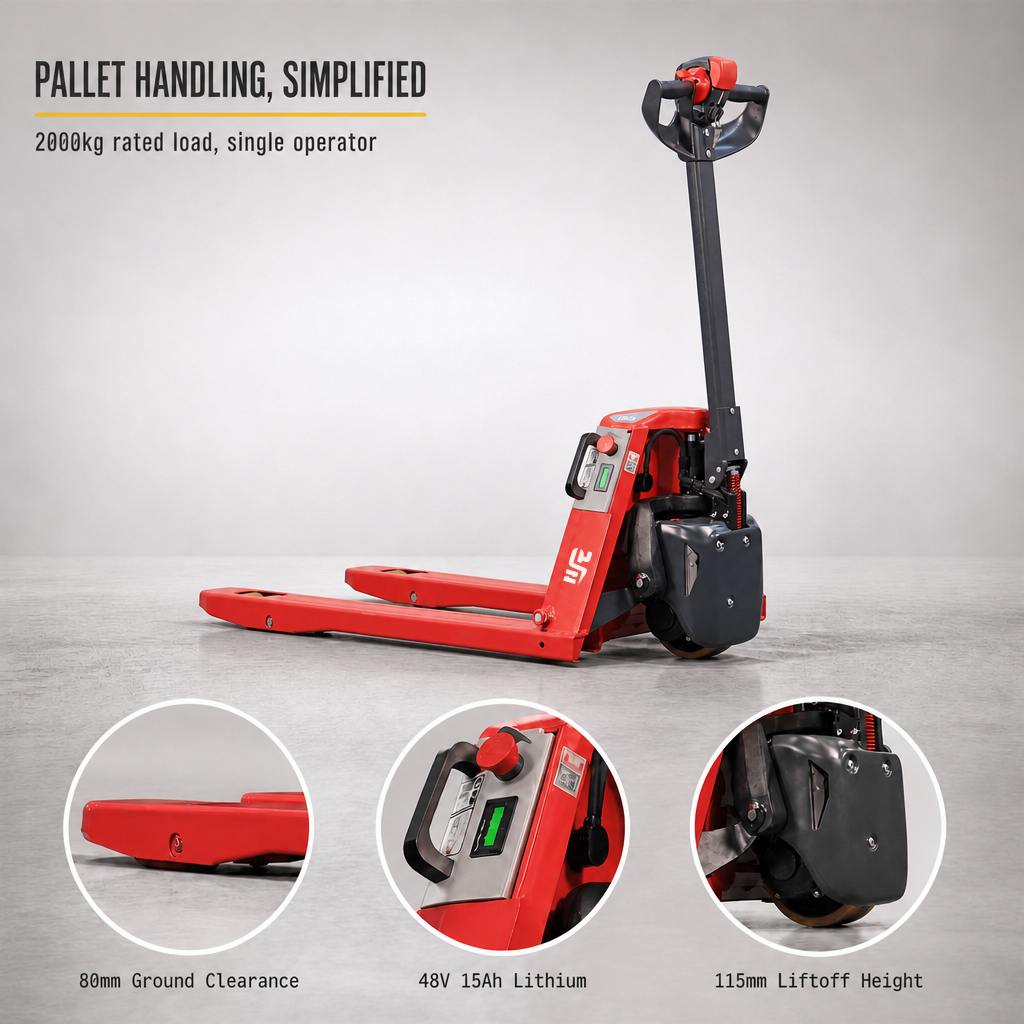
NB20L01LD 2000kg Electric Pallet Truck Lithium Battery 4.8km/h Speed 1245mm Turning Radius Jack
A lithium pallet truck for fast horizontal transfer. Its 4.8 km/h travel speed and 1,245 mm turning radius suit dispatch areas, retail backrooms and 3PL hubs where drivers turn frequently and need responsive handling.
View product →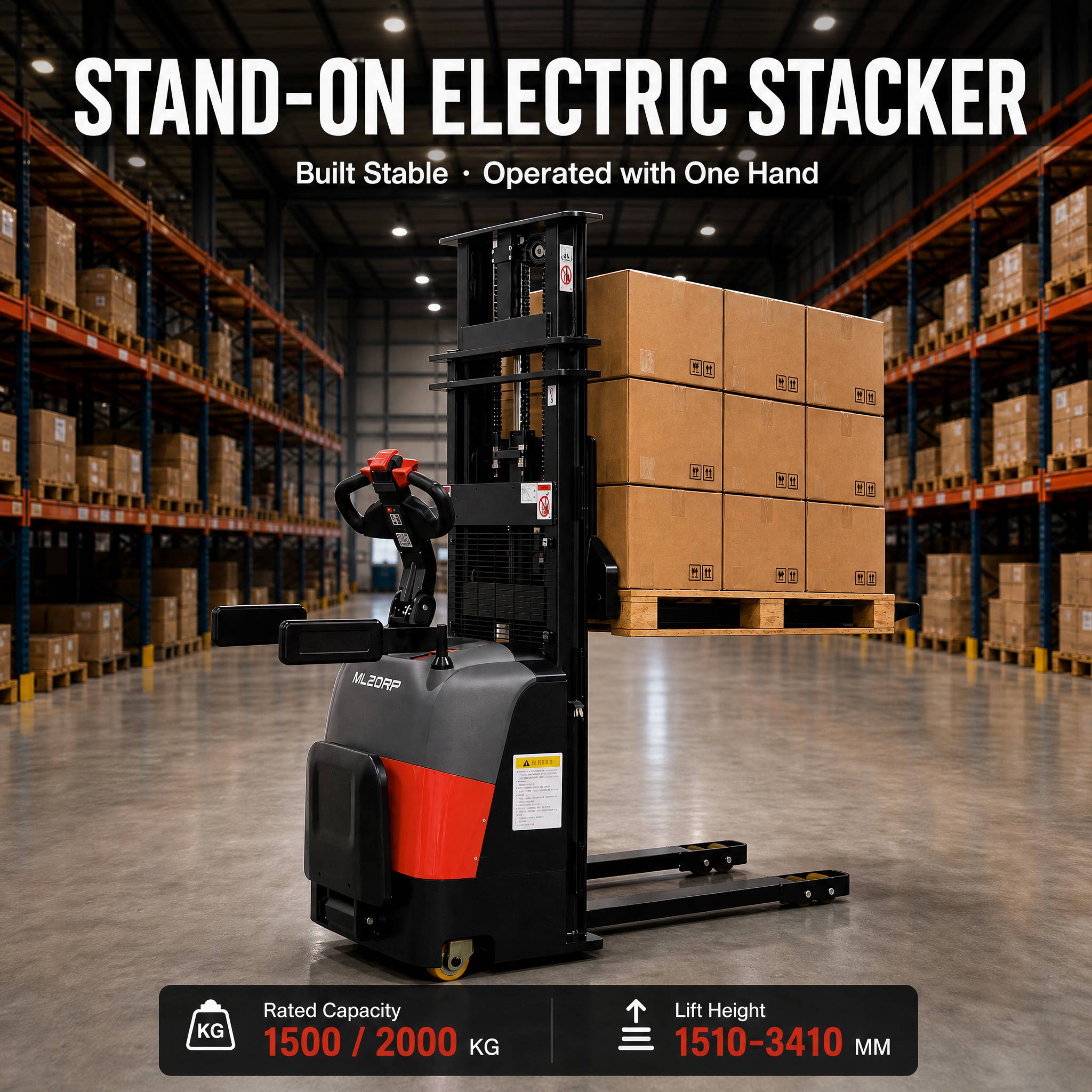
Channel Steel Mast Electric Pallet Stacker 2000kg 90mm Lowered Fork Height Stable High Rack Stacking
Use where top racking is within its lift range but stacker stability matters. The 90 mm lowered fork height helps with low-clearance pallets and double-stack operations on controlled concrete floors.
View product →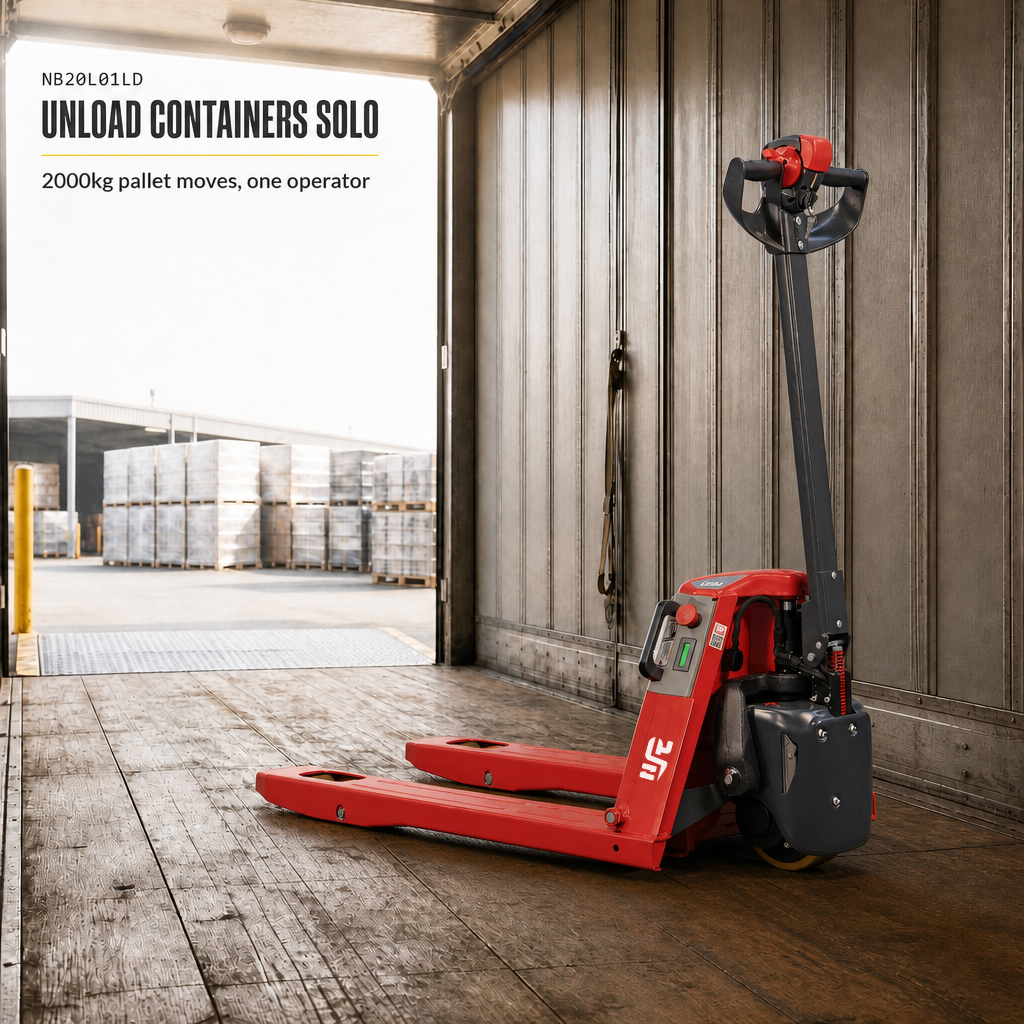
2000kg Electric Pallet Truck Lithium Ion 48V 10Ah Power Jack 1150mm Forks Polyurethane Wheels Container Loading
A container-loading workhorse: 48V lithium-ion, 1,150 mm forks and polyurethane wheels. Confirm charger input, cycle demand and container-floor condition before standardising a fleet on one battery size.
View product →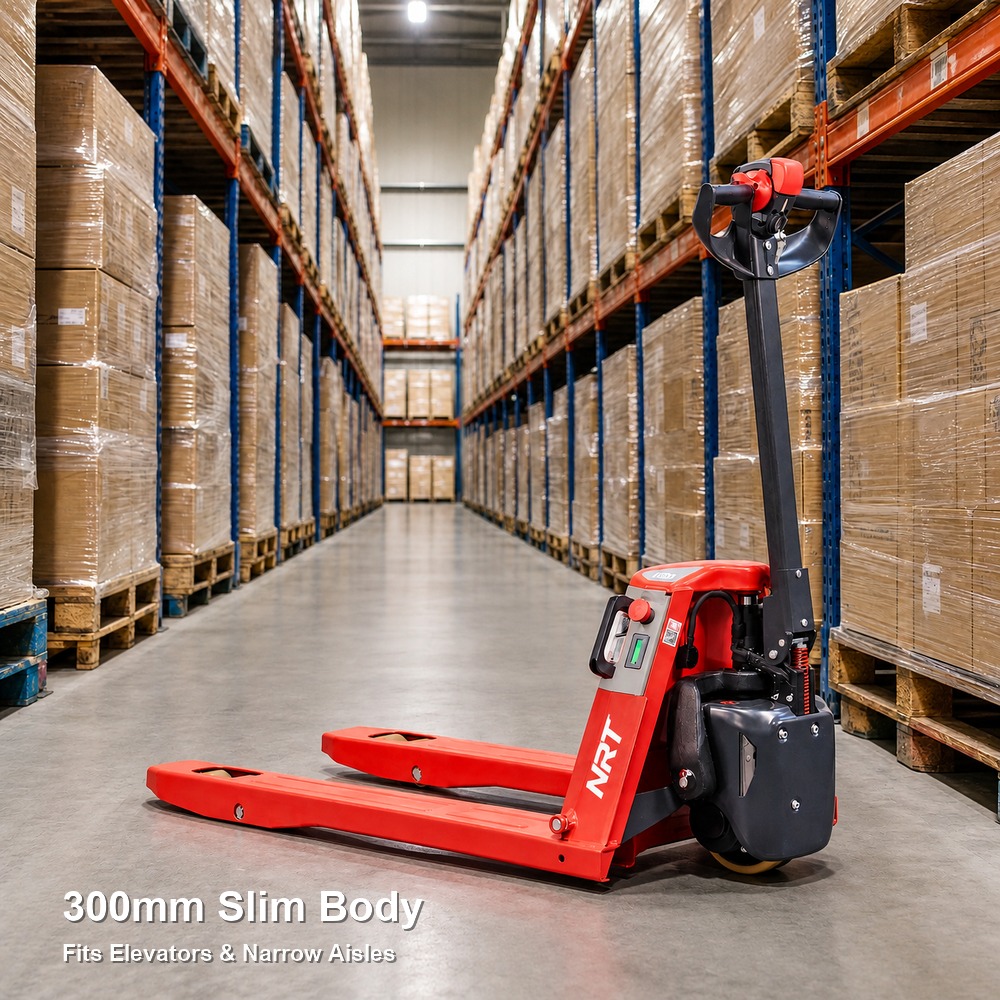
NB15L01LD Electric Pallet Jack 2000kg 48V 15Ah Lithium Battery 850W Fork 1150mm PU Wheels Pallet Truck
A 2,000 kg jack with a larger 48V 15Ah lithium pack for distributors who want one balanced SKU. It is relevant for longer shifts and multi-user fleets; ask for charger and BMS documentation.
View product →
2000kg Walkie Electric Pallet Jack 685mm Width Narrow Fork Pallet Truck with Lithium Battery for Container Loading
The narrow 685 mm fork option is important in Vietnam’s compact warehouses, retail backrooms and container corners. Always measure the real pallet width and turning envelope before ordering narrow equipment.
View product →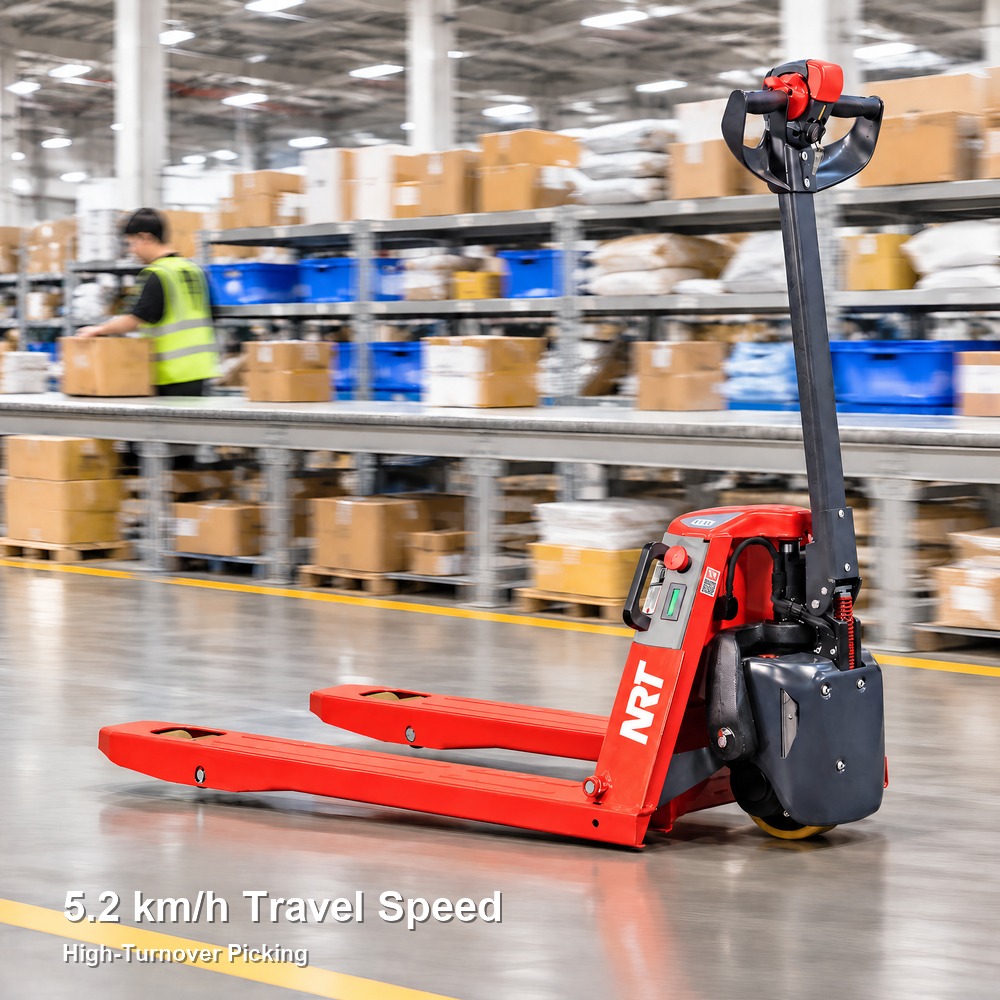
Electric Pallet Jack with Quick Release Drive Wheel 1Min Service 48V Lithium Walkie Pallet Truck 2000kg Capacity
Designed around a quick-release drive wheel for faster maintenance. For rental fleets and 3PLs, service access can matter as much as purchase price; request a spare-wheel and training plan with the quotation.
View product →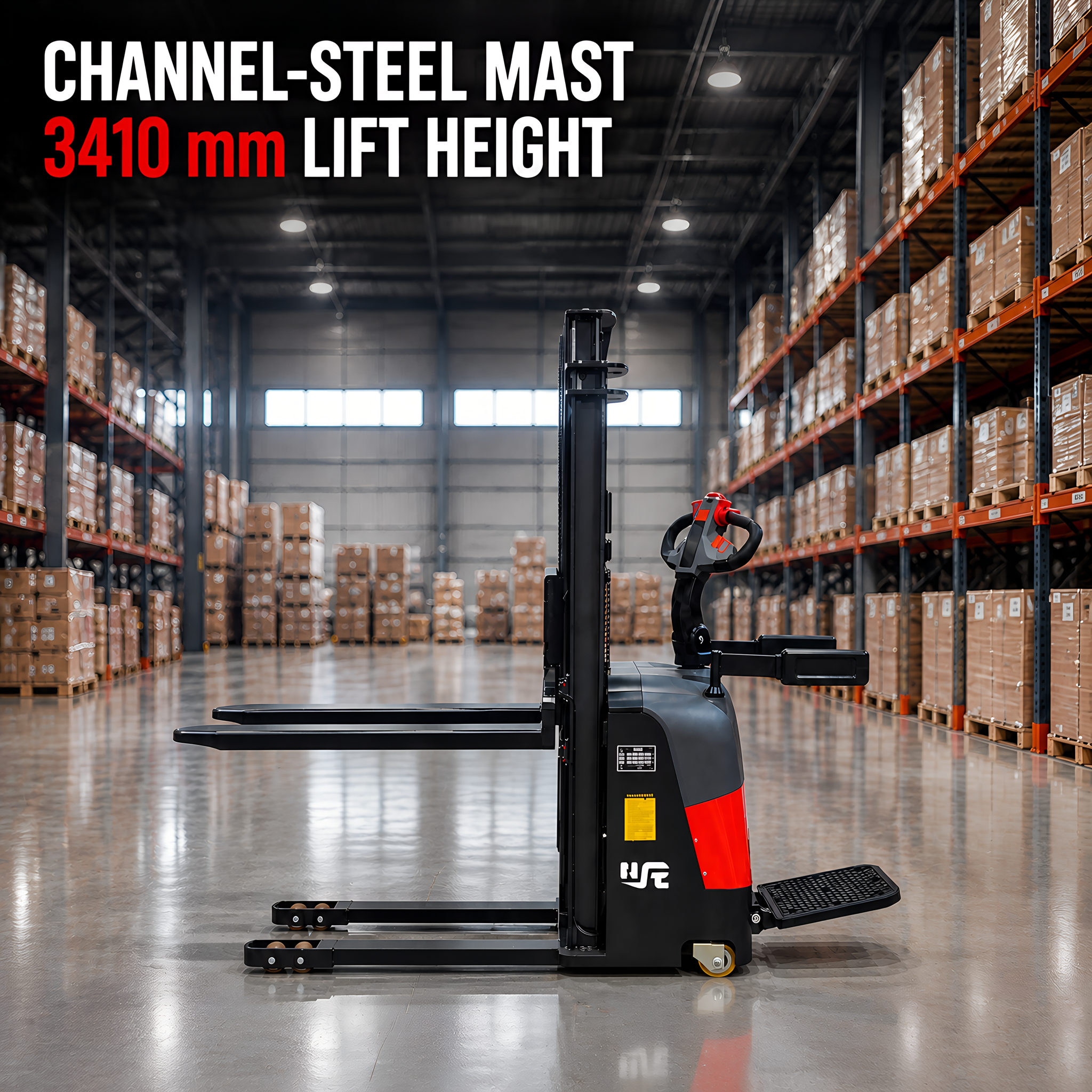
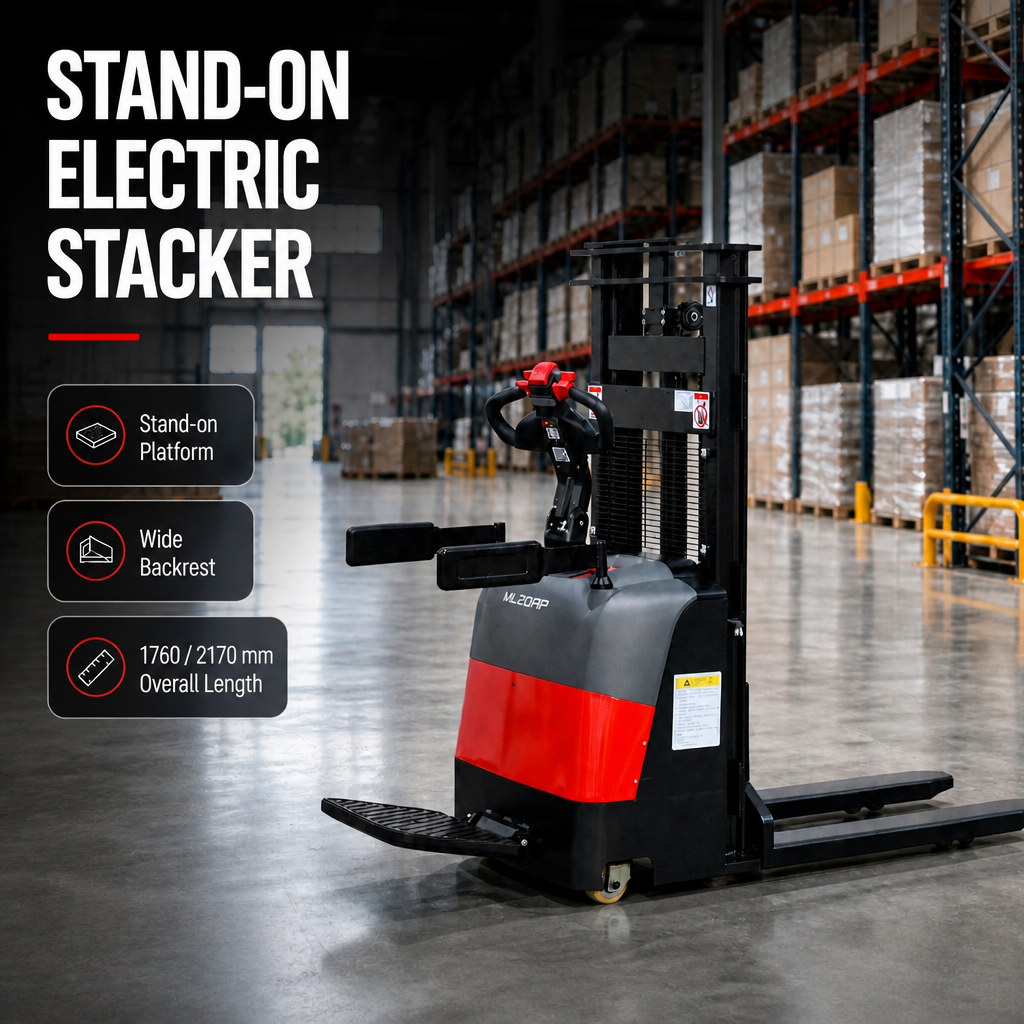
ML20AP Stand on Electric Stacker 2000kg 3410mm Max Lift 1478mm Turning Radius 820mm Body Width
A stand-on stacker for longer horizontal travel plus 3,410 mm lifting. Its 1,478 mm turning radius and 820 mm body width must be checked against actual aisle layouts and overhead obstructions.
View product →Localized applications
Application Scenarios Across Vietnam’s Warehouse and Factory Network
Equipment selection should begin with the operating scene, not the model number. These six scenarios show how Vietnam buyers typically match material handling equipment to local workflows.
Industrial parks in Bac Ninh, Hai Phong and Da Nang
Electronics, supporting industries and manufacturing plants need low-noise electric stackers for line-side replenishment and loading. Buyers should confirm continuous lift cycles, battery swap routines and floor joint conditions before choosing a model.
3PL and e-commerce hubs in Ho Chi Minh City and Hanoi
Fast fulfilment centres benefit from 48V lithium pallet trucks with tight turning radius and quick-release maintenance access. For peak-season rental fleets, operator familiarity and charger availability often decide the standard SKU.
Container loading at Cat Lai, Cai Mep and Hai Phong
Container loading and unloading rewards 1,150 mm forks, polyurethane wheels and predictable battery performance. Narrow 685 mm units can work in compact cargo configurations, but the pallet overhang and container floor must be measured first.
Cold chain, food and agriculture in the Mekong Delta
Condensation, washdown and humidity require a specification discussion, not a catalogue assumption. Buyers should confirm electrical protection, battery placement, charger environment and corrosion-control expectations for each model.
High-rack warehouses in Binh Duong and Dong Nai
As racking goes higher, the stacker becomes a precision tool. Check maximum lift, lowered fork height, mast stability, overhead clearance and operator training before using a 3,410 mm lift model in multi-shift high-rack operations.
Retail and wholesale distribution in provincial cities
Retail backrooms often have limited charging space, uneven loading areas and mixed operator skill levels. Compact electric pallet trucks and walk-behind stackers can improve safety and speed without demanding a full forklift aisle.
Specification intelligence
Specifying for Vietnam’s Heat, Humidity, Floors and Power
A China quotation can look identical on paper while hiding major differences in charger input, wheel compound, battery management, fork dimensions and service access. Use this table to ask better questions before you compare prices.
| Site factor | Procurement question | Practical action |
|---|---|---|
| Heat and humidity | Will the controller, connectors and battery tolerate a hot, humid warehouse and a non-air-conditioned charging area? | Request model-specific electrical and battery information; plan ventilation, dry storage and a charging routine that avoids condensation on hot batteries. |
| Charging and power | Is the charger configured for the site’s actual voltage, phase and plug standard? | Confirm single-phase or three-phase input, 50 Hz supply, charger placement and operator training. Do not assume a charger is plug-and-play for Vietnam. |
| Floor and wheels | Will polyurethane wheels suit the concrete, expansion joints, ramps and container floors? | Inspect the route, measure thresholds and confirm wheel type and replacement availability. Rough yards may need different equipment, not just a different wheel. |
| Aisle and pallet size | Is the real loaded pallet width, overhang and turning envelope understood? | Use a measured layout drawing. Compare 1,150 mm forks with 685 mm narrow units and check turning radius against racking, doors and dock corners. |
| Container and ramps | Will the unit load and unload containers safely without damaging the truck or the cargo? | Confirm fork length, entry clearance, container floor condition and dock level. Container loading is a workflow, not a one-line capacity claim. |
| Service and spare parts | Can a failed drive wheel, charger or battery be resolved without weeks of downtime? | Ask for a recommended spare-parts kit, maintenance manual, video evidence and quick-release service features such as those on the drive-wheel model. |
Information gain
Six Checks That Protect Your First Vietnam Order
Most imported equipment problems are not caused by the model alone. They come from incomplete site data, unclear battery configuration and missing after-sales assumptions. These checks help procurement teams compare China factories on more than FOB price.
1. Calculate cost per pallet move
Compare purchase price with battery cycle life, charging labour, maintenance access, tyre replacement, floor space and uptime. A low-cost truck with a weak charger or slow wheel service can cost more per pallet move than a better-specified unit.
2. Ask for battery and charger evidence
Request the battery type, capacity, charger input, charge time and BMS information. For lithium models, confirm the operating temperature guidance and whether the charger can be configured for the destination site.
3. Match protection to the real environment
Vietnam’s humidity and washdown needs vary by site. Do not accept a generic “waterproof” claim. Ask which components are protected, how the charger area is managed and what maintenance routine is expected in a humid building.
4. Use a measured aisle drawing
A catalogue cannot confirm whether a 685 mm truck will turn safely in your aisle. Measure rack-to-rack width, door openings, pallet overhang and operator clearance, then send the drawing to the supplier for configuration review.
5. Require pre-shipment test evidence
Ask for functional testing of lifting, travel, braking and electrical systems before dispatch. A short video with the unit’s serial number, plus a QC checklist, is more useful than a promise that “all machines are tested.”
6. Price the after-sales kit with the machine
Include a recommended spare drive wheel, charger, battery document set and basic maintenance tools in the first quotation. Confirm how warranty parts are shipped and how technical questions will be handled across time zones.
Supplier evidence
Why Xiamen Pexal Is a Relevant Partner for Vietnam Buyers
Pexal is a China-based material handling equipment supplier working from Xiamen, Fujian. The company was founded in Xiamen in 2024 as the sales, service and technical support base for Pexal equipment, while working with a 220,000 m² partner manufacturing campus employing more than 1,200 people. For Vietnam buyers, that means a practical combination of product breadth, customisation and third-party-verified supplier information.
Partner manufacturing scale
A 220,000 m² partner manufacturing base and more than 1,200 skilled workers support container-level orders, recurring dealer stock and customised builds.
Broad electric product range
Electric forklifts, pallet trucks, stackers, reach trucks, order pickers and automated guided forklifts allow a dealer to build a coherent warehouse equipment portfolio.
OEM, ODM and full customisation
Sample-based customisation, full customisation and ODM support can cover mast height, fork length, battery type, colour, logo and attachment configuration for different market requirements.
SGS onsite assessment
Xiamen Pexal has passed an onsite check and supplier assessment conducted by SGS Group. Buyers can review the supplier assessment record, credit index and trade capacity before placing a first order.
Export terms and payment flexibility
Common delivery terms include FOB, CFR, CIF, EXW, FCA, CPT, CIP and DDP. Accepted payment methods include T/T, L/C, D/P, D/A, Western Union, PayPal, credit card and escrow, with USD, EUR, GBP, JPY, CAD, AUD, HKD, CHF and CNY currencies.
Application support and export logistics
Support covers logistics solution design, pre-shipment quality checks, export packaging and coordination through Xiamen port. Vietnam-bound projects should confirm destination port, documentation, HS code and C/O eligibility before shipment.

Pexal’s stated main export markets are Western Europe, North America, South America, Eastern Europe and Oceania. Vietnam-bound inquiries are reviewed by model, voltage, documentation and logistics requirement; please confirm current availability with the sales team.
Selection matrix
Quick Product Selection for Vietnam Material Handling Projects
Use this matrix as a first filter. Final selection should still be confirmed with measured pallet data, aisle drawings, duty cycle and charging arrangements.
| Equipment type | Best Vietnam application | Why buyers choose it | Check before order |
|---|---|---|---|
| 1,150 mm electric pallet truck | Container loading, horizontal transfer, warehouse dispatch | Fast handling with familiar fork length and polyurethane wheels | Charger voltage, battery capacity, floor condition |
| 685 mm narrow pallet truck | Compact warehouses, retail backrooms, narrow container corners | Improved access where standard forks may not fit | Actual pallet width, overhang and turning clearance |
| Electric stacker with 3,410 mm lift | Medium-high racking, loading and unloading | Powered lifting without a counterbalance forklift footprint | Mast height, overhead clearance, load centre |
| Stand-on electric stacker | Longer horizontal travel plus stacking | Operator rides between pick and put-away points | Body width, turning radius, aisle and traffic flow |
| Channel steel mast stacker | Stable high-rack stacking in controlled floor areas | Structural stability for repeated lifting cycles | Floor flatness, lowered fork height and maintenance access |
Vietnam buyer FAQ
Local Purchasing Questions About China Material Handling Supply
These are the questions Vietnamese distributors, 3PLs and factory buyers most often ask when comparing electric pallet trucks and stackers from China.
Which electric equipment should a Vietnam distributor stock first?
Most distributors start with a 2,000 kg electric pallet truck in a 1,150 mm fork configuration because it covers container loading, horizontal transfer and warehouse dispatch. A second SKU is often a 3,410 mm electric stacker for racking, followed by a narrow 685 mm pallet truck for compact sites. Before stocking, confirm the pallet standards used by your target customers and the voltage or charger requirements of their facilities.
Are 2,000 kg pallet trucks and stackers enough for Vietnamese warehouses?
For many general warehouse, retail, 3PL and container-loading operations, 2,000 kg is a practical class. However, capacity alone is not enough. The load centre, fork length, lift height, floor condition and duty cycle must be checked. If the application involves heavy continuous outdoor work, rough ground or attachments, a different equipment class may be required.
What is the difference between an electric pallet truck and an electric stacker?
An electric pallet truck is mainly for horizontal movement and container loading, with limited lifting for pallet entry. An electric stacker is designed for lifting pallets onto racking or stacking. In Vietnam, many factories use both: a pallet truck for dock and transport work, and a stacker for storage and put-away.
Why are 685 mm and 1,150 mm forks both offered?
The 1,150 mm fork is a common general-purpose length for pallet handling and container loading. The 685 mm narrow configuration can improve access in tight aisles or compact cargo patterns, but it is not automatically better for every site. Measure the loaded pallet, overhang, racking clearance and turning path before choosing a narrow model.
How should a lithium battery charging area be prepared in Vietnam?
The charging area should be dry, ventilated and separated from combustible materials. Confirm the charger input and plug standard before installation, and avoid charging in a location where condensation or water ingress is likely. Operators should be trained on charging order, connector handling and emergency procedures. For high-temperature or high-humidity sites, ask the supplier for model-specific battery and charger guidance.
Can Pexal customise equipment for Vietnam buyers?
Yes. Xiamen Pexal Technology Co., Ltd. offers sample-based customisation, full customisation and ODM services. Customisation can include mast height, fork length, battery type, colour, logo and attachment configuration. For Vietnam projects, share the pallet size, aisle drawing, required lift height and voltage information so the configuration can be reviewed efficiently.
Which Incoterms, payment methods and currencies does Pexal accept?
Common delivery terms include FOB, CFR, CIF, EXW, FCA, CPT, CIP and DDP. Payment methods include T/T, L/C, D/P, D/A, Western Union, PayPal, credit card and escrow. Accepted currencies include USD, EUR, GBP, JPY, CAD, AUD, HKD, CHF and CNY. For Vietnam, confirm the destination port, import documents and final delivery terms with the sales team.
Has Pexal been verified by a third party?
Yes. Xiamen Pexal Technology Co., Ltd. has passed an onsite check and a supplier assessment conducted by SGS Group. Buyers can review the supplier assessment, credit index, trade capacity, transaction level and trade history before making a sourcing decision.
How can a Vietnam buyer verify quality before container loading?
Request a pre-shipment checklist and video evidence showing lifting, travel, braking and electrical functions. Confirm the serial number, battery and charger configuration, packaging method and spare-parts list. If the order value is significant, arrange a third-party inspection or a factory visit before shipment.
Which documents should be confirmed for a Vietnam-bound shipment?
Discuss commercial invoice, packing list, bill of lading, HS code, product documentation and certificate-of-origin eligibility with your freight forwarder and supplier before booking. Requirements can vary by model and origin rules, so do not leave documentation confirmation until after the container is loaded.
Build a Vietnam-Ready Material Handling Package
Send your pallet weight, aisle width, lift height, container loading process and destination port. The Pexal team can review the right electric pallet truck or stacker configuration and prepare a quotation based on verifiable specifications, customisation options and export terms.