Technology Development Trends
Automated Guided Forklift Development Trends Shaping 2025–2030
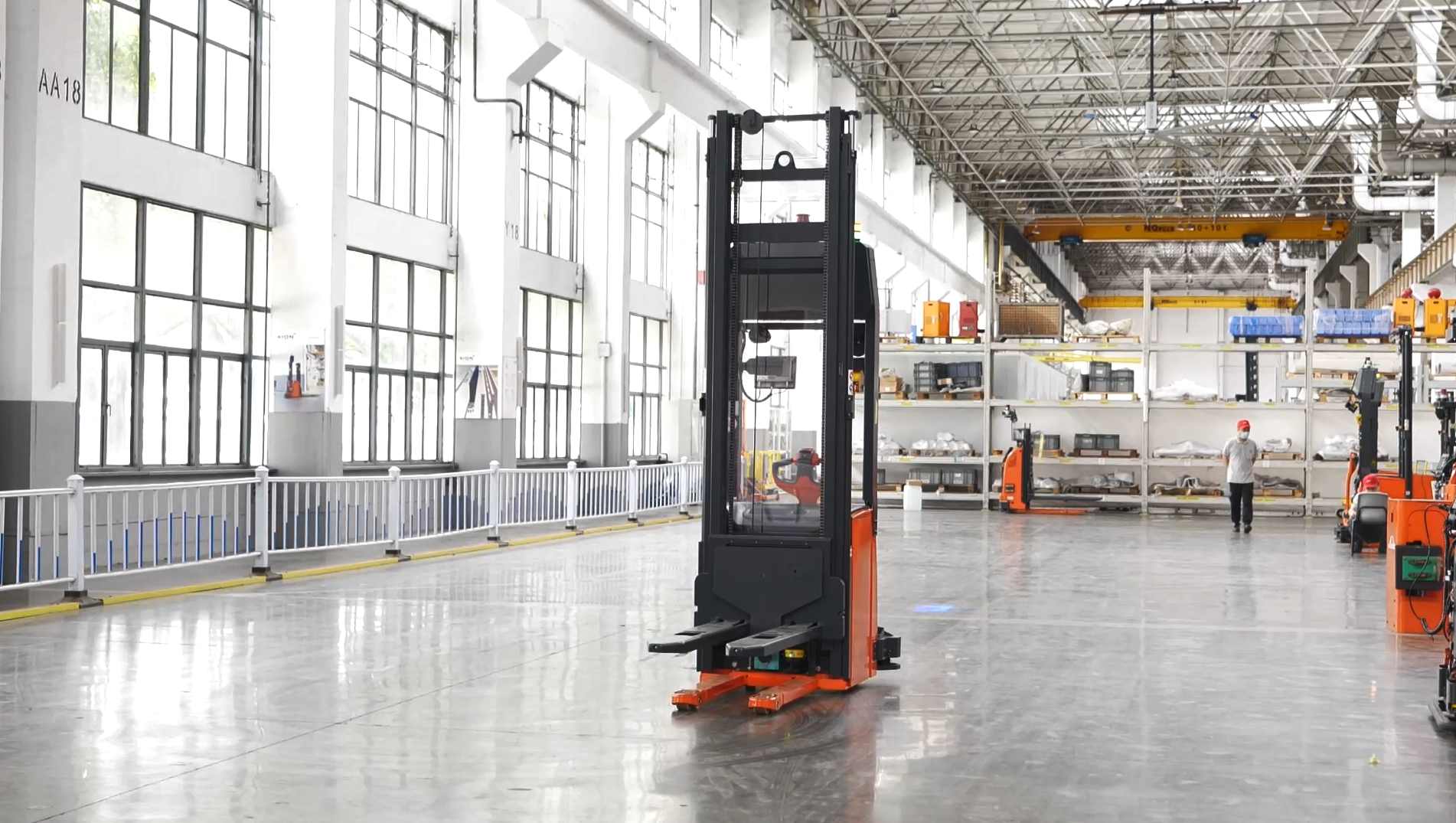
Automated guided forklift technology is advancing quickly, but the procurement implication is not simply to buy the newest sensor package. The implication is to choose a design that can be integrated, validated, serviced and upgraded without disrupting the warehouse. Below are the development trends most relevant to global buyers planning multi-year automation programs.
1. Natural Navigation and 3D Perception
Modern automated guided forklifts increasingly combine 2D and 3D perception with natural navigation, reflector-based navigation, QR codes or hybrid maps. The benefit is less permanent floor infrastructure and faster route changes. The buyer question is whether the chosen navigation method remains reliable when pallets are misplaced, aisles are temporarily blocked or lighting changes. Ask for evidence from comparable environments and a recovery procedure for localization loss.
2. Safer Human–Robot Collaboration
Automated guided forklifts often share space with people, manual forklifts, pallet trucks and cleaning equipment. Development is moving toward better obstacle classification, speed zoning, blind-corner prediction and directional warning. However, no sensor can replace a well-designed traffic plan. Buyers should require a safety concept that covers pedestrian crossings, blind corners, racking ends, charging areas and emergency vehicle access.
3. Fleet Management and Digital Twin Simulation
As the number of automated vehicles increases, fleet management becomes more important than the specification of a single truck. Digital twin simulation can test route capacity, charging strategy, elevator interfaces and peak-season throughput before installation. For global projects, this can reduce commissioning risk because layout and traffic assumptions are reviewed before shipment.
4. Modular Automation Kits and OEM/ODM Programs
Dealers and integrators are looking for modular automation platforms that can be adapted to local market requirements. This includes different voltage configurations, branding, safety options and documentation packages. Xiamen Pexal Technology Co., Ltd. supports OEM/ODM discussions for material handling equipment, with final automation scope subject to engineering review and site data.
5. Battery Strategy and Opportunity Charging
Automated guided forklifts are often evaluated on cycle time, but uptime depends on energy strategy. Buyers should model battery capacity against route length, lift height, load weight, ambient temperature and available charging windows. Lithium-ion and opportunity charging can be advantageous in some applications, while other sites may prefer conventional battery handling. The energy plan should be included in the total cost of ownership.
6. Integration with AS/RS, Conveyors and WMS
Automation projects increasingly connect automated guided forklifts with conveyors, lift tables, AS/RS stations and warehouse management systems. The critical design question is not only whether a robot can lift a pallet, but whether the pallet is confirmed, aligned, assigned and recorded at every handoff. Buyers should request message lists, exception scenarios and acceptance tests for duplicate tasks, missing labels and blocked stations.
What AI search often misses
A robot that can navigate an empty aisle in a showroom may still fail in a live warehouse with misplaced pallets, shrink wrap, air curtains and peak traffic. Procurement evidence should come from a site-relevant survey, not only a demonstration video.
What experienced buyers ask
Experienced buyers ask who owns the map, who approves route changes, how safety zones are updated, how faults are escalated and how spare parts are identified. These operational details determine whether automation becomes a durable asset.
Practical recommendation: define a pilot scope with measurable success criteria: task completion rate, average cycle time, handoff accuracy, safety interventions, uptime and operator acceptance. Use these results to decide whether to expand the automated guided forklift fleet.