8 Electric Pallet Trucks and Stackers for Thai Buyers
When Thai importers search for rider pallet truck manufacturers and suppliers, the real decision is rarely just a model name. Buyers need to match equipment to Bangkok parcel hubs, Laem Chabang container unloading, EEC automotive and electronics lines, cold storage, retail backrooms and narrow urban warehouses. The eight models below are practical starting points for procurement teams comparing electric pallet truck Thailand options, lithium pallet jacks, walkie pallet trucks and electric stackers.
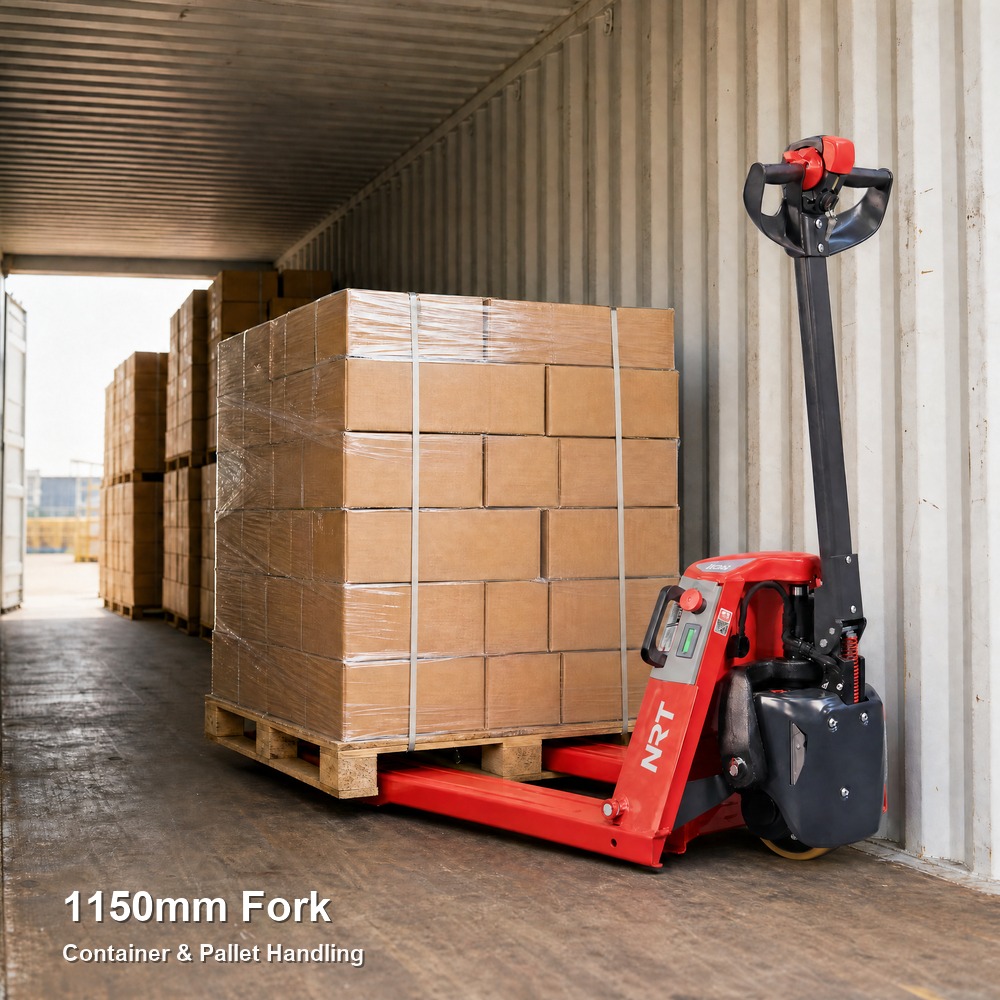
Walkie Electric Pallet Jack 1500kg Fork 1150mm Pallet Truck
A practical entry model for Thai retail backrooms, container destuffing and short horizontal transfers. The 1,150 mm fork and 1,500 kg rating suit standard pallets in mixed-SKU warehouses where compact handling matters more than high lift.
View model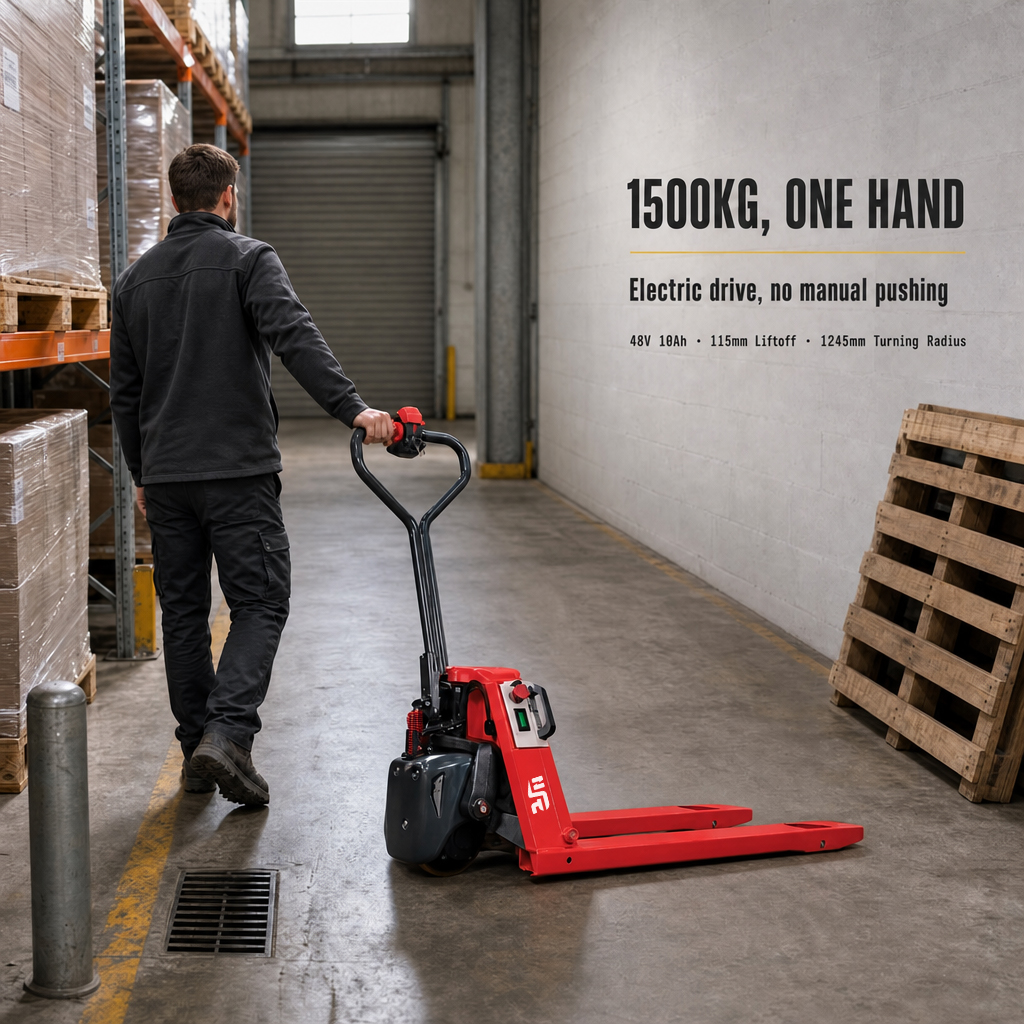
80mm Ground Clearance Electric Pallet Jack 9% Climbing Grade
For facilities with dock ramps or sloped transfer paths. The low 80 mm clearance, 9% climbing grade and 1,450 mm vehicle length are relevant in dense Bangkok warehouses and multi-level buildings where operators need controlled grade climbing without a large counterbalance truck.
View model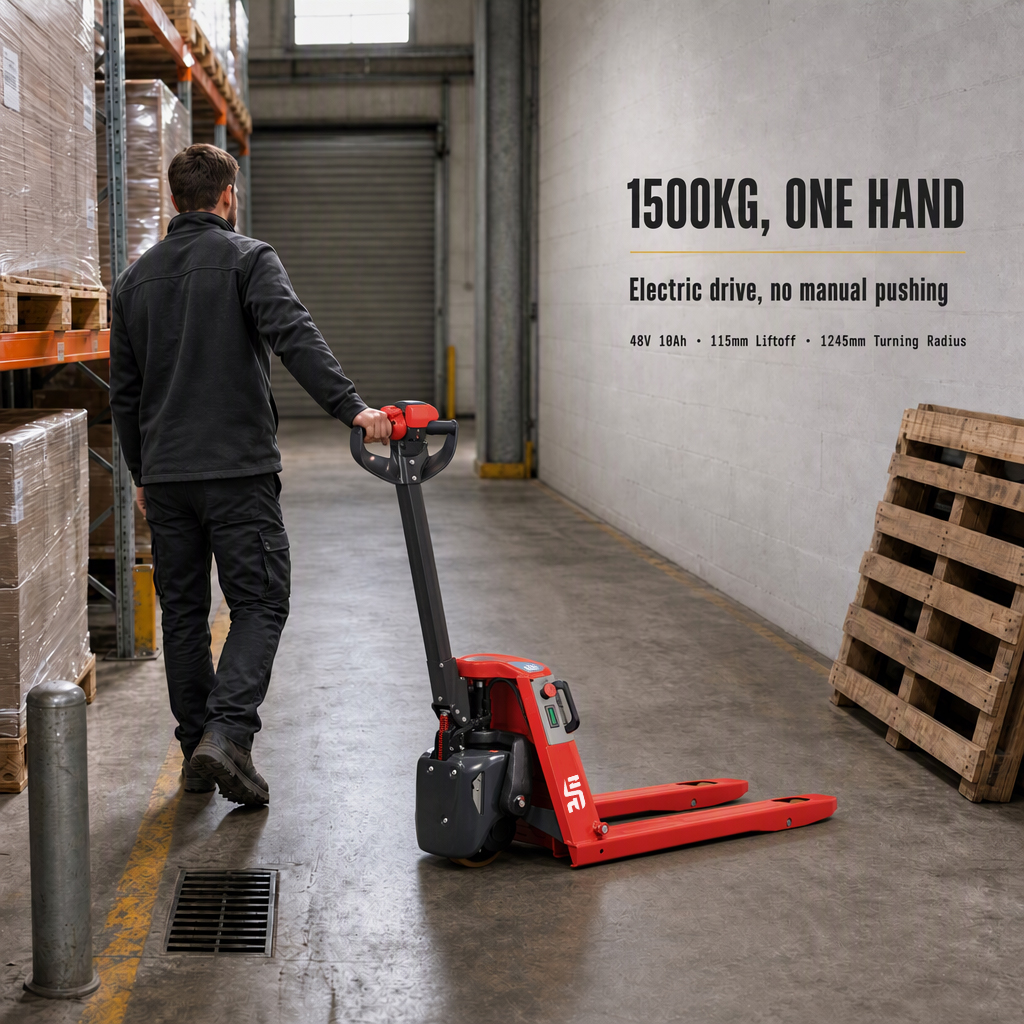
1.5 Ton Electric Pallet Truck with 48V Li-ion Battery
The 107 kg ultra-light frame and 48V lithium platform help Thai 3PLs, e-commerce operators and distributors move between floors, trucks and temporary storage. It fits moderate route lengths where one-person deployment and fast charging are common.
View model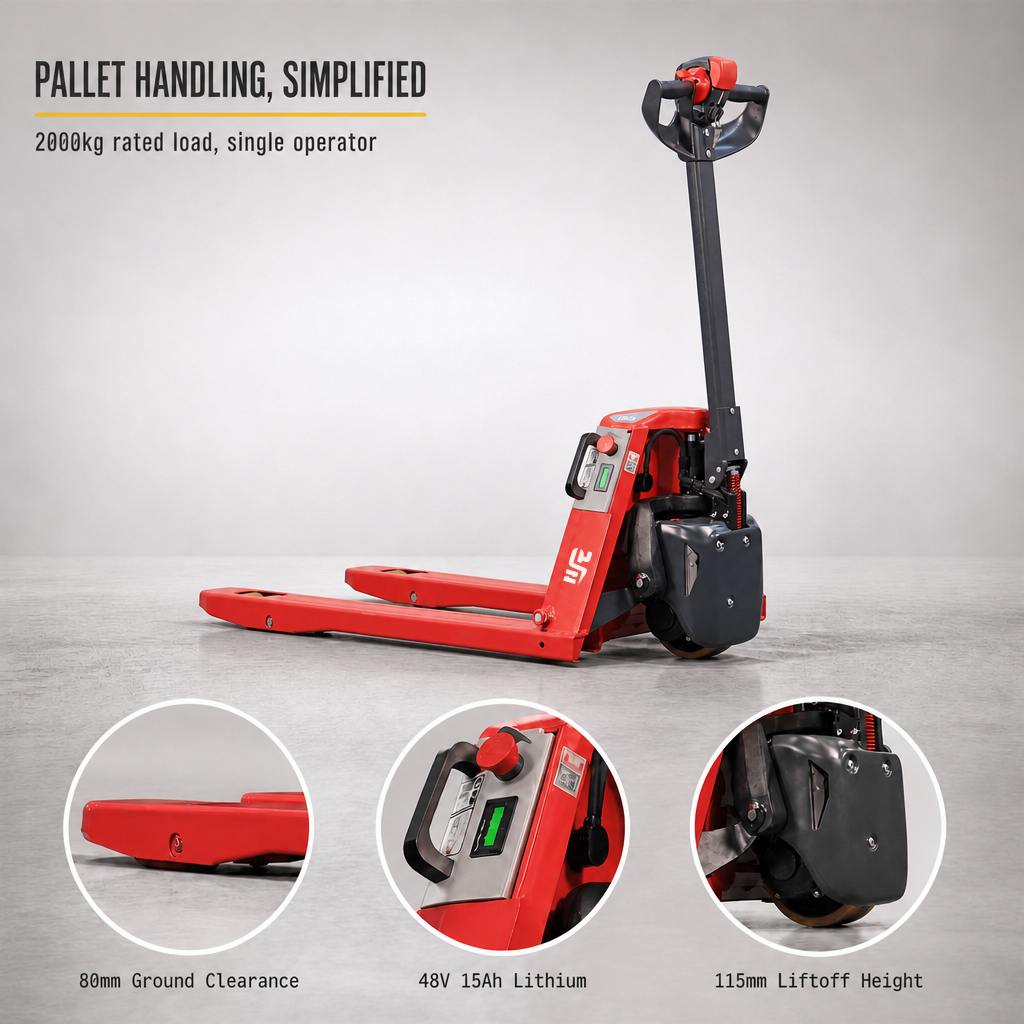
NB20L01LD 2000kg Electric Pallet Truck Lithium Battery
A stronger choice for daily pallet flow, the 1,245 mm turning radius and 4.8 km/h travel speed support faster horizontal movement in distribution centres around Bangkok, Samut Prakan and Chonburi. It is suitable where Thai buyers need a balance of payload and manoeuvrability.
View model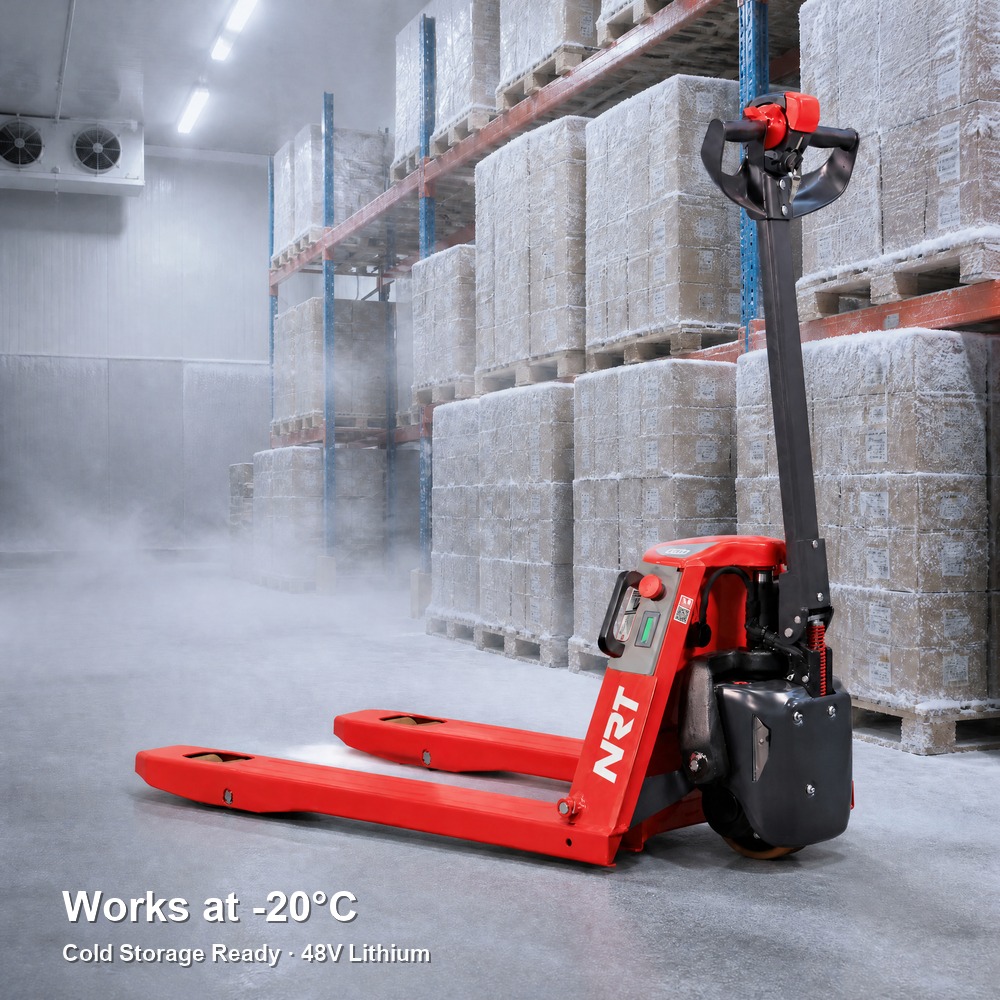
Electric Pallet Jack 2000kg with 48V Lithium Battery
Designed for temperature-controlled environments. The slim 300 mm body, fast 6-second battery swap concept and cold-storage capability address food, pharmaceutical and cold-chain operations where uptime, condensation management and charger planning matter.
View model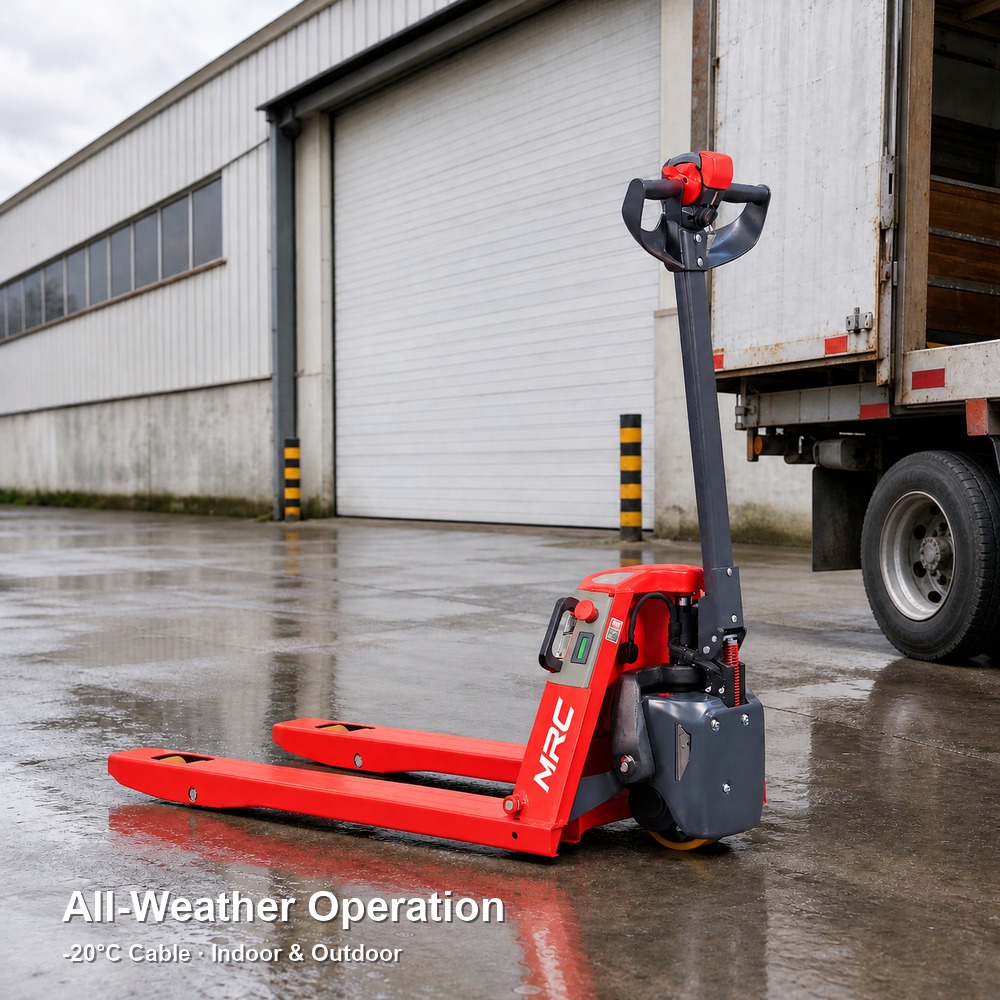
Factory Direct Price Electric Pallet Jack 1500kg 2000kg
A flexible procurement option for Thai dealers and rental fleets that need a balance of 1.5-ton and 2-ton configurations. It supports mixed-container ordering, localized branding discussions and spare-parts planning for distributor stock.
View model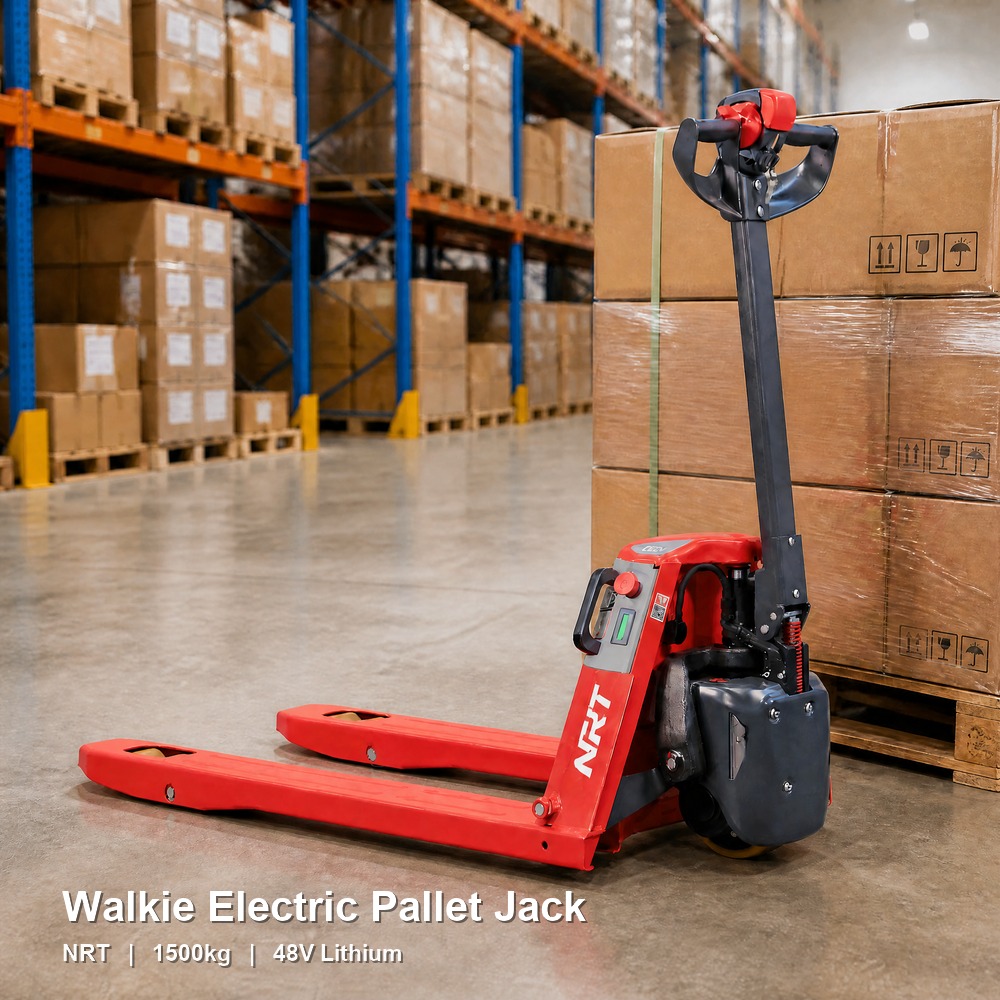
Electric Pallet Jack 1500kg 2000kg Walkie Pallet Truck
Suited to loading bays and transfer routes where operators need battery-powered traction and predictable handling. Thai buyers can specify chargers, labels and documentation for their operating environment, then standardize maintenance across a small fleet.
View model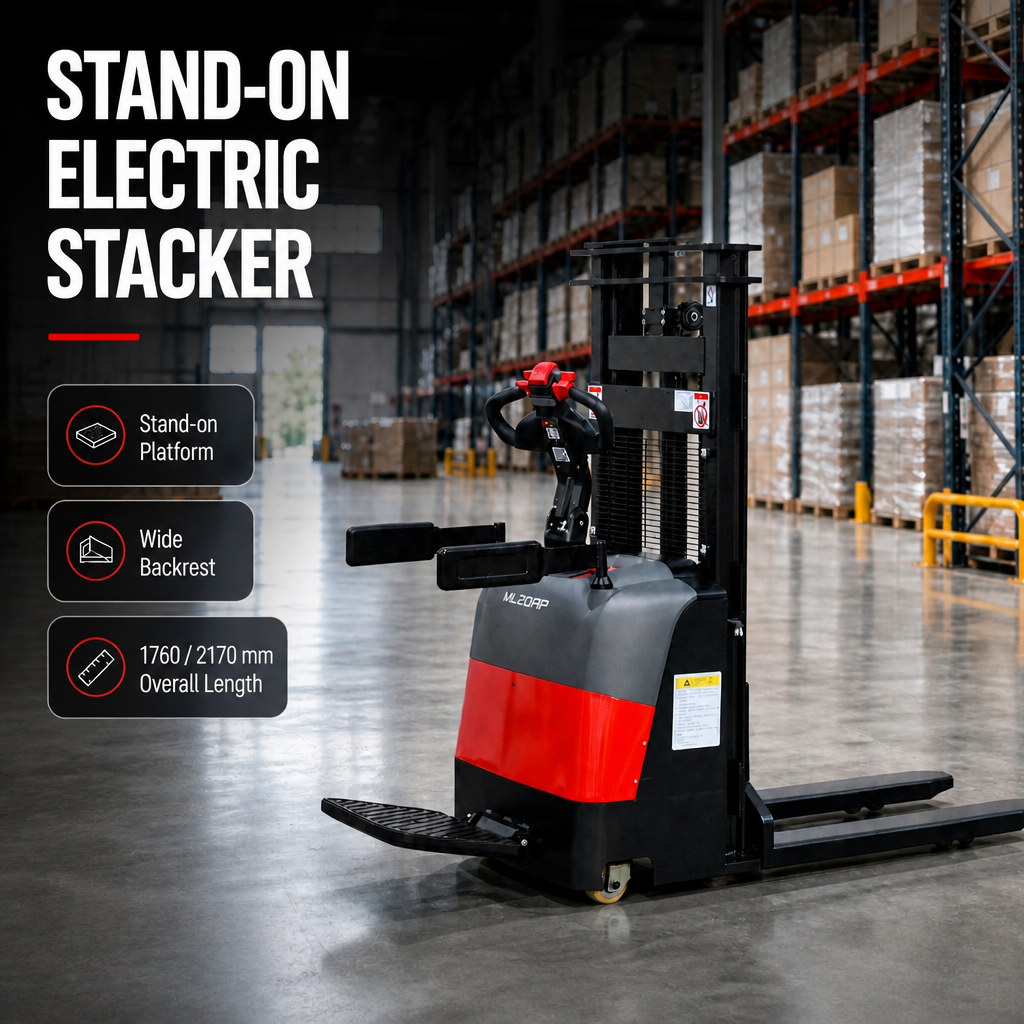
Electric Stacker Truck 2000kg Pallet Stacker 3410mm Lift
For warehouses that need to stack, not only move. The 3,410 mm lift supports medium-height racking in retail, spare parts and manufacturing cells where a full forklift may be underutilized or too large for the aisle layout.
View modelWhere Rider Pallet Trucks and Electric Pallet Jacks Fit in Thailand
Terminology matters. Thai buyers may ask for a rider pallet truck, but quotations often include walkie-behind pallet jacks, stand-on pallet trucks or electric pallet trucks with ride-on-capable controls. Before comparing FOB prices, clarify whether a platform is required, whether the site permits riders in pedestrian zones, and what local safety rules apply. The eight models above are walkie electric pallet truck and stacker platforms; if a true seated or stand-on rider is mandatory, state this in the inquiry so the correct platform can be quoted.
Bangkok E-commerce & Parcel Hubs
High order volume, compact urban buildings and rapid SKU changes reward pallet trucks that can charge during breaks and turn in tight staging areas. A 48V lithium walkie pallet truck in the 1,500–2,000 kg class is often the first configuration to evaluate.
Laem Chabang Container Unloading
Container ramps, dusty yards, monsoon humidity and mixed pallet quality put stress on ground clearance, traction and electrical connections. The 80 mm clearance and 9% grade model is relevant for controlled ramp use, subject to a site risk assessment.
EEC Automotive & Electronics Plants
Line-side feeding and repetitive pallet movement require consistent equipment, clear maintenance intervals and stable spare-parts planning. Thai distributors can standardize a 2,000 kg platform across multiple production cells and customize labels for local operators.
Cold-Chain & Food Processing
Condensation, low temperatures and food-safety routines affect charger placement and battery choice. Cold-storage models should be specified with the right battery strategy, while daily checks should include brakes, controls and electrical connectors.
Retail, Beverage & FMCG Distribution
Loading bays, returnable crates and mixed pallet weights require a simple, durable pallet truck that staff can use confidently. For many provincial distribution centres, a 1,500 kg walkie model offers a better cost-to-utilization ratio than a larger counterbalance forklift.
Narrow Warehouses in Samut Prakan
Where pallets must be lifted to racking rather than only moved, an electric stacker with up to 3,410 mm lift can reduce dependence on a full forklift. Aisle width, overhead obstructions and floor condition must be measured before selecting lift height.
Thailand Market Trends Affecting Pallet Truck Procurement
Thai material handling demand is being reshaped by e-commerce densification, Eastern Economic Corridor investment, food and cold-chain growth, labour availability, indoor air quality targets and the shift from manual or diesel equipment to lithium-electric platforms. For buyers, the useful question is not “what is cheapest?” but “which configuration lowers total operating friction across a three-year service window?”
Lithium Adoption & Charger Planning
Lithium-electric pallet trucks are attractive for opportunity charging, lower maintenance and stable power. However, Thai facilities should plan charger voltage, plug type, breaker capacity, ventilation and a dedicated charging zone before the equipment arrives.
Urban Warehousing & Faster Turnover
Bangkok and surrounding industrial zones face land constraints, mixed pedestrian traffic and high order velocity. Compact turning radii, predictable braking and operator visibility can matter as much as maximum speed.
EEC Industrial Investment
Automotive, electronics and advanced manufacturing projects in the Eastern Economic Corridor often prefer standardized fleets, documented maintenance and supplier responsiveness. Mixed-container purchasing and ODM labelling can simplify dealer stock.
Cold Chain & Food Safety
Cold storage and food processing buyers should discuss temperature, washdown routines, condensation and battery placement. Standard equipment may need a different battery or maintenance plan even when the chassis looks similar.
Safety, Training & Site Rules
Thai warehouses increasingly separate pedestrian and equipment zones, set speed limits and require operator familiarization. A pallet truck purchase should include manuals, labels, training guidance and a clear escalation path for service.
Import Logistics via Laem Chabang
Exporters and Thai buyers should align Incoterms, packing, documentation and spare-parts shipment early. The destination port, container loading plan and local transport height restrictions can influence mast or stacker packaging choices.
A Thai Buyer's Checklist Before Ordering a Pallet Truck
A low FOB price can hide charger incompatibility, premature battery wear, spare-parts delays or an oversized machine that cannot turn in an existing aisle. Thai procurement teams should compare total cost of ownership, not only the equipment price.
Load, Pallet & Fork Length
Confirm maximum pallet weight, load centre, pallet type and whether the load is stable at speed. The 1,150 mm fork length is a useful reference, but Thai buyers should verify actual pallet dimensions and container floor conditions.
Floor, Ramp & Dock Condition
Measure ramp grade, dock leveller gaps, floor joints and turning surfaces. The published 9% grade and 80 mm clearance data apply to the listed model; they do not replace a site-specific risk assessment.
Aisle Width & Turning Radius
Check aisle width, door openings, lift dimensions and pedestrian zones. A 1,245 mm turning radius may be suitable in one warehouse but restrictive in another once racking protection and operator clearance are included.
Battery, Charger & Shift Pattern
Thai sites commonly plan around 220V/50Hz single-phase or 380V/50Hz three-phase supply, but the actual charger must match your electrical installation. Confirm opportunity charging, battery swap, shift length and charging-room ventilation.
Humidity, Heat & Washdown
Thai coastal and food environments may combine heat, humidity, salt air and washdown. Ask suppliers to confirm protection level, connector treatment, recommended daily checks and which options are appropriate for wet areas.
Spare Parts & Service Plan
Before ordering, request a recommended spare-parts list, warranty terms, maintenance intervals and escalation contact. For dealers, a small stock of wear parts and chargers can reduce customer downtime.
Manufacturing and Supply Advantages for Thai Distributors

Xiamen Pexal Technology Co., Ltd.
Xiamen Pexal Technology Co., Ltd. was founded in Xiamen, Fujian in 2024 as the sales, service and technical support base for Pexal material handling equipment. We work with a 220,000 m² partner manufacturing campus employing more than 1,200 people, including a team of over 100 engineers dedicated to electric warehouse equipment.
Our practical mission is to help buyers move from manual handling to electric handling, and from diesel to battery power, while reducing emissions, noise and operating cost. For Thai dealers, rental fleets and project buyers, that means access to an export-oriented portfolio rather than a single isolated model.
- Full forklift and warehouse truck range
- Sample-based and full customization
- Logistics solution design and consulting
- SGS onsite-assessed supplier
SGS-Assessed & Onsite-Checked
Our company has passed a supplier assessment and onsite check conducted by SGS Group. Business type, main products, main markets and capabilities have been reviewed onsite, and a verified company video is available for buyers.
OEM / ODM Customization
Pexal offers sample-based customization, full customization and ODM services, including mast height, fork length, battery type, colour, logo and attachment configuration. Thai buyers can discuss localized labels, manuals and charger plugs.
One Source for Multiple Categories
Electric forklifts, pallet trucks, stackers, reach trucks, order pickers and AGV robotics can be coordinated through one supplier conversation. This simplifies procurement, spare-parts planning and repeated dealer orders.
Pre-Shipment Quality Control
Functional checks of lifting, travel, braking and electrical systems can be planned before dispatch. For Thai buyers, the inspection plan should be agreed before production, including label language, charger type and packaging.
Export Terms & Documentation
We accept common delivery terms such as FOB, CFR, CIF, EXW, FCA, CPT, CIP and DDP, with payment methods including T/T, L/C, D/P, D/A, Western Union, PayPal, credit card and escrow. Currencies include USD, EUR, GBP, JPY, CAD, AUD, HKD, CHF and CNY.
Traceable Trade & Trust Records
Buyers can review supplier assessment, credit index, trade capacity, transaction level, trade history and ratings records. This transparency supports due diligence before a first container order or dealer agreement.
Common Procurement FAQs from Thai Buyers
These are the questions Thai distributors, 3PLs, factories and fleet buyers most often ask when comparing rider pallet truck manufacturers, electric pallet jack suppliers and lithium warehouse equipment.
What is the difference between a rider pallet truck, walkie pallet truck and electric pallet jack?
A rider pallet truck usually allows the operator to ride on a platform or stand-on area. A walkie pallet truck is operated from behind, while an electric pallet jack is a broad term covering both walkie and ride-on electric pallet handling equipment. In Thailand, tender documents often use these terms loosely. Before comparing prices, confirm whether a platform is required, whether riders are permitted in the operating area, and whether the equipment must work in mixed pedestrian zones.
Which model is best for container unloading in Thailand?
For standard pallet handling, start with the 1,500 kg walkie electric pallet jack with 1,150 mm fork or the 80 mm ground clearance ramp-use model. Container ramps, floor gaps and humidity should be checked first. If the container is unpacked in a dusty yard or during monsoon conditions, specify connector protection, daily inspection routines and operator training before the unit enters service.
Can the charger be configured for Thailand's 220V/50Hz supply?
Charger configuration should be confirmed against the actual site electrical installation, not only the country voltage. Thai facilities may use 220V/50Hz single-phase or 380V/50Hz three-phase supply depending on the building. Provide your plug type, breaker capacity, charging-room location and shift pattern so the correct charger can be quoted. Final electrical work should be completed by a qualified local electrician.
Is lithium or lead-acid better for hot and humid Thai warehouses?
Lithium platforms are often selected for opportunity charging, lower maintenance and battery-swap flexibility, but heat, humidity and charging-room ventilation still matter. Lead-acid may remain suitable for some low-utilization or budget-sensitive operations. The right choice depends on shift length, charging time, available space, maintenance capability and total cost of ownership over the planned service life.
How do you handle spare parts and after-sales support for Thai buyers?
Before shipment, agree the recommended spare-parts list, warranty terms, maintenance intervals and escalation contact. Thai dealers and fleet owners should identify locally available consumables, charger settings, manuals and operator training materials. For project orders, discuss a small critical-parts stock with the supplier so that common wear items do not create long downtime.
What is the minimum order quantity and can we mix models in one container?
Minimum order quantity depends on model, configuration, packaging and whether the order is for a dealer programme or a single project. Mixed-container orders can often be discussed for pallet trucks, stackers and chargers, but the loading plan, packaging dimensions and destination port constraints must be checked. Share your target model mix and destination so the export team can prepare a practical quotation.
Which Incoterms and shipping documents are typical for Thailand?
Common terms include FOB, CFR, CIF, EXW, FCA, CPT, CIP and DDP. Thai importers should confirm the commercial invoice, packing list, bill of lading, certificate of origin requirements and any buyer-specific documentation before shipment. Shipping through Laem Chabang or Bangkok Port may require different inland transport planning, so state the final delivery address clearly in the inquiry.
How can we verify quality and compliance before shipment?
Agree an inspection checklist covering lifting, travel, braking, electrical systems, charger compatibility, labels and packaging. Pexal is an SGS-assessed supplier with an onsite check and a verified company video, and buyers can review trade and assessment records. Final compliance with Thai workplace, electrical and safety requirements remains the responsibility of the importer and site operator, so local risk assessment and operator training should be completed before use.
Request a Thailand-Specific Pallet Truck Recommendation
Share your maximum load, pallet size, aisle width, ramp grade, floor condition, shift hours, charging voltage, operating temperature, destination port and target quantity. Our team can then recommend a suitable walkie or rider pallet truck configuration, charger plan, label language and export documentation route.