Pallet Lift Truck Supplier & Wholesaler Serving the Indianapolis Market
Electric pallet jacks, walkie pallet trucks and stand-on stackers configured for Indianapolis warehouses, 3PL cross-docks, cold storage and building-material yards. Wholesale support, OEM/ODM options and export logistics from an SGS-assessed supplier.
A Practical Guide for Indianapolis Buyers Comparing Electric Pallet Lift Trucks
Indianapolis sits at the center of major freight corridors and supports a dense mix of distribution centers, 3PL operations, e-commerce fulfillment, food and pharmaceutical storage, and advanced manufacturing. For local buyers, a pallet lift truck is not a commodity purchase. It is a productivity decision that affects dock-to-stock time, operator safety, battery strategy and total cost of ownership.
What changes the recommendation in Indianapolis
The same 2,000 kg pallet truck can perform very differently in a heated distribution center, a cold-storage room, a trailer yard and a building-material shop. Buyers should compare load center, aisle width, lift height, floor condition, duty cycle and charging access before comparing price. A model that is oversized for horizontal transport can waste capital, while an undersized stacker can bottleneck racking and create unsafe workarounds.
This guide is prepared by Xiamen Pexal Technology Co., Ltd., a material handling supplier working with distributors, rental fleets and end users across Western Europe, North America, South America, Eastern Europe and Oceania. Our role is to match electric pallet lift trucks to real workflows, then support wholesale buyers with configuration, documentation, spare parts planning and export logistics. For Indianapolis, the practical objective is a truck that fits the aisle, the operator, the battery routine and the maintenance plan.
- Trailer unloading and dock-to-stock loops
- Narrow-aisle pallet stacking and replenishment
- Cold-storage and temperature-controlled transfers
- Building-material, retail and wholesale backrooms
Site data to collect before an inquiry
Give your supplier a complete operating picture and the quotation becomes more accurate from the first response.
- Maximum pallet weight, pallet type and load center
- Narrowest aisle, door width and rack beam height
- Required lift height and lowered fork clearance
- Floor condition, ramps, dock plates and outdoor use
- Hours per shift, shifts per day and charging window
- Temperature range, washdown, dust or corrosive exposure
- Charger voltage available and preferred battery chemistry
- Spare parts, training and local compliance expectations
Eight Pallet Lift Truck Models Recommended for Indianapolis Operations
The models below cover walkie pallet jacks, lithium battery pallet trucks, stand-on electric stackers, narrow-aisle handling, high-rack stacking and cold-storage work. Each product image links to its original product URL so procurement teams can review full specifications.
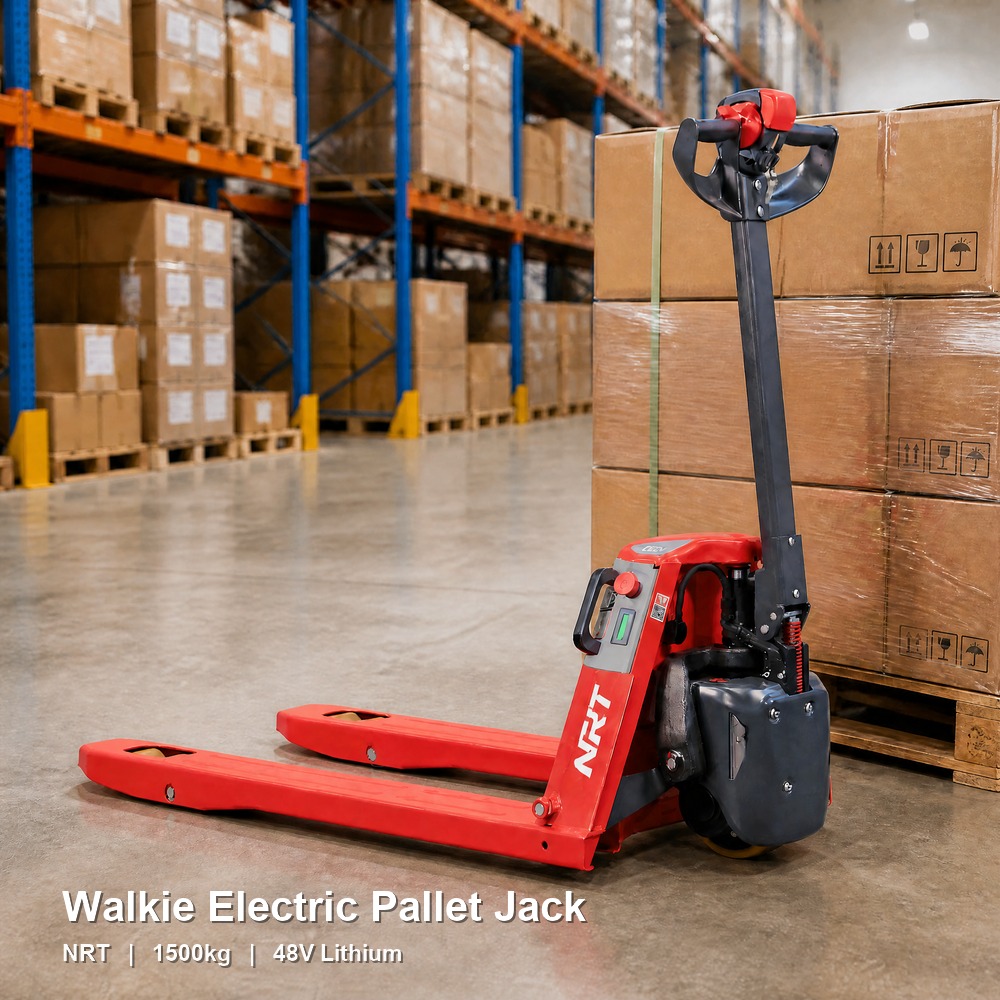
Electric Pallet Jack 1500kg 2000kg Walkie Pallet Truck Battery Powered Lithium Pallet Jack for Warehouse Loading
A high-frequency horizontal transport truck for receiving docks, trailer unloading and warehouse floor moves. The 1,500 kg and 2,000 kg load classes suit mixed pallet flows where operators need fast on/off access and simple lithium charging.
View model details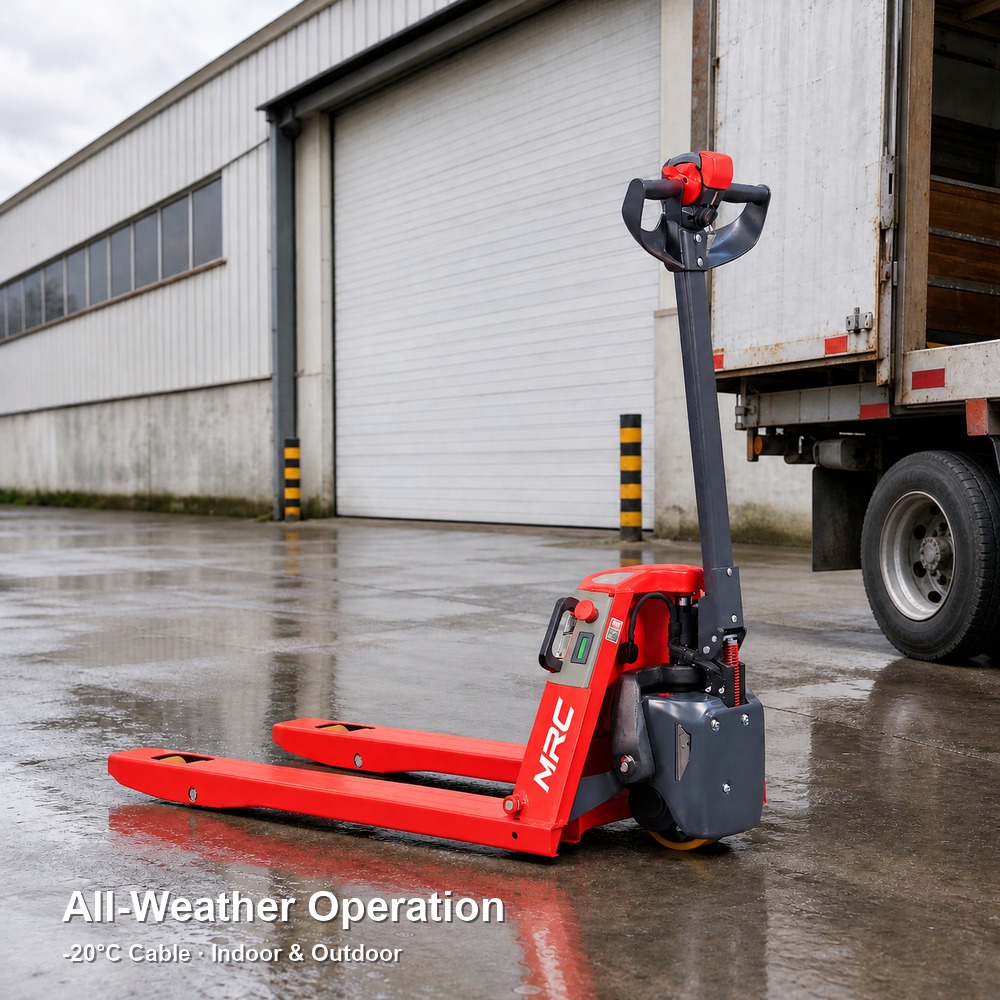
Factory Direct Price Electric Pallet Jack 1500kg 2000kg Battery Powered Walkie Pallet Truck Lithium Pallet Jack
A value-focused wholesale configuration for dealer stock, rental fleets and multi-site buyers. It keeps the familiar walkie pallet truck format while offering lithium power and a straightforward maintenance profile for repetitive dock work.
View model details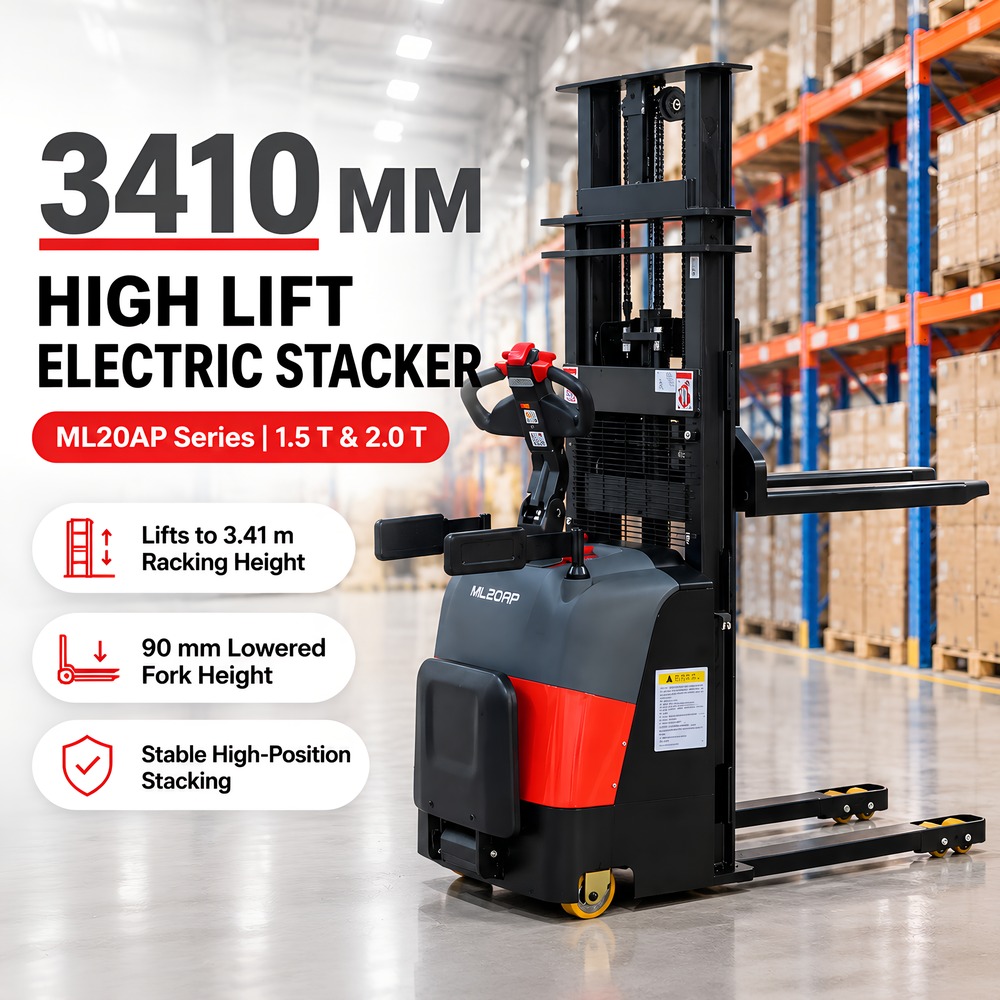
ML20AP Stand on Electric Stacker Truck 2000kg Warehouse Stacker for Narrow Aisle Loading Dock Building Material Shops
A stand-on stacker for medium-height racking, narrow loading zones and building-material handling. The ride-on platform reduces walking distance during long shifts, but aisle width and overhead clearance should be verified before selection.
View model details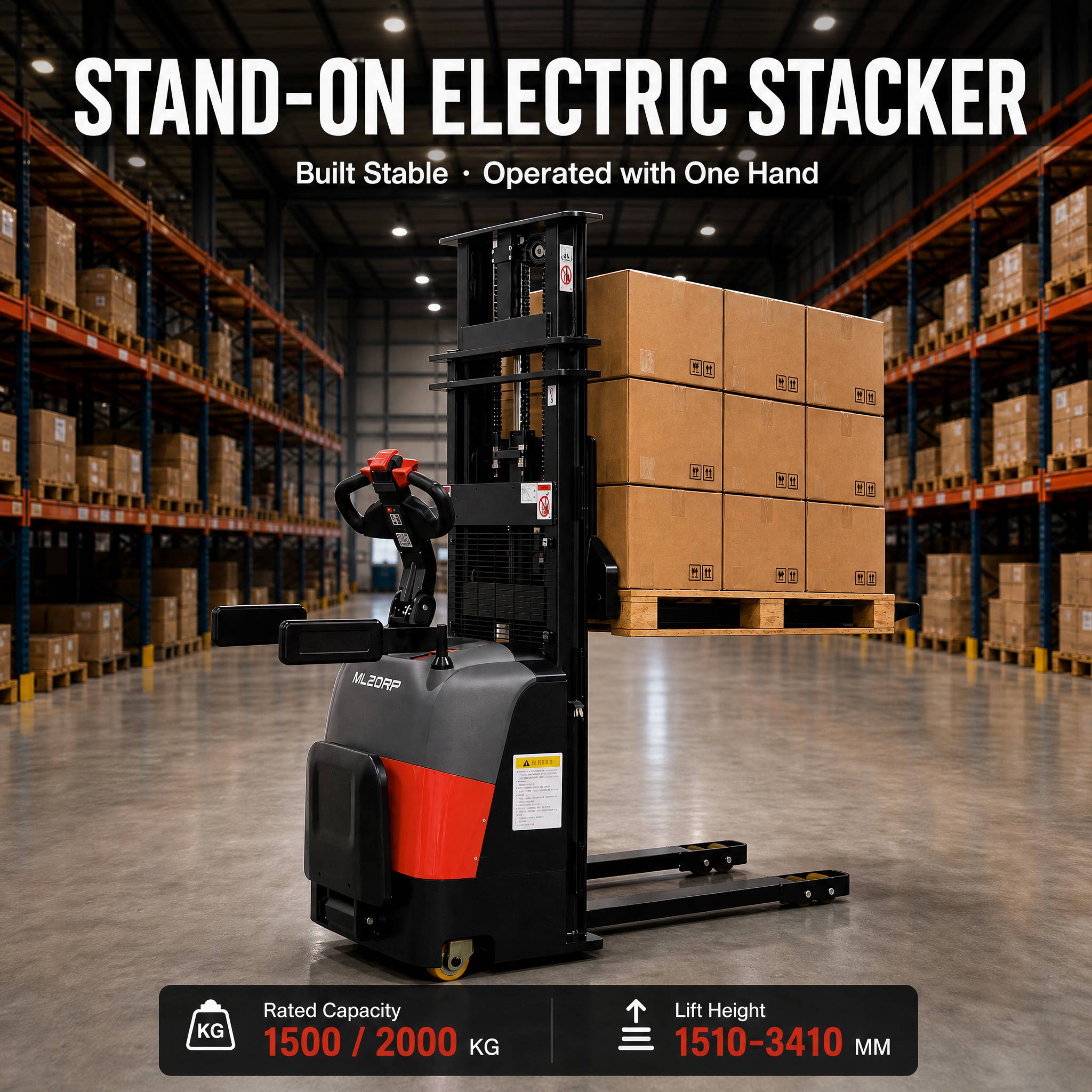
Channel Steel Mast Electric Pallet Stacker 2000kg 90mm Lowered Fork Height Stable High Rack Stacking
The 90 mm lowered fork height helps enter low-clearance pallets, while the channel steel mast supports repeated high-rack stacking. This is relevant for building-material shops, printing operations and manufacturing sites where stable lifting matters more than road speed.
View model details
Stand on Electric Stacker 2000kg for Narrow Aisle Warehouse Loading Dock Building Material Shop Pallet Handling
A compact stand-on stacker for tight aisles and pallet handling at loading docks. It suits operations where a full counterbalance forklift is too large but operators still need controlled lifting, lowering and precise placement.
View model details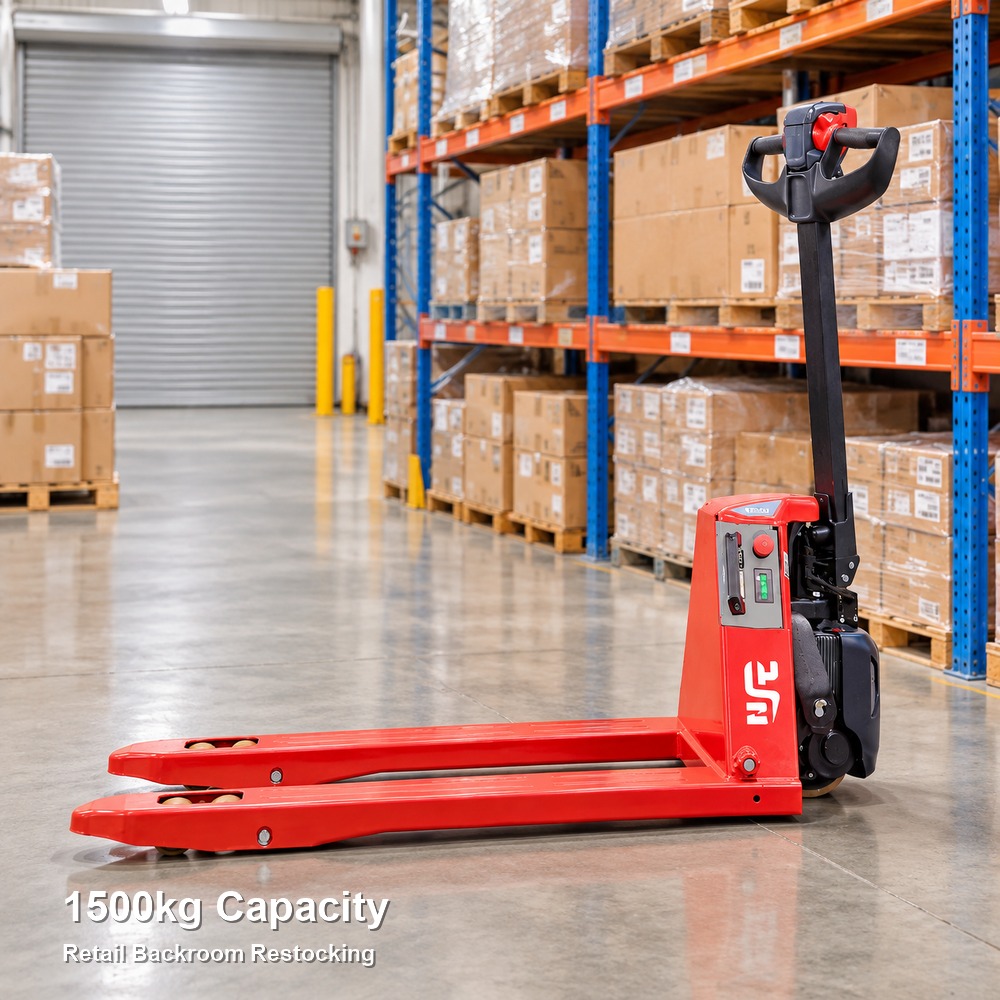
Cold Storage Electric Pallet Jack -20C Working 48V Lithium Battery Pallet Truck Walkie Type 1500kg 2000kg
Designed for cold storage and freezer-adjacent work down to -20°C. Buyers should confirm charger placement, condensation management, battery warming routines, operator PPE and the actual time the truck spends outside the freezer.
View model details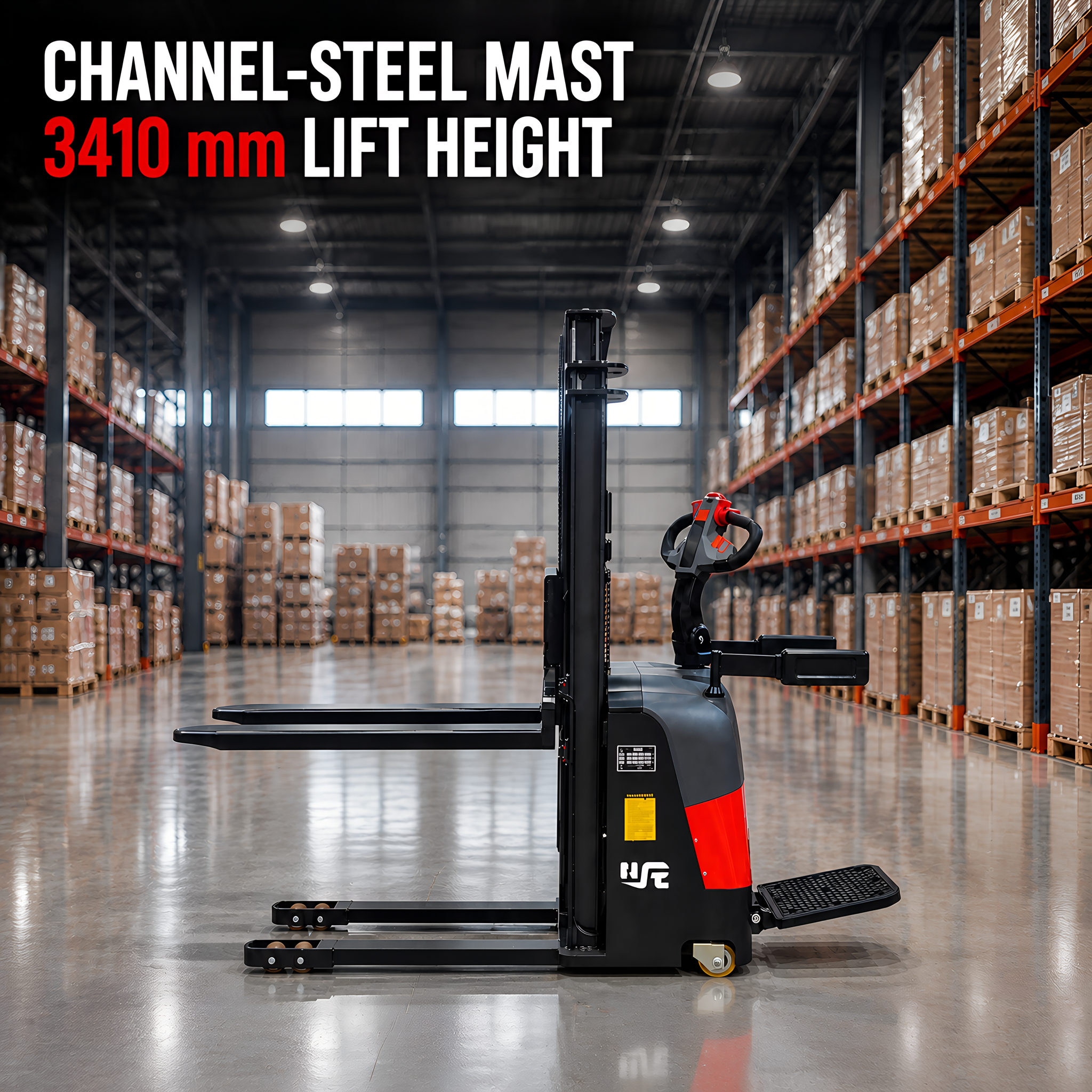
ML20AP Stand on Electric Stacker 2000kg 3410mm Max Lift 1478mm Turning Radius 820mm Body Width
A narrower-body stand-on stacker with up to 3,410 mm lift and a 1,478 mm turning radius. The 820 mm body width makes it relevant for compact warehouses and high-density pallet storage. Verify residual capacity at your load center and any attachment.
View model details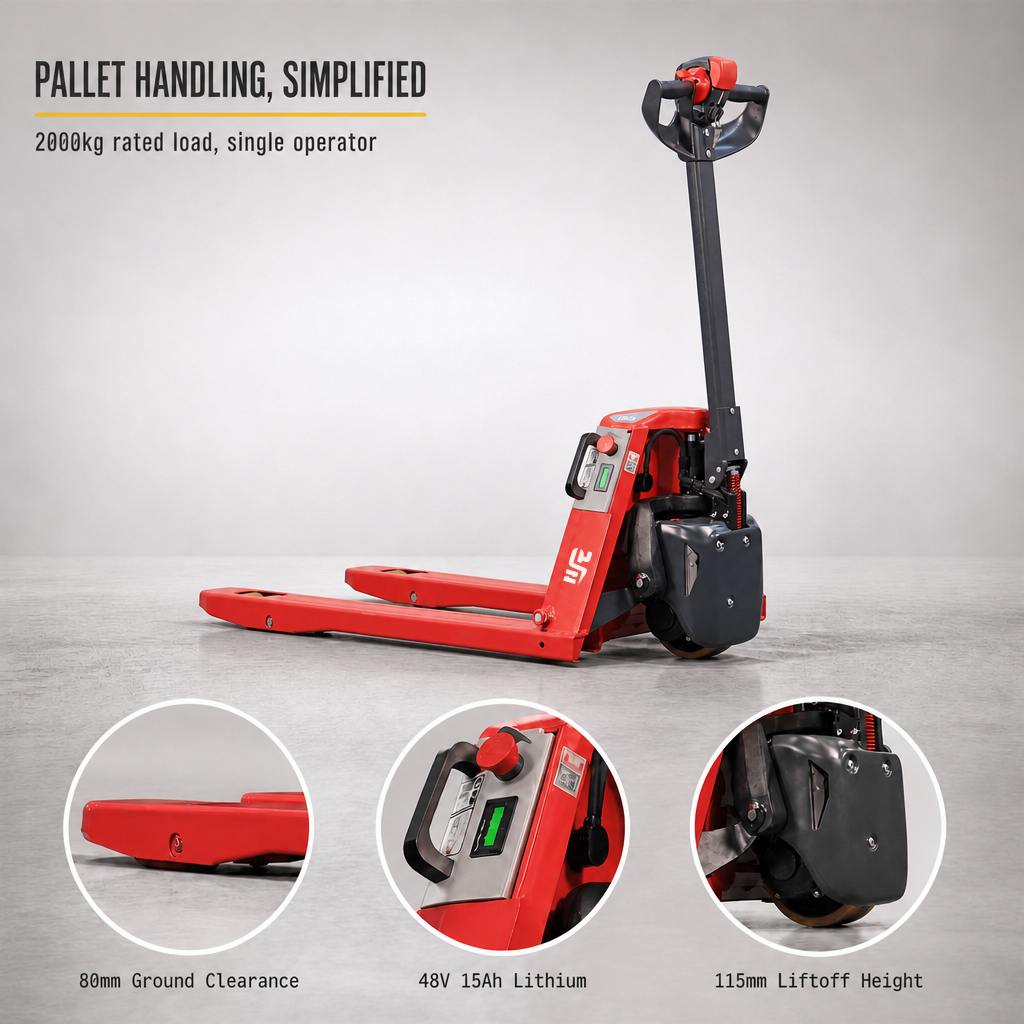
NB20L01LD 2000kg Electric Pallet Truck Lithium Battery 4.8km/h Speed 1245mm Turning Radius Jack
A 2,000 kg lithium pallet truck with 4.8 km/h travel speed and a 1,245 mm turning radius. It suits fast dock-to-stock loops, retail backrooms and trailer work where maneuverability is the limiting factor rather than high racking height.
View model detailsWhich Pallet Lift Truck Fits Your Indianapolis Workflow?
Use this short selection matrix as a first filter. The final specification should always be confirmed against the actual pallet, rack, floor and charging conditions.
Trailer unloading and fast stock moves
Choose a walkie pallet truck such as the 1,500/2,000 kg lithium electric pallet jack or the NB20L01LD with a 1,245 mm turning radius. Measure dock plate slope, trailer floor transitions and the number of turns between receiving and storage. Operator speed and battery opportunity charging matter more than maximum lift height.
Medium-height racking and replenishment
Use a stand-on electric stacker where aisles are tight and pallets are stacked regularly. The ML20AP 2000 kg series offers a 1,478 mm turning radius, 820 mm body width and up to 3,410 mm lift. Do not confuse maximum lift with safe working lift: rack beam clearance, overhead lights and sprinkler lines must be checked.
Freezer rooms and temperature-controlled transfers
For cold storage, start with the -20°C electric lithium pallet truck. Confirm how long the truck works inside the freezer, where it charges, how condensation is managed and whether the battery is exposed to rapid temperature cycling. A cold-storage truck should be matched to a charging routine, not simply ordered and left on a standard dock charger.
Building-material, retail and wholesale yards
Building-material shops often need low fork entry, stable lifting and compact handling. The 90 mm lowered fork height and channel steel mast of the 2,000 kg electric pallet stacker support repeated high-rack stacking. Where the yard is exposed to rain, snow or salt, specify outdoor expectations clearly and add tire, brake and electrical checks to the maintenance plan.
Where Pallet Lift Trucks Improve Daily Productivity in Indianapolis
Indianapolis buyers rarely need one universal truck. Distribution centers, cold-chain operators, manufacturers and building-material suppliers usually need a small fleet of complementary equipment.
3PL and cross-dock operations
Dock doors turn over quickly. Pallet trucks reduce dwell time between unloading, staging and put-away. In a multi-customer 3PL, standardizing on common battery and charger types can simplify training and spare parts, while a small number of compact stackers handle overflow racking.
Recommended: walkie pallet trucks + stand-on stackersE-commerce and retail fulfillment
Fast-moving SKUs create constant replenishment tasks. A lithium pallet truck can move pallets from receiving to pick faces, while a stand-on stacker places reserve stock in racking. Narrow backrooms and trailer tailgates make turning radius and battery position important ergonomic details.
Recommended: NB20L01LD + ML20AP stackersFood, beverage and cold chain
Zero-emission electric pallet trucks support indoor air quality and low-noise work near freezer doors. For -20°C environments, the cold-storage model should be paired with a disciplined charging plan. Buyers should also check washdown practices, floor drainage and condensation risks around electrical components.
Recommended: cold-storage electric pallet jackManufacturing and line-side supply
Indianapolis manufacturing operations often move palletized components from receiving to line-side staging. A 2,000 kg electric stacker can lift and position loads at ergonomic heights, reducing manual handling. For repetitive fixed routes, document the path and consider whether automation readiness should be part of the next fleet plan.
Recommended: 2,000 kg stand-on electric stackerBuilding-material and home-improvement yards
Pallets of brick, tile, lumber-related products and packaged goods require stable lifting and secure placement. The 90 mm lowered fork height helps with low-clearance pallets, while a channel steel mast supports repetitive high-rack stacking. Confirm load center when handling dense materials.
Recommended: channel steel mast pallet stackerWholesale backrooms and retail stores
Retail and wholesale backrooms often combine narrow doors, ramps, stockroom turns and mixed floor surfaces. A compact pallet truck with a tight turning radius may be more useful than a larger stacker. Where overhead storage exists, a stand-on stacker should be sized to the lowest ceiling and sprinkler clearance.
Recommended: compact lithium pallet truckIndianapolis Market Trends Shaping Pallet Lift Truck Procurement
Three practical trends are changing how distributors and fleet managers evaluate electric pallet lift trucks in the Indianapolis market.
Warehouse densification and narrow-aisle planning
As warehouse space is planned more tightly, pallet lift trucks are being selected around aisle width, turning radius and racking height rather than only load capacity. The 820 mm body width, 1,245 mm turning radius and 1,478 mm turning radius figures in the models above show why spec sheets need to be read together with a site layout. A truck that fits a standard aisle may still fail at a column, door frame or dock transition.
Lithium batteries and opportunity charging
Lithium pallet trucks are increasingly evaluated for opportunity charging during breaks and shift changes. This can reduce battery swapping and simplify fleet management, but it depends on charger access, electrical capacity and operator discipline. In winter, charging in a cold dock or outdoor enclosure can affect performance; a conditioned charging area is usually easier to manage than repeated deep discharges.
Labor, safety and automation readiness
Training time, operator confidence and injury risk are central procurement criteria. Ergonomic controls, clear visibility, stable lifting and predictable braking help reduce avoidable incidents. For repetitive routes, buyers are also asking whether the pallet lift truck platform can later connect to telematics or automated guided vehicle planning. Start with a safe manual workflow, then document the route and data requirements before automating.
Specification Details That Change the Buying Decision
A 2,000 kg rating is only the beginning. These four technical details often determine whether a pallet lift truck performs well or becomes a daily constraint.
Capacity and load center
Capacity must be read at the stated load center. Long forks, non-standard pallets and attachments can reduce safe working capacity. Confirm the heaviest pallet, its depth and how far the center of gravity sits from the fork heel.
Aisle width and turning radius
Turning radius and body width affect aisle planning. The ML20AP models list a 1,478 mm turning radius and 820 mm body width, while the NB20L01LD lists a 1,245 mm turning radius. Add clearance for the operator, rack uprights, door frames and floor markings.
Lift height and fork entry
Lowered fork height and maximum lift solve different problems. A 90 mm lowered fork height helps enter low-clearance pallets, while 3,410 mm maximum lift supports high-rack stacking. Check collapsed mast height, overhead obstructions and residual capacity at height.
Battery and temperature strategy
The cold-storage electric pallet jack is rated for -20°C work with a 48V lithium battery. Charging location, condensation, operator gloves and the ratio of freezer time to ambient time should all be discussed before the model is finalized.
Illustrative decision weighting for a warehouse review
This is a planning example, not a performance claim. Use it to structure a buying committee discussion before requesting a formal quote.
Total cost of ownership improves when capacity, battery routine, maintenance access and operator training are considered together.
Five questions that improve quote accuracy
- What is the heaviest pallet, and what is the load center?
- What is the narrowest aisle and the highest rack beam?
- How many hours per shift will the truck actually move?
- Where will it charge, and what voltage is available?
- Which spare parts and training support are needed at start-up?
Buyers who provide these details usually receive a more useful configuration and a clearer freight plan.
Why Wholesale Buyers Work With Xiamen Pexal Technology Co., Ltd.
Xiamen Pexal Technology Co., Ltd. was founded in Xiamen, Fujian in 2024 as the sales, service and technical support base for Pexal material handling equipment. We work with a partner manufacturing campus and support distributors, rental companies and end users with electric pallet trucks, stackers, forklifts and warehouse equipment.

Partner manufacturing scale
A 220,000 m² partner production campus, more than 1,200 employees and over 100 R&D engineers support electric warehouse equipment development and volume orders.
SGS-assessed supplier
Our company has passed an onsite check and supplier assessment conducted by SGS Group. Buyers can review verification records, credit index, trade capacity and trade history before ordering.
OEM, ODM and customization
Sample-based customization, full customization and ODM services are available, including mast height, fork length, battery type, color, logo and attachment configuration for your market.
Export logistics and trade support
We support common delivery terms from EXW to DDP, multiple payment methods and export packaging. For Indianapolis buyers, our team can coordinate model selection, documentation and freight planning with your importer or dealer.
Delivery terms
Payment methods
Currencies
Questions Local Buyers Ask Before Ordering a Pallet Lift Truck
These answers are written for importers, distributors, 3PL operators and fleet managers comparing electric pallet lift trucks for the Indianapolis market.
Are you a local Indianapolis dealer or an overseas wholesaler?
Xiamen Pexal Technology Co., Ltd. is a China-based material handling supplier working with wholesale buyers, dealers and end users. For the Indianapolis market, we support product selection, OEM/ODM configuration, export documentation and freight planning. Buyers should confirm whether they need local dealer stock, direct import or a hybrid supply plan.
How do I choose between a pallet jack and a pallet stacker?
Choose a pallet jack for horizontal transport, trailer unloading and dock-to-stock moves where lifting to racking is not required. Choose a pallet stacker when the task includes lifting, lowering or placing pallets at height. If the truck must do both, confirm the required lift height, aisle width and load center before selecting a stand-on stacker.
What lead time should I plan for delivery to Indianapolis?
Lead time depends on the model, battery, charger, customization and shipping method. Production scheduling, ocean or rail freight, customs clearance and final trucking all affect the total. The most reliable approach is to confirm quantity, configuration and Incoterm first, then request a written schedule with the quotation.
Can the equipment handle Indianapolis winter conditions and cold storage?
For freezer rooms and -20°C work, specify the cold-storage electric pallet jack and discuss charging location, condensation and battery management. For outdoor yards exposed to snow, ice and salt, confirm the truck's intended use, tire condition, braking performance and daily inspection routine. Lithium batteries generally prefer a conditioned charging area rather than repeated charging in freezing conditions.
What charging infrastructure is needed for lithium pallet trucks?
Charging requirements vary by model and market. Before ordering, confirm available voltage, circuit capacity, charger type, charging location and whether opportunity charging will be used. Involve a qualified electrician and follow the final product documentation. A charger that works in one facility may not be suitable for a cold dock or an outdoor enclosure.
Do you offer OEM/ODM, spare parts and dealer support?
Yes. We support sample-based customization, full customization and ODM services, including mast height, fork length, battery type, color, logo and attachments. Wholesale buyers can also discuss mixed-model orders, spare parts planning, product documentation and training materials for their market.
Which Incoterms and payment methods are available?
Common delivery terms include FOB, CFR, CIF, EXW, FCA, CPT, CIP and DDP. Payment methods include T/T, L/C, D/P, D/A, Western Union, MoneyGram, PayPal, credit card and escrow. Accepted currencies include USD, EUR, GBP, JPY, CAD, AUD, HKD, CHF and CNY. Confirm the final terms in your quotation.
How do I verify safety and compliance for my site?
Use a site-specific risk assessment, operator training, load testing and local code review. In the United States, buyers should verify applicable OSHA requirements, ANSI standards and internal safety policies. Product documentation and configuration support help procurement, but the buyer remains responsible for confirming that the equipment and work practices meet the requirements of the actual facility.
Request an Indianapolis-Specific Pallet Lift Truck Recommendation
Share your maximum pallet weight, aisle width, required lift height, temperature range, floor condition, charging voltage and target quantity. Our team will propose a model, battery and charger configuration, then outline the wholesale and export path to your Indianapolis operation. Email: info@pexalbot.com.
Inquire Now