Pallet Handling Equipment Manufacturers & Exporters for the Philadelphia Market
Lithium electric pallet trucks, ultra-light walkie jacks and stand-on electric stackers configured for Philadelphia warehouses, food distribution, life sciences, building-material yards and port-adjacent logistics.
8 Pallet Handling Equipment Recommendations for Philadelphia Buyers
These eight models are presented as a practical shortlist rather than a catalog dump. Each item is matched to a Philadelphia-area operating constraint: dense urban receiving, narrow-aisle racking, cold-chain distribution, retail backroom handling, loading-dock pallet flow or a mixed dealer fleet.
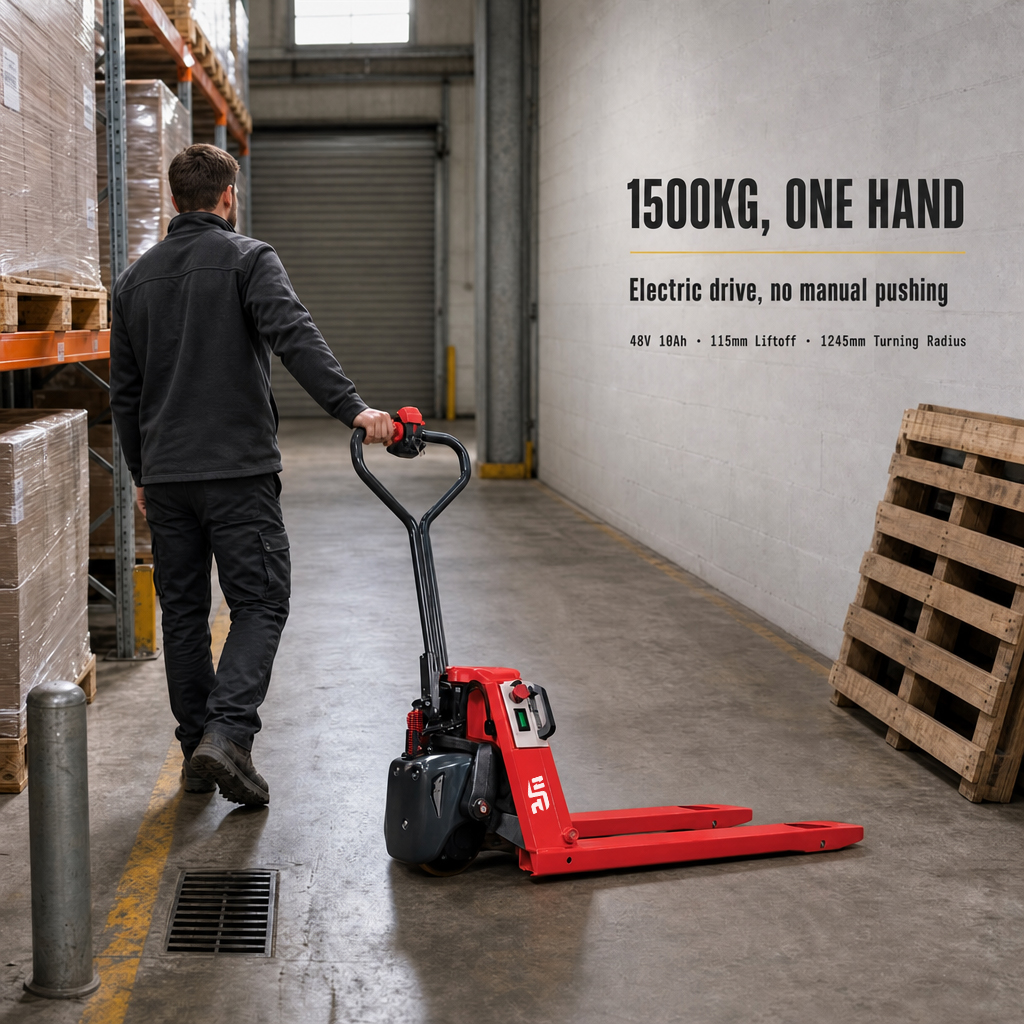
Electric Pallet Truck for Distribution Center Workshop Supermarket Pallet Handling 1500kg Lithium Battery Walkie Jack
For Center City supermarkets, mixed dock traffic, workshops and distribution centers where pallets move horizontally between receiving, staging and pick zones. The 1,500 kg lithium walkie jack is a practical first step away from manual pallet pumps.
- 1,500 kg
- Lithium battery
- Walkie format
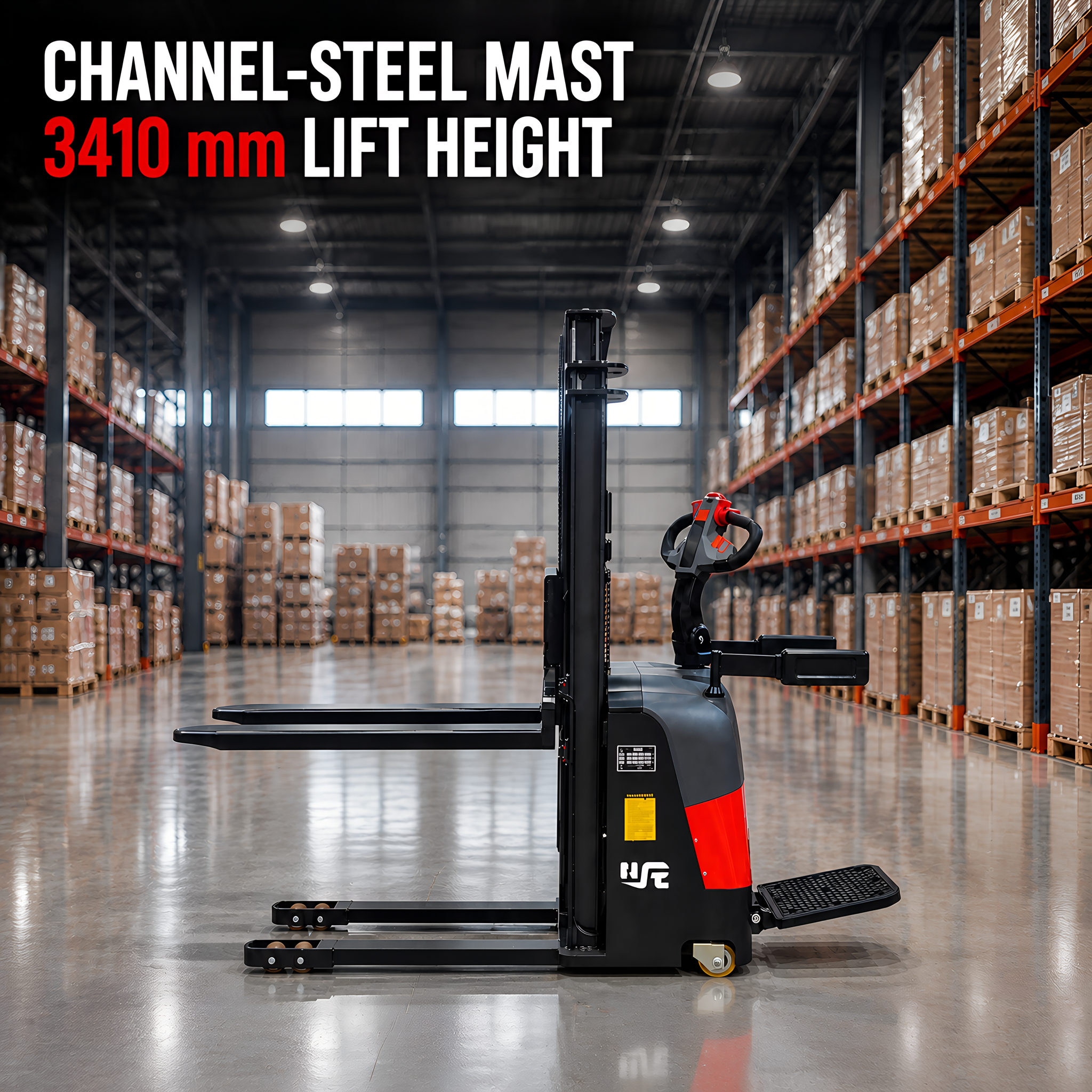
ML20AP Stand on Electric Stacker 2000kg 3410mm Max Lift 1478mm Turning Radius 820mm Body Width
A strong fit for South Jersey 3PLs and Delaware Valley food warehouses that need high racking but cannot sacrifice turning space. The 3,410 mm lift, 1,478 mm turning radius and 820 mm body width make this stand-on stacker easier to place in existing aisle layouts.
- 2,000 kg
- 3,410 mm lift
- 1,478 mm turning radius
- 820 mm width
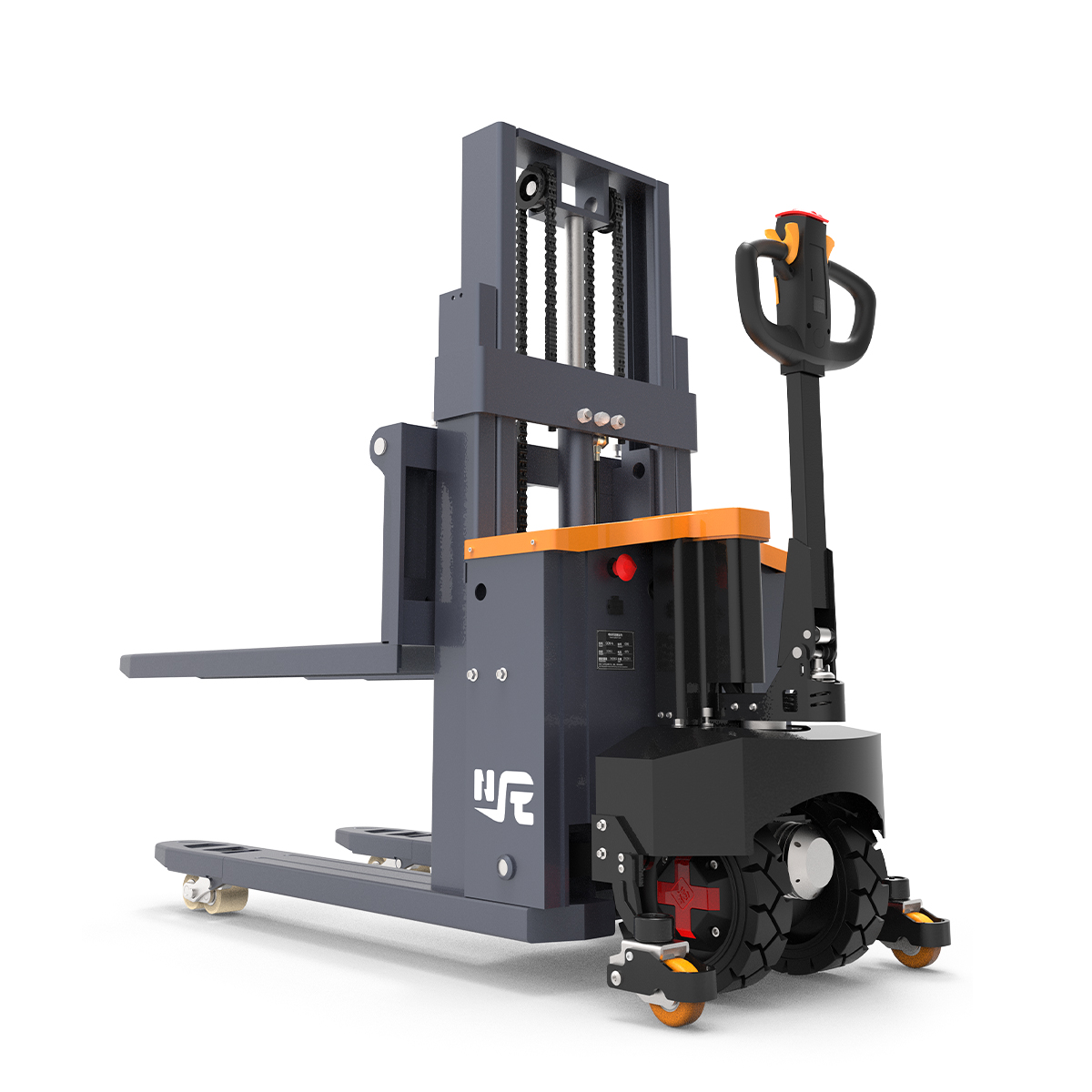
1500kg 2000kg Electric Stacker Pallet Stacker Truck 1.6m 3m Lift Height Warehouse Material Handling Equipment
For buyers who need one stacker family to cover low-to-medium racking and general warehouse material handling. The 1.6 m and 3 m lift-height options let procurement standardize parts while matching different rack levels.
- 1,500 / 2,000 kg
- 1.6 m / 3 m lift
- Warehouse handling
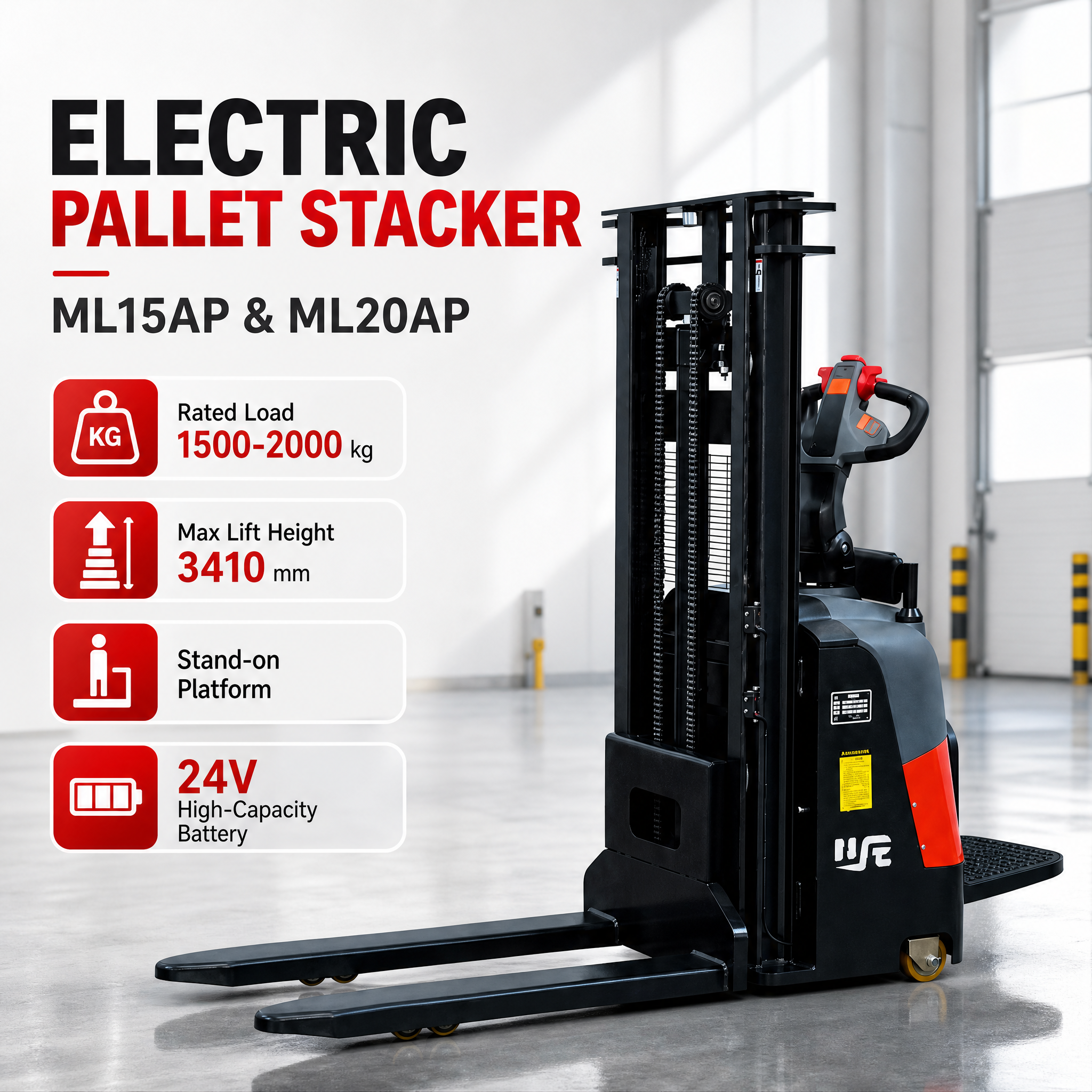
Stand on Electric Stacker 2000kg Centre Mounted Drive Twin Balance Wheels Stable High Racking Stacking
The centre-mounted drive and twin balance wheels make this 2,000 kg stand-on stacker suitable for stable high racking in busy facilities. It suits operations where driver confidence and load stability matter more than maximum travel speed.
- 2,000 kg
- Centre-mounted drive
- Twin balance wheels
- High racking
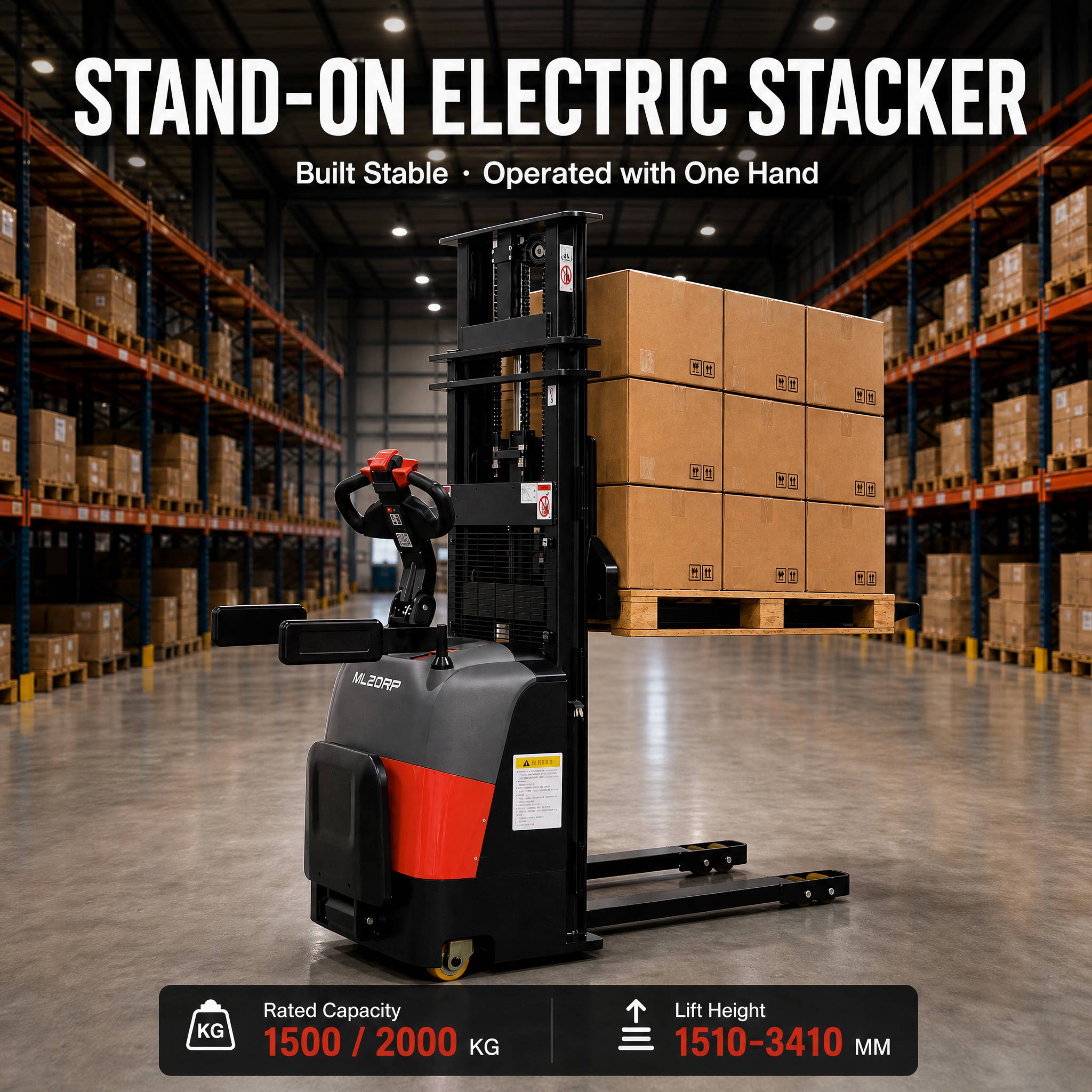
Channel Steel Mast Electric Pallet Stacker 2000kg 90mm Lowered Fork Height Stable High Rack Stacking
A channel steel mast platform for high-rack stacking, with a 90 mm lowered fork height that helps entry into standard pallets and low-clearance positions. A good match for building-material shops and dense racking where precise approach matters.
- 2,000 kg
- 90 mm lowered fork
- Channel steel mast
- High-rack stacking

2026 New Alternative Convertidor De Palet Jack a Electrico Ultra-Lightweight 107kg Electric Pallet Jack with Lithium Power
The 107 kg lithium power unit is positioned for urban retail, micro-fulfillment and small delivery operations that want a lighter, more compact alternative shaped by the classic “convertidor de palet” search intent. It is best where a full-size pallet truck is unnecessary.
- 107 kg
- Lithium power
- Ultra-lightweight
- Compact handling
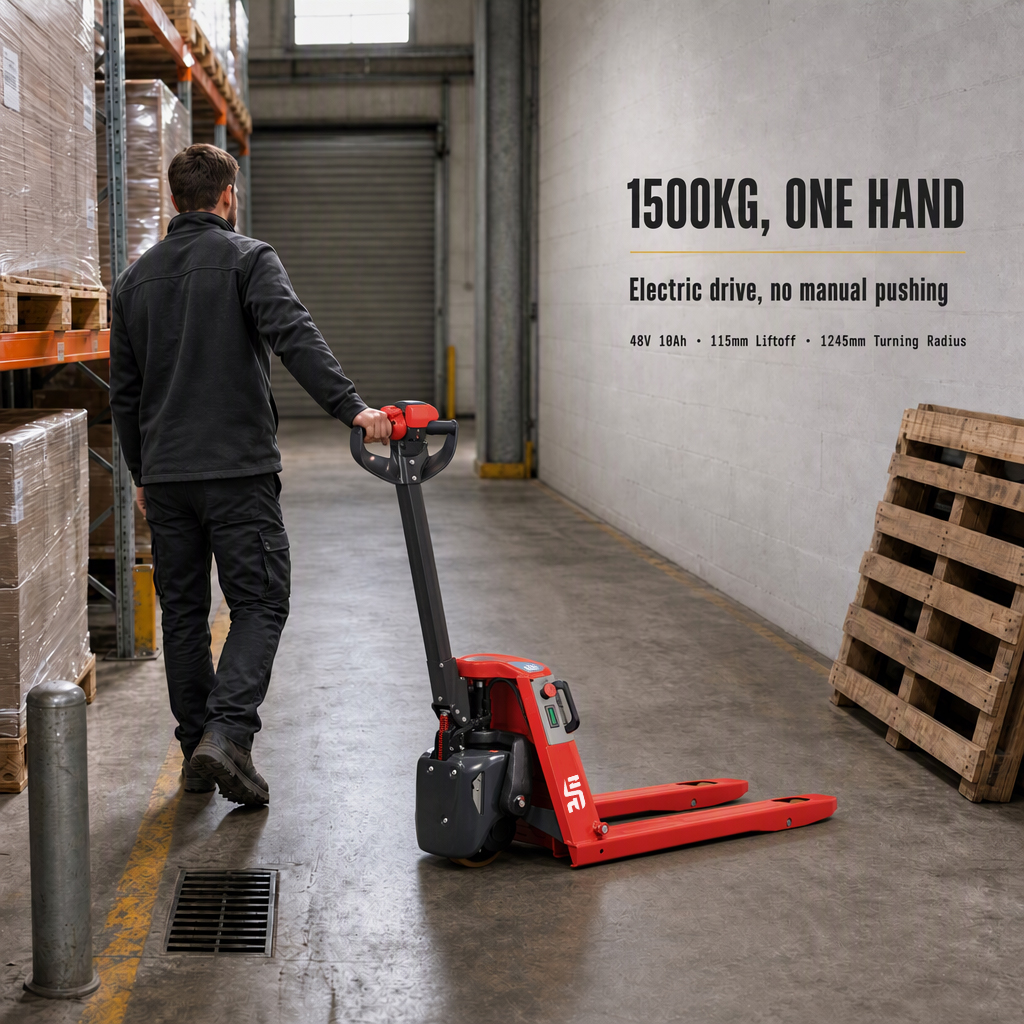
1.5 Ton Electric Pallet Truck with 48V Li-ion Battery, 107kg Ultra-lightweight Pallet Jack for Narrow Aisle Warehouse
A 1.5-ton, 48V Li-ion pallet truck for narrow-aisle warehouses and mixed fleets. The 107 kg ultra-lightweight chassis helps reduce operator fatigue while the lithium battery supports opportunity charging between shifts.
- 1.5 ton
- 48V Li-ion
- 107 kg
- Narrow aisle

Stand on Electric Stacker 2000kg for Narrow Aisle Warehouse Loading Dock Building Material Shop Pallet Handling
A 2,000 kg stand-on stacker for narrow-aisle warehouses, loading docks and building-material shops. It is recommended when dock congestion, pallet flow and repeated loading must be handled by one operator-controlled unit.
- 2,000 kg
- Narrow aisle
- Loading dock
- Building material shop
What Philadelphia-Area Buyers Actually Need to Solve
Philadelphia is not a single warehouse market. The Delaware Valley combines the Port of Philadelphia, Philadelphia International Airport, the I-95 and I-76 corridors, South Jersey distribution parks and a dense network of older urban buildings. Procurement teams may be fitting equipment into a new high-bay facility in one county and a low-clearance backroom in another.
That is why generic pallet-handling copy underperforms. A Philadelphia buyer searching for electric pallet truck Philadelphia, lithium pallet jack near me, stand-on stacker for narrow aisle or warehouse pallet handling equipment supplier is usually trying to match three variables: pallet weight, available aisle space and power/charging reality. A fourth variable—documentation and after-sales confidence—decides whether the order proceeds.
Information gain matters here. A manufacturer or exporter earns trust by explaining why a 1,500 kg walkie jack may be better than a rider truck in a supermarket backroom, why a 3,410 mm stand-on stacker may fit a South Jersey 3PL aisle, or how charger voltage and spare-parts planning affect total cost. The recommendations above are structured around those decisions.
Relative Application Fit — Philadelphia Use Cases

Xiamen Pexal Technology Co., Ltd. works with a partner manufacturing campus and provides export-facing sales, service and technical support.
Where These Pallet Handling Trucks Fit in Greater Philadelphia
The same 2,000 kg stacker can be right for one site and wrong for another. These application modules show how Philadelphia-area buyers typically translate operating conditions into equipment choices.
Food Distribution & Cold Chain
Philadelphia’s food distributors and cold-chain operators need clean, quiet equipment inside coolers, freezers and cross-dock areas. Electric pallet trucks reduce local emissions during receiving, while stand-on stackers support rack replenishment. Cold-store use must be specified at quotation so battery, charger placement and duty cycle are confirmed.
Life Sciences & Pharma Support
Life-science buildings often combine tight corridors, strict cleanliness expectations and heavy documentation. A compact electric pallet jack for material transfer plus a 2,000 kg stand-on stacker for components can keep pallet movement predictable without introducing diesel emissions indoors.
Urban 3PL & E-Commerce
Dense fulfillment centers around Philadelphia and South Jersey live on throughput. Narrow turning radii, stand-on stackers and lightweight pallet jacks reduce congestion during receiving, put-away and dispatch. Opportunity charging fits break-window charging better than overnight-only lead-acid routines in multi-shift sites.
Supermarkets & Retail Backrooms
In retail, the backroom is often the constraint, not the pallet weight. The 1,500 kg lithium walkie jack and the 107 kg ultra-light electric pallet jack give store teams compact tools for delivery intake, sales-floor replenishment and seasonal pallet moves without tying up a full-size forklift.
Building Materials & Hardware
A 2,000 kg stand-on stacker with stable high-racking geometry supports lumber, hardware and building-material yards where pallets may sit near loading docks or on imperfect floors. Confirm floor condition, fork length and overhead clearance before selection; the 90 mm lowered fork height can matter in low-entry positions.
Port-Adjacent Warehouses & Docks
Port of Philadelphia and I-95 distribution sites prioritize fast turnaround and simple maintenance. Mixed fleets can use lithium pallet trucks for horizontal transfer and 2,000 kg stackers for racking, with charger placement, spare-parts planning and operator training treated as part of the purchase rather than an afterthought.
Three Trends Reshaping Pallet Handling Procurement in Philadelphia
These are not abstract industry slogans. They directly change the questions buyers ask, the options they shortlist and the documentation they request before placing a container order.
Lithium Is Becoming an Operating Strategy
Philadelphia-area operators increasingly treat lithium not as a premium add-on but as a way to simplify charging. Opportunity charging during breaks, lower maintenance and steady power delivery can matter more than a headline battery capacity. For multi-shift 3PLs, the practical question is where chargers can be placed safely and how many units share each circuit.
Space Density Is Reshaping Equipment Choice
Older urban buildings and high-cost South Jersey warehouse space push buyers toward compact equipment. A stand-on stacker with a 1,478 mm turning radius and 820 mm body width can be more valuable than a larger counterbalance truck if existing racking cannot be moved. Narrow-aisle performance is now a first-order procurement criterion.
Safety and Documentation Are Part of the Product
U.S. buyers commonly reference OSHA 1910.178 operator training and ANSI/ITSDF B56.1 practices when evaluating warehouse equipment. That does not replace local engineering review, but it changes supplier expectations: clear manuals, spare-parts lists, charger specifications and traceable product data are increasingly part of the buying decision.
How to Match a Pallet Handling Truck to a Philadelphia Operation
Use this matrix as a shortlisting aid, then confirm load center, floor condition, overhead clearance and electrical requirements with your site team before finalizing the order.
Map the Load
Confirm maximum pallet weight, pallet type, load center and whether the unit lifts to racking or only moves horizontally.
Measure the Site
Record aisle width, top rack level, door height, dock slope, floor joints and overhead obstructions.
Confirm Power
Define charger voltage, phase, plug type, charging location and daily duty cycle before comparing battery options.
Verify Documents
List required manuals, component documentation, spare-parts expectations and operator-training responsibilities.
Why Pexal Fits a Philadelphia Procurement File
Xiamen Pexal Technology Co., Ltd. was founded in Xiamen, Fujian in 2024 as the sales, service and technical support base for Pexal material handling equipment. It works with a 220,000 m² partner manufacturing campus employing more than 1,200 people, including a team of more than 100 engineers dedicated to electric warehouse equipment.
The product portfolio covers electric forklifts, pallet trucks, pallet stackers, reach trucks, order pickers and automated guided forklifts. For a Philadelphia buyer, that range matters because a single container or dealer program may need more than one equipment type—horizontal pallet transfer, high-rack stacking and future automation planning.
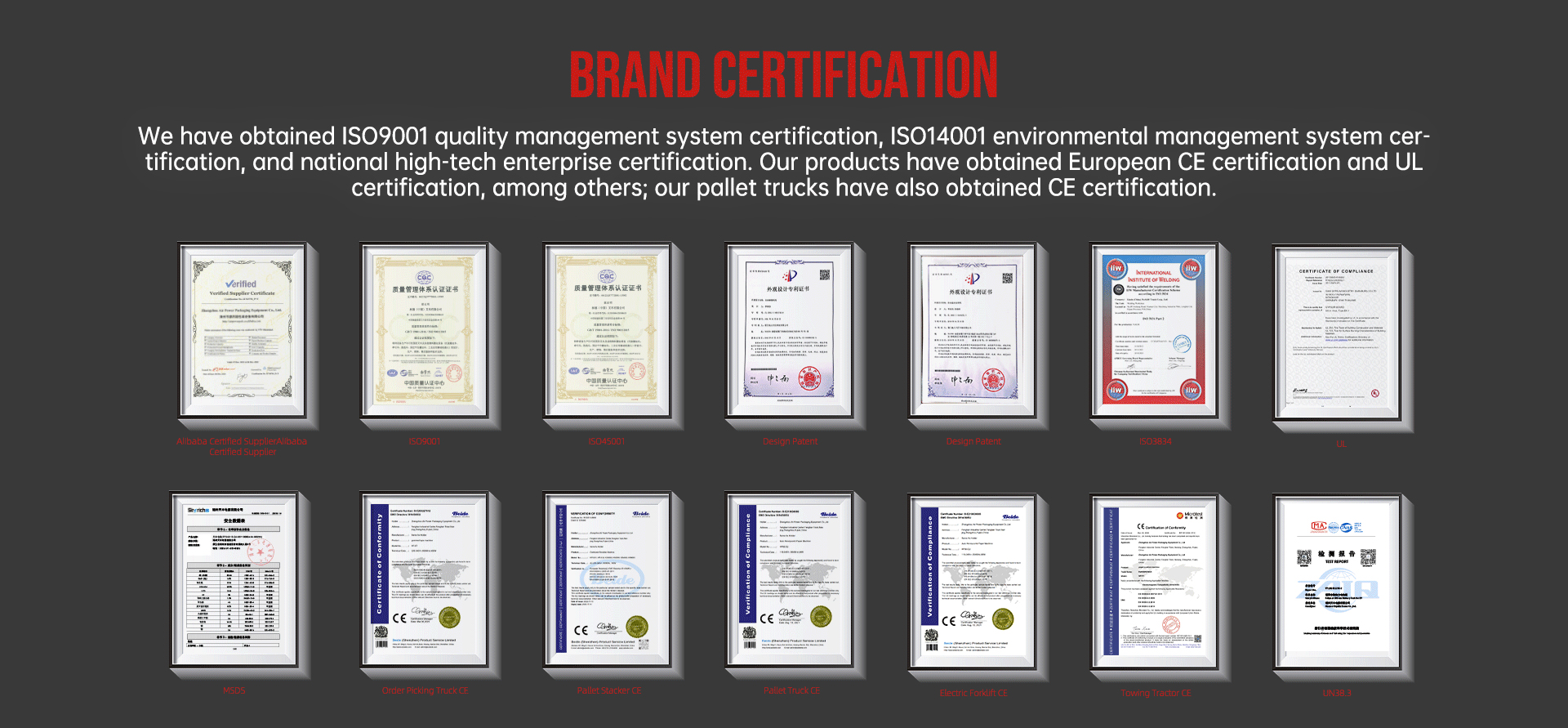
Trust signals are presented for review: an SGS-assessed supplier profile, onsite check records, credit index, trade history and a verified company video. OEM/ODM and sample-based customization are available, including mast height, fork length, battery type, color, logo and attachment configuration. Export terms and payment methods can be aligned to the buyer’s finance and logistics process.

Partner Campus Scale
A 220,000 m² manufacturing base supports container orders, recurring dealer stock and mixed product programs.
Engineering Depth
More than 100 R&D engineers focus on electric drive, warehouse trucks and intelligent material handling.
Third-Party Verification
SGS onsite assessment, supplier assessment records and a verified video help buyers reduce supplier uncertainty.
OEM / ODM Flexibility
Mast height, forks, battery, color, logo and attachments can be configured for dealer and end-user programs.
Common Local Procurement Questions Answered Directly
These are the questions that most often appear when a U.S. buyer moves from browsing pallet trucks to requesting a configured quotation.
Are you a manufacturer or an export trading company?+
How are pallet trucks and stackers shipped to Philadelphia?+
What charger voltage should we specify for the Philadelphia area?+
Are lithium electric pallet jacks suitable for cold storage in Philadelphia?+
What compliance documentation can be provided?+
Can we customize mast height, forks, battery, color or branding for a dealer program?+
What support is available after the first container order?+
Send Your Load, Aisle and Dock Data for a Philadelphia-Specific Recommendation
Share pallet weight, rack height, aisle width, charger voltage and target delivery window. The Pexal team will map the eight recommended models above into a practical configuration shortlist for your facility, dealer program or mixed fleet.