Narrow Aisle Reach Truck Supplier & Exporters in the Monterrey Market
A procurement-focused guide for Monterrey warehouses, 3PLs, automotive suppliers and importers comparing reach-truck strategies, electric pallet jacks and stand-on stackers from an SGS-assessed supply base.
Eight Warehouse Trucks for Monterrey Operations
For Monterrey buyers, a narrow aisle reach truck project rarely stands alone. Docks need pallet jacks, medium-height racking needs stackers, and cold or high-turnover zones need reliable battery-powered support. These eight models cover the horizontal transport and stacking tasks that surround a reach-truck fleet.
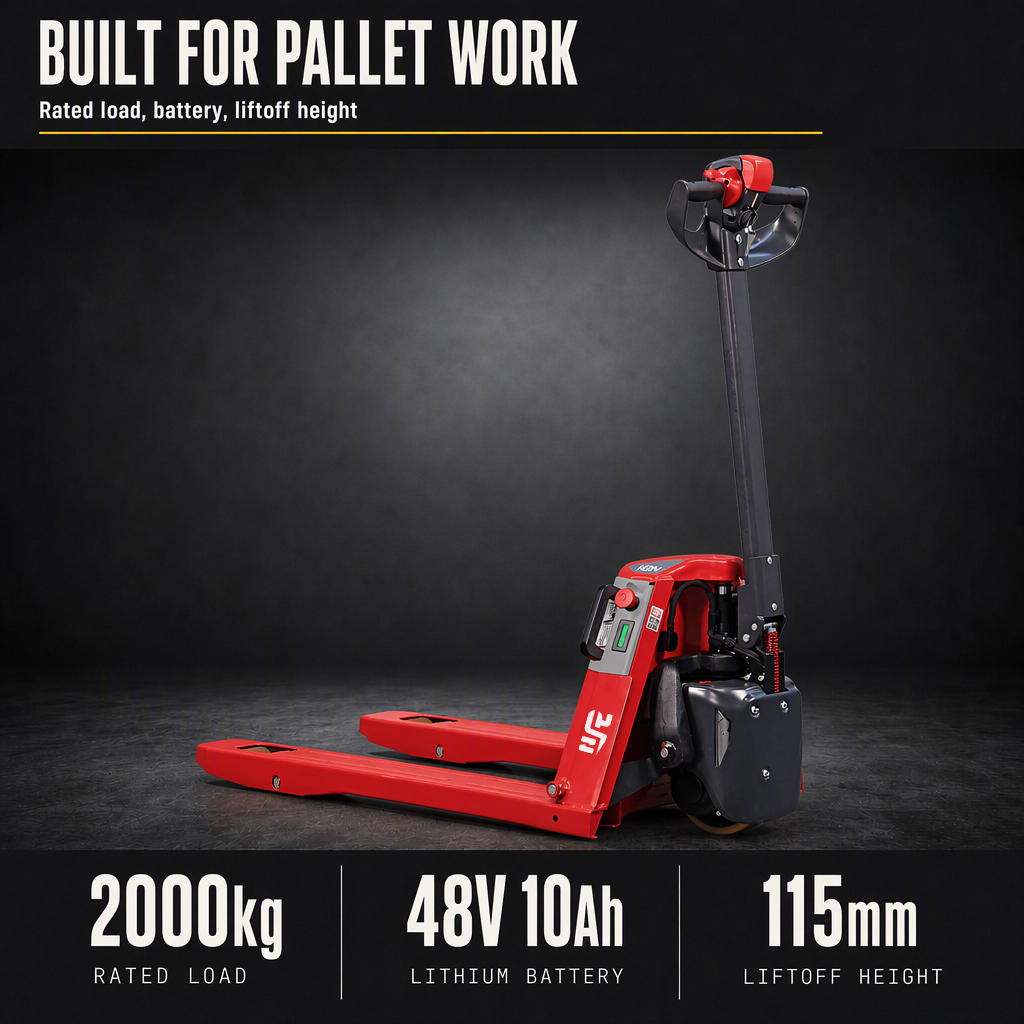
Professional Electric Pallet Jack 2 Ton 2000kg Capacity Heavy Duty Power Pallet Truck
Easy-control power pallet truck for dock turns, trailer unloading, dense staging lanes and repetitive horizontal moves where durability matters.
View product
Efficient 2 Ton Electric Pallet Jack 2000kg Capacity for Logistics Centers
A practical material handling solution for cross-docking, dispatch lanes and high-frequency pallet movement in 3PL and fulfillment sites.
View product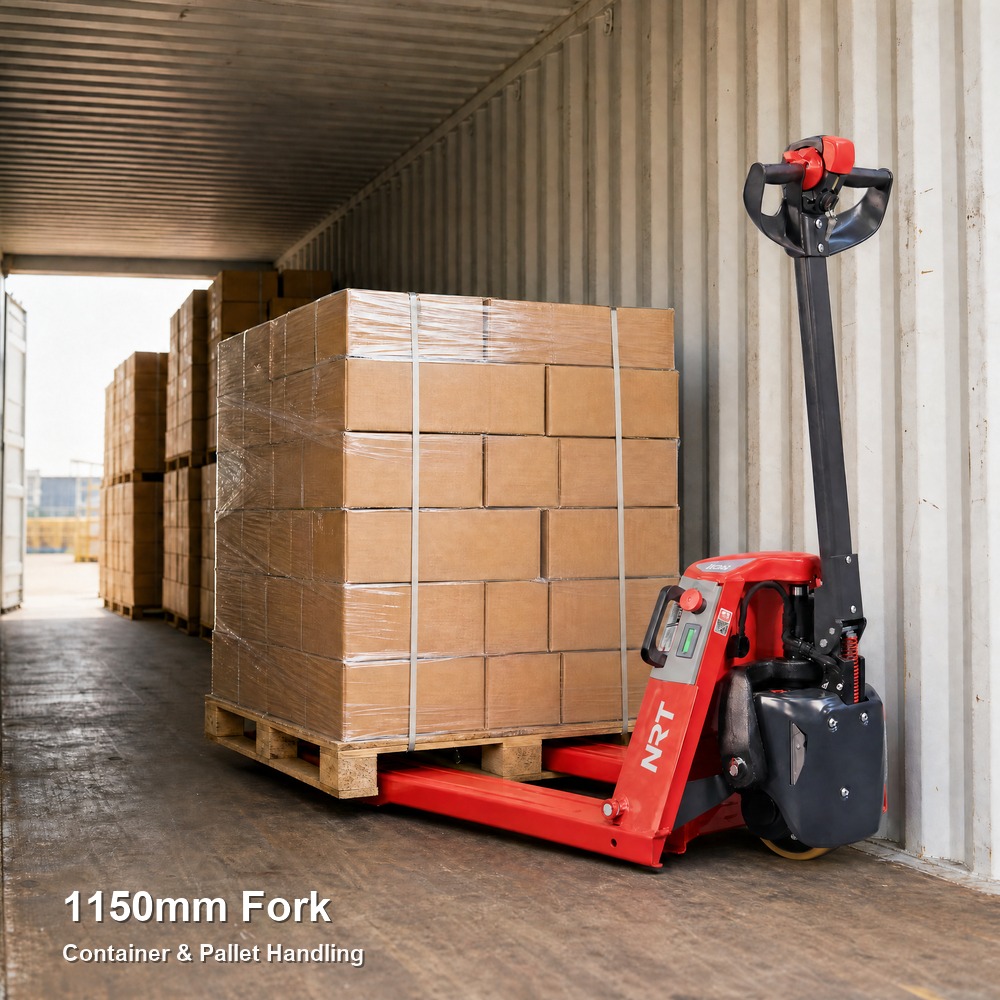
Walkie Electric Pallet Jack 1500kg Fork 1150mm Pallet Truck Battery Powered
Compact battery-powered walkie truck for container unloading, shop-floor replenishment and retail backroom handling.
View product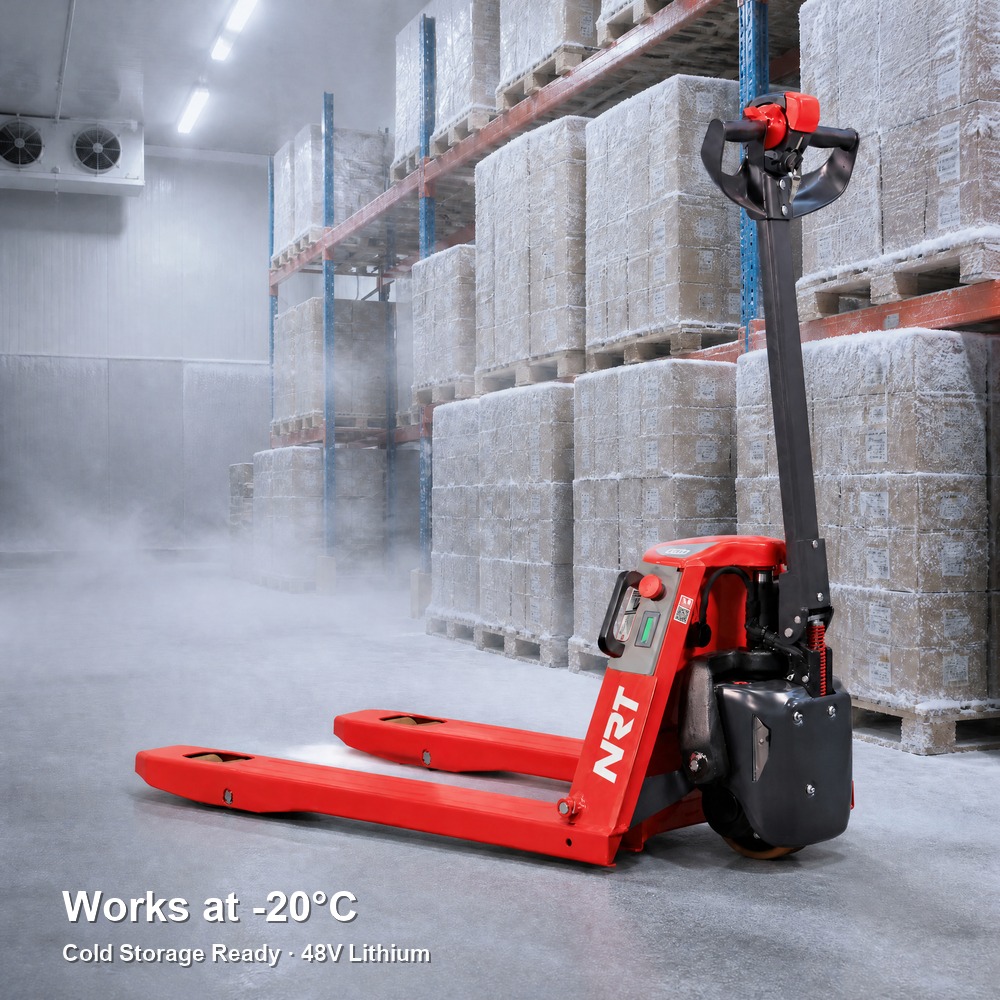
Electric Pallet Jack 2000kg with 48V Lithium Battery and Slim Body
Designed around fast battery swap, a slim body and climbing capability for cold-chain environments and tight warehouse corners.
View product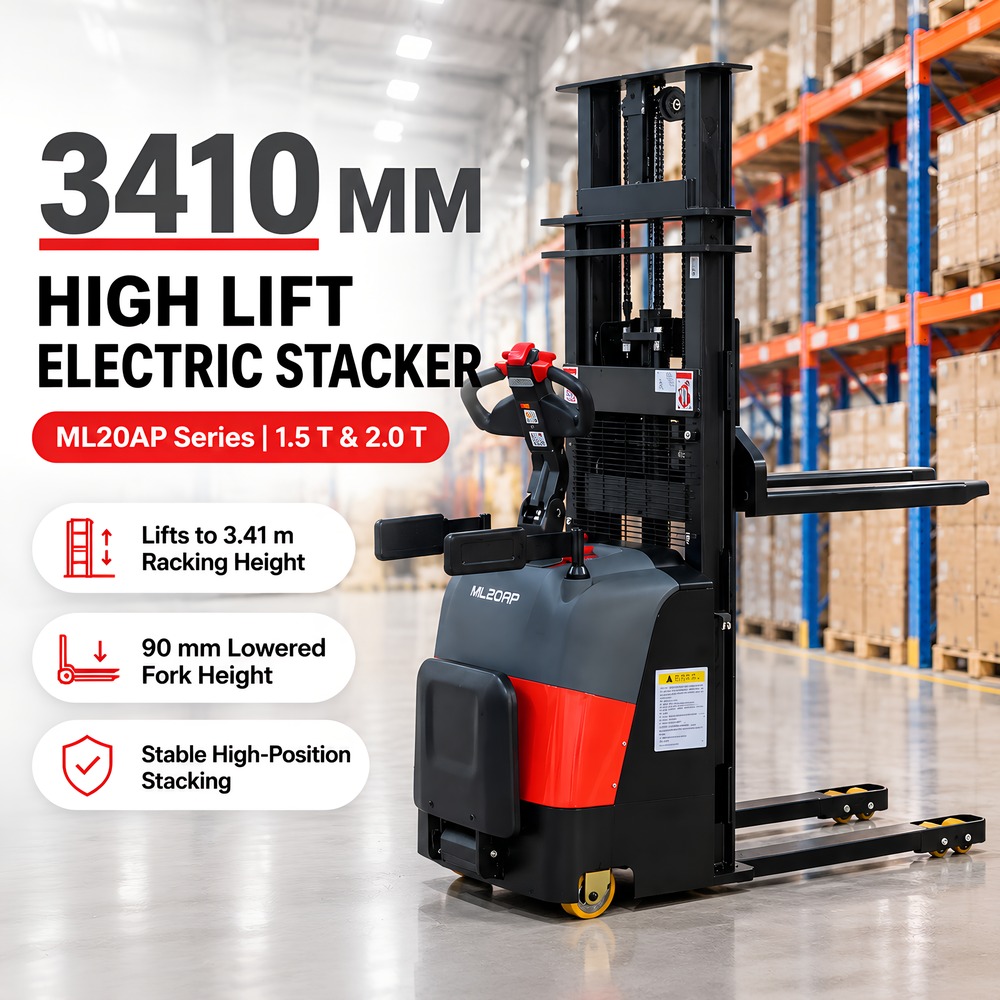
ML20AP Stand on Electric Stacker Truck 2000kg for Narrow Aisle Loading Docks
Stand-on stacker for loading docks, building material shops and medium-height racking where a full counterbalance forklift is not the best fit.
View product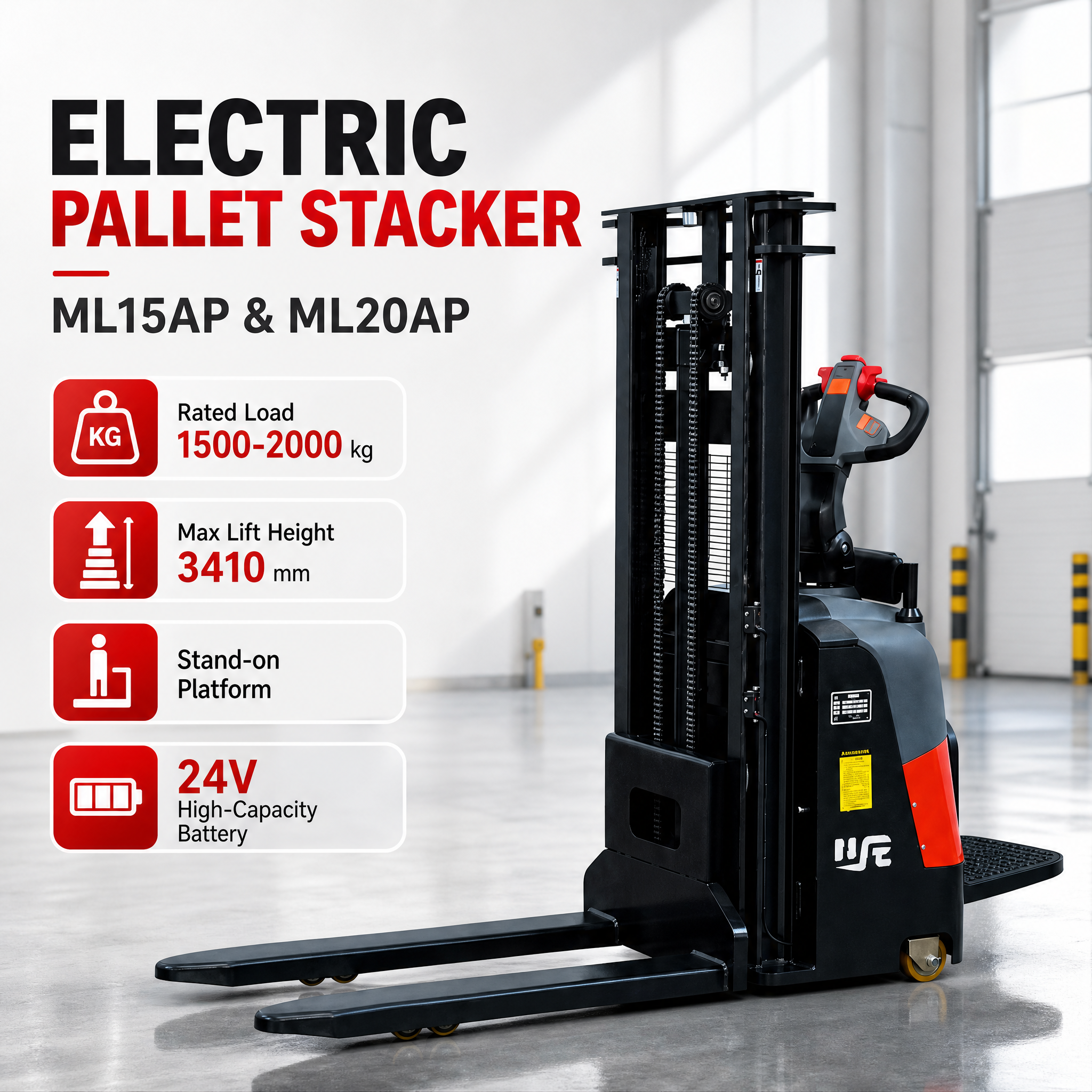
Stand on Electric Stacker 2000kg Centre Mounted Drive Twin Balance Wheels
Twin balance wheels and centre-mounted drive improve stability when stacking at higher racking levels in busy warehouse workflows.
View product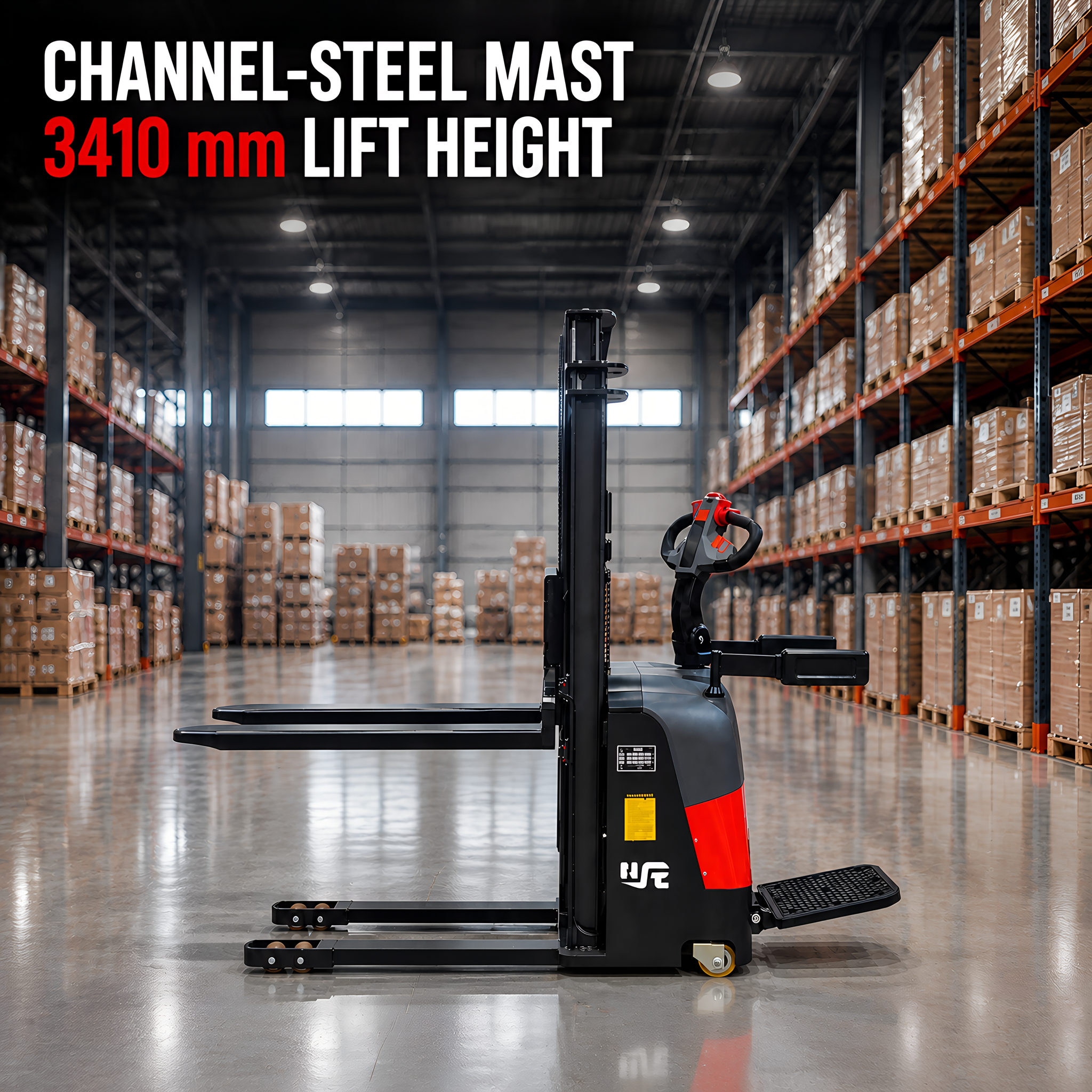
ML20AP Stand on Electric Stacker 2000kg 3410mm Max Lift
Specified for applications that need a higher lift, compact 820 mm body width and a tight 1,478 mm turning radius.
View product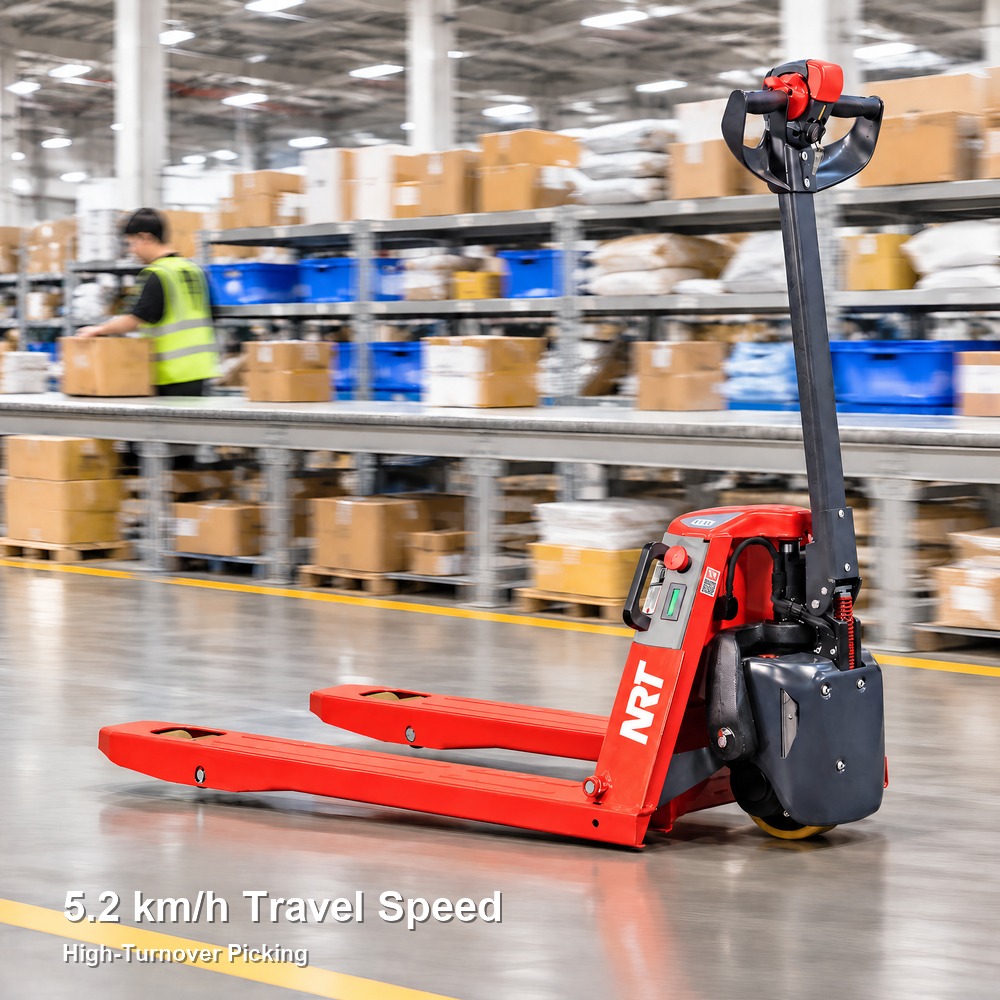
Electric Pallet Jack with Quick Release Drive Wheel 1Min Service
48V lithium walkie pallet truck with 2,000 kg capacity and a quick-release drive wheel for faster maintenance access.
View productWhy Monterrey's Narrow-Aisle Market Rewards Better Buying Decisions
The Monterrey industrial market is not a single warehouse environment. It is a network of automotive parks, 3PL campuses, cold-chain facilities, building-material yards and cross-border distribution sites, each with different rack heights, aisle widths and shift patterns.
Monterrey has become one of Mexico's most important logistics and manufacturing regions. Industrial corridors around Apodaca, Santa Catarina, Guadalupe, San Nicolás, Ciénega de Flores and Salinas Victoria continue to attract nearshoring investment, while the city's connection to the U.S. border supports import, export and cross-dock activity. For warehouse operators, the result is intense pressure to store more pallets per square metre without sacrificing throughput.
That pressure changes the equipment conversation. A buyer searching for a narrow aisle reach truck supplier in Monterrey is usually not shopping for a generic forklift. They are trying to solve a racking problem: how to reach higher levels, work inside narrower aisles and still maintain safe, repeatable pallet handling across multiple shifts. In high-density storage, the right reach truck can increase pallet positions; the wrong configuration can turn every lift into a slow, risky maneuver.
Local buying intent is practical. Monterrey purchasers typically ask about aisle dimensions, lift height, residual capacity, battery charging, Spanish documentation, spare parts and delivery terms before they discuss model numbers. They need to know whether a supplier can export to Mexico, support customs coordination through ports such as Manzanillo or Lázaro Cárdenas, or arrange inland delivery toward Nuevo León. A supplier that cannot answer these questions creates risk for the maintenance and operations teams who will live with the equipment every day.
This is where a complete product strategy matters. A narrow aisle reach truck should be matched with electric pallet jacks for dock and trailer movement, stand-on stackers for medium-height racking and loading docks, and suitable chargers for the facility's electrical profile. Pexal's warehouse truck range supports this layered approach, so Monterrey buyers can build a coherent fleet rather than mix incompatible equipment from multiple sources.
For importers and dealers, the strongest supplier is not necessarily the one with the lowest initial quotation. It is the one that can provide technical selection data, export documentation, customization options, after-sales parts support and a realistic lead time. That is why Pexal emphasizes application matching, sample-based customization and full ODM support. The aim is to reduce the uncertainty that makes imported material handling equipment difficult to approve internally.
Monterrey buyers should also compare the total operating profile, not just the purchase price. Battery choice affects charging labor and cold-storage performance. Body width affects turning and rack clearance. Service access affects downtime. Operator visibility affects training speed and damage rates. By treating these factors as part of the procurement decision, a reach-truck project becomes a measurable operations improvement rather than a one-time equipment purchase.
Monterrey RFQ Priority Index
Illustrative weighting from application-engineering conversations with warehouse and dealer buyers. Use it to structure your next supplier comparison.
- Confirm right-angle stacking aisle, not only truck width.
- Ask for charger voltage and plug options before shipment.
- Verify warranty and consumable parts list.
Where Narrow Aisle and Warehouse Equipment Fit in Monterrey
Reach-truck performance depends on the workflow around it. These are the localized scenarios where Monterrey buyers most often combine reach trucks with pallet jacks, stackers and battery-powered support equipment.
Automotive and Tier 1 supply
Dense racking, sequenced deliveries and line-side replenishment require predictable lift cycles. Reach trucks handle high-bay storage while stand-on stackers and pallet jacks support dock-to-line and warehouse-to-production movement.
3PL and e-commerce fulfillment
Third-party logistics operators in Monterrey manage mixed pallets, rapid dispatch and peak-season volume. Electric pallet jacks speed trailer unloading, while reach trucks consolidate high-density reserve storage.
Cold chain and food distribution
Cold rooms require equipment that performs reliably under low temperatures. Pexal's 48V lithium pallet jack range includes a cold-storage model specified for environments down to -20°C, supporting fast dock transfers without emissions.
Manufacturing and industrial parks
Factories around Apodaca and Santa Catarina depend on continuous material flow. Stand-on stackers bridge loading docks and production cells, while narrow aisle reach trucks maximize storage density in finished-goods areas.
Building materials and retail yards
Building-material shops and home-improvement yards use compact stackers for loading, pallet placement and customer pickup. Models with higher lift and tight turning radius help fit within constrained outdoor or covered areas.
Cross-border distribution
Monterrey's trade lanes require fast pallet preparation, labeling and trailer loading. Walkie electric pallet jacks and heavy-duty 2-ton pallet trucks reduce manual effort at cross-dock and export consolidation points.
What Is Changing for Monterrey Material Handling Buyers
Four procurement trends are shaping how Monterrey buyers specify reach trucks and supporting warehouse equipment. They also explain why supplier evidence, rather than brochure claims, matters more than ever.
Nearshoring density
More production and distribution activity means more pressure on storage space. Buyers are asking for higher racking and narrower aisles, which increases the value of a properly specified reach truck.
Lithium adoption
Opportunity charging, battery swapping and lower maintenance are becoming part of the buying case. Cold-storage and multi-shift operations pay particular attention to 48V lithium configurations.
Safer, ergonomic work
Labor retention and safety programs favor equipment with clear visibility, predictable controls and stable stacking. Twin balance wheels and centre-mounted drive are practical answers in high-racking work.
Service localization
Importers compare Spanish documentation, spare-parts availability and response time alongside price. After-sales planning is now part of the original equipment decision, not an afterthought.
Reach Truck, Stacker or Pallet Jack? A Monterrey Selection Framework
Use this comparison to shortlist the right equipment class before requesting a quotation. For a true narrow aisle project, share rack height, aisle width, load weight and daily duty cycle so the supplier can verify the configuration.
| Equipment class | Best Monterrey use case | Aisle and height profile | Key purchasing trigger |
|---|---|---|---|
| Narrow aisle reach truck | High-bay storage, 3PL reserve racking, automotive parts warehouses and dense distribution centers. | Designed for narrow aisles and high racking; exact aisle width must be checked by model and mast. | You need more pallet positions, higher rack levels or better cube utilization. |
| Stand-on electric stacker | Loading docks, building-material shops, medium-height racking and production line-side stacking. | Useful where lift height is moderate and the operator needs compact maneuvering. | You need powered lifting without the footprint or cost of a full counterbalance forklift. |
| Electric pallet jack | Trailer unloading, cross-docking, staging, retail backrooms and horizontal pallet transport. | Best for floor-level horizontal moves; not a substitute for high racking equipment. | Manual pallet handling is slowing dock turnaround or creating operator fatigue. |
| Counterbalance electric forklift | Mixed indoor and outdoor handling where forks need to enter racks from a conventional aisle. | Suitable for standard aisles and versatile yard-to-warehouse movement. | You need one flexible truck for varied loads rather than maximum storage density. |
Measure the aisle
Record actual clear aisle width, rack depth, right-angle stacking aisle and door openings.
Confirm the load
Share maximum pallet weight, pallet type, load center and any attachments used.
Define the duty cycle
State shifts per day, lift height, travel distance and charging window.
Plan the export
Confirm Incoterm, destination, voltage, charger plug, documents and spare-parts list.

Supplier Advantages for Monterrey Importers and Dealers
Xiamen Pexal Technology Co., Ltd. is the sales, service and technical support base for Pexal material handling equipment. Founded in Xiamen, Fujian, in 2024, the company works with a 220,000 m² partner manufacturing campus employing more than 1,200 people, including a team of over 100 engineers focused on electric warehouse equipment.
The product strategy fits Monterrey's buying intent: support the move from manual handling to electric handling, and from diesel power to battery power, while reducing emissions, noise and operating cost. From electric reach trucks and pallet trucks to stackers and AGV solutions, Pexal provides a single source for warehouse equipment conversations.
Every enquiry can be matched with sample-based customization, full customization or ODM support, including mast height, fork length, battery type, color, logo and attachment configuration. Accepted delivery terms include FOB, CFR, CIF, EXW, FCA, CPT, CIP and DDP, with payment options such as T/T, L/C, D/P, D/A, Western Union, PayPal, credit card and escrow. Accepted currencies include USD, EUR, GBP, JPY, CAD, AUD, HKD, CHF and CNY.
For buyers who need defensible supplier evidence, Pexal has passed an onsite check and a supplier assessment conducted by SGS Group. The company serves dealers, rental companies and end users across Western Europe, North America, South America, Eastern Europe and Oceania.
What Monterrey Buyers Can Verify Before Ordering
Strong supplier evaluation reduces the risk of downtime, mismatched chargers and unavailable spare parts. These advantages are directly relevant to imported warehouse equipment projects in Nuevo León.
SGS-assessed supplier
Onsite check and supplier assessment conducted by SGS Group, giving procurement teams a third-party reference before placing an order.
Scaled partner manufacturing
A 220,000 m² partner production campus and 1,200+ workforce support recurring dealer stock and container-level orders.
OEM / ODM customization
Configure mast height, fork length, battery type, color, logo and attachments to suit dealer programs or end-user applications.
Flexible export terms
FOB, CFR, CIF, EXW, FCA, CPT, CIP and DDP terms can be discussed, with export packaging and documentation support.
Multiple payment methods
T/T, L/C, D/P, D/A, Western Union, MoneyGram, PayPal, credit card and escrow options support different buyer profiles.
Application engineering support
Share your load, aisle and duty cycle. Pexal can recommend configurations and support logistics solution design before quotation.
Frequently Asked Questions from Monterrey Buyers
These are the practical questions that come up when importers, warehouse managers and dealers evaluate a narrow aisle reach truck supplier for the Monterrey market.
What aisle width should I plan for a narrow aisle reach truck in Monterrey?
Can Pexal supply equipment for both narrow aisle reach trucks and supporting pallet trucks?
How do we handle voltage, chargers and electrical compatibility in Mexico?
Can you quote CIF or DDP delivery to Nuevo León?
Do you offer Spanish manuals, training or spare-parts lists?
Which model is more suitable for cold storage: a pallet jack or a reach truck?
Can we customize mast height, fork length, battery type or branding?
What lead time should a Monterrey buyer expect for a container order?
Has Pexal been verified by a third party?
How do we start a Monterrey reach-truck quotation?
Plan Your Narrow Aisle Fleet for Monterrey
Share your aisle width, rack height, load weight, charging voltage and destination in Nuevo León. We will help match reach trucks, pallet jacks, stackers and export terms to the operation — not just the catalog.