Why German procurement teams are rethinking battery-powered material handling
Germany's logistics and manufacturing base is under sustained pressure to reduce local emissions, lower noise, improve indoor air quality and keep multi-shift operations productive with fewer available operators. For many warehouses, the practical answer is not a single forklift but a right-sized fleet of high-performance battery forklifts and electric warehouse trucks matched to aisle width, rack height, load centre, floor surface, charging window and documentation requirements.
This guide is written for importers, dealers, rental fleets and end users comparing Chinese battery forklift suppliers for the German market. It combines application scenarios from intralogistics, automotive supply, cold chain, e-commerce and Mittelstand production with a clear selection method, German procurement FAQ and verifiable company advantages. The aim is to help you ask better technical questions before placing an order — not simply compare headline capacity and price.
8 battery-powered warehouse trucks for German distribution, production and cold-chain sites
These models cover the most common German buying briefs: compact pallet transport, narrow-aisle handling, cold storage at -20°C, stacker work up to 3410mm, heavy-duty 2-tonne pallet moves and container loading. Each product link is preserved for direct specification review.
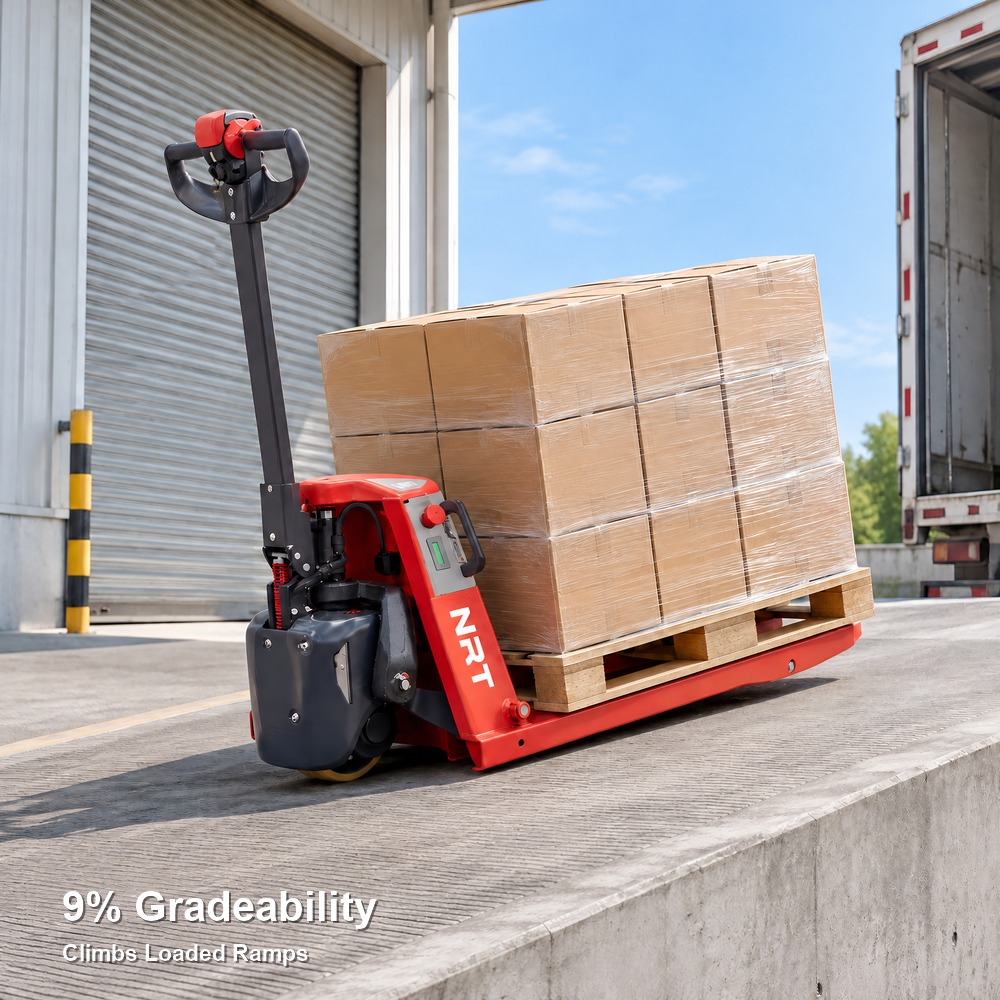
Lithium Battery Electric Pallet Jack Truck 1500kg 2000kg Walkie Pallet Jack Electric Forklift Alternative for Warehouse
A practical first step from manual handling to battery-powered pallet transport, suited to dock levellers, retail backrooms and horizontal warehouse flows.
View specification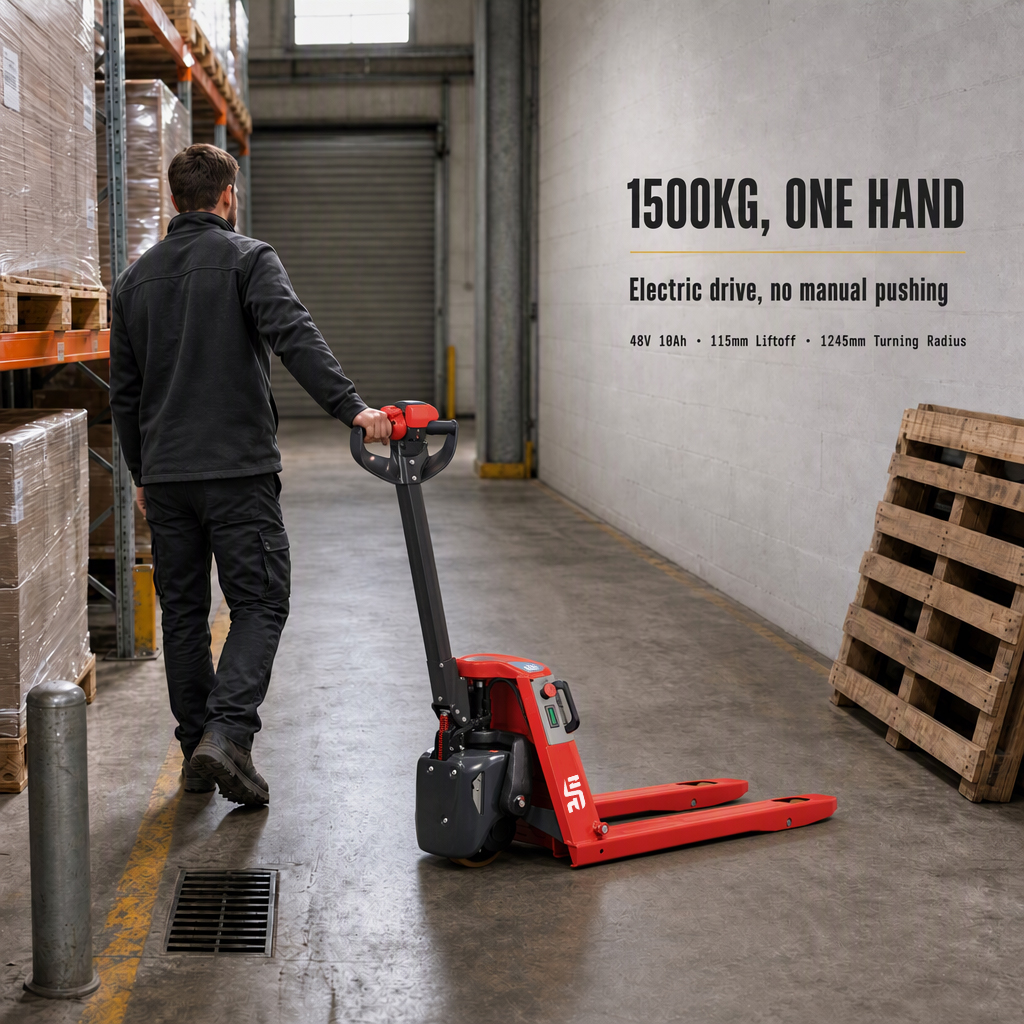
1.5 Ton Electric Pallet Truck with 48V Li-ion Battery, 107kg Ultra-lightweight Pallet Jack for Narrow Aisle Warehouse
Ultra-light construction and 48V Li-ion power make this model attractive where floor loading, elevator use and tight urban warehouse aisles matter.
View specification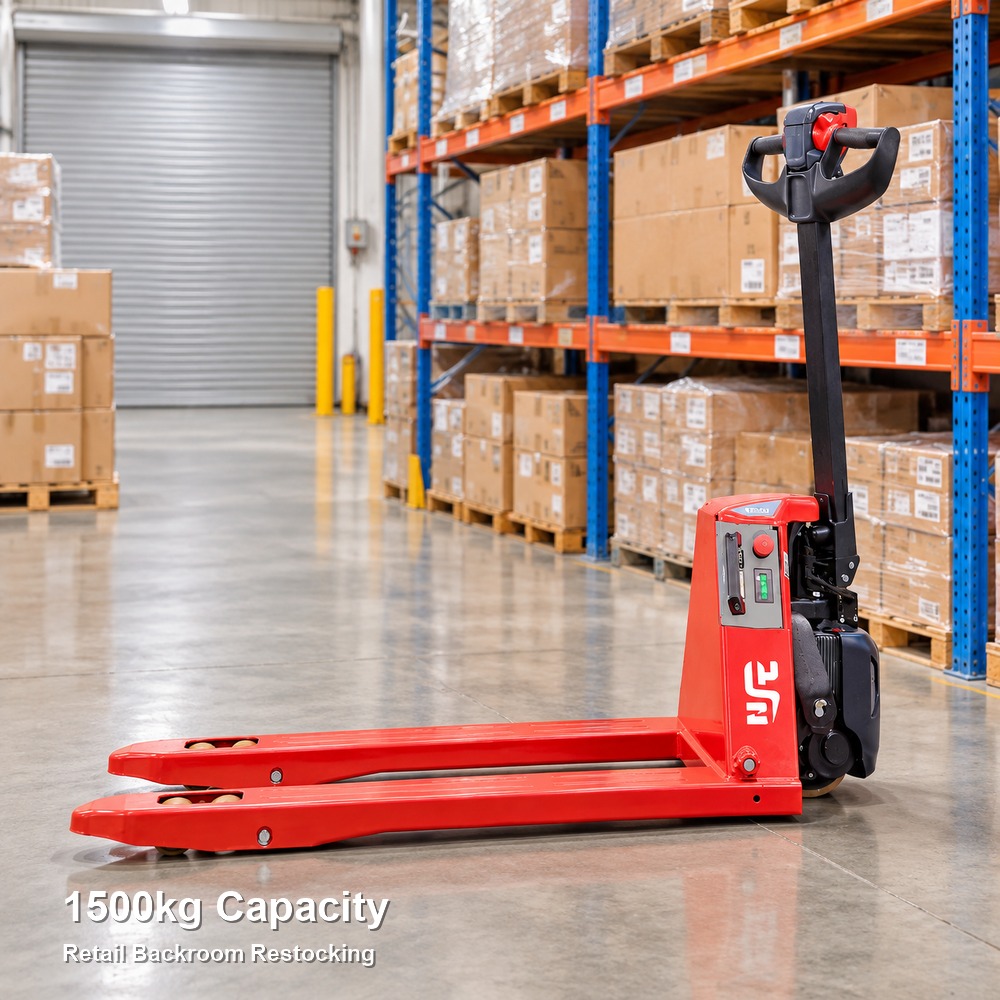
Cold Storage Electric Pallet Jack -20C Working 48V Lithium Battery Pallet Truck Walkie Type 1500kg 2000kg
Designed for frozen-food, pharmaceutical and cold-chain logistics where battery performance, seals, lubrication and operator safety must suit low temperatures.
View specification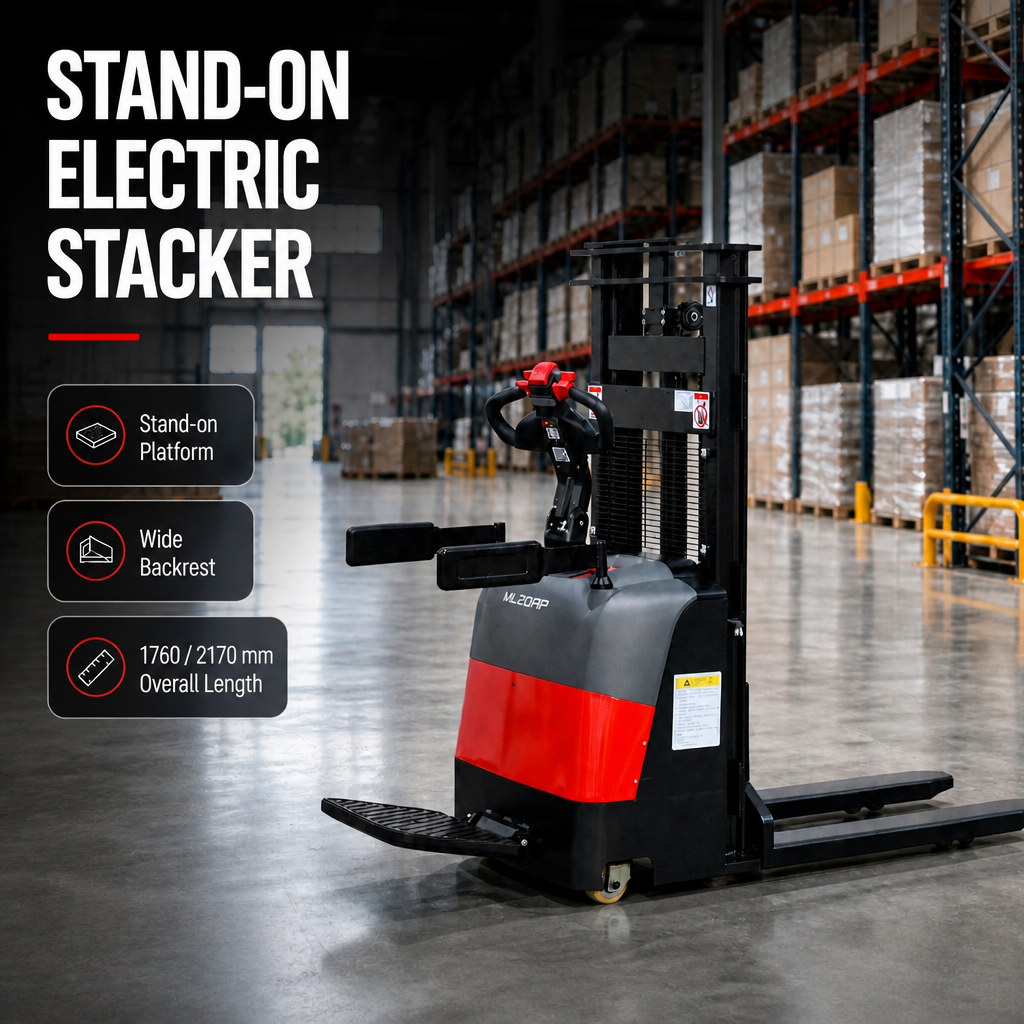
Electric Stacker Truck 2000kg Pallet Stacker Forklift 3410mm Lift for Warehouse Loading Unloading
A high-lift stacker option for warehouses that need to place pallets into racking without the footprint or cost of a full counterbalance forklift.
View specification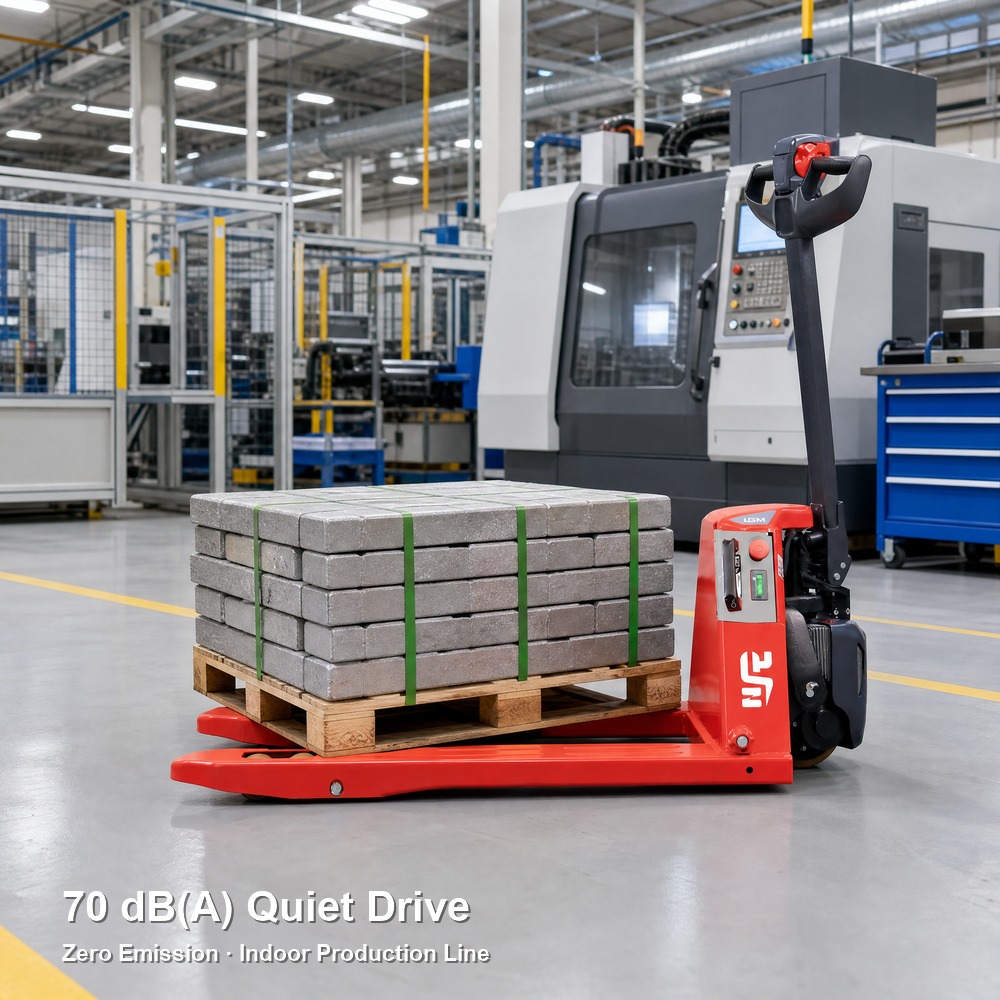
Battery Powered Pallet Jack Truck 48V Lithium Walkie Type for Narrow Aisle Warehouse Elevator Loading Unloading
Well suited to German city logistics sites with limited space, elevator transfers and frequent loading/unloading between storage and dispatch zones.
View specification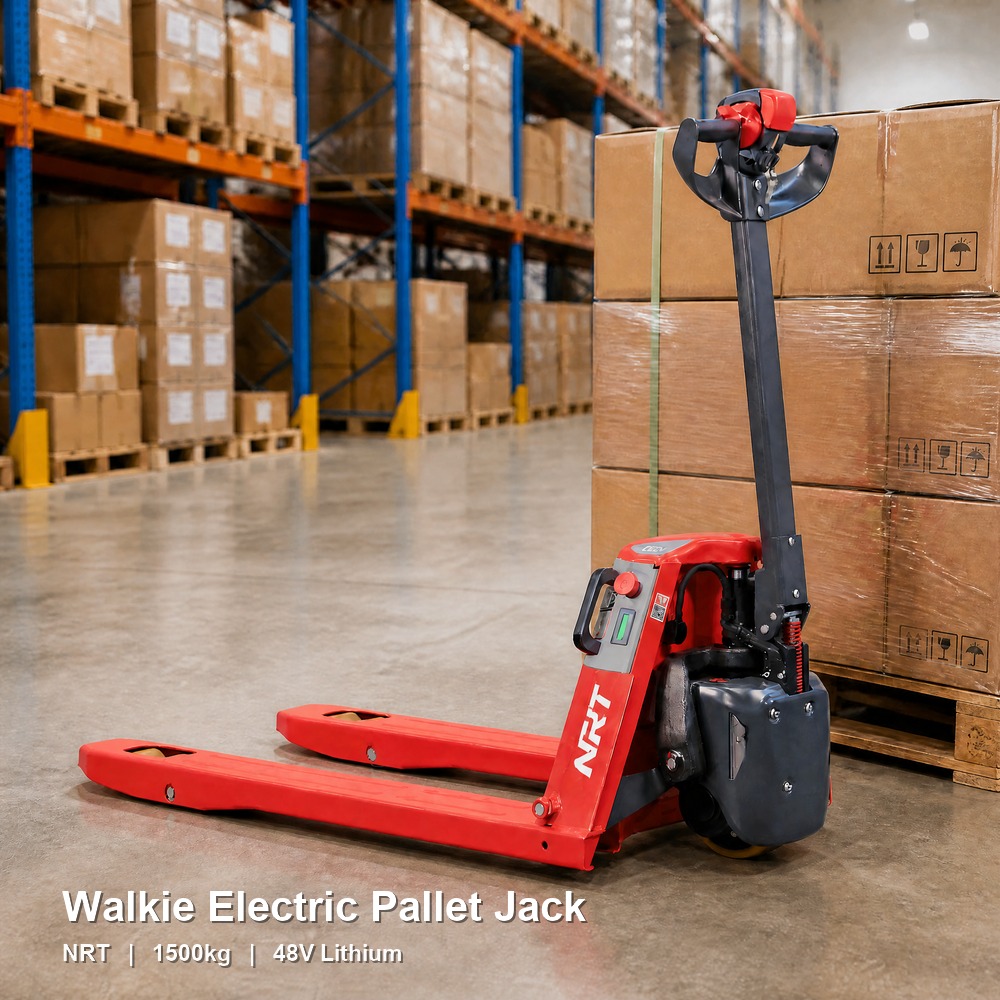
Electric Pallet Jack 1500kg 2000kg Walkie Pallet Truck Battery Powered Lithium Pallet Jack for Warehouse Loading
A balanced choice for 3PL and distribution warehouses needing dependable daily pallet movement with simple operation and low maintenance.
View specification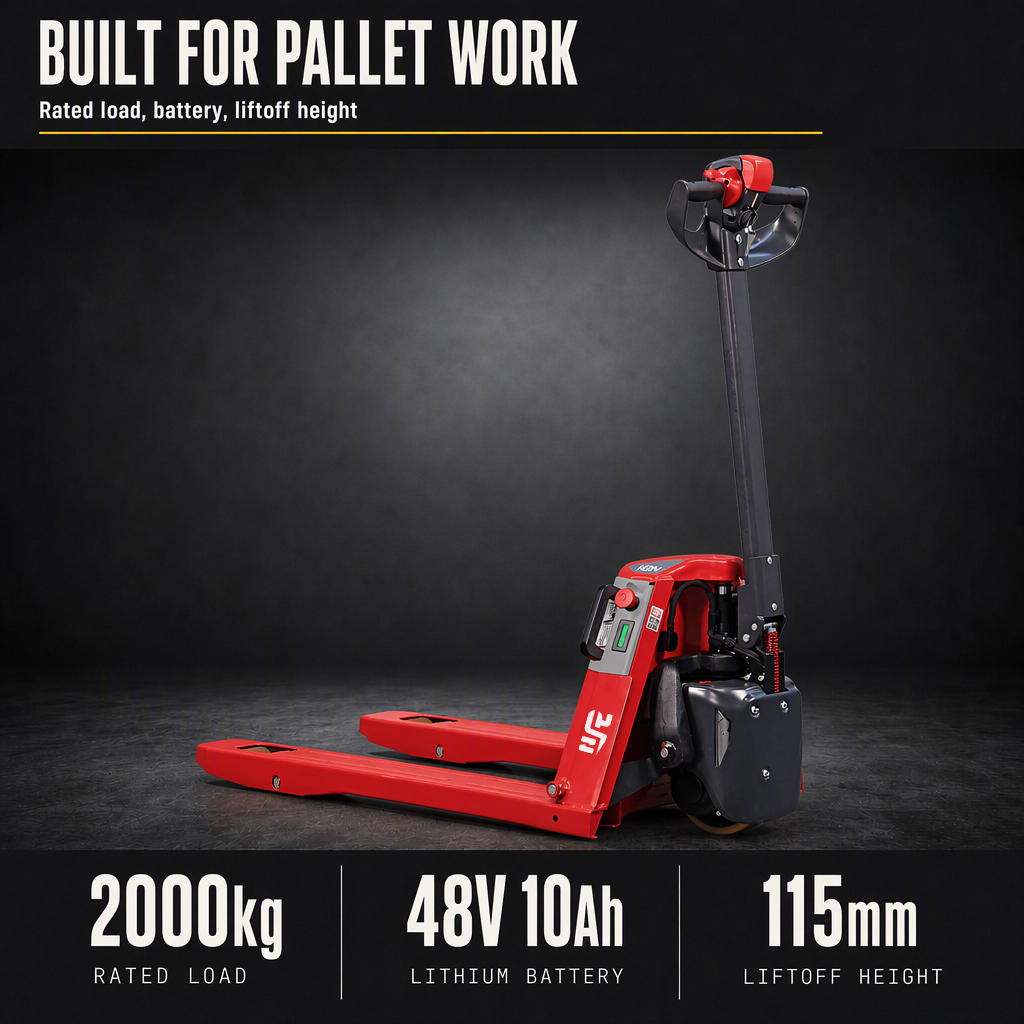
Professional Electric Pallet Jack 2 Ton 2000kg Capacity Heavy Duty Power Pallet Truck with Easy Control System for Warehouse
For heavier pallet loads, intensive dock work and users who prefer a robust control system with straightforward operator training.
View specification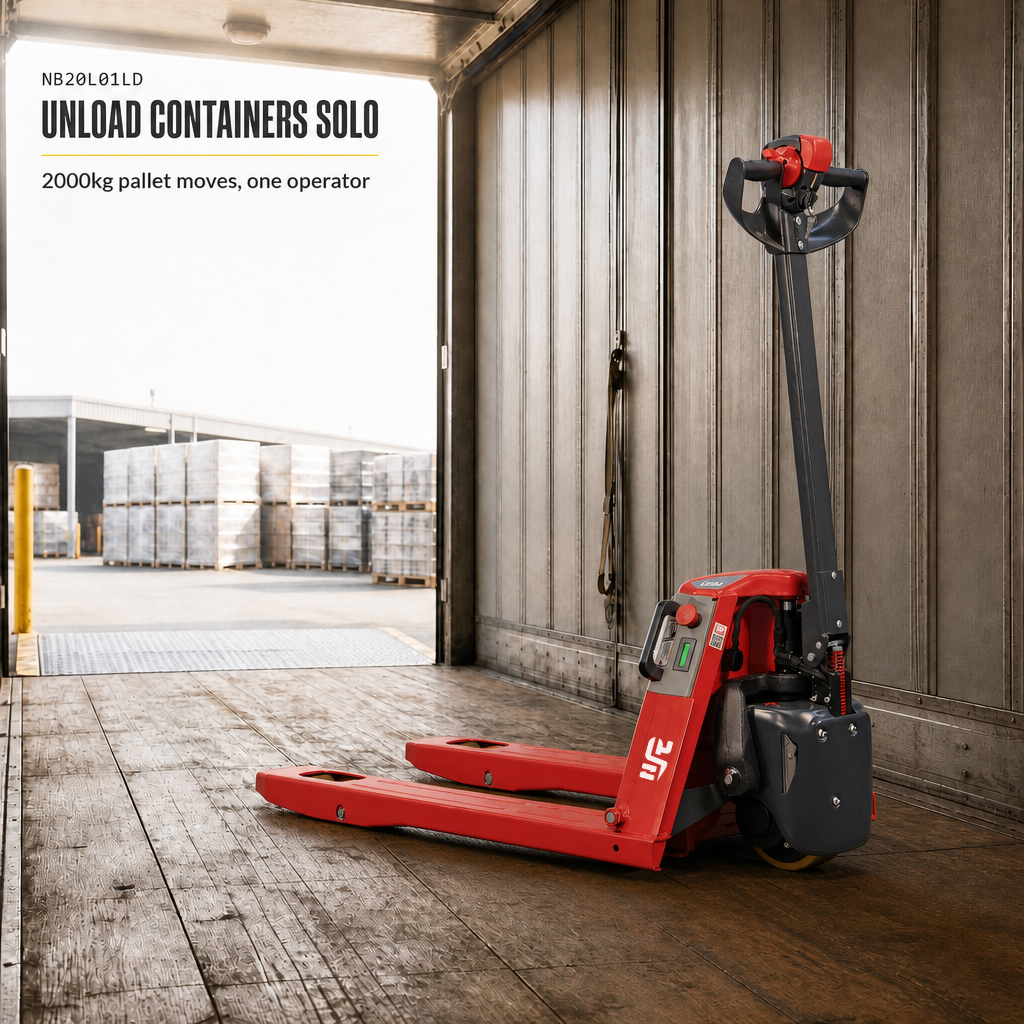
2000kg Electric Pallet Truck Lithium Ion 48V 10Ah Power Jack 1150mm Forks Polyurethane Wheels Container Loading
Container loading, polyurethane wheels and 1150mm forks make this model relevant for export packing, cross-docking and smooth indoor floors.
View specificationWhere high-performance battery forklifts fit in Germany's logistics landscape
German buyers rarely purchase by capacity alone. They evaluate the whole flow: truck type, aisle geometry, racking height, charging position, floor finish, safety concept and the availability of spare parts. These six scenarios reflect common briefs received from German distributors and fleet operators.
Hamburg, Bremerhaven and hinterland cross-docks
Port-related logistics demands fast container unloading, short pallet moves and reliable equipment around loading bays. Battery pallet trucks and 2-tonne electric pallet jacks reduce local emissions while keeping dock cycles predictable.
Automotive and machinery supply in Baden-Württemberg, Bavaria and NRW
Line-side replenishment, work-in-progress transfer and finished-goods handling require repeatable lifting, stable braking and clear operator control. High-performance battery forklifts are often specified where indoor air quality and noise reduction are priorities.
Cold chain and pharma in Rhine-Main and northern Germany
Frozen-food distributors and pharmaceutical logistics need equipment that starts reliably in low temperatures and avoids unnecessary heat or emissions inside cold rooms. The -20°C cold storage pallet truck is designed for this environment.
E-commerce fulfilment around Berlin, Leipzig and Munich
Fast piece picking and short-distance pallet movement need compact, easy-to-train equipment. Order pickers, walkie pallet trucks and AGV-ready workflows help fulfilment centres manage peak volumes with fewer manual touches.
Mittelstand workshops with narrow aisles
Many German family-owned manufacturers operate compact production halls where every metre matters. Ultra-light pallet trucks and compact stackers allow electric handling without sacrificing aisle clearance or floor capacity.
Food and beverage plants requiring hygienic, low-noise handling
Battery-electric equipment supports cleaner indoor operations and quieter shifts. Smooth polyurethane wheels, wash-down-friendly layouts and appropriate sealing should be discussed with the supplier for each zone.
Six procurement shifts shaping battery forklift demand in Germany
These trends explain why more German buyers now ask for lithium battery options, documented charging plans and supplier evidence before approving a trial order.
Energiewende and local emissions reduction
Electric drive removes local exhaust emissions and supports indoor air-quality goals. Buyers increasingly compare energy consumption per pallet move, charger efficiency and battery lifespan rather than purchase price alone.
Multi-shift uptime and opportunity charging
High labour costs make unplanned downtime expensive. Lithium-ion trucks with opportunity charging can fit breaks and shift changes, provided the site confirms power supply, charger location and operator routines.
Urban warehouses with narrow aisles
Land constraints in German cities encourage high-density racking and compact equipment. A 107kg pallet truck or a compact stacker can be more useful than a larger counterbalance forklift if the flow is horizontal or medium-lift.
Cold-chain investment
Frozen food, online grocery and pharmaceutical logistics continue to require reliable low-temperature handling. Cold-store buyers should ask about battery heating, condensation control, seals, lubrication and start-up behaviour at -20°C.
Digitalisation and AGV readiness
Logistics 4.0 projects start with stable, predictable flows. Automated guided forklifts and smart control features are most attractive where routes, pallet types and safety zones are already standardised.
Supplier verification before trial orders
German buyers commonly request company verification, product videos, spare-parts lists, packaging details and clear Incoterms before approving a sample. SGS assessment records and trade-capability information shorten this evaluation.
How to choose the right battery forklift or warehouse truck for a German site
Use this comparison as a shortlisting tool. Final selection should always be confirmed against load diagrams, aisle measurements, floor condition, charging infrastructure and applicable site safety rules.
| Equipment | Best-fit German environment | Key advantage | Shortlist when |
|---|---|---|---|
| High-performance battery forklift | Indoor production, distribution centres, food and beverage plants | Zero local emissions, low noise, strong repeated lifting | Charging power is available and indoor air quality matters |
| Lithium walkie pallet truck | Docks, retail backrooms, cross-docks, container loading | Fast horizontal transport with simple training | Pallets move mainly at floor level |
| Electric stacker | Small warehouses, racking up to medium height, workshops | Lifting capability in a compact footprint | Racking height is moderate and aisle space is limited |
| Cold storage pallet truck | Frozen food, pharma, cold-chain 3PL | Configured for -20°C operation | The truck spends long periods inside low-temperature rooms |
| Reach truck | High-density urban warehouses | Maximises cubic storage capacity | Rack height and aisle width are the main constraints |
| Order picker | E-commerce and spare-parts fulfilment | Elevated picking productivity | Piece picking dominates the workflow |
| AGV forklift | Standardised, repetitive pallet routes | Labour saving and 24/7 repeatability | Flows are stable and safety zones can be engineered |
Define the real load
Record maximum pallet weight, load centre, pallet type and attachments. A 1500kg rating is not automatically suitable if the load centre is unusually long or the load is unstable.
Measure aisle and rack geometry
Provide aisle width, right-angle stacking width, rack beam height, door clearances and floor flatness. For German urban warehouses, centimetres can decide whether a stacker or reach truck is the correct choice.
Map the charging window
Confirm whether the site prefers 230V or 400V charging, where chargers can be installed, whether opportunity charging is allowed and who will manage battery charging routines across shifts.
Agree documentation and support
Clarify CE documentation expectations, importer of record, EORI and VAT handling, Incoterms, warranty terms, spare-parts list and the escalation path for technical support before ordering.
Compare cost per productive hour, not sticker price
For German multi-shift operations, the most useful comparison is cost per productive hour: purchase price, charging efficiency, battery life, tyre wear, service interval, spare-parts lead time and downtime risk. A lower-priced manual truck can become expensive if labour hours are high; an oversized forklift can waste energy and space. Match the smallest safe truck to the actual flow, then confirm the battery and charger strategy with the supplier's engineers.


Xiamen Pexal Technology Co., Ltd. — a verified export partner for German buyers
Founded in Xiamen, Fujian in 2024, Xiamen Pexal Technology Co., Ltd. operates as the sales, service and technical support base for Pexal material handling equipment. We work with a 220,000m² partner manufacturing campus employing more than 1,200 people, including over 100 engineers focused on electric warehouse equipment.
Our export approach is practical: help buyers move from manual handling to electric handling, and from diesel dependence to battery power, while reducing emissions, noise and operating cost. We support dealers, rental fleets and end users with a complete range covering electric forklifts, pallet trucks, stackers, reach trucks, order pickers, AGVs, diesel forklifts and off-road forklifts.
Questions German buyers commonly ask before ordering battery forklifts
These answers reflect typical export and application discussions. For a specific site, always confirm the final configuration, documentation package and commercial terms in the quotation.
Are these battery forklifts and pallet trucks suitable for multi-shift German warehouses?+
Can you configure chargers for German 230V or 400V power supplies?+
What documentation can you provide for CE and EU market evaluation?+
Which model is best for a narrow-aisle warehouse in a German city?+
Do you offer cold-store equipment for -20°C applications?+
What Incoterms and import considerations matter for shipping to Germany?+
Can you supply OEM or ODM battery forklifts for German dealers and rental fleets?+
How are spare parts, warranty and after-sales support handled?+
Request a Germany-ready battery forklift configuration
Share your load weight, aisle width, lift height, shift pattern and charging conditions. Our team will help you shortlist battery forklifts, pallet trucks or stackers, confirm customisation options and prepare an export quotation for the German market.
Send an Inquiry Include your target city or postcode, annual quantity and preferred Incoterm for a faster response.