8 Electric Picking and Pallet-Handling Trucks Shortlisted for Toronto Buyers
Search demand for an Electric Picking Truck Manufacturers & Supplier serving the Toronto market usually comes from three buyer groups: dealers that want a repeatable SKU for Ontario customers, 3PLs replacing manual pallet jacks, and cold-chain, grocery or retail operators working in older GTA buildings. The eight Pexal models below answer practical Toronto constraints: tight turns, dock trailers, multi-temperature storage, limited elevator capacity and high labor replacement cost.
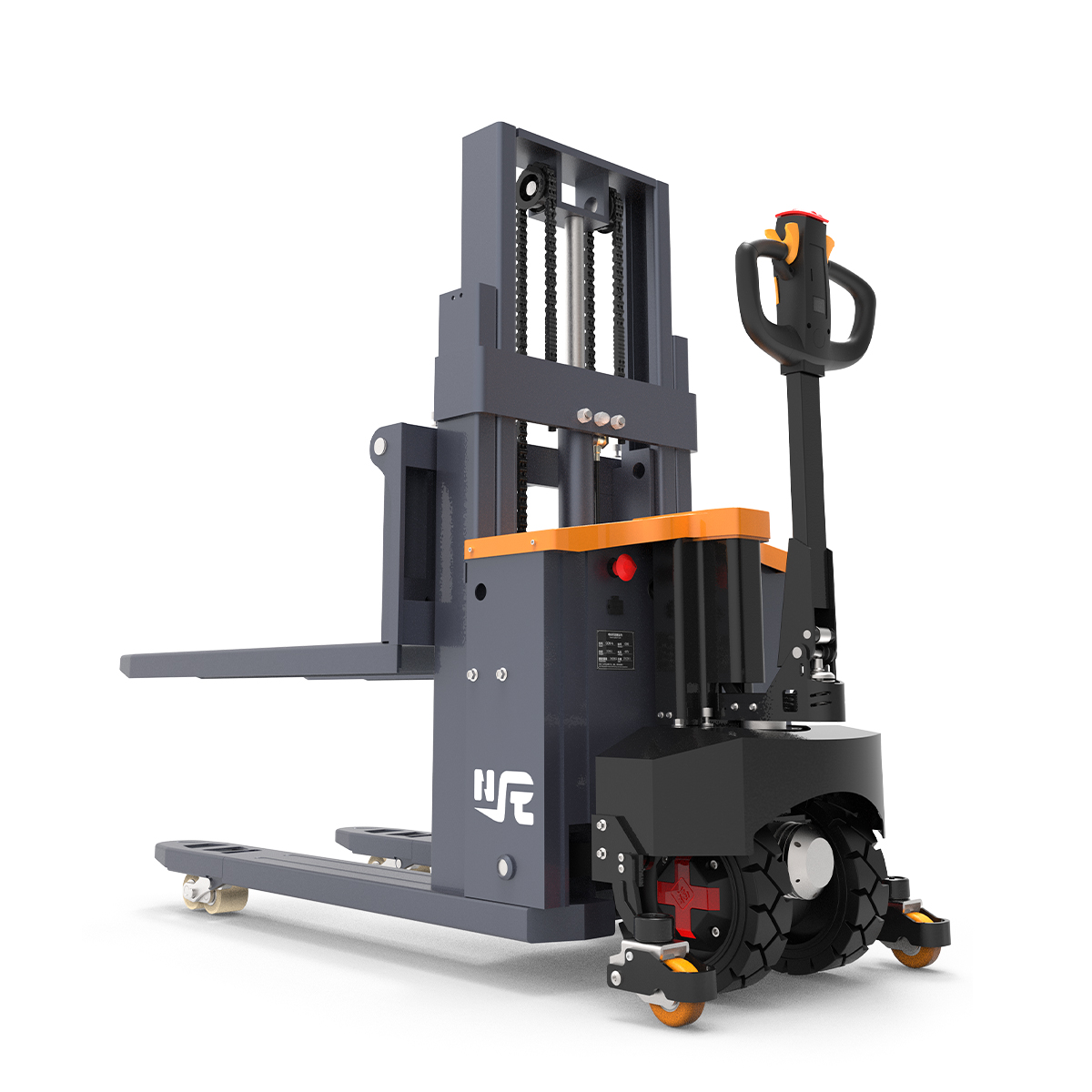
1500kg 2000kg Electric Stacker Pallet Stacker Truck 1.6m 3m Lift Height Warehouse Material Handling Equipment
Toronto fit: a practical stacker for Mississauga and Brampton 3PLs that need 1.6–3 m racking support without the footprint of a counterbalance forklift.
- Good for reserve storage, replenishment and medium-duty stacking.
- Measure door clearances and sprinkler height before choosing the mast.
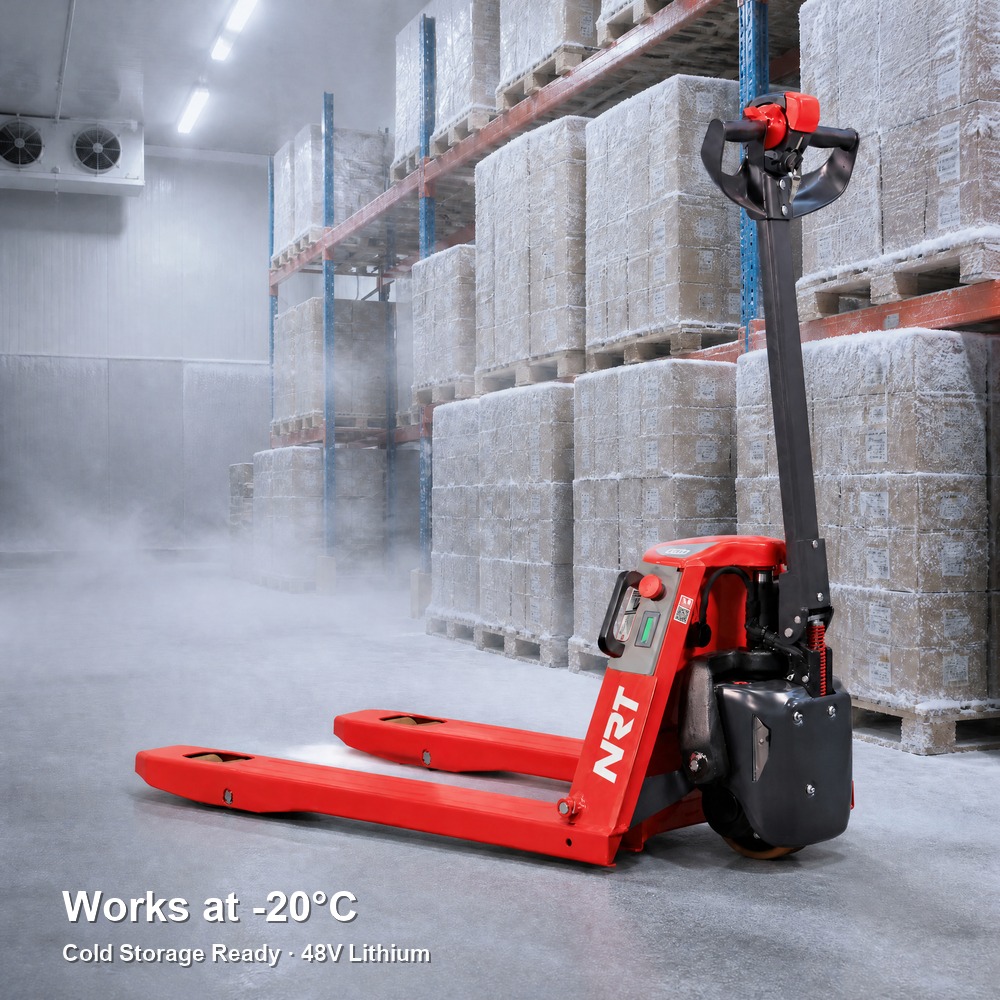
Electric Pallet Jack 2000kg with 48V Lithium Battery 6s Swap 300mm Slim Body Climbing 9% for Cold Storage -20C
Toronto fit: designed for frozen food, grocery and pharmaceutical cold-chain operations where slim access and fast battery exchange matter.
- 300 mm slim body supports tight freezer aisles.
- Specify cold-room package and charger location outside the freezer.
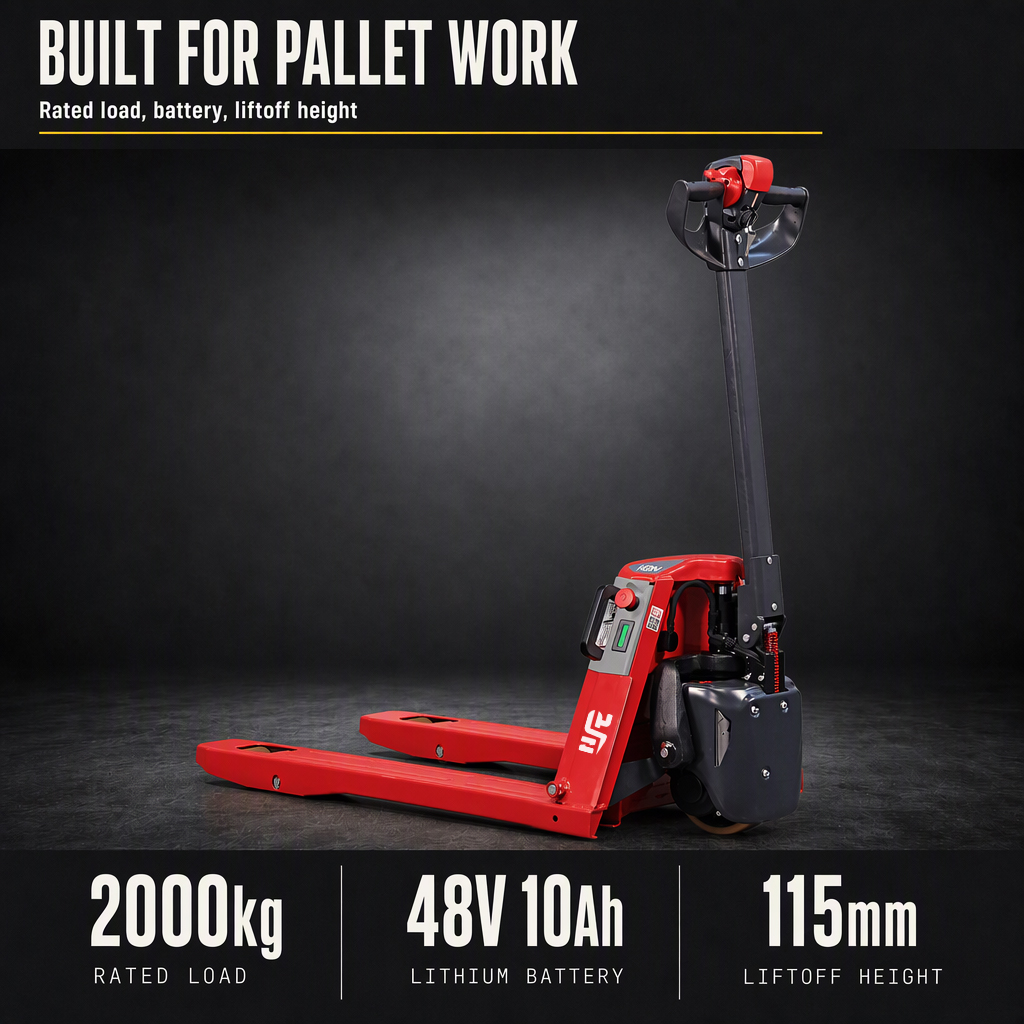
Portable Electric Pallet Jack Lithium Battery 2T for Narrow Aisle Warehouse and Truck Delivery Handling with 48V High Efficiency
Toronto fit: useful for downtown retail, last-mile depots and small warehouses where the unit must move between truck, elevator and stockroom.
- 48V lithium system supports high-efficiency daily handling.
- Good choice for cramped receiving areas and multi-stop delivery support.
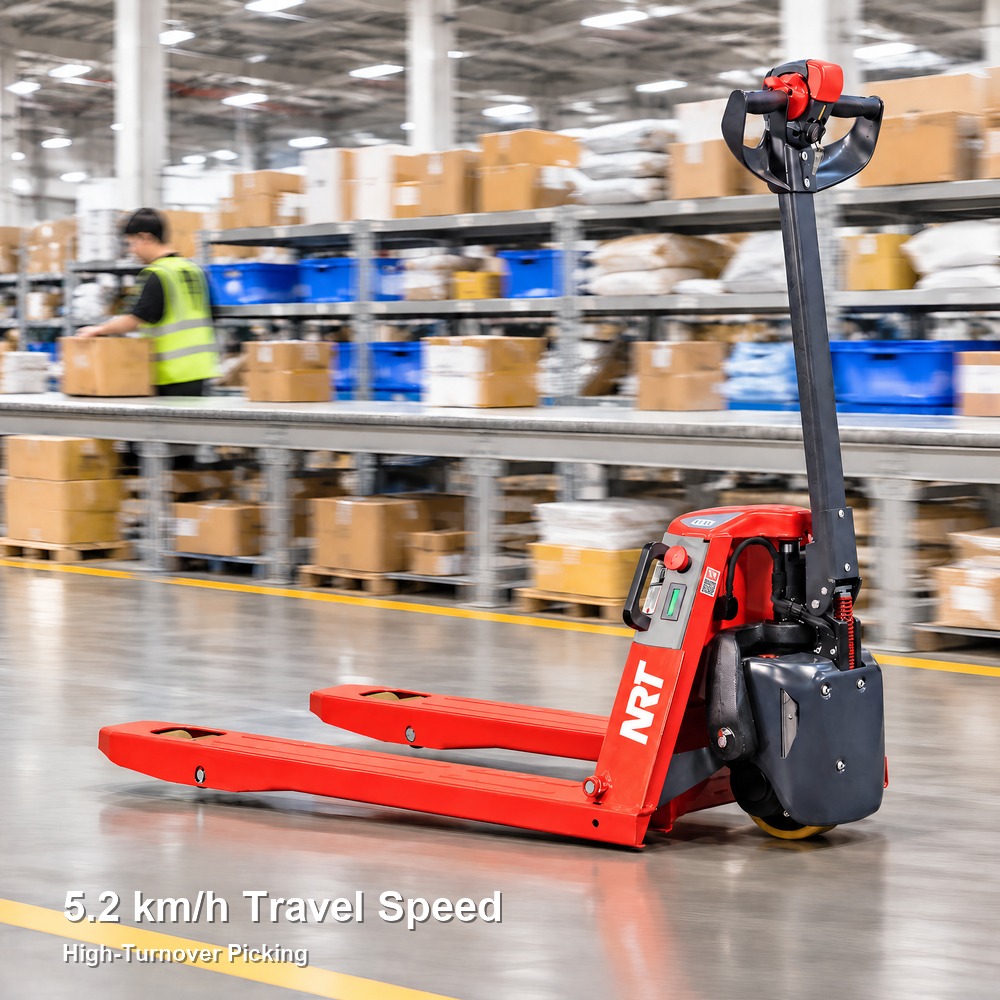
Electric Pallet Jack with Quick Release Drive Wheel 1Min Service 48V Lithium Walkie Pallet Truck 2000kg Capacity
Toronto fit: a strong option for GTA rental fleets and high-utilization 3PLs where fast drive-wheel service helps reduce downtime.
- Quick release drive wheel simplifies routine maintenance.
- 2000 kg capacity suits busy dock, cross-dock and shop-floor work.
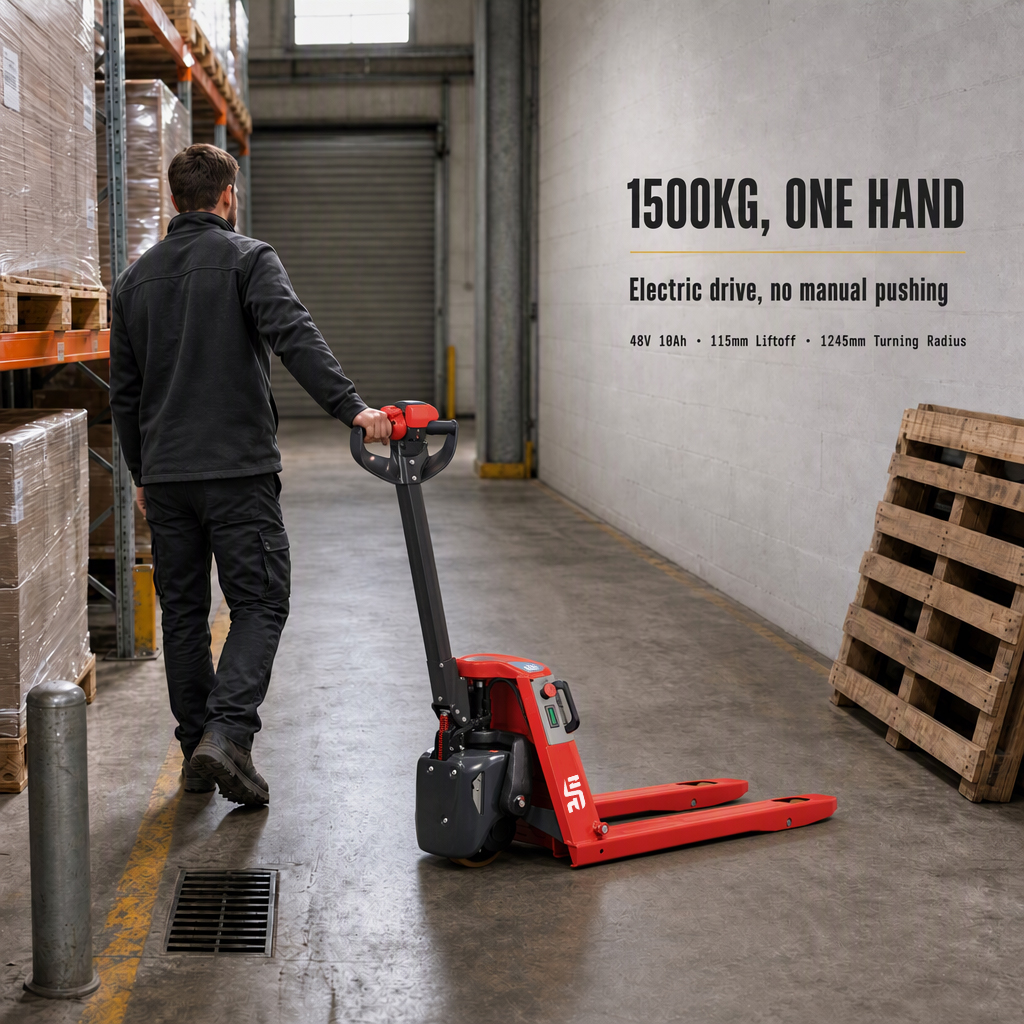
1.5 Ton Electric Pallet Truck with 48V Li-ion Battery, 107kg Ultra-lightweight Pallet Jack for Narrow Aisle Warehouse
Toronto fit: ideal for older Toronto buildings, elevators and compact backrooms where unit weight affects floor loading and operator fatigue.
- Ultra-lightweight design supports multi-level and truck-to-store workflows.
- 48V Li-ion battery helps reduce routine maintenance and charging friction.
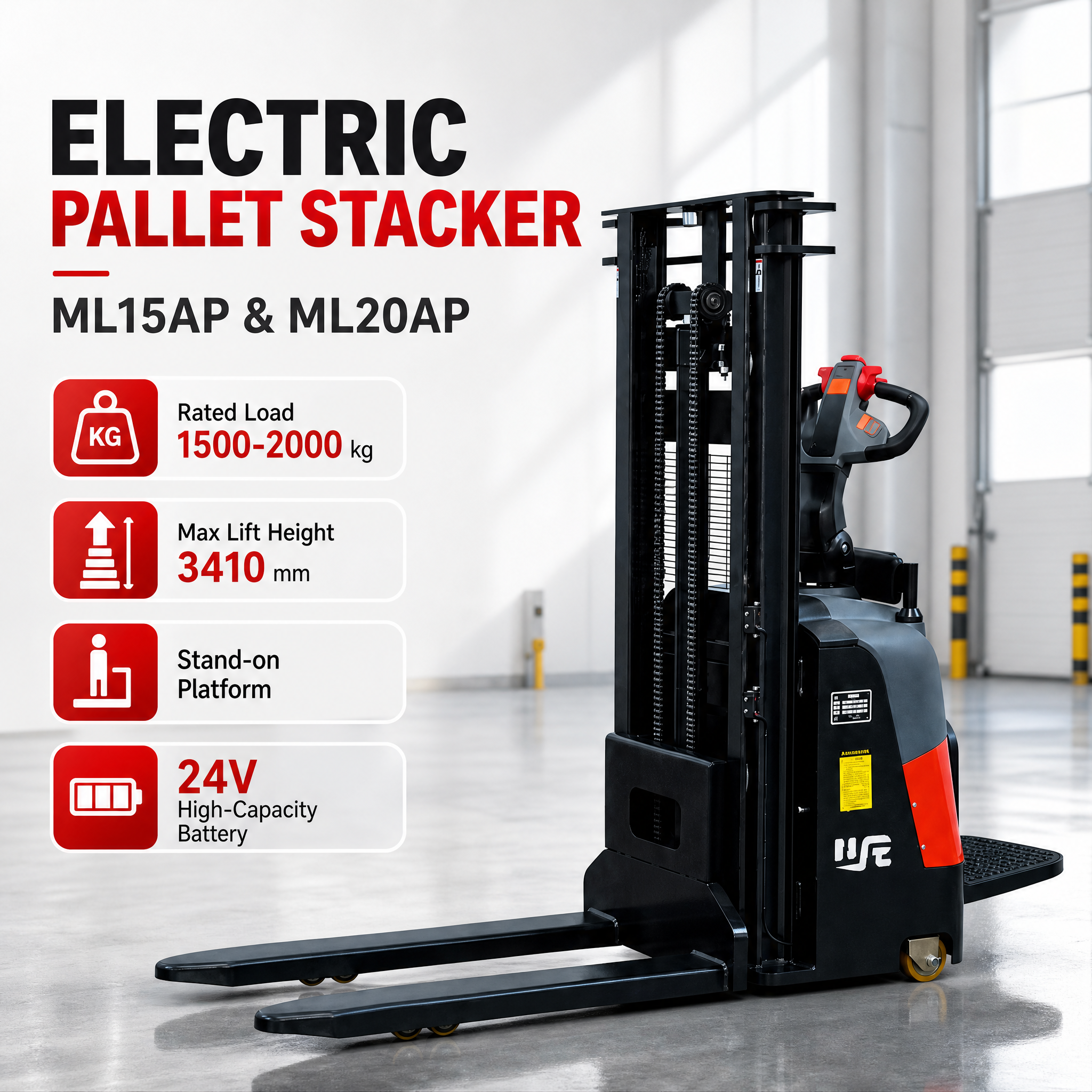
Stand on Electric Stacker 2000kg Centre Mounted Drive Twin Balance Wheels Stable High Racking Stacking
Toronto fit: built for Vaughan, Markham and Mississauga distribution centers where operators travel longer distances and repeat high-racking cycles.
- Centre-mounted drive and twin balance wheels support stable handling.
- Stand-on format reduces walking fatigue in high-throughput storage areas.
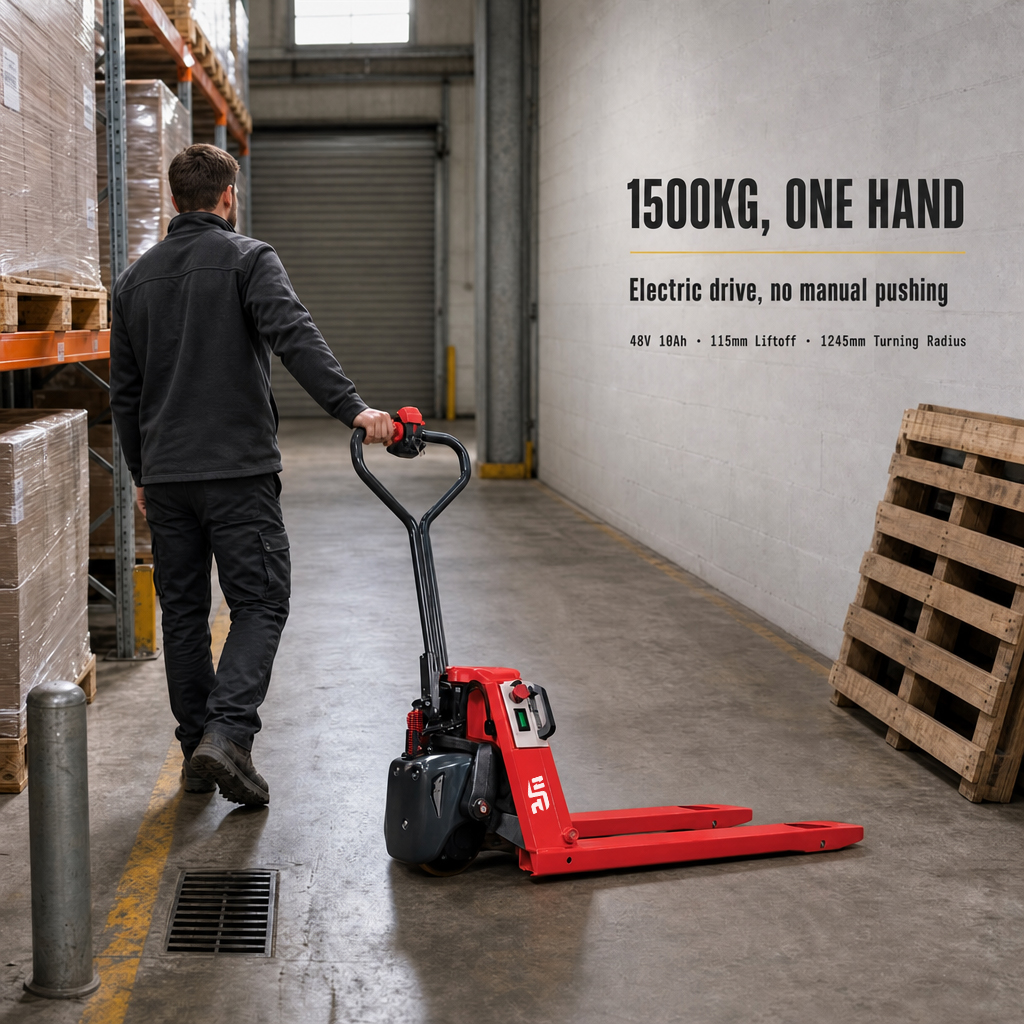
Electric Pallet Truck for Distribution Center Workshop Supermarket Pallet Handling 1500kg Lithium Battery Walkie Jack
Toronto fit: a versatile walkie pallet truck for distribution centers, workshops and supermarket replenishment across the GTA.
- Simple operation supports fast operator onboarding.
- Good balance of capacity, price and maneuverability for daily pallet moves.
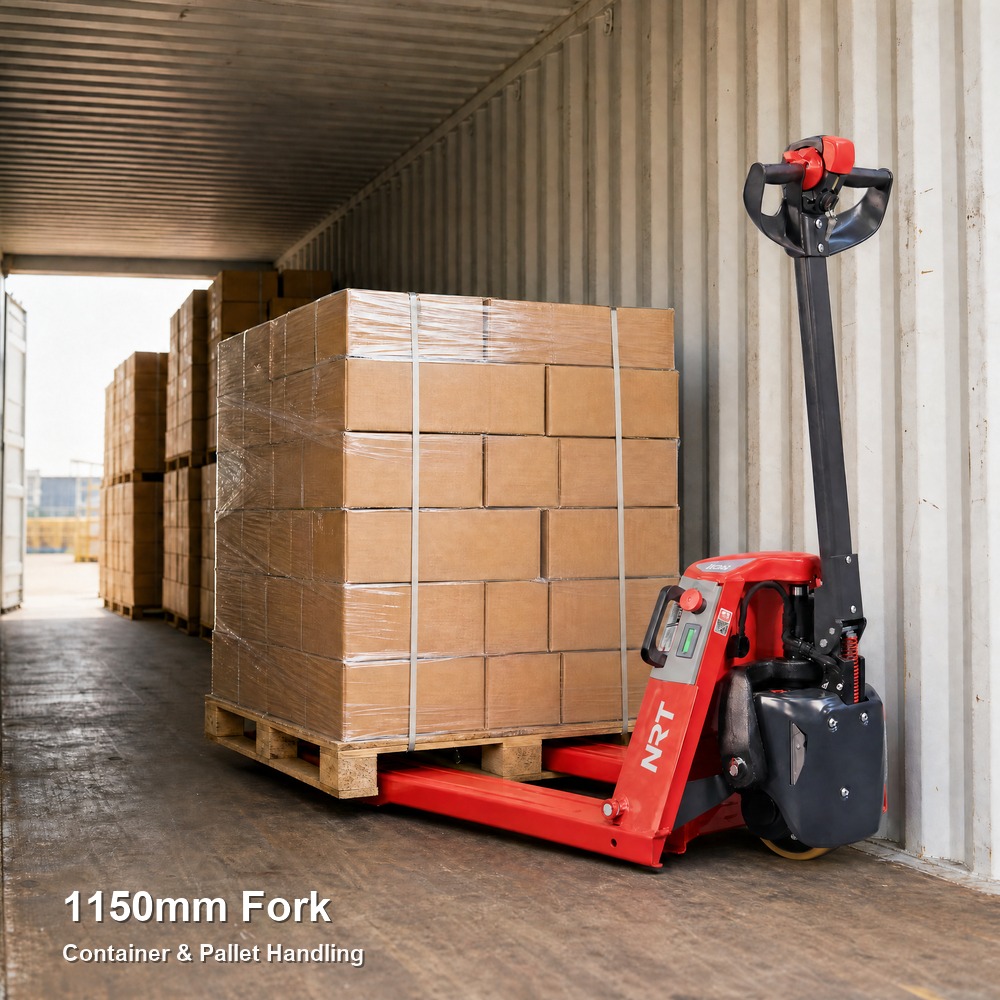
Walkie Electric Pallet Jack 1500kg Fork 1150mm Pallet Truck Battery Powered for Container Unloading Shop Floor
Toronto fit: suited to 53-foot trailer unloading, container stripping and retail shop-floor pallet movement in congested receiving zones.
- 1150 mm fork format handles standard pallet workflows in tight docks.
- Battery-powered walkie design supports quick movement between trailer and staging.
Where Electric Picking Trucks Fit in Toronto and the GTA
Toronto is not a single warehousing market. A freezer in Etobicoke, a 3PL in Brampton, a downtown grocery backroom and a cross-dock near the Port Lands have different aisle, floor and temperature constraints. The right electric picking truck is the one that fits the actual operating envelope, not only the capacity label.
GTA 3PL & Distribution Centers
High pallet throughput and multi-shift operations in Mississauga, Brampton and Vaughan reward equipment with predictable service and simple operator controls.
Stacker + walkie pallet truck + stand-on stackerDowntown Toronto Retail & Grocery
Older buildings, narrow backrooms, elevators and limited floor loading make lightweight electric pallet jacks more practical than heavy counterbalance trucks.
107 kg ultra-light model · compact turningCold Chain & Food Distribution
Freezer, chilled and dry zones need specified battery, charger and lubricant packages. The 2000 kg -20°C model is relevant to frozen food and pharmaceutical flows.
48V lithium · 300 mm slim body · -20°CTrailer & Container Unloading
Dock congestion near Toronto routes makes fast unloading important. A 1150 mm fork walkie pallet jack helps move pallets from trailer to staging without blocking the dock.
1500 kg walkie · 1150 mm fork · shop floorManufacturing & Industrial Supply
Markham, Scarborough and Etobicoke plants use electric pallet trucks for line-side supply, work-in-progress movement and finished-goods staging.
1500–2000 kg · low noise · zero local emissionsYards, Building Supply & Mixed Sites
Where ground is uneven or outdoor work dominates, our broader range includes diesel and all-terrain forklifts; the electric warehouse models here are best for improved surfaces.
Ask for application matching before selectionWhy Toronto Buyers Are Replacing Manual and Diesel Handling
Toronto procurement teams increasingly evaluate electric pallet trucks and stackers as part of a broader operating-cost and ESG plan. The strongest business cases combine labor efficiency, indoor air quality, noise reduction and better use of expensive GTA warehouse space.
Electrification & ESG
Electric pallet trucks cut local exhaust emissions and noise. For Toronto retailers, food distributors and building operators, that supports cleaner indoor operations and corporate sustainability reporting.
Labor Efficiency
High turnover and training pressure make intuitive controls, simple battery exchange and low maintenance important. A truck that is easy to learn can shorten onboarding time.
Dense Urban Warehousing
GTA real estate pressure pushes more storage into less space. Narrow-aisle electric pallet trucks, stackers and compact walkie units help increase pallet positions without expanding the building.
Safety & Compliance
Ontario buyers should confirm OHSA and CSA B335 expectations, operator training and charger electrical requirements. Pexal supports configuration data; final site compliance should be reviewed locally.
1. Aisle & Door Data
Measured aisle width, clear height, door openings and elevator turning space.
2. Load & Duty Cycle
Maximum pallet weight, load centre, lift height, hours per shift and shifts per day.
3. Temperature & Battery
Cold-room temperature, charger location, opportunity charging and battery swap policy.
4. Service & Compliance
Local electrical requirements, operator training, spare parts plan and dealer support.
How Toronto Buyers Should Specify an Electric Picking Truck
A white-paper-grade shortlist should start with the work, not the model number. Use the following engineering questions to compare pallet trucks, stackers and stand-on units before you ask for a quotation.
Calculate Load at the Load Centre
Do not compare only the headline capacity. Confirm the maximum pallet weight, load centre and any attachment effect. Required residual capacity should be checked against the final configuration sheet.
Measure the Real Aisle
Measure at the tightest point: columns, door frames, dock levellers, elevator thresholds and racking uprights. Add clearance for operator movement and pallet overhang.
Match Temperature to Battery
For GTA cold-chain work, state whether the truck enters a freezer, how long it stays and where the charger is installed. The -20°C model above should be specified as a system, not just a truck.
Check Trailer and Dock Conditions
Dock height, trailer type, floor transition and container stripping affect fork length and ground clearance. A 1150 mm fork walkie is often practical for trailer-to-staging work.
Plan Charging and Power
Confirm available voltage, charger location, ventilation and shift pattern. Ontario electrical requirements should be reviewed by a qualified local electrician before installation.
Plan Training and Uptime
Ontario operations should include pre-use inspection, operator training and a spare-parts plan. Quick-release drive wheels and accessible service points help protect uptime.
A Supplier Model Built for Toronto Dealers and Fleet Buyers
Xiamen Pexal Technology Co., Ltd. is the sales, service and technical support base for Pexal material handling equipment. Founded in Xiamen, Fujian in 2024, Pexal works with a 220,000 m² partner manufacturing campus employing more than 1,200 people, including over 100 engineers focused on electric warehouse equipment.
For Toronto buyers, that model is useful because it combines export documentation, OEM/ODM flexibility and a broad electric warehouse range. Instead of forcing one model into every project, Pexal can review load, aisle, racking, battery and trailer data and then recommend a configuration for the Ontario market.
- Full electric forklift, pallet truck, stacker, reach truck, order picker and AGV range
- Sample-based customization, full customization and ODM support
- Mast height, fork length, battery type, colour, logo and attachment configuration
- SGS-assessed supplier with onsite check and supplier assessment


Quality, Export and Trust Signals
Pexal’s company profile records an onsite check and supplier assessment conducted by SGS Group, with business type, main products, markets and capabilities reviewed. A verified company video, credit index, trade capacity, transaction level and trade history are available for buyers to review before an order.
Export support covers common Incoterms including FOB, CFR, CIF, EXW, FCA, CPT, CIP and DDP, with payment options such as T/T, L/C, D/P, D/A, Western Union, PayPal, credit card and escrow. Accepted currencies include USD, EUR, GBP, JPY, CAD, AUD, HKD, CHF and CNY. For Toronto buyers, CAD quotation planning and clear documentation help simplify internal approvals.
Common Local Purchase Questions
These answers reflect Pexal product and company information, with practical Toronto and GTA buying considerations. Final compliance and site approvals should always be confirmed with local authorities and qualified professionals.
What is an electric picking truck, and is it the same as an electric pallet truck?
In Toronto procurement searches, “electric picking truck” can refer to low-level order picking equipment, but it is also used broadly for electric pallet trucks used to replenish, move or stage pallets during picking. A walkie pallet truck is usually for horizontal transport; a stacker adds lifting to racking; a stand-on stacker supports longer travel and repeated high-racking tasks. The eight models above cover the pallet-truck and stacker side of these workflows.
Can these electric pallet trucks work in Toronto cold storage?
Yes, when the truck is configured for cold-chain use. The 2000 kg 48V lithium pallet jack with 300 mm slim body is specifically described for -20°C cold storage. For Toronto freezer and pharmaceutical projects, state the entering temperature, dwell time, floor condition and charger location so the battery, lubrication and safety package can be reviewed.
Which model is best for unloading 53-foot trailers or containers in the GTA?
The 1500 kg walkie electric pallet jack with 1150 mm fork is a practical starting point for container unloading and shop-floor pallet movement. Before ordering, confirm trailer floor condition, dock leveller transition, pallet width, fork length, ground clearance and whether the operator needs to turn inside the trailer. For high-volume docks, also consider the quick-release drive-wheel model to simplify maintenance.
Do you offer OEM, ODM and customization for Ontario dealers?
Yes. Pexal offers sample-based customization, full customization and ODM services. Typical configuration items include mast height, fork length, battery type, charger specification, colour, logo and attachment configuration. Dealers should provide the intended Toronto or Canadian operating voltage, load profile, aisle data and documentation requirements before the final quotation.
What about CSA, electrical, and Ontario safety compliance?
Pexal can supply product configuration data and export documentation, but compliance is site- and market-specific. Toronto buyers should confirm requirements with a qualified local electrician, the applicable electrical authority, and their health-and-safety adviser. Operator training and pre-use inspection should align with Ontario requirements and CSA B335 guidance. The buyer should complete a site risk assessment before putting any truck into service.
Which Incoterms, payment methods and currencies do you accept?
Pexal works with common delivery terms including FOB, CFR, CIF, EXW, FCA, CPT, CIP and DDP. Payment can include T/T, L/C, D/P, D/A, Western Union, PayPal, credit card and escrow. Accepted currencies include USD, EUR, GBP, JPY, CAD, AUD, HKD, CHF and CNY. The final terms should be confirmed on the quotation for your Toronto delivery address and project scope.
How do we choose between a pallet truck, a stacker, and a stand-on stacker?
Use a pallet truck for horizontal movement and trailer unloading. Choose a stacker when pallets must be lifted into low- or medium-height racking. Choose a stand-on stacker when operators travel longer distances and repeated high-racking cycles make walking fatigue a factor. Share your aisle width, rack height, pallet weight, daily hours and floor conditions for a configuration recommendation.
How should a Toronto buyer prepare an inquiry?
Send the maximum pallet weight, load centre, lift height, aisle width, door and elevator dimensions, racking height, trailer or container type, floor surface, temperature range, shifts per day, charging voltage available and any required documentation. Photos and a simple layout sketch often improve the first recommendation and reduce back-and-forth before quotation.
Request a Toronto-Specific Configuration
Share your Toronto or GTA site details — aisle width, rack height, pallet load, temperature, trailer type, charging voltage and daily hours. Pexal will review the eight models above or propose an OEM/ODM configuration with the right battery, charger, fork length and export plan for your market.