China Top Electric Towing Tractor Factory & Supplier in the San Antonio Market
Factory-direct electric towing tractors, lithium pallet trucks, and stackers configured for San Antonio warehouses, 3PL operations, food distribution, manufacturing plants, and USMCA logistics corridors.
Why San Antonio Buyers Compare China Factory Suppliers Before Choosing an Electric Tow Tractor
San Antonio is not a single warehouse market. It is a network of distribution nodes linked by Loop 1604, I-10, I-35, I-37, and US 281, with cross-border supply chains reaching Laredo and Mexico. For procurement teams, the right electric towing tractor is the one that fits the route, cart train, floor condition, charging setup, and local service model — not simply the lowest quoted price.
Electric towing tractors are used to pull cart trains, totes, luggage, waste containers, and materials over repeated horizontal routes. They are not a replacement for a forklift’s lifting function, and they are not the same as an electric pallet truck. In San Antonio, buyers often source both: a tow tractor for horizontal flow and lithium pallet trucks or stackers for dock-to-staging, put-away, and racking support.
The search intent behind “China top electric towing tractor factory and supplier in the San Antonio market” is practical. Buyers want to know who can build the equipment, how the U.S. voltage and charger will be configured, how spare parts will be handled, what documents are available for customs, and whether the supplier can support OEM branding for a Texas dealer or fleet.
This guide is structured around those decisions. It includes localized San Antonio applications, information gain on battery and charging readiness, a practical scorecard, the enterprise strengths behind Xiamen Pexal Technology Co., Ltd., and commonly asked procurement questions from North American buyers.
Pexal’s factory-direct model is built around a 220,000 m² partner manufacturing campus, a workforce of more than 1,200 skilled staff, and over 100 engineers focused on electric warehouse equipment. For San Antonio buyers, that means the conversation starts with application data — load, aisle width, ramp grade, duty cycle, and voltage — before a model is recommended.
What “Electric Towing Tractor” Means in This Market
- Horizontal transport of cart trains and wheeled containers
- Towing duty rated by route, slope, floor, and load weight
- Complementary to pallet trucks for dock and trailer handling
- Different from a forklift: no primary racking lift function
- Voltage and charger must be specified for the U.S. site
Factory Capability, Engineering Depth, and Export Readiness
These are the operational indicators Pexal can present to San Antonio dealers, rental fleets, and end users evaluating a China-based material handling partner.
8 San Antonio-Ready Electric Pallet Truck & Stacker Models for Towing Tractor Fleets
These models are frequently evaluated alongside electric towing tractors for final-stage handling. Each product URL below is preserved from the original catalog data, and each description highlights the specifications that matter in Texas warehouses, ramps, elevators, and loading docks.
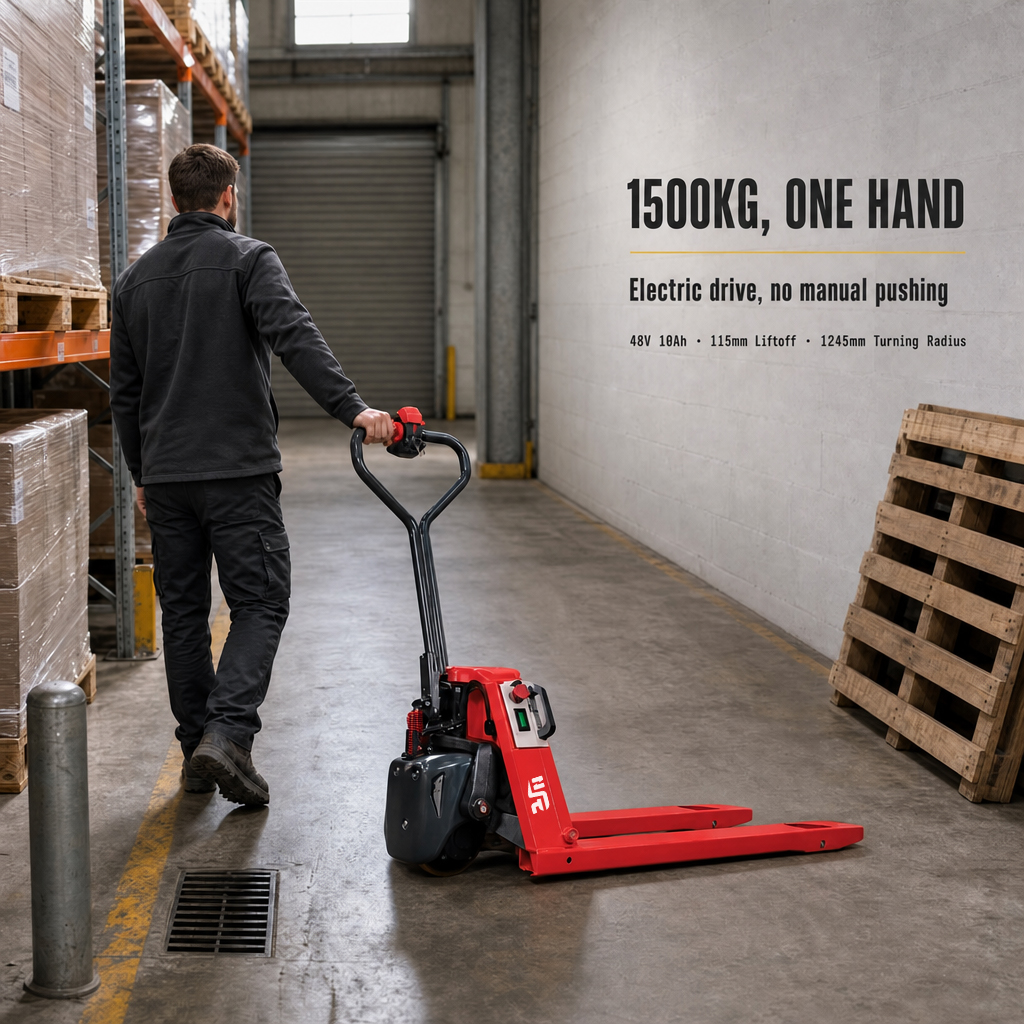
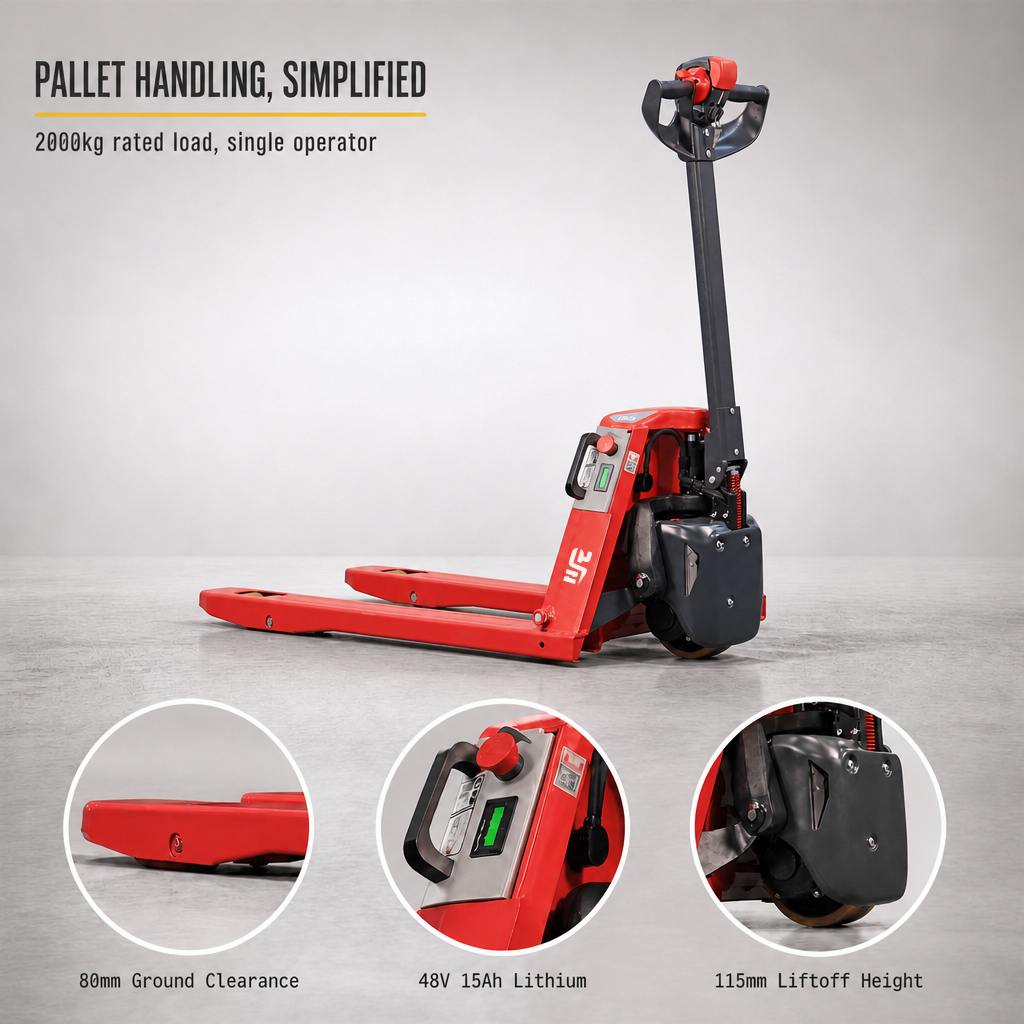
80mm Ground Clearance Electric Pallet Jack 9% Climbing Grade 1450mm Vehicle Length Lithium Pallet Truck for Ramp Use
A ramp-capable lithium pallet truck with 80 mm ground clearance and a 9% climbing grade. The 1,450 mm vehicle length is useful where dock plates, floor transitions, and trailer ramps are part of the daily route.
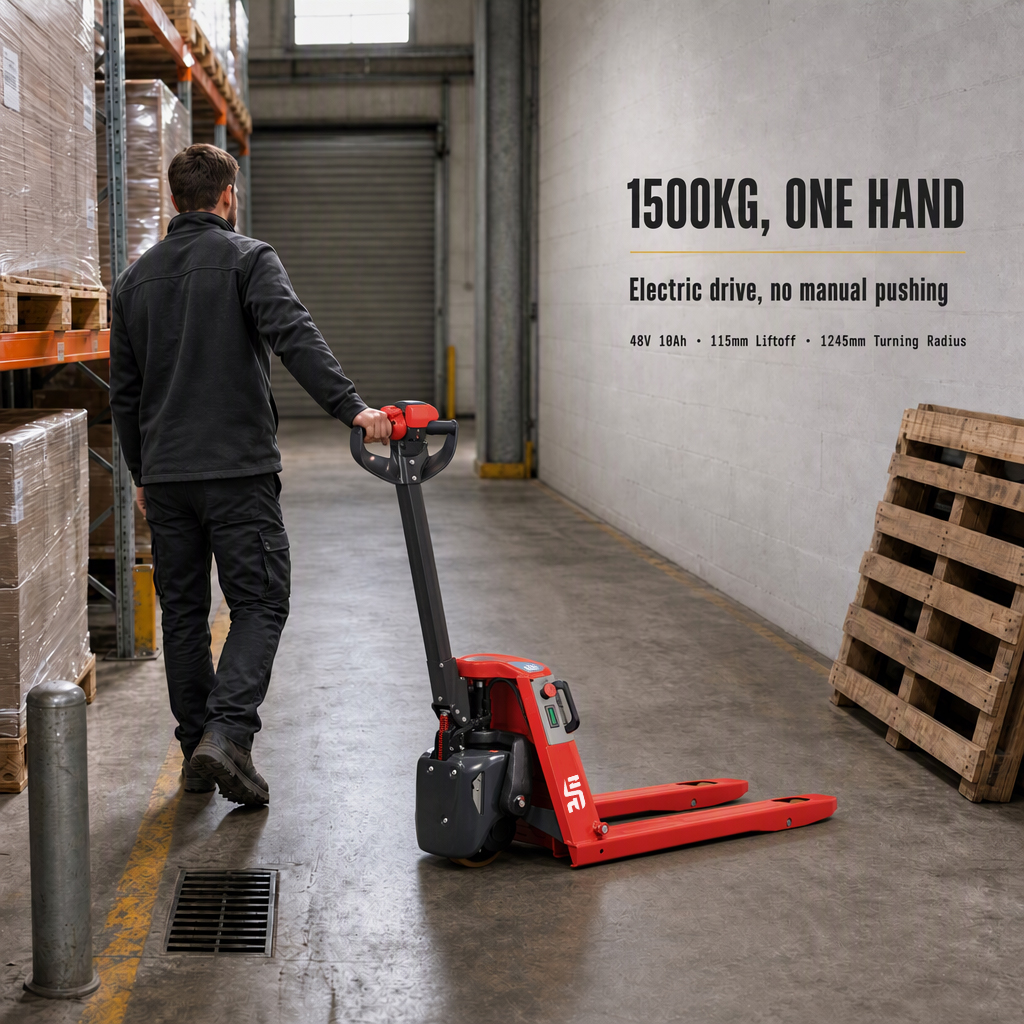
1.5 Ton Electric Pallet Truck with 48V Li-ion Battery, 107kg Ultra-lightweight Pallet Jack for Narrow Aisle Warehouse
An ultra-light 107 kg design with a 48V Li-ion battery for narrow aisles, retail backrooms, and delivery vehicles. Lightweight construction helps reduce floor and trailer loading concerns in multi-stop operations.
NRT 2 Ton Electric Pallet Jack Lithium-Ion 48V 10Ah 1150mm Forks Polyurethane Wheels Warehouse Handling
A 2-ton lithium pallet jack with 48V 10Ah battery, 1,150 mm forks, and polyurethane wheels. Well suited to compact warehouse handling, cross-docking, and low-maintenance pallet movement.
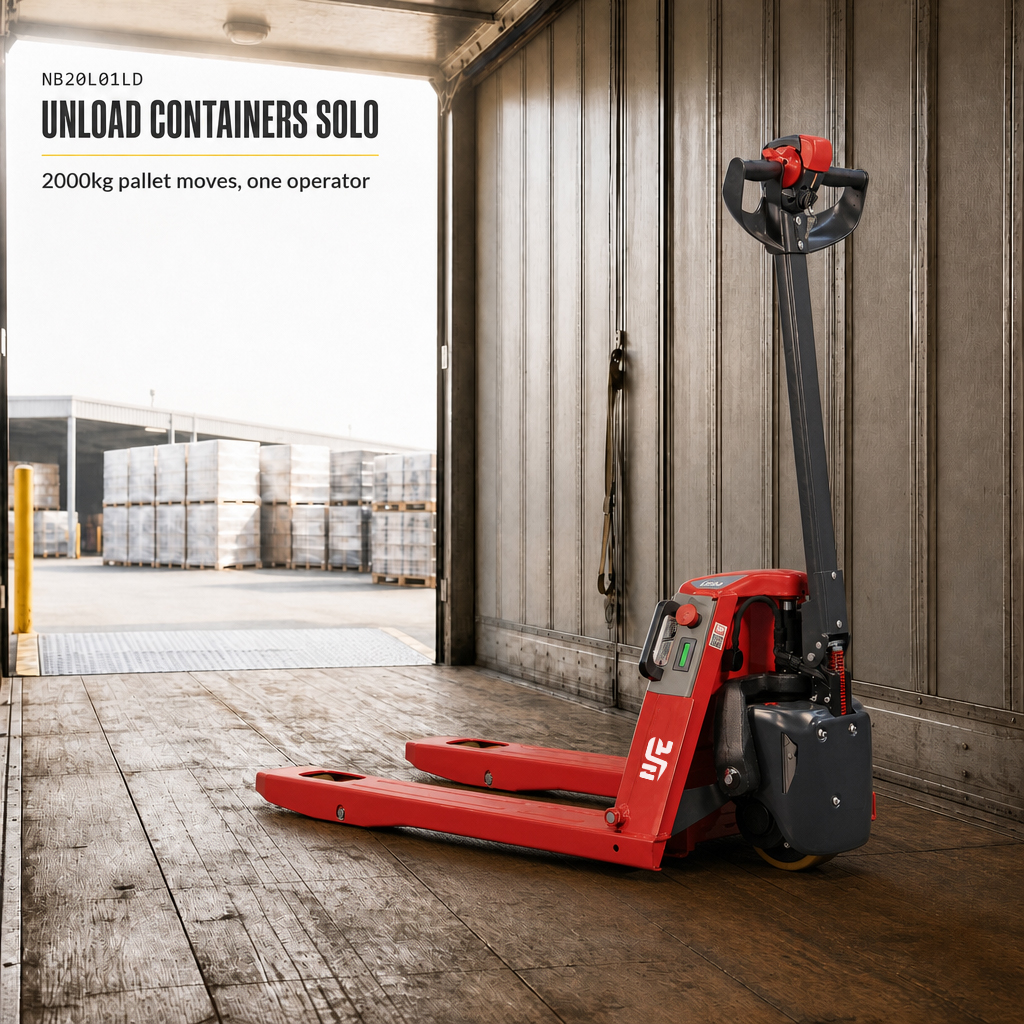
NB20L01LD 2000kg Electric Pallet Truck Lithium Battery 4.8km/h Speed 1245mm Turning Radius Jack
A 2,000 kg electric pallet truck with 4.8 km/h travel speed and a 1,245 mm turning radius. The tighter turning radius helps in crowded 3PL staging areas and distribution center cross-docks.
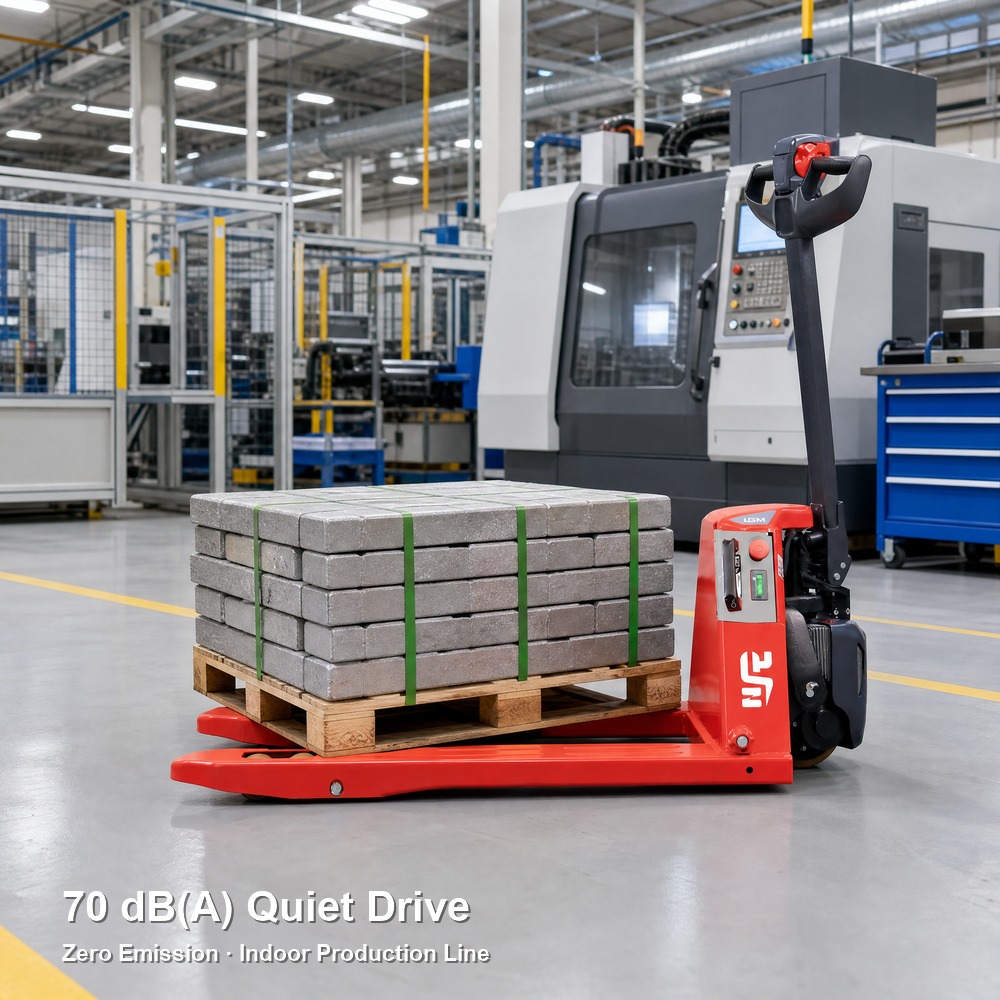
Battery Powered Pallet Jack Truck 48V Lithium Walkie Type for Narrow Aisle Warehouse Elevator Loading Unloading
A 48V lithium walkie pallet truck for narrow aisle warehouses and elevator loading. A practical option for multilevel facilities, retail replenishment, and dock-to-storage routes that do not require high rack stacking.
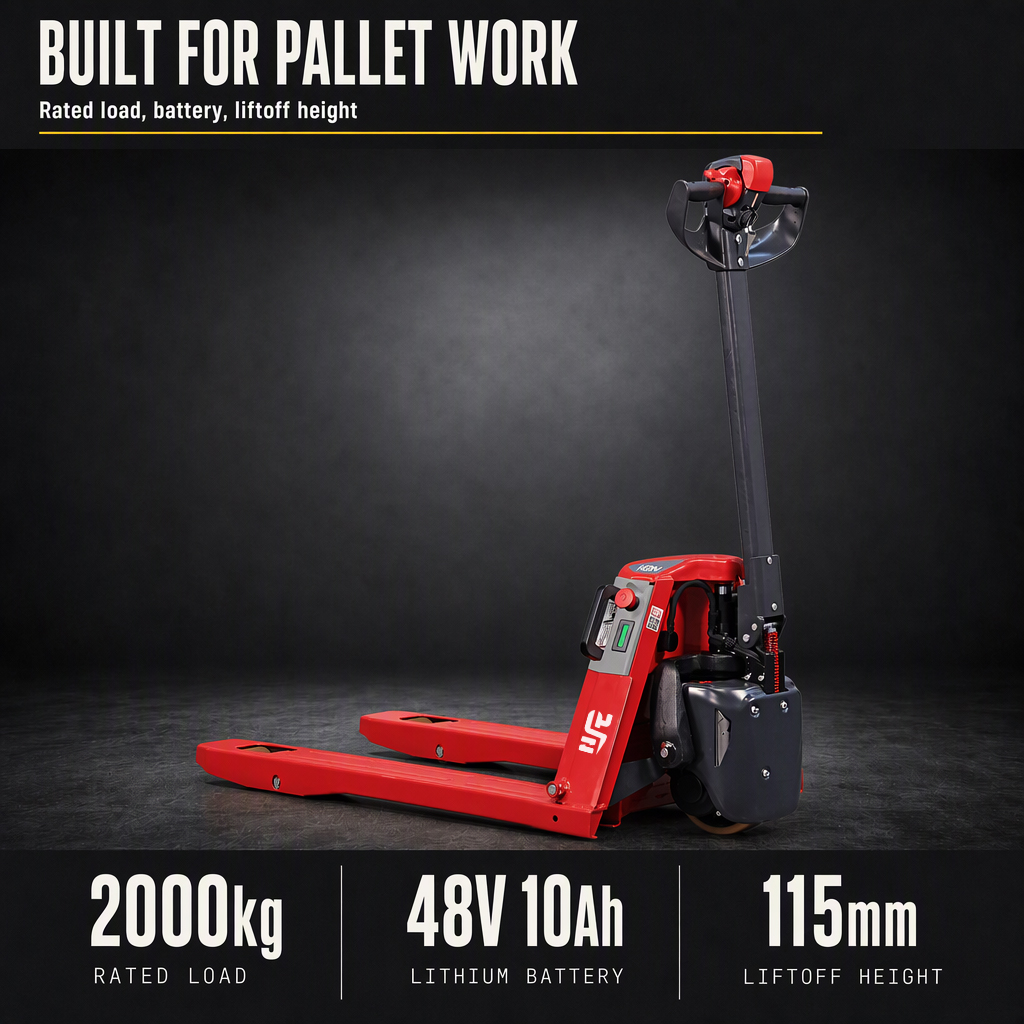
Portable Electric Pallet Jack Lithium Battery 2T for Narrow Aisle Warehouse and Truck Delivery Handling with 48V High Efficiency
A portable 2-ton lithium pallet jack for narrow aisles and truck delivery handling. Its 48V high-efficiency platform is relevant for route delivery, event logistics, and facilities that move between dock positions.

Stand on Electric Stacker 2000kg for Narrow Aisle Warehouse Loading Dock Building Material Shop Pallet Handling
A 2,000 kg stand-on electric stacker for narrow aisles, loading docks, building material shops, and repeated pallet handling. The stand-on format can reduce operator fatigue where lifting cycles are frequent.
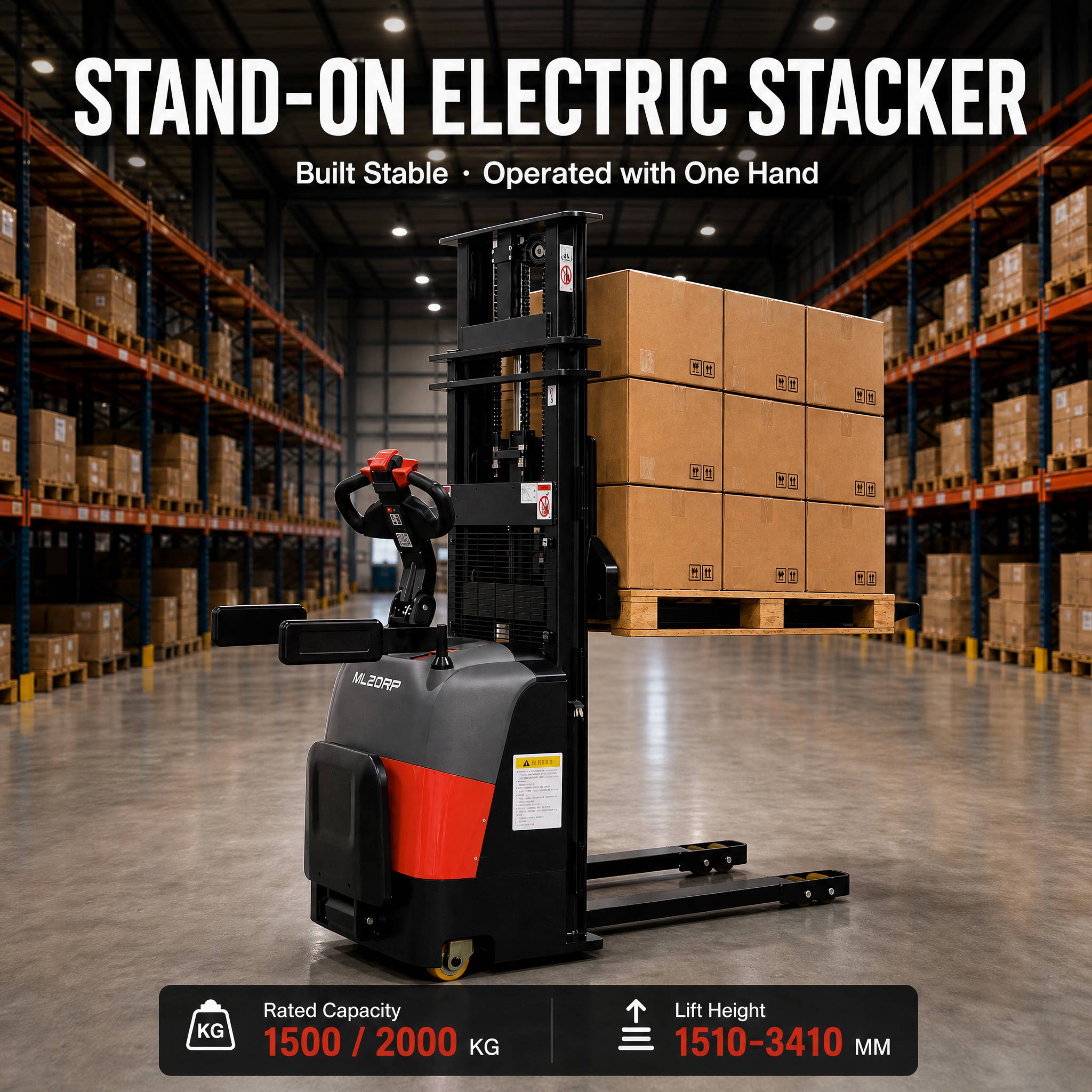
Channel Steel Mast Electric Pallet Stacker 2000kg 90mm Lowered Fork Height Stable High Rack Stacking
A 2,000 kg channel steel mast electric pallet stacker with 90 mm lowered fork height for stable high-rack stacking. This configuration is aimed at buyers who need repeatable pallet positioning and rack support.
Need the full model sheet, battery options, and charger list?
Use the catalog request to share your load, aisle width, ramp grade, voltage, and duty cycle. Our team will map the suitable towing tractor or warehouse handling configuration for your San Antonio site.
Where Electric Towing Tractors and Warehouse Trucks Fit in San Antonio
San Antonio’s logistics profile blends warehouse distribution, manufacturing, food and beverage, military-adjacent support, building materials, and cross-border trade. Each environment changes the tow tractor and pallet truck specification.
3PL and Distribution Centers
Use towing tractors for cart-train movement from receiving to pick modules, with lithium pallet trucks for dock-to-staging. Include the NB20L01LD’s 1,245 mm turning radius in your aisle-fit review.
Focus: turnaround time, aisle fitFood, Beverage, and Cold Chain
Zero-emission electric equipment supports indoor air quality and low-noise operations. In cold rooms and food plants, confirm condensation control, wash-down expectations, and opportunity-charging routines.
Focus: hygiene, uptime, low noiseManufacturing and Aerospace Support
Line-side supply and work-in-process transfer often favor tow tractors for repeatable routes. High-rack or component handling can use stand-on stackers and channel mast models for stable positioning.
Focus: repeatability, safetyRetail and E-commerce Fulfillment
Portable and ultra-light pallet trucks are useful for store replenishment, delivery vans, and multilevel facilities. For fulfillment centers, combine tow tractor routes with walkie pallet trucks and stackers.
Focus: flexibility, compact sizeBuilding Materials and Construction
Building material shops often benefit from a 2,000 kg stand-on stacker for repeated loading and put-away. For yards, confirm wheel type, ground clearance, ramp grade, and dust exposure before selection.
Focus: durability, lifting cyclesUSMCA and Cross-Border Logistics
San Antonio serves as a gateway for Mexico-linked supply chains. Buyers need clear voltage, documentation, spare-parts planning, and equipment that can handle cross-dock cart trains and trailer transfer.
Focus: documents, charger readinessSan Antonio Market Trends Shaping Electric Tug and Pallet Truck Procurement
Procurement specifications are changing as Texas warehouses add automation, manage summer heat, and shorten supply chains through nearshoring. These trends directly affect model selection and total cost of ownership.
Nearshoring and USMCA Flows
More San Antonio and Laredo-corridor facilities are planning flexible cross-dock layouts. That increases demand for tow tractors that can move staged cart trains and for compact pallet trucks that fit changing dock assignments.
Implication: flexible route planningHeat, Humidity, and Charging
South Texas heat makes charging location and battery temperature management important. Specify charger ventilation, avoid charging a hot battery immediately after heavy use, and plan charging areas outside flood-prone zones.
Implication: charging site reviewLabor Retention and Ergonomics
Fleet buyers are weighing operator fatigue as much as purchase price. Stand-on stackers, lightweight pallet trucks, and intuitive controls can reduce training time and improve shift-to-shift consistency.
Implication: operator comfortLithium and Opportunity Charging
Lithium-ion pallet trucks support opportunity charging during breaks. For San Antonio multi-shift warehouses, match battery capacity and charger voltage to the actual break schedule rather than relying on a generic runtime claim.
Implication: duty-cycle data firstAutomation-Compatible Fleets
AGV and smart forklift interest is growing where repeatable pallet flows exist. Buyers should plan aisle markings, safety controls, Wi-Fi coverage, and data infrastructure before adding automated equipment.
Implication: plan infrastructureService Parts and Dealer Support
Total cost of ownership depends on parts access, training, and response time. San Antonio dealers should request common wear-part kits, battery data, charger manuals, and a clear escalation path before placing a fleet order.
Implication: plan the service modelHow to Choose an Electric Towing Tractor or Pallet Truck for a San Antonio Facility
Use this practical weighting as a starting point. For fleet purchases, replace the example percentages with your own measured costs, route data, and safety requirements.
Site Preparation Checklist
Before requesting a quote, collect the data that changes the recommendation.
- Maximum load weight, cart train length, and route distance
- Aisle width, door height, elevator dimensions, and turning space
- Ramp grade, dock plate transitions, floor condition, and outdoor exposure
- Charger location, available voltage, phase, plug type, and ventilation
- Shift hours, break schedule, and opportunity-charging windows
- Operator training requirements and local safety procedures
Compliance and Documentation
For U.S. sites, buyers should verify applicable requirements with their safety and legal teams. The procurement file should include equipment drawings, charger specifications, warning labels, and training materials.
Common review points include OSHA 29 CFR 1910.178 for powered industrial trucks, ANSI/ITSDF B56.1 for low-lift and high-lift trucks, local fire codes for battery charging areas, and charger listings required by the authority having jurisdiction.
Do not accept a verbal compliance claim in place of documents. Ask your supplier to state exactly which standards the offered configuration is designed to meet and which certificates are available for the final model.
Why Xiamen Pexal Technology Co., Ltd. Fits San Antonio B2B Buyers
Pexal is the sales, service, and technical support base for material handling equipment produced through its partner manufacturing ecosystem in Xiamen, Fujian, China. The company was established in 2024 and works with a large-scale partner campus supplying electric forklifts, pallet trucks, stackers, reach trucks, order pickers, and AGV solutions.

For a San Antonio buyer, the value is not simply a lower unit price. It is access to a supplier that can keep product data, customization, export documents, and after-sales support aligned as the order moves from quotation to delivery.
Pexal supports sample-based customization, full customization, and ODM service, including mast height, fork length, battery type, color, logo, and attachment configuration. Accepted delivery terms include FOB, CFR, CIF, EXW, FCA, CPT, CIP, and DDP, with payment options that include T/T, L/C, and other common trade methods.
- SGS onsite-assessed supplier with third-party verification
- Verified company video and trade-history pages
- Export support to Western Europe, North America, South America, Eastern Europe, and Oceania
- One range covering electric forklifts, pallet trucks, stackers, reach trucks, order pickers, and AGVs

SGS-Assessed Supplier
Pexal has passed a supplier assessment and onsite check conducted by SGS Group. Business type, main products, main markets, and capabilities were reviewed onsite.
220,000 m² Partner Campus
A large partner manufacturing base supports container orders, recurring dealer stock, and customized production planning for North American markets.
1,200+ Workforce
More than 1,200 skilled staff support production and quality control, including a team of over 100 engineers dedicated to electric warehouse equipment.
OEM / ODM Customization
Configure mast height, fork length, battery type, color, logo, and attachments. This helps dealers and fleet buyers align equipment with their brand and local application.
Trade Terms and Currencies
Delivery terms include FOB, CFR, CIF, EXW, FCA, CPT, CIP, and DDP. Payment methods include T/T, L/C, D/P, D/A, Western Union, PayPal, credit card, and escrow where applicable.
Export Market Experience
Main export markets include Western Europe, North America, South America, Eastern Europe, and Oceania, serving dealers, rental companies, and end users.

Questions Local Dealers and Fleet Managers Ask About Electric Towing Tractors from China
These answers address the practical issues that appear in Texas procurement reviews: application fit, voltage, shipping, documents, customization, heat, spare parts, and order planning.
What is an electric towing tractor, and how is it different from an electric pallet truck?
Can you configure equipment for a U.S. facility with 208V, 240V, or 480V power?
How do I estimate shipping from China to San Antonio?
What documents can support customs and internal compliance review?
Do you offer private label, custom color, mast height, fork length, and battery options?
How does San Antonio heat affect lithium batteries and warehouse equipment?
What spare parts and training support are available for a Texas fleet?
What is the minimum order and lead time for a San Antonio project?
Request a San Antonio-Specific Electric Towing Tractor and Pallet Equipment Quote
Send your load, aisle width, ramp grade, charger voltage, duty cycle, and branding requirements. Pexal will respond with a practical configuration path, product catalog, and next-step checklist for your San Antonio operation. Email: info@pexalbot.com