CE Certified Order Picking Truck Factory & Supplier Serving the Chicago Market
Engineering-led order picking trucks, pallet jacks, stackers and warehouse equipment for Chicago 3PLs, cold-storage operators, e-commerce fulfillment centers and manufacturers. We combine factory-direct customization, export documentation and practical US deployment support.
CE-Ready Order Picking & Warehouse Truck Lineup for Chicago Buyers
Order picking efficiency is rarely created by one machine alone. In a Chicago facility, the order picker is supported by pallet jacks, stackers, walkie trucks and stand-on equipment that move replenishment stock, unload containers, feed pick faces and transfer finished orders. The eight models below are practical building blocks for a right-sized, CE-documented warehouse fleet.
 Recommended · Cross-dock
NB15L01LD Electric Pallet Jack 2000kg 48V 15Ah Lithium Battery 850W Fork 1150mm PU Wheels Pallet Truck
Best-fit for Chicago cross-dock replenishment, retail backroom moves and short-haul trailer unloading where a compact lithium pallet truck reduces manual strain and charging downtime.
View product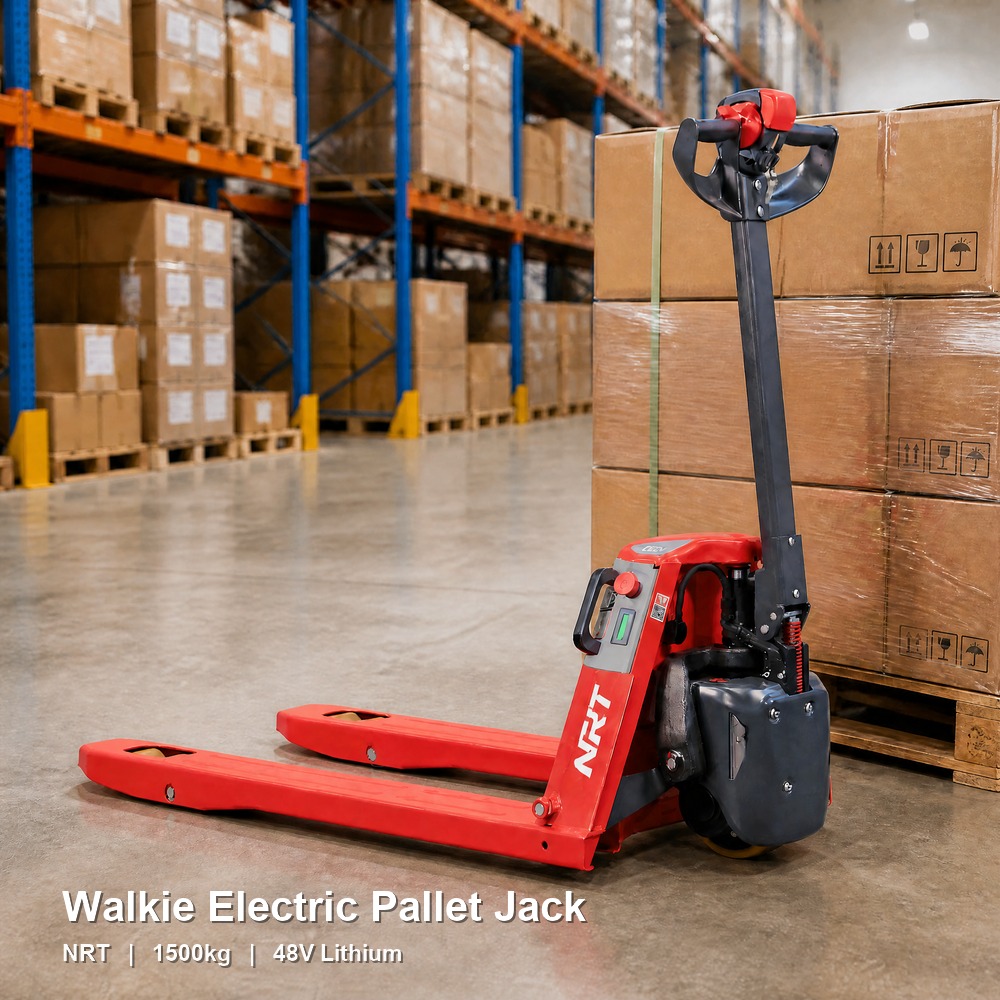 Flexible capacity
Electric Pallet Jack 1500kg 2000kg Walkie Pallet Truck Battery Powered Lithium Pallet Jack for Warehouse Loading
Useful for multi-client 3PLs that need one fleet standard across mixed pallet weights. Select 1.5 t or 2 t based on actual pallet profile, dock plates, ramps and daily travel distance.
View product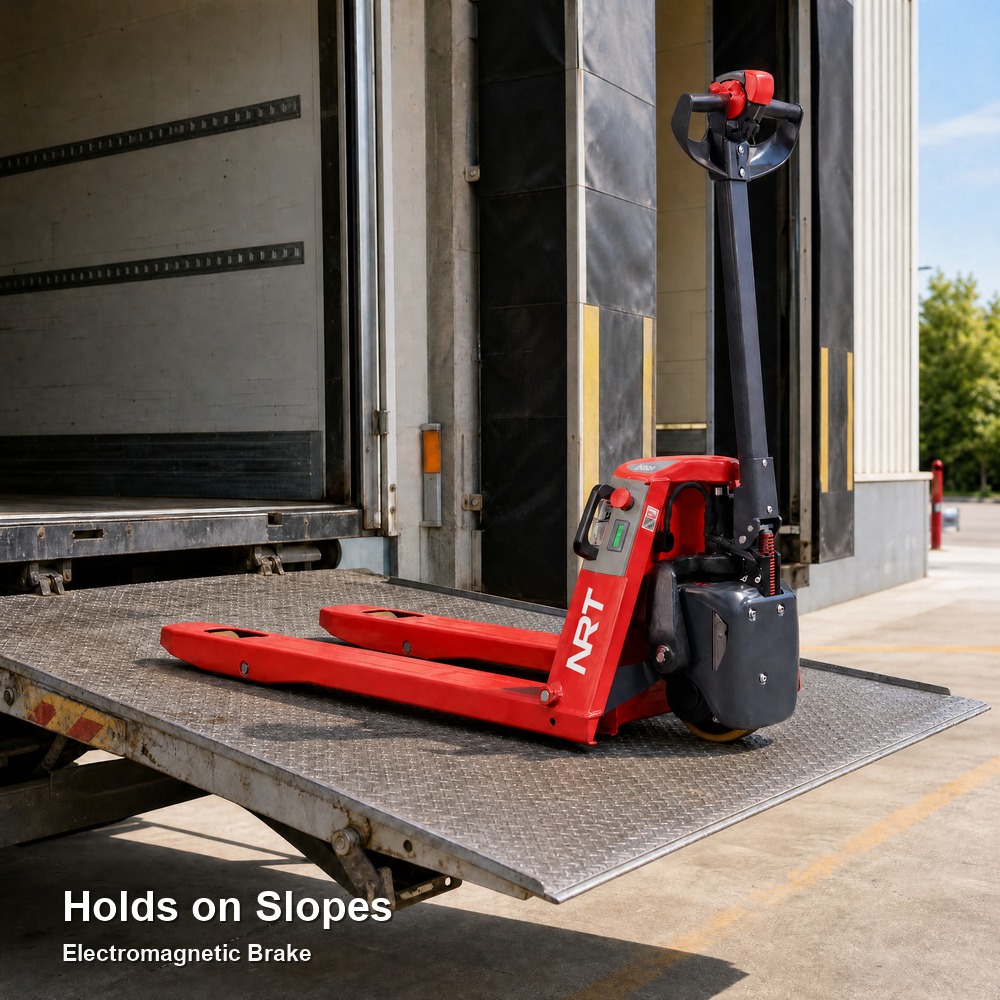 Narrow-space fit
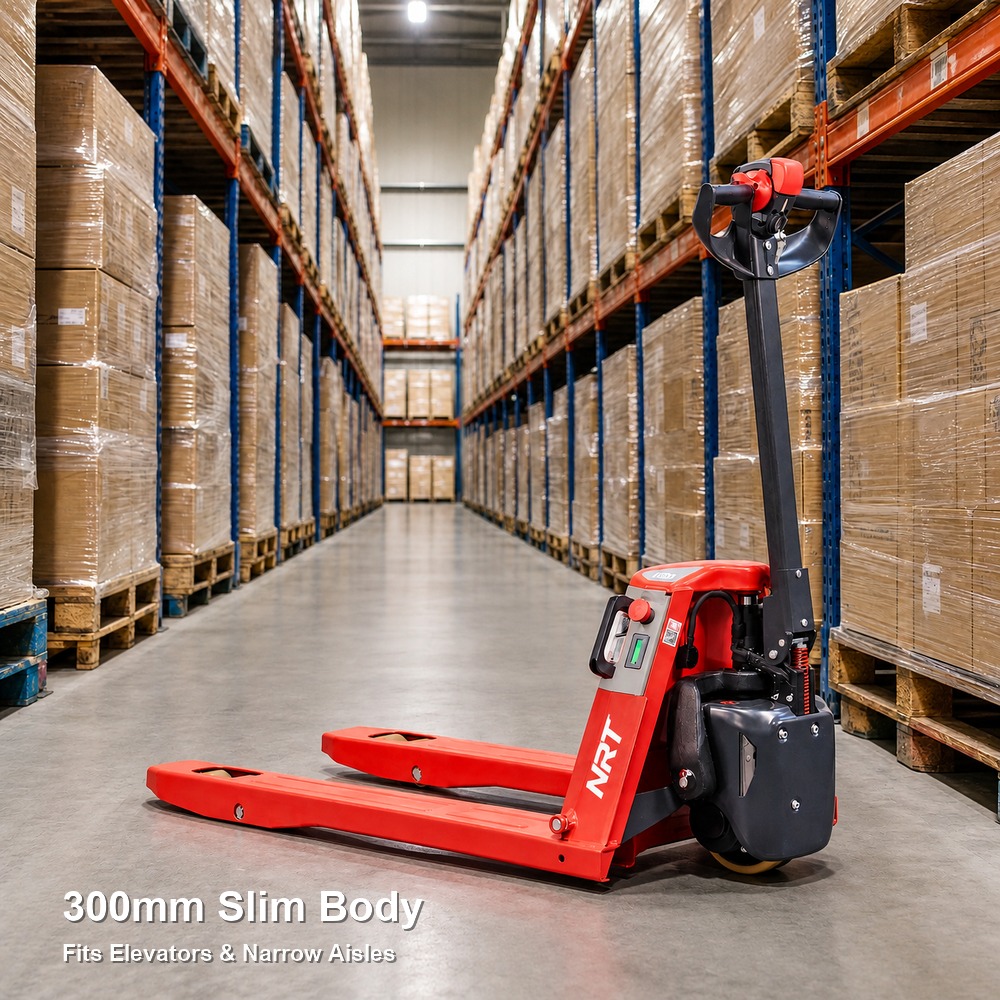
Electric Pallet Jack 1500kg 300mm Slim Body Walkie Pallet Truck for Elevator Freight Box Narrow Aisle Handling
A strong candidate for dense urban buildings, freight elevators, mezzanine transfers and older Chicago facilities where door widths and turning space constrain conventional trucks.
View product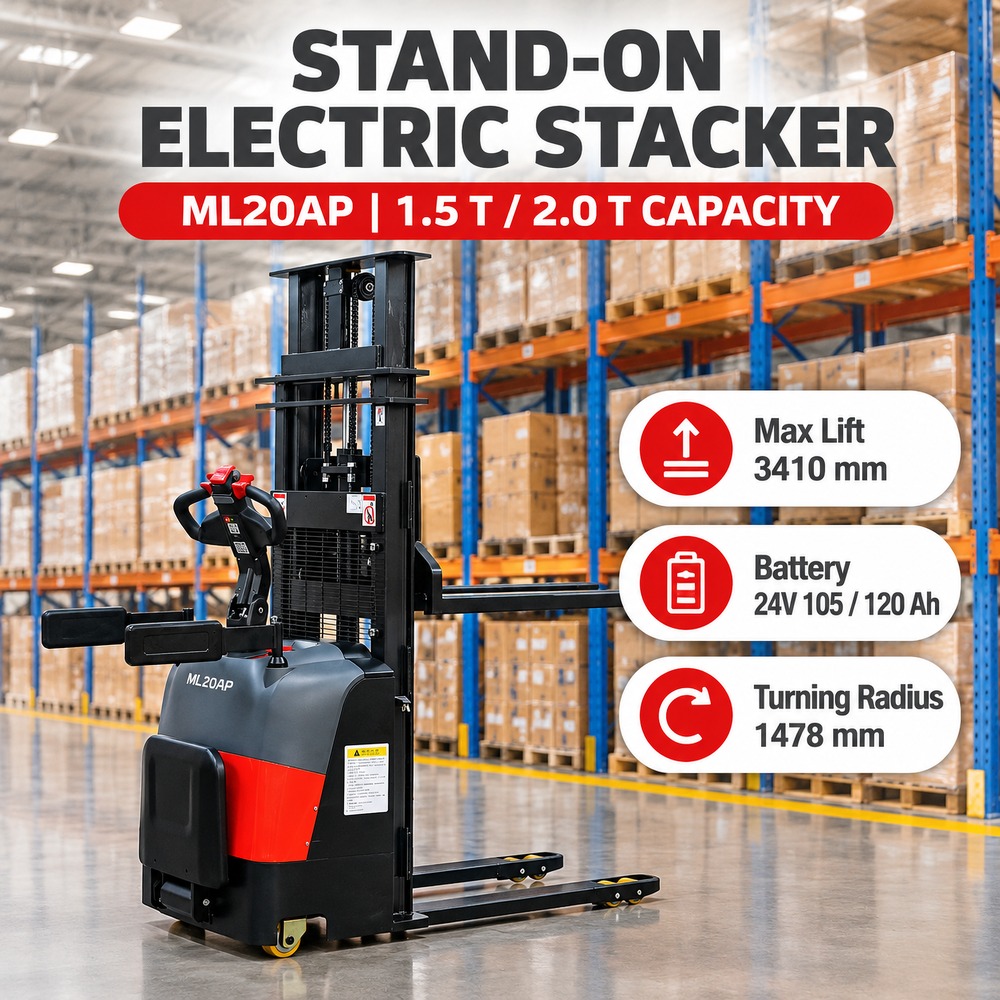 Put-away support
Warehouse Stacker Truck 1500kg 2000kg Electric Pallet Stacker 24V 105Ah Maintenance Free Battery
For low-to-medium racking, replenishment staging and put-away in compact warehouses. Confirm mast collapsed height, free-lift needs and battery selection before matching it to cold or ambient zones.
View product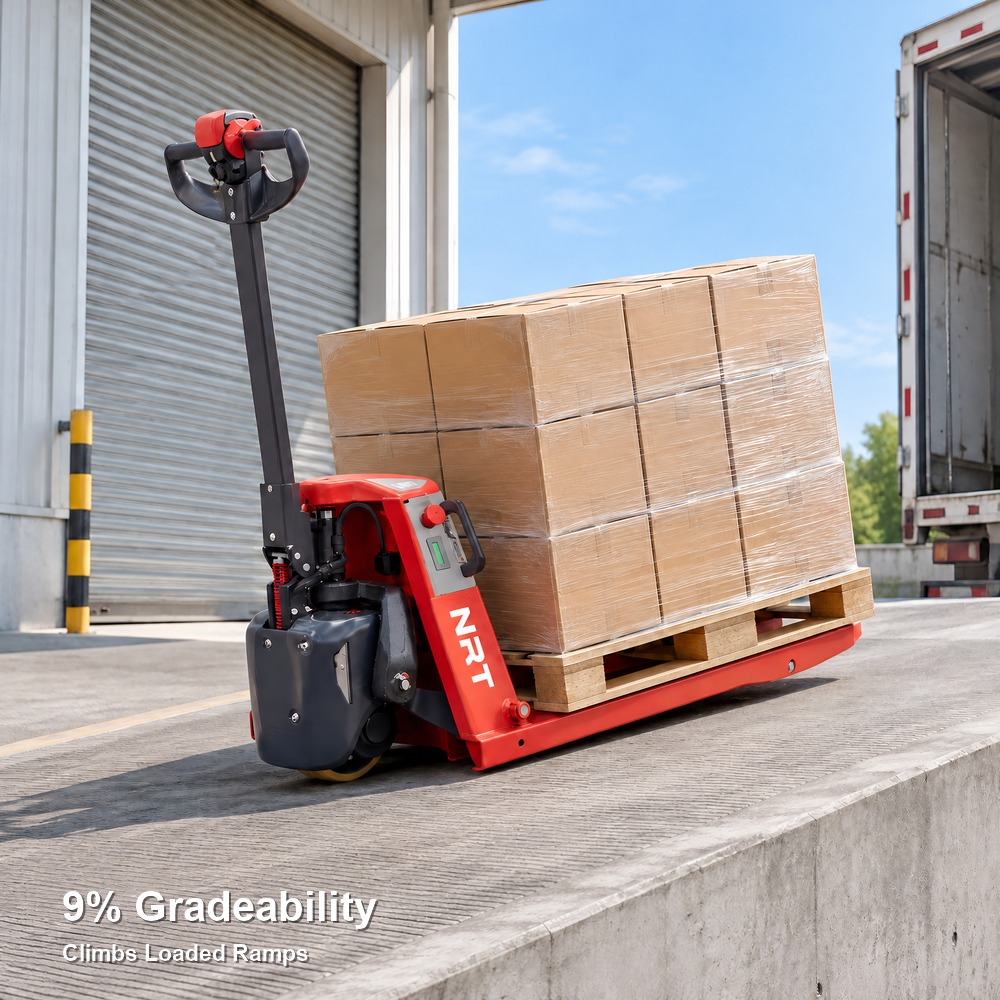 Multi-shift option
Lithium Battery Electric Pallet Jack Truck 1500kg 2000kg Walkie Pallet Jack Electric Forklift Alternative for Warehouse
An electric forklift alternative for horizontal transport and fast turns between receiving, pick faces and dispatch. Opportunity charging and battery management should be specified around your shift pattern.
View product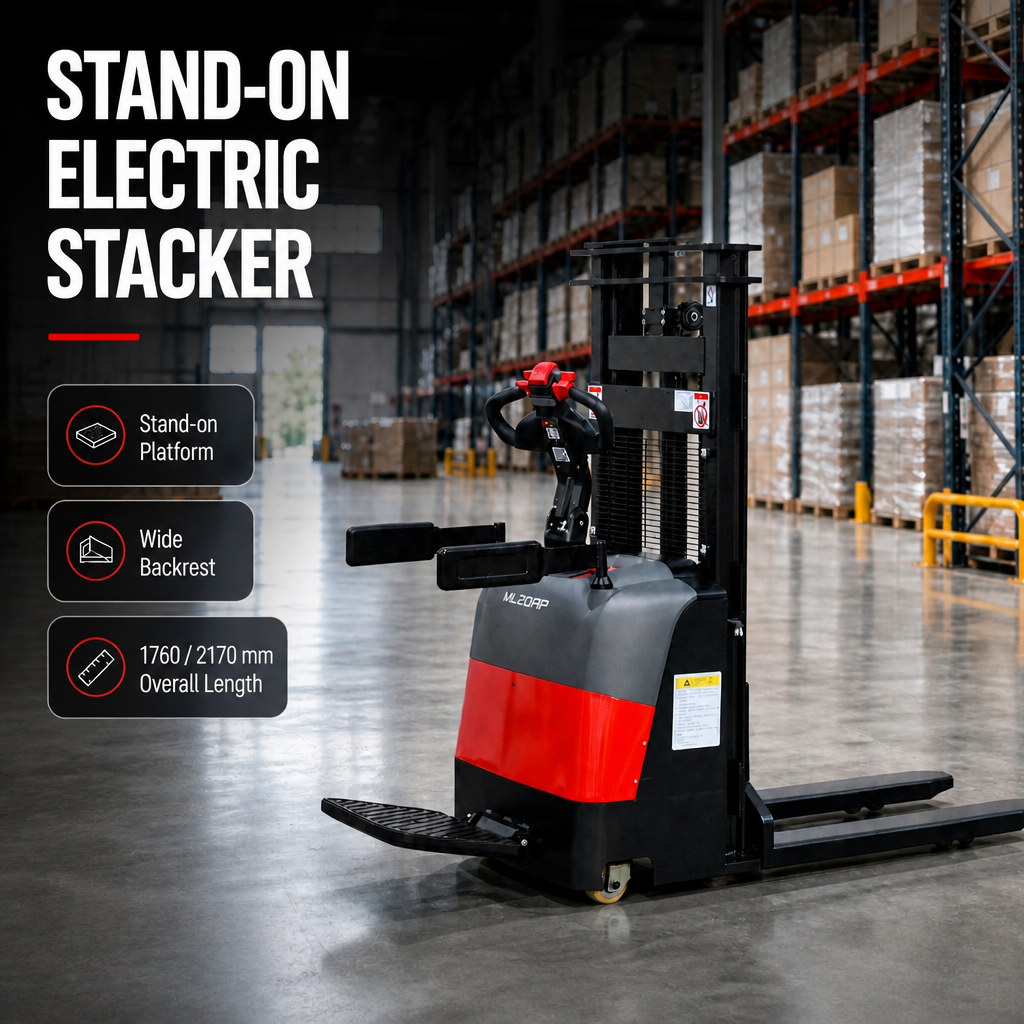 High-lift stacker
Electric Stacker Truck 2000kg Pallet Stacker Forklift 3410mm Lift for Warehouse Loading Unloading
Designed for loading, unloading and higher racking where a conventional low-lift stacker runs out of lift. Verify overhead obstructions, mast height and load centre before ordering.
View product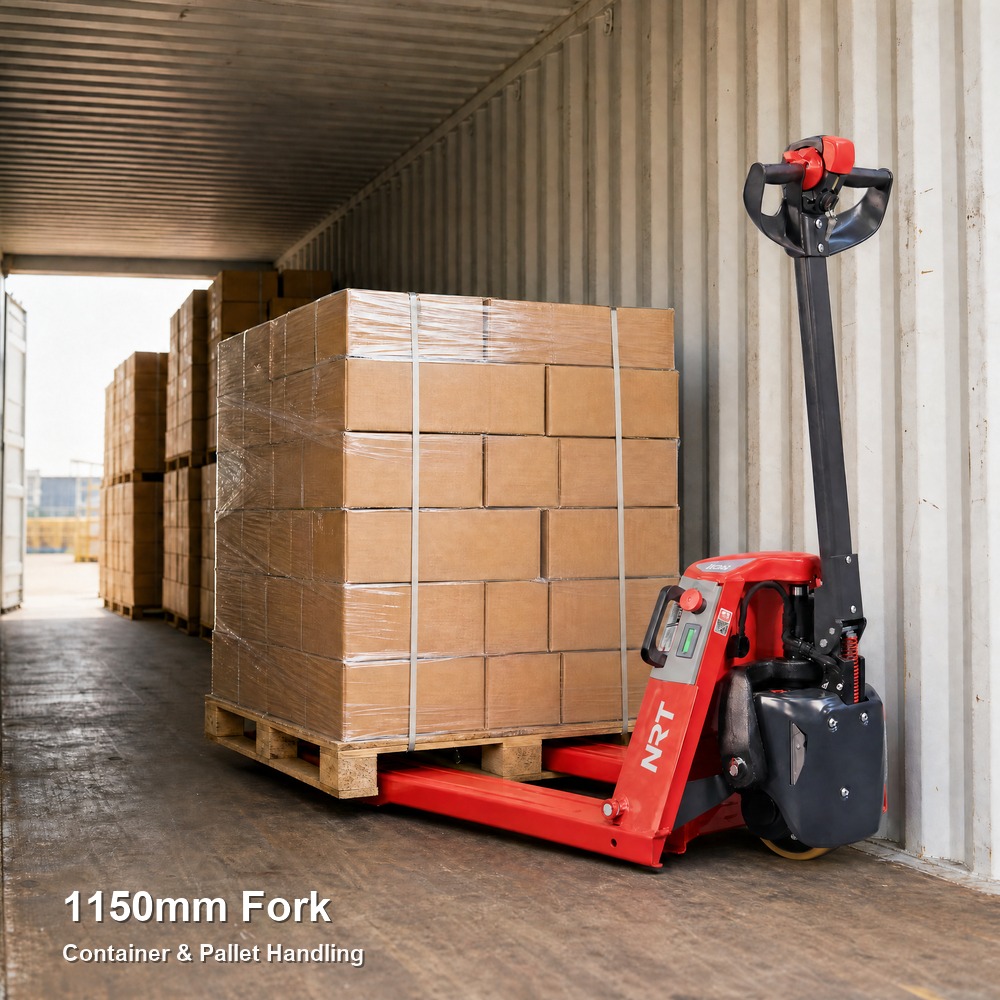 Dock & shop floor
Walkie Electric Pallet Jack 1500kg Fork 1150mm Pallet Truck Battery Powered for Container Unloading Shop Floor
A practical workhorse for container unloading, shop-floor transfers and trailer-to-staging moves. Its simpler operation helps temporary labor become productive quickly without a long training cycle.
View product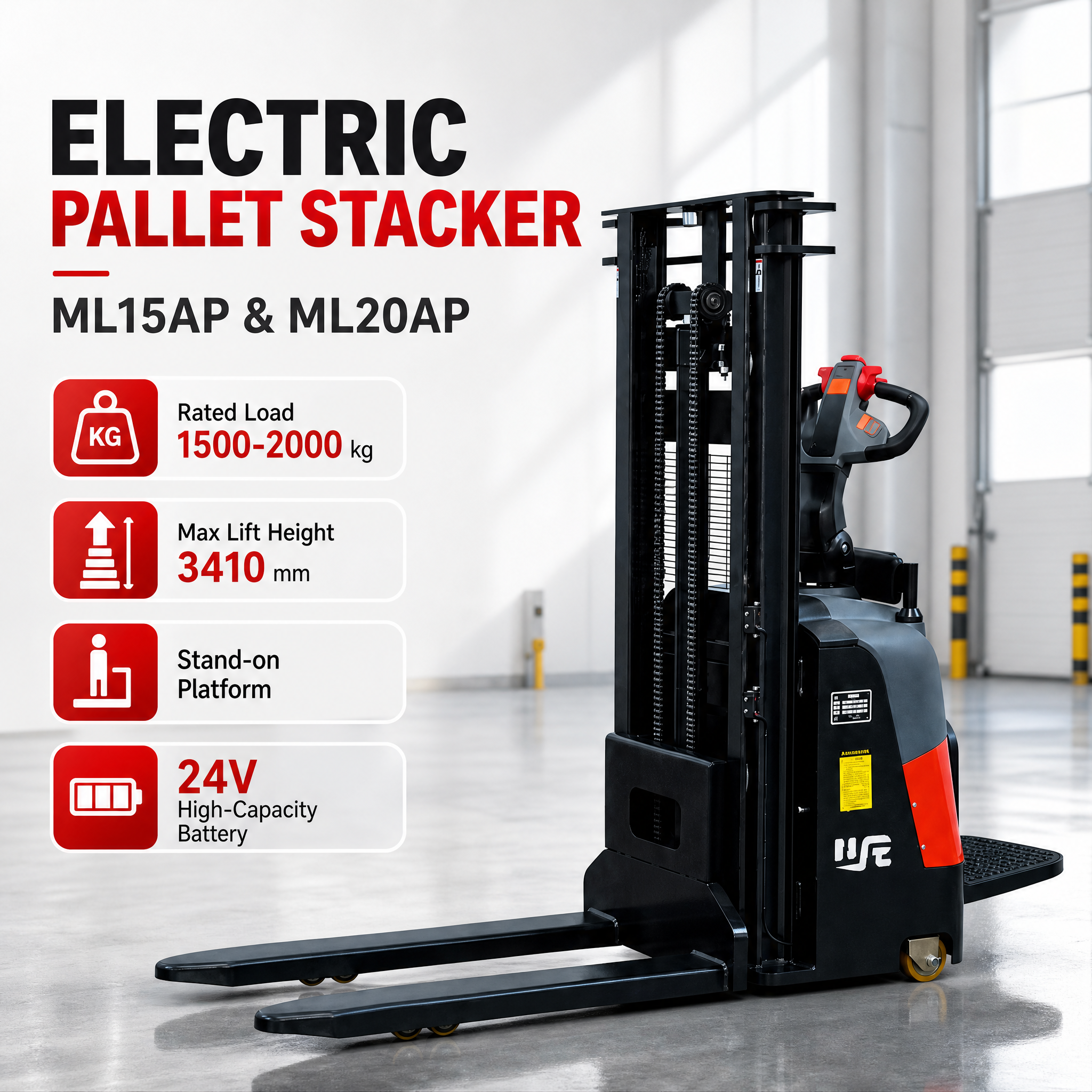 Long-travel stacker
Stand on Electric Stacker 2000kg Centre Mounted Drive Twin Balance Wheels Stable High Racking Stacking
Best for operations that combine longer travel distance with high-racking stacking. Centre-mounted drive and twin balance wheels support stability, but operator training and route design remain essential.
View product
A Factory-Linked Supplier Built for Serious Chicago Procurement
Xiamen Pexal Technology Co., Ltd. was founded in Xiamen, Fujian, as the sales, service and technical support base for Pexal material handling equipment. We work closely with a 220,000 m² partner manufacturing campus employing more than 1,200 people, including a team of over 100 engineers dedicated to electric warehouse equipment.
Our commercial mission is direct: help buyers move from manual handling to electric handling, and from diesel to battery power, while reducing emissions, noise and operating cost. For Chicago buyers, that means more than quoting a truck. It means reviewing aisle width, dock conditions, floor surface, shift pattern, charging window, operator training and the documentation your insurer, landlord or local authority may request.
- Full pallet truck, stacker and warehouse equipment range
- Sample-based customization and full ODM support
- Logistics solution design and application consulting
- SGS onsite-assessed supplier with verified profile
Need a Chicago-specific configuration? Share your aisle width, rack height, load weight and daily moves. We will recommend a practical model mix rather than a generic catalog list.
Inquire NowSGS Onsite Assessment
Business type, products, markets and capabilities reviewed through a third-party supplier assessment and onsite check.

Customization Verified
Sample-based customization, full customization and ODM services, including mast height, fork length, battery, color and logo.
Factory-Direct Coordination
Production planning, pre-shipment inspection and export packing coordinated from Xiamen to your Chicago receiving point.
Export Market Experience
Main markets include Western Europe, North America, South America, Eastern Europe and Oceania, serving dealers, rental fleets and end users.

Where These Trucks Earn Their Keep in Chicagoland
Chicago is not a single warehouse market. It is a network of dense urban buildings, suburban distribution parks, cold-chain facilities, rail-linked logistics hubs and manufacturing plants. Each environment changes the specification.
Cross-Dock & 3PL Operations
Facilities around Joliet, Elwood, the O'Hare corridor and the broader intermodal network live on speed. Pallet jacks and walkie trucks move freight from trailer to staging lane without waiting for a forklift. The best configuration usually combines compact turning radius with battery capacity that lasts the dock schedule.
Food & Cold-Chain Distribution
Chicago's food, grocery and cold-storage networks require low-noise, zero-local-emission equipment in enclosed spaces. Lithium batteries need careful charging and temperature planning. Ask for battery specifications, charger placement guidance and condensation-control advice when the truck moves between freezer, cooler and ambient docks.
E-Commerce & Micro-Fulfillment
When pick faces turn over quickly, replenishment is the constraint. A dedicated order picker may be appropriate for elevated piece picking, but it must be supported by pallet jacks and stackers moving reserve stock. Design the flow in one direction: receive, stage, replenish, pick, pack and dispatch.
Manufacturing & Fabrication
Midwest manufacturers often move work-in-progress between cells, feed line-side material and load finished goods. The duty cycle is intermittent but unforgiving. Look for robust build, clear service access, standard spare parts and a model that can be safely operated by a mixed-experience workforce.
Retail, Grocery & Backroom
Space is tight and customer-facing areas demand quiet operation. Slim-body electric pallet trucks and compact walkies can improve backroom throughput. Check elevator dimensions, floor transitions and storage aisle widths before selecting the shortest or most powerful model.
Yards, Construction Supply & Winter Conditions
Chicago winters expose battery, tire and operator realities that sunny-showroom specifications miss. Outdoor-to-indoor transitions create moisture and salt. Plan for battery storage above freezing, inspect tires and braking surfaces, and train operators on wet or icy dock plates.
What Is Shaping Chicago Material Handling Purchasing Now
Procurement teams are not simply replacing old trucks. They are responding to higher warehouse utilization, tighter labor markets, electrification targets and stricter documentation demands.
Infill Warehousing & Narrow Aisles
Rising land values and limited modern space push operators to use every cubic foot. The result is more narrow-aisle layouts, higher racking and equipment that must fit the building, not the other way around.
Electrification With Practical Charging
Electric trucks reduce indoor emissions and noise, but the charging plan matters as much as the battery. Chicago buyers increasingly ask for charger voltage compatibility, opportunity charging guidance and shift-by-shift energy calculations.
Lithium Adoption & Cold-Weather Discipline
Lithium-ion improves opportunity charging and maintenance freedom, but cold storage and winter docks require temperature-aware operating rules. Specification must include battery management, charger location and operator training.
Automation-Ready, Not Automation-First
AGVs and smart forklifts attract attention, yet many Chicago operations still need reliable manual equipment and clean data first. Standardized pallets, marked routes and predictable flows are prerequisites before automation delivers value.
How to Specify an Order Picking Truck Without Overbuying
An order picking truck is a purpose-built tool for piece picking, not simply a pallet jack with a platform. The correct choice depends on pick height, load unit, travel distance, aisle width and the safety controls your operation can enforce.
| Equipment | Best Environment | Key Advantage | Chicago Caution |
|---|---|---|---|
| Low-Level Order Picker | E-commerce, spare parts, grocery piece picking | Operator platform with controls for rapid pick faces | Requires training, harness/anchor policy and aisle discipline |
| Electric Pallet Jack | Docks, trailers, horizontal transport | Fast, compact and simple to deploy | Check dock plates, ramps and battery charging window |
| Electric Stacker | Low-to-medium racking and put-away | Lifting capability in less space than a forklift | Verify mast height, overhead obstructions and load centre |
| Stand-On Stacker | Longer travel plus high-racking stacking | Rider stability and travel efficiency | Route planning and operator training are essential |
| Reach Truck | Narrow aisle, high-density storage | Maximizes pallet positions per square foot | Floor flatness, rack tolerance and aisle measurement |
| AGV / Smart Forklift | Repetitive fixed-route moves | Labor savings and predictable cycles | Needs stable infrastructure, markings and process discipline |
CE Certification Is Configuration-Specific
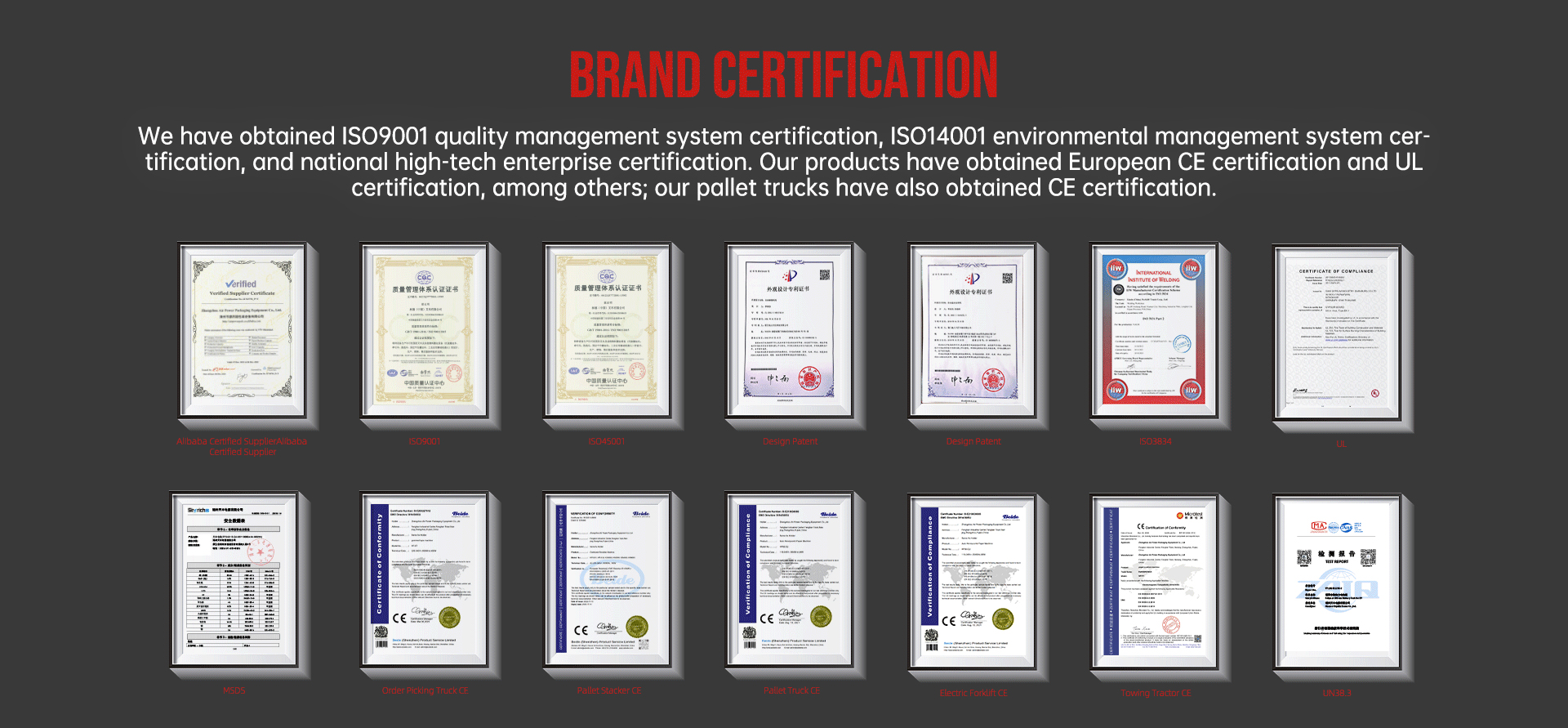
CE marking is an EU conformity declaration and does not automatically replace US requirements such as NRTL listing, UL/CSA-recognized components, NFPA guidance or local AHJ acceptance. For Chicago deployment, request model-specific CE documentation, charger electrical compatibility for 120/208/240/480 V availability, battery UN 38.3 transport documents, a spare-parts list and any available UL/CSA component records for the exact configuration quoted.
Measure the Building
Record aisle width, door width, elevator depth, dock plate slope, rack height and overhead obstructions. Do not rely on drawings alone.
Count the Real Duty Cycle
List pallet moves per shift, average travel distance, maximum load and peak periods. A truck that fits the average may fail the peak.
Design the Charging Plan
Confirm voltage, phase, charger location, ventilation, battery type and who is responsible for charging discipline.
Verify Documentation Early
Collect CE documents, component records, battery transport papers and spare-parts lists before the purchase order, not after the ship date.
Questions Chicago Buyers Ask Before Ordering
These are the practical questions that repeatedly appear in RFQs from 3PLs, dealers, cold-storage operators and manufacturers in the Chicago area.
Are your order picking trucks CE certified for Chicago use?
How do you ship warehouse trucks to Chicago?
Can chargers be configured for Chicago electrical supply?
Will lithium batteries work in a Chicago winter or cold-storage facility?
Do you offer UL or CSA components for US buyers?
What is the minimum order and customization level?
Which Incoterms, currencies and payment methods do you accept?
Can you help compare a pallet jack, stacker and order picker?
Launch a Chicago-Ready Equipment Review
Tell us what you move and where it must fit. We will turn your operating data into a practical configuration recommendation, a documentation checklist and an export plan from Xiamen to your Chicago receiving location.
- Load weight and pallet dimensions
- Aisle, door and rack height
- Daily moves and shift pattern
- Charging voltage and location
- CE, UL/CSA or insurer requirements
- Target quantity and delivery window