Eight Battery-Powered Models for Port-to-Warehouse Operations
These eight product families cover horizontal pallet transfer, medium-height stacking, high-rack storage, cold-room work, and light retail handling. Each model can be quoted with charger, spare-parts kit, fork length, mast height, branding, and export packaging. For a mixed fleet, compare the pallet weight, aisle width, lift height, shift pattern, and charging capacity before choosing.
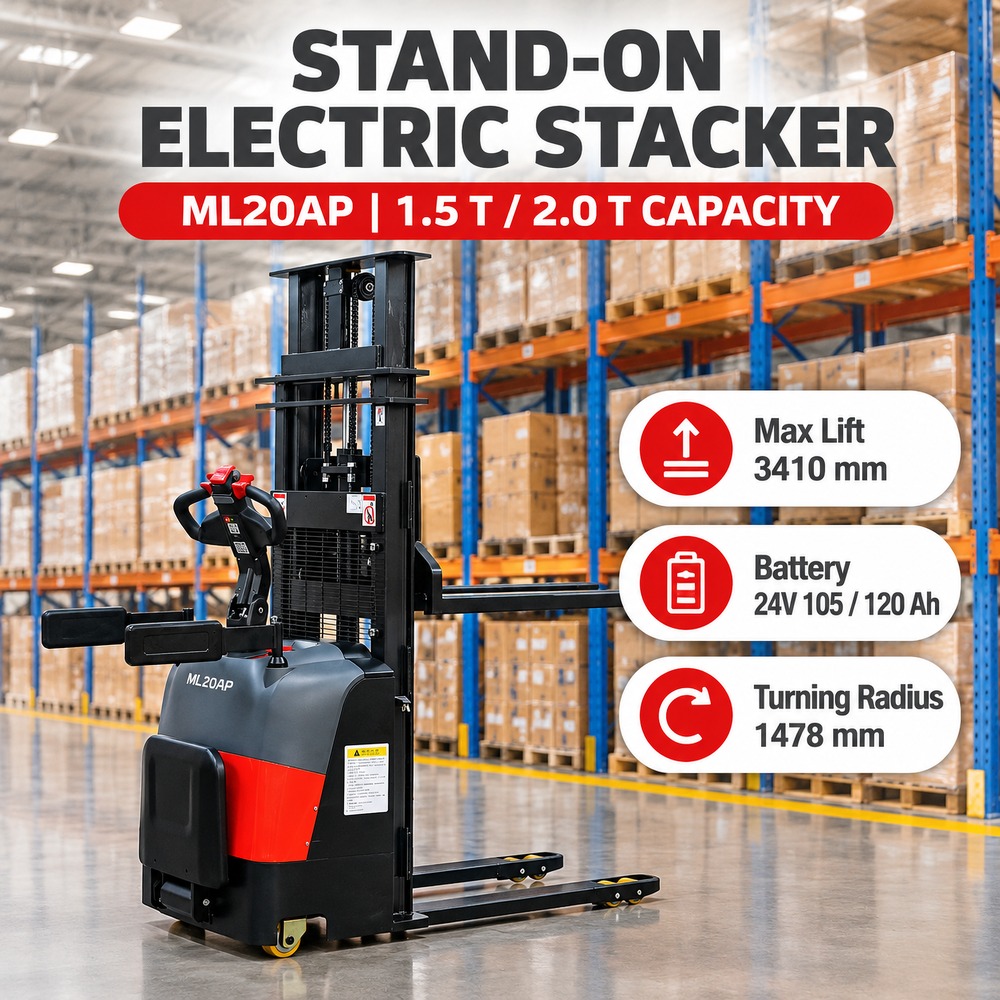
Warehouse Stacker Truck 1500kg 2000kg Electric Pallet Stacker 24V 105Ah Maintenance Free Battery
A practical choice for KIMA distributors, retail backrooms, and warehouse zones that need repeatable medium-height stacking, simple operator training, and a maintenance-free battery routine.
View Model →
2026 New Alternative Convertidor De Palet Jack a Electrico Ultra-Lightweight 107kg Electric Pallet Jack with Lithium Power
Ideal for retail floors, narrow backrooms, and fast-moving distribution points where staff need a lightweight lithium pallet jack that is easy to deploy between receiving and dispatch.
View Model →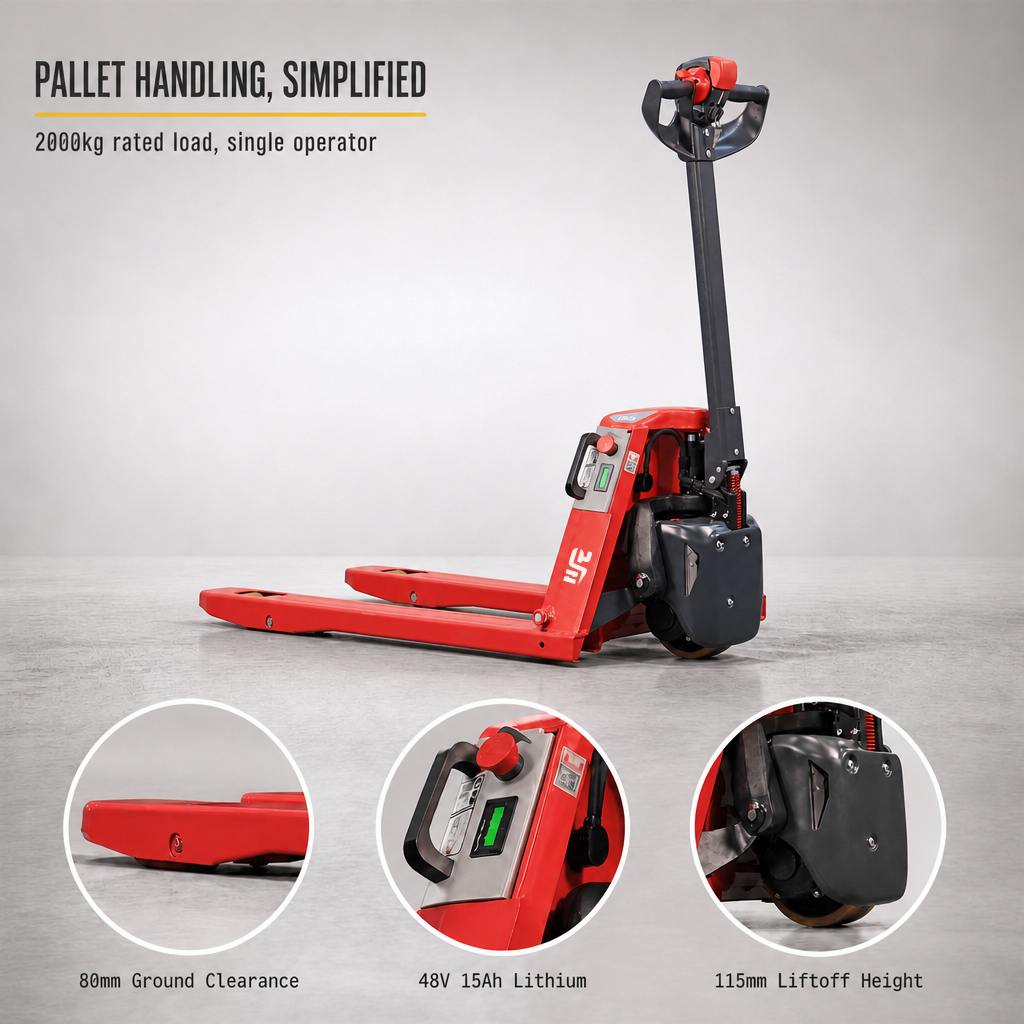
NB20L01LD 2000kg Electric Pallet Truck Lithium Battery 4.8km/h Speed 1245mm Turning Radius Jack
Recommended for dock-to-storage transfers, container unloading, and busy 3PL aisles where a 2000 kg lithium pallet truck needs to turn tightly and keep pace with receiving schedules.
View Model →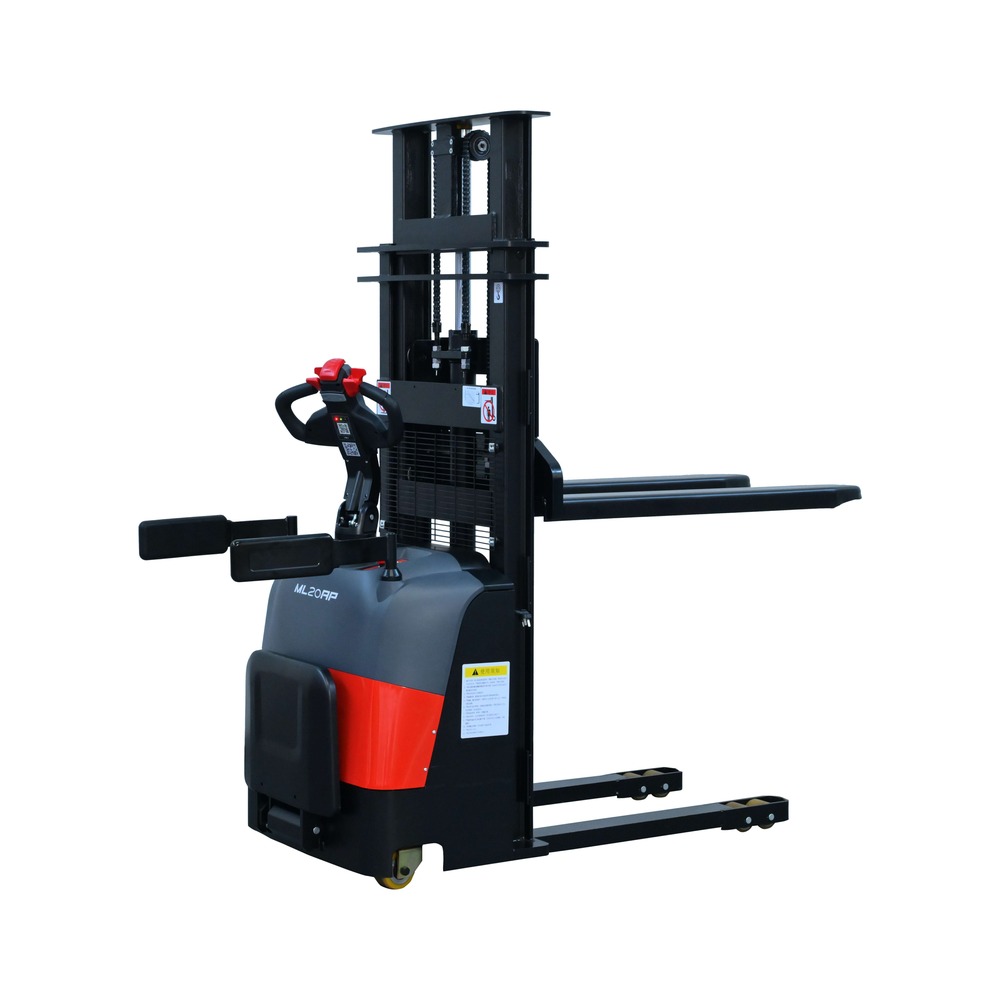
2000kg Stand on Electric Pallet Stacker 3.41m Lift Height Pallet Stacker Truck Channel Steel Mast 1480mm Turning Radius
Suited to high-density 3PL and warehouse operations that want stand-on travel comfort, 3.41 m lift height, and a controlled turning radius around medium-height racking.
View Model →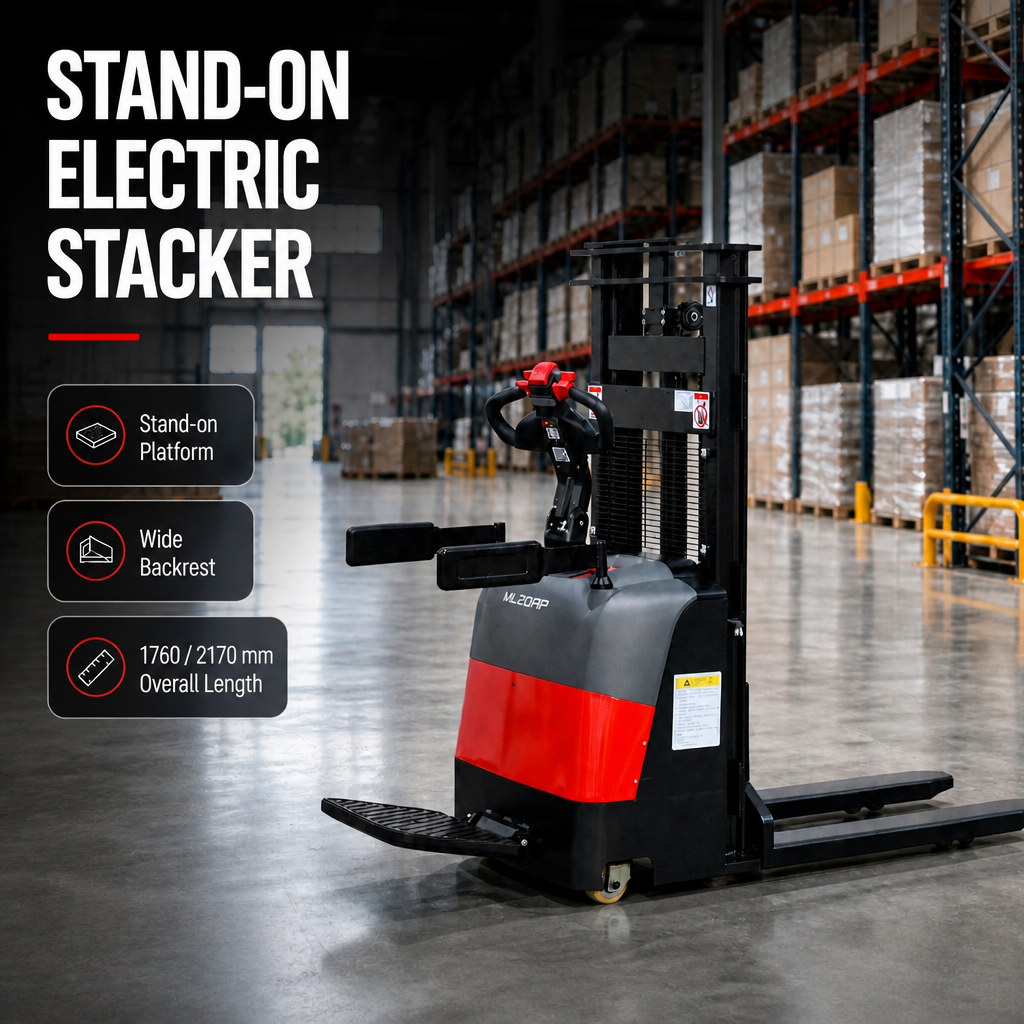
Electric Stacker Truck 2000kg Pallet Stacker Forklift 3410mm Lift for Warehouse Loading Unloading
Built for loading and unloading zones where 3410 mm lift height helps move pallets onto racking or vehicle beds without the footprint of a large counterbalance forklift.
View Model →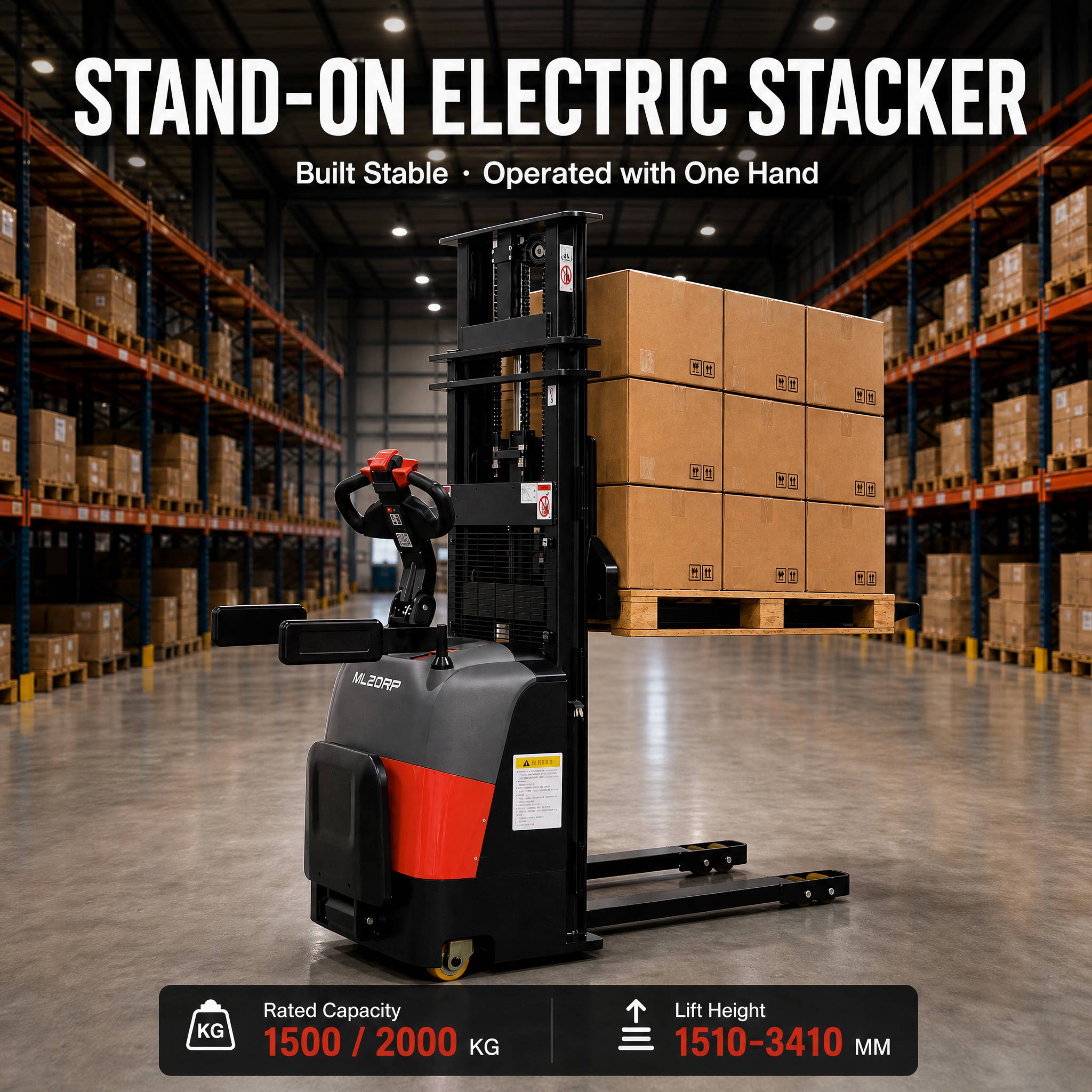
Channel Steel Mast Electric Pallet Stacker 2000kg 90mm Lowered Fork Height Stable High Rack Stacking
A focused high-rack stacker for warehouses that prioritize stable pallet entry, 90 mm lowered fork height, and dependable channel-steel mast construction.
View Model →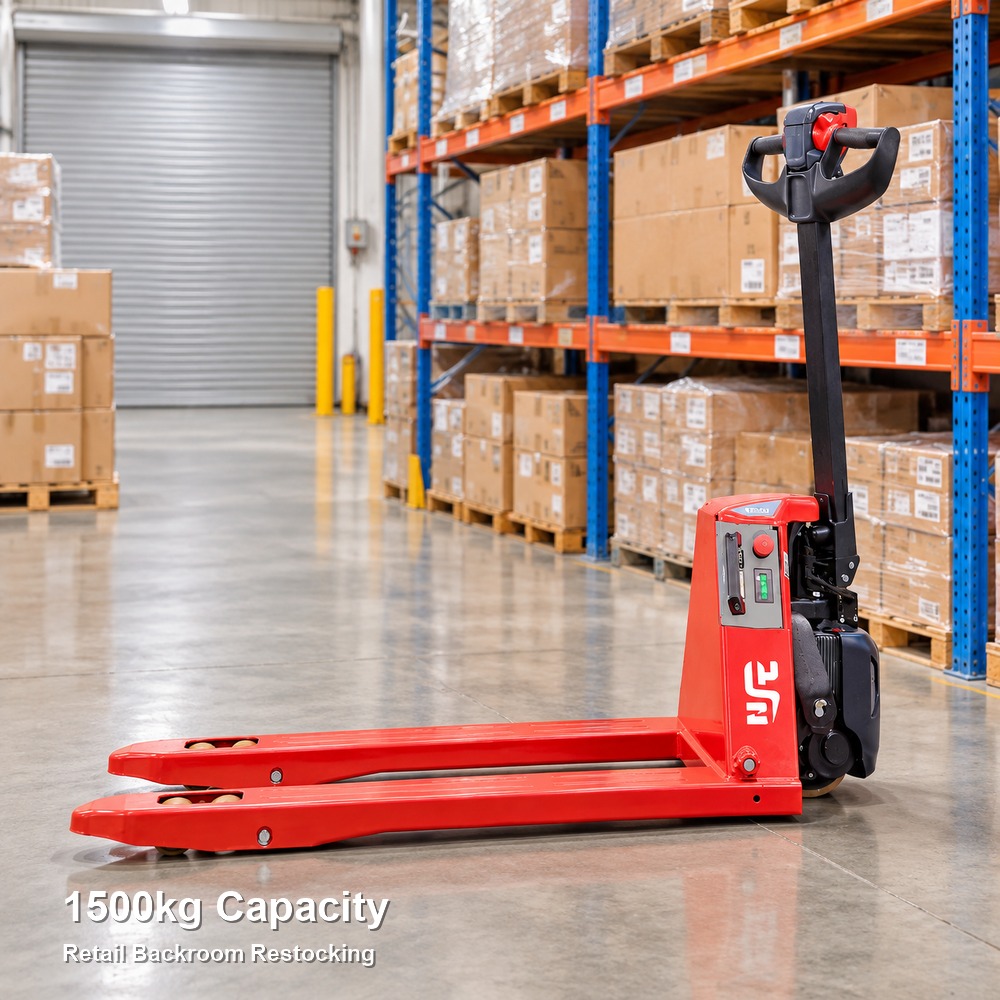
Cold Storage Electric Pallet Jack -20C Working 48V Lithium Battery Pallet Truck Walkie Type 1500kg 2000kg
For seafood cold rooms, frozen-food distribution, and chilled logistics where a walkie pallet truck must operate at -20°C and return to a controlled charging area.
View Model →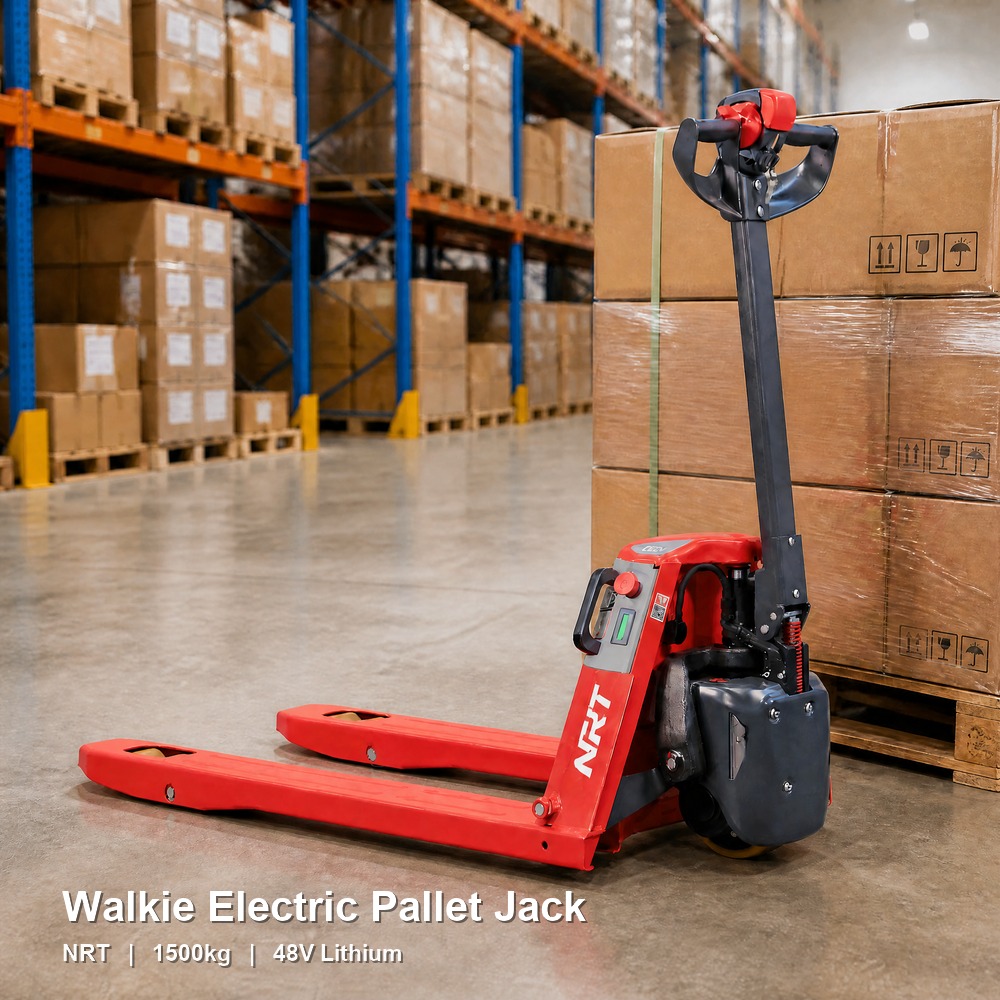
Electric Pallet Jack 1500kg 2000kg Walkie Pallet Truck Battery Powered Lithium Pallet Jack for Warehouse Loading
A general-purpose lithium walkie pallet jack for warehouse loading, retail replenishment, and truck-side handling where operators need flexible power and simple maintenance.
View Model →Why Battery-Powered Forklifts Fit Makassar’s Logistics Reality
Makassar is more than a local South Sulawesi market. It is a gateway for goods moving into and out of eastern Indonesia, and its equipment requirements are shaped by port traffic, cold-chain demands, humidity, and high warehouse utilization.
Warehouses around the Port of Makassar, the Makassar Industrial Estate (KIMA), and the city’s main distribution corridors handle rice, coffee, cocoa, seaweed, seafood, cement, building materials, packaged consumer goods, and e-commerce parcels. This variety creates a practical problem: one standard forklift specification rarely fits every site. A cold-store operator measures performance by battery behaviour at low temperature; a port cross-dock focuses on travel speed and turning radius; a high-rack 3PL prioritizes lift height and stable pallet entry. Pexal approaches Makassar with an application review, not a one-size-fits-all catalogue.
Battery-powered equipment has a clear role in this environment. In enclosed warehouses and cold rooms, electric pallet trucks and stackers eliminate local diesel exhaust, reduce engine noise, and support cleaner indoor air. For distributors, battery power can simplify on-site energy management when charging is planned around shift patterns. Yet electrification is not automatically the right answer for every outdoor yard: unpaved surfaces, long outdoor runs, and sites with unreliable charging infrastructure may still require diesel or all-terrain alternatives. The correct procurement question is not simply “electric or diesel?” but “which power source, floor condition, lift height, aisle width, and service model will keep pallets moving at the lowest total cost over five years?”
Tropical operating conditions deserve attention. Makassar’s humidity, coastal salt exposure, and high temperatures can stress electrical connectors, chargers, and battery compartments. A responsible specification should include charger placement away from salt mist, suitable ventilation, connector inspection routines, and a planned charging zone. For frozen storage, the buyer should verify the battery and charger’s low-temperature configuration, condensation management, and a recovery procedure after downtime. Our engineering team asks for shift hours, pallet weight distribution, rack height, floor surface, door dimensions, and charging power before recommending a model.
The information gain for Makassar buyers is not a longer brochure; it is a clearer decision record. Document the load centre, maximum lift height, aisle turning circle, floor load capacity, and number of shifts. Then compare the eight models above and request a factory configuration. That process reduces the risk of buying a truck that is over-specified for a retail backroom or under-specified for a multi-shift 3PL operation.

Localized Scenarios Where Battery Power Pays Back
The strongest battery-forklift business case appears where indoor air quality, noise, stop-start pallet movement, and predictable charging windows matter more than long outdoor range.
Port, Container & Cross-Dock
At the Port of Makassar and surrounding depots, pallets move from container stripping to staging, then to trucks. Battery pallet trucks and compact stackers reduce fumes and noise in covered staging areas. For rough open yards, confirm wheel type and floor condition before choosing electric.
01Seafood & Cold Chain
Seafood, frozen food, dairy, and chilled storage require reliable low-temperature performance. The -20°C cold storage pallet jack with 48V lithium battery is suited to walkie handling between freezer rooms and ambient staging.
023PL, Retail & E-Commerce
Distribution centres need fast horizontal transfer, less double handling, and flexible labour. Ultra-light lithium pallet jacks and 2000 kg lithium pallet trucks support receiving, put-away, and dispatch. Add a stand-on stacker where racking is present.
03Manufacturing & Building Materials
At KIMA and other industrial sites, battery-powered stackers support packaging lines, cement bag stacking, and finished-goods handling under roof. For dusty or outdoor zones, request a robustness review and confirm the charging plan.
04Makassar Procurement Trends Shaping Battery Forklift Choice
Buyers are moving from “lowest purchase price” toward total cost per pallet moved. The strongest proposals connect equipment configuration to energy, safety, space, and service realities.
Electrification as a Procurement KPI
Diesel exhaust, noise, and energy-price exposure are increasingly part of warehouse safety and ESG reviews. Battery power should be assessed against electricity availability, charger location, battery life, maintenance, and downtime—not sticker price alone.
Warehouse Densification & High-Rack
As urban warehouse space tightens, operations add rack levels. Equipment must handle 3.41 m lift heights and stable high-rack entry. Channel-steel masts, 90 mm lowered fork height, and precise positioning become practical purchase criteria.
Lithium, Opportunity Charging & Digital Service
Maintenance-free lithium batteries reduce watering and acid handling. Opportunity charging can support shift patterns when electrical capacity and charger placement are planned. Dealers also ask for remote diagnostics, spare-parts clarity, and OEM/ODM flexibility.
Factory-Grade Advantages Behind Every Makassar Quote
Pexal is not a Makassar-based factory. It is a Xiamen-based material handling supplier supported by a large partner manufacturing campus. For Makassar buyers, that distinction matters: you get source-direct engineering and export coordination, while local delivery and service should be defined clearly in the quotation.


SGS-Assessed & Onsite-Verified
Our company has passed a supplier assessment and onsite check conducted by SGS Group. The verification covers business type, products, markets, and capabilities. A verified company video is also available for review.
220,000 m² Partner Manufacturing Campus
The partner production campus employs more than 1,200 people and supports container-level orders, recurring dealer stock, and custom build scheduling. Source-direct communication reduces specification ambiguity before production.
Engineering Depth for Electric Equipment
More than 100 engineers work on electric warehouse equipment, including electric drive, battery configuration, mast structure, and application matching. This helps Makassar buyers compare the right model before freight is booked.
OEM, ODM & Full Customization
Sample-based customization, full customization, and ODM services include mast height, fork length, battery type, charger, colour, logo, attachments, and market-specific documentation requests.
Complete Range & Spare-Parts Logic
From walkie pallet trucks and stackers to electric forklifts, reach trucks, order pickers, and AGV forklifts, Pexal supports mixed-fleet sourcing. We recommend a spare-parts kit based on duty cycle, not guesswork.
Export Terms from Xiamen to Makassar
Common terms include FOB, CFR, CIF, EXW, FCA, CPT, CIP, and DDP. Payment can be discussed through T/T, L/C, D/P, D/A, Western Union, PayPal, credit card, and escrow. Shipping can be quoted to the Port of Makassar or a transshipment route.
Match the Battery Forklift to the Makassar Duty Cycle
Use this application matrix to shortlist a model, then confirm the final specification with an engineer. The bars are selection-priority indicators for comparison, not measured test results.
High-Rack 3PL Warehouse
Shortlist: 2000 kg stand-on stacker 3.41 m or channel-steel mast stacker. Check: top rack height, pallet quality, aisle width, floor flatness, and mast stability under load.
Port Cross-Dock & Truck-Side
Shortlist: NB20L01LD 2000 kg lithium pallet truck or general walkie pallet jack. Check: turning radius, dock plates, container ramps, charge windows, and operator shift handover.
Cold Room & Frozen Storage
Shortlist: -20°C cold storage electric pallet jack 48V lithium. Check: freezer entry time, condensation at charging, charger location, and a recovery procedure after long shutdowns.
Retail & Small Warehouse
Shortlist: 107 kg ultra-light lithium pallet jack or 1500–2000 kg warehouse stacker. Check: doorway width, floor transitions, pallet type, and whether lifting to racking is required.
Shipping, Humidity, Charging & After-Sales Questions
These are the practical questions procurement teams ask before placing a battery-powered forklift order for Makassar and eastern Indonesia.
Can you ship battery-powered forklifts to Makassar?
Yes. We quote export shipments from Xiamen to Makassar or a transshipment route when required. Share the destination port, warehouse address, container plan, and preferred Incoterm. Common terms include FOB, CFR, CIF, EXW, FCA, CPT, CIP, and DDP subject to destination conditions.
How should we specify battery and charger for high humidity?
Request a moisture-conscious configuration: maintenance-free lithium where suitable, sealed connector review, charger placement away from salt mist, ventilation, and a routine for inspecting plugs and cables. Plan charging outside the coldest or dampest zone and train operators on condensation checks.
Do you offer OEM, ODM, and private-label builds?
Yes. Pexal offers sample-based customization, full customization, and ODM services. Typical options include mast height, fork length, battery type, charger specification, colour, logo, attachments, and market documentation requests.
What spare parts should a Makassar fleet keep on hand?
Typical critical items include charger-related components, emergency stop, fuses, wheels, battery connectors, and controller-related parts as recommended for the model. We can propose a starter kit based on shift hours, fleet size, and distance from the nearest service partner.
How long is lead time and what payment methods apply?
Lead time depends on model, battery, charger, customization, and order volume. Payment discussions can include T/T, L/C, D/P, D/A, Western Union, PayPal, credit card, and escrow. Accepted currencies include USD, EUR, GBP, JPY, CAD, AUD, HKD, CHF, and CNY.
Which models suit a 3PL warehouse near Makassar port?
A common starting mix is one or two lithium walkie pallet trucks for horizontal transfer, one stand-on or channel-steel stacker for racking, and a cold-storage pallet jack if freezer work is included. Confirm pallet weight, aisle width, lift height, and charging capacity before finalizing quantities.
Request a Makassar-Specific Battery Forklift Proposal
Send your maximum pallet weight, pallet type, aisle width, lift height, shift hours, charging power, and delivery port or warehouse address. Our team will recommend a model, charger plan, optional spare-parts kit, and export terms from Xiamen to Makassar.
Email: info@pexalbot.com • SGS-assessed supplier • OEM/ODM available • Export documentation and packaging support