8 Warehouse Forklift & Pallet Truck Models for Wholesale Programmes
These eight models cover the most common warehouse jobs: horizontal transport, ramp access, cold-storage handling, high-rack stacking and heavy-duty logistics. The original product URLs are preserved so buyers can review full specifications before sending an RFQ.
Channel Steel Mast Electric Pallet Stacker 2000kg 90mm Lowered Fork Height Stable High Rack Stacking
A 2,000 kg electric stacker with channel-steel mast and 90 mm lowered fork height, suited to stable high-rack put-away where a compact warehouse truck is preferred over a counterbalance forklift.
Efficient 2 Ton Electric Pallet Jack 2000kg Capacity: Best Material Handling Solution for Logistics Centers 2026 Hot Sale
A 2,000 kg electric pallet jack for high-throughput logistics centres, cross-docking, container unloading and horizontal transfer. A practical dealer model for buyers comparing duty cycle, wheel choice and charging strategy.
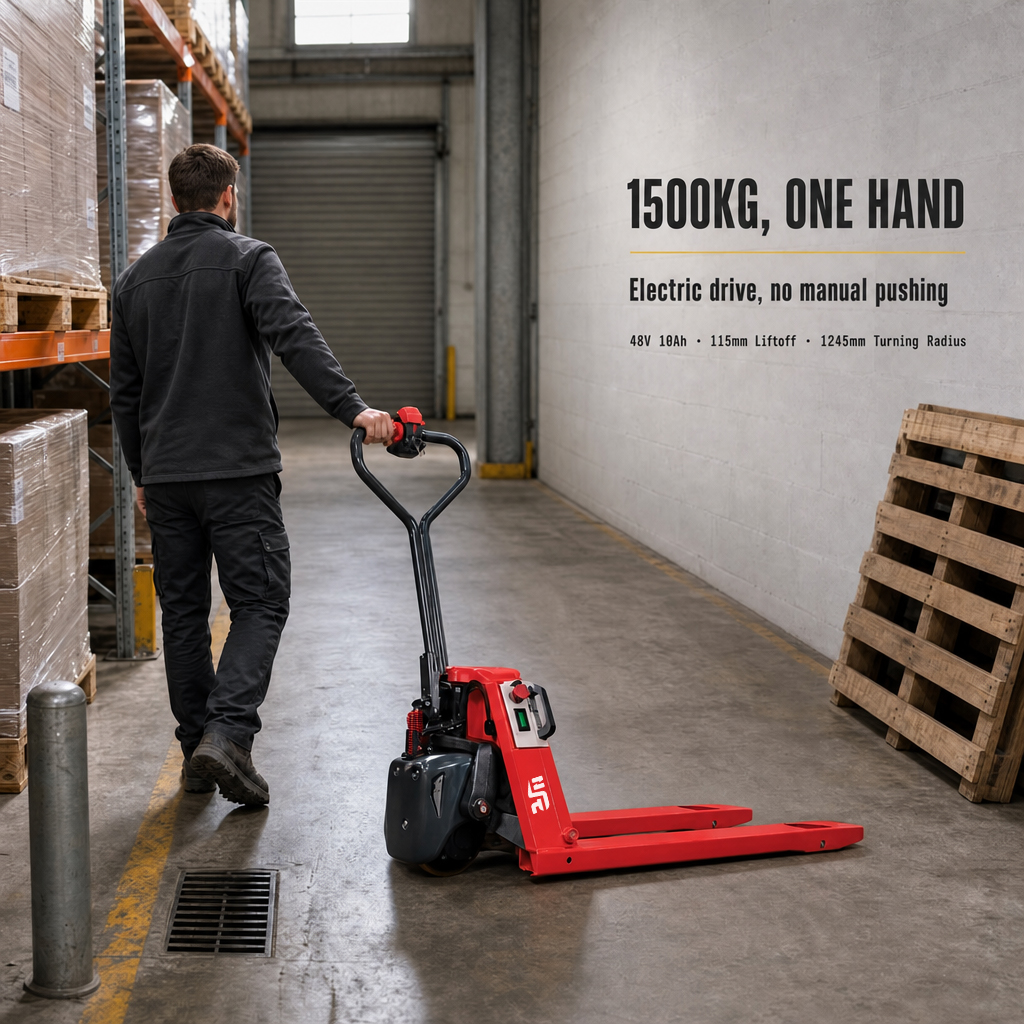
Lithium Battery Electric Pallet Jack Truck 1500kg 2000kg Walkie Pallet Jack Electric Forklift Alternative for Warehouse
A walkie lithium pallet jack in 1,500 kg and 2,000 kg classes, positioned as an electric forklift alternative for warehouses that need zero local emissions, low noise and lower routine maintenance.
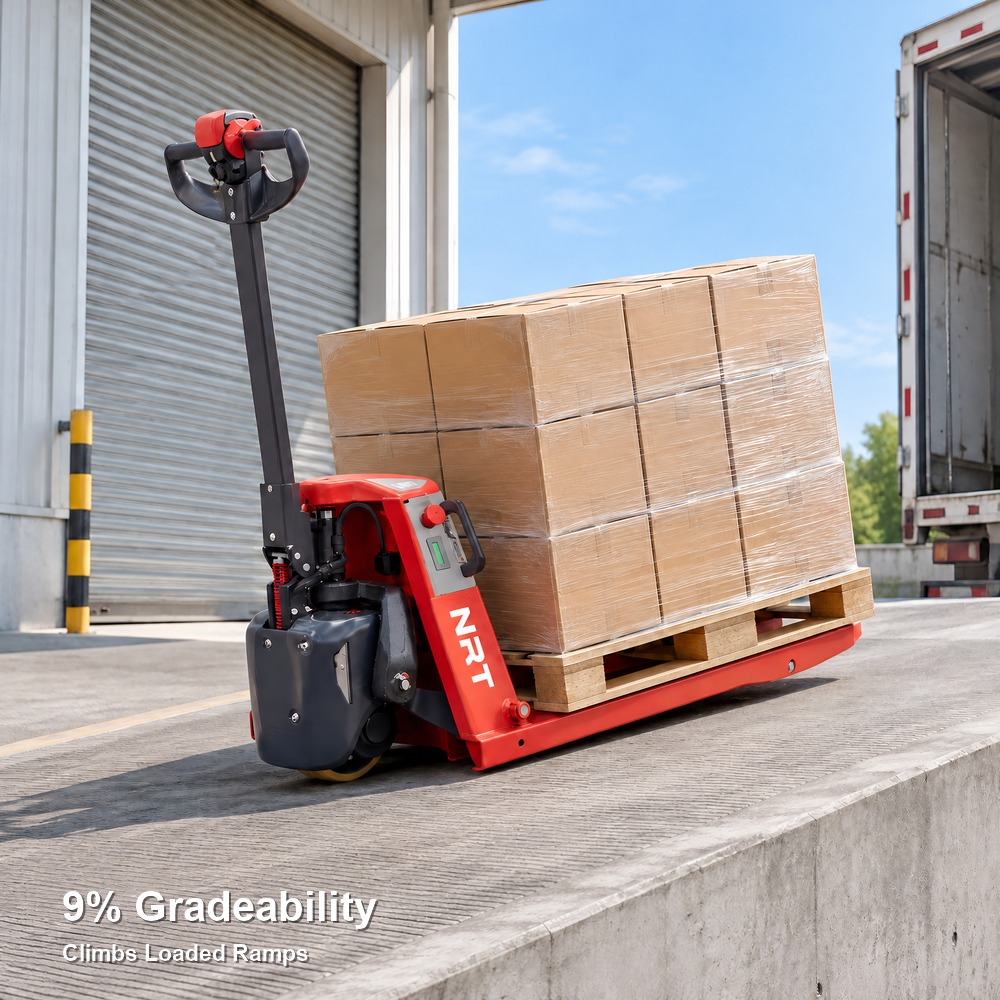
80mm Ground Clearance Electric Pallet Jack 9% Climbing Grade 1450mm Vehicle Length Lithium Pallet Truck for Ramp Use
A lithium pallet truck engineered for ramps and dock-leveler access, with 80 mm ground clearance, 9% climbing grade and a 1,450 mm vehicle length for limited turning space.
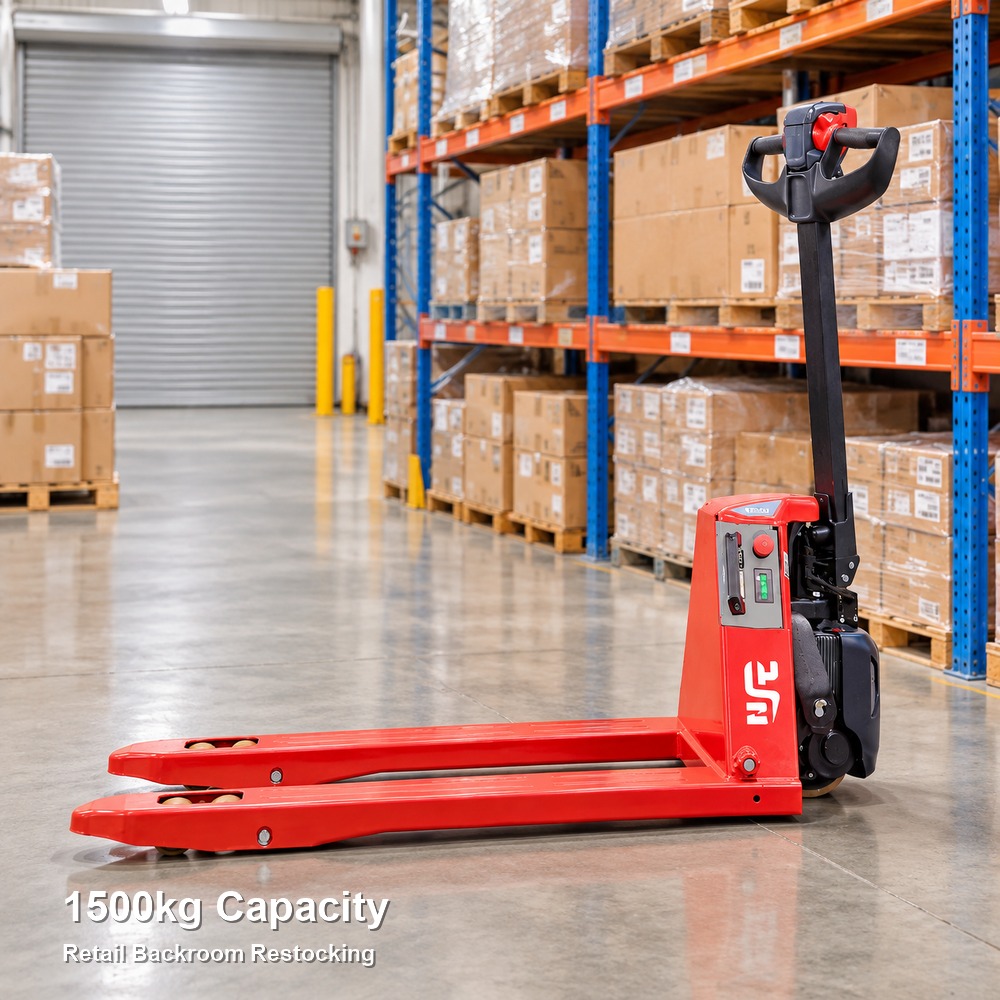
Cold Storage Electric Pallet Jack -20C Working 48V Lithium Battery Pallet Truck Walkie Type 1500kg 2000kg
A walkie cold-storage pallet truck rated for -20°C environments with a 48V lithium battery. For cold-chain wholesalers, the selection question includes battery behaviour, sealing, lubrication and service access.
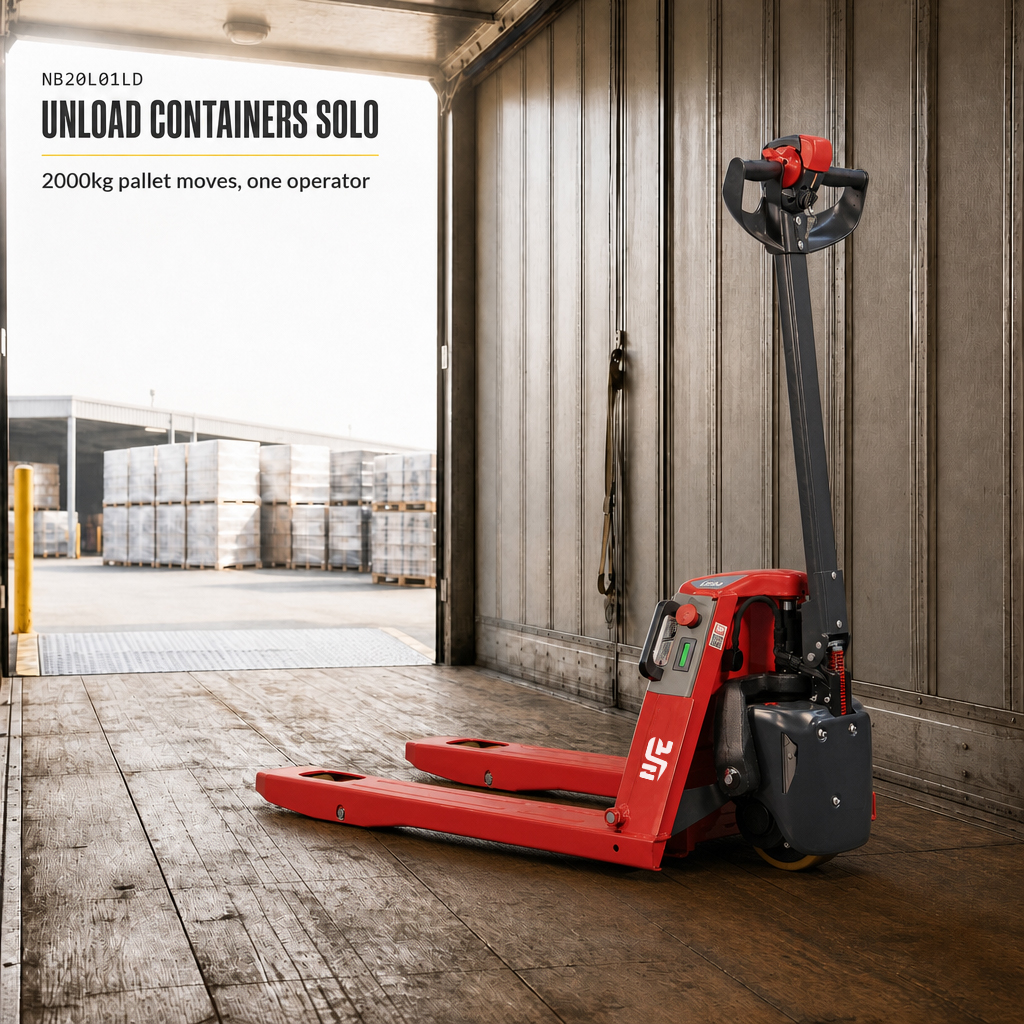
NRT 2 Ton Electric Pallet Jack Lithium-Ion 48V 10Ah 1150mm Forks Polyurethane Wheels Warehouse Handling
An NRT 2-ton lithium electric pallet jack with 48V 10Ah battery, 1,150 mm forks and polyurethane wheels, sized for warehouse handling, order staging and trailer work on smooth internal floors.
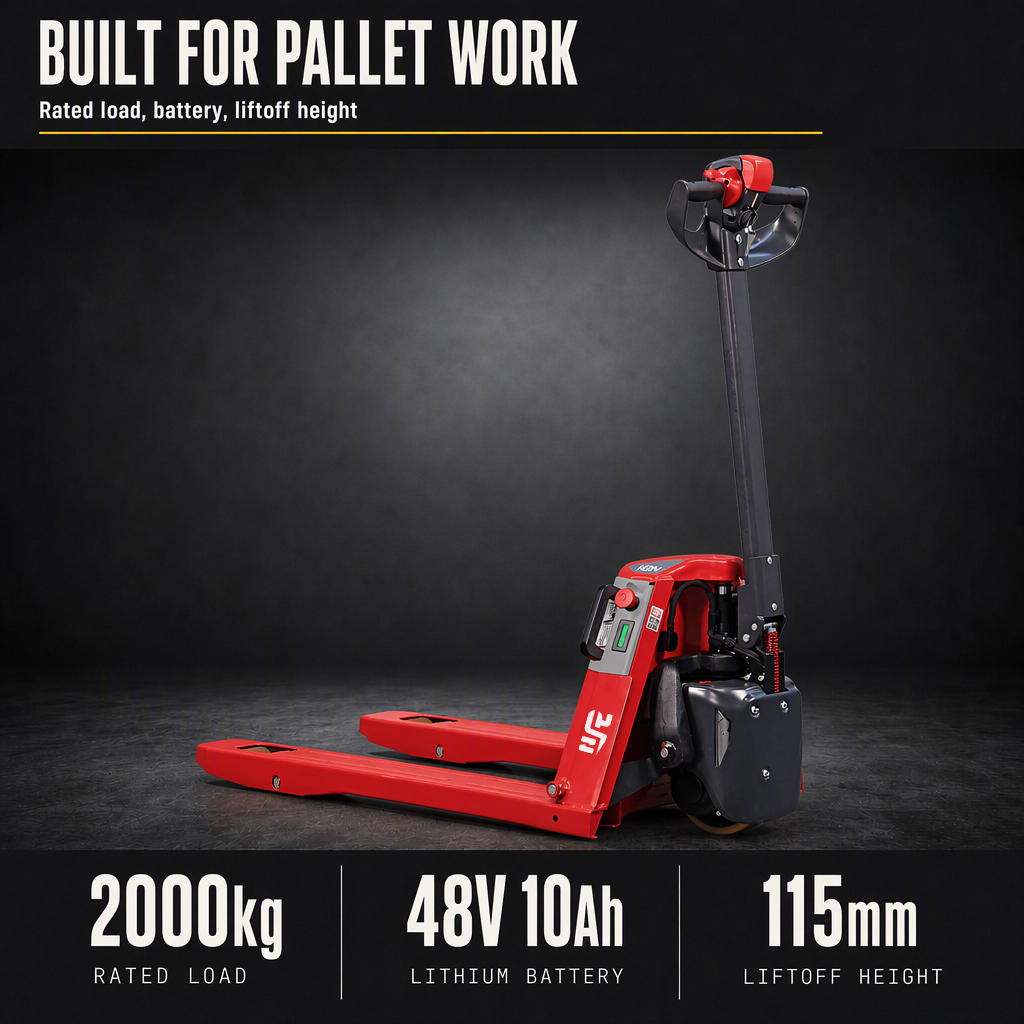
Professional Electric Pallet Jack 2 Ton 2000kg Capacity Heavy Duty Power Pallet Truck with Easy Control System for Warehouse
A professional 2,000 kg power pallet truck for 3PLs, manufacturers and distributors that need durable daily pallet flows. Compare load centre, floor condition, ramp exposure and shift length before specification.
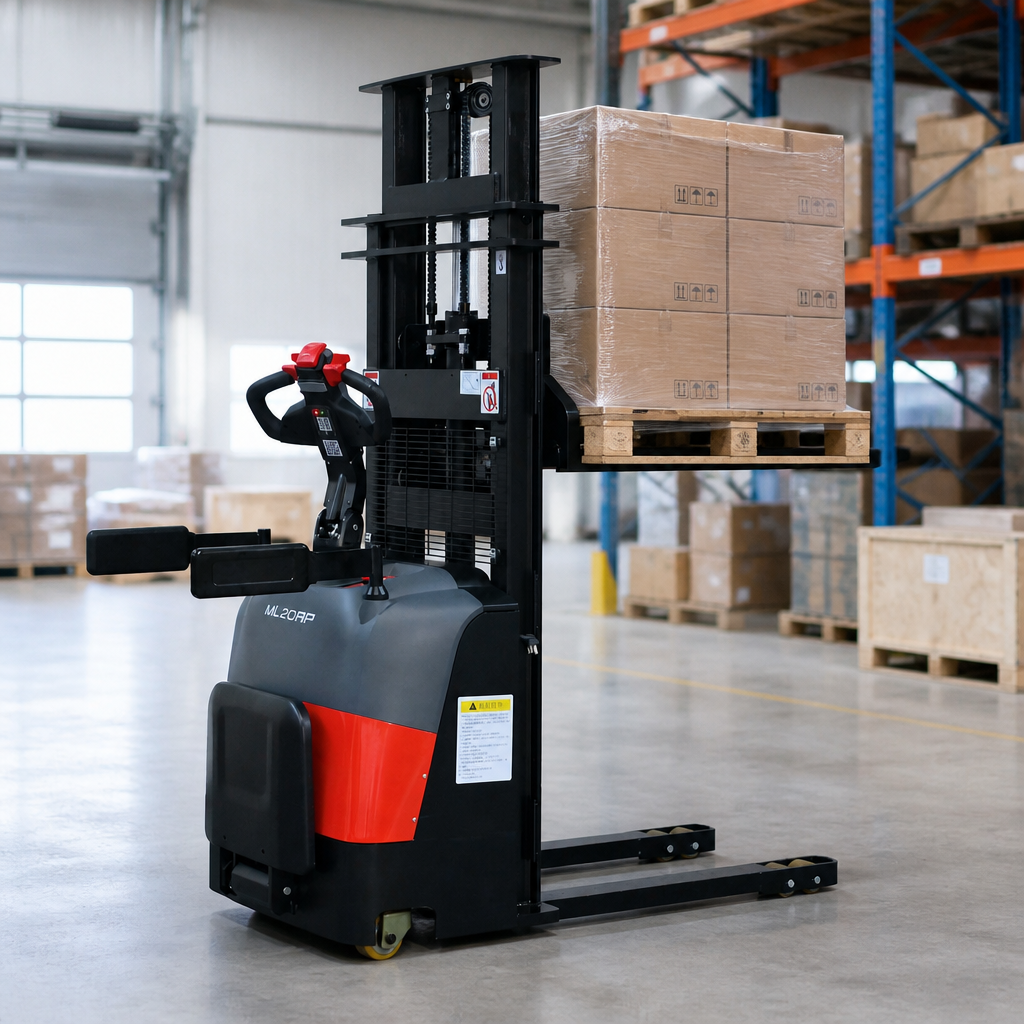
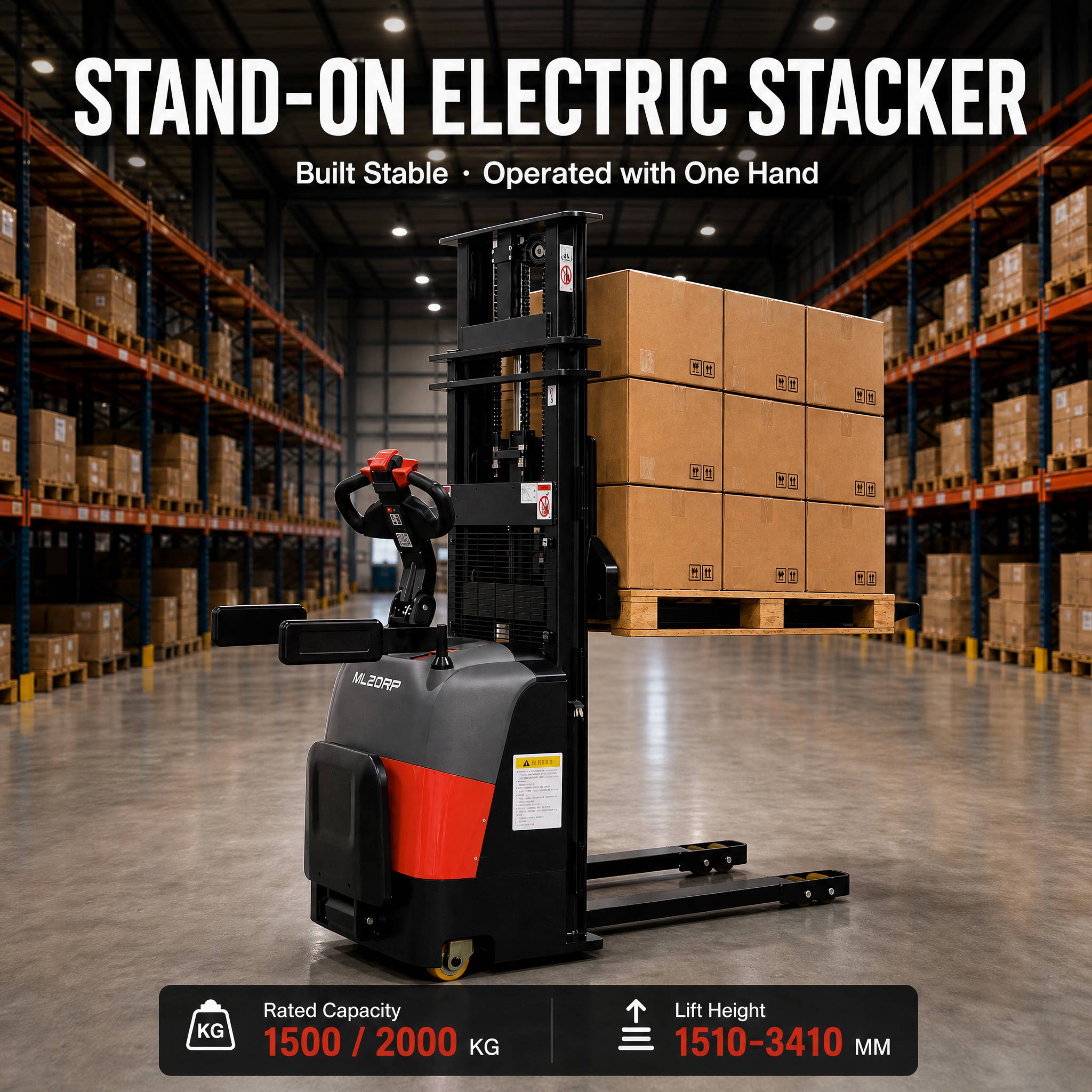
Electric Pallet Stacker 2000kg 3410mm Lift Height Stand on Stacker Truck for Warehouse Racking Stacking
A stand-on electric stacker with 2,000 kg capacity and 3,410 mm lift height, filling the gap between walkie stackers and counterbalance forklifts for racking, high put-away and compact warehouses.
What “Trusted” Means for a Warehouse Forklift Wholesaler in 2026
Trust is not a badge on a landing page. In warehouse forklift wholesale, trust is the ability to make a repeatable procurement decision easy: the right truck for the aisle, the right battery for the shift, the right documentation for the destination market and the right support after the container is unloaded.
Warehouse forklift wholesale is no longer a transaction measured only by unit price. For distributors, 3PL operators, cold-chain managers and industrial buyers, the real cost is created after delivery: charging infrastructure, battery cycle life, uptime, spare-parts availability, safety compliance, operator training and the ability to customize configurations without slowing a project. The most trusted warehouse forklift wholesaler is therefore not the supplier with the loudest catalogue. It is the supplier that can turn a site survey into a documented, repeatable order.
Xiamen Pexal Technology Co., Ltd. approaches this brief from a focused position. The company was founded in Xiamen, Fujian in 2024 as a sales, service and technical support base for Pexal material handling equipment. It works with a 220,000 m² partner manufacturing campus, more than 1,200 employees and over 100 engineers dedicated to electric warehouse equipment. Its scope covers electric pallet trucks, pallet stackers, high-rack stackers, cold-storage trucks, reach trucks, order pickers, counterbalance forklifts and automated guided forklift platforms.
The commercial mission is straightforward: help buyers move from manual handling to electric handling, and from diesel to battery power, while reducing emissions, noise and operating cost. For a wholesale buyer, the value is not only the machine. It is the configuration logic, export documentation, customization discipline and after-sales communication that determine whether the programme can be repeated across multiple dealers and regions.
This guide is written with the information gain a serious procurement team needs. It names the models, preserves the original product URLs, explains application constraints, separates evidence from marketing language, and translates supplier capabilities into questions that can be used in an RFQ. A search quality rater would expect transparent sourcing, relevant authors, real product detail and clear commercial intent. That is the standard applied here.
Procurement Signals Designed Into This Guide
Use these dimensions to compare a warehouse forklift wholesaler beyond the quotation sheet.
Total Cost First
Evaluate energy, wear parts, uptime and service—not only the unit price.
Electric Transition
Match battery and charging to shift length, climate and available power.
Safety as a Gate
Treat operator protection, braking, visibility and load stability as tender requirements.
Service Roadmap
Plan spare parts, technician training and future telematics from day one.
Four Trends Reshaping Warehouse Forklift Wholesale
Buyers are not only comparing machines. They are comparing operating models. These four trends should be built into supplier scorecards and dealer programme planning.
From Unit Price to TCO
The lowest quotation is rarely the lowest cost per pallet moved. RFQs increasingly ask for energy consumption, charger compatibility, battery cycle life, wheel and brake wear, spare-parts lead time, technician training and uptime assumptions. A truck that costs slightly more but avoids one shift of downtime per quarter can be the cheaper asset.
Lithium and Opportunity Charging
Lithium-ion is becoming a default option, but not a universal one. The real decision is energy architecture: opportunity charging during breaks, full-shift runtime, cold-storage performance, fire-safety documentation and local voltage. Buyers now want the battery, charger, management system and service plan quoted together—not treated as separate afterthoughts.
Safety as a Procurement Gate
Operator presence sensing, speed control, emergency braking, load stability, visibility and warning systems are increasingly requested in dealer tenders. For cross-border wholesale, request documentation that matches the destination market and keep the final compliance review with a qualified local authority or certification body.
Automation-Ready Fleets
Buyers are asking whether a fleet can add telematics, operate in a hybrid manual and AGV flow, and be serviced by local technicians. The winning wholesaler supplies a product and a roadmap: spare-parts kits, training, configuration support and clear interfaces for warehouse management systems.
What Warehouse Truck Technology Will Change Next
The next procurement cycle will reward suppliers who can explain how the machine will remain serviceable, safe and upgradeable—not just how much it can lift today.
Modular Electric Platforms
New warehouse trucks are being designed as modular electric platforms: common chassis, multiple battery chemistries, configurable masts, forks and wheel compounds. For buyers, this means shorter customization cycles and more predictable spare parts. It also raises the importance of a supplier that documents battery, charger and controller compatibility—not only lift capacity.
Procurement action: request a written configuration matrix and confirm which parts remain common across your dealer programme.
Intelligent Safety and Assistance
Sensors, load monitoring and speed-limiting logic are moving down from premium forklifts into pallet trucks and stackers. Expect more assistance features such as auto-braking, slope hold, operator-presence detection and zone-based speed control. The implication is to define the risk profile first—congested aisles, ramps, cold rooms, mixed pedestrian traffic—then specify the safety package.
Procurement action: score safety features against site risk, not as a generic checklist item.
Connected Serviceability
Telematics and digital service records will become a differentiator in wholesale programmes. Dealers want fault codes, battery health, usage hours and maintenance alerts to reduce call-out cost and improve uptime. The best implementations are simple: readable dashboards, exportable data and service workflows that local technicians can actually use.
Procurement action: ask how the supplier handles data access, fault reporting and spare-parts identification.
How Wholesale RFQs Are Scored in 2026
This is a qualitative planning model, not a statistical survey. It reflects the criteria that application engineers, dealers and fleet buyers commonly use when shortlisting warehouse equipment suppliers.
How to Use This Model
Convert each priority into a written question so suppliers cannot answer with generic claims.
- Ask for energy consumption per shift, charger details and battery warranty terms.
- Request safety documentation and a clear statement of final compliance responsibility.
- Ask for spare-parts lead times, recommended stock kits and technician training.
- Confirm Incoterms, packaging, destination port and customs documentation before order.
- Approve the customization matrix before the sample and production stages.

Why Xiamen Pexal Technology Co., Ltd. Is Built for Wholesale Programmes
Pexal’s advantage is not a single specification. It is a supply model designed around dealer and fleet procurement. Founded in Xiamen in 2024 as a sales, service and technical support base, the company draws on a 220,000 m² partner manufacturing campus, a 1,200+ workforce and more than 100 engineers focused on electric warehouse equipment.
That structure gives buyers a focused commercial and technical interface while supporting large-scale production, customization and export packaging. The goal is to reduce the unknowns between an initial RFQ and a repeatable wholesale order.
- SGS-assessed and onsite-verified supplier
- Electric pallet trucks, stackers, forklifts and AGVs
- Sample-based, full and ODM customization
- Export markets across five regions
- Flexible Incoterms and payment methods
- Pre-shipment quality control and export logistics
SGS-Assessed and Onsite Verified
Our company has passed an onsite check and supplier assessment conducted by SGS Group. Business type, main products, main markets, premises and customization capability have been reviewed. Buyers can request the assessment record and verified video for a more transparent due-diligence process.
Scale and Focus
A 220,000 m² partner production campus, more than 1,200 employees and over 100 engineers support container orders, repeat dealer stock and custom builds. This depth helps avoid treating every wholesale request as a one-off project.
Broad Material Handling Range
Electric pallet trucks, stackers, counterbalance forklifts, reach trucks, order pickers, diesel and off-road forklifts, plus AGV robotics. Consolidating from one qualified source can reduce supplier audits, parts complexity and communication cost.
Customization Discipline
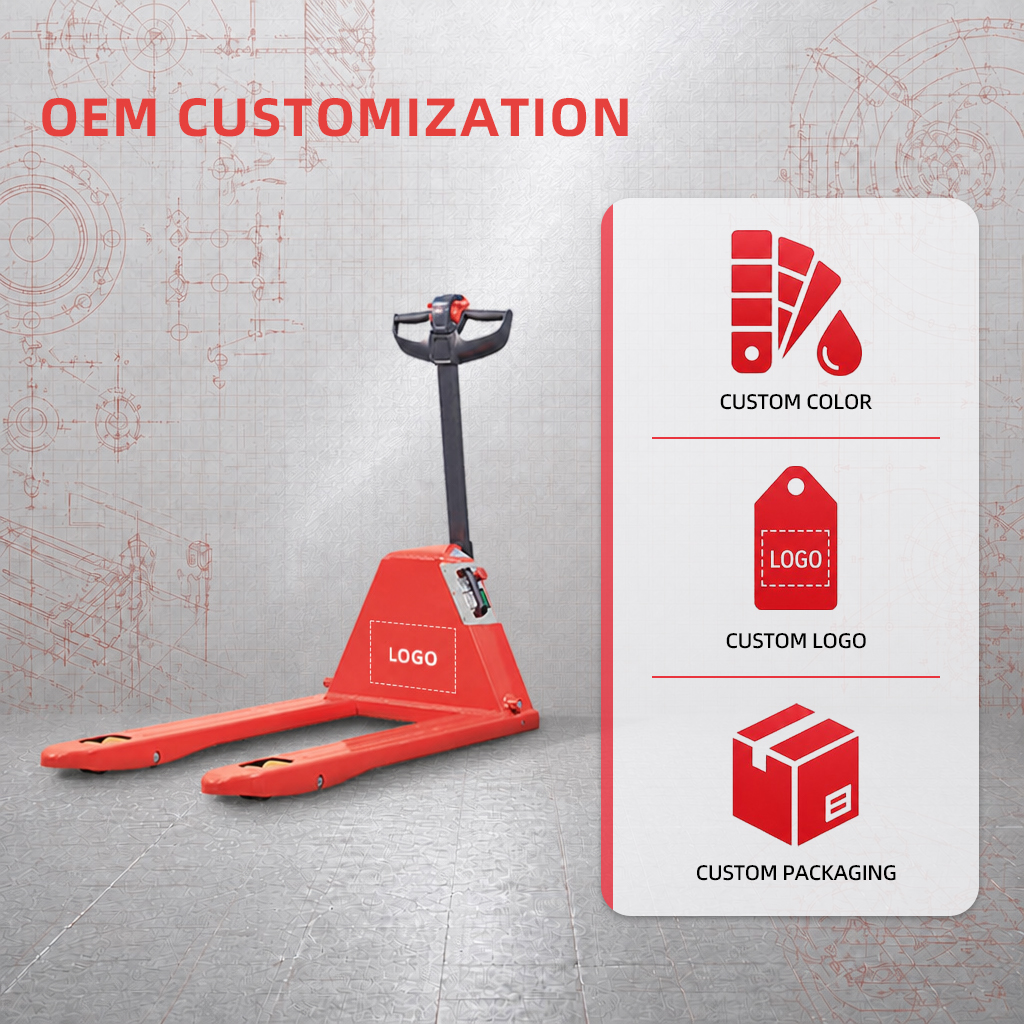
Sample-based customization, full customization and ODM services cover mast height, fork length, battery type, colour, logo and attachment configuration. A written configuration matrix keeps the sample, production order and spare-parts list aligned.
Global Trade Readiness
Main export markets include Western Europe, North America, South America, Eastern Europe and Oceania. Incoterms include FOB, CFR, CIF, EXW, FCA, CPT, CIP and DDP, with payments by T/T, L/C, D/P, D/A, Western Union, PayPal, credit card and escrow.
Service and Export Support
Pre-shipment QC covers lifting, travel, braking and electrical systems. Export packaging and flexible logistics move through Xiamen port. Technical support, parts planning, operator documentation and training content are built around predictable commissioning.
Warehouse Forklift Wholesale Questions Buyers Ask
These answers are written for importers, dealers and fleet managers who need to move from research to a practical RFQ.
What should I compare when sourcing warehouse forklifts wholesale?
How do I choose between an electric pallet jack, stacker and forklift?
Can you customize mast height, forks, battery, colour and logo?
Which Incoterms, payment methods and currencies are supported?
Which markets and special applications can you support?
How can I verify supplier trust before placing a first order?
Plan Your Next Warehouse Forklift Order With Evidence
Share your load, aisle width, lift height, ramp or cold-storage conditions, shift length, destination port and target market. Our team can recommend the right electric pallet truck, stacker or forklift configuration without finalizing the decision on price alone.