LFP Becomes the Default
Lithium iron phosphate will continue to displace other chemistries in the 1,500–3,000 kg class, because cycle life and thermal margin matter more to fleet operators than a marginal density gain.
Lithium battery forklifts stopped being a pilot category years ago. What buyers are underwriting in 2026 is not a battery chemistry — it is the engineering discipline behind it.
For most of the last decade, the lithium transition inside warehouses was treated as an experiment. A logistics manager would deploy a handful of lithium pallet trucks into one building, watch the state of health for a few quarters, and only then consider scaling. That experimental phase is over. In 2026, lithium-ion has become the default specification across the 1,500 kg to 2,000 kg walkie pallet truck and pallet stacker classes — not because the chemistry is fashionable, but because the arithmetic finally stopped favouring lead-acid.
The arithmetic is straightforward. A 2,000 kg electric pallet truck working a loading dock and a dispatch lane may complete several hundred pick-and-place cycles across a six to eight hour shift. Its real cost to the operation is not the invoice price — it is the availability ratio. Every hour the truck spends tethered to a charger, every week someone spends topping up cells with deionised water, and every shift lost to a corroded connector is a cost that never appears on the purchase order but always appears in the operating budget.
Lithium changes that equation, but it also concentrates risk in a place most procurement teams never inspect: the seam between cell, pack and vehicle. A lithium pack that is under-specified on usable capacity, or protected by a battery management system that was written for a different application, will perform acceptably for the first month and then quietly degrade the fleet's throughput for the next four years. By the time the failure becomes visible, the factory's after-sales behaviour — not its sales brochure — is what determines your recovery cost.
That is why the word trusted carries more commercial weight in 2026 than the word cheap. A lead-acid pallet truck is largely a mechanical purchase; replacement batteries are a commodity line item. A lithium warehouse truck is closer to buying a small, mobile energy asset. Selecting a factory is therefore a decision about the calibre of the team that made the battery decision — and about whether a third party has independently verified that the team exists, produces, and ships.
Most lithium warehouse equipment today uses lithium iron phosphate (LFP). Understanding why — and where the compromises sit — is the fastest way to separate a serious factory from an assembler.
LFP is not the highest energy-density chemistry available, and on a datasheet it can look unremarkable next to nickel-rich alternatives. It wins on three properties that matter far more in a warehouse than peak density: thermal stability, long cycle life, and the ability to accept partial charging without meaningful penalty. Those three properties are precisely what make opportunity charging commercially viable — the practice of topping up a truck during natural breaks rather than running it flat and recharging overnight.
The second layer buyers should interrogate is pack assembly. Cells are only half the story. A well-built pack has matched cells, mechanically restrained busbars, a sealed enclosure with a documented ingress protection rating, and a thermal path that keeps the hottest cell within a few degrees of the coolest. A poorly built pack has none of those things and will still pass a five-minute demonstration in a showroom.
The third layer is the battery management system. The BMS decides when to derate, when to disconnect, and how to communicate. Ask specifically: does the pack talk to the charger over CAN or RS-485, or does charging rely purely on voltage thresholds? Does the BMS balance cells actively or passively? What happens at 45 °C ambient in an unconditioned warehouse in summer? What happens at −10 °C in a cold-store anteroom? A factory that cannot answer these questions in writing is selling you a battery, not a system.
The fourth layer is vehicle integration — the part the battery supplier never sees. Fork dimensions, chassis stiffness, mast construction and hydraulic routing all affect how much of the pack's nominal capacity you can actually use in a shift. A 2,000 kg truck with a 90 mm lowered fork height and channel-steel mast behaves very differently from a lighter unit on the same pack, because the duty cycle per pallet is different. Matching the battery to the duty cycle is an engineering act, not a catalogue selection.
Six product-level shifts that should be written into your next three-year capital plan, because retrofitting them later costs more than specifying them now.
Lithium iron phosphate will continue to displace other chemistries in the 1,500–3,000 kg class, because cycle life and thermal margin matter more to fleet operators than a marginal density gain.
Quick top-ups during breaks replace overnight deep cycles. The design consequence: chargers and connectors must be rated for many more insertion cycles than legacy lead-acid setups assumed.
State of health, cycle count and fault history exported over CAN is becoming a procurement requirement rather than a premium option, because fleet dashboards now depend on that data.
For multi-shift operations, a removable pack that can be exchanged in minutes removes the last argument for keeping a spare lead-acid charger room on the floor plan.
Weight reduction in the chassis and mast translates directly into runtime per charge. The constraint is stiffness: a lighter truck that flexes under load loses the energy gain to friction and rework.
Even buyers who are not automating yet are specifying trucks with the control interfaces and safety inputs needed for a later retrofit to automated guided operation.
The way distributors, rental fleets and end users evaluate lithium battery forklift exporters has changed faster than most catalogues have been updated.
Third-party onsite assessment now precedes the sample request in most serious tenders. Buyers want to confirm the factory exists and produces before they invest time in a trial unit.
One-line quotations are being replaced by five-year cost models that include charger infrastructure, energy, maintenance labour and residual battery value at disposal.
Contracts increasingly specify a minimum state of health at defined cycle counts, which forces the exporter to stand behind cell quality rather than the vehicle alone.
Voltage declarations, machine safety documentation and material declarations are now requested alongside the commercial invoice, not months after delivery.
Distributors want their own brand on the truck, their own documentation, and their own part numbers — driving demand for factories with genuine ODM capability rather than sticker rebranding.
Service response is being contracted, not assumed. A defined parts list with lead times is increasingly treated as part of the product, not as an afterthought.
From container loading to high-rack stacking, these are the models most frequently specified by dealers and fleet buyers across Europe, the Americas and Oceania.
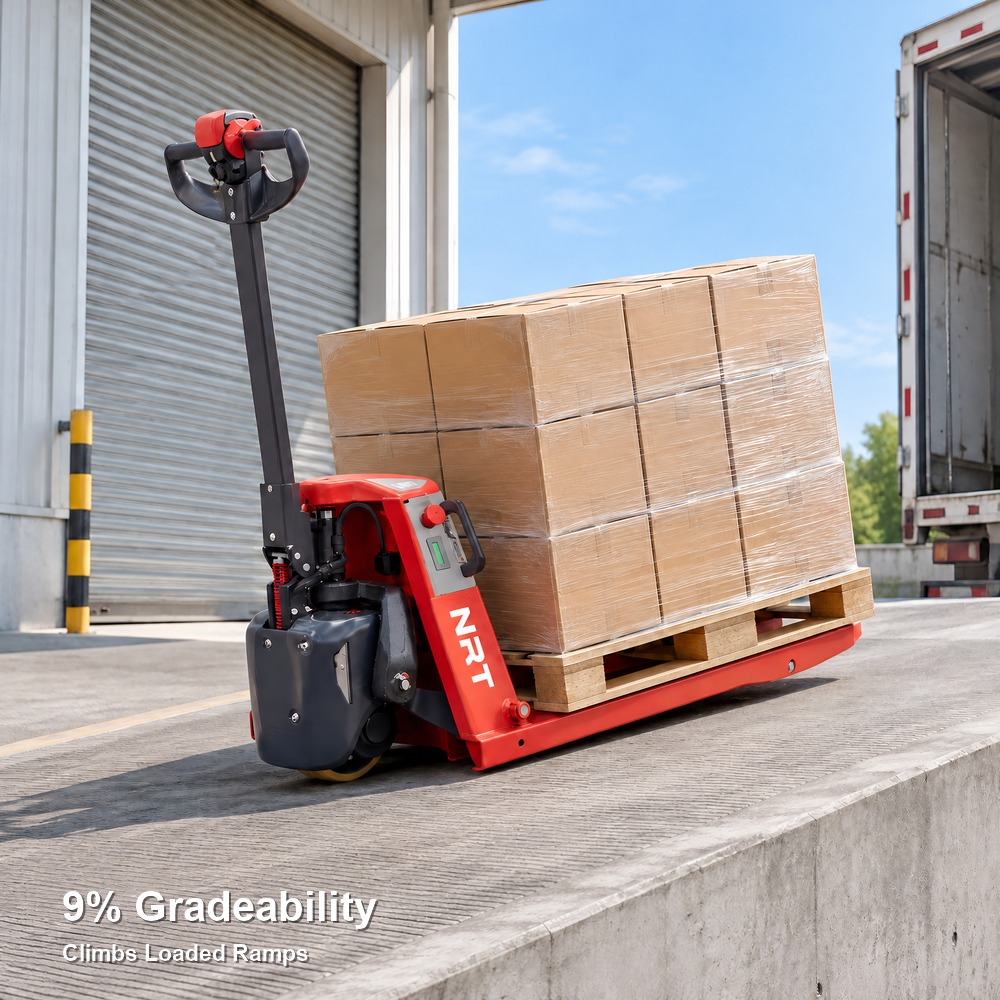
A walkie-format lithium pallet truck positioned as a direct alternative to a ride-on forklift for horizontal transport, dock work and trailer loading.
View specification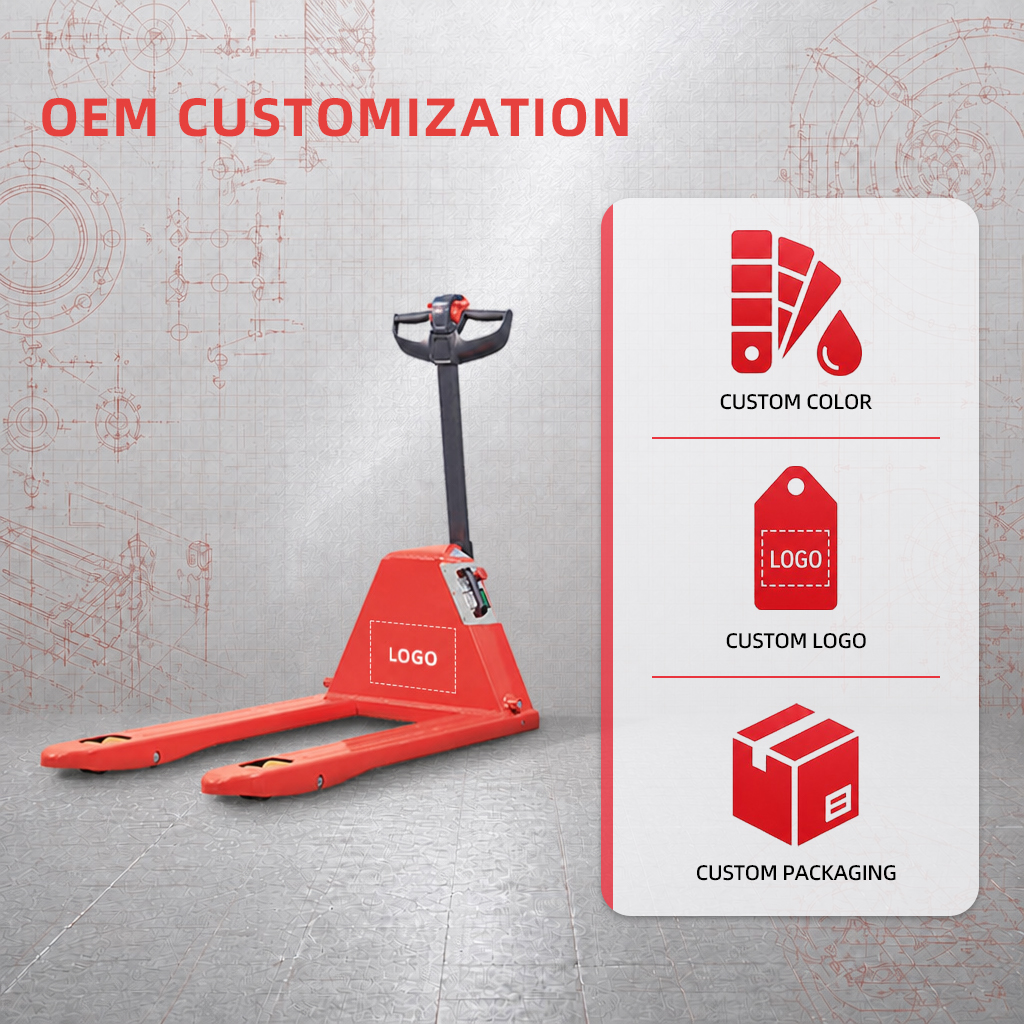
A two-tonne workhorse tuned for logistics centres where repeatable uptime beats peak speed — sealed components and simple controls.
View specification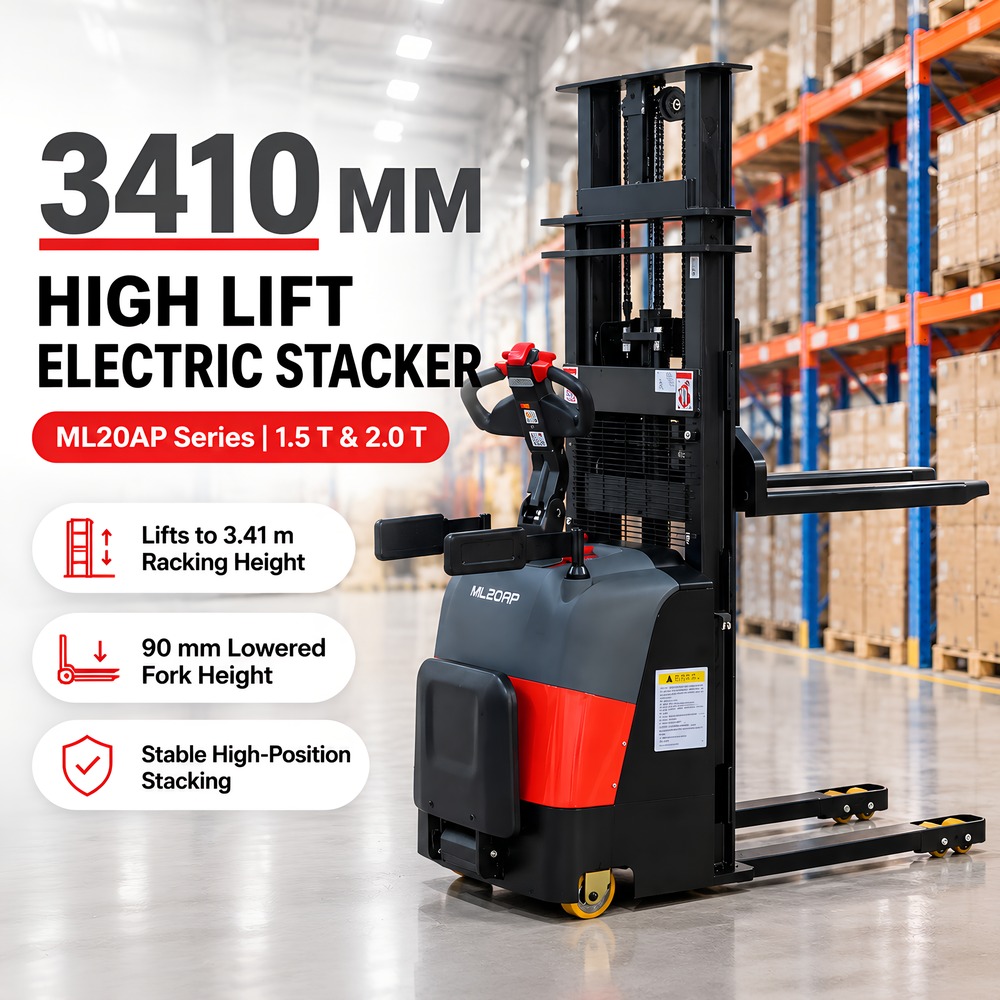
Keeping the operator off the ground cuts fatigue on long shifts while still fitting narrow-aisle loading docks and building-material shops.
View specification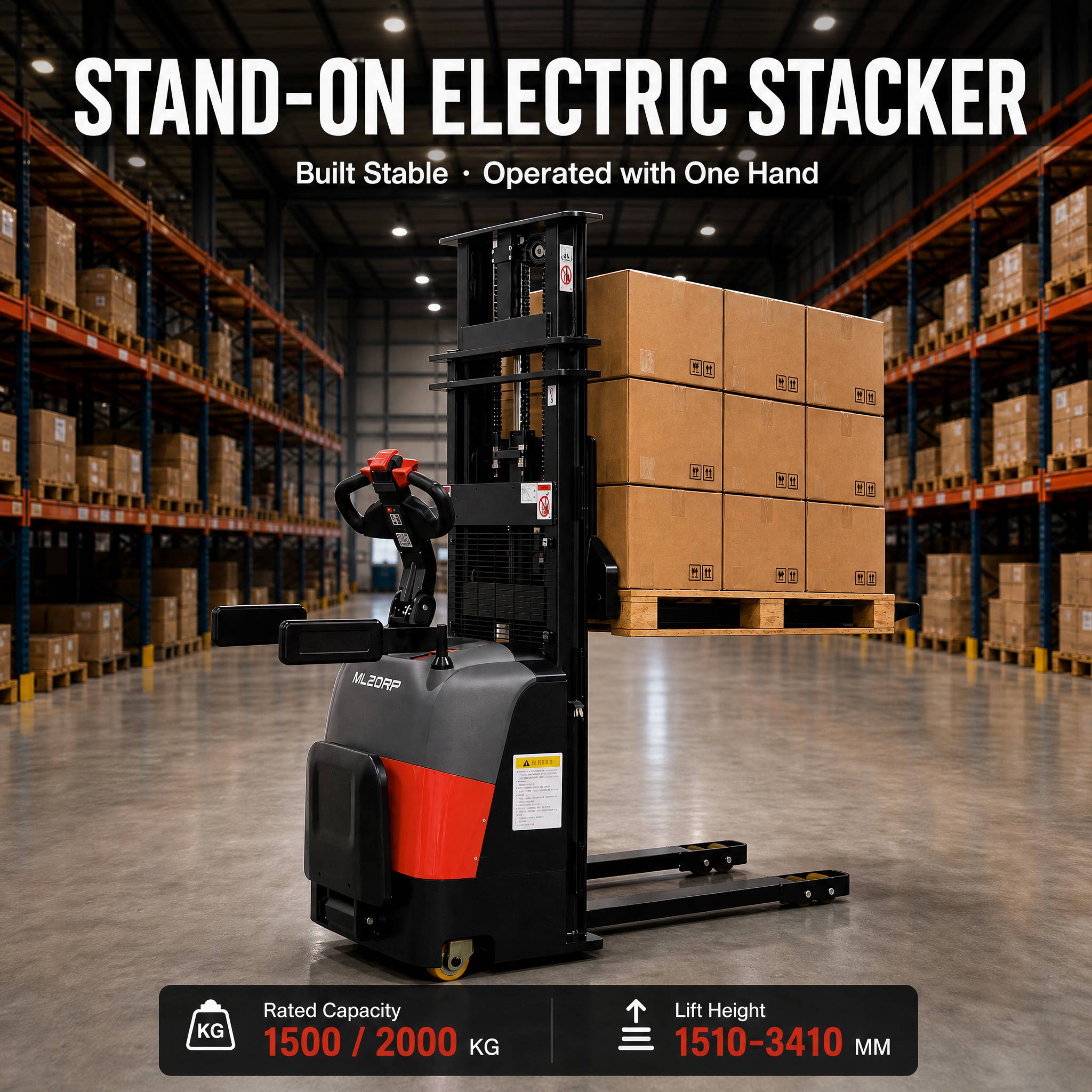
A 90 mm lowered fork height lets the truck pick from floor level and still stack into high racks with a channel-steel mast structure.
View specification
A 685 mm fork width for narrow pallets and container loading, where centimetres of turning clearance translate directly into throughput.
View specification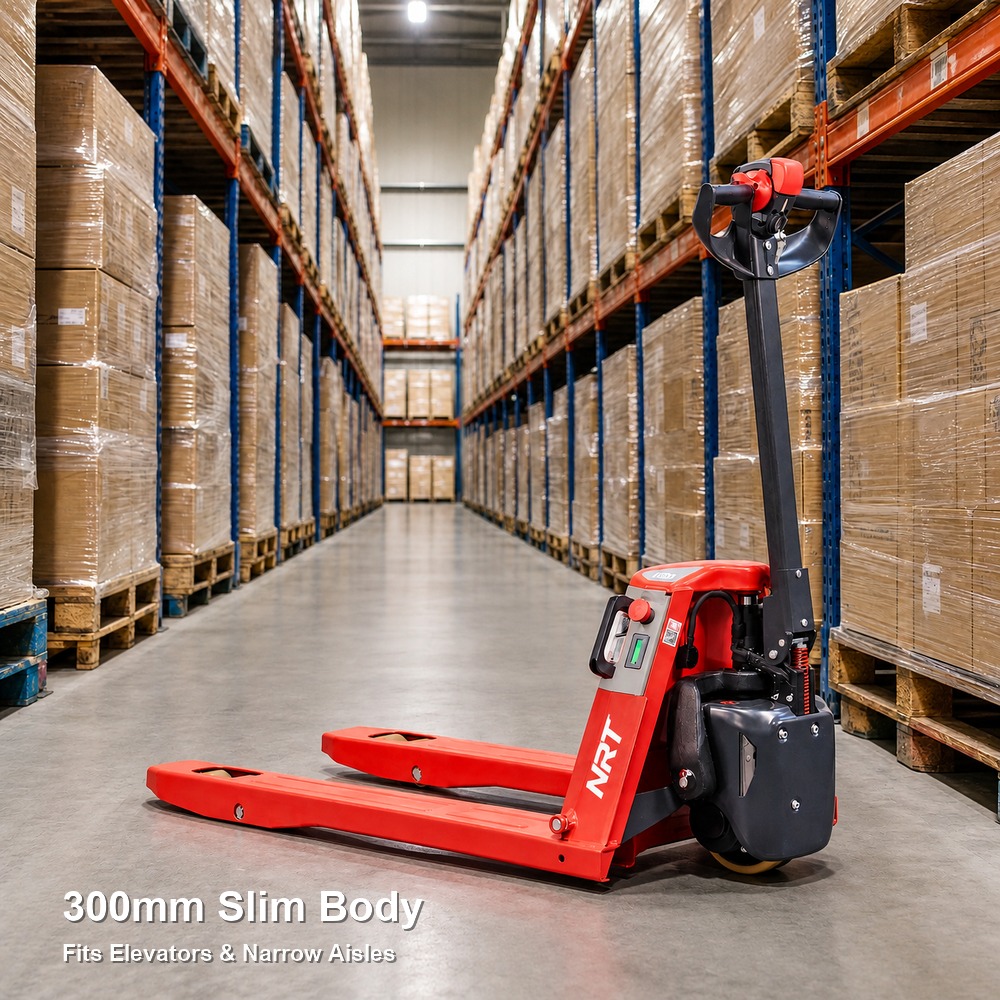
48V lithium power, an 850 W drive unit and 1150 mm forks on polyurethane wheels — specified for smooth floors and frequent start-stop.
View specification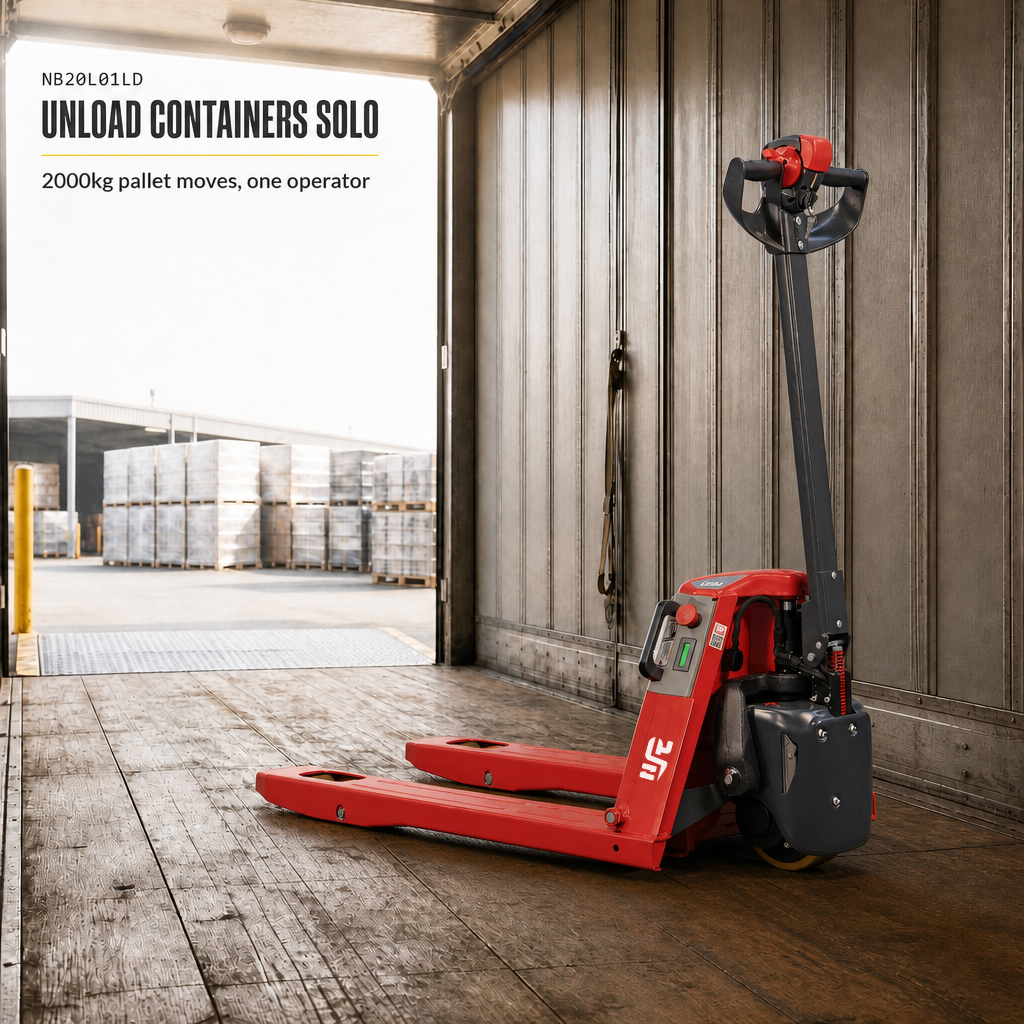
A lighter-duty lithium-ion pallet truck with 1150 mm forks, aimed at container loading and cross-dock moves where storage space is tight.
View specification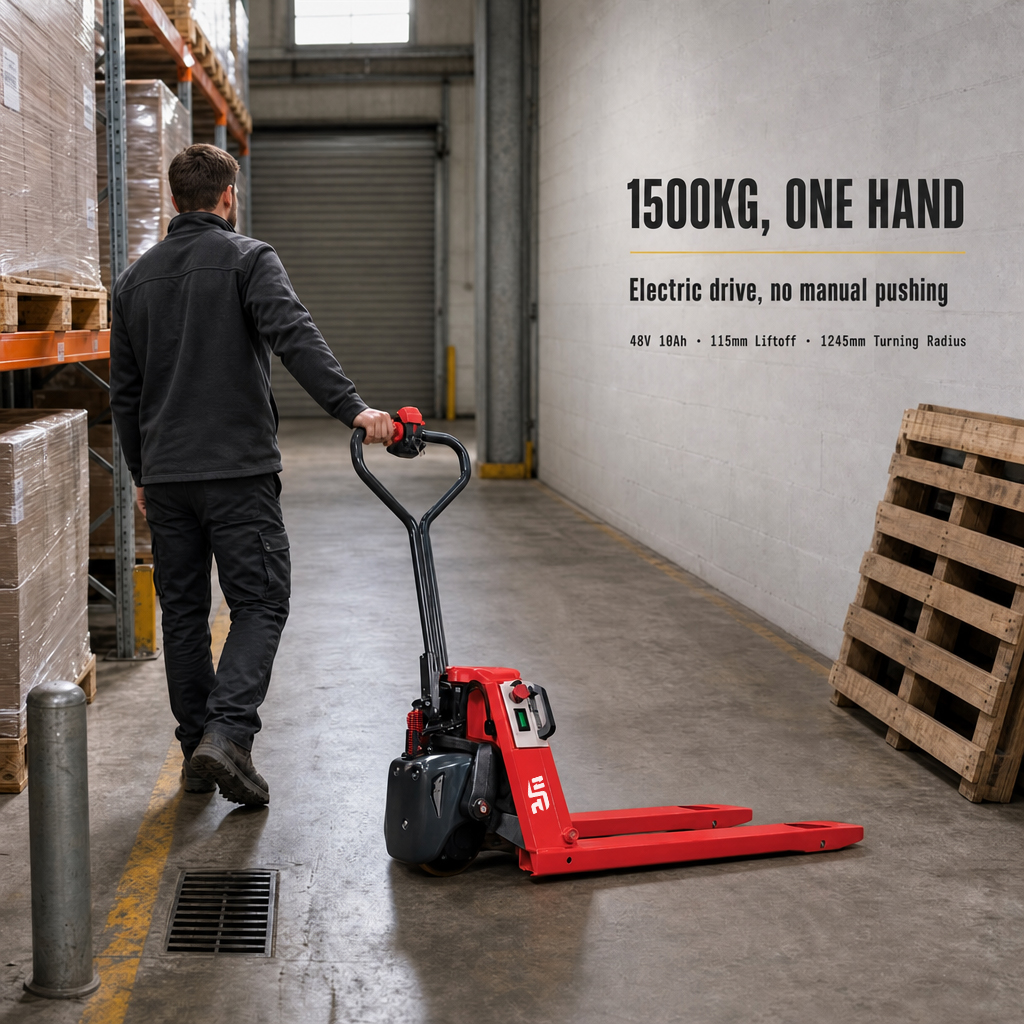
A 1,500 kg walkie jack configured for distribution centres, workshops and supermarket back-of-house handling — compact, quiet and quick to charge.
View specificationPurchase price is the smallest variable in the comparison. This table maps the cost lines that actually move a fleet budget over a five-year horizon.
| Cost Line | Lead-Acid Truck | Lithium Truck | Net Effect |
|---|---|---|---|
| Initial purchase | Lower headline price | Higher upfront cost | Lithium carries a premium that is recovered downstream |
| Battery replacement | Expected within the ownership window | Designed to outlast the typical fleet cycle | Removes a mid-life capital event |
| Daily maintenance | Watering, equalising, terminal cleaning | No routine electrolyte maintenance | Converts weekly labour into zero recurring tasks |
| Charging infrastructure | Dedicated charger room, ventilation, spill containment | Standard power points at the point of use | Frees floor space and avoids a construction cost |
| Opportunity charging | Not practical without shortening pack life | Supported by design | Enables partial top-ups during breaks |
| Energy consumption | Higher losses during charge | Higher charge efficiency | Lower electricity spend per operating hour |
| Downtime exposure | Long charge cycles, water top-ups | Short top-ups, no maintenance stops | Higher availability ratio per shift |
Eight checks that a legitimate exporter will be able to close quickly — and that an assembler will struggle to answer at all.
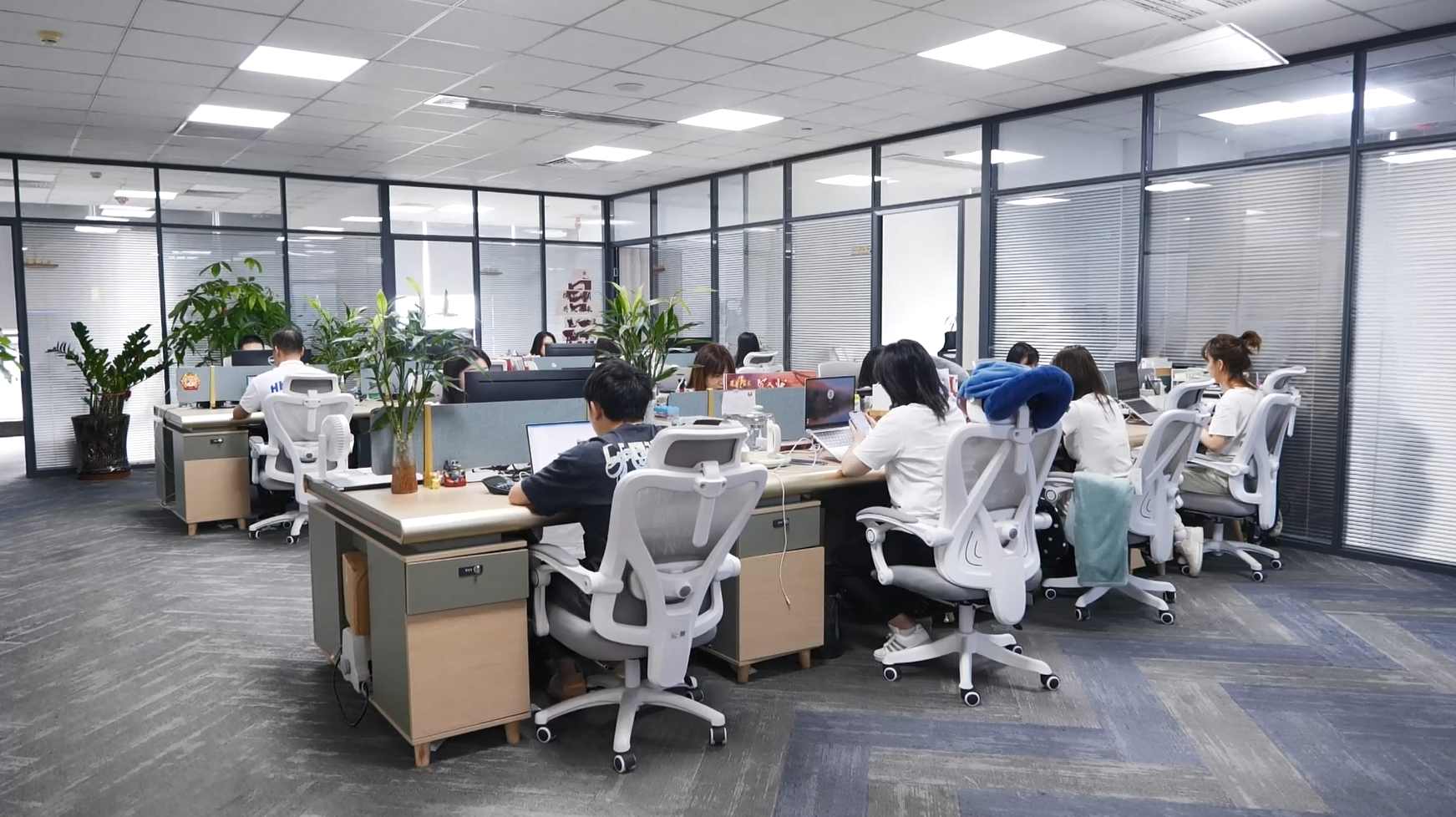
A sales, service and technical support base in Xiamen, Fujian — working hand in hand with a 220,000 m² partner manufacturing campus.

Xiamen Pexal Technology Co., Ltd. was founded in Xiamen, Fujian Province in 2024 as the sales, service and technical support base for Pexal material handling equipment. The company operates alongside a 220,000 m² partner manufacturing campus employing more than 1,200 people, including a team of over 100 engineers dedicated to electric warehouse equipment.
The mission is deliberately practical: help buyers move from manual handling to electric handling, and from diesel to battery power — reducing emissions, noise and operating cost while building toward intelligent, digital logistics. The product range covers electric forklifts, electric pallet trucks, electric pallet stackers, reach trucks, order pickers and automated guided forklifts, so a single supplier can cover counterbalance lifting, horizontal transport and automation.
Customisation is offered at three levels: sample-based customisation, full customisation and ODM service. That includes mast height, fork length, battery type, colour, logo and attachment configuration — the kind of flexibility a distributor needs to build a differentiated line rather than resell a generic catalogue product.
Verification matters as much as capability. The company has passed an onsite check and a supplier assessment conducted by SGS Group, one of the world's leading inspection, verification and certification organisations, confirming business type, main products, main markets and production capabilities. A verified company video is also available for buyers who cannot travel to Xiamen before contracting.
Trade terms accepted include FOB, CFR, CIF, EXW, FCA, CPT, CIP, DDP and other common delivery terms. Payment can be arranged by T/T, L/C, D/P, D/A, Western Union, PayPal, credit card and escrow, with settlement in USD, EUR, GBP, JPY, CAD, AUD, HKD, CHF or CNY. Main export markets are Western Europe, North America, South America, Eastern Europe and Oceania, serving dealers, rental companies and end users.

Straight answers to the questions that come up most often from importers, dealers and fleet managers evaluating lithium battery forklift suppliers.
Share your load profile, aisle width, lift height and duty cycle. We will return a configuration recommendation, a five-year cost outline and an export schedule for your market — including OEM and ODM options where relevant.
Inquire Now