8 Factory-Backed Electric Stacker & Pallet Truck Models
These models are frequently shortlisted by distributors, rental fleets and warehouse operators evaluating electric straddle stacker programs. All product URLs below are preserved exactly as supplied; each image is displayed in full without cropping or compression.
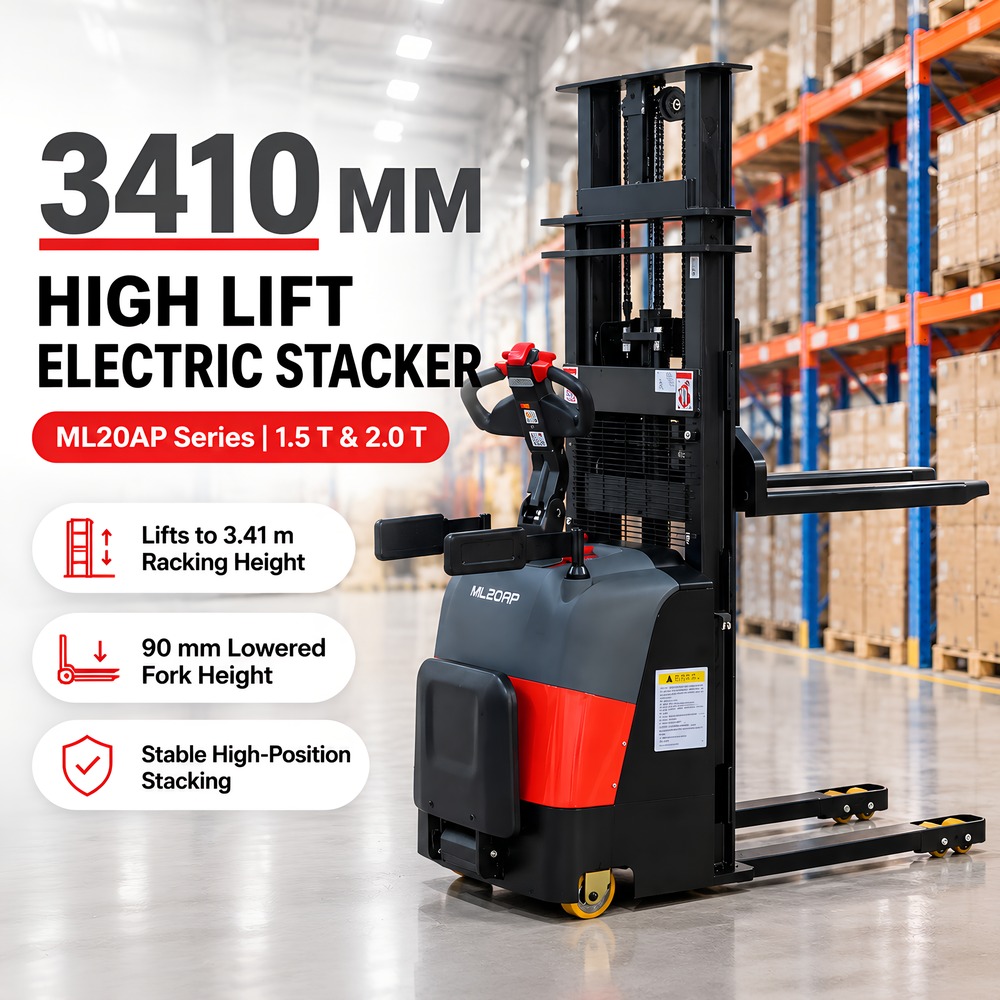
ML20AP Stand on Electric Stacker Truck 2000kg Warehouse Stacker for Narrow Aisle Loading Dock Building Material Shops
Best suited to operators who need faster travel over medium distances while retaining a compact stacker footprint in material shops and busy loading zones.
View model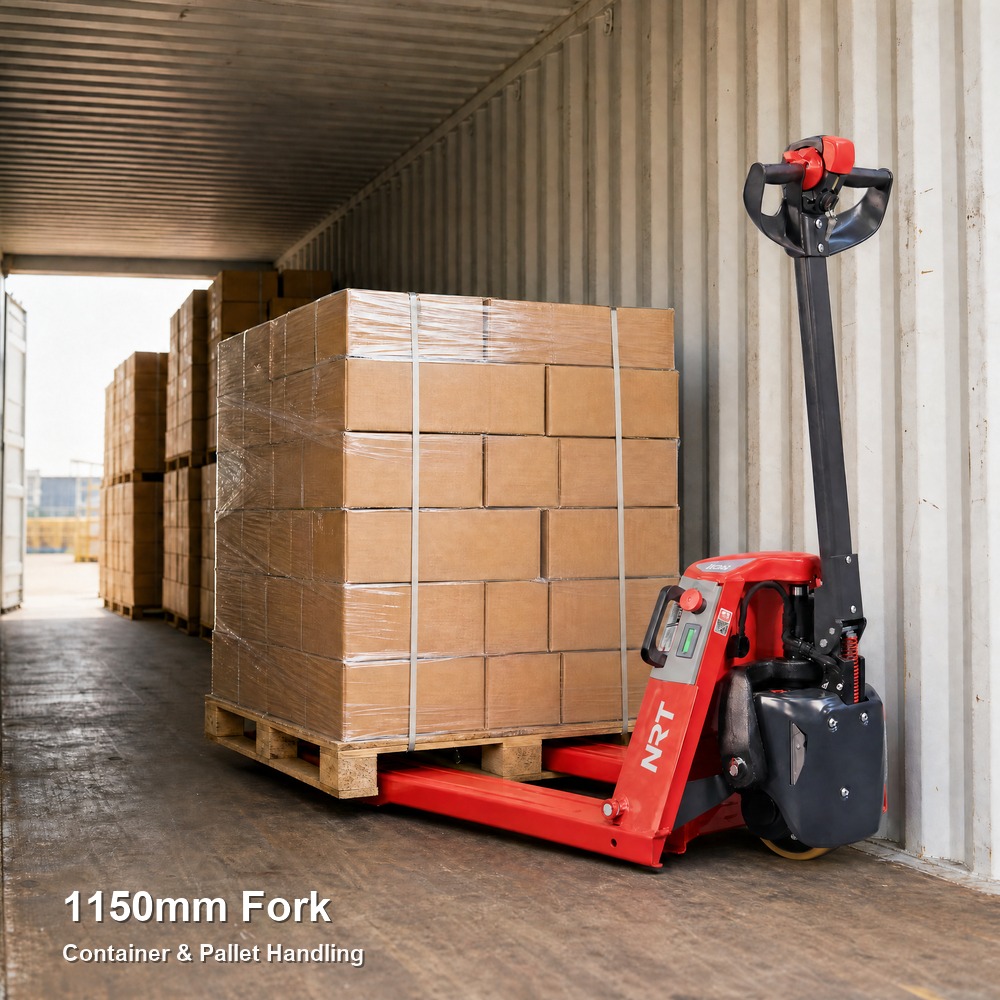
Walkie Electric Pallet Jack 1500kg Fork 1150mm Pallet Truck Battery Powered for Container Unloading Shop Floor
A practical entry model for importers replacing manual pallet trucks where container unloading speed and operator fatigue are the main cost concerns.
View model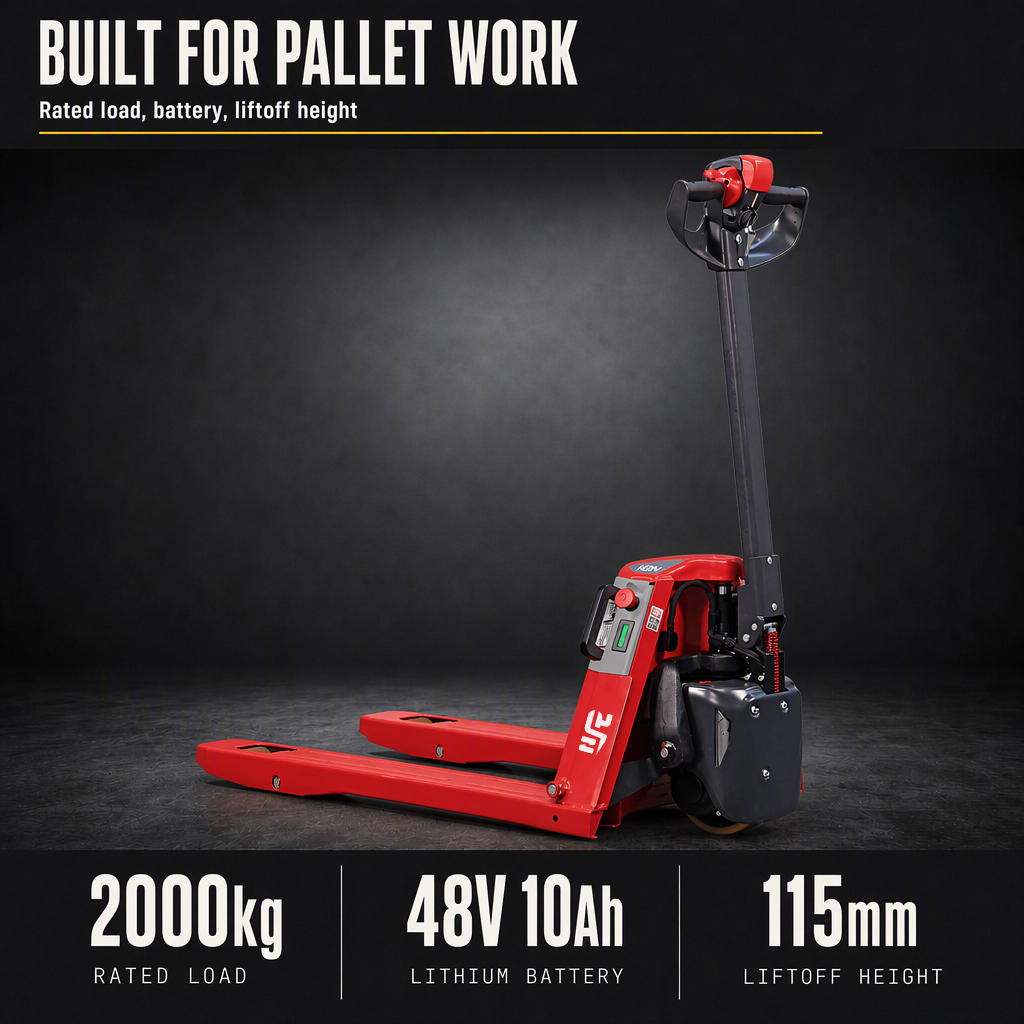
Professional Electric Pallet Jack 2 Ton 2000kg Capacity Heavy Duty Power Pallet Truck with Easy Control System for Warehouse
Recommended for daily pallet movement in distribution centers where control ergonomics, repeatability and low maintenance matter more than top speed.
View model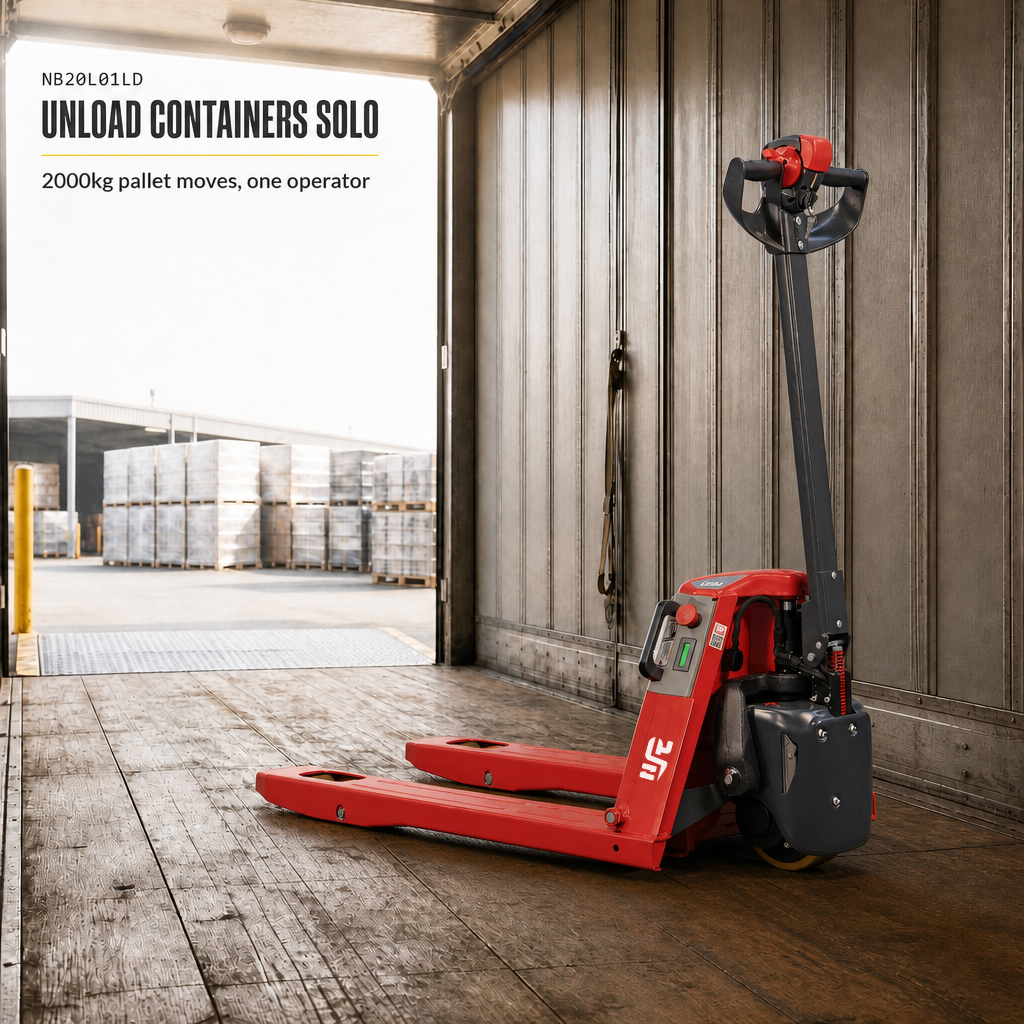
2000kg Electric Pallet Truck Lithium Ion 48V 10Ah Power Jack 1150mm Forks Polyurethane Wheels Container Loading
Attractive for fleet buyers seeking lithium-ion convenience, opportunity charging and stable handling during container loading and horizontal transport.
View model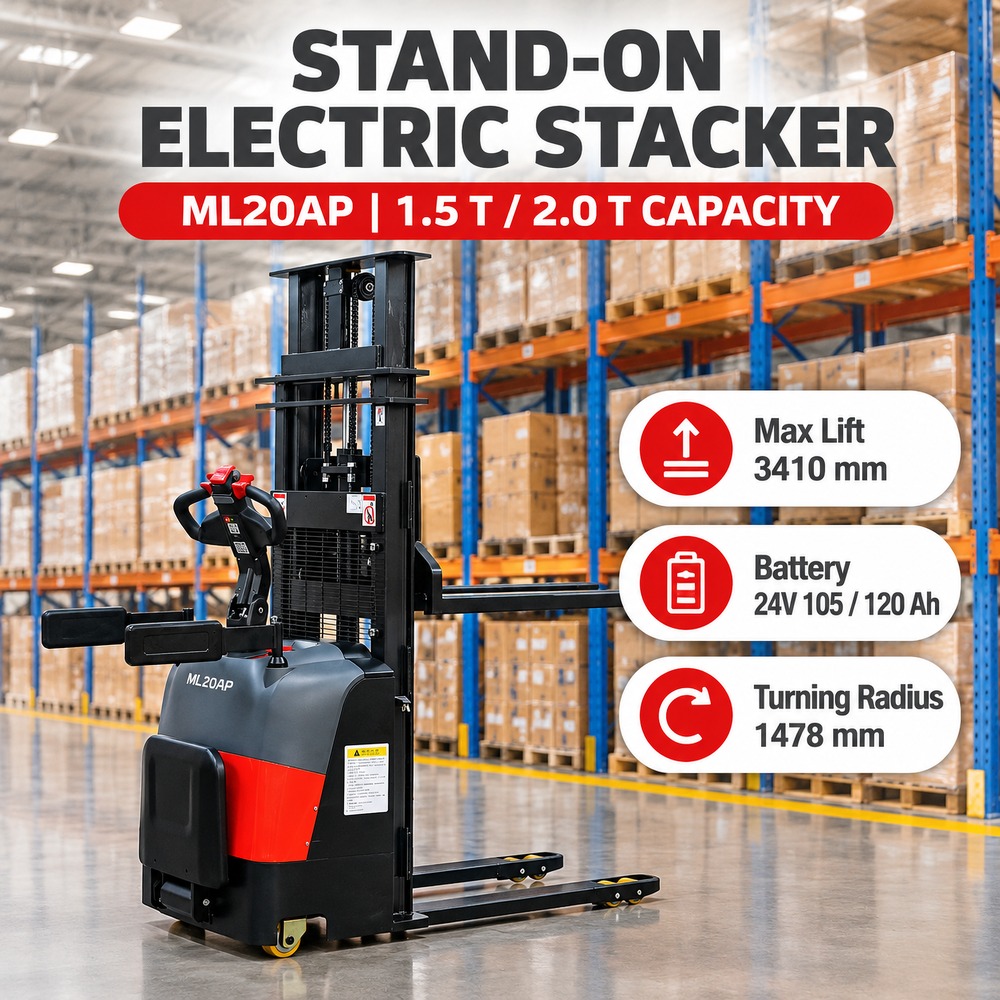
Warehouse Stacker Truck 1500kg 2000kg Electric Pallet Stacker 24V 105Ah Maintenance Free Battery
A strong candidate for warehouses standardizing on low-maintenance battery technology while covering moderate lifting and pallet stacking duties.
View model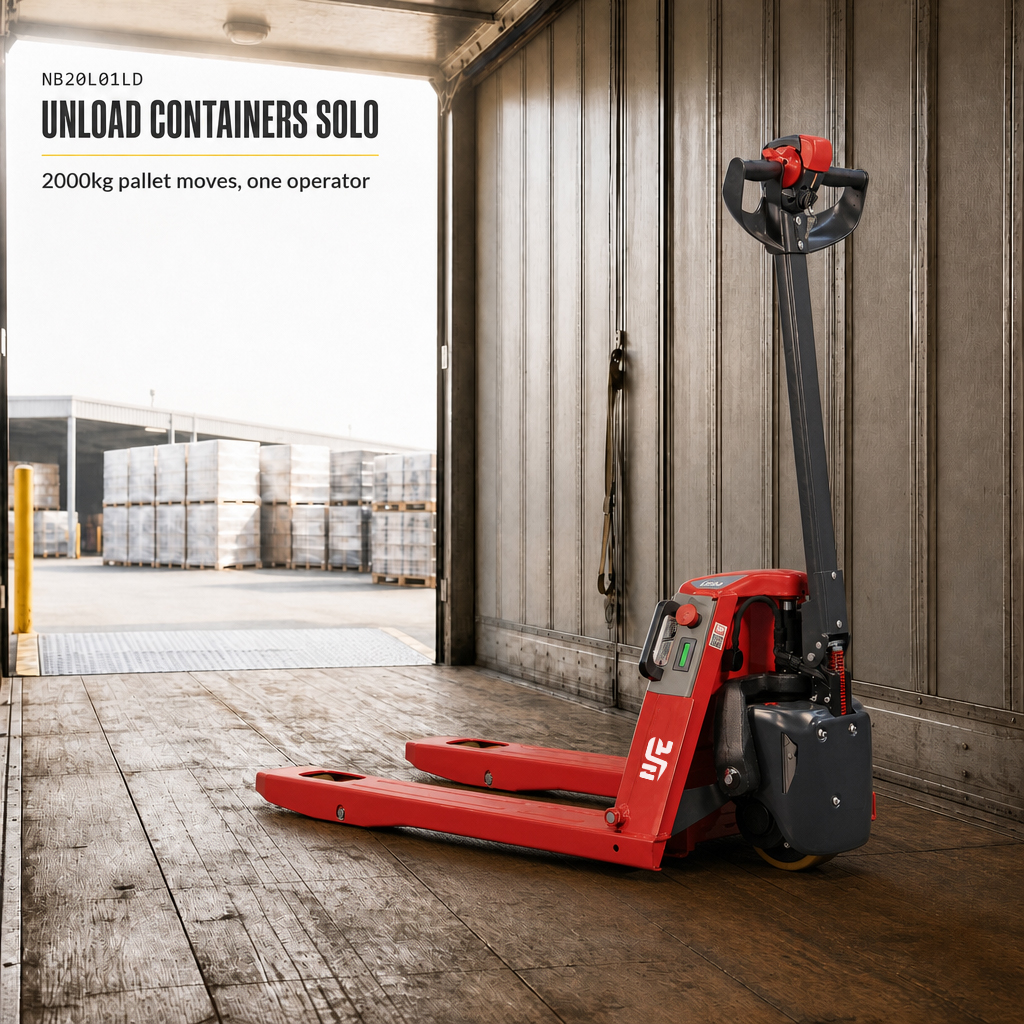
NRT 2 Ton Electric Pallet Jack Lithium-Ion 48V 10Ah 1150mm Forks Polyurethane Wheels Warehouse Handling
Ideal for distributors building a standardized lithium-ion pallet truck fleet across multiple warehouse sites and rental applications.
View model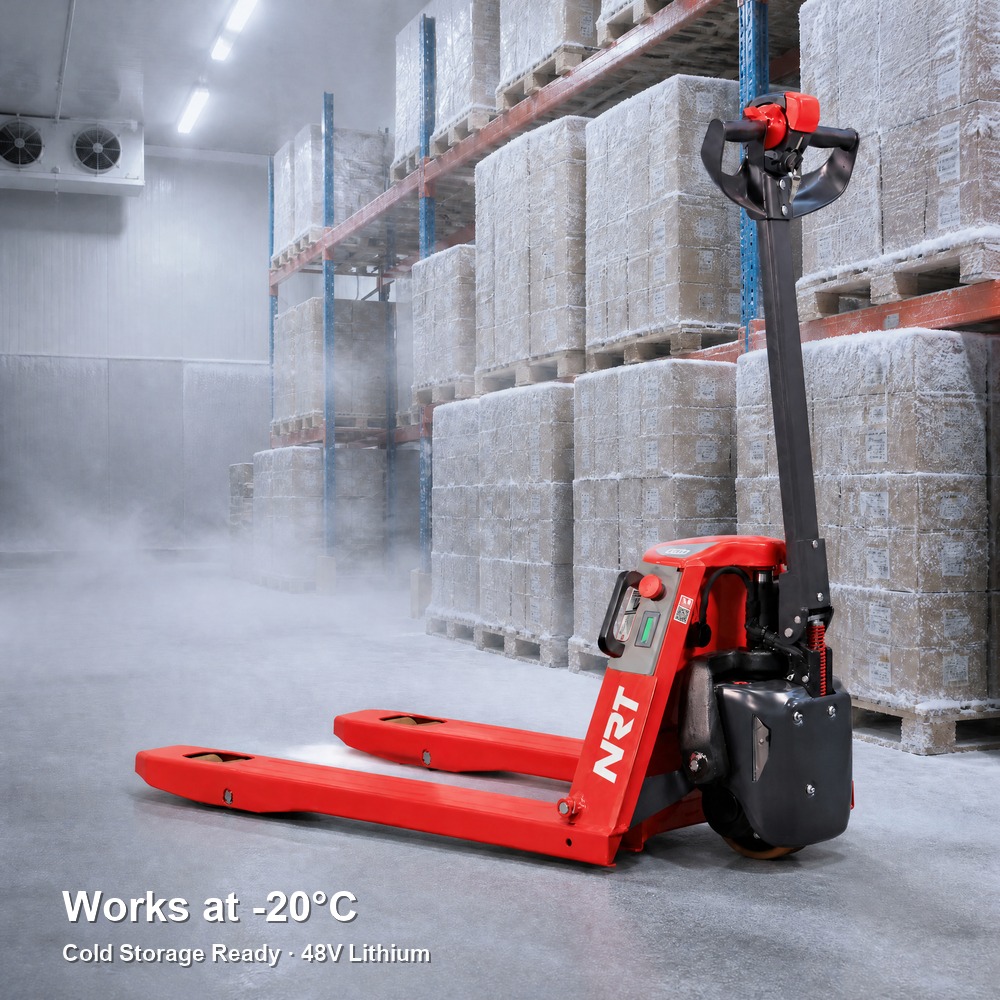
Electric Pallet Jack 2000kg with 48V Lithium Battery 6s Swap 300mm Slim Body Climbing 9% for Cold Storage -20C
A high-intent model for cold-chain and space-constrained operations where battery swap time, slim chassis width and gradeability directly affect uptime.
View model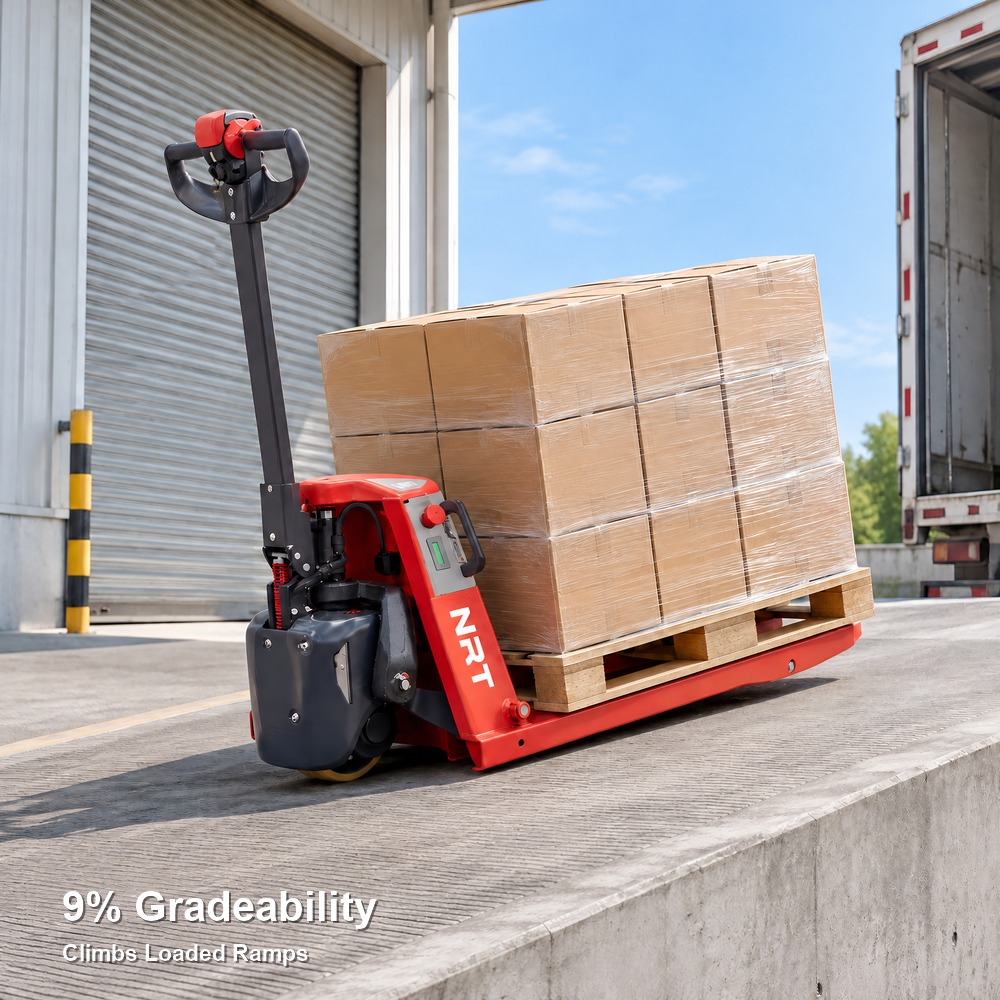
Lithium Battery Electric Pallet Jack Truck 1500kg 2000kg Walkie Pallet Jack Electric Forklift Alternative for Warehouse
A flexible walkie option for buyers comparing a compact electric pallet jack against a full forklift for low-level horizontal transport.
View modelNeed a straddle stacker configuration for your market?
Send your load weight, aisle width, lift height, floor condition and voltage requirement. Our team will map the shortlist to a factory-backed configuration.
Why Electric Straddle Stackers Are Becoming a Strategic Procurement Category
Warehouse buyers are no longer comparing stackers only on purchase price. They are modeling uptime, battery strategy, narrow-aisle productivity, safety documentation and after-sales responsiveness across the full asset life cycle.
Xiamen Pexal Technology Co., Ltd. was founded in Xiamen, Fujian in 2024 as the sales, service and technical support base for Pexal material handling equipment. It works with a 220,000 m² partner manufacturing campus employing more than 1,200 people, including a team of over 100 engineers dedicated to electric warehouse equipment. The commercial case is straightforward: help buyers move from manual handling to electric handling and from diesel to battery power while reducing emissions, noise and operating cost.
Six Forces Reshaping Electric Stacker Procurement
These are the buying signals that separate a low-cost RFQ from a resilient fleet decision. They should appear in supplier scorecards, factory audits and total-cost-of-ownership models.
Labor Availability
Persistent warehouse labor pressure makes powered pallet trucks and stackers a productivity tool, not a luxury. Buyers are asking for lower training time, intuitive controls and lower operator fatigue.
Lithium-Ion Adoption
Lithium-ion models with opportunity charging and fast swap options are moving from premium options to mainstream specifications in dealer catalogs and rental fleets.
Narrow-Aisle Density
Rising rent and storage density favor compact chassis widths, precise steering and stacker designs that can work in aisles where a counterbalance forklift is inefficient.
Safety & Compliance
Procurement teams increasingly require clear documentation for braking, stability, electrical protection, emergency lowering and market-specific voltage requirements.
Cold-Chain Demand
Food, pharmaceutical and cold-storage operators need reliable performance at low temperature, with battery strategies that avoid long charging interruptions.
Automation Readiness
Even buyers not purchasing AGVs today want equipment that can later integrate with fleet telematics, access control, battery management and automated material flow.
What Is an Electric Straddle Stacker?
An electric straddle stacker is a battery-powered lifting truck whose outrigger legs straddle the pallet, allowing the forks to lift and stack loads in aisles where a conventional counterbalance forklift may be too wide or too expensive to operate. It is typically chosen for moderate lift heights, repetitive pallet handling and space-constrained warehouses.
Best-Fit Loads
Standard pallets, stable loads and repeated lift heights where the operator needs compact lifting rather than high-capacity outdoor yard performance.
Best-Fit Sites
Warehouses, retail backrooms, building-material shops, loading docks, production cells and cold-storage areas with smooth floors and defined pallet flows.
When to Choose Another Truck
For very high racking, narrow-aisle high-lift work or heavy outdoor duty, compare a reach truck, order picker, counterbalance forklift or all-terrain forklift before finalizing.
| Equipment | Best Environment | Key Advantage | Watch-Out | Typical Pexal Path |
|---|---|---|---|---|
| Electric Straddle Stacker | Narrow aisles, smooth floors | Compact lifting with outrigger stability | Confirm pallet width and lift height | Stacker / pallet stacker configuration |
| Electric Pallet Truck | Docks, horizontal transport | Fast, simple, cost-efficient movement | Not designed for high racking | Walkie or lithium pallet jack |
| Electric Reach Truck | High racks, narrow aisles | Maximizes storage density | Higher operator training requirement | Reach truck product line |
| Counterbalance Forklift | Mixed indoor/outdoor, higher loads | Familiar operation and versatility | Larger aisle footprint | Electric or diesel forklift |
| AGV / Automated Forklift | Repetitive fixed routes | 24/7 labor saving and consistent flow | Requires stable process and site survey | Automated guided forklift |
Model the 5-Year TCO Before You Negotiate Price
Purchase price is only one line in the business case. A reliable buying model should separate acquisition cost from energy, maintenance, battery replacement, downtime and resale value. The illustration below reflects the cost direction that buyers should quantify during supplier comparison.
Illustrative 5-Year Cost Direction
Illustrative only. Actual TCO depends on duty cycle, charging strategy, energy tariff, load weight, floor condition, operator training and service response time.
Questions That Change the Result
- How many hours per shift, and how many shifts per day?
- Will the battery be opportunity-charged, swapped, or charged overnight?
- What is the real lift height, load center and maximum pallet weight?
- Is the operating environment ambient, dusty, wet, or below -20°C?
- What spare-parts and service-response commitments are documented?
- Can the factory support a pilot unit, dealer branding and repeatable QC?
What Forward-Looking Buyers Are Putting in the RFQ
Procurement language is shifting from “lowest price per unit” to “documented configuration, repeatable quality and lifetime support.” These clauses are appearing in dealer and OEM discussions.
Battery Strategy
Lithium-ion, opportunity charging and 6-second swap capability are being written into RFQs where uptime outweighs initial cost.
Space Efficiency
300mm-class slim bodies and compact turning radii are evaluated against actual aisle measurements, not brochure photographs.
Regional Compliance
Voltage, plug type, labeling, documentation and market-specific safety requirements must be confirmed before production, not after shipment.
Automation-Ready
Telematics, battery data and digital fleet management are becoming differentiators for dealers selling to larger warehouse groups.
Electric Stacker Features Shaping the Next Buying Cycle
Product development in this category is practical rather than cosmetic: more energy flexibility, slimmer chassis, better cold-weather operation, safer controls and easier service access.
48V Lithium Platforms
Models such as the 2000kg electric pallet truck with 48V 10Ah lithium-ion power are designed for simpler charging routines and lower maintenance attention.
6-Second Battery Swap
The 2000kg 48V lithium pallet jack with 6s swap supports multi-shift operations where charging time cannot interrupt container or cold-storage flow.
300mm Slim Body
Reduced chassis width helps operators work in tighter aisles and confined loading zones without sacrificing the ability to handle standard pallets.
9% Gradeability
Climbing ability matters on dock ramps and uneven floors. Gradeability should be confirmed against the actual ramp angle and load weight.
-20°C Cold Storage
Cold-chain operators are asking for validated low-temperature performance, battery management and service procedures rather than generic “cold room” claims.
Maintenance-Free Batteries
24V 105Ah maintenance-free battery configurations appeal to buyers who want predictable service intervals and less operator intervention.
Recommended Equipment by Operating Scenario
Use this module to translate site conditions into a shortlist before requesting a quotation. Final configuration should always be confirmed with application engineers.
Narrow Aisle & Loading Dock
Consider the ML20AP stand-on electric stacker truck for 2000kg warehouse work where faster travel and compact lifting are both required.
Compare modelContainer Unloading
The walkie electric pallet jack 1500kg with 1150mm forks is a practical choice for shop floors and container unloading where speed per pallet matters.
Compare modelHeavy Duty Warehouse
Use the professional 2-ton electric pallet jack where 2000kg capacity, easy controls and repeatable daily movement dominate the duty cycle.
Compare modelCold Storage at -20°C
The 2000kg 48V lithium pallet jack with 6s swap, 300mm slim body and 9% climbing ability addresses cold-storage uptime and space constraints.
Compare modelMulti-Shift Pallet Stacking
The warehouse stacker truck 1500kg/2000kg with 24V 105Ah maintenance-free battery is suited to low-intervention multi-shift routines.
Compare modelRetail & E-Commerce Floor
The NRT 2-ton lithium electric pallet jack and 1500/2000kg walkie pallet jack provide flexible options for fast-moving retail and fulfillment floors.
Compare modelFactory-Backed Support from Xiamen Pexal Technology Co., Ltd.
Xiamen Pexal Technology Co., Ltd. is the sales, service and technical support base for Pexal material handling equipment. Founded in Xiamen, Fujian in 2024, the company works with a 220,000 m² partner manufacturing campus and more than 1,200 employees, including over 100 engineers focused on electric warehouse equipment.
For international buyers, the practical advantage is not simply product range. It is the combination of factory-backed production, customization, documented supplier verification, export logistics and a single technical contact from specification through shipment.
- SGS-assessed supplier with onsite check and supplier assessment records
- Sample-based customization, full customization and ODM service
- Export experience across Western Europe, North America, South America, Eastern Europe and Oceania
- Flexible Incoterms from EXW and FOB to CIF, CPT, CIP and DDP

Scaled Production
Large-volume assembly capacity supports container orders, dealer stock programs and repeatable specifications across shipments.
Pre-Shipment QC
Functional testing of lifting, travel, braking and electrical systems is expected before dispatch to reduce inspection surprises.
Custom Builds
Mast height, fork length, battery type, color, logo and attachment configuration can be aligned to your market requirements.
Export Logistics
Export packaging and flexible delivery terms from Xiamen port help dealers coordinate shipments with their local sales cycle.
Global Market Fit
Regional voltage, documentation and after-sales expectations are discussed before configuration to reduce rework after arrival.
Trade Flexibility
Accepted terms include FOB, CFR, CIF, EXW, FCA, CPT, CIP and DDP, with payment options such as T/T, L/C, D/P, D/A, Western Union, PayPal, credit card and escrow.

How to Verify a Trusted Electric Straddle Stacker Manufacturer or Factory
Search results alone do not qualify a supplier. A trustworthy factory-backed partner should be able to support your due diligence with documents, live evidence and a clear escalation path.
Onsite Verification
Confirm whether the supplier has passed an onsite check or third-party supplier assessment, and request the relevant report or profile link.
Documentation Trail
Ask for product drawings, key component lists, test records, packaging standards and market-specific compliance information before placing a deposit.
Factory or Partner Model
Clarify whether the supplier owns the factory, works with a partner manufacturing campus, or acts as a trading company. Transparency is a trust signal.
Customization Evidence
Request examples of past customization: mast height, fork length, battery type, color, logo, attachment or region-specific configuration.
Export Track Record
Review main markets, trade history, transaction level and buyer feedback. Ask for references relevant to your region or application.
After-Sales Path
Define spare-parts availability, warranty process, technical response time, diagnostic support and escalation contacts before the first shipment.
Common Questions from Electric Stacker Buyers
These answers are written for importers, dealers and fleet managers who need practical procurement guidance rather than generic product descriptions.
What is an electric straddle stacker, and how is it different from a pallet truck?
An electric straddle stacker is designed to lift and stack pallets using outrigger legs that straddle the load. A pallet truck is primarily for horizontal transport and usually does not lift to racking height. Straddle stackers are a better fit when you need compact lifting, while pallet trucks are more efficient for dock work and short-distance pallet movement.
How do I choose between a 1500kg, 2000kg, and 2-ton electric stacker?
Start with the maximum pallet weight, load center and lift height, not the nominal capacity alone. A 1500kg model may suit lighter retail or container work, while a 2000kg or 2-ton model offers more reserve for heavy-duty warehouse cycles. Always confirm residual capacity at your actual lift height and load center.
Should I choose lithium-ion or maintenance-free battery technology?
Lithium-ion is attractive when opportunity charging, fast battery swap or compact battery packaging improves uptime. Maintenance-free 24V 105Ah configurations can suit buyers prioritizing predictable service intervals. The best choice depends on shifts per day, charging infrastructure, ambient temperature and total cost of ownership.
Can you supply a configuration for cold storage at -20°C?
Yes. The electric pallet jack with 48V lithium battery, 6s swap, 300mm slim body and 9% climbing ability is positioned for cold-storage and space-constrained applications. Buyers should provide operating temperature, duty cycle, ramp angle and charging location so the battery and components can be reviewed correctly.
Do you offer OEM, ODM and full customization?
Yes. Xiamen Pexal Technology Co., Ltd. offers sample-based customization, full customization and ODM services, including mast height, fork length, battery type, color, logo and attachment configuration. Share your target market, voltage and documentation requirements at the RFQ stage.
Which Incoterms, payment methods and currencies do you accept?
Common delivery terms include FOB, CFR, CIF, EXW, FCA, CPT, CIP and DDP. Payment options include T/T, L/C, D/P, D/A, Western Union, PayPal, credit card and escrow. Accepted currencies include USD, EUR, GBP, JPY, CAD, AUD, HKD, CHF and CNY. Confirm the exact combination for your order before issuing the purchase order.
Which export markets do you serve?
The main export markets are Western Europe, North America, South America, Eastern Europe and Oceania, serving dealers, rental companies and end users. Regional voltage, labeling, documentation and after-sales expectations should be confirmed during configuration.
Has the company been verified by a third party?
Yes. The company has passed an onsite check and a supplier assessment conducted by SGS Group. Buyers can review the supplier assessment, credit index, trade capacity, transaction level and verified company video as part of their due diligence.
Plan Your Next Electric Straddle Stacker Order with Factory-Backed Support
Share your load weight, aisle width, lift height, floor condition, battery preference and destination market. Xiamen Pexal Technology Co., Ltd. will help you shortlist a configuration and prepare the next step for your dealer, rental or warehouse fleet program. Email: info@pexalbot.com