8 Wholesale-Ready Electric Pallet Trucks
These are the electric lift truck models most relevant to distributors, rental companies and warehouses comparing lithium walkie pallet jacks, 2-ton electric pallet trucks, cold-storage units and ramp-capable electric pallet jacks. Every product URL below is retained exactly for direct sourcing review.
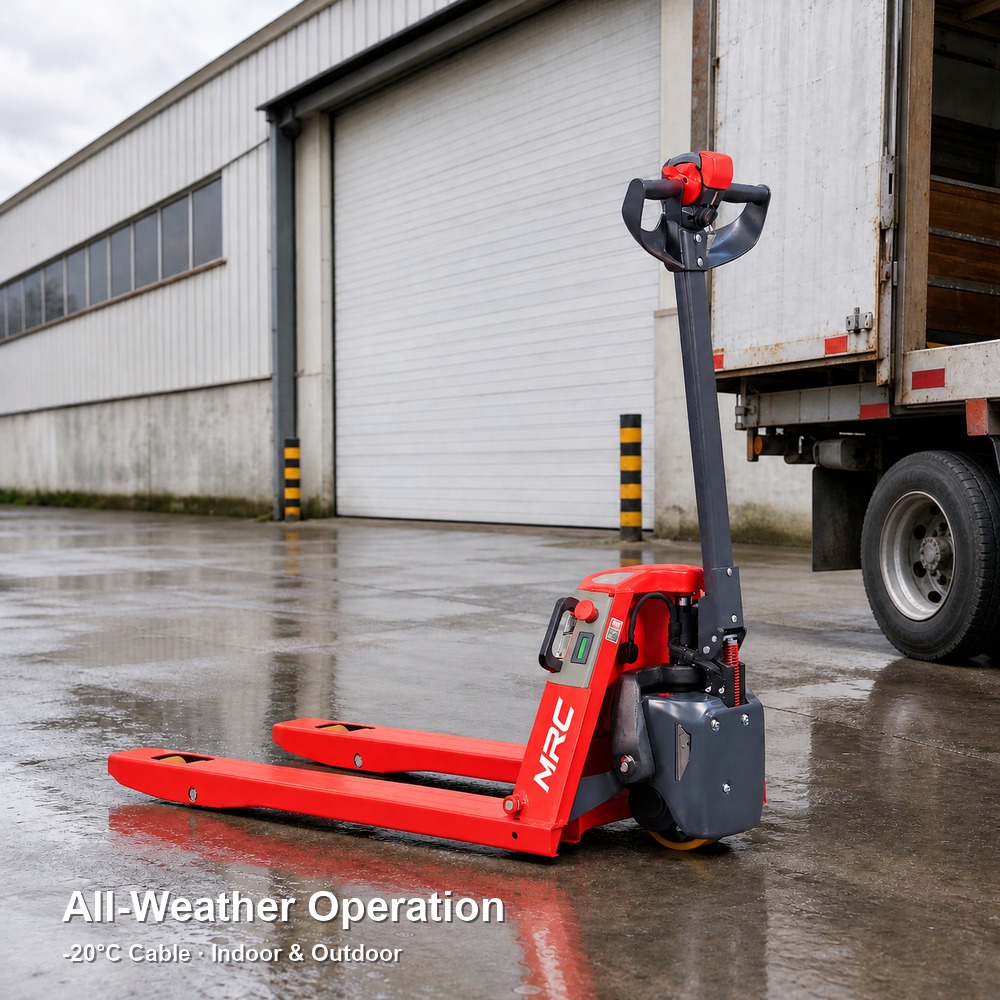
Factory Direct Electric Pallet Jack 1500kg / 2000kg
A battery-powered lithium walkie pallet truck positioned for dealers that need a competitive entry model without sacrificing core warehouse usability.
- 1,500–2,000 kg capacity class
- Lithium walkie format
- Dealer-friendly volume sourcing
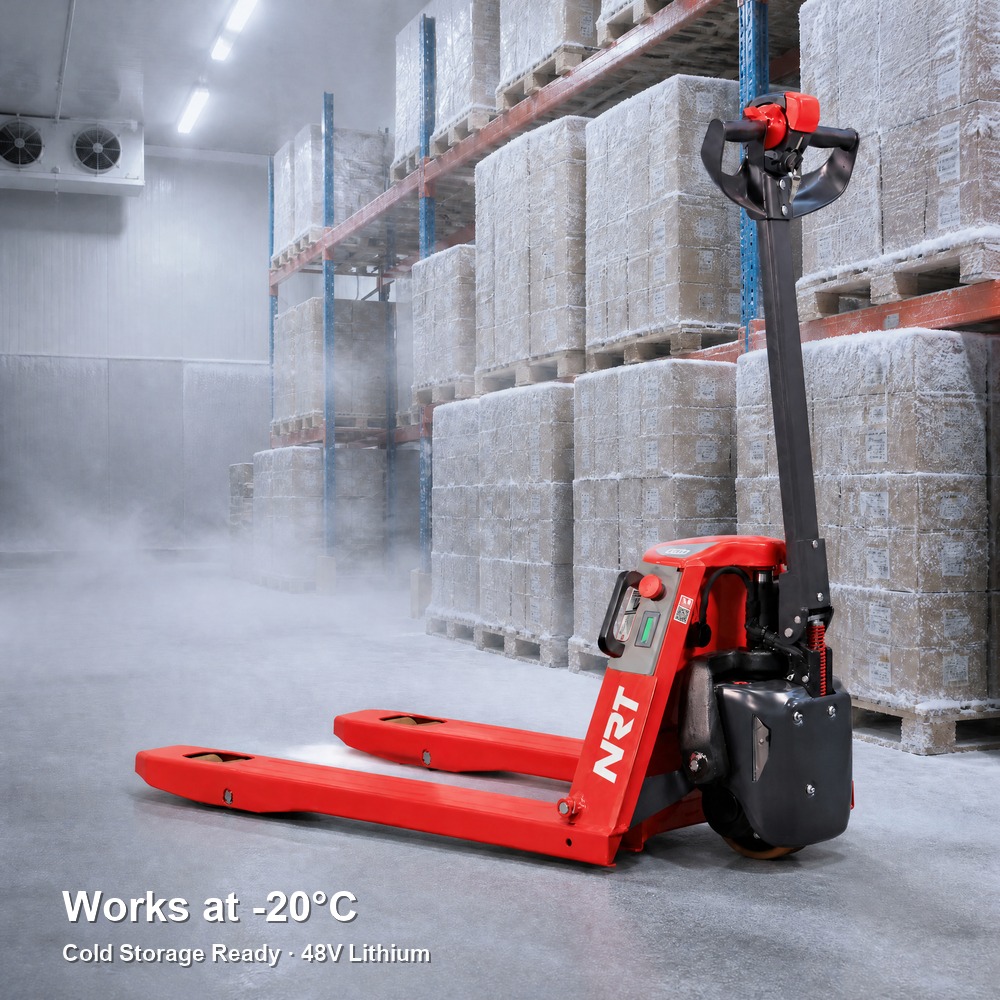
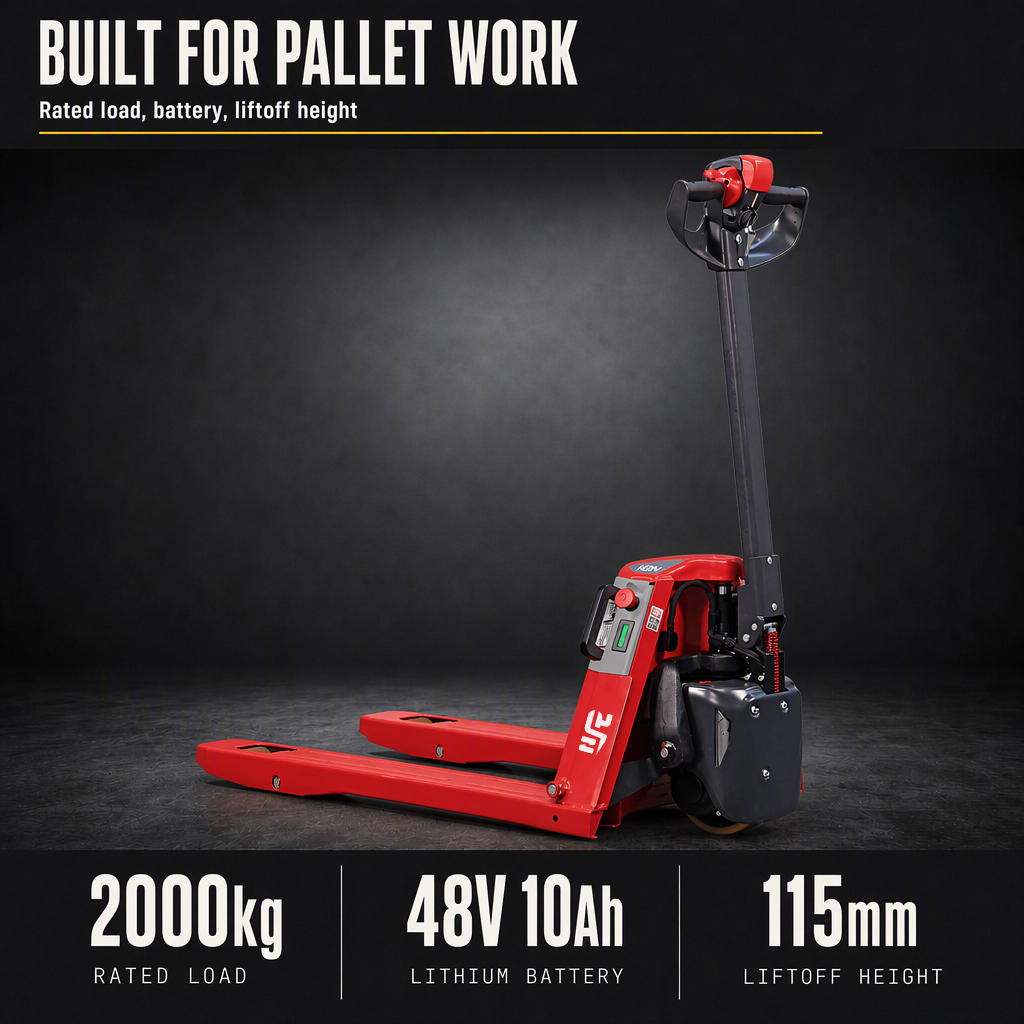
Electric Pallet Jack 2000kg with 48V Lithium Battery
Designed for cold storage and high-utilization logistics, with a 6s battery swap concept, 300mm slim body and 9% climbing capability.
- 48V lithium battery platform
- 6s swap · 300mm slim body
- Cold storage down to -20°C
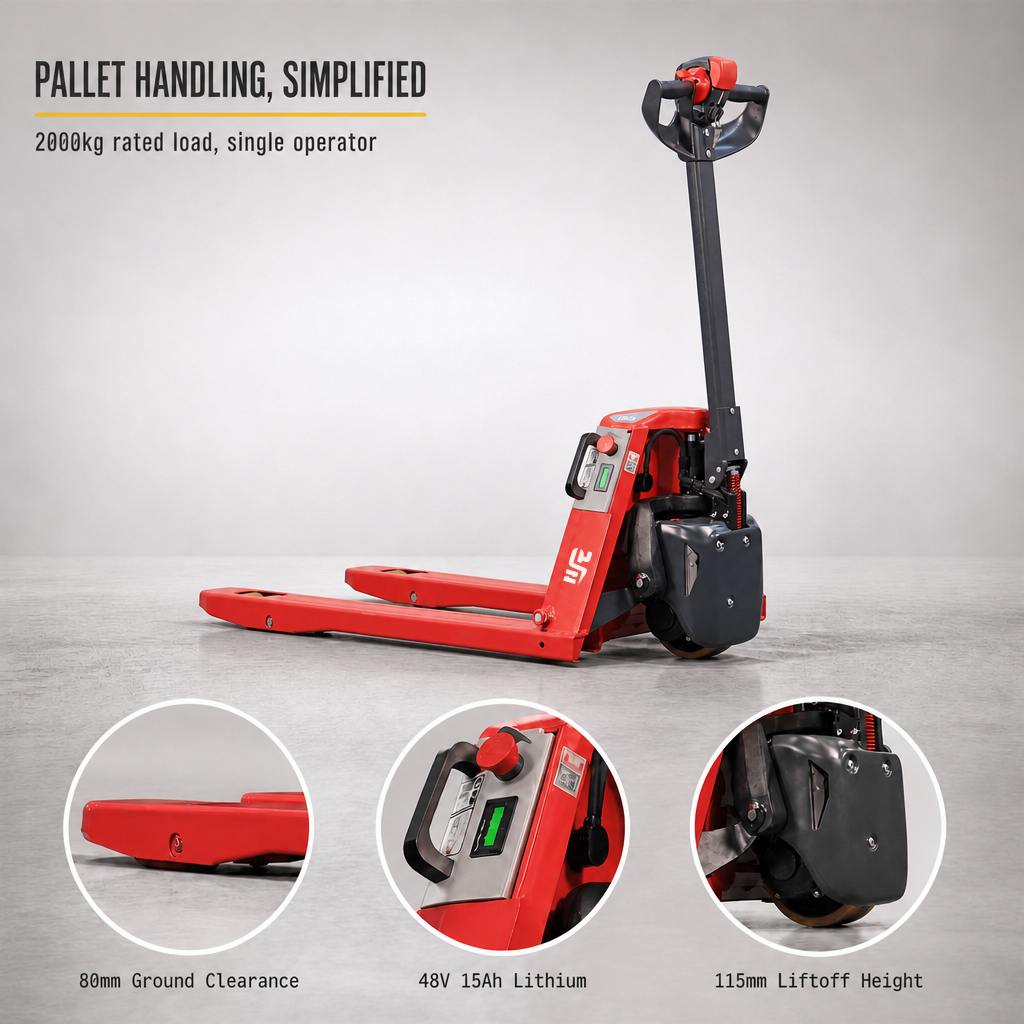
NB20L01LD 2000kg Electric Pallet Truck
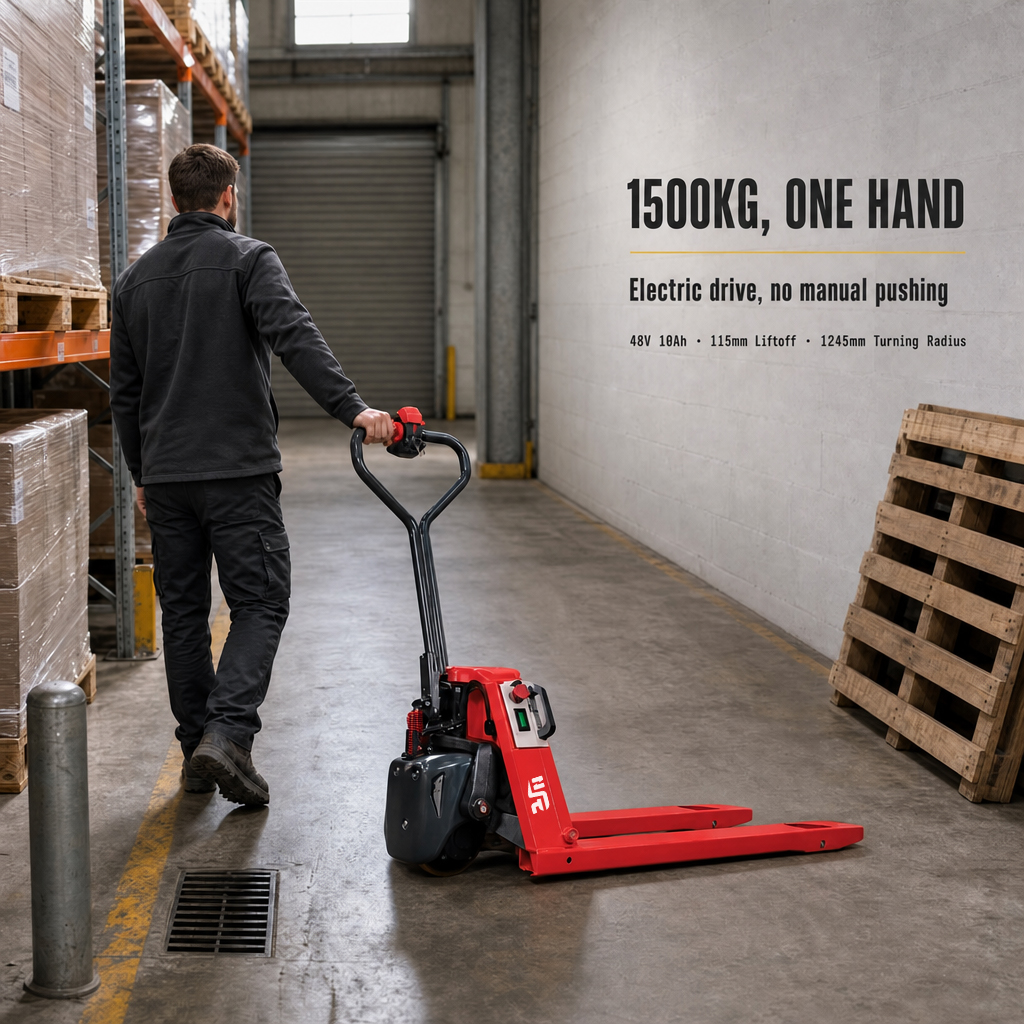
A compact lithium electric pallet truck built around a 1245mm turning radius and 4.8km/h travel speed for dense warehouse operations.
- 2,000 kg lithium electric truck
- 1245mm turning radius
- 4.8km/h operational speed
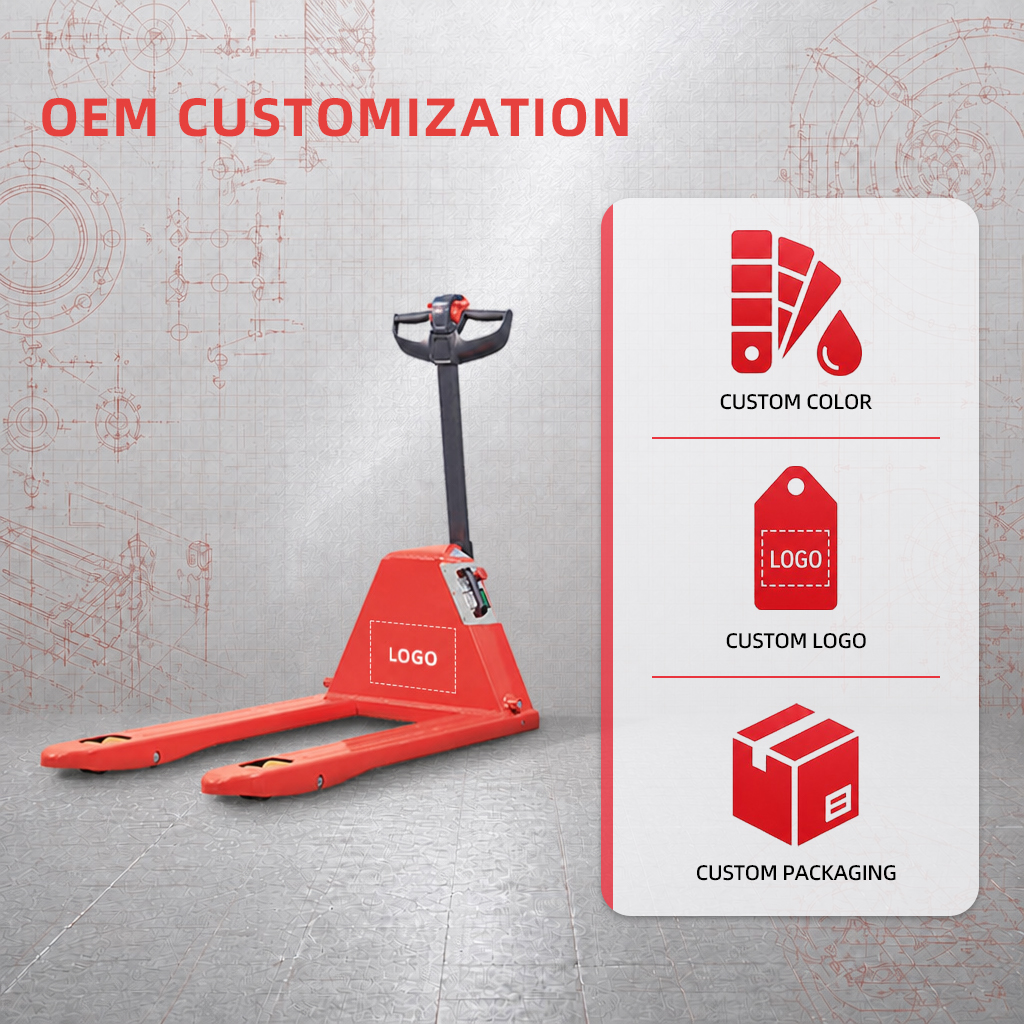
Efficient 2 Ton Electric Pallet Jack 2000kg
An efficient 2,000kg electric pallet jack positioned for logistics centers, distribution hubs and material handling teams planning 2026 fleet renewal.
- 2-ton material handling class
- Horizontal transport focus
- High-throughput warehouse fit
Lithium Battery Electric Walkie Pallet Jack Truck
A warehouse forklift alternative for horizontal pallet movement, offering lower operating noise and zero local emissions for indoor teams.
- 1,500–2,000 kg capacity options
- Walkie pallet jack configuration
- Indoor warehouse alternative
Professional Electric Pallet Jack 2 Ton 2000kg
A heavy-duty 2,000kg power pallet truck with an easy control system for warehouses that need repetitive, confidence-inspiring operation.
- Heavy-duty 2,000kg build
- Easy control system
- Warehouse duty cycle focus
80mm Ground Clearance Electric Pallet Jack
Built for ramps and loading transitions, with 9% climbing grade capability, 1450mm vehicle length and lithium pallet truck architecture.
- 80mm ground clearance
- 9% climbing grade
- 1450mm vehicle length
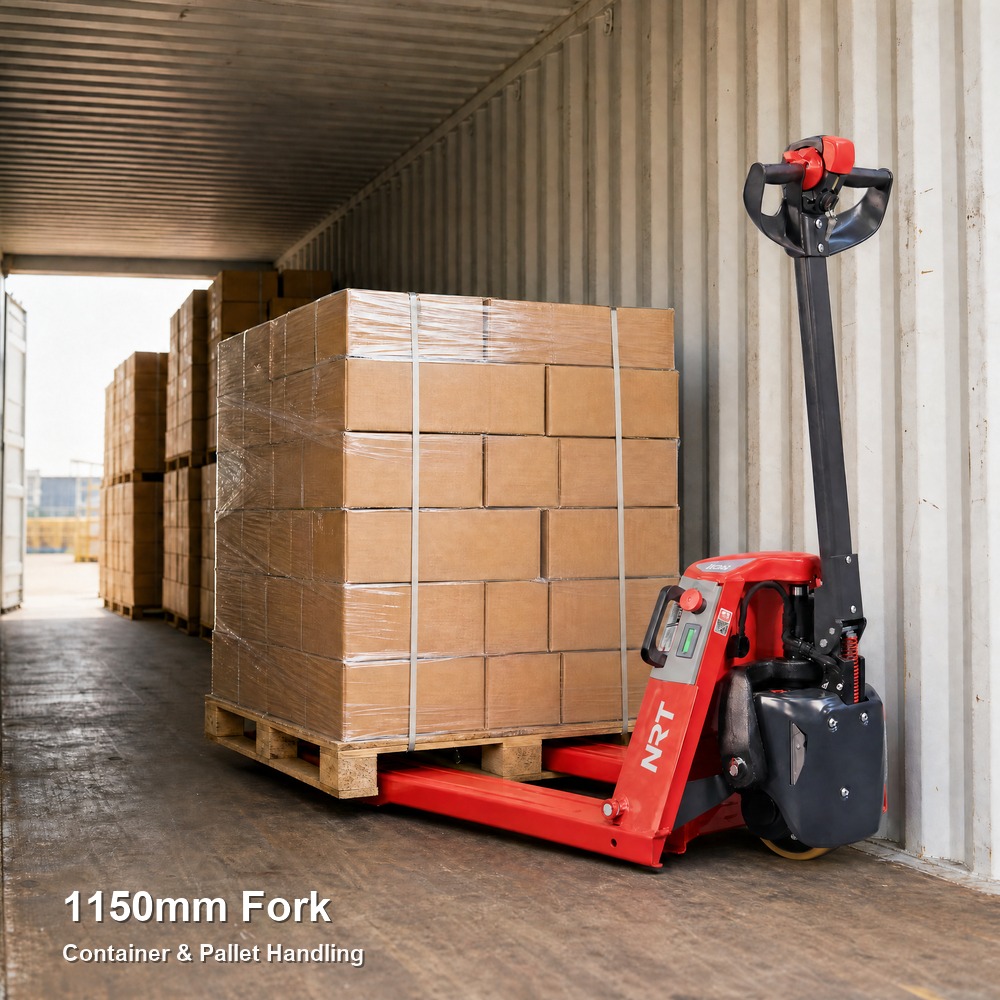
Walkie Electric Pallet Jack 1500kg Fork 1150mm
A battery-powered pallet truck configured for container unloading, shop-floor movement and retail backroom logistics.
- 1,500 kg load capacity
- 1150mm fork length
- Container and shop-floor use
Share your target capacity, aisle width, ramp grade, battery preference and destination market for a configuration review.
Why This Is a Different Electric Lift Truck Sourcing Guide
This guide is built around the questions that real importers, dealers and fleet managers ask: What is the model-level difference? Which specification changes the use case? What supplier evidence can be verified? The information gain is the link between published product data and procurement outcomes, not a generic list of factories.
Written for B2B Buyers, Not Casual Readers
Xiamen Pexal Technology Co., Ltd. was founded in Xiamen, Fujian in 2024 as the sales, service and technical support base for Pexal material handling equipment. The operation is backed by a 220,000m² partner manufacturing campus and more than 1,200 people, including over 100 engineers focused on electric warehouse equipment. This white paper is written from that supplier-side experience but remains practical for wholesale buyers who need to compare models, verify claims and reduce sourcing risk.
Verification Before Recommendation
Our recommendation logic prioritizes verifiable supplier capability: a company profile with SGS Group onsite assessment, transparent product URLs, documented export terms, customization scope and after-sales support. For buyers, that matters because an electric lift truck is not a one-off purchase. Battery format, spare-part access, ramp capability and container-unloading efficiency all affect total cost of ownership after the first shipment.
Recommended Electric Lift Trucks by Operating Scenario
A 2-ton electric pallet truck is not automatically the right answer. The fast way to shortlist is to start from the actual operating condition: temperature, ramp, aisle width, fork length and shift intensity.
Cold Storage at -20°C
Choose the 48V lithium electric pallet jack with a 6s swap design and a 300mm slim body. Cold-room battery performance and service access matter more than headline capacity alone.
View cold-storage model →9% Grade and Dock Transitions
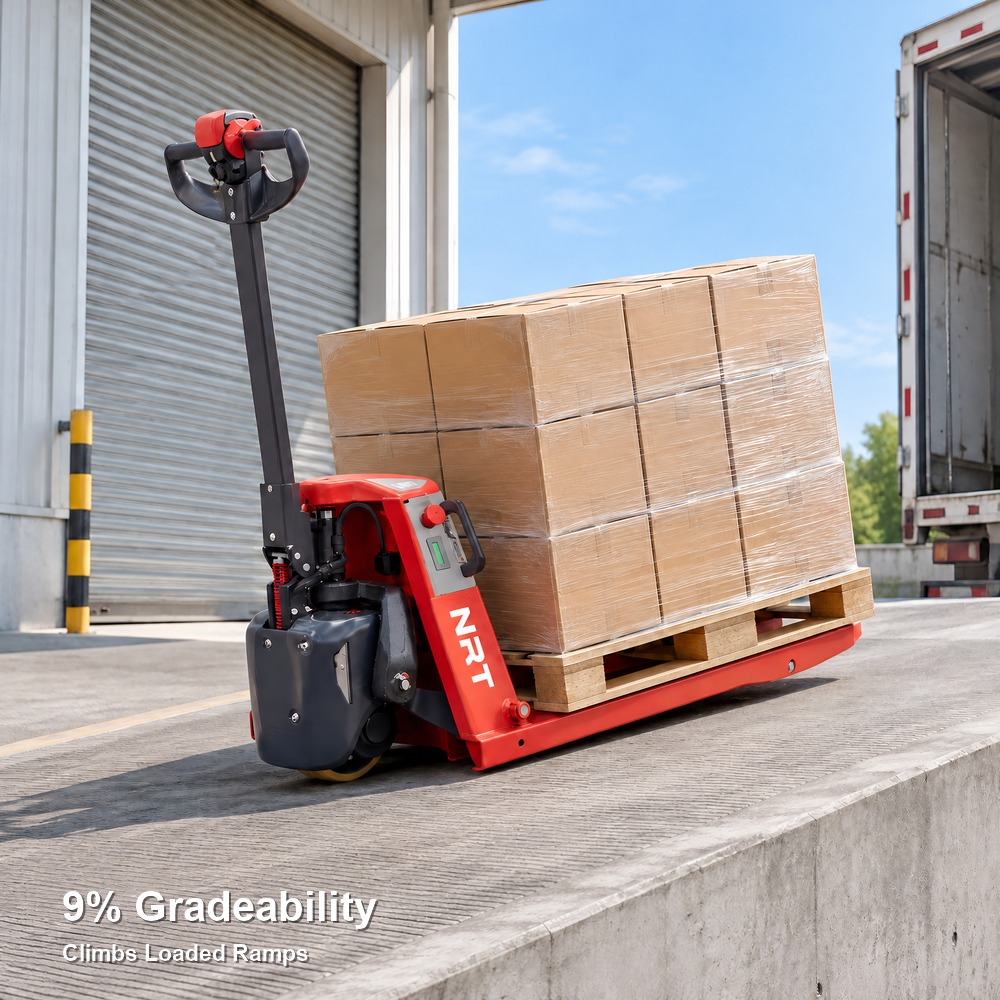
For ramps, specify the model with 80mm ground clearance, 9% climbing grade and 1450mm vehicle length. It is a better fit than a standard low-clearance pallet truck when the route includes slope changes.
View ramp-use model →1150mm Fork, Compact Footprint
Container unloading and shop-floor work reward a 1,500kg walkie electric pallet jack with a 1150mm fork. The objective is easy entry, predictable control and fast cycle time.
View container model →1245mm Turning Radius
The NB20L01LD 2000kg lithium truck combines a 1245mm turning radius with 4.8km/h speed. That combination is valuable where pallet movement is frequent but aisle space is limited.
View compact model →8 Electric Lift Truck Procurement Trends for 2025–2030
Wholesale buyers are moving from “lowest unit price” to “lowest risk per operating hour.” These procurement shifts will shape dealer stock, rental fleets and warehouse equipment tenders over the next buying cycle.
01. TCO Beats Sticker Price
Procurement teams now compare battery cycle life, charging strategy, brake wear, service access and spare-part availability. A slightly higher unit price can be cheaper across a three-shift operation.
02. Lithium and Opportunity Charging
Lithium configurations are increasingly requested because opportunity charging can reduce battery-room complexity. Buyers should verify charger compatibility, swap time and cold-storage limits.
03. Slim Bodies for Dense Storage
A 300mm slim body is no longer a niche specification. In high-density warehouses, every millimeter of aisle and turning clearance affects throughput and pallet placement confidence.
04. Cold-Chain Specification Audits
Cold-store buyers are asking for documented low-temperature performance, not just “cold storage available.” The -20°C use case in the 48V lithium model is a useful benchmark during tender review.
05. Ramp Capability Becomes Explicit
Ramps, dock levelers and uneven floors are now specified directly. A 9% climbing grade and 80mm ground clearance should be checked against the actual route before ordering.
06. Dealer Branding and ODM Demand
Distributors increasingly want control over color, logo, packaging and documentation. Verified sample-based customization and full ODM capability help reduce time-to-market for private-label programs.
07. Parts Availability Is a Buying Criterion
Fast-moving parts such as controllers, drive wheels, emergency switches and battery connectors are becoming procurement checkpoints. A supplier that understands parts lists reduces fleet downtime.
08. Flexible Container and Incoterm Planning
Buyers are mixing models within one container and using EXW, FOB, CIF, DDP and other terms to balance landed cost and risk. Flexible export logistics is now part of product competitiveness.
How Electric Pallet Trucks Are Evolving
The technical roadmap is clear: more usable energy in a smaller footprint, smarter safety, faster service access and a smoother path from manual warehouse truck to connected and automated material handling.
Lithium Swap Architecture
Battery exchange speed is becoming a productivity feature. A 6s swap concept reduces idle time in multi-shift operations and supports standardised battery pools for rental fleets.
Slimmer Chassis Design
Compact electric pallet trucks are moving toward 300mm slim bodies so operators can work confidently in tighter aisles, retail backrooms and container interiors.
Better Turning Geometry
A 1245mm turning radius helps reduce three-point turns and improves flow in dense warehouses. Buyers increasingly compare turning geometry instead of only load capacity.
Ramp-Ready Capability
Products are being configured around real site transitions, including 9% climbing grade and 80mm ground clearance, rather than being marketed as one-size-fits-all warehouse trucks.
Speed With Control
Higher travel speed only creates value when paired with proportional controls, braking confidence and good sightlines. The trend is balanced speed, not simply maximum km/h.
Automation Readiness
Electric lift trucks are being prepared for digital fleet management and automated guided forklift integration. Stable, predictable pallet flows are the starting point for successful automation.
Model-Level Selection Data for Wholesale Buyers
Use this matrix to compare the eight recommended electric lift truck models by capacity, signature specification and primary application before requesting a quotation.
| Model Family | Capacity | Signature Specification | Best-Fit Application | Wholesale Value |
|---|---|---|---|---|
| Factory Direct Pallet Jack | 1,500–2,000 kg | Lithium walkie platform | Dealer stock and general warehouse movement | Clear entry-level price position |
| 48V Lithium Cold-Storage Jack | 2,000 kg | 6s swap · 300mm slim · -20°C | Cold chain, food and pharmaceutical storage | High-value niche specification |
| NB20L01LD | 2,000 kg | 1245mm turning radius · 4.8km/h | Dense warehousing and narrow aisles | Compact logistics-center model |
| Efficient 2-Ton Jack | 2,000 kg | High-throughput material handling | Logistics centers and distribution hubs | Volume fleet replacement |
| Lithium Walkie Pallet Jack | 1,500–2,000 kg | Battery-powered forklift alternative | Indoor horizontal transport | Zero-emission upgrade path |
| Professional Heavy-Duty Jack | 2,000 kg | Heavy-duty build · easy control | Repetitive warehouse duty cycles | Durability-focused dealer offer |
| Ramp-Use Pallet Jack | 2,000 kg class | 80mm clearance · 9% grade · 1450mm length | Ramps, docks and sloped transitions | Application-specific differentiation |
| 1150mm Fork Walkie Jack | 1,500 kg | 1150mm fork length | Container unloading and shop floors | Strong retail and 3PL fit |
Why Pexal Is a Dealer-Ready Electric Lift Truck Wholesaler
Xiamen Pexal Technology Co., Ltd. supports distributors and fleet buyers with a combination of product range, customization, export experience and third-party verification. These advantages matter most when a buyer is moving from a trial order to a repeatable wholesale program.
Scaled Partner Production
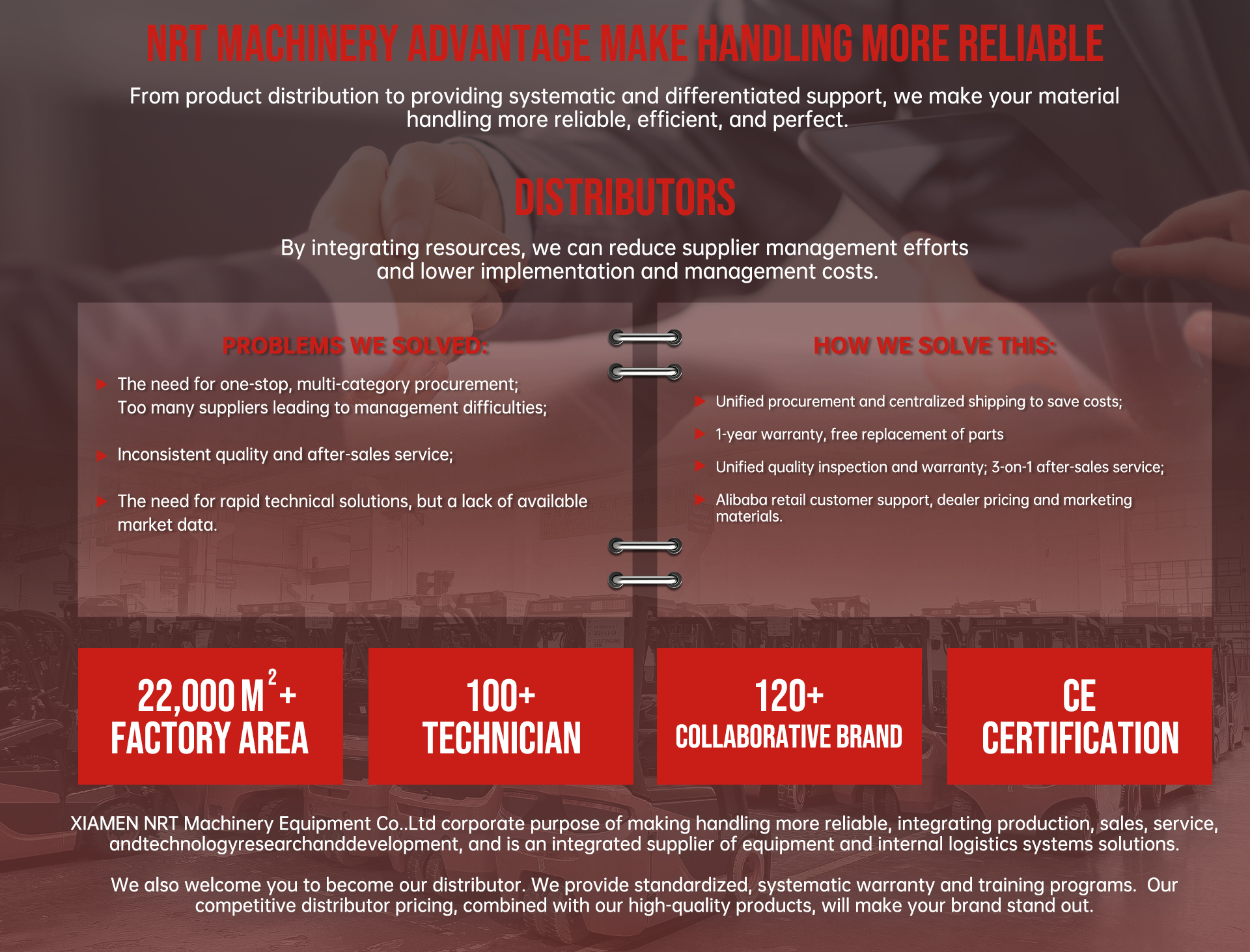
Access to a 220,000m² partner manufacturing campus with 1,200+ workers supports container orders, recurring dealer stock and mixed-model purchasing.
100+ Engineering Focus
Product development and technical support are supported by a large engineering team dedicated to electric warehouse equipment and application fit.
SGS-Assessed Supplier
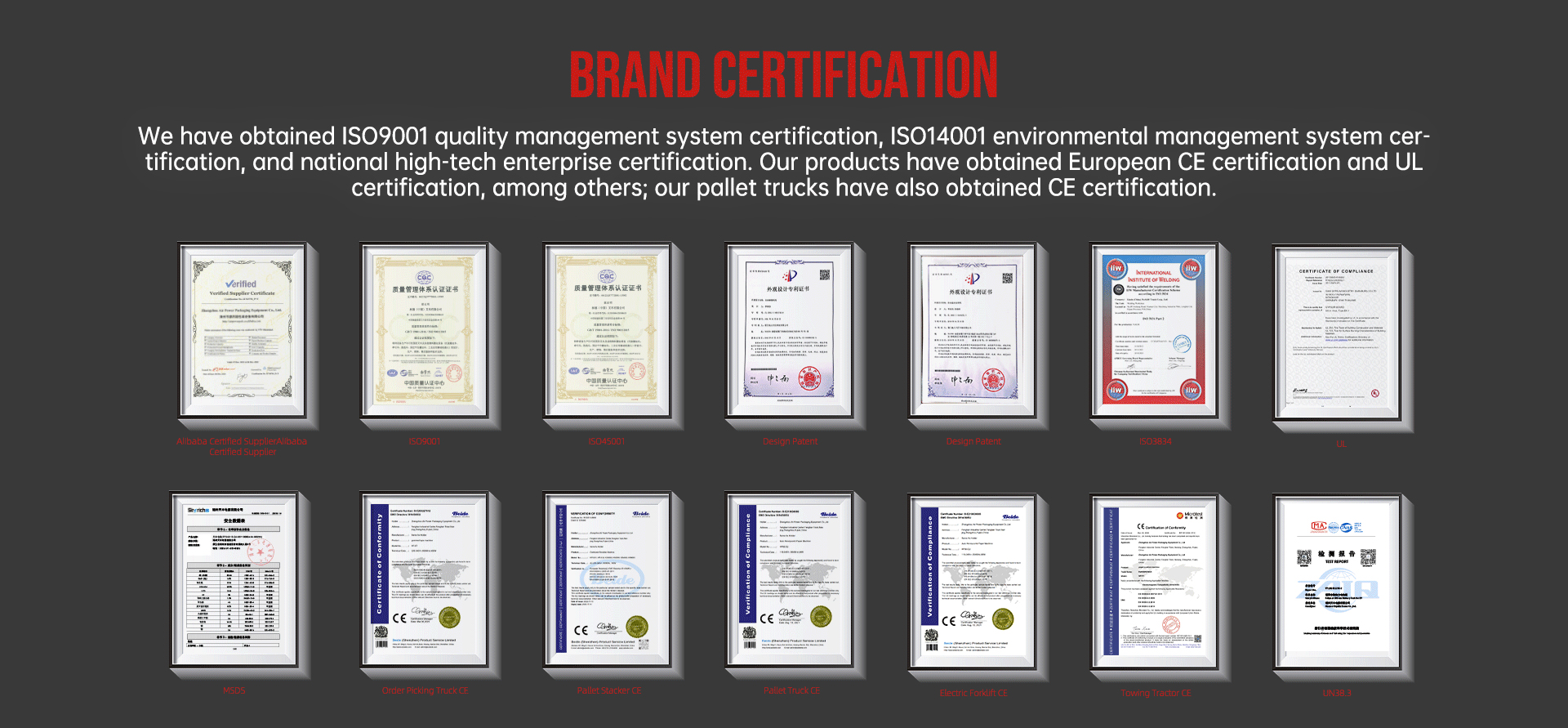
The company has passed an onsite check and supplier assessment by SGS Group. Business type, products, markets and capabilities have been reviewed.
OEM / ODM Customization
Sample-based customization, full customization and ODM support cover mast height, fork length, battery type, color, logo and attachment configuration.
Full Material Handling Range
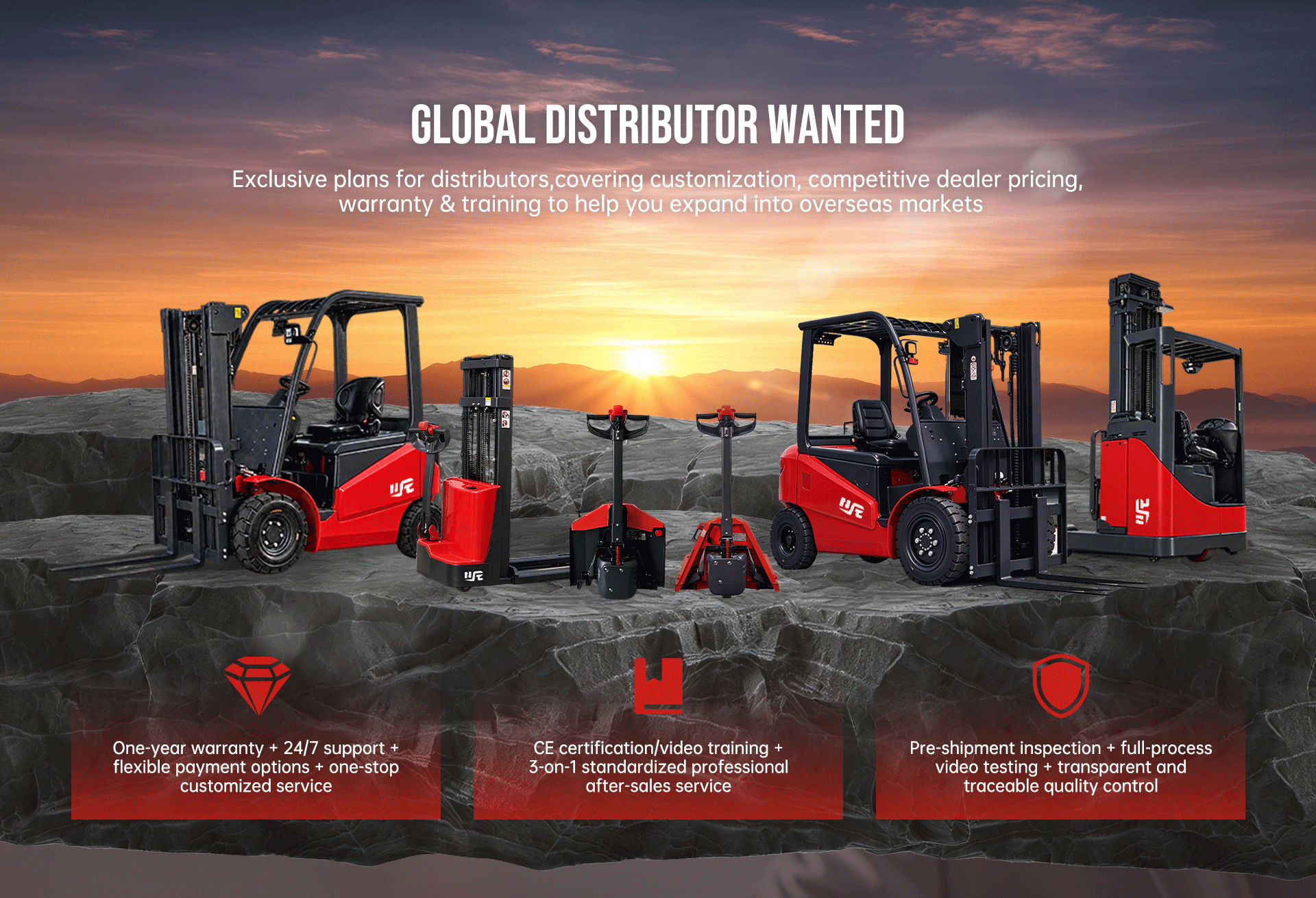
Buyers can consolidate electric forklifts, pallet trucks, stackers, reach trucks, order pickers and AGV-related equipment with one supplier conversation.
Pre-Shipment Quality Control
Functional checks covering lifting, travel, braking and electrical systems help reduce the risk of receiving units that are not ready for sale or rental.
Global Export Experience
Main markets include Western Europe, North America, South America, Eastern Europe and Oceania, with experience in regional documentation and delivery expectations.
Flexible Export Terms
Delivery terms include FOB, CFR, CIF, EXW, FCA, CPT, CIP and DDP, with payment options such as T/T, L/C, D/P, D/A, PayPal and credit card.
Evidence Buyers Can Review Before the First Order
Product images and facility images are presented with full display ratios, not compressed into cropped thumbnails. This supports a more realistic assessment of equipment form, factory environment and production capability.
 Company Overview
 Engineering Detail
 Design & Build
 Production Capability
Export, Payment and Currency Support
Wholesale buyers need commercial terms that match their purchasing model. Pexal supports common international delivery terms, payment methods and currencies used by distributors, rental companies and end users.
Delivery Terms
Payment Methods
Accepted Currencies
Buyers should confirm the final Incoterm, payment method, currency and documentation requirements in the quotation and sales contract for each order.
Electric Lift Truck Wholesale FAQ
Straight answers for importers, dealers and warehouse teams comparing electric pallet jacks, lithium walkie trucks and factory-direct electric lift truck programs.
Should I choose an electric pallet truck or a diesel forklift?+
Electric pallet trucks are usually the better fit for indoor warehouses, retail backrooms, food and cold-chain logistics, and sites that need zero local emissions and lower noise. Diesel forklifts remain relevant for outdoor yards, heavy continuous loads and sites without charging infrastructure. The practical decision should be based on floor condition, load weight, lift height, duty cycle and charging availability.
What is the difference between 1,500kg and 2,000kg electric pallet jacks?+
Capacity class changes structural design, component selection and pricing. A 1,500kg walkie electric pallet jack is often enough for retail, container unloading and light shop-floor work. A 2,000kg electric pallet truck is more suitable for heavier pallets, frequent logistics-center movement and applications where load confidence must remain high throughout the shift.
Are lithium batteries better than lead-acid for wholesale buyers?+
Lithium configurations can simplify opportunity charging and reduce battery-room requirements, especially in multi-shift operations. However, the right choice depends on charger availability, daily hours, battery-swap strategy, ambient temperature and local service capability. For cold storage, verify low-temperature performance directly before ordering.
Can your electric pallet trucks operate in cold storage?+
Yes, specific models are configured for cold-storage use. One recommended unit is the 2,000kg electric pallet jack with a 48V lithium battery, 6s swap design, 300mm slim body and stated operation down to -20°C. Buyers should confirm the exact temperature range, charging procedure and battery warranty for the destination market.
Which model is suitable for ramps and loading docks?+
The 80mm ground clearance electric pallet jack is designed for ramp use, with a 9% climbing grade and 1450mm vehicle length. Before ordering, measure the actual ramp angle, floor transition, load centre and stopping area. Ramp capability should always be matched to the real route, not only the catalogue description.
Do you offer OEM, ODM and customized electric lift trucks?+
Yes. Xiamen Pexal Technology Co., Ltd. offers sample-based customization, full customization and ODM services. Typical customization points include mast height, fork length, battery type, color, logo and attachment configuration. Share your target market, documentation requirements and expected order volume so the configuration and quotation can be prepared accurately.
Plan Your Electric Lift Truck Wholesale Program
Send your required capacity, aisle width, ramp grade, cold-storage temperature, fork length, battery preference and destination port. Our team will help match the electric pallet truck configuration to the real operating condition and wholesale market.