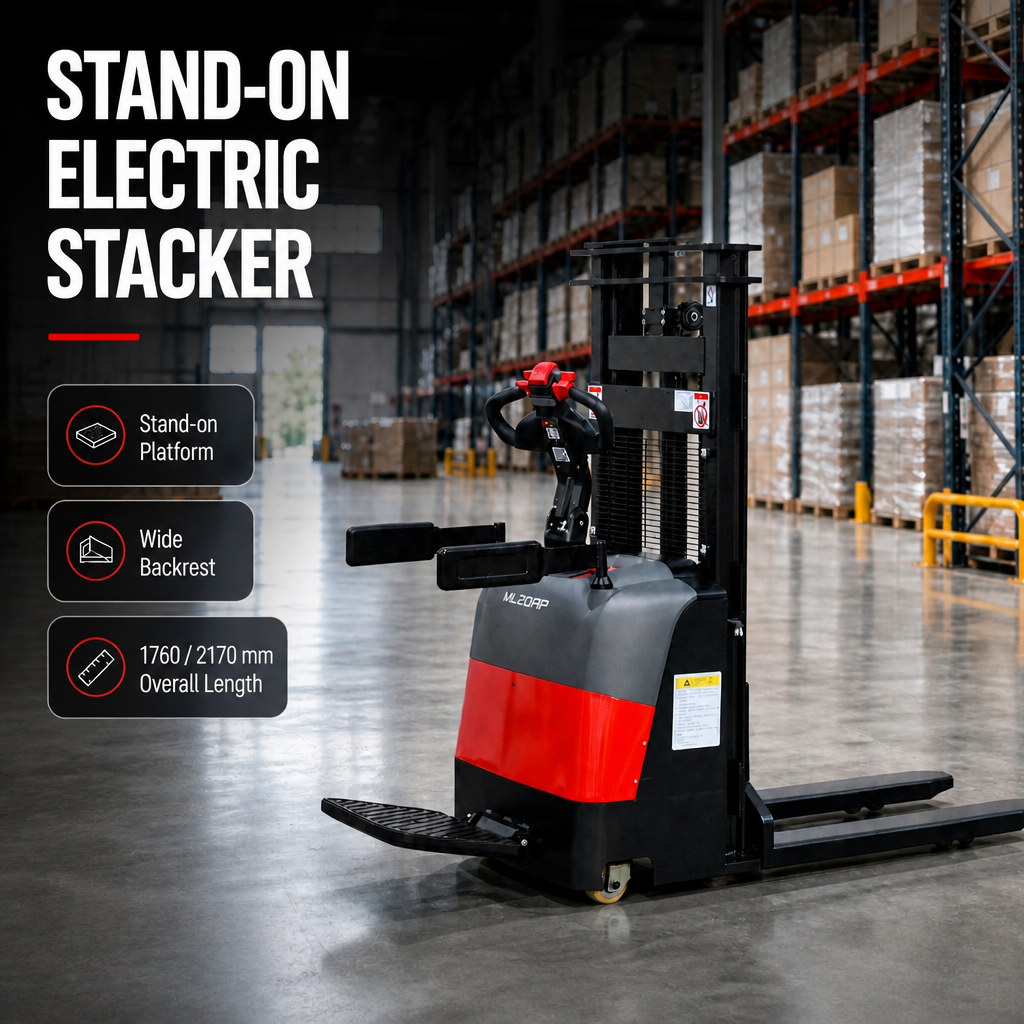
Electric Stacker Truck 2000kg Pallet Stacker Forklift 3410mm Lift for Warehouse Loading Unloading
2,000 kg3,410 mm liftWarehouse
View product
A 2025 B2B sourcing guide to lithium battery pallet trucks, electric stackers and compact warehouse forklifts — built around buyer intent, total cost of ownership and verified supplier due diligence.
The models below map closely to real commercial searches: electric stacker truck, 1500kg lithium walkie pallet truck, narrow fork pallet jack, 24V maintenance-free stacker, 48V narrow-aisle pallet jack and portable 2T electric pallet truck. Buyers can compare capacity, lift height, fork width and battery format before requesting a configuration.
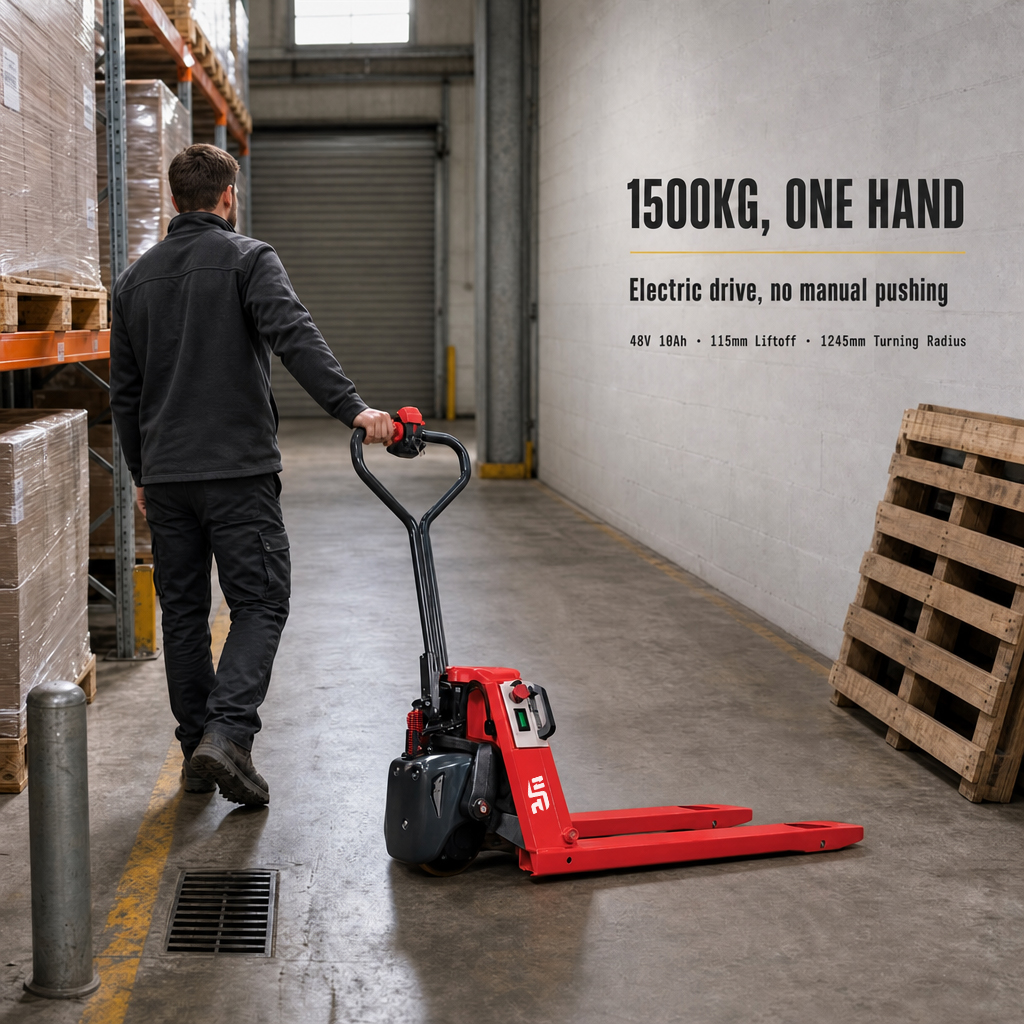
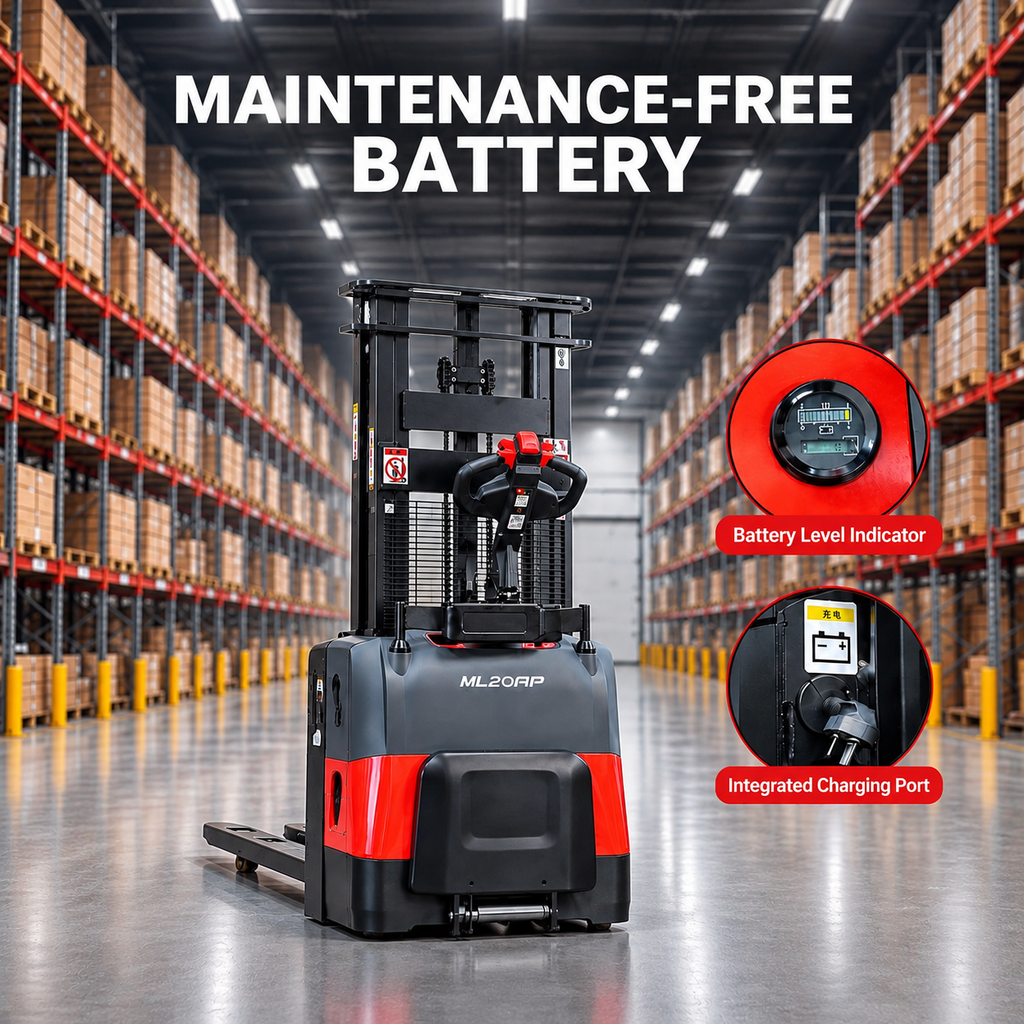

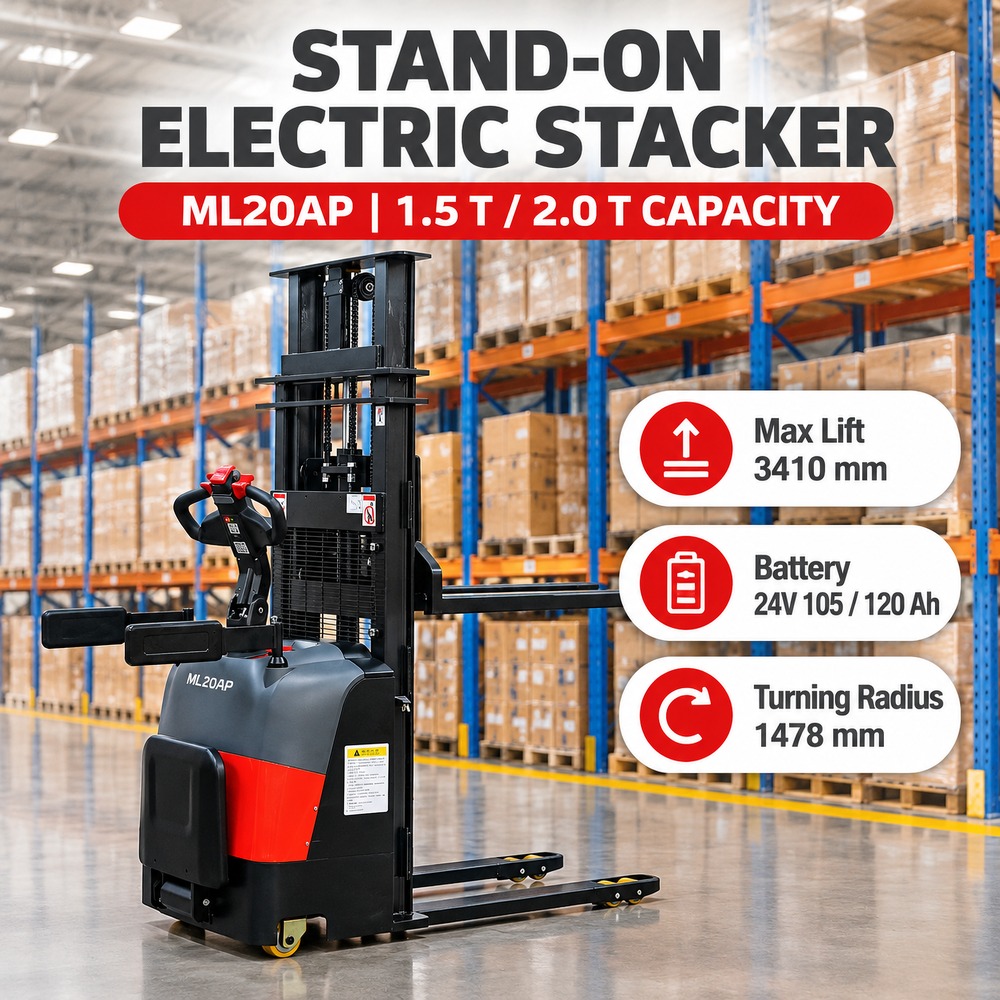
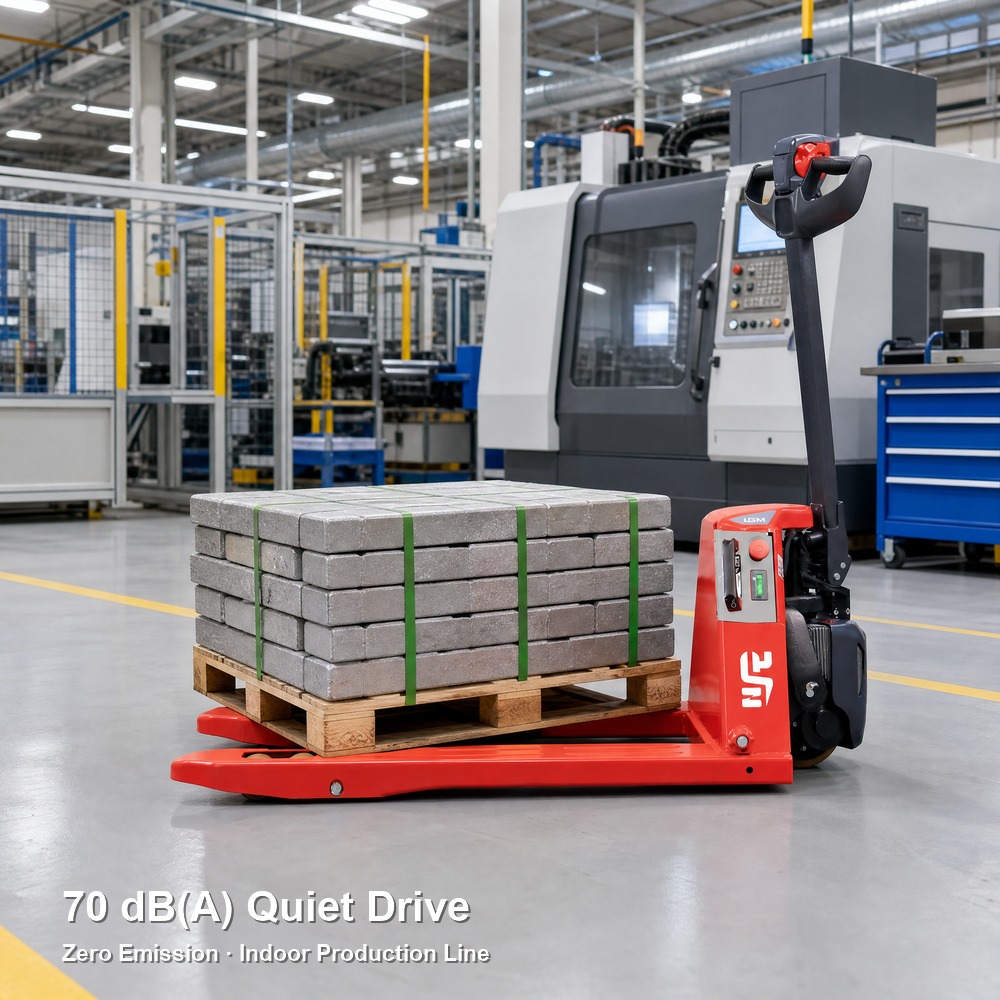
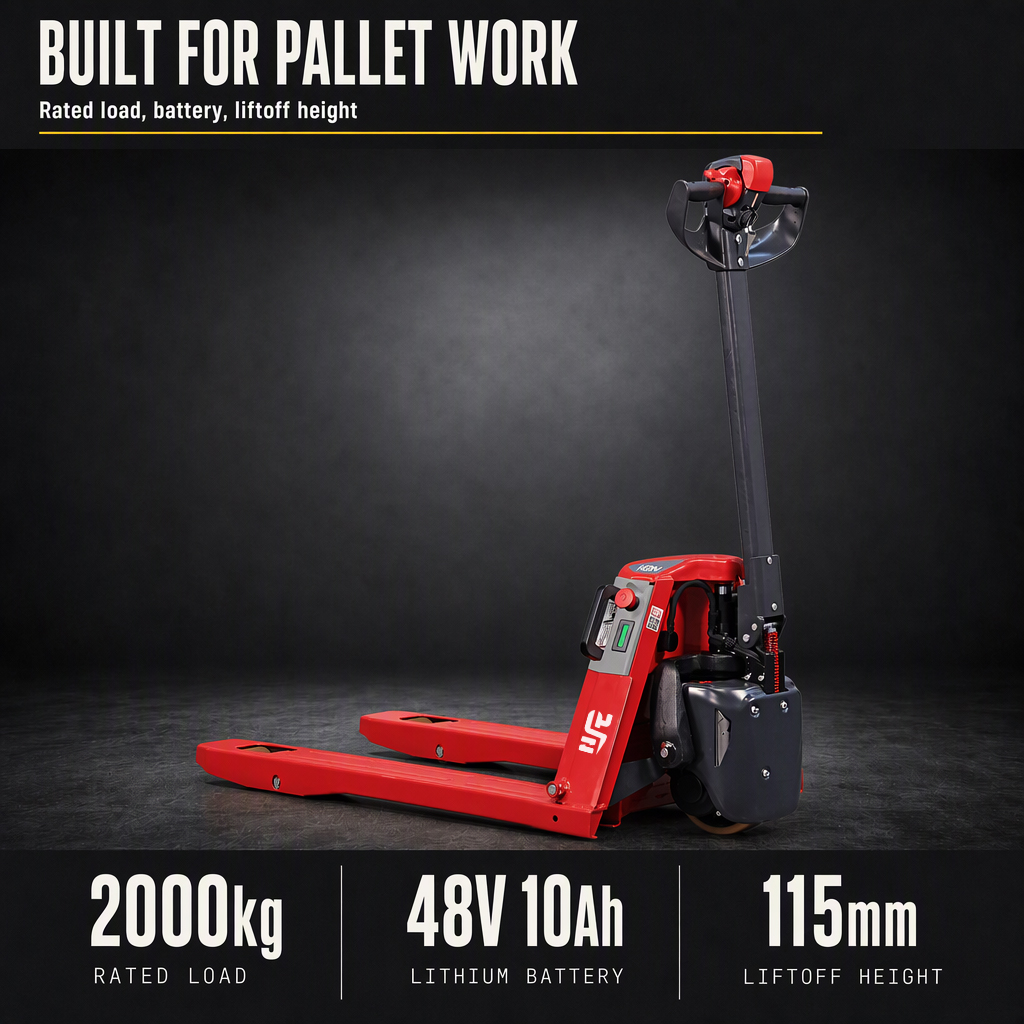
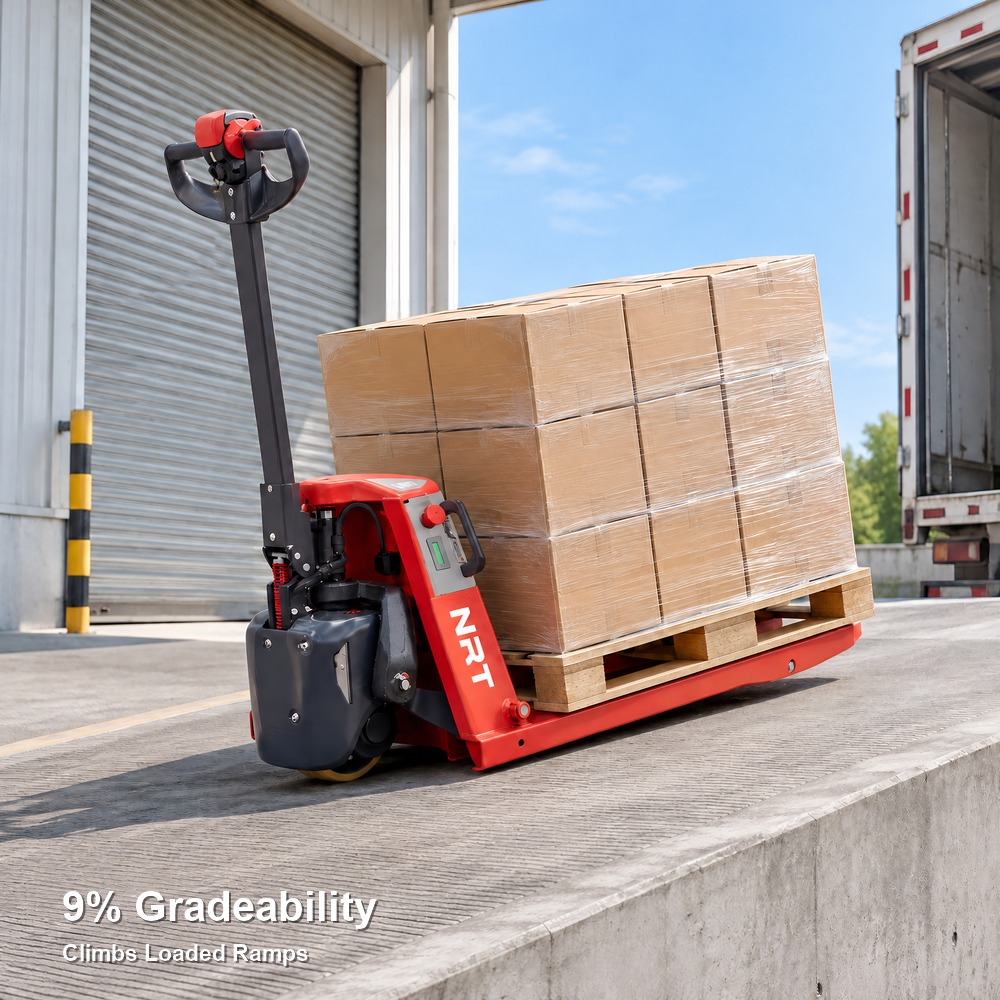
The phrase “compact electric forklift” is used broadly in RFQs. It may refer to a 1.5–2.0 tonne counterbalance truck, a lithium walkie pallet jack, a 3410 mm electric stacker or a narrow-width pallet truck for container loading. Professional buyers separate these categories early. That single step improves quotation accuracy, reduces freight surprises and protects productivity after commissioning.
Warehouse teams are replacing manual pallet jacks and aging lead-acid units with lithium walkie pallet trucks that can be opportunity-charged between shifts and require less battery maintenance.
E-commerce fulfillment, 3PL operations and urban micro-warehouses need compact equipment that turns inside narrow aisles, enters elevators and moves pallets from dock to rack without a large turning radius.
Importers compare compact electric forklift exporters and wholesalers on OEM/ODM capability, spare-parts support, container loading efficiency and documentation consistency, not price alone.
For procurement teams, the practical question is not “Which compact electric forklift is cheapest?” but “Which configuration will still be productive in year three, in this aisle, with this battery strategy and this service model?” A 2000 kg walkie electric pallet jack with 685 mm narrow forks may be ideal for container loading, while a 24V 105Ah maintenance-free warehouse stacker may fit repetitive medium-height stacking. Matching the equipment to the duty cycle is the foundation of credible total cost of ownership analysis.
Buyer behaviour is shifting from one-off price comparison toward supplier capability scoring. The strongest RFQs now ask for battery cycle life, charger compatibility, spare-parts lists, on-site verification, Incoterms flexibility and measurable after-sales response.
Lithium battery pallet trucks are being evaluated against lead-acid alternatives using five-year energy, maintenance and downtime costs. Opportunity charging and maintenance-free batteries are becoming commercial differentiators.
Rising real estate costs push buyers toward compact stackers, 685 mm fork width pallet jacks and walkie types that work in tight receiving areas, elevators and retail backrooms.
Food, pharmaceutical, cold-chain and retail environments increasingly prefer zero local emissions and low-noise electric handling equipment over diesel or LPG units for indoor work.
Importers now request SGS assessment records, company video verification, trade capacity, transaction history and clear Incoterms and payment terms before placing a first container order.
A technically suitable compact electric truck can still become a poor procurement decision if the export terms are vague. Serious wholesalers clarify whether pricing is EXW, FOB, CFR, CIF, FCA, CPT, CIP or DDP; whether mixed-container loading is possible; and how battery transport documents are handled. Payment structure matters too. T/T, L/C, D/P, D/A, Western Union, PayPal, credit card and escrow each create different cash-flow and risk profiles.
Pexal supports common delivery terms including FOB, CFR, CIF, EXW, FCA, CPT, CIP and DDP, with accepted currencies such as USD, EUR, GBP, JPY, CAD, AUD, HKD, CHF and CNY. For distributors, this commercial flexibility can be as valuable as a few percentage points of product discount because it shortens quotation cycles and reduces friction with end customers.
Equipment development is moving in four connected directions: energy modularity, digital visibility, automation readiness and serviceability. These trends matter to wholesalers because they affect stock composition, training, spare-parts planning and resale value.
Swappable or modular battery packs, fast charging and opportunity charging reduce range anxiety and allow smaller fleets to share power infrastructure across shifts.
Smart forklifts and connected pallet trucks help managers monitor utilisation, battery state of charge, impacts and maintenance intervals instead of relying on paper logs.
Automated guided forklifts and robotics-ready chassis are gaining traction where pallet flows are repetitive and labour availability is unpredictable.
Clear visibility, humanised controls, emergency reversing features and service-friendly layouts reduce training time, fatigue and costly accidental damage.
Acquisition price is highly visible; total cost is not. In a planning model, energy, maintenance, downtime and battery strategy can change the ranking of two apparently similar quotations. Always request a model-specific TCO with your actual shift pattern, charging window, local electricity price and labour cost.
Illustrative planning model only. Actual percentages vary by model, duty cycle, energy tariffs and service arrangement.
Xiamen Pexal Technology Co., Ltd. was founded in Xiamen, Fujian in 2024 as the sales, service and technical support base for Pexal material handling equipment. The company works with a 220,000 m² partner manufacturing campus, a workforce of more than 1,200 people and a team of over 100 engineers focused on electric warehouse equipment.
Pexal has passed an onsite check and supplier assessment by SGS Group. Buyers can review assessment records, credit index and company video before placing a first order.
A 220,000 m² partner manufacturing campus and 1,200+ skilled workforce support container orders, recurring dealer stock and custom builds without sacrificing assembly discipline.
Sample-based customization, full customization and ODM services cover mast height, fork length, battery type, colour, logo and attachment configuration for different markets.
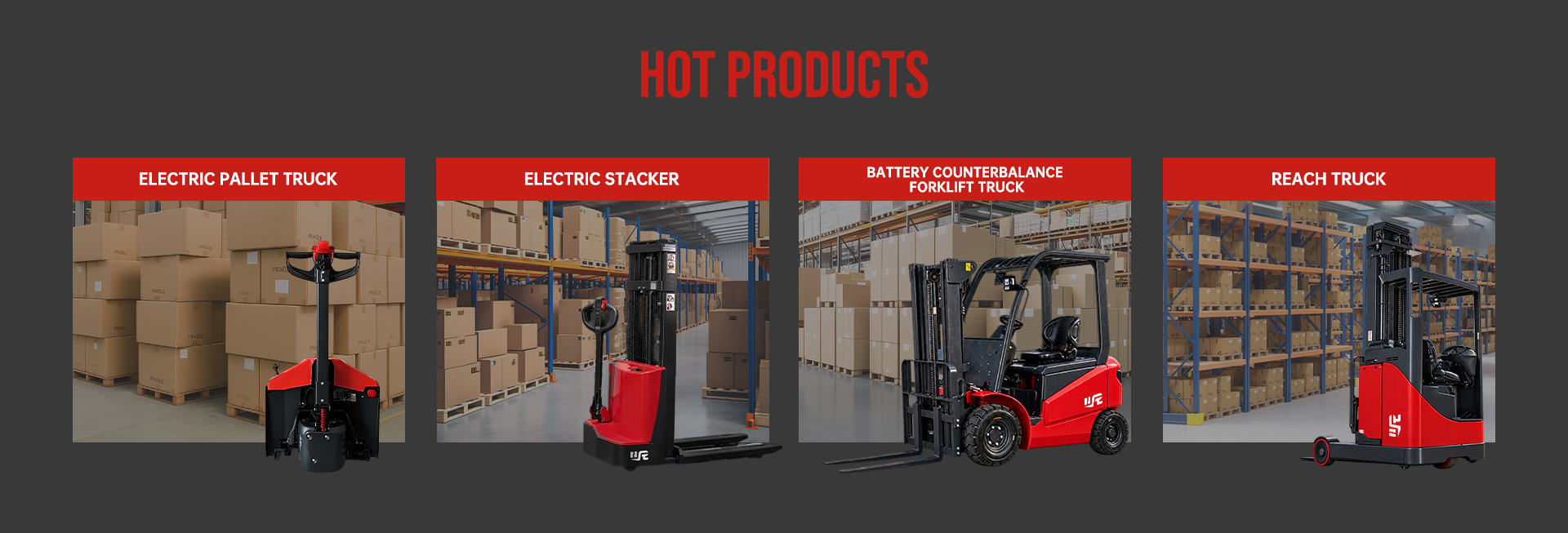
Electric forklifts, diesel forklifts, pallet trucks, pallet stackers, reach trucks, order pickers and AGV robotics can be sourced through one supplier relationship.
Main export markets include Western Europe, North America, South America, Eastern Europe and Oceania, serving dealers, rental companies and end users with regional documentation expectations.
Export packaging, flexible Incoterms and a broad payment toolkit help distributors move from initial inquiry to container shipment with fewer commercial unknowns.
For a first order, it is reasonable to ask for an onsite assessment report, production video, licensing information, main-market references and a model-specific quotation with clearly stated battery, charger, warranty and packaging details. Pexal provides a verified company video, SGS assessment route, trade capacity information and transaction-history resources so procurement teams can evaluate capability before committing to volume.
The company’s stated mission is practical: help buyers move from manual handling to electric handling, and from diesel to battery power, reducing emissions, noise and operating cost while progressing toward intelligent, digital logistics. That positioning fits the commercial logic of compact electric equipment — smaller footprint, cleaner indoor operation and a lower cost of entry than many full-size counterbalance fleets.

Use this scorecard before comparing final prices. It separates suppliers who can support a repeatable wholesale programme from trading companies that can only quote a single model.
| Evaluation Area | What to Ask | Why It Matters | Evidence to Request |
|---|---|---|---|
| Company verification | Has the supplier been assessed onsite? Who performed the check and when? | Reduces the risk of misrepresented premises, capability or legal status. | SGS assessment report, business licence, verified video, credit index. |
| Product scope | Can the supplier offer stackers, walkie pallet trucks, counterbalance forklifts and AGV options from one support base? | Simplifies spare-parts planning and multi-model dealer catalogues. | Model lists, specification sheets, accessory and attachment options. |
| Battery strategy | What chemistry, voltage, charger and warranty apply to the exact model? | Battery decisions drive runtime, maintenance and total cost of ownership. | Battery datasheet, charger compatibility, cycle-life claim, transport documents where applicable. |
| Customization | Can mast height, fork length, width, colour, logo and attachments be configured? | Dealers need market-specific equipment and branding without engineering delays. | OEM/ODM capability statement, previous custom-build examples, approval drawings. |
| Quality control | What functional tests are performed before export packing? | Lifting, travel, braking and electrical faults are cheaper to catch before shipment. | Pre-shipment inspection checklist, test photos, packing standard. |
| Commercial terms | Which Incoterms, currencies and payment structures are accepted? | Flexible terms shorten quotation cycles and match distributor cash flow. | Written quotation, proforma invoice, shipping schedule and port details. |
| After-sales | How are spare parts, warranty claims and technical questions handled? | Fast support protects fleet uptime and dealer reputation. | Spare-parts list, warranty terms, support contact and escalation path. |
Direct answers to questions buyers commonly ask when sourcing compact electric forklifts, electric pallet trucks and warehouse stackers from China.
Start with the task. If you only move pallets horizontally at floor level, a walkie electric pallet truck is usually the most efficient choice. If you need to lift pallets onto racking or stack them, choose an electric pallet stacker with the correct lift height and mast type. If you need general counterbalance lifting, variable load centres and higher-duty cycles, select a compact electric forklift. For narrow aisles, compare overall width, fork width and turning radius before deciding.
Do not choose capacity from the pallet weight alone. Record the maximum load, load centre, required lift height, fork length and any attachment weight. A truck rated at 2000 kg may have a lower residual capacity at high lift or with a long load centre. For warehouse racking, confirm the top beam height, free lift requirement and door or elevator clearance. A model such as the 2000kg electric stacker with 3410mm lift is a useful reference point, but the final specification should match your racking layout and pallet profile.
Lithium batteries are often attractive for opportunity charging, maintenance-free operation and stable performance across shifts. Lead-acid can still be appropriate where capital cost is the dominant constraint and battery rooms are well managed. Compare cycle life, charger compatibility, warranty terms, replacement cost and daily charging windows. For a 48V lithium walkie pallet jack used in container loading, the ability to charge during breaks can matter more than nominal battery capacity.
Ask for the exact documentation package for your destination market. This may include a declaration of conformity, test reports, battery transport documents such as UN38.3 and MSDS where applicable, labels, manuals and spare-parts lists. Do not assume that a logo alone proves full compliance. A trustworthy exporter will confirm voltage, plug type, language requirements and local registration needs before production.
MOQ and lead time depend on the model, battery configuration and customization level. Standard catalogue models may allow more flexible trial orders, while special mast heights, custom colours or attachments usually require a larger batch and longer production schedule. Request a written quotation that separates product price, packaging, freight and customization charges, and confirm whether mixed-container loading is available for a dealer programme.
Pexal accepts common delivery terms including FOB, CFR, CIF, EXW, FCA, CPT, CIP and DDP. Payment methods include T/T, L/C, D/P, D/A, Western Union, PayPal, credit card and escrow. Accepted currencies include USD, EUR, GBP, JPY, CAD, AUD, HKD, CHF and CNY. For first orders, agree on inspection, documentation and shipment milestones in the proforma invoice before payment.
Check whether the company has undergone an onsite assessment, review its assessment report and credit information, watch a verified company video, and compare the product scope on the website with the quotation. Ask for main export markets, spare-parts support and references relevant to your region. A reliable supplier will answer technical questions precisely rather than only pushing a price list.
Confirm warranty duration and coverage, spare-parts availability, battery and charger responsibilities, technical support channels, and the process for reporting transport damage. For dealer programmes, request a recommended spare-parts kit and training material for sales and service teams. Clear after-sales terms are especially important for battery-powered equipment because charging behaviour and operator training directly affect uptime.
Send your load, aisle width, lift height, duty cycle, voltage and destination market. Our team will return a model shortlist, battery recommendation and export quotation. Email: info@pexalbot.com