Top China Electric Warehouse Forklift Suppliers & Wholesalers
A procurement-focused guide for dealers, 3PLs, rental fleets and warehouse operators comparing lithium pallet jacks, electric stackers, stand-on trucks and narrow-aisle handling equipment from China. Use the shortlists, due-diligence checks and trend signals below to source with less risk.
8 Electric Warehouse Forklift and Pallet Truck Models for Wholesale Buyers
Below is a practical shortlist of 1.5–2.0 t electric warehouse models from the Pexal range, selected for container loading, high racking, narrow aisles and cold storage. Each card links to the exact product page. Capacity alone is not enough: compare fork dimensions, chassis width, lift height, battery chemistry and duty cycle before requesting a wholesale quotation.

2000kg Walkie Electric Pallet Jack 685mm Width Narrow Fork Pallet Truck with Lithium Battery for Container Loading
A narrow 685 mm fork format for container unloading, tight retail backrooms and dense dock areas. Lithium power reduces manual pushing and supports repeatable loading cycles; confirm fork width against your pallet entry and container door clearance.
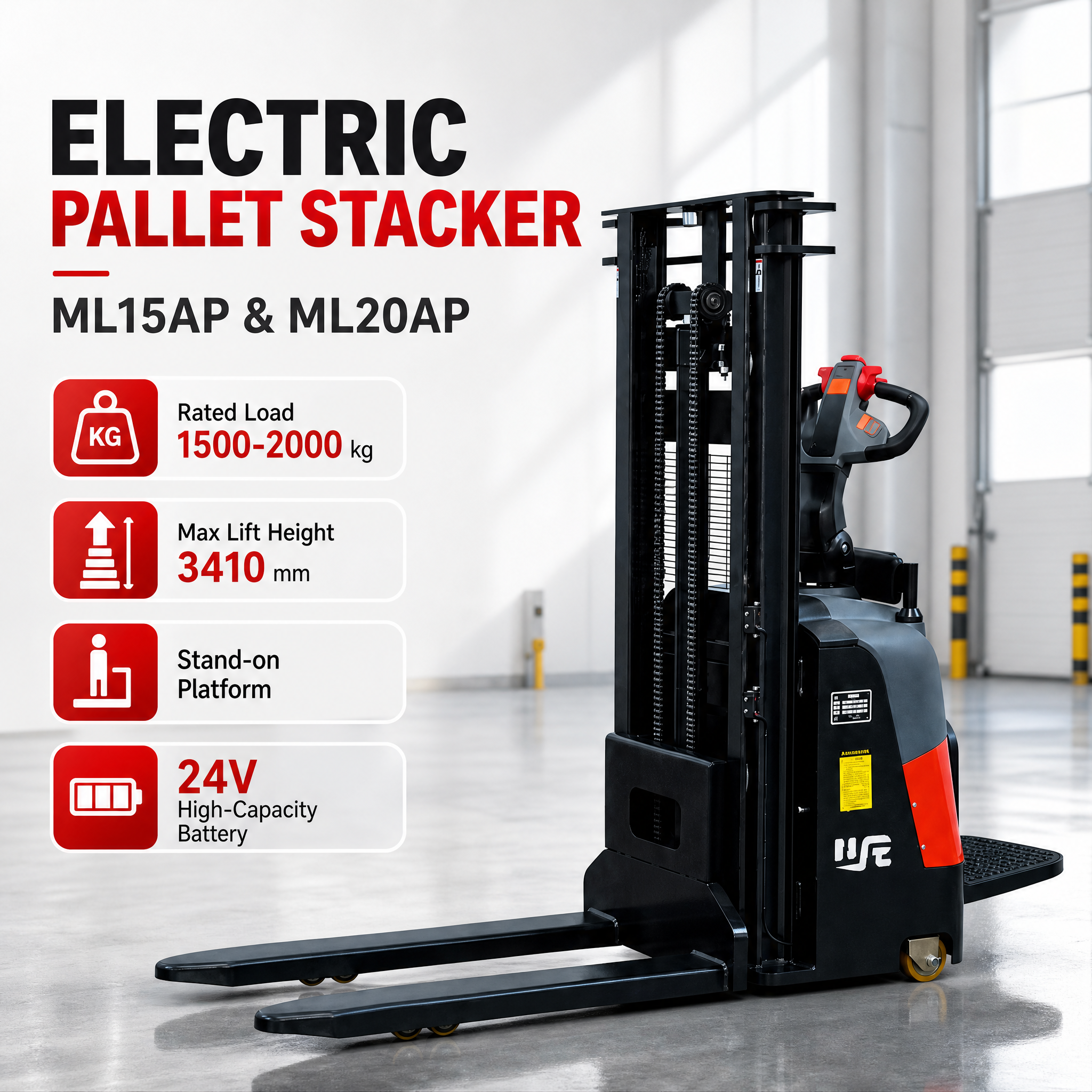
Stand on Electric Stacker 2000kg Centre Mounted Drive Twin Balance Wheels Stable High Racking Stacking
Designed for stable high-racking stacking where operator confidence and chassis balance matter. Centre-mounted drive and twin balance wheels support tight turns; validate aisle width, mast height and residual capacity at your maximum lift before order confirmation.
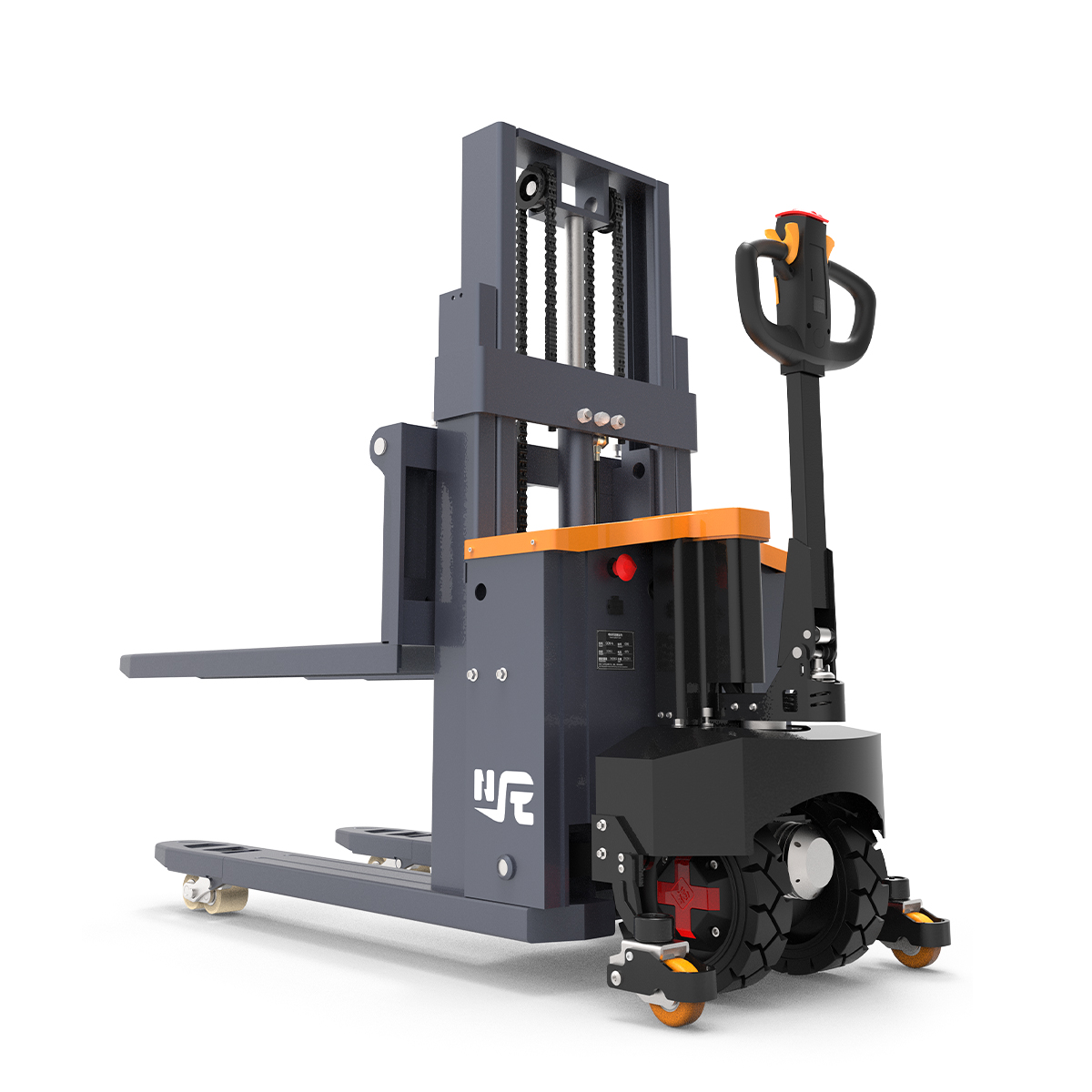
1500kg 2000kg Electric Stacker Pallet Stacker Truck 1.6m 3m Lift Height Warehouse Material Handling Equipment
A flexible stacker family for medium-height racking, production supply and warehouse material handling. The key procurement question is not only rated capacity but the mast configuration, fork length and battery runtime required for each shift.
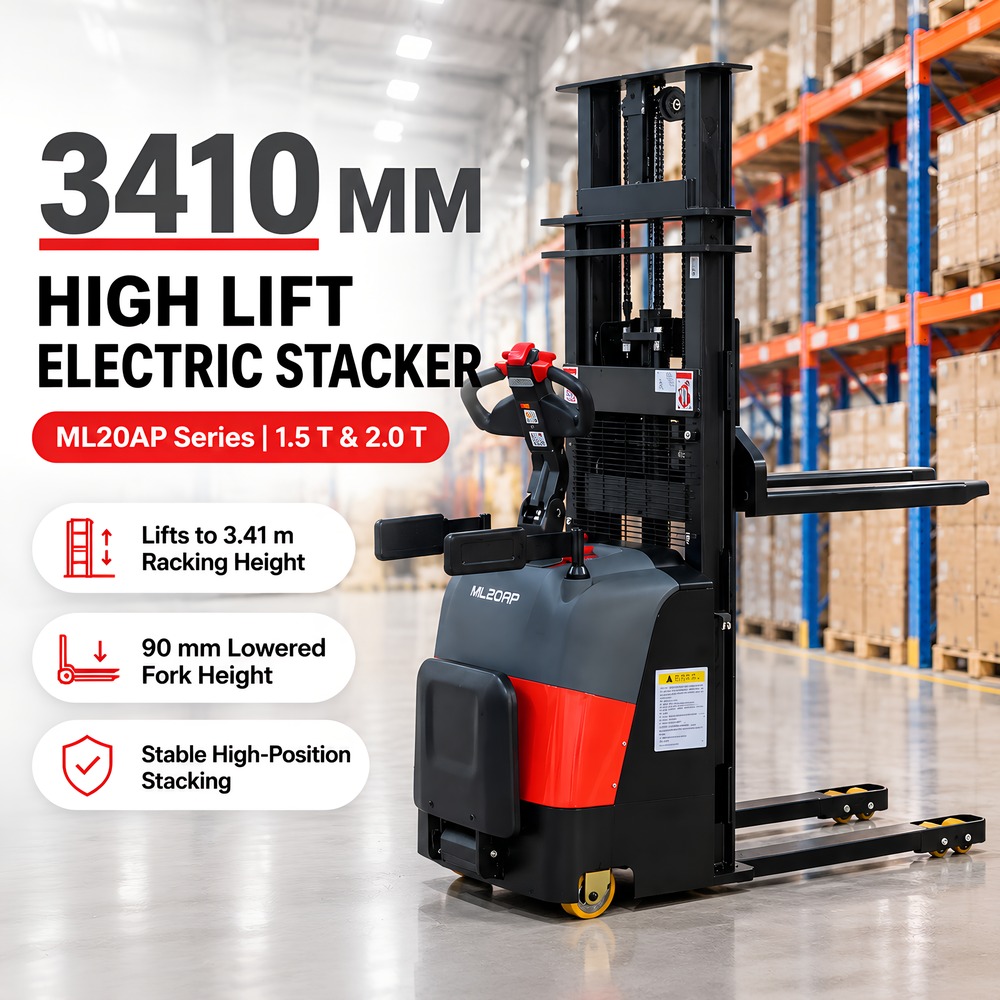
ML20AP Stand on Electric Stacker Truck 2000kg Warehouse Stacker for Narrow Aisle Loading Dock Building Material Shops
A 2,000 kg stand-on stacker for warehouse aisles, loading docks and building material shops where repeated lifting and short travel cycles are common. Buyers should check floor condition, ramp access and overhead clearance in the actual work zone.
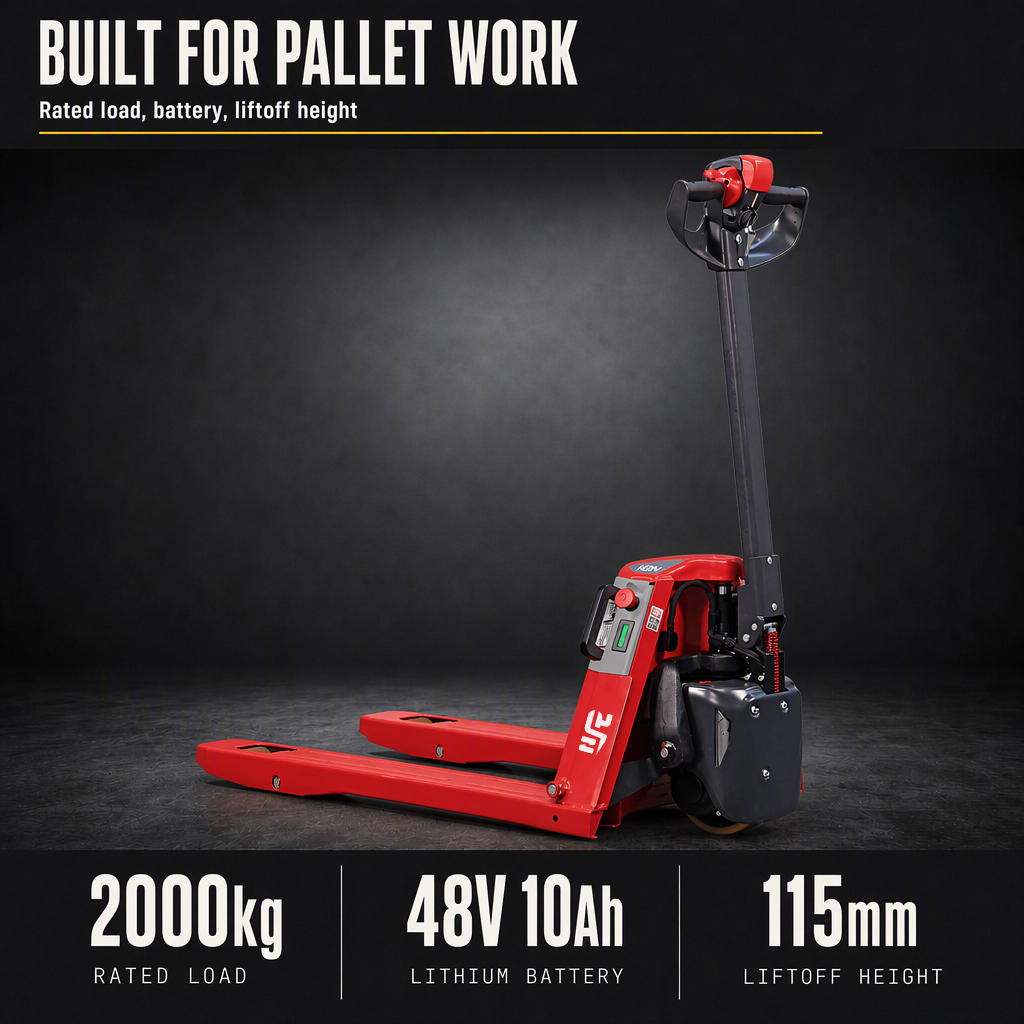
Professional Electric Pallet Jack 2 Ton 2000kg Capacity Heavy Duty Power Pallet Truck with Easy Control System for Warehouse
A robust 2-ton power pallet truck for warehouse horizontal transport and dock work. The easy control system helps reduce operator fatigue, but wholesale buyers should still compare wheel material, emergency reverse, brake response and spare-part availability.
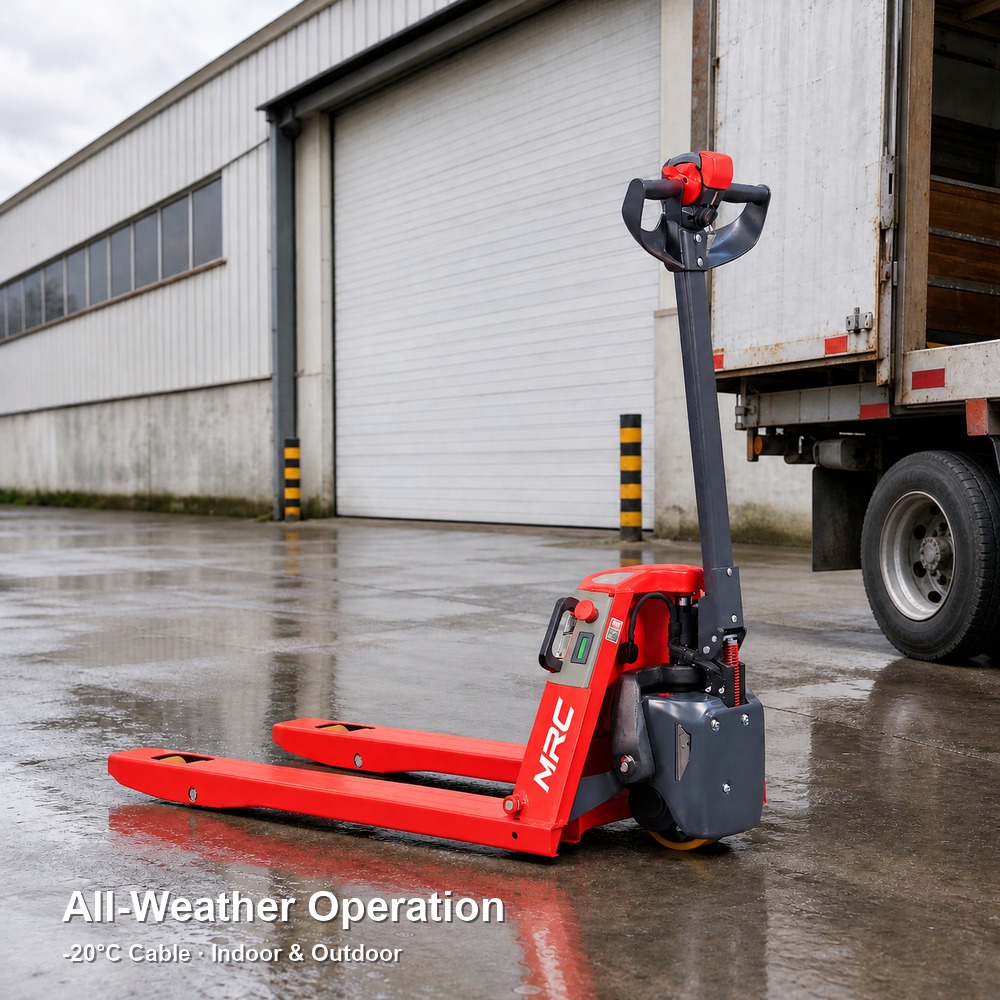
Factory Direct Price Electric Pallet Jack 1500kg 2000kg Battery Powered Walkie Pallet Truck Lithium Pallet Jack
A practical 1.5–2.0 t lithium walkie pallet truck for dealers building a competitive entry-level warehouse range. For wholesale programs, ask for charger compatibility, battery cycle-life documentation and a model-specific spare-parts list.
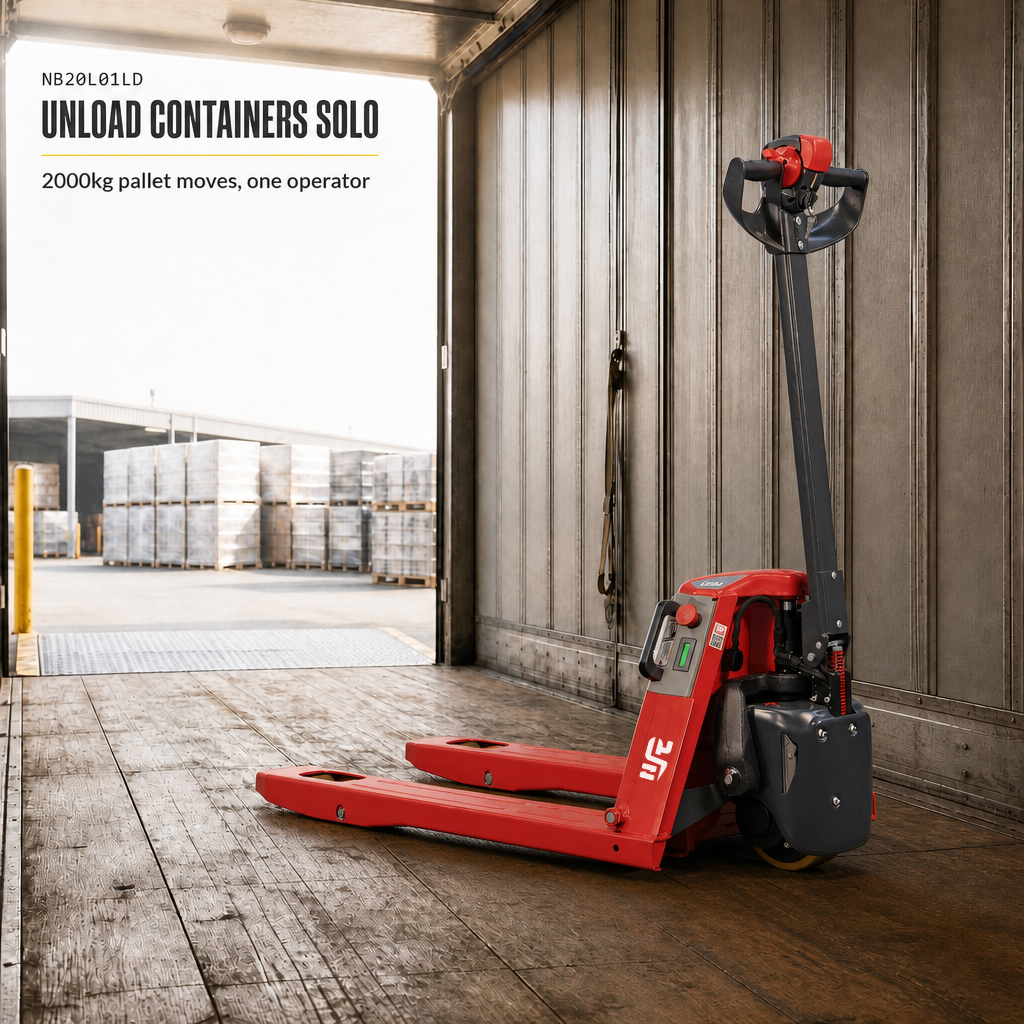
2000kg Electric Pallet Truck Lithium Ion 48V 10Ah Power Jack 1150mm Forks Polyurethane Wheels Container Loading
A 48V lithium-ion power jack with 1150 mm forks and polyurethane wheels for container loading and smooth warehouse floors. Polyurethane wheels can improve rolling efficiency indoors; confirm floor type and ramp friction before standardizing the model.
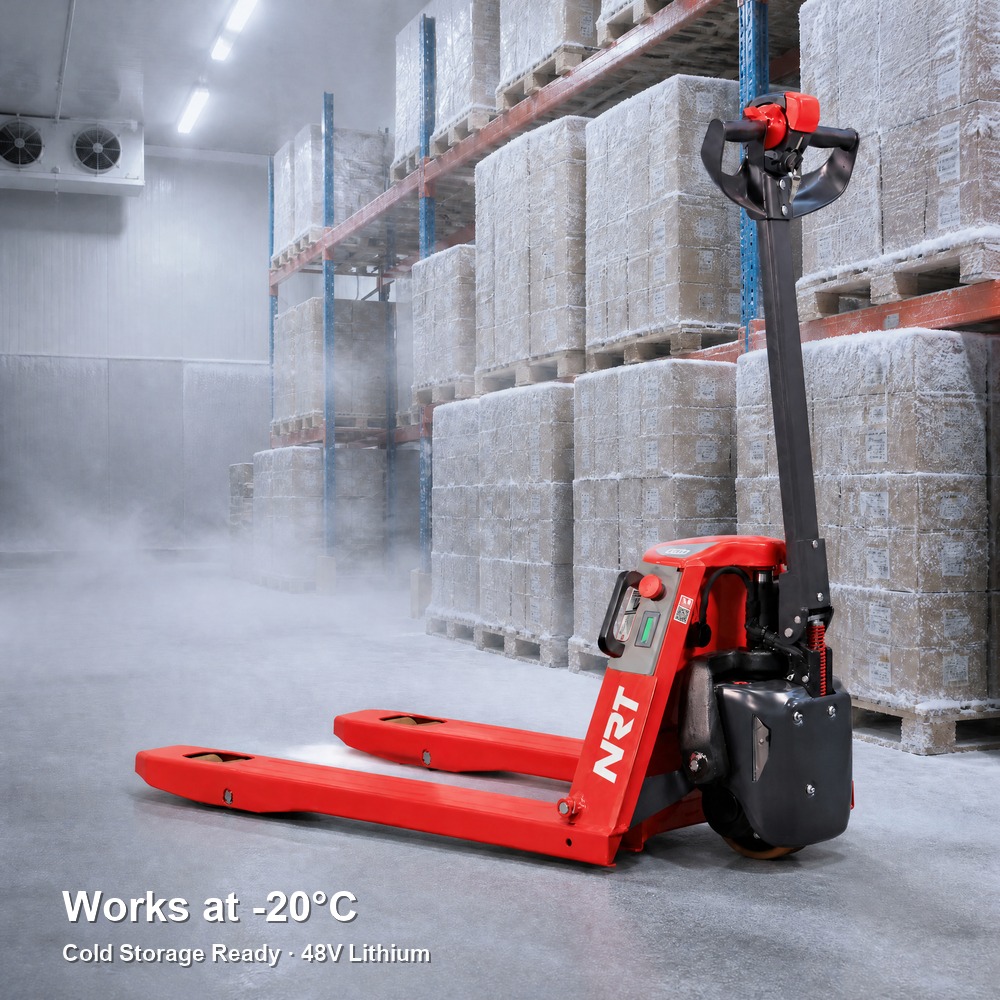
Electric Pallet Jack 2000kg with 48V Lithium Battery 6s Swap 300mm Slim Body Climbing 9% for Cold Storage -20C
A cold-storage-oriented 2,000 kg pallet jack with 48V lithium battery, 6-second battery swap, 300 mm slim body and 9% climbing capability. At -20°C, verify battery derating, hydraulic oil, seals, charger temperature limits and actual loaded grade performance.
Built for Wholesale Scale: Capacity, Engineering and Export Reach
Electric warehouse forklift wholesalers need more than a catalogue. They need stable production, engineering support, export documentation and a practical after-sales path. These figures summarize the Pexal operating base referenced throughout this guide.
Partner Manufacturing Campus
Container-volume production potential for dealers and recurring stock programs.
Skilled Workforce
Production, assembly and quality-control capacity across the partner campus.
R&D Engineering
Electric drive and warehouse equipment specialists supporting customization.
Main Export Markets
Western Europe, North America, South America, Eastern Europe and Oceania.
Why China Remains the Sourcing Base for Electric Warehouse Forklifts
China’s advantage is no longer only price. The country has deep supply chains for lithium batteries, chargers, hydraulic components, controllers and compact chassis. That breadth lets buyers configure warehouse trucks around real operating constraints, not just headline capacity.
Design the Purchase Around the Workflow
For warehouse buyers, the most valuable Chinese supply base is one that can support application-specific configuration: 685 mm narrow forks for container doors, 1150 mm forks for standard pallets, 1.6 m to 3 m lift heights, 300 mm slim bodies, polyurethane wheels for smooth floors, and low-temperature packages for cold stores.
The lowest quotation is rarely the lowest landed cost. A 2 t pallet jack that cannot complete a full shift can cost more in labour and downtime than a slightly higher-priced model with the right battery and charger. A stacker with the wrong mast height can slow every put-away cycle.
- Measure floor type, dock plates, ramps and container door clearance.
- Define duty cycle by hours per shift, starts/stops and travel distance.
- Confirm charger location, opportunity charging and battery swap needs.
- Request spare-part availability for wheels, brakes, controllers and batteries.
Five-Year TCO Signals
Use this qualitative risk map to structure supplier questions. Actual total cost of ownership varies by duty cycle, energy tariff, utilization and service response.
Illustrative weighting only. Request model-specific battery, charger, warranty and spare-parts data before comparing quotations.
2026 Procurement Trends Wholesalers Should Price Into the Deal
Warehouse equipment buying is moving from simple unit-price comparison to performance, safety and service-cost modeling. These trends should be reflected in your RFQ, supplier scorecard and landed-cost calculator.
Lithium Becomes Baseline
For 1.5–2.0 t warehouse trucks, lithium-ion is increasingly treated as the default power choice because it supports opportunity charging, lower maintenance and flexible shift planning. Buyers should still compare cycle life, charger compatibility and cold-store performance.
Buyer action: request BMS and charger specs in writingBattery Swap and Opportunity Charging
Downtime is now a procurement metric. A 6-second battery swap or well-planned opportunity charging can matter more than a small price difference, especially in multi-shift warehouses where chargers are shared across a mixed fleet.
Buyer action: map charger locations before selecting battery capacityContainer-Optimized Dimensions
Container and retail backroom work rewards narrow forks, slim chassis and compact turning. Models with 685 mm width, 1150 mm forks and 300 mm body profiles are becoming more important for wholesalers serving e-commerce and distribution customers.
Buyer action: measure door openings, pallet entry and aisle turnsTCO Replaces Unit Price
Wholesale buyers are increasingly pricing energy consumption, battery replacement, tyres, brakes, controllers and downtime over three to five years. A landed-cost model should separate the equipment quotation from the cost of keeping it productive.
Buyer action: build a 5-year landed-cost sheet, not a single price columnSafety Enters the RFQ
Automatic braking, emergency reverse, operator-presence sensing, speed limits and stable stacking are now part of supplier evaluation. If a model claims 9% climbing ability, verify that figure with the actual load, floor friction and brake condition.
Buyer action: require model-specific safety and compliance documentsService Network Becomes a Deal Breaker
Wholesalers need exploded parts diagrams, standard service kits, operator manuals and a clear response path for controllers, chargers and hydraulic components. Remote diagnostics and training videos help distributors support end users in local markets.
Buyer action: request a spare-parts kit and training plan with the quotationWhat the Next Warehouse Truck Will Do Better
Electric pallet trucks, stackers and stand-on warehouse equipment are becoming more modular, more data-aware and easier to service. These development directions matter for dealers planning the next 24–36 months of inventory.
Modular Lithium Platforms
More models will share modular battery packs, chargers and control architecture. For wholesalers, this can reduce spare-parts complexity and make it easier to offer 48V lithium configurations across multiple truck families.
Slimmer, Stronger Chassis
Compact chassis and reinforced masts are being refined for container loading, narrow aisles and cold storage. A 300 mm body and low-temperature package can be more commercially relevant than a marginally higher top speed.
Smarter Safety Assistance
Aisle speed limits, automatic deceleration, anti-rollback and operator-presence sensing are moving from premium options to expected features. Buyers should ask how these systems are configured, tested and maintained.
Application-Specific Customization
Mast height, fork length, fork width, wheel material, cold-store protection, color, logo and attachments are increasingly configured by application. This is where OEM/ODM support creates real differentiation for distributors.
AGV-Ready, Phased Automation
Automated guided forklifts and handling robots are becoming more accessible, but full automation is not the first step for every warehouse. A phased path can start with manual electric trucks, then introduce fixed-route automation where flows are stable.
Serviceability by Design
Faster access to controllers, batteries and hydraulic components supports distributor service teams. Common fasteners, clear diagnostic points and accessible manuals reduce the risk of long repair cycles in overseas markets.
How to Compare China Electric Warehouse Forklift Suppliers and Wholesalers
A China electric warehouse forklift supplier can be a trading company, an OEM factory, a wholesaler with mixed sourcing, or a hybrid sales-and-technical support base. The right partner depends on your product mix, customization needs and after-sales model.
| Evaluation Area | Why It Matters | Evidence to Request |
|---|---|---|
| Product Scope | A mixed fleet from one source simplifies procurement, spare-parts planning and dealer catalogues. | Line card with models, specifications, product-page links and parts availability. |
| Engineering & OEM/ODM | Warehouse trucks often need different mast heights, fork lengths, batteries and branded details. | Drawings, customization workflow, sample-based customization examples and ODM capability statement. |
| Company Verification | Third-party checks reduce supplier risk and help confirm that the legal entity matches the quotation. | SGS supplier assessment, onsite check, legal company name, verified company video and trade records. |
| Quality Process | Dead-on-arrival equipment and early failures can damage a distributor’s local reputation. | Pre-shipment functional test of lifting, travel, braking and electrical systems; inspection photos or reports. |
| Export & Finance | Delivery terms, payment structure and currencies affect landed cost, cash flow and import compliance. | Incoterms, accepted currencies, export port, packaging method, payment terms and document checklist. |
| After-Sales Path | Uptime after the sale depends on spare parts, manuals, training and a clear technical response route. | Spare-parts list, exploded diagrams, warranty terms, operator manuals and training resources. |
Minimum RFQ Checklist
Send this information in the first email so suppliers can quote a compatible model rather than a generic capacity class.
- Maximum load, load center, fork length, fork width and pallet type.
- Required lift height, aisle width, door clearance, floor surface and ramp grade.
- Hours per shift, shifts per day, travel distance and ambient temperature.
- Battery voltage, charger availability, opportunity charging or battery swap preference.
- Destination market, preferred Incoterm, packaging needs and required documentation.
Red Flags to Screen Out
Use commercial common sense alongside product specifications. A wholesale partnership is only as strong as the evidence behind the quotation.
- No exact product link, model number or battery/charger specification.
- Company-level verification presented as a product certificate.
- No pre-shipment test report, no spare-parts list and no warranty terms.
- Lead times given verbally but never confirmed against drawings and vessel schedule.
Why Pexal Is Positioned for Wholesale, OEM and Project Procurement
Xiamen Pexal Technology Co., Ltd. was founded in Xiamen, Fujian in 2024 as the sales, service and technical support base for Pexal material handling equipment. We work with a 220,000 m² partner manufacturing campus employing more than 1,200 people, including over 100 engineers focused on electric warehouse equipment.
Our mission is practical: help buyers move from manual handling to electric handling, and from diesel to battery power, while reducing emissions, noise and operating cost. For wholesale and OEM buyers, that means product shortlisting, customization coordination, export documentation and a clear path to spare-parts support.

SGS-Assessed Supplier
Pexal has passed a supplier assessment and onsite check conducted by SGS Group, and a verified company video is available for buyers to review. This supports initial due diligence but does not replace model-specific product certificates.
220,000 m² Partner Campus
Scalable production capacity supports container orders, dealer stock programs and recurring wholesale demand. Confirming the current production slot before committing to a vessel schedule remains essential.
1,200+ Workforce and 100+ Engineers
Production depth and engineering support make it easier to handle sample-based customization, full customization and ODM requests across pallet trucks, stackers and stand-on warehouse equipment.
Full Material Handling Range
One supplier relationship can cover electric forklifts, electric pallet trucks, electric stackers, reach trucks, order pickers and AGV robotics, simplifying procurement and spare-parts planning.
Five Export Regions
Main markets include Western Europe, North America, South America, Eastern Europe and Oceania. Export conversations can cover FOB, CFR, CIF, EXW, FCA, CPT, CIP, DDP and other common delivery terms.
Custom Builds and Export Support
Mast height, fork length, battery type, color, logo and attachment configuration can be reviewed by application. Payment options include T/T, L/C, D/P, D/A, Western Union, PayPal, credit card and escrow, with currencies such as USD, EUR, GBP, JPY, CAD, AUD, HKD, CHF and CNY.
China Electric Warehouse Forklift Wholesale FAQ
These are the questions dealers, rental companies and warehouse operators most often ask when comparing electric pallet jacks, stackers and warehouse forklifts from China.
Is Pexal a manufacturer, supplier or wholesaler?
Xiamen Pexal Technology Co., Ltd. is a Xiamen-based material handling supplier founded in 2024. We provide sales, service and technical support and work with a 220,000 m² partner manufacturing campus. Buyers can request OEM/ODM, sample-based customization and factory verification. If your policy requires direct factory status, review the legal entity, production model and documentation before ordering.
Which electric warehouse truck should I choose for container loading?
Start with a compact walkie pallet jack and match fork length, fork width, chassis profile and battery runtime to the container and dock. A 685 mm narrow-fork model can suit tight doors, while a 1150 mm fork truck may fit standard pallets. Verify ramp friction, floor condition, load center and operator control expectations.
Can Pexal customize mast height, fork size, battery and branding?
Pexal offers sample-based customization, full customization and ODM services, including mast height, fork length, battery type, color, logo and attachment configuration. Provide drawings, load data and destination-market requirements so the configuration can be reviewed against rated capacity, safety and transport dimensions.
What is the MOQ and how fast can wholesale orders ship?
MOQ and lead time depend on model, battery configuration, customization and order volume. Sample orders and mixed-model wholesale orders can be discussed. Lead time should be confirmed in writing after drawings, packaging and production slot are agreed. For container orders, align production completion with the vessel schedule rather than relying on a verbal estimate.
Which Incoterms, payment methods and currencies are supported?
Common delivery terms include FOB, CFR, CIF, EXW, FCA, CPT, CIP and DDP. Payment options include T/T, L/C, D/P, D/A, Western Union, PayPal, credit card and escrow. Currencies include USD, EUR, GBP, JPY, CAD, AUD, HKD, CHF and CNY. Final terms should be written into the sales contract.
How can I verify certificates, warranty and spare parts?
Company-level SGS assessment and onsite check help verify the supplier, but they are not a product certificate. Request model-specific documentation for your market, battery and charger compliance information, warranty terms, spare-parts list, operator manual and training support. For fleet buyers, a small recommended spare-parts kit is often more valuable than a longer verbal warranty promise.
Plan Your Next Electric Warehouse Forklift Order with Pexal
Send your load weight, fork length, maximum lift height, aisle width, duty cycle, ambient temperature and target market. The Pexal team will help shortlist models, review battery and charger options, and prepare export terms for your market. Email: info@pexalbot.com.
No obligation. Include model names where possible so we can compare like for like.