Eight Proven Platforms for Reach Stacker and Warehouse Projects
A reach stacker procurement decision rarely stands alone. Ports, depots, distribution centres and dealers often need a mixed fleet that includes electric pallet trucks, walkie jacks and stackers. The eight models below are current catalogue platforms that support dock, warehouse and narrow-aisle operations alongside an OEM/ODM reach stacker enquiry.
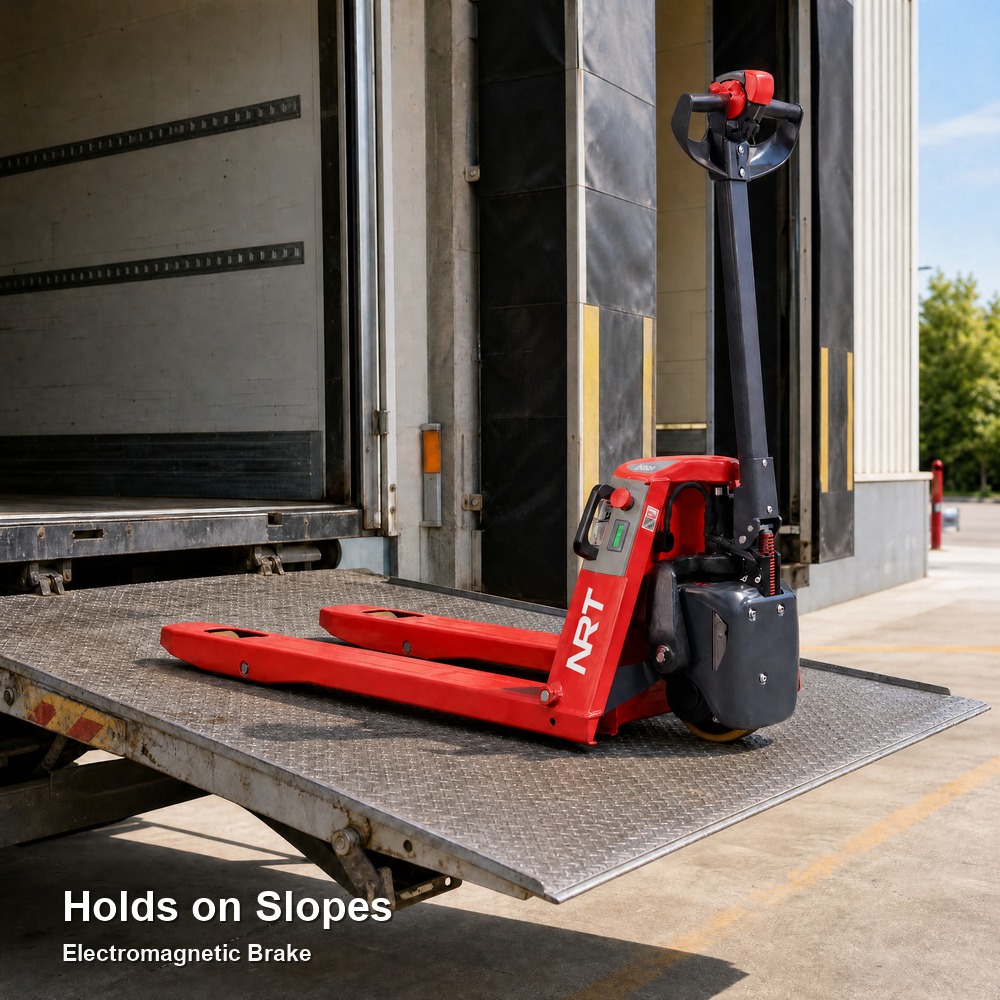
Electric Pallet Jack 1500kg 300mm Slim Body Walkie Pallet Truck for Elevator Freight Box Narrow Aisle Handling
A 300 mm slim-body walkie platform for elevators, freight boxes and tight loading lanes where a standard pallet truck cannot turn cleanly.
View Specifications
2026 New Alternative Convertidor De Palet Jack a Electrico Ultra-Lightweight 107kg Electric Pallet Jack with Lithium Power
A 107 kg lithium-powered model aimed at flexible deployment, easy transport and lower operator fatigue in multi-site fleets.
View Specifications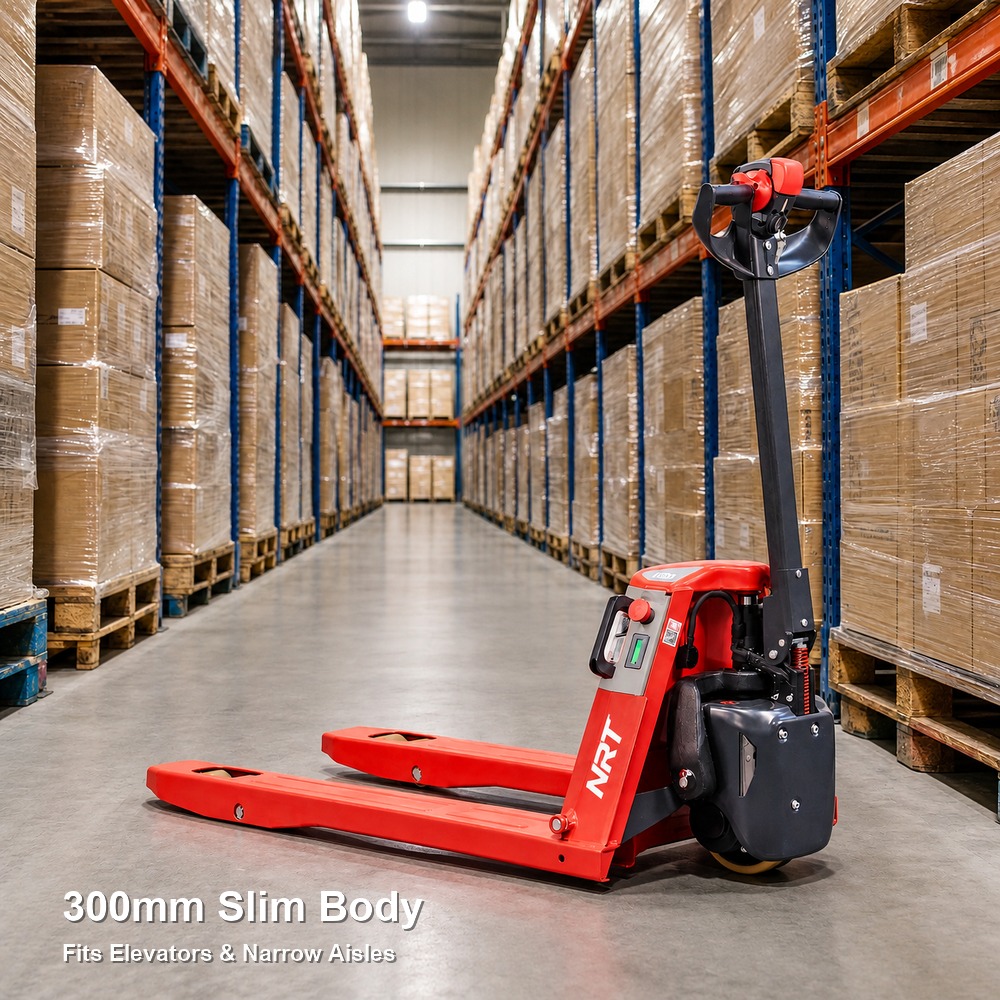
NB15L01LD Electric Pallet Jack 2000kg 48V 15Ah Lithium Battery 850W Fork 1150mm PU Wheels Pallet Truck
2000 kg capacity, 48V 15Ah lithium battery, 850 W drive and 1150 mm forks for repeatable dock and warehouse transfers.
View Specifications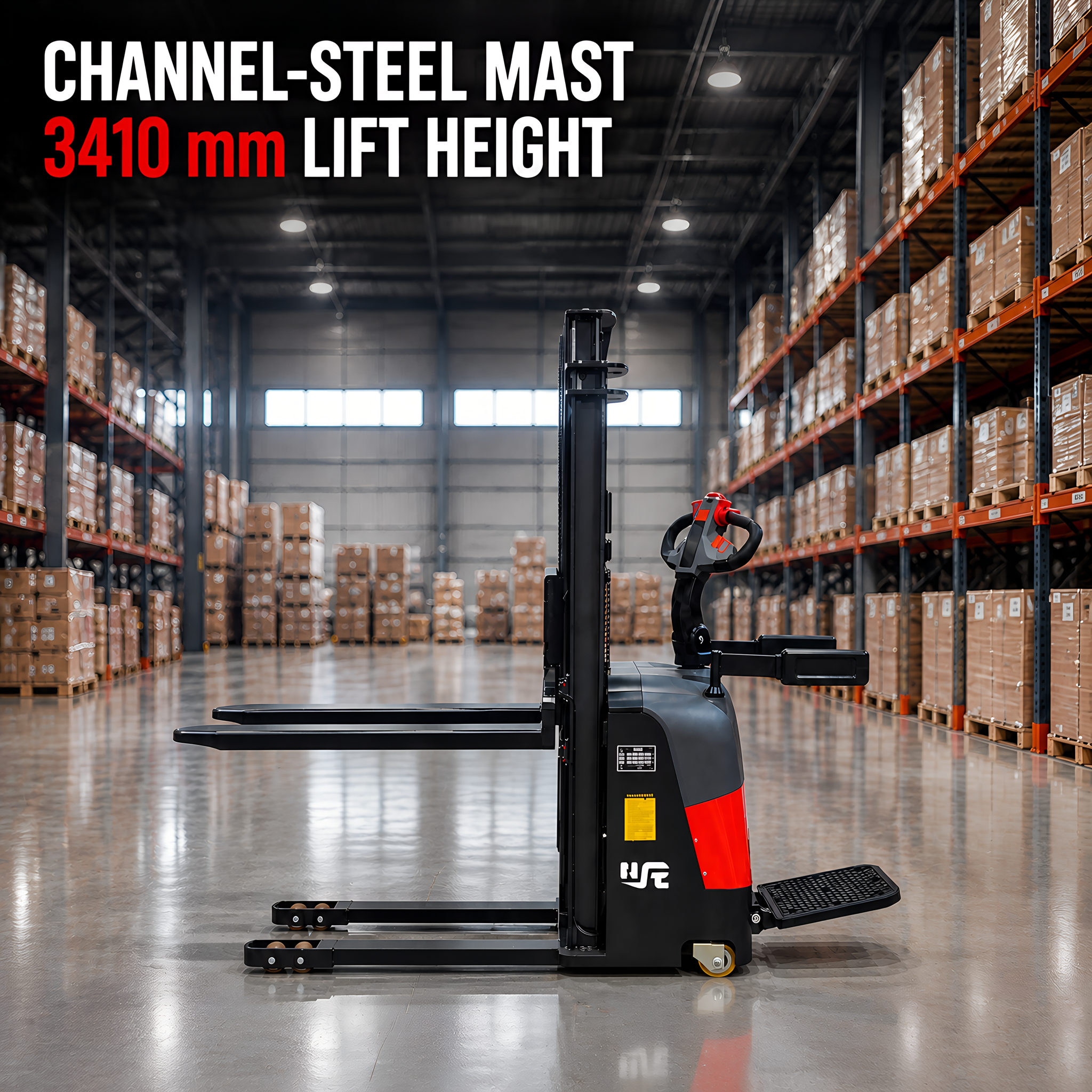
ML20AP Stand on Electric Stacker 2000kg 3410mm Max Lift 1478mm Turning Radius 820mm Body Width
A stand-on stacker for medium-high racking, with 3410 mm max lift, a 1478 mm turning radius and an 820 mm body width for constrained lanes.
View Specifications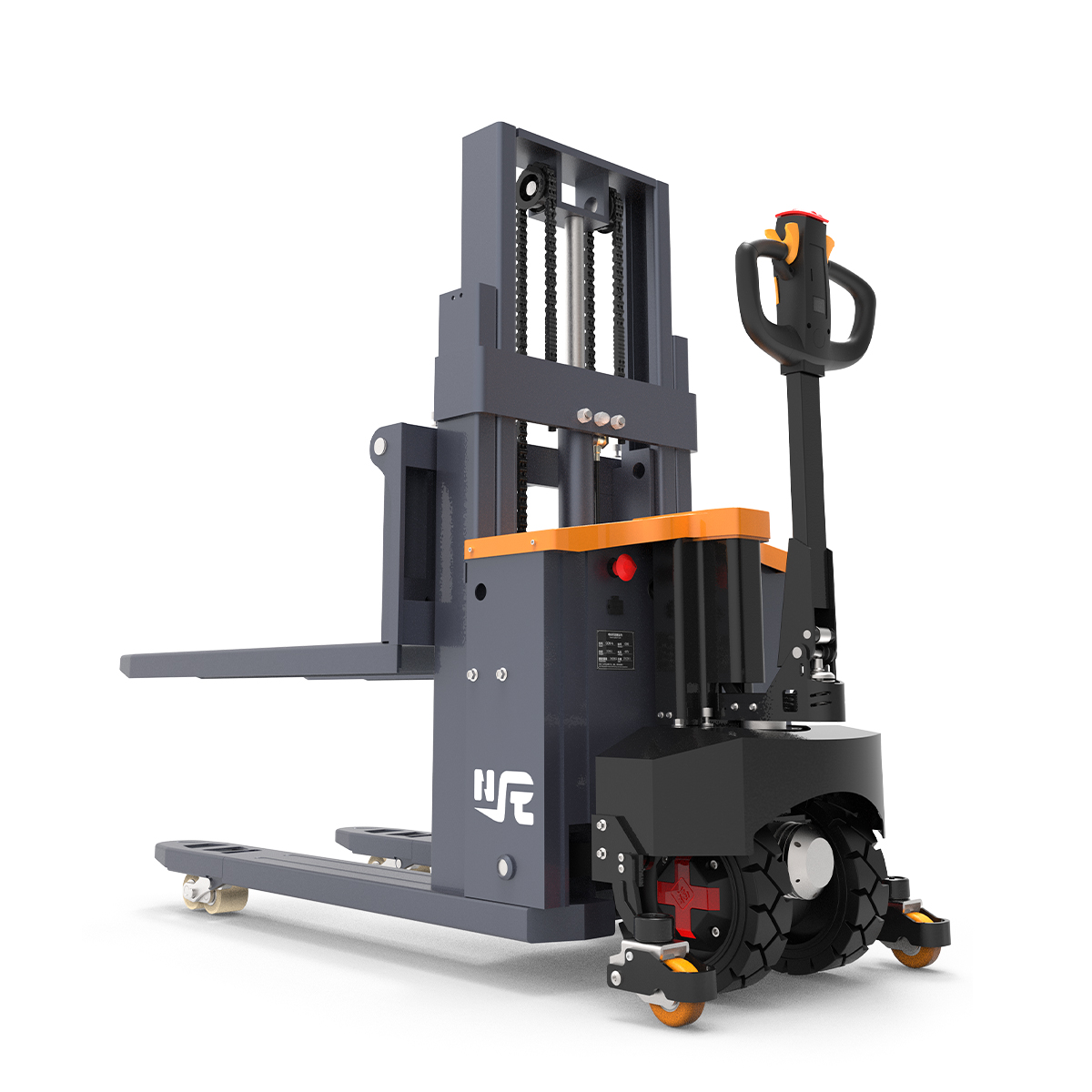
1500kg 2000kg Electric Stacker Pallet Stacker Truck 1.6m 3m Lift Height Warehouse Material Handling Equipment
A warehouse stacker platform covering 1500–2000 kg loads with 1.6 m to 3 m lift options for pallet racking and production supply.
View Specifications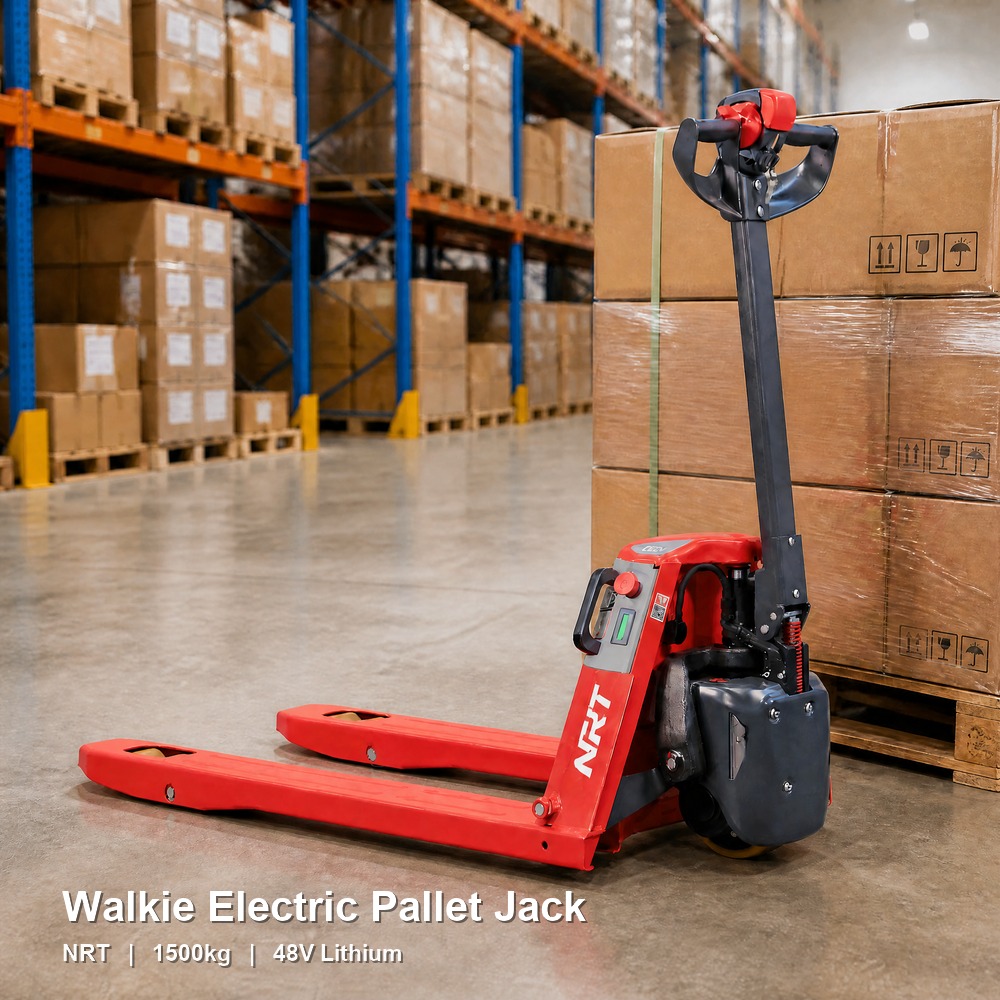
Electric Pallet Jack 1500kg 2000kg Walkie Pallet Truck Battery Powered Lithium Pallet Jack for Warehouse Loading
A lithium walkie pallet jack for loading bays, horizontal transport and high-turnover warehouses that need fast battery access.
View Specifications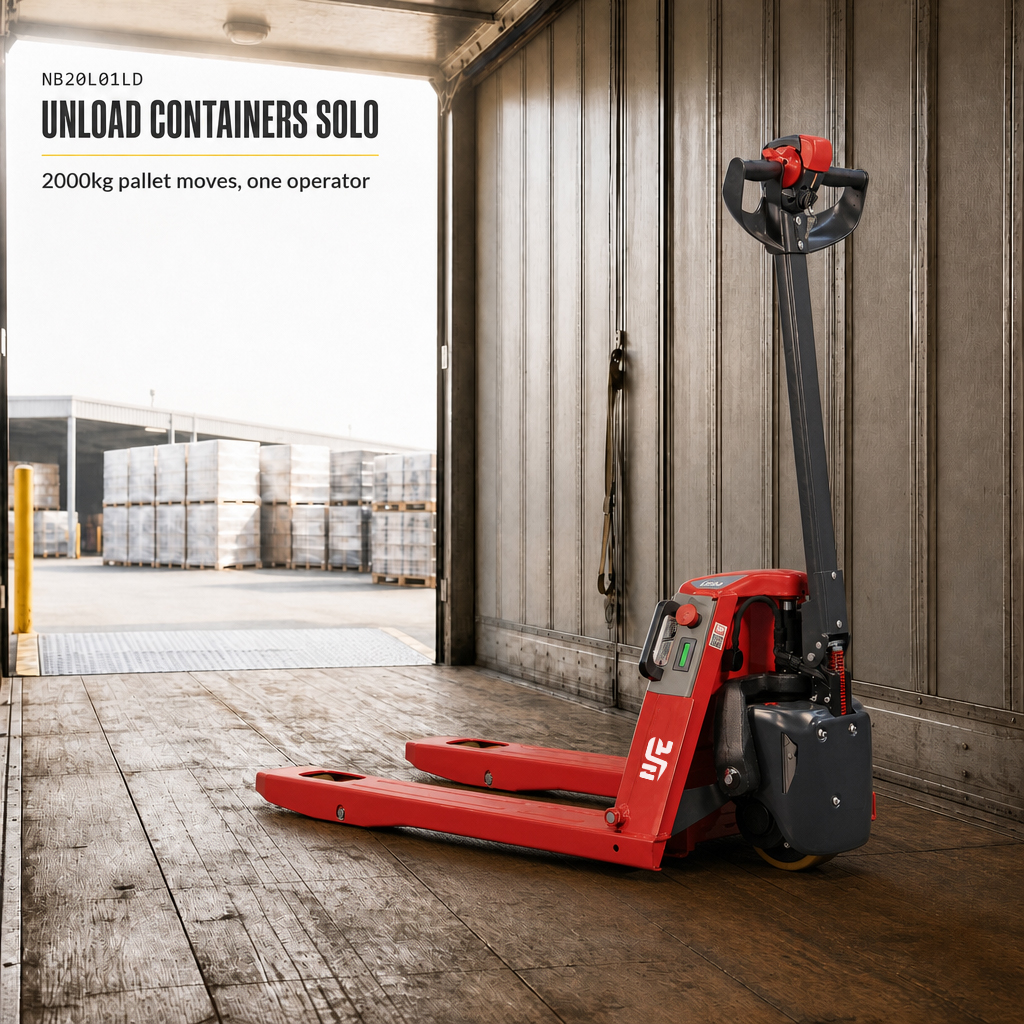
NRT 2 Ton Electric Pallet Jack Lithium-Ion 48V 10Ah 1150mm Forks Polyurethane Wheels Warehouse Handling
A 2-ton lithium pallet jack with 1150 mm forks and polyurethane wheels for smooth floors, trailers and daily warehouse handling.
View Specifications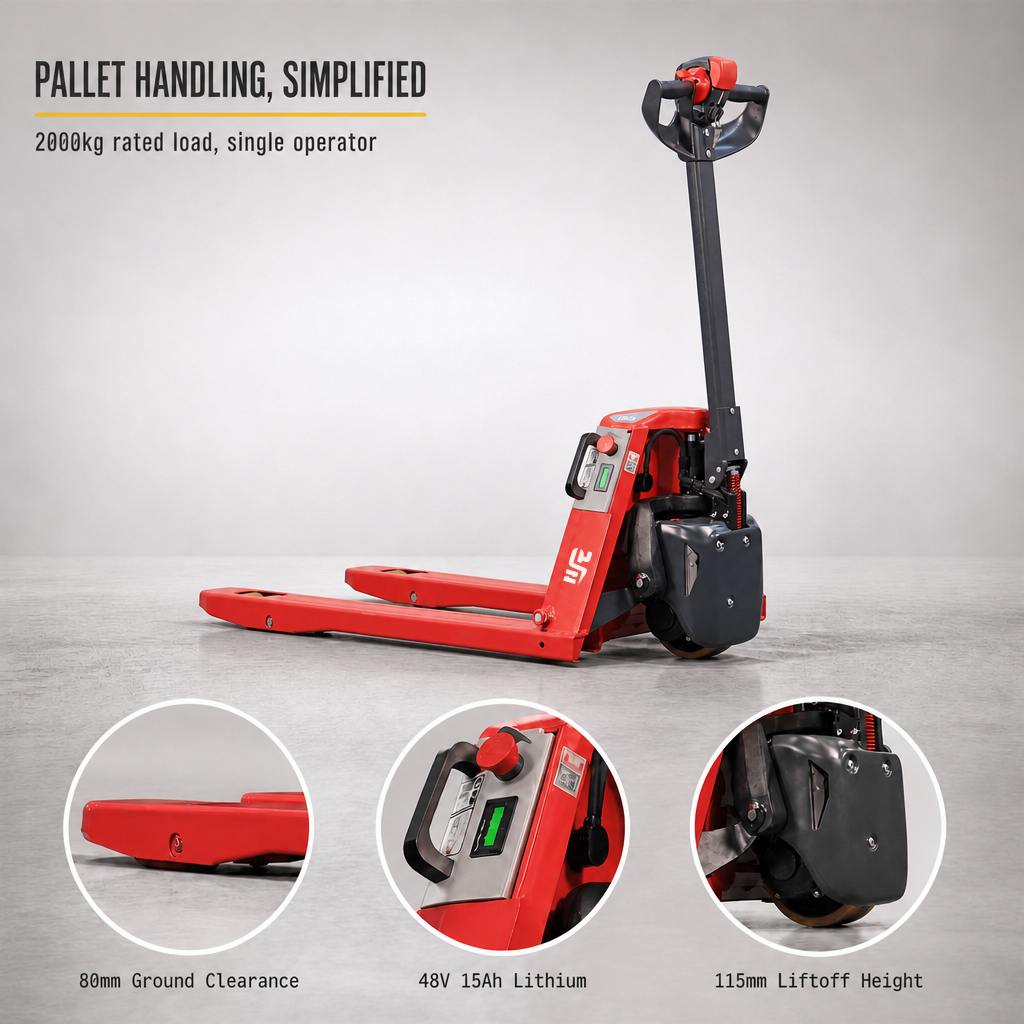
NB20L01LD 2000kg Electric Pallet Truck Lithium Battery 4.8km/h Speed 1245mm Turning Radius Jack
A 2000 kg electric pallet truck with 4.8 km/h travel speed and a 1245 mm turning radius for balanced speed and maneuverability.
View SpecificationsA Reach Stacker Factory Search Is Usually a Supply-Chain Decision
Buyers who search for an OEM/ODM reach stacker factory and wholesaler usually arrive with two questions inside the same query: can this supplier build to my specification, and can it support a repeatable wholesale programme? That is a different intent from buying a used container handler. It signals a long-term procurement decision involving engineering, certification, spare parts, financing and delivery reliability across multiple shipments.
Xiamen Pexal Technology Co., Ltd. was founded in Xiamen, Fujian, in 2024 as the sales, service and technical support base for Pexal material handling equipment. We work with a 220,000 m² partner manufacturing campus employing more than 1,200 people, including over 100 engineers dedicated to electric warehouse equipment and material handling solutions. Our company has passed an onsite check and supplier assessment by SGS Group, and our verified company video is available for buyers who want to review the operation before issuing an RFQ.
We do not treat OEM/ODM as a logo service. We treat it as a controlled process: application review, specification matching, configuration, bill-of-material confirmation, pre-shipment inspection, export documentation and after-sales planning. For reach stacker projects, our engineering and export team coordinates with qualified heavy-equipment production partners inside this manufacturing ecosystem. For warehouse operations, we can supply proven electric pallet trucks, stackers, reach trucks, order pickers and AGVs from an existing production platform. This mix of capabilities matters because a reach stacker rarely replaces an entire fleet; it is usually one part of a wider material handling strategy.
The most useful way to evaluate an OEM/ODM reach stacker wholesaler is therefore not to compare headline prices first. Start with the operating envelope, then compare the verifiable evidence behind the offer: production capacity, engineering ownership, inspection process, spare-parts plan, export terms and after-sales response.
Reach Stacker, Reach Truck or Pallet Stacker? Clarifying the Buying Category
Search intent becomes expensive when the category is wrong. A reach stacker is a heavy container-handling machine for ports and intermodal yards. A reach truck is a narrow-aisle warehouse forklift. A pallet stacker is a compact, lower-capacity lifting platform. These are not interchangeable, and the fastest way to slow a procurement project is to issue one RFQ that mixes them.
| Equipment | Primary Job | Typical Site | What to Specify |
|---|---|---|---|
| Reach Stacker | Lifting and stacking containers, often 20 ft and 40 ft units | Ports, rail terminals, container yards, depots | Container size, stacking height, load centre, duty cycle, spreader type, energy plan |
| Reach Truck | High-rack pallet handling in narrow aisles | Distribution centres, high-bay warehouses | Lift height, aisle width, pallet type, battery, mast and attachment |
| Pallet Stacker | Lifting pallets to low or medium racking and production levels | Warehouses, retail backrooms, workshops, production cells | Capacity, lift height, body width, fork length, battery and floor condition |
Quick qualification: if your load is a 20 ft or 40 ft container and your task is stacking containers, you are in reach stacker territory. If you are lifting pallets to 8–12 m racking, you need a reach truck. If you are lifting a pallet a few metres and moving it across a dock, a pallet stacker is the right class.
Advantages Built for OEM/ODM and Wholesale Buyers
The strongest supplier is not always the one with the largest catalogue. It is the one that can prove what it controls, document what it configures and support what it ships. These are the company advantages we bring to a reach stacker or mixed-fleet procurement programme.
SGS-Assessed Supplier
Our company has passed an onsite check and supplier assessment by SGS Group. The business type, main products and markets, customization capabilities and operational capacity were reviewed onsite, and a verified company video is available for buyer review.
Source-Direct Partner Manufacturing
A 220,000 m² partner manufacturing campus and a workforce of more than 1,200 people support production, assembly and quality control. This gives wholesale buyers a realistic base for container orders and recurring dealer stock.
Engineering Customization
More than 100 engineers support sample-based customization, full customization and ODM. Typical variables include mast height, fork length, battery type, colour, logo and attachment configuration, with technical documentation and market-specific requirements reviewed before quotation.
Mixed-Fleet Wholesale Support
One supplier for electric forklifts, pallet trucks, stackers, reach trucks, order pickers and AGV robotics simplifies procurement, spare-parts planning and after-sales communication for dealers building a full warehouse offer.
Export Documentation & Terms
We accept FOB, CFR, CIF, EXW, FCA, CPT, CIP, DDP and other common delivery terms. Payment options include T/T, L/C, D/P, D/A, Western Union, PayPal, credit card and escrow. Supported currencies include USD, EUR, GBP, JPY, CAD, AUD, HKD, CHF and CNY.
Global Market Familiarity
Our main export markets are Western Europe, North America, South America, Eastern Europe and Oceania. We work with dealers, rental companies and end users, and we understand regional voltage, documentation and after-sales expectations.

Move Reliably, Customize Transparently
Since 2024, Xiamen Pexal Technology Co., Ltd. has built its role around three practical promises: help buyers move from manual handling to electric handling, reduce noise and operating cost, and build toward intelligent, digital logistics without hiding the production model.
Our team supports full customization and ODM services for materials handling equipment, including mast height, fork length, battery type, colour, logo and attachment configuration. We also provide logistics solution design and consulting for buyers who need to match equipment to aisle width, lift height, floor condition and duty cycle.
- SGS onsite check and supplier assessment
- Verified company video for remote buyers
- Trade capacity and transaction history review
- Dealer, rental and end-user export support
What the Next Reach Stacker Generation Will Need
Reach stacker development is moving from a pure lifting specification toward a connected, energy-aware and safety-integrated asset. For OEM/ODM buyers, the priority is to separate near-term production options from future-ready architecture.
Electrification & Energy Modularity
Ports and depots with clean-air targets are evaluating electric and hybrid heavy-handling solutions. The practical question is not simply “electric or diesel,” but which duty cycle can be electrified first, how energy will be replenished and what backup plan keeps the yard moving.
Lithium-Ion & Opportunity Charging
Larger battery capacity, battery management systems and thermal control are becoming more relevant in heavy equipment. Opportunity charging can reduce range anxiety, but the supplier must design the energy package around shift length, charger availability and expected battery life.
Intelligent Safety Systems
Load-moment indication, zone limiting, pedestrian detection, camera systems and speed control are moving from premium options to expected features. A well-designed safety package should reduce operator error without making normal handling cycles slower than necessary.
Telematics & Fleet Data
CAN-bus data, remote diagnostics, utilisation dashboards and battery state-of-health reporting help buyers manage a mixed fleet. The value is not data collection alone; it is faster fault finding, better maintenance planning and clearer replacement decisions.
Modular Cabin & Attachment Design
Spreader options, cabin ergonomics, visibility, service access and attachment interfaces are becoming modular. For wholesale buyers, modularity can reduce engineering variation while still allowing regional branding and application-specific configuration.
Automation Readiness
AGV and remote-monitoring architecture is influencing how handling equipment is specified. Even when a reach stacker is manually operated today, buyers increasingly ask whether the machine can connect to yard-management systems or support future automation of repetitive routes.
How Wholesale Buyers Will Purchase Reach Stackers
The purchasing conversation is shifting from “What is the unit price?” to “What does this asset deliver over its working life?” For an OEM/ODM reach stacker wholesaler, that means documenting engineering assumptions, service readiness and replacement-part availability before the order is placed.
- TCO over headline price: energy, maintenance, uptime, training, parts and residual value become part of the comparison.
- Verified supplier evidence: onsite checks, assessment reports, videos, trade history and production capacity are reviewed before an RFQ moves forward.
- Mixed-fleet compatibility: dealers want fewer suppliers and more consistent controls, documentation and spare-part logic.
- After-sales readiness: the ability to supply consumables, electrical components and technical support can matter more than a small price difference.
- Compliance and ESG reporting: emissions, noise, battery handling and documentation requirements increasingly influence equipment selection.
- Shorter, more configurable orders: wholesale programmes need predictable lead times and the flexibility to combine models, attachments and branding.
A Practical TCO Model for Reach Stacker Procurement
A low purchase price can hide high costs: unplanned downtime, slow parts, unsuitable batteries, excessive maintenance and poor resale value. Build the TCO model before negotiating, and use the same input sheet for every OEM/ODM supplier.
Information gain for buyers: ask each supplier to explain the assumptions behind the offer, not just the quoted machine. A reach stacker that is cheaper at the invoice can become the most expensive asset in the yard if it cannot match the duty cycle or cannot be serviced locally.
Use the table opposite as a common RFQ framework. It also helps reveal whether a supplier is genuinely engineering the application or simply reselling a catalogue model.
| Input | Why It Matters | Data to Capture |
|---|---|---|
| Duty Cycle | Defines motor, battery and cooling requirements | Operating hours per shift, lifts per hour, shifts per day, peak season profile |
| Load & Load Centre | Prevents unsafe specification and premature wear | Container size, maximum weight, attachment weight, load centre distance |
| Lift & Stacking Height | Determines mast, boom and stability requirements | Stacking height, racking level, aisle width, overhead clearance |
| Energy Infrastructure | Affects charging time, battery life and operating cost | Charger availability, shift pattern, opportunity charging window, backup plan |
| Floor & Yard Condition | Influences tyre choice, traction and structural durability | Surface type, slope, outdoor exposure, dust, salt, cold-store temperature |
| Compliance & Documentation | Prevents delivery delays and costly rework | Destination port, voltage, safety requirements, labelling, language, inspection needs |
| After-Sales Plan | Protects uptime after commissioning | Recommended spare parts, service intervals, remote support, training, warranty terms |
From RFQ to Delivery: A Five-Step OEM/ODM Procurement Roadmap
A clear process reduces engineering rework, unexpected exclusions and shipment disputes. This is the sequence we recommend for reach stacker and mixed-fleet orders.
Application Brief
Share the load, lift height, container or pallet type, duty cycle, floor condition, energy plan, destination port and target market requirements. This brief becomes the reference point for every technical decision.
Configuration & Quote
Our team reviews the operating envelope, proposes the equipment class, confirms customization options and explains the scope of supply, delivery term and indicative lead-time path.
Engineering Sign-Off
Before production, confirm the bill of material, key dimensions, battery or energy system, branding, documentation and inspection plan. Changes should be written into the approved specification.
Pre-Shipment Inspection
Functional checks should cover lifting, travel, braking, steering, electrical systems and safety features. Third-party inspection can be arranged when the buyer or their market requires independent verification.
Export & After-Sales Handover
We coordinate export packaging, documentation and the agreed Incoterm, then hand over manuals, service information and recommended spare parts so the buyer can support the equipment in its local market.
Matching Reach Stackers and Handling Equipment to the Job
Use the application matrix to narrow the equipment class before requesting a quotation. The most efficient procurement conversation starts with the work, not the model name.
Ports & Container Terminals
High-capacity container handling, stack reorganisation and yard support require reach stackers, heavy forklifts and disciplined maintenance planning.
Intermodal Rail & Depots
Rail yards need predictable container throughput, rapid turnaround and equipment that can tolerate continuous outdoor duty cycles.
3PL & Distribution Centres
Mixed fleets need reach trucks, stackers and pallet trucks working together across receiving, storage and dispatch zones.
E-Commerce Fulfilment
Speed and uptime dominate. Order pickers, electric pallet jacks and AGV solutions can reduce walking distance and repetitive handling.
Manufacturing Supply
Line-side replenishment and work-in-progress transfer require compact, reliable equipment with clear safety controls and fast service access.
Cold Chain & Food
Zero-emission electric equipment supports indoor air quality and low-noise operation in food, beverage and pharmaceutical storage.
Reach Stacker OEM/ODM and Wholesale Questions
Direct answers to the questions importers, dealers and fleet managers ask before requesting a factory-direct quotation.
Are you an OEM/ODM reach stacker factory or a trading company?
Xiamen Pexal Technology Co., Ltd. is a material handling equipment supplier based in Xiamen, China. For reach stacker OEM/ODM projects, we act as the technical and export interface for qualified heavy-equipment production partners; our team controls the specification, configuration, inspection and export process. We are transparent about the production model. Buyers can verify our SGS onsite check and supplier assessment, review the company video and audit the proposed production plan before placing an order.
Do you offer full OEM/ODM customization?
Yes. We support sample-based customization, full customization and ODM services. Depending on the product class, customization can include mast height, fork length, battery type, colour, logo, attachment configuration and other application-specific requirements. For reach stacker projects, the engineering review should also confirm container size, spreader requirements, duty cycle, safety features, destination-market compliance and the after-sales parts plan.
What information do you need to prepare a quote?
Send the maximum load, load centre, lift or stacking height, container or pallet type, aisle width, operating hours per shift, floor condition, energy or charging plan, destination port, target market requirements and expected order quantity. If you already have a preferred model, attachment or branding requirement, include it in the brief so the quotation can be configured rather than estimated.
How do you control quality before shipment?
Our company has passed an onsite check and supplier assessment by SGS Group. Before dispatch, the inspection plan should cover lifting, travel, braking, steering, electrical systems, safety features and the approved configuration. We can coordinate pre-shipment checks and support third-party inspection when the buyer or destination market requires independent verification. Photos and videos can be provided for remote buyers.
Which Incoterms, payment methods and currencies do you accept?
We accept FOB, CFR, CIF, EXW, FCA, CPT, CIP, DDP and other common delivery terms. Payment methods include T/T, L/C, D/P, D/A, Western Union, PayPal, credit card and escrow. Accepted currencies include USD, EUR, GBP, JPY, CAD, AUD, HKD, CHF and CNY. The final combination depends on the order value, destination and agreed contract terms.
Which markets do you export to?
Our main export markets are Western Europe, North America, South America, Eastern Europe and Oceania. We serve dealers, rental companies and end users. When preparing a quotation, we review regional voltage, documentation, packaging and after-sales expectations so the equipment is configured for the destination market rather than only for the factory floor.
Can one order combine reach stackers with pallet trucks and stackers?
Yes, mixed-fleet enquiries are welcome. Reach stacker projects often sit alongside warehouse handling equipment for depots, distribution centres and service yards. We can coordinate a mixed order of reach stacker equipment, electric forklifts, pallet trucks, stackers, reach trucks, order pickers or AGVs, subject to production schedule and shipping plan. A combined order can reduce supplier administration, but the technical and after-sales requirements should still be documented line by line.
How do you handle spare parts and after-sales support?
We recommend agreeing a spare-parts list with the order, covering consumables and critical components based on the equipment type and duty cycle. Support can include technical documentation, remote troubleshooting and dealer training coordination. For wholesale buyers, the most effective arrangement is usually a planned stock of fast-moving parts plus a clear escalation path for technical issues.
Request an OEM/ODM Reach Stacker or Mixed-Fleet Quotation
Send your load, lift height, duty cycle, energy plan, destination port and branding requirements. Our team will review the application, recommend the right equipment class and outline the next engineering steps.