Custom OEM Warehouse Pallet Stacker Manufacturers & Exporters
Pexal engineers custom warehouse pallet stackers, electric pallet jacks and lithium walkie trucks for distributors, 3PLs, cold-chain operators and rental fleets, backed by SGS-assessed supplier verification and export-ready documentation.
Eight Proven Platforms for Custom Pallet Stacker Programs
The shortest path to a dependable OEM program is to start with a proven platform, then tune fork dimensions, lift height, battery strategy, branding and export packaging. The eight models below cover narrow-aisle handling, container loading, racking, cold storage, distribution centres and serviceability-focused fleets.

2000kg Walkie Electric Pallet Jack – 685mm Narrow Fork
A narrow 685 mm fork stance helps distributors and 3PLs raise container and truck loading density without sacrificing 2,000 kg handling capacity.
- 2,000 kg
- Lithium walkie
- 685 mm width
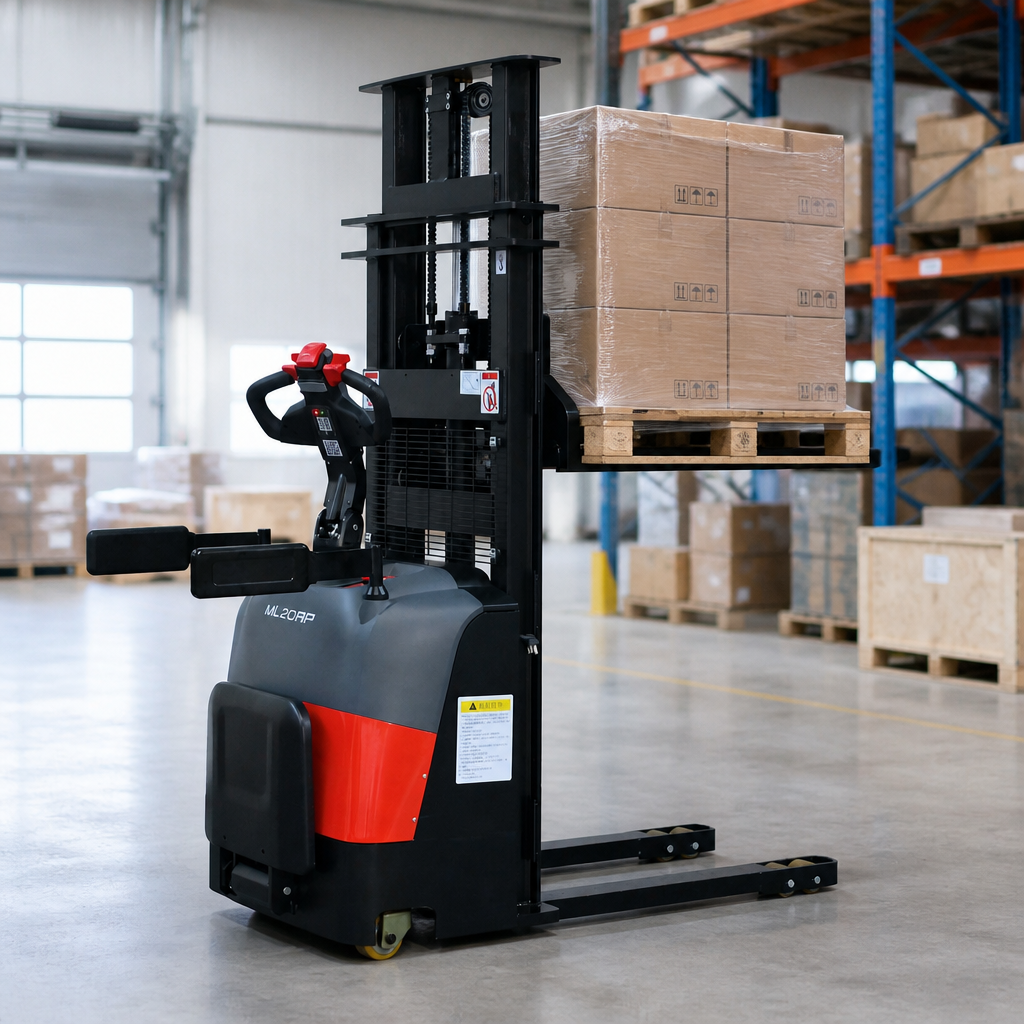
Electric Pallet Stacker 2000kg – 3410mm Lift Height
A stand-on stacker for racking and pallet positioning where operators need stable high-lift performance and confident control in busy warehouses.
- 2,000 kg
- 3,410 mm lift
- Stand-on design
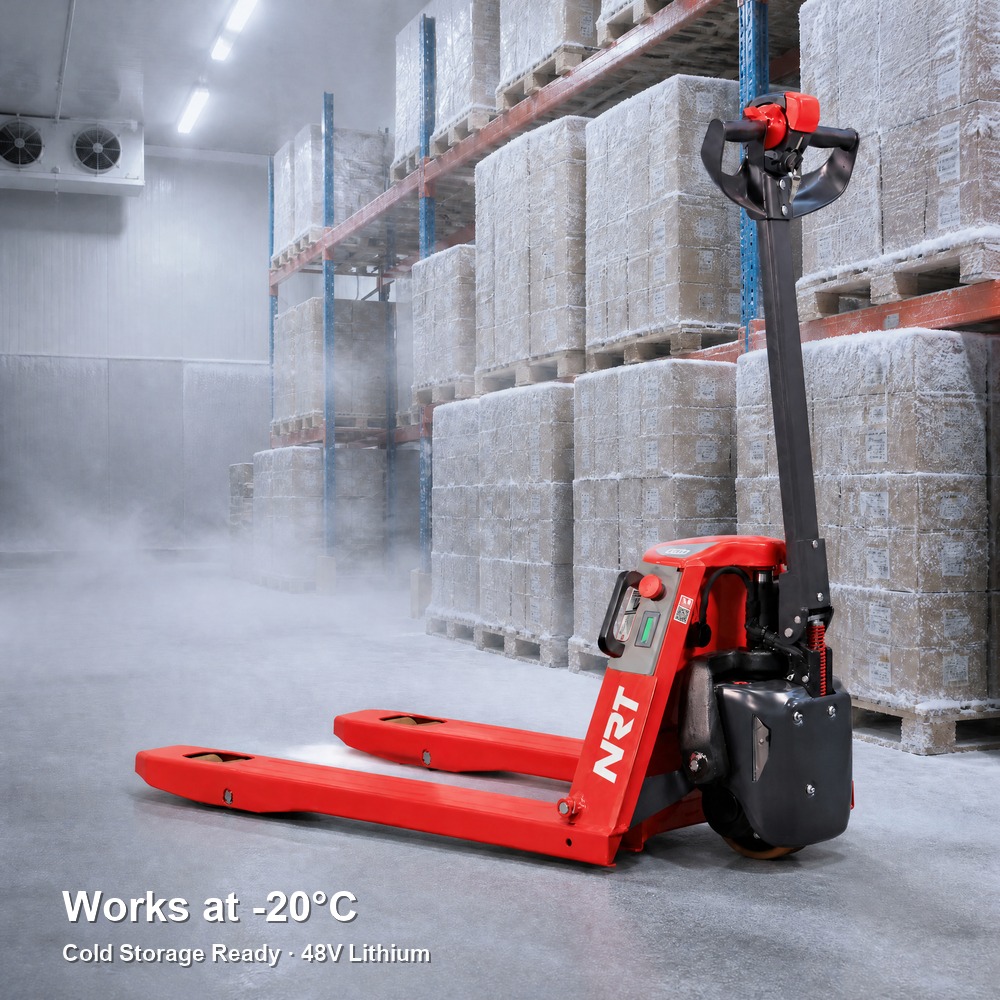
Electric Pallet Jack 2000kg – 48V Lithium, Cold Storage
48V lithium power, a 6-second battery swap concept and a slim body support high-cycle pallet transport where charging windows are short.
- 48V lithium
- 6s swap
- -20°C use
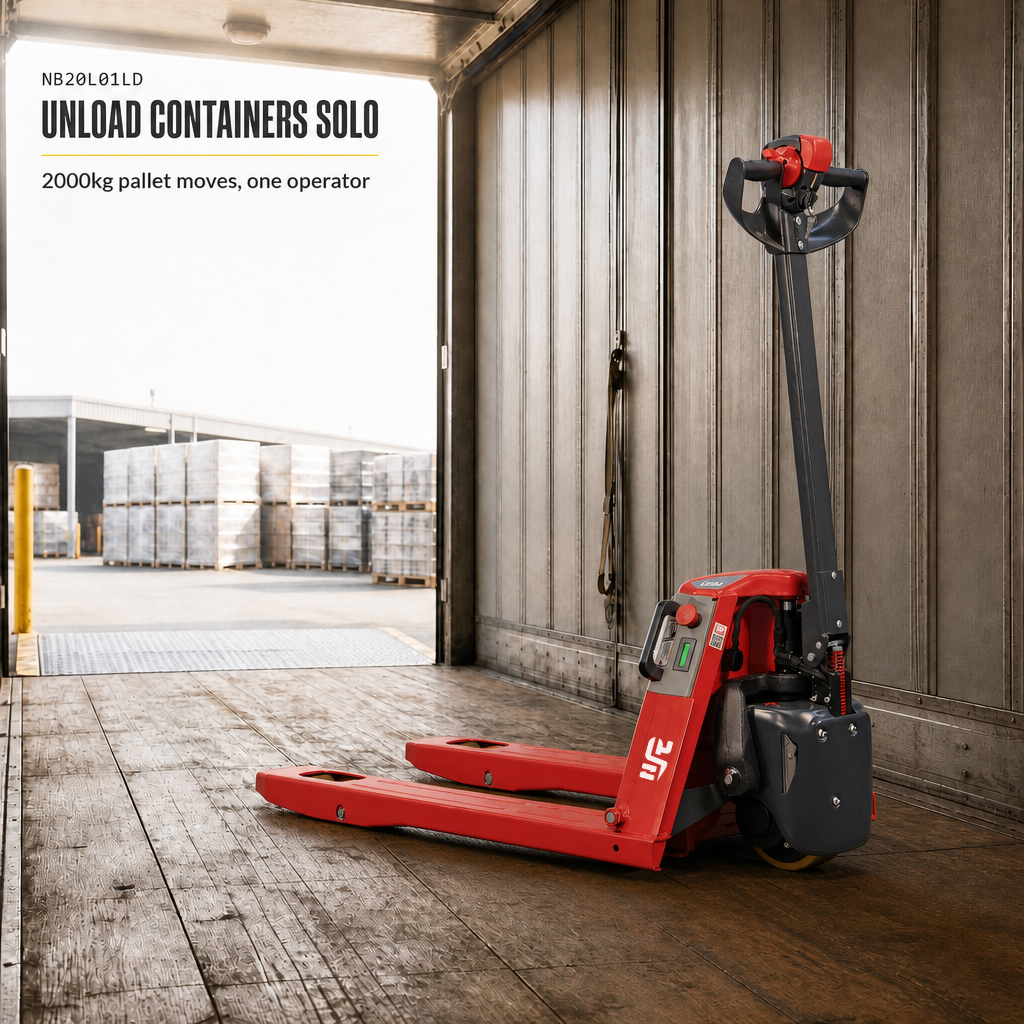
2000kg Electric Pallet Truck – Lithium-Ion 48V
A 48V 10Ah lithium-ion pallet truck with 1,150 mm forks and polyurethane wheels for container loading, logistics and distribution centre work.
- 1,150 mm forks
- 48V 10Ah
- PU wheels
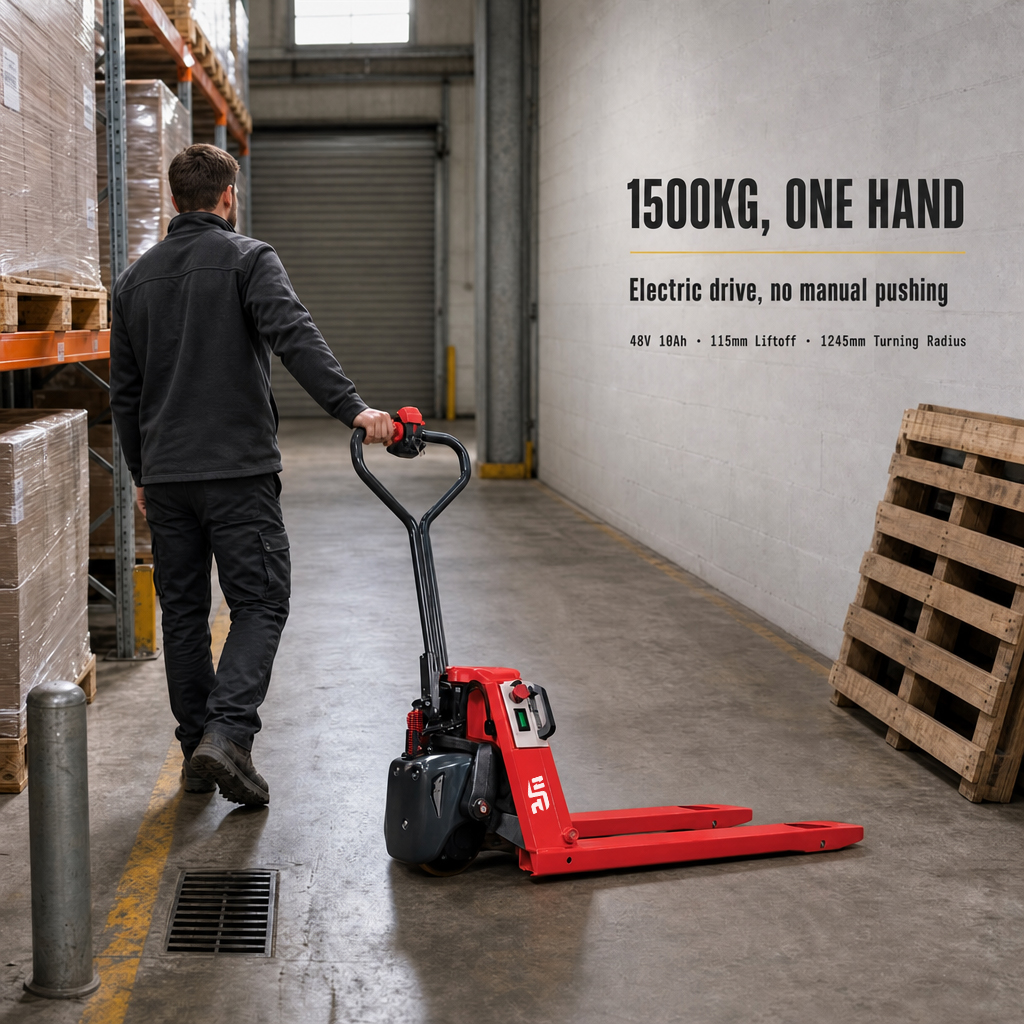
Electric Pallet Truck for Distribution Centres – 1500kg Walkie
A 1,500 kg lithium walkie pallet truck for distribution centres, workshops and supermarkets that need quiet electric handling and easy operator adoption.
- 1,500 kg
- Lithium battery
- Walkie operation
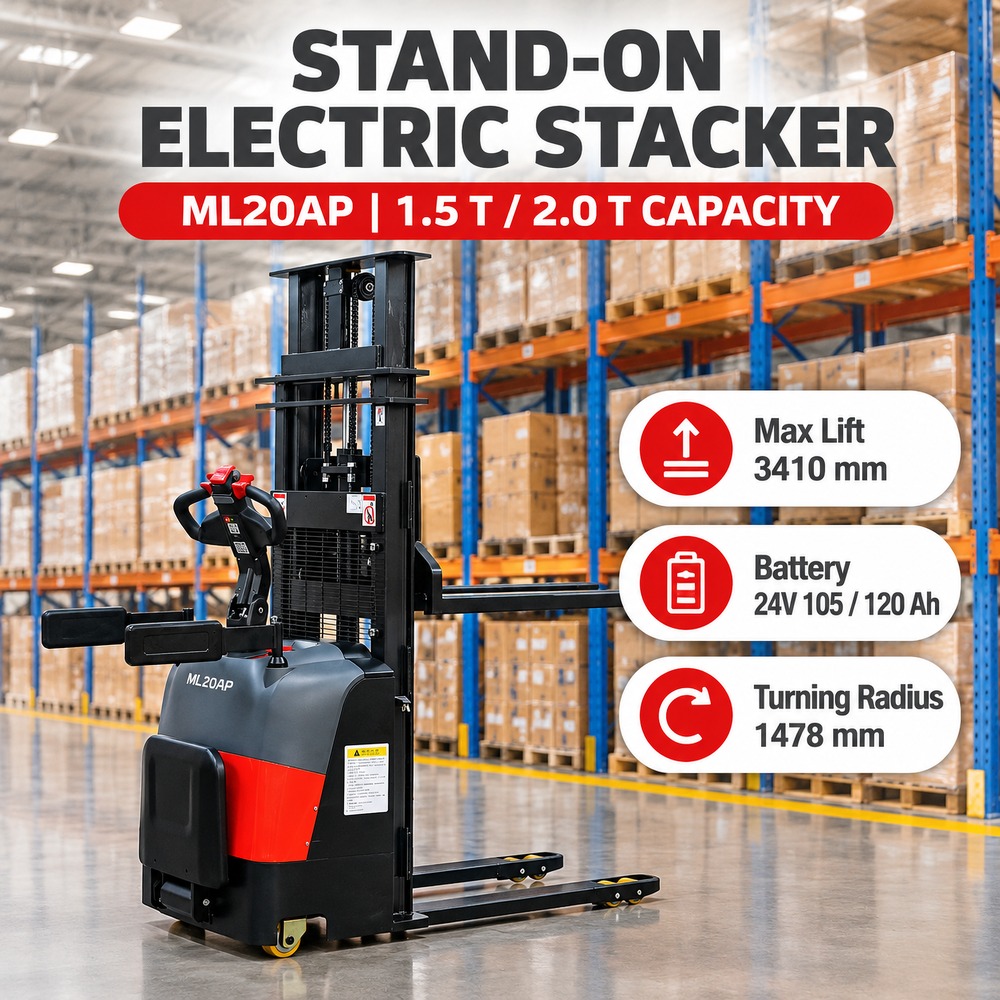
Warehouse Stacker Truck 1500–2000kg – 24V 105Ah
A 1,500–2,000 kg warehouse stacker with 24V 105Ah maintenance-free battery for repetitive pallet lifting and general warehouse stacking.
- 1.5–2.0 t
- 24V 105Ah
- Maintenance-free
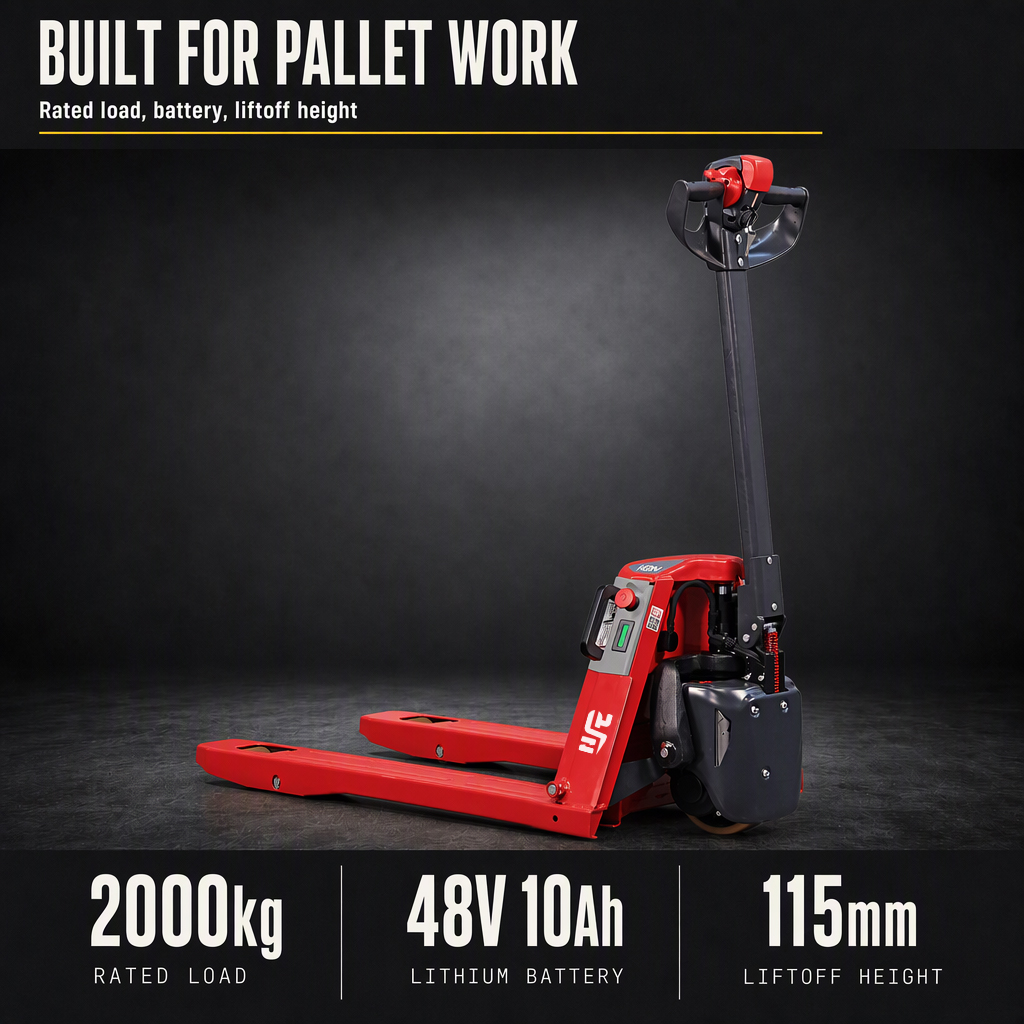
Portable 2T Electric Pallet Jack – Narrow Aisle & Truck Delivery
A portable 2T lithium pallet jack for narrow aisles and truck delivery, combining compact dimensions with 48V efficiency and flexible deployment.
- 2,000 kg
- Portable
- 48V efficiency
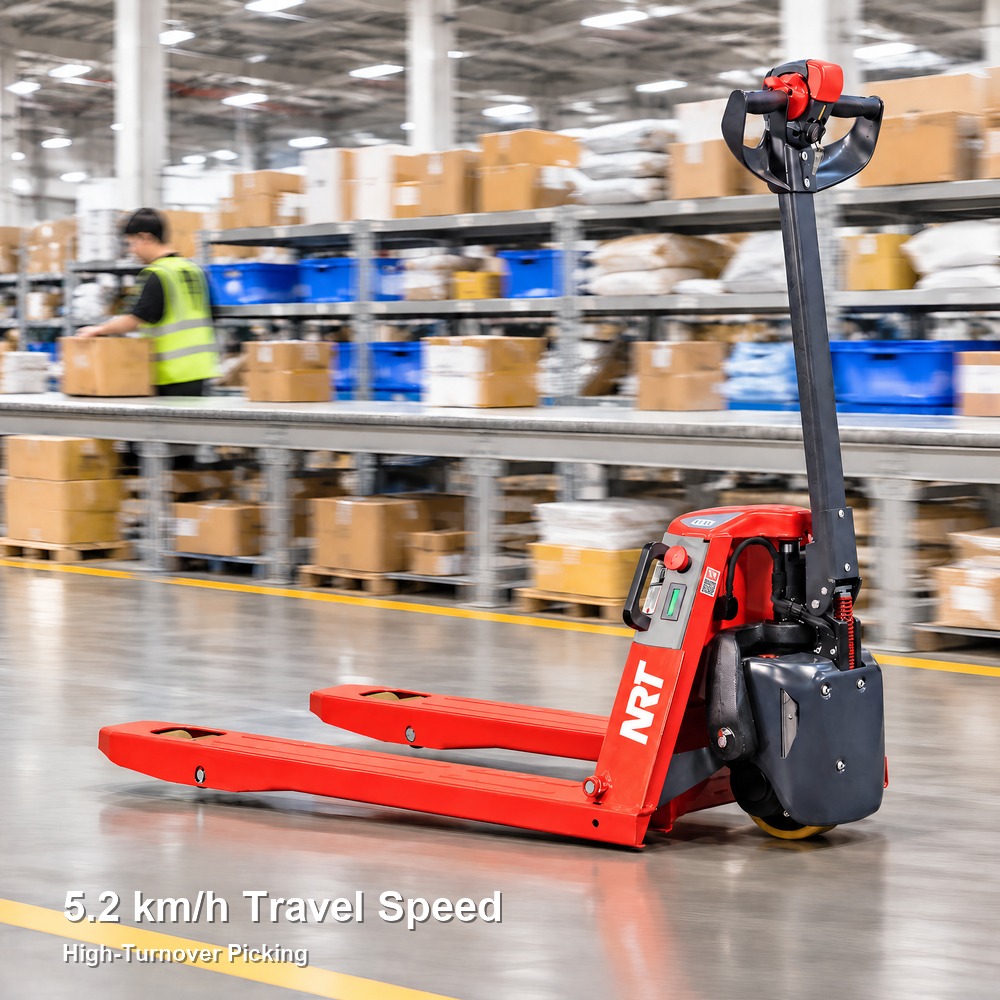
2000kg Quick-Release Drive Wheel Pallet Truck – 48V Lithium
A 2,000 kg electric pallet truck with a quick-release drive wheel that supports one-minute service access and reduced downtime in rental fleets.
- 2,000 kg
- Quick release
- 48V lithium
Need a fork length, lift height or battery configuration not shown here? Inquire Now and our engineers will map the requirement against a proven platform.
A Supplier Profile Built for Due Diligence
For B2B buyers, supplier credibility is not a slogan. It is a chain of evidence covering manufacturing scale, engineering depth, third-party assessment and export experience. These figures reflect the operating base behind Xiamen Pexal Technology Co., Ltd.
Production scale for container orders, dealer stock and recurring OEM programs.
Production and quality-control personnel supporting consistent build quality.
Engineering specialists focused on electric drive, warehouse equipment and customization.
Western Europe, North America, South America, Eastern Europe and Oceania.
What OEM Buyers Should Verify Before Choosing a Pallet Stacker Manufacturer
Searching for “custom OEM warehouse pallet stacker manufacturers” usually combines three intents: commercial comparison, technical specification and supplier risk assessment. A credible manufacturer and exporter must answer all three, not just publish a catalog. Buyers need to know whether the platform can handle the real load centre at full lift height, whether the battery and charger strategy fits the shift pattern, and whether spare parts and documentation will still be available after the first container arrives.
Information gain in this category comes from the data plate, not the brochure. Ask for the rated capacity at the actual lift height, the recommended aisle width, the battery voltage and charger compatibility, the service access points and the export packing method. These details determine total cost of ownership far more than a headline capacity figure.
- Request residual capacity at maximum lift height and at your real load centre.
- Confirm battery chemistry, charger input voltage, swap time and cold-store suitability.
- Ask for a spare-parts list, service manual language and recommended fast-moving parts kit.
- Verify supplier assessment, trade records, pre-shipment inspection scope and packaging standards.
Xiamen Pexal Technology Co., Ltd. was founded in Xiamen, Fujian in 2024 as the sales, service and technical support base for Pexal material handling equipment. The company works with a 220,000 m² partner manufacturing campus employing more than 1,200 people, including over 100 engineers. Pexal has passed an onsite check and supplier assessment conducted by SGS Group, and offers sample-based customization, full customization and ODM services for distributors and fleet buyers.
Inquire Now
Pallet Stacker Procurement Trends: What Will Change by 2030
Procurement teams are moving away from one-off catalog purchasing toward application engineering, lifecycle economics and documented supplier readiness. The trends below are especially relevant for importers, rental companies, 3PLs and private-label distributors building a repeatable warehouse equipment program.
Lithium as the default platform
As buyers move from lead-acid to lithium, they increasingly require compatible 24V and 48V platforms, opportunity charging and clear battery data for fleet planning.
Charging layout enters the tender
Procurement teams now evaluate charger placement, power availability, shift patterns and battery swap routines before confirming stacker quantities.
Safety telematics becomes baseline
Access control, travel-speed limits, impact logging and operator presence checks are moving from premium options to baseline expectations in tender documents.
TCO replaces lowest price
Five-year cost models include batteries, chargers, tyres, hydraulic service, downtime and spare-parts availability, not just the initial quotation.
Compliance checked earlier
Destination-market documentation, voltage requirements, manuals and packaging marks are now requested during supplier shortlisting, not after purchase order approval.
OEM as a market-entry tool
Private-label color, logo, manuals, packaging and spare-parts kits help distributors localize the product without developing a new platform from scratch.
Illustrative tender weighting model
This framework helps buyers compare suppliers consistently. Adjust the weights to your own market, but score every supplier against the same evidence.
What this means for buyers
A low quotation can hide expensive assumptions: undersized batteries, unclear spare-parts support, weak manuals or packaging that damages paint and controls in transit. A stronger tender compares evidence.
Request a configuration sheet that states load capacity at lift height, fork dimensions, battery type, charger input, aisle requirement, service access, packing method and delivery term. That single document prevents most misunderstandings between distributor, end user and factory.
Inquire Now for a configuration reviewHow Warehouse Pallet Stackers Are Evolving
The next generation of electric stackers and pallet trucks is being shaped by narrower aisles, higher uptime expectations, smarter safety systems and the need to integrate with digital warehouse workflows.
Slimmer chassis, tighter turning
Warehouses are squeezing more storage into existing footprints. Narrow fork widths, compact bodies and precise steering geometry help pallet trucks work in tighter container, truck and aisle conditions.
Smart safety, not just displays
Operator presence checks, travel-speed control, load monitoring and impact logging are becoming practical differentiators for fleets that care about training, insurance and incident investigation.
Modular lithium & quick service
Quick-release drive wheels, maintenance-free batteries and modular electrical layouts reduce downtime. In rental fleets, service minutes are a direct cost and a customer-experience issue.
AGV-ready and cold-chain engineering
Sensor interfaces, predictable travel paths and cold-store protection packages are preparing conventional stackers for semi-automated workflows and temperature-controlled logistics.
Why Pexal Is a Credible OEM Warehouse Pallet Stacker Partner
Pexal combines export-focused sales support with access to a large partner manufacturing base. For distributors, that means a practical balance between proven platforms, customization and documented supplier verification.
SGS-Assessed Supplier
Pexal has passed an onsite check and supplier assessment by SGS Group, giving buyers third-party evidence to review during supplier qualification.
Scale Behind the Program
A 220,000 m² partner manufacturing campus, more than 1,200 employees and 100+ engineers support production, engineering changes and quality control.
OEM / ODM Customization
Sample-based customization, full customization and ODM services cover mast height, fork length, battery type, color, logo, attachments and packaging.
Full Warehouse Range
Electric forklifts, pallet trucks, stackers, reach trucks, order pickers and AGV robotics can be sourced through one supplier relationship.
Export Terms & Logistics
Common delivery terms include FOB, CFR, CIF, EXW, FCA, CPT, CIP and DDP, with export packaging and flexible shipping arrangements via Xiamen port.
Market-Aware Support
Main export markets include Western Europe, North America, South America, Eastern Europe and Oceania, serving dealers, rental companies and end users.
How to Specify a Custom Pallet Stacker Without Creating Hidden Costs
Most procurement errors happen before the quotation stage. If the buyer does not define the load, lift height, aisle, battery strategy and documentation requirements clearly, suppliers will price different assumptions. Use this checklist to make every offer comparable.
| Specification | What to ask | Why it matters |
|---|---|---|
| Load & load centre | Residual capacity at maximum lift height | Prevents unsafe ratings when the pallet is raised. |
| Lift height | Required racking height, free lift and pallet entry clearance | Avoids paying for height you cannot safely use. |
| Fork dimensions | Fork length, width and overall stance for your pallet | Improves container, truck and racking compatibility. |
| Battery & charging | 24V or 48V, lithium or lead-acid, charger input and swap time | Directly affects uptime, energy cost and shift planning. |
| Aisle & floor | Turning radius, aisle width, floor surface and ramp use | Determines productivity, stability and tyre choice. |
| Service & documents | Quick-release parts, spare-parts list, manual language and inspection scope | Reduces downtime and compliance risk after import. |
Define the task profile
Record pallet weight, load centre, lift height, aisle width, floor condition and shifts per day.
Verify the data plate
Ask for capacity at height and confirm that the proposed mast and fork dimensions match your racking.
Compare landed cost
Include battery, charger, spare-parts kit, packaging, freight, duties and delivery term in the comparison.
Validate before shipment
Confirm function testing, photos, inspection scope, manual language and spare-parts labeling before dispatch.
OEM Warehouse Pallet Stacker FAQ for Importers and Fleet Managers
These are the questions most often raised by distributors, rental fleets and end users when evaluating a custom pallet stacker program from China.
What does custom OEM mean for warehouse pallet stackers?
Custom OEM should go beyond a logo sticker. For pallet stackers and pallet trucks, it can include mast height, fork length and width, battery type, charger configuration, color, branding, manual language, packaging marks and a recommended spare-parts kit. Pexal offers sample-based customization, full customization and ODM services, so buyers can start from a proven platform and adapt it to their market.
Should I choose a 1500kg or 2000kg pallet stacker?
Choose by real load, not by the nearest round number. Add the pallet weight, load weight, any attachment weight and the effect of load centre. A 2,000 kg model is common for mixed palletized freight, while 1,500 kg walkie trucks suit lighter distribution, retail and workshop handling. Always request the residual capacity at your required lift height.
What lift height should I specify for racking?
Measure the top beam, pallet entry clearance and the highest safe lifting point, then allow a margin for operator control. Do not select a lift height only because it is the largest available. A model such as the 3,410 mm stand-on pallet stacker can suit warehouse racking, but the final choice must match the racking layout, aisle width and load stability.
Is lithium better than lead-acid for warehouse pallet trucks?
Lithium is often preferred for opportunity charging, lower maintenance, compact packaging and multi-shift flexibility. Lead-acid may still suit single-shift operations with established charging rooms and ventilation. The decision should include charger input voltage, battery management system, replacement cost, cold-store requirements and the way operators actually use the truck.
Can an electric pallet jack work in cold storage at -20°C?
Yes, but cold-store use must be specified. Ask for cold-condition battery protection, compatible lubricants, condensation controls, suitable display and wiring protection, and a charger strategy that fits the temperature transition. The listed 48V lithium cold-storage pallet jack is designed for -20°C applications, but duty cycle and battery heating requirements should still be confirmed with engineering.
What Incoterms, payment methods and currencies are accepted?
Common delivery terms include FOB, CFR, CIF, EXW, FCA, CPT, CIP, DDP and other standard terms. Payment methods include T/T, L/C, D/P, D/A, Western Union, PayPal, credit card and escrow. Accepted currencies include USD, EUR, GBP, JPY, CAD, AUD, HKD, CHF and CNY. Final terms depend on the order value, destination and agreed contract.
Which markets do you export to, and how is after-sales support handled?
Main export markets are Western Europe, North America, South America, Eastern Europe and Oceania, serving dealers, rental companies and end users. Export support includes configuration sheets, documentation, spare-parts planning, packaging requirements and technical communication. For fleet buyers, we recommend agreeing a fast-moving spare-parts kit and document language before the first shipment.
How can I verify quality before shipment?
Start with supplier assessment records, then request the pre-shipment inspection scope. Important checks include lifting and lowering, travel and braking, electrical function, battery and charger compatibility, paint and label condition, manual language and packaging. Pexal has passed an SGS onsite check and supplier assessment, and buyers can also arrange third-party inspection before dispatch.
What is the MOQ and lead time for a custom pallet stacker order?
MOQ and lead time depend on the model, customization level, battery configuration, packaging plan and order volume. A mixed container program may be possible, but timing must be confirmed against production scheduling and component availability. Share your target quantity, destination market and required delivery window through the inquiry channel so the team can respond with a practical proposal.
Request a Custom OEM Pallet Stacker Proposal
Share your load, lift height, aisle width, battery preference and destination market. The Pexal team will recommend a proven platform, prepare a configuration sheet and confirm the most suitable delivery term. Email: info@pexalbot.com.