Custom OEM Low Lift Pallet Truck Manufacturers & Wholesaler
Source electric pallet trucks, lithium-ion pallet jacks and compact warehouse stackers through a supplier built for custom branding, export documentation and wholesale programs across Western Europe, North America, South America, Eastern Europe and Oceania.
Low Lift Pallet Trucks & Warehouse Models for Wholesale Programs
Wholesale buyers rarely fail because they cannot find a pallet truck. They fail because quotations look similar on paper but differ in battery architecture, fork geometry, wheel specification, controls, packaging and after-sales documentation. These eight models cover the practical core of a low-lift and warehouse assortment: lithium-ion pallet jacks for container and dock work, slim-body units for elevators and tight freight boxes, and stand-on stackers for customers who need vertical lift as well as horizontal transfer. Each product link preserves the original model page for procurement traceability.
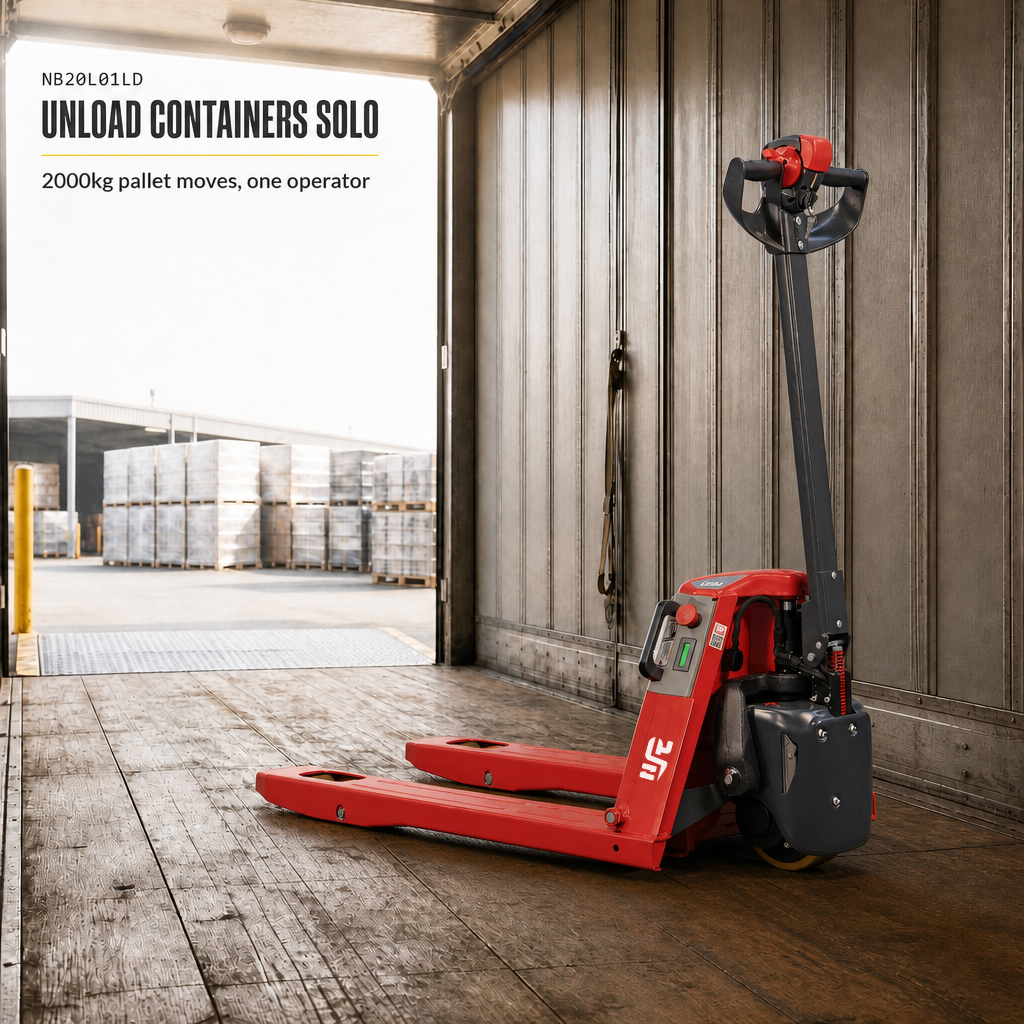
2000kg Electric Pallet Truck Lithium Ion 48V 10Ah Power Jack 1150mm Forks Polyurethane Wheels Container Loading
A 2,000 kg lithium-ion electric pallet truck with 1,150 mm forks and polyurethane wheels. A practical wholesale choice for container loading, distribution centers and fleet buyers that prioritize fast turnover, easy charging and low maintenance.
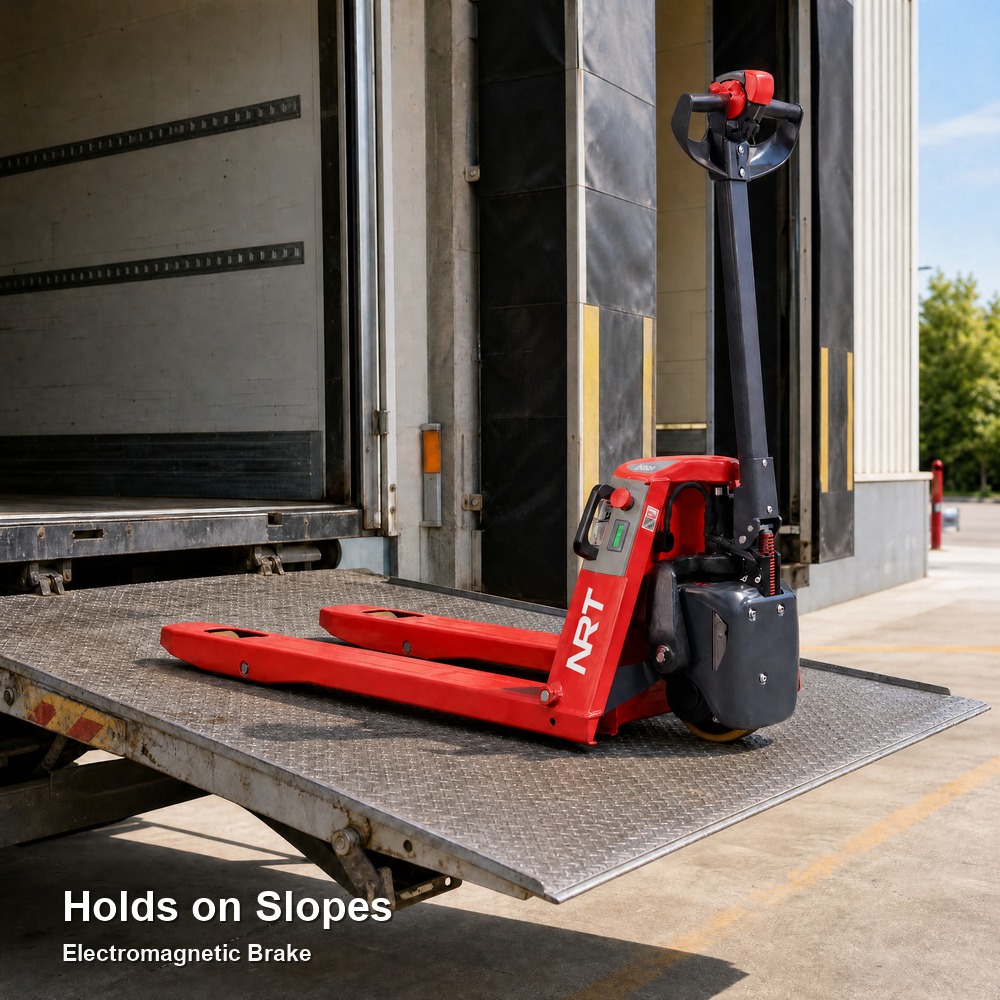
Electric Pallet Jack 1500kg 300mm Slim Body Walkie Pallet Truck for Elevator Freight Box Narrow Aisle Handling
A slim-body walkie pallet truck designed around 1,500 kg loads and tight handling zones. The reduced body profile suits elevator transport, freight boxes, retail backrooms and narrow aisle movement where conventional pallet jacks feel too wide.
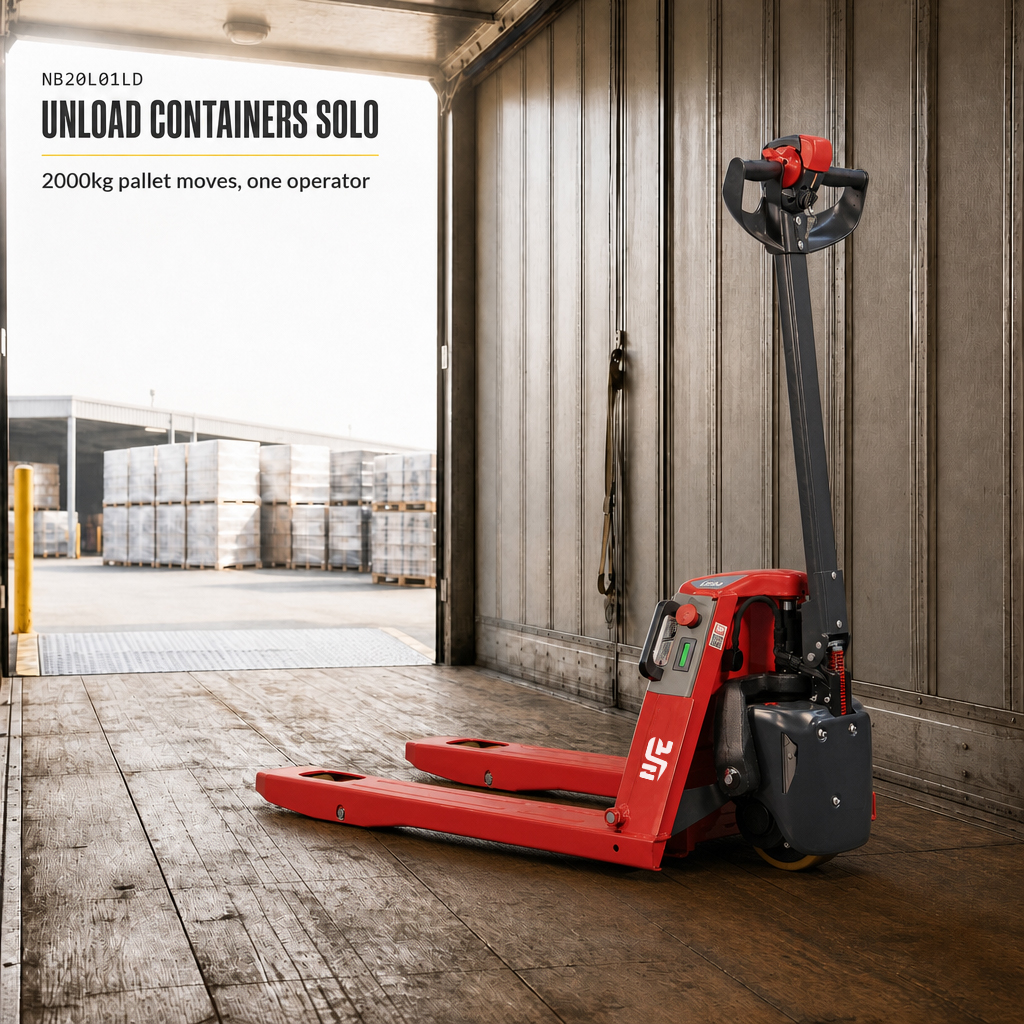
NRT 2 Ton Electric Pallet Jack Lithium-Ion 48V 10Ah 1150mm Forks Polyurethane Wheels Warehouse Handling
A 2-ton lithium electric pallet jack for warehouse handling, with 1,150 mm forks and polyurethane wheels. Well suited to distributors who want a familiar low-lift format with modern battery convenience and straightforward operator training.
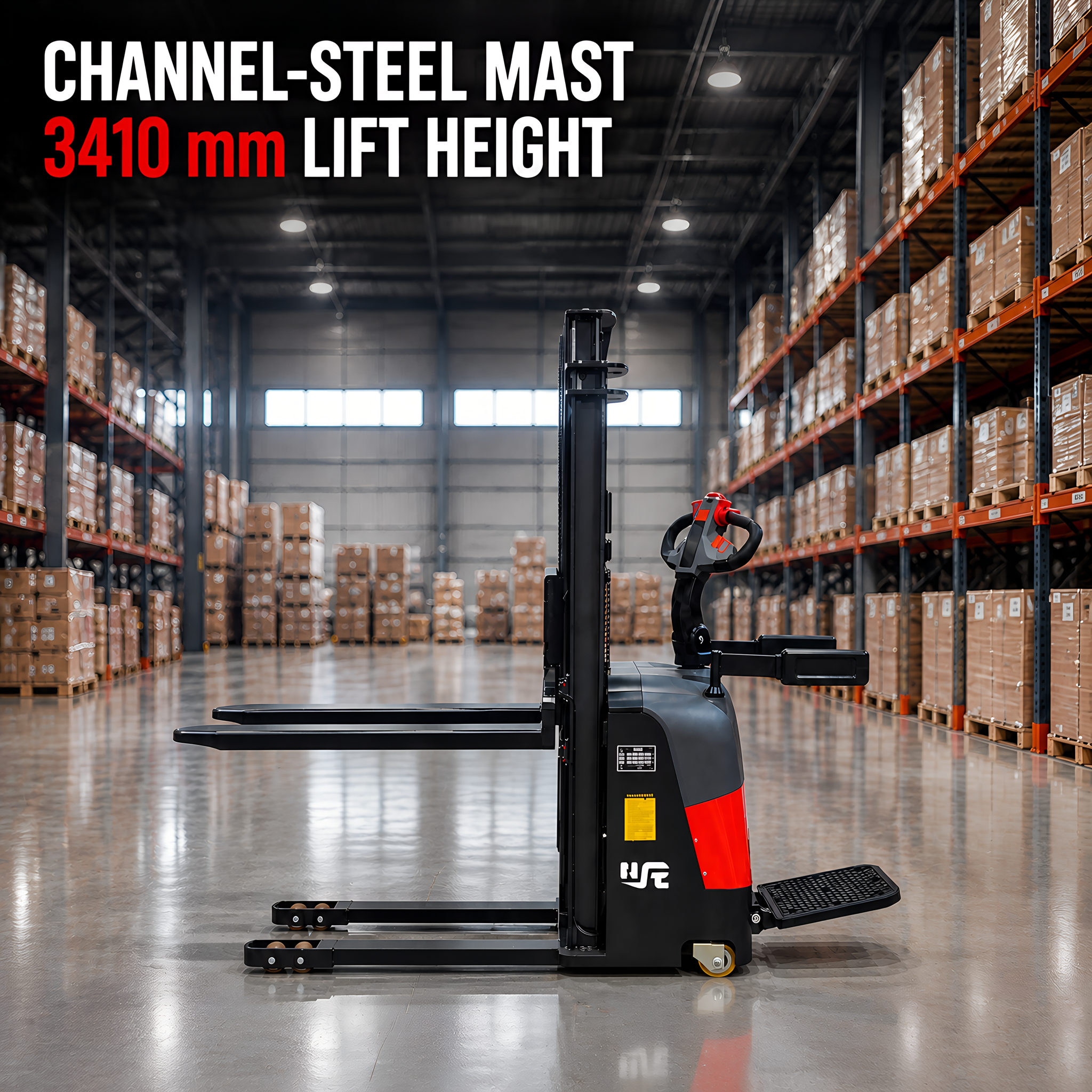
ML20AP Stand on Electric Stacker 2000kg 3410mm Max Lift 1478mm Turning Radius 820mm Body Width
A stand-on electric stacker with 2,000 kg capacity and 3,410 mm maximum lift. Its 1,478 mm turning radius and 820 mm body width make it relevant for warehouses moving beyond simple floor-level pallet transport into medium-height racking and loading work.
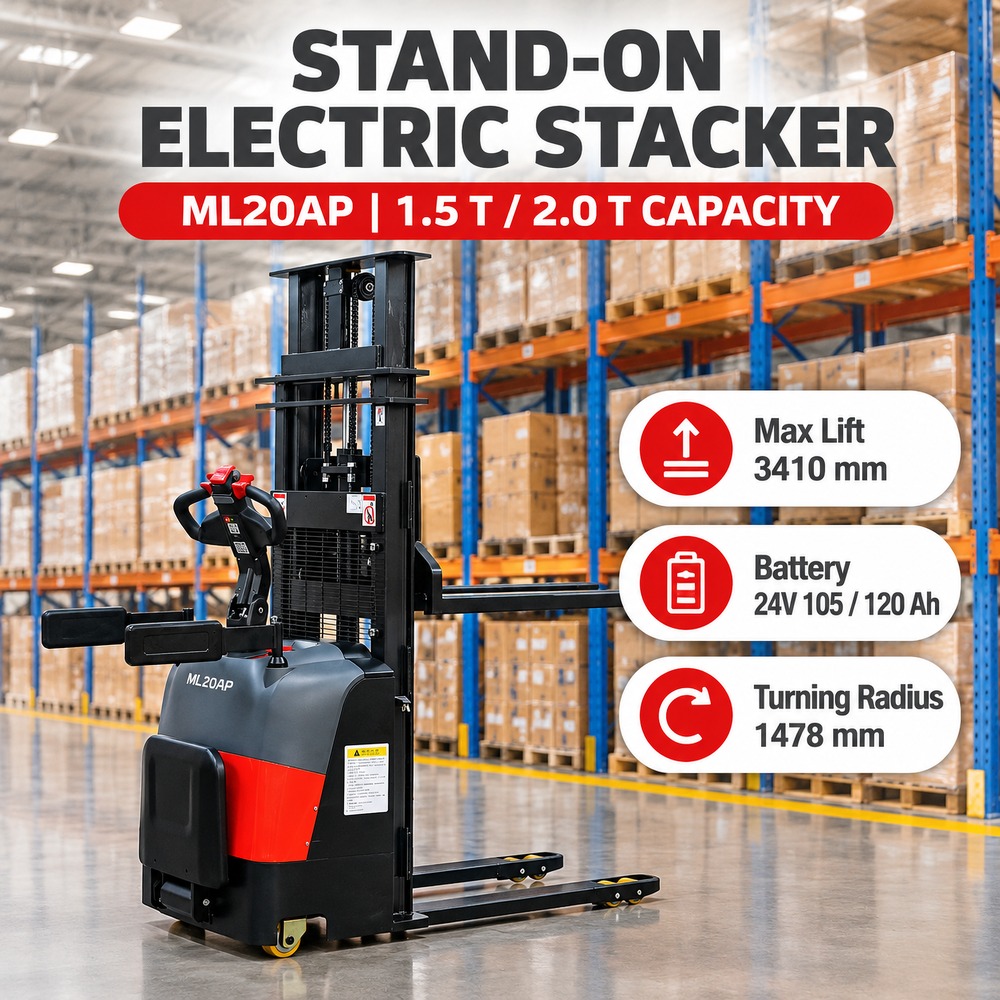
Warehouse Stacker Truck 1500kg 2000kg Electric Pallet Stacker 24V 105Ah Maintenance Free Battery
A warehouse stacker truck for 1,500 kg to 2,000 kg applications, equipped with a 24V 105Ah maintenance-free battery. A sensible option for dealers serving small warehouses, workshops and retail operations that need lifting capability without forklift complexity.
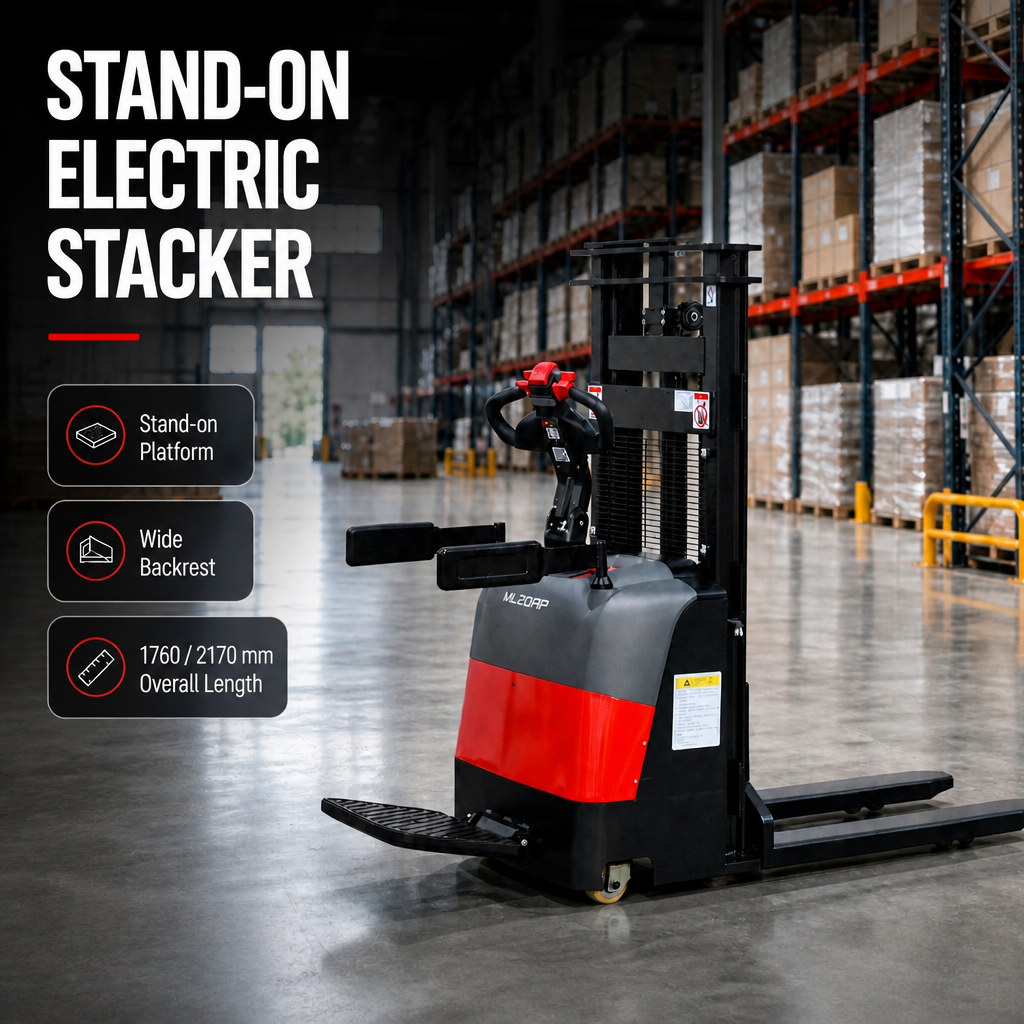
Electric Stacker Truck 2000kg Pallet Stacker Forklift 3410mm Lift for Warehouse Loading Unloading
A 2,000 kg electric stacker with 3,410 mm lift for warehouse loading and unloading. It bridges the gap between a low lift pallet truck and a full counterbalance forklift for customers with fixed racking heights and predictable pallet flows.
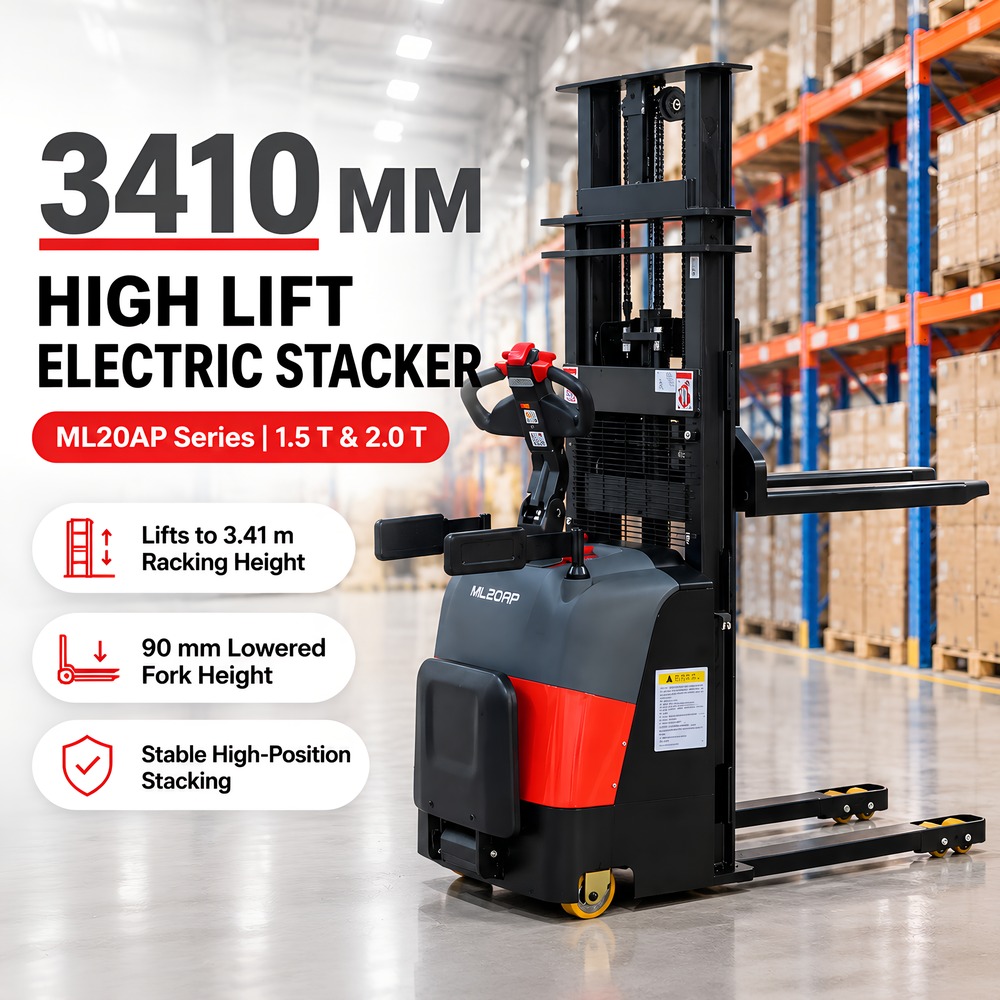
ML20AP Stand on Electric Stacker Truck 2000kg Warehouse Stacker for Narrow Aisle Loading Dock Building Material Shops
A stand-on electric stacker truck rated at 2,000 kg for narrow aisle, loading dock and building material shop environments. It is a stronger recommendation when operators need travel efficiency, repeated lifting and better sightlines than a basic walkie stacker.
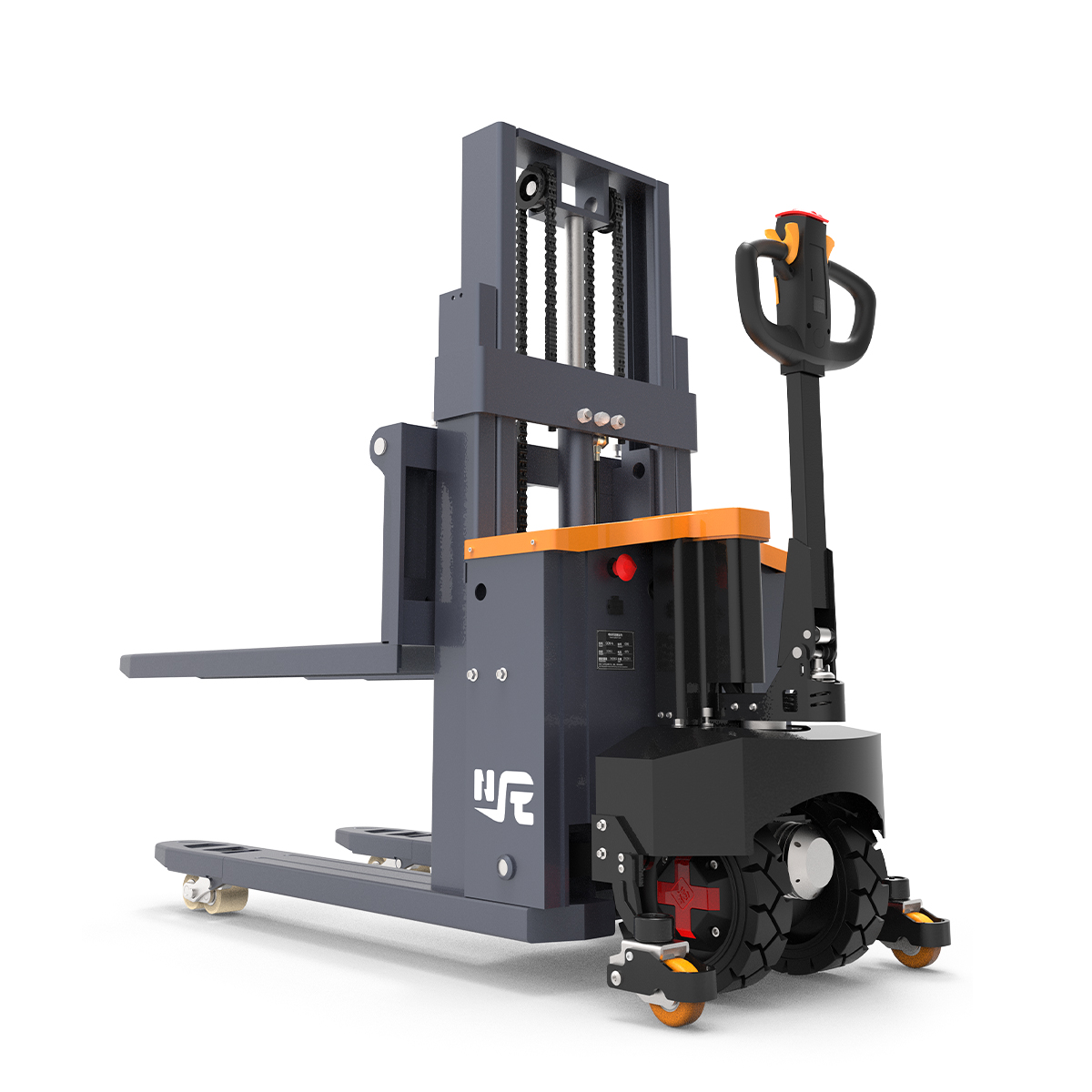
1500kg 2000kg Electric Stacker Pallet Stacker Truck 1.6m 3m Lift Height Warehouse Material Handling Equipment
A flexible 1,500 kg to 2,000 kg electric stacker range with 1.6 m to 3 m lift height options. This model helps wholesalers cover multiple customer segments with one platform family, reducing spare-parts complexity across a dealer’s product line.
What a Low Lift Pallet Truck Really Does — and Where Buyers Misjudge It
A low lift pallet truck is the workhorse between the trailer and the racking. It raises the forks enough to move a pallet but not high enough to place it on a rack. That simple distinction matters because procurement teams sometimes compare a low lift pallet truck with a stacker purely on price, then discover after delivery that the equipment cannot serve the intended racking level. The right comparison is task-based, not category-based.
For importers and distributors, the product is deceptively mature. Most quotations list capacity, fork length and battery voltage. Fewer list wheel material and bearing type, charger compatibility, controller brand, IP protection, tiller ergonomics, emergency reverse performance, slope control, packaging method, spare-parts kit and manual language. These details shape the buyer’s total cost of ownership long after the invoice is paid.
The most useful RFQ for a custom OEM low lift pallet truck normalizes offers around the real operating cycle: pallets per hour, floor surface, aisle width, charging window, operator skill, maintenance access and documentation requirements. It should also state whether the customer needs a pure low lift pallet truck or a stacker with 1.6 m, 3 m or 3.4 m lift. Clear scoping prevents the hidden cost of over-specification and the operational risk of under-specification.
 Xiamen · Sales & Technical Support
Six Non-Negotiables When Vetting Custom OEM Suppliers
For distributors, the phrase “custom OEM” is only useful when it is backed by a repeatable process. Validate these six areas before approving a supplier for a private-label low lift pallet truck program.
Defined Customization Scope
Confirm what is truly customizable: fork length, fork width, load wheels, battery type, charger plug, paint color, logo, labels, manual language, packaging and attachments. A supplier should separate sample-based customization, full customization and ODM in writing.
Battery and Charger Matching
Ask how the battery is matched to shift length, charging window and site voltage. Lithium-ion and lead-acid configurations have different charging discipline, maintenance expectations and replacement planning. The charger should be quoted as part of the system, not as an afterthought.
Compliance Documentation
An SGS supplier assessment verifies company identity and capability; it is not the same as product-specific certification. Request declarations, labels, manuals, warning decals and test records required for the destination market, then confirm responsibilities in the purchase order.
Spare Parts and Service Kit
A low lift pallet truck is a long-life asset. Ask for a recommended spare-parts bundle covering wheels, controller, charger, switches, tiller components and hydraulic parts. Serviceability should be checked before the first container order, not after the first downtime event.
Export Packaging and Loading
Confirm whether the packaging is designed for mixed containers, LCL shipments and dealer warehousing. Clear marking, moisture protection, secure battery packaging and accessible manuals reduce damage claims and improve the unboxing experience for distributors.
Wholesale Economics
MOQ varies by model, battery, branding and packaging, so the correct approach is a written configuration-specific quotation. Discuss mixed-model container loading, launch quantity, repeat-order lead time and private-label requirements together to avoid optimizing one variable at the expense of the whole program.
How Low Lift Pallet Trucks Are Evolving
The next buying cycle will reward suppliers who can explain not only what the truck includes, but how the platform lowers lifetime cost and improves deployment speed.
Lithium-Ion and Opportunity Charging
Lithium-ion packs continue to move downmarket from premium fleets to standard warehouse equipment. Distributors increasingly ask for opportunity charging, lighter battery handling and charger compatibility because the battery strategy can matter as much as the truck itself.
Modular Low-Lift Platforms
Common chassis, controls and battery interfaces allow a manufacturer to produce more variants without multiplying spare-parts complexity. For wholesalers, modularity supports faster customization and more efficient mixed-container ordering.
Safety by Design
Emergency reverse, regenerative braking, speed control, slope monitoring, audible alerts and ergonomic tiller design are becoming part of the value story. The most useful supplier documentation explains when each feature activates and how it reduces operator risk.
Telematics and Fleet Data
Even basic warehouse trucks are being pulled into digital fleet management. Usage hours, shock events, fault codes and battery health help distributors plan maintenance and prove utilization. The key procurement question is whether data access remains open and actionable.
Serviceability and Parts Commonality
Low lift trucks are purchased for uptime, not showroom appeal. Common controllers, readily accessible diagnostic points, protected wiring and clear service manuals reduce repair time and make after-sales support more predictable for dealers.
Sustainability and Packaging Efficiency
Recyclable packaging, reduced void space and lower-VOC coatings are becoming commercial factors in tenders. For wholesale programs, better packaging efficiency can reduce freight waste while protecting the equipment and simplifying warehouse receiving.
What B2B Buyers Will Compare More Carefully
Sticker price will remain visible, but the winning suppliers will be the ones that make lifetime cost, documentation and serviceability easy to compare.
TCO Over Sticker Price
Buyers are normalizing energy use, wheel life, battery replacement, maintenance hours and downtime. A lower headline price can lose once charging behavior and service access are included.
Supplier Consolidation
Dealers prefer fewer vendors across pallet trucks, stackers, forklifts and AGVs. A consolidated range reduces training, spare-parts inventory and documentation burden across the sales team.
Compliance-First Purchasing
Procurement teams want traceable labels, manuals, declarations and test records before shipment. Suppliers that treat documentation as part of the product will be easier to approve and reorder.
Service-Level and Data
Spare-parts availability, response time, technical training and remote diagnostics are becoming part of the commercial offer. The truck is the hardware; the service model protects the resale relationship.

SGS Group Supplier AssessmentOur company has passed an onsite check and supplier assessment conducted by SGS Group. Buyers can review the assessment, credit index and trade history as part of supplier due diligence.
Why Xiamen Pexal Technology Supports Custom OEM Programs
Xiamen Pexal Technology Co., Ltd. was established in Xiamen, Fujian in 2024 as the sales, service and technical support base for Pexal material handling equipment. For a young export brand, the right response is transparency: verify the evidence, compare the configuration and test the communication before placing a container order.
We work with a 220,000 m² partner manufacturing campus employing more than 1,200 people, including a team of over 100 engineers focused on electric warehouse equipment. This operating base supports product sourcing, configuration review, export documentation and after-sales coordination for dealers, rental fleets and end users.
Our customization scope includes sample-based customization, full customization and ODM services. Depending on the model, configuration can cover fork length, battery type, color, logo, labels, packaging, manuals and attachments, with stacker mast options available where relevant. We also support logistics solution design and consulting so that a low lift pallet truck recommendation is tied to the actual handling flow rather than a generic catalog choice.
Main export markets include Western Europe, North America, South America, Eastern Europe and Oceania. We accept common delivery terms including FOB, CFR, CIF, EXW, FCA, CPT, CIP and DDP, with payment methods such as T/T, L/C, D/P, D/A, Western Union, PayPal, credit card and escrow. Supported currencies include USD, EUR, GBP, JPY, CAD, AUD, HKD, CHF and CNY.
Match the Truck to the Job Before You Compare Prices
Use this matrix to structure a buyer conversation. The goal is not to force every customer into one model, but to avoid quoting a low lift pallet truck for an application that truly needs a stacker.
Dock and Horizontal Transfer
Choose a 1.5–2.0 t electric pallet truck with fork length matched to the pallet, polyurethane wheels for smooth floors and a battery strategy that fits the charging window. Confirm the ramp, dock plate and container transition conditions.
Elevator, Retail and Tight Freight
Prioritize slim body width, low chassis clearance, compact turning behavior and predictable controls. The 1,500 kg 300 mm slim-body electric pallet jack is designed for these constrained routes where width and maneuvering matter more than maximum capacity.
Medium-Height Stacking
When the pallet must reach 1.6 m, 3 m or 3.4 m, move to a stacker. Check lift height, closed mast height, overhead clearance, turning radius and load center. A stand-on stacker can improve travel efficiency for longer routes and repeated lifts.
Wholesale Assortment Design
Build a dealer assortment around customer jobs: a core low lift pallet truck, a slim-body model, one or two stacker heights and a spare-parts kit. This reduces model overlap while giving the sales team a clear recommendation path for different industries.
Common Questions from Importers and Distributors
These are the questions buyers ask most often when comparing custom OEM low lift pallet truck manufacturers and wholesalers.
What is the difference between a low lift pallet truck and an electric stacker?
A low lift pallet truck raises the forks enough to transport pallets, typically for horizontal movement, loading and dock work. An electric stacker adds meaningful lifting height, such as 1.6 m, 3 m or 3.4 m, so it can place pallets onto racking or stack loads. If the customer only needs floor-level transport, a low lift truck is simpler and more cost-efficient. If racking is involved, compare stackers instead.
Can you customize low lift pallet trucks for private label programs?
Yes. Xiamen Pexal Technology Co., Ltd. supports sample-based customization, full customization and ODM services. Depending on the model and order configuration, customization can cover color, logo, labels, manuals, packaging, fork length, battery type, charger plug and selected attachments. Final options and MOQ should be confirmed in a written quotation because they vary by configuration and market.
Should a wholesaler choose lithium-ion or lead-acid batteries?
The correct choice depends on shift length, charging opportunity, site voltage, maintenance capability and replacement planning. Lithium-ion is often attractive where opportunity charging, lighter battery handling and lower maintenance are priorities. Lead-acid may still make sense in some budget-sensitive or established charging environments. The procurement brief should specify charging windows and daily hours so the battery and charger are not selected in isolation.
How do I select fork length and chassis width?
Start with pallet dimensions, load center and the actual route the truck will travel. Fork length must support the load safely, while chassis width and turning radius determine whether the truck can enter elevators, freight boxes, aisles and dock plates. For narrow applications, a slim-body pallet truck with a 300 mm class body may be more suitable than a standard unit.
What documents should I request before approving an OEM supplier?
Request the quotation with configuration details, battery and charger specifications, packaging method, warranty terms, spare-parts list, manuals, labels and any product documentation required for your market. Also review third-party supplier verification such as the SGS assessment, credit index and trade history. A supplier assessment verifies the company; product compliance requirements should be confirmed separately for each destination market.
Which Incoterms and payment methods do you accept?
We accept FOB, CFR, CIF, EXW, FCA, CPT, CIP, DDP and other common delivery terms. Payment methods include T/T, L/C, D/P, D/A, Western Union, PayPal, credit card and escrow. Accepted currencies include USD, EUR, GBP, JPY, CAD, AUD, HKD, CHF and CNY. The final terms should be confirmed in the quotation and contract.
Which markets do you export to, and how is after-sales support handled?
Our main export markets are Western Europe, North America, South America, Eastern Europe and Oceania, serving dealers, rental companies and end users. After-sales support is configured during quotation through spare-parts recommendations, manuals and technical communication. Because requirements differ by market, buyers should define service expectations, parts kits and documentation before placing the order.
Has your company been verified by a third party?
Yes. Our company has passed an onsite check and a supplier assessment conducted by SGS Group. Buyers can review our assessment, credit index, trade capacity and company video. This verification is useful for supplier due diligence, but it should be read alongside the specific product configuration, documentation and commercial terms for the order.
Build a Custom OEM Low Lift Pallet Truck Program
Share your loads, aisle dimensions, charging window, target market and branding requirements. Our team can help compare low lift pallet trucks, stacker options and spare-parts planning so your next wholesale order is easier to specify, sell and support.