Custom OEM Industrial Forklift Supplier & WholesalersEngineered for Distributors, Rental Fleets and Private Label Programs
Source electric forklifts, pallet trucks, stackers and AGV-ready warehouse equipment from an SGS-assessed partner manufacturing ecosystem. Benefit from 220,000 m² production scale, 1,200+ skilled employees, 100+ engineering specialists and export support for Western Europe, North America, South America, Eastern Europe and Oceania.
8 Recommended Custom OEM Industrial Forklifts & Warehouse Trucks
Shortlisted for wholesalers, dealers and private-label buyers seeking reliable electric handling equipment. Images are displayed in full without ratio distortion, and every product link is retained as supplied. If a configuration is not visible here, use the inquiry button and our team will build a custom OEM proposal around your load, aisle and duty-cycle requirements.
Electric Stacker Truck 2000kg Pallet Stacker Forklift 3410mm Lift for Warehouse Loading Unloading
A strong candidate for medium-height racking, truck unloading and warehouse transfer where a 2,000 kg platform and 3,410 mm lift reduce manual handling and improve pallet flow.

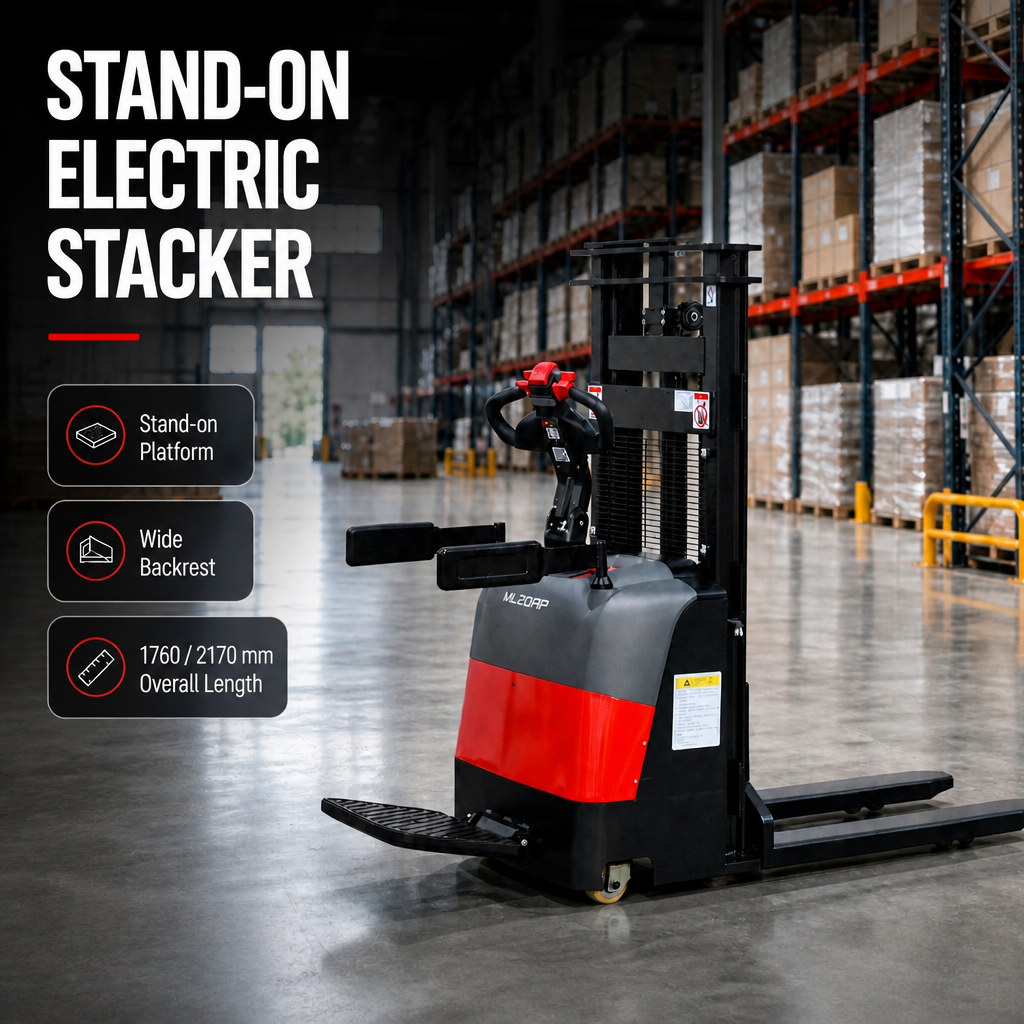
Stand on Electric Stacker 2000kg for Narrow Aisle Warehouse Loading Dock Building Material Shop Pallet Handling
Recommended where operators need to cover longer horizontal distances while still fitting narrow aisles and loading-dock routines. The stand-on format supports productivity without the full footprint of a counterbalance forklift.

2026 New Alternative Convertidor De Palet Jack a Electrico Ultra-Lightweight 107kg Electric Pallet Jack with Lithium Power
A high-information-gain option for importers targeting tight retail backrooms, elevators and lightweight distribution. The 107 kg ultra-lightweight design can make a practical difference where floor loading and maneuverability are constrained.
Efficient 2 Ton Electric Pallet Jack 2000kg Capacity: Best Material Handling Solution for Logistics Centers 2026 Hot Sale
A practical staple for logistics centers, distribution hubs and wholesale warehouses. The 2,000 kg capacity balances payload flexibility with the agility needed for dock-to-stock and cross-docking operations.
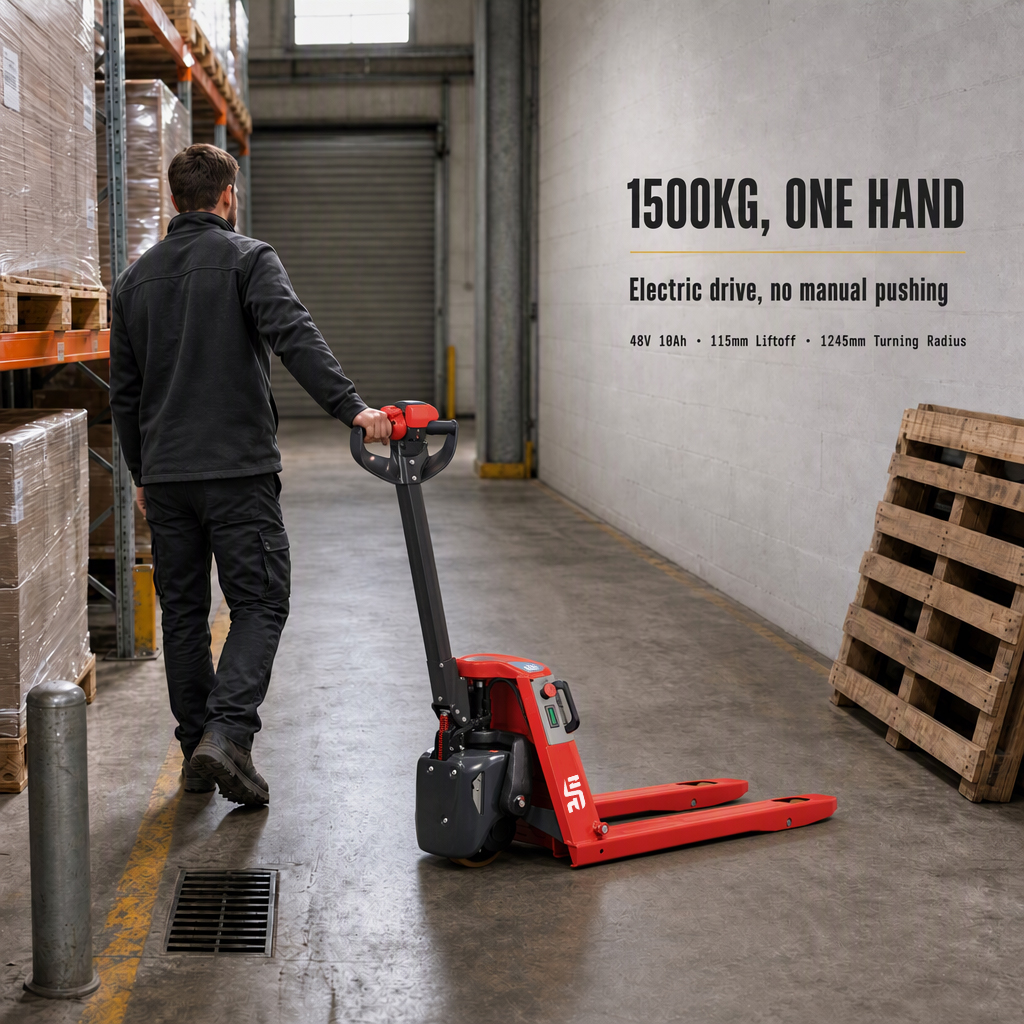
1.5 Ton Electric Pallet Truck with 48V Li-ion Battery, 107kg Ultra-lightweight Pallet Jack for Narrow Aisle Warehouse
Built for distributors targeting lightweight, lithium-powered warehouse equipment with narrow-aisle access. The 48V Li-ion platform and low weight suit multi-stop retail, food and small-format logistics projects.
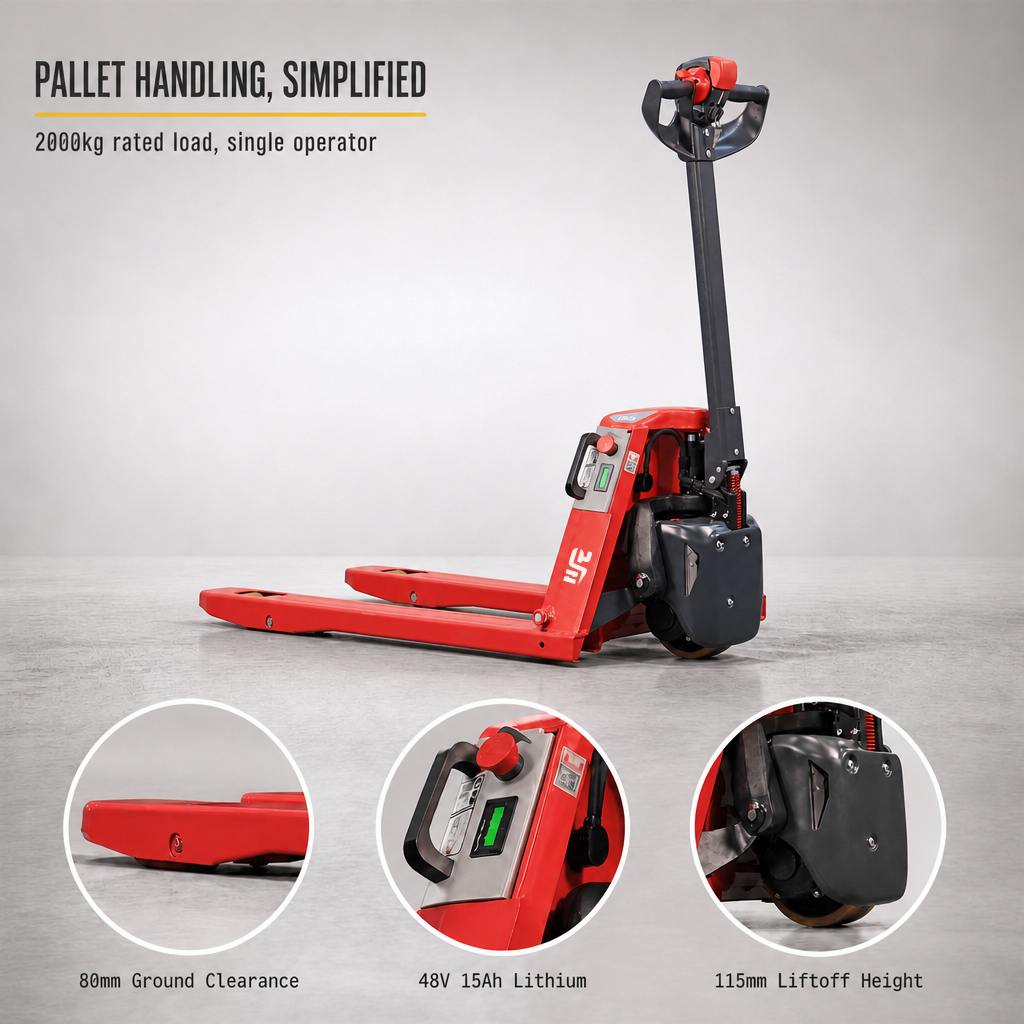
NB20L01LD 2000kg Electric Pallet Truck Lithium Battery 4.8km/h Speed 1245mm Turning Radius Jack
A specification-led option for buyers who need to document turning radius, travel speed and lithium power in a tender or dealer catalogue. The 1,245 mm turning radius is relevant to space-constrained warehouses and loading areas.
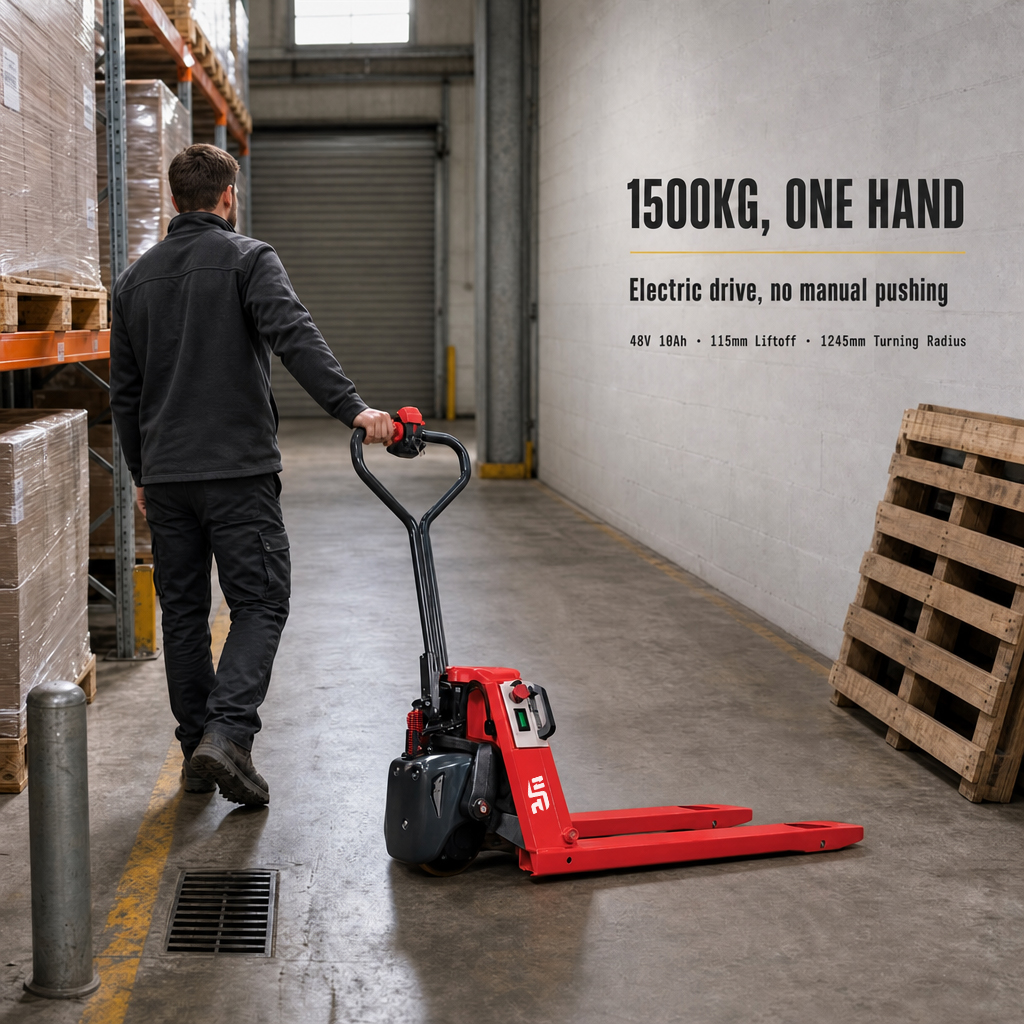
Electric Pallet Truck for Distribution Center Workshop Supermarket Pallet Handling 1500kg Lithium Battery Walkie Jack
A versatile walkie pallet truck for wholesalers serving supermarkets, workshops and light distribution centers. It suits buyers who need a clear balance between 1,500 kg capacity, lithium convenience and operator-friendly pallet handling.
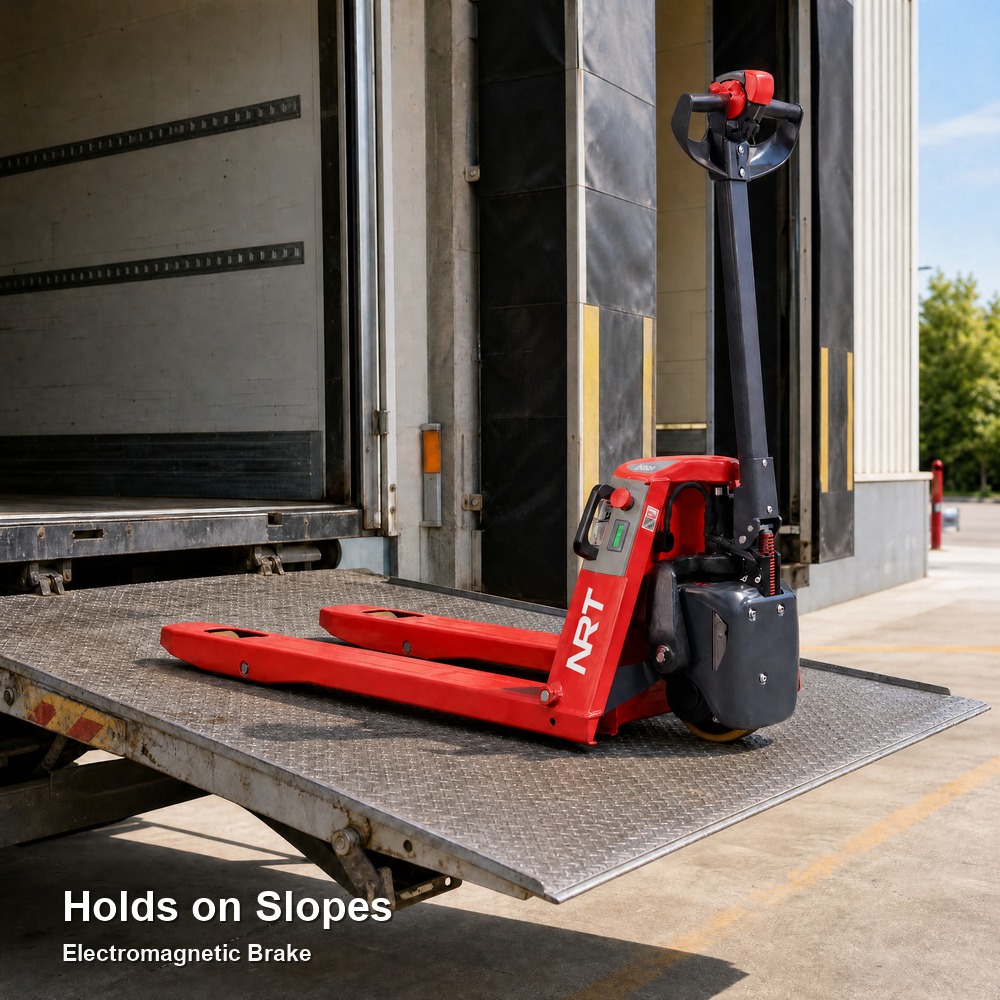
Electric Pallet Jack 1500kg 300mm Slim Body Walkie Pallet Truck for Elevator Freight Box Narrow Aisle Handling
Recommended for elevators, freight boxes and extremely tight aisles where body width and maneuvering space are decisive. The 300 mm slim-body design addresses a real procurement bottleneck that generic catalogue listings often overlook.
Tell us your target market, load requirements and annual volume. We will recommend the right OEM configuration.
Supplier Strength That Supports Wholesale and OEM Growth
For distributors, the supplier behind the product matters as much as the model number. Our partner manufacturing ecosystem combines scale, engineering depth and third-party verification.
Production campus supporting container orders and recurring dealer stock.
Production, assembly, quality control and export support teams.
Engineering specialists focused on electric drive, structure and application fit.
Western Europe, North America, South America, Eastern Europe and Oceania.
Why Industrial Forklift Procurement Is Moving from Catalogue Buying to OEM Engineering
Industrial forklift procurement is no longer a simple unit-price comparison. Wholesalers, rental companies and fleet operators now evaluate the total operating envelope: load center, duty cycle, battery chemistry, charging window, aisle width, floor condition, local safety expectations, spare-parts commonality, documentation and resale potential. For a custom OEM industrial forklift supplier, this changes the commercial conversation from “which model is available?” to “which configuration reduces handling cost per pallet over the next five years?”
Across export projects for Western Europe, North America, South America, Eastern Europe and Oceania, the strongest buyers ask for three forms of information gain: validated specifications, transparent customization boundaries and documentation that can survive an audit. They want to understand why a 1.5-ton ultra-light pallet truck may outperform a heavier unit in a freight elevator, why a 2-ton stand-on stacker can be more productive than a counterbalance forklift in a narrow aisle, and how lithium-ion opportunity charging affects multi-shift planning.
The Real Benchmark Is Cost per Pallet Moved
A low purchase price can lose to a higher-priced configuration when energy, maintenance, downtime, spare parts and operator training are included. In a white-paper procurement model, the buyer should normalize quotes by payload at the actual load center, battery capacity, charger inclusion, warranty terms, packaging, documentation, Incoterms and after-sales service scope. This is where a supplier with genuine engineering support creates measurable value for wholesalers: it helps the buyer avoid under-specified equipment that appears cheap at quotation stage but creates service friction after delivery.
Customization Must Be Modular, Not Improvised
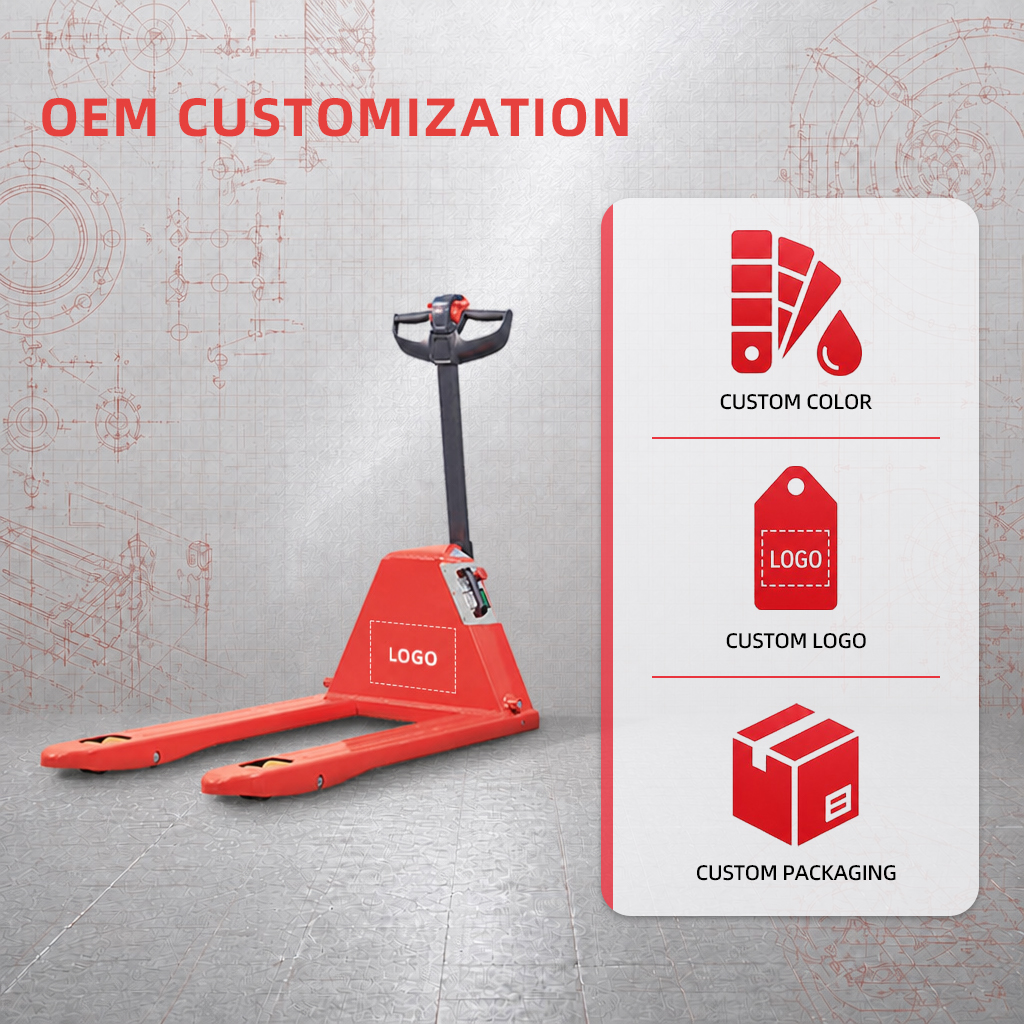
The most reliable OEM programs are built on modular platforms. Mast height, fork length, battery type, color, logo, labels, manual language, packaging and attachment configuration can be customized around a proven base platform. This approach protects product quality while allowing distributors to differentiate their brand. For wholesalers, the objective is not maximum uniqueness — it is profitable differentiation with predictable serviceability.
This is also why user intent mining matters in B2B equipment marketing. A buyer searching for “custom OEM industrial forklift supplier & wholesalers” is not only looking for a product photo. They are evaluating whether the supplier can discuss certification support, mixed-container planning, private-label packaging, spare-parts strategy and long-term configuration control.
Executive Procurement Summary
- Compare total cost of ownership, not just unit price.
- Confirm capacity at the real load center and lift height.
- Lock battery and charging strategy before quotation approval.
- Verify third-party assessment and documentation scope.
- Ask how customization affects spare parts and lead time.
- Plan a mixed fleet around common platforms where possible.
Recommended Configurations by Warehouse and Distribution Scenario
Product recommendations only become useful when they are matched to the operating environment. These scenarios help wholesalers and fleet buyers translate daily workflows into equipment choices.
Dock-to-Stock Transfer
Use a 1.5–2.0 ton electric pallet truck with lithium power for fast horizontal movement, short charging windows and low maintenance. This is often the highest-utilization asset in a distribution center.
Medium-Height Racking
A 2,000 kg electric stacker with 3,410 mm lift suits pallet stacking where racking height is moderate and aisle space is limited. It reduces manual lifting and supports repeatable pallet positioning.
Narrow Aisle Loading Dock
The stand-on electric stacker is relevant where operators need longer travel distance and narrow-aisle access. It can improve throughput compared with walk-behind handling in dock and building-material environments.
Supermarket and Workshop
A 1,500 kg lithium walkie pallet truck supports frequent, short-distance pallet handling in retail backrooms and workshops where simple operation and rapid charging are more important than high lift.
Elevator and Freight Box
The 1,500 kg slim-body electric pallet jack with 300 mm body width is designed for constrained spaces. Buyers should verify elevator floor loading, entry width and turning clearance before confirming the order.
Private-Label Dealer Program
For OEM wholesalers, combine proven pallet trucks and stackers with customized color, logo, labels, manual language and packaging. Modular customization protects brand differentiation without creating uncontrolled spare-parts complexity.
What Wholesalers and Fleet Buyers Will Prioritize Next
Procurement teams are becoming more analytical. The next buying cycle will reward suppliers who can provide specification transparency, customization discipline and cost evidence.
TCO-Led Sourcing
Buyers are adding energy, maintenance, downtime, parts and residual value to procurement scorecards. A higher-purchase-price lithium configuration can outperform a lower-price unit when cost per pallet moved is the true metric.
Lithium-Ion as the Baseline
For many warehouse and distribution projects, 48V lithium pallet trucks and stackers are becoming the default because opportunity charging reduces battery-room dependency and supports flexible shift patterns.
Private-Label OEM Programs
Wholesalers increasingly want model names, colors, decals, manuals and packaging that support local dealer networks. A generic catalogue product is harder to defend in competitive markets.
Safety and Documentation Evidence
Procurement teams need clear operating instructions, control behavior, braking information and service access. Suppliers that treat documentation as a core deliverable reduce buyer risk.
Mixed Fleets with Shared Components
Instead of purchasing many unique models, dealers are planning fleets around shared platforms and parts. This simplifies inventory, technician training and after-sales support.
Supply Resilience and Export Flexibility
Flexible Incoterms, mixed-container planning and clear export documentation help wholesalers maintain stock during freight volatility. Cost remains important, but delivery certainty is often decisive.
How Industrial Forklifts and Warehouse Trucks Are Evolving
Development is moving toward greater energy flexibility, data readiness, operator safety and modular customization. These shifts benefit wholesalers that need future-proof platforms.
Higher Energy Density and Fast Charging
Lithium battery systems are becoming more compact and easier to integrate into multi-shift operations. Charging strategy is now a front-end design decision rather than an afterthought.
AGV-Ready Architecture
Warehouse trucks are increasingly designed with automation interfaces and predictable control behavior in mind. Buyers planning Logistics 4.0 upgrades should ask whether the platform can support future automation.
Smart Safety and Telematics Readiness
Fleet operators want better visibility into utilization, battery status and service needs. Even when telematics is not installed, data-ready architecture helps protect the asset's long-term value.
Ergonomics for Labor Retention
Controls, visibility and operator fatigue influence productivity and safety. Human-centered design is becoming a purchasing consideration, especially in warehouses facing labor shortages.
Modular Customization
Mast height, fork dimensions, battery type, branding and attachments can be configured around a stable base. This helps OEM buyers differentiate products without destabilizing serviceability.
Serviceability and Parts Commonality
Dealers care about access to components, maintenance simplicity and consistent documentation. Products that are easy to service have a stronger lifetime value in rental and wholesale channels.

A Verified OEM Partner for Industrial Forklift Wholesalers
Xiamen Pexal Technology Co., Ltd. is the sales, service and technical support base for Pexal material handling equipment in Xiamen, Fujian. Founded in 2024, we work with a 220,000 m² partner manufacturing campus employing more than 1,200 people, including over 100 engineers dedicated to electric warehouse equipment. Our mission is practical: help buyers move from manual handling to electric handling, and from diesel dependence to battery power, while preparing for intelligent and digital logistics.
We supply a full range covering electric forklifts, diesel forklifts, electric pallet trucks, electric pallet stackers, reach trucks, order pickers and automated guided forklifts. For OEM and wholesale programs, we support sample-based customization, full customization and ODM services, including mast height, fork length, battery type, color, logo and attachment configuration.
- Full forklift and warehouse truck range
- Sample-based and full customization
- ODM and private-label support
- Logistics solution design and consulting
- SGS onsite-assessed supplier
- Export support for five main regions
Our company has passed an onsite check and supplier assessment by SGS Group. Verified video and assessment records are available for buyers who require additional due diligence before dealer onboarding.
How to Evaluate a Custom OEM Industrial Forklift Supplier
Use this checklist to compare quotations consistently. It is designed for procurement managers, importers and dealer principals who need defensible supplier selection.
Verify the Operating Envelope
Confirm rated capacity at the actual load center, maximum lift height, closed mast height, aisle width, gradeability and floor condition. A truck that fits the specification sheet may still fail the real workflow.
Validate the Energy Strategy
Check battery chemistry, charger compatibility, charging window, opportunity charging policy and spare battery plan. The battery decision should follow the duty cycle, not precede it.
Confirm the Documentation Package
Ask for manuals, labels, spare-parts catalogue, packaging details and market-specific documentation requirements. Reliable documentation reduces dealer after-sales friction.
Audit Total Cost and Terms
Compare units, freight, duties, spare parts, training, warranty scope, service communication and Incoterms. The lowest quotation is not necessarily the lowest total cost of ownership.
Common Questions from Forklift Wholesalers and OEM Buyers
These are the questions we most often receive from importers, rental companies, distributors and private-label buyers evaluating Chinese industrial forklift suppliers.
What is a custom OEM industrial forklift supplier?
A custom OEM industrial forklift supplier helps buyers adapt a proven equipment platform to their market, brand and application. This can include mast height, fork length, battery type, color, logo, labels, manual language, packaging and selected attachments, while keeping the core platform stable for quality and serviceability.
Can you customize models for my brand and target market?
Yes. Xiamen Pexal Technology Co., Ltd. offers sample-based customization, full customization and ODM services. Branding, voltage requirements, battery configuration, packaging and documentation scope can be discussed during quotation so the final configuration is clearly defined before production.
How do I choose among the eight recommended products?
Start with the working environment. For medium-height racking, review the 2,000 kg electric stacker with 3,410 mm lift. For very tight elevators or freight boxes, review the 1,500 kg slim-body electric pallet jack. For logistics centers, compare the efficient 2-ton electric pallet jack and the NB20L01LD 2000 kg lithium model. For ultra-light delivery, the 107 kg lithium pallet jack is relevant, but always confirm floor loading and duty cycle.
What specifications are required for an accurate quotation?
Provide maximum pallet weight, load center, maximum lift height, closed mast height, aisle width, floor or ground condition, required travel speed, duty cycle, battery preference, charging window, destination market, voltage, branding requirements, annual quantity and preferred Incoterm. For custom OEM projects, also share packaging, label and manual-language requirements.
Is lithium-ion or lead-acid better for multi-shift operations?
Lithium-ion is often attractive for opportunity charging and reduced battery-room dependency, but the correct choice depends on duty cycle, charging infrastructure, budget and maintenance capability. Lead-acid can still be suitable for certain planned charging routines. Buyers should verify charger compatibility and the full energy plan rather than selecting a battery type from a catalogue title.
Do you support wholesalers and distributors with mixed configurations?
We can discuss mixed configurations across electric pallet trucks, stackers and other warehouse equipment. The final container plan depends on model mix, destination and packaging requirements. For dealer programs, it is advisable to standardize key components wherever possible to simplify spare-parts planning.
Which Incoterms, payment methods and currencies do you accept?
Common delivery terms include FOB, CFR, CIF, EXW, FCA, CPT, CIP, DDP and other standard terms. Payment can be discussed around T/T, L/C, D/P, D/A, Western Union, PayPal, credit card and escrow. Accepted currencies include USD, EUR, GBP, JPY, CAD, AUD, HKD, CHF and CNY. Final terms are confirmed in the quotation and sales contract.
Is Xiamen Pexal Technology third-party verified?
Yes. The company has passed an onsite check and supplier assessment conducted by SGS Group. Buyers can request verification information and review the company video as part of supplier due diligence before placing an OEM or wholesale order.
How should I compare quotations from different forklift suppliers?
Normalize every quote by rated capacity at the real load center, lift height, battery capacity, charger inclusion, warranty terms, spare-parts availability, packaging, manuals, Incoterms and after-sales scope. Also compare the supplier's ability to explain customization boundaries. A clear, well-documented offer is usually safer than a low-price quote with undefined specifications.
Request a Custom OEM Forklift Configuration
Share your load, lift height, aisle width, duty cycle, market voltage, branding requirements and estimated annual volume. Our team will respond with model recommendations, customization options and export terms for your market. Email: info@pexalbot.com