8 Battery-Powered Forklift and Warehouse Truck Models for OEM Buyers
The configurations below cover the most common import requests from logistics centers, cold stores, container-loading operations, narrow-aisle warehouses, and building-material yards. Each product link preserves the original catalogue URL for faster technical review. Capacities and features are model-specific; confirm voltage, charger, mast, and destination compliance before ordering.
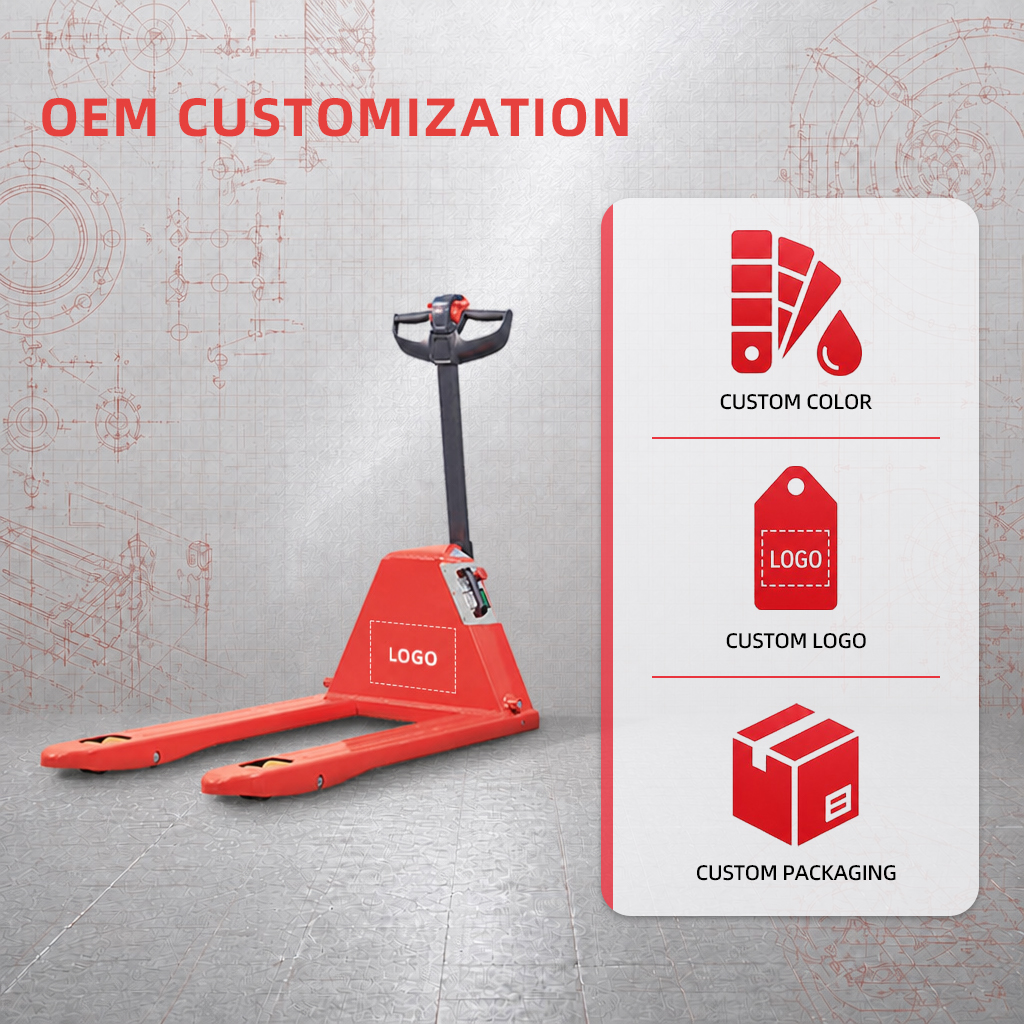
Efficient 2 Ton Electric Pallet Jack 2000kg
A practical 2,000 kg pallet jack for high-throughput dock and logistics-center work. Positioned for horizontal pallet movement where simple operation, low maintenance, and reliable battery power matter more than complex automation.
- 2,000 kg
- Dock & logistics
- OEM-ready
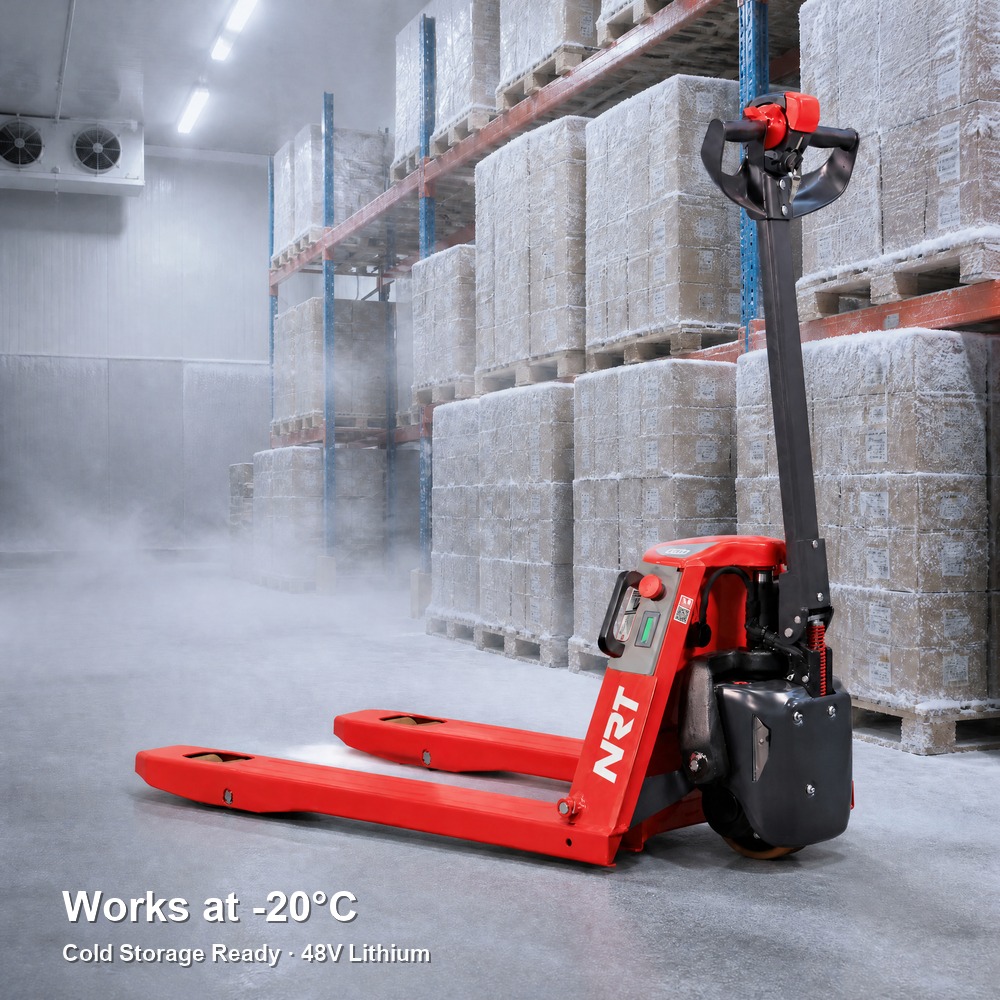
Electric Pallet Jack 2000kg with 48V Lithium Battery
48V lithium pack, fast-swap concept, 300 mm slim body, 9% climbing ability, and -20°C cold-storage operation. A strong candidate for temperature-controlled warehouses that need fast battery exchange and compact maneuvering.
- 48V lithium
- 6s swap
- -20°C
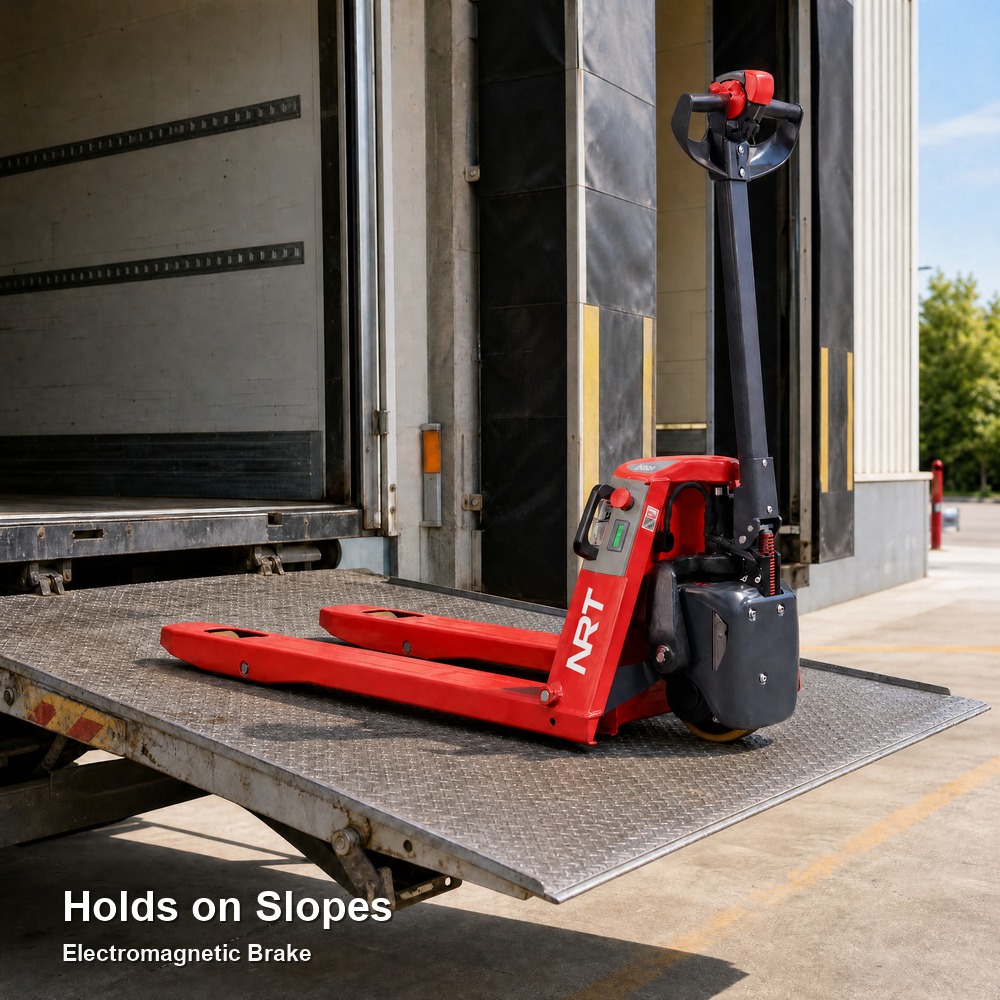
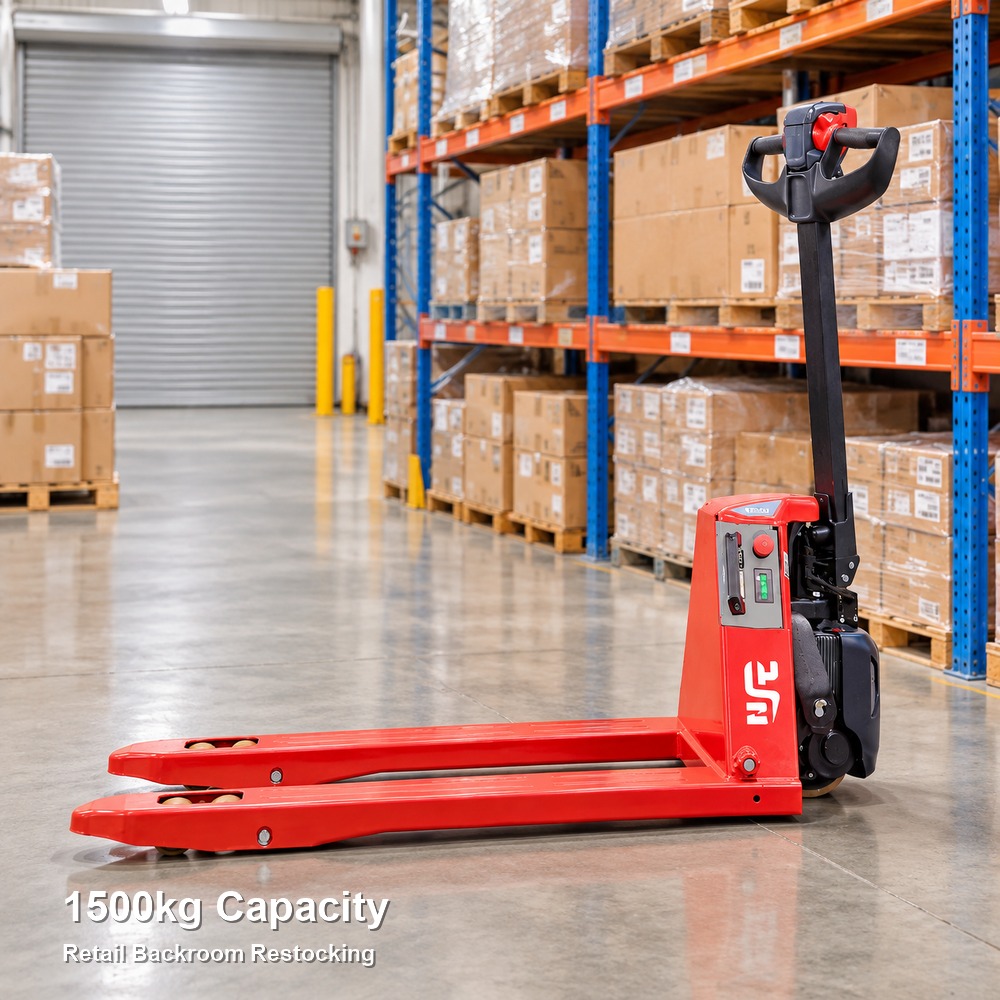
1500kg Slim Body Electric Pallet Truck
A 300 mm slim-body walkie pallet truck for elevator freight boxes, tight aisles, and narrow handling zones. The 1,500 kg class is useful where a 2-ton truck is unnecessary but manual handling creates bottlenecks.
- 1,500 kg
- 300 mm slim
- Narrow aisle
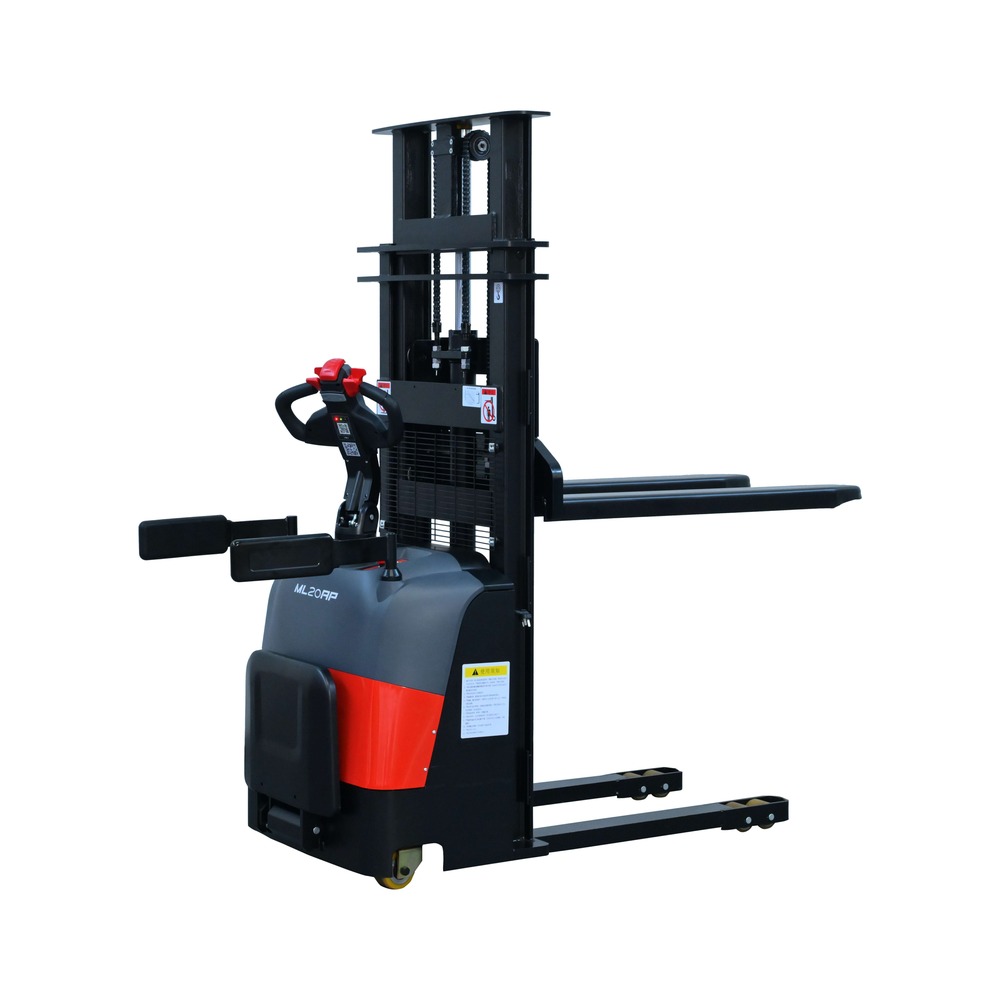
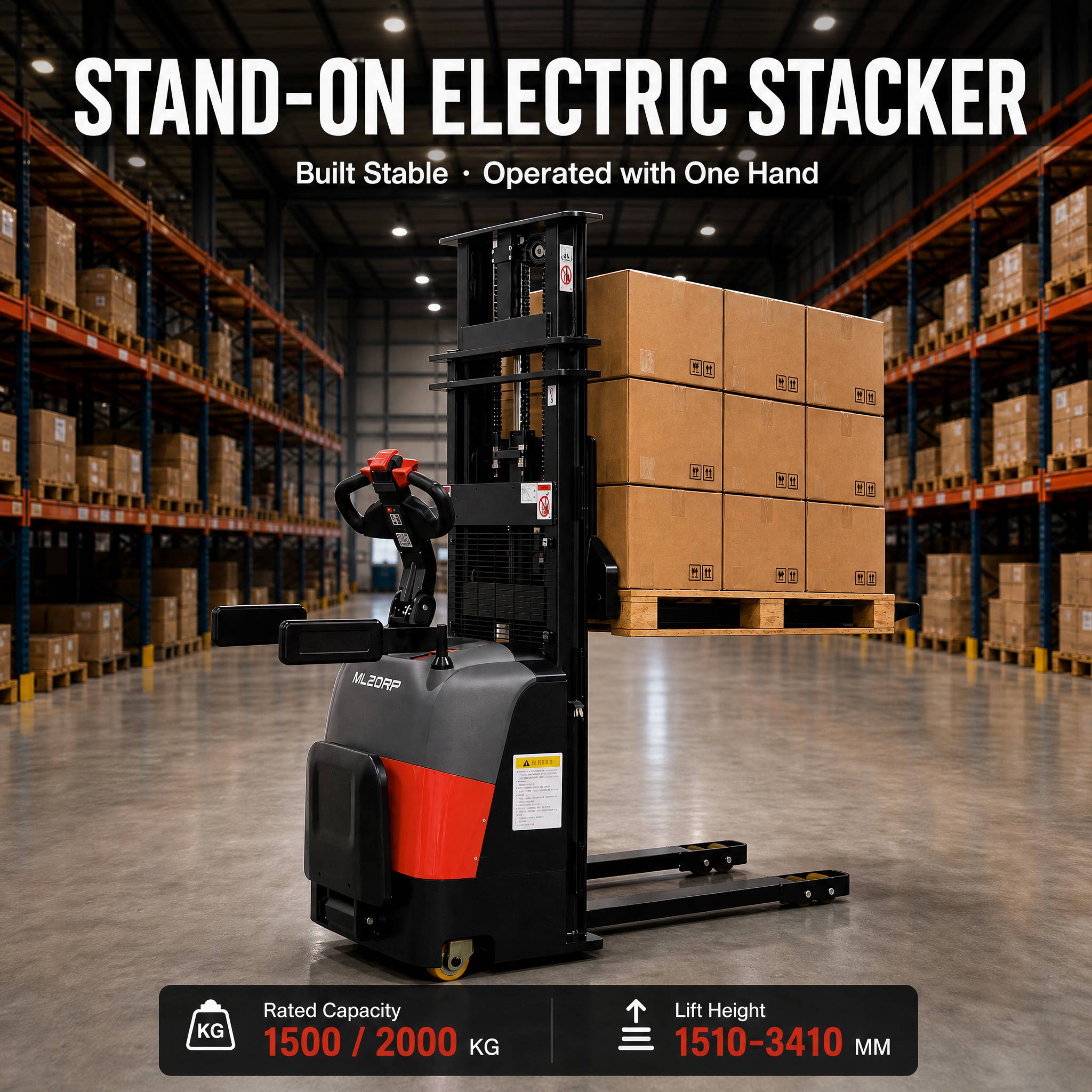
2000kg Stand-on Electric Pallet Stacker
Stand-on stacker with 3.41 m lift height, channel-steel mast, and 1,480 mm turning radius. Designed for warehouses that need higher racking and operator comfort without moving to a full counterbalance forklift.
- 3.41 m lift
- 2,000 kg
- 1,480 mm radius
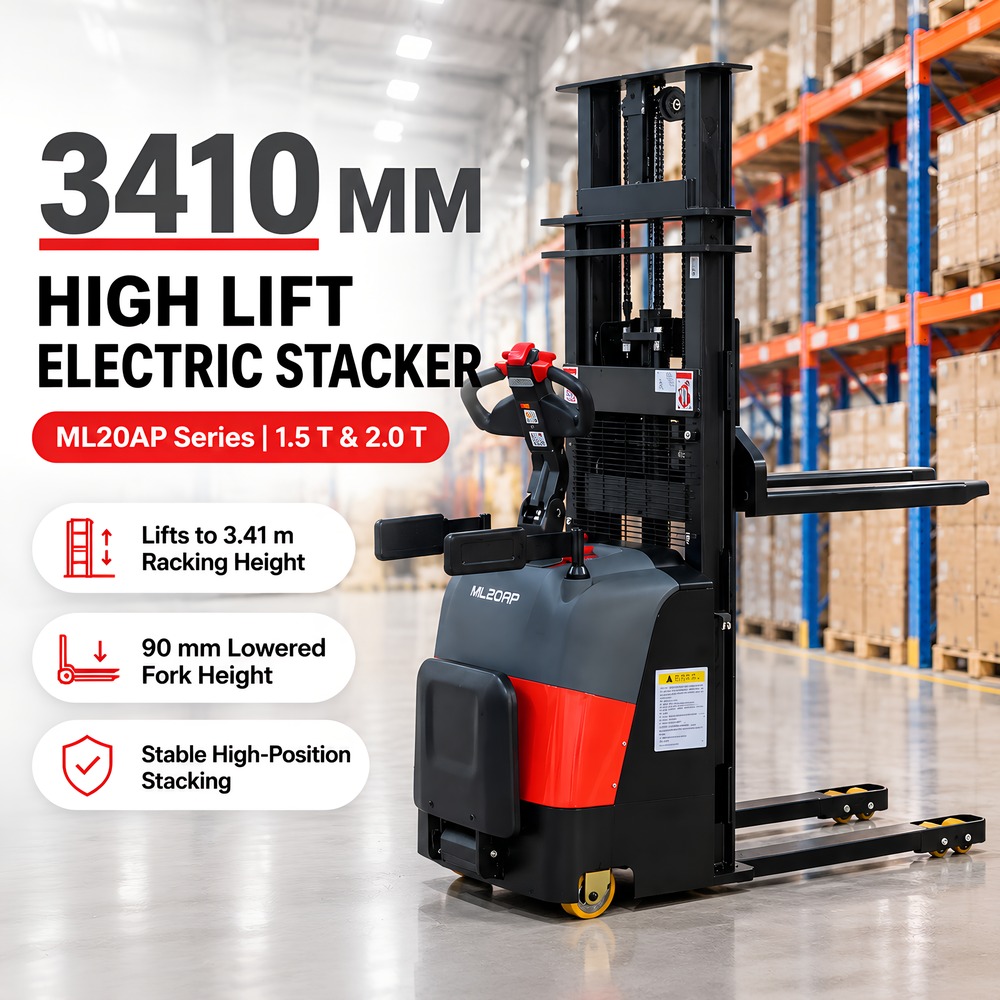
ML20AP Stand-on Electric Stacker Truck 2000kg
A 2,000 kg warehouse stacker for narrow aisles, loading docks, and building-material shops. The stand-on format supports repeated short-to-medium trips and reduces operator fatigue during busy receiving windows.
- 2,000 kg
- Stand-on
- Dock & shop
Cold Storage Electric Pallet Jack -20C Working
A 48V lithium walkie pallet truck for -20°C environments, available in 1,500 kg and 2,000 kg classes. Cold-chain buyers should confirm charge strategy, hydraulic oil, seals, and condensation protection before final selection.
- -20°C
- 48V lithium
- 1.5/2.0 t
Channel Steel Mast Electric Pallet Stacker 2000kg
Channel-steel mast construction, 2,000 kg capacity, and 90 mm lowered fork height for stable high-rack stacking. A good fit for warehouses that need predictable pallet placement and low-fork access at floor level.
- 2,000 kg
- 90 mm fork
- High rack

2000kg Walkie Electric Pallet Jack 685mm Width
A 685 mm narrow-fork walkie pallet truck with lithium battery for container loading and confined trailer work. Narrow fork spacing helps when pallet geometry and container walls leave little room for positioning.
- 2,000 kg
- 685 mm width
- Container
Need a model matched to your pallet, aisle, and charging window? Send the load details, destination port, and branding requirements for a configuration review.
Contact UsOEM Capacity Backed by a Large Manufacturing Partner Campus
Battery-powered forklift supply is a logistics and service commitment as much as a product purchase. Scale, engineering depth, and export experience reduce risk across multi-model orders.
The Procurement Question Has Changed: From “Can It Lift?” to “Can It Repeat?”
Battery-powered forklifts have crossed from early adoption into mainstream procurement. For importers and fleet buyers, the decisive issue is no longer whether a single truck can complete a lift. The real question is whether a supplier can repeat an approved configuration across countries, batches, and service cycles while keeping documentation, spare parts, and training aligned.
Xiamen Pexal Technology Co., Ltd. was founded in Xiamen, Fujian in 2024 as a sales, service, and technical support base for Pexal material handling equipment. The company works with a 220,000 m² partner manufacturing campus employing more than 1,200 people, including over 100 engineers dedicated to electric warehouse equipment. That operating model gives overseas buyers access to sample-based customization, full customization, and ODM support across electric forklifts, pallet trucks, stackers, reach trucks, order pickers, and AGV robotics.
This guide is written for procurement teams comparing custom OEM battery powered forklift suppliers and exporters. It combines product recommendations with procurement trends, development trends, a selection matrix, and a request-for-quotation framework. The objective is not to make every specification look identical. It is to help buyers identify the few variables that determine uptime, safety, and total cost—then verify them before placing a container order.
Confirm before approving a sample
- Rated capacity at the actual load center, not only the nominal model name.
- Battery voltage, capacity, connector type, charger input, and destination plug.
- Lift height, lowered fork height, fork length, and fork width for pallet geometry.
- Aisle width, turning radius, door height, elevator depth, and container access.
- Lift and travel speed, gradeability, braking, and emergency stop performance.
- Colour, logo, labels, manuals, packaging, warranty, and spare-parts list.
Battery Forklift Procurement Trends for 2026–2030
Buyers are shifting from single-unit price comparison to fleet-level evaluation. These six trends are shaping the questions that suppliers must answer during RFQ review and supplier qualification.
Lithium-ion moves from upgrade to baseline
Dealers increasingly specify 48V lithium batteries, fast charging, and swap options because fleet uptime is a stronger purchasing driver than headline price. For OEM orders, define cell quality, BMS protection, charger matching, and warranty terms before approving the first batch.
Cold-chain and harsh-environment specialization
Requests for -20°C cold-store trucks, corrosion-resistant finishes, and condensation protection are rising. Cold storage is not simply a low-temperature option; it changes battery choice, lubrication, seals, and inspection intervals.
Narrow-aisle and e-commerce productivity
Dense urban warehouses are reducing aisle widths. 300 mm slim pallet trucks, 685 mm narrow-fork models, and stand-on stackers enable pallet movement in spaces once considered manual-only.
OEM localization and compliance
Importers want colour, logo, manuals, labels, chargers, and packaging aligned with local expectations. The strongest suppliers provide a clear specification sheet and document package so the dealer can register, sell, and service the fleet consistently.
Total cost of ownership replaces purchase price
Fleet buyers now model energy, maintenance, downtime, spare-parts logistics, and residual value. Battery-powered equipment can reduce indoor emissions and noise, but the business case depends on charging strategy and duty-cycle design.
AGV-ready layouts and data capture
Even buyers not ready for automation are preparing aisles, routes, and charging zones for future AGV or intelligent forklift deployment. A modular fleet layout avoids a costly redesign later.
What Is Changing Inside Modern Battery Forklifts
Product development is moving toward modular energy systems, easier service access, and stronger safety data. These changes directly affect how importers configure and support a fleet.
Modular battery and mast architecture
Subsystems are being designed around common interfaces so capacity, lift height, fork dimensions, and attachments can change with fewer custom parts. For OEM buyers, this shortens lead time and simplifies spare-parts planning.
Swap-friendly energy systems
Fast battery exchange and opportunity charging reduce range anxiety. 48V lithium platforms with rapid-swap concepts are especially relevant for multi-shift cold storage and logistics centers where vehicle downtime is costly.
Safety, telematics, and operator assistance
Speed control, regenerative braking, stability monitoring, and fleet data are moving from premium models to mainstream warehouse trucks. These features protect people and improve utilization across rental and dealer fleets.
Serviceability by design
The best specifications are also maintainable: accessible hydraulic components, clear diagnostic codes, common fasteners, and documented service intervals. A supplier should provide maintenance schedules and spare-parts diagrams, not just a quotation.
Why Xiamen Pexal Technology Co., Ltd. Fits an OEM Export Strategy
Xiamen Pexal Technology Co., Ltd. is a material handling equipment supplier and export partner established in Xiamen, Fujian in 2024. Its mission is practical: help buyers move from manual handling to electric handling, and from diesel to battery power, reducing emissions, noise, and operating cost while building toward intelligent, digital logistics.
For importers, the advantage is a single commercial and technical contact supported by a large partner manufacturing campus. Buyers can review product configuration, SGS assessment records, credit index, trade history, customization capability, and a verified company video before committing to a container order.
- Full forklift and warehouse truck range
- Sample-based, full OEM, and ODM customization
- Lithium, lead-acid, cold-store, and high-rack configurations
- SGS onsite-assessed supplier with verified video
- Delivery terms from EXW to DDP
- Multiple payment methods and currencies
- Main markets across Europe, the Americas, and Oceania
- Technical support and spare-parts planning


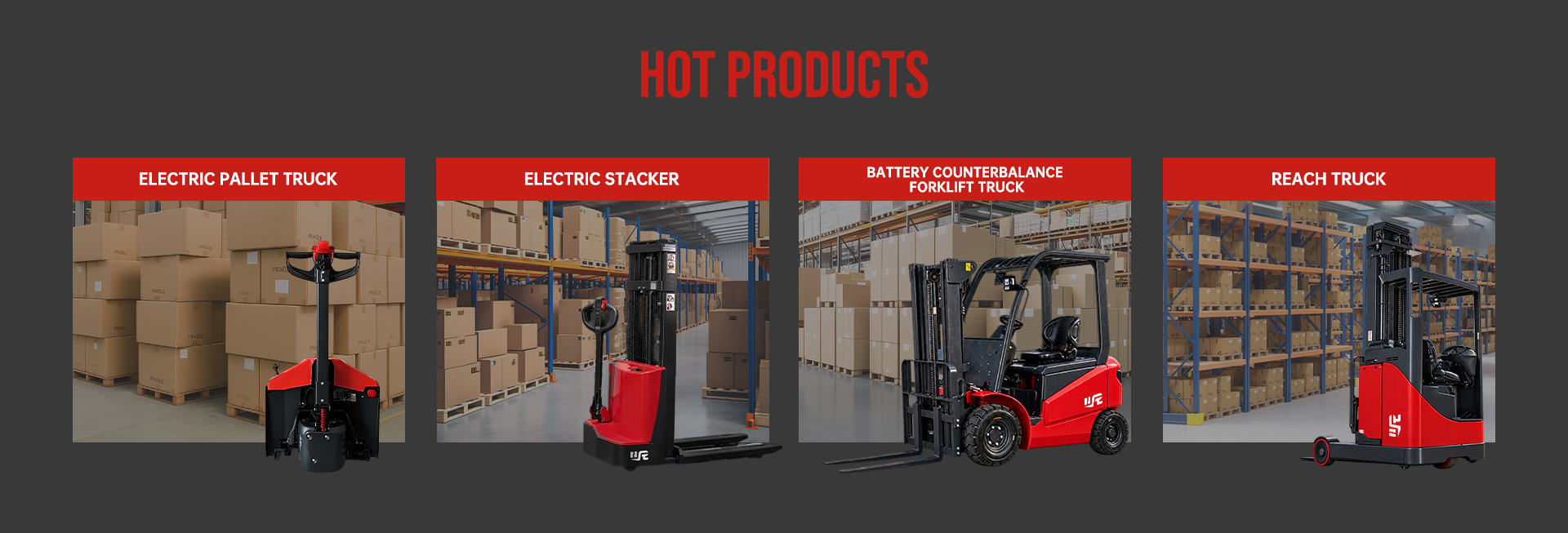
How to Match a Battery-Powered Forklift to the Real Duty Cycle
The most common procurement error is buying for the maximum load while ignoring the average trip, aisle, and charging window. Use this matrix to shortlist the right equipment class before comparing quotations.
| Operational Need | Recommended Equipment | Specification to Verify | Procurement Risk to Control |
|---|---|---|---|
| Logistics center / cross-dock | 2-ton electric pallet jack | Dock plate condition, trip distance, charger location, battery swap plan | Oversizing the fleet and adding capital cost without improving throughput |
| -20°C cold storage | Cold-storage electric pallet jack or stacker | Battery heating, cold-rated hydraulic oil, seals, condensation protection | Reduced range and downtime if the charging plan is not designed for cold |
| Narrow aisle or elevator freight box | 1,500 kg slim-body or 685 mm narrow-fork pallet truck | Aisle width, door width, turning radius, fork width, floor transitions | Body damage and slow cycles when the chassis is too wide |
| High-rack stacking | 2,000 kg stand-on stacker with channel-steel mast | Lift height, lowered fork height, residual capacity at height | Unsafe lifting when nominal capacity is used at the wrong load center |
| Building material / loading dock | ML20AP stand-on electric stacker | Dock ramp grade, floor joints, load stability, operator comfort | Tire wear and operator fatigue in repeated short-cycle work |
| Future automation readiness | AGV-ready or intelligent forklift platform | Route width, WMS integration, safety sensors, charging zone layout | An isolated pilot that cannot scale into the main warehouse flow |
What to Send in an RFQ for Custom OEM Battery Forklifts
A useful RFQ should let the supplier calculate residual capacity, cycle time, charging window, and export packaging without guessing. Short messages such as “send price for 2-ton electric forklift” usually produce quotations that cannot be compared accurately.
For faster review, provide the equipment class, rated capacity at load center, maximum lift and lowered fork height, fork length and width, pallet type, aisle and door dimensions, duty cycle, battery preference, destination voltage, labelling requirements, and spare-parts expectations. If the equipment will work in a cold store, state the exact temperature and the number of shifts per day.
Buyers should also ask for the maintenance schedule, charger specification, warranty statement, packaging method, and recommended spare-parts kit. These details influence landed cost and after-sales performance as much as the machine price itself.
Information that changes the quote
- Equipment class and rated capacity at load center
- Maximum lift height and lowered fork height
- Fork length, fork width, and pallet type
- Aisle width, turning radius, door and elevator dimensions
- Hours per shift, lifts per hour, and shifts per day
- Battery voltage, capacity, swap or opportunity-charging plan
- Destination voltage, plug type, labels, manuals, and certification
- Packaging, spare parts, warranty, and after-sales route
Common Questions from Battery Forklift Importers
These answers reflect the questions most frequently raised during supplier qualification, product configuration, and export planning.
Are you a manufacturer, trading company, or exporter?
Xiamen Pexal Technology Co., Ltd. is the sales, service, and technical support base in Xiamen, working with a 220,000 m² partner manufacturing campus. We operate as an exporter and OEM/ODM partner, giving buyers factory-level configuration support with a single commercial contact for documentation, packaging, and shipment.
What can be customized on an OEM battery-powered forklift?
Typical variables include rated capacity, battery voltage and chemistry, charger type, mast height, fork length and width, attachments, speed settings, colour, logo, labels, manuals, packaging, and destination-specific plugs. Final scope depends on the model and the compliance requirements of the destination market.
Should I choose lithium-ion or lead-acid battery power?
Lithium is often preferred for opportunity charging, lower maintenance, and swap-based multi-shift work. Lead-acid may remain cost-effective in stable single-shift operations with a well-managed charging room. Compare total cost, charging window, operating temperature, and local service capability before deciding.
Can you supply -20°C cold-storage models?
Yes. The range includes cold-storage electric pallet trucks rated for -20°C with 48V lithium batteries, including 1,500 kg and 2,000 kg options. Buyers should confirm battery heating, hydraulic oil, seals, condensation protection, and the charging plan before placing an order.
How is quality controlled before shipment?
Pre-shipment checks should cover lifting, travel, braking, electrical functions, battery and charger matching, leak inspection, label verification, and packaging. Pexal also provides an SGS onsite assessment and a verified company video for supplier due diligence.
What Incoterms, payments, and currencies are accepted?
Common delivery terms include FOB, CFR, CIF, EXW, FCA, CPT, CIP, and DDP. Payment options include T/T, L/C, D/P, D/A, Western Union, PayPal, credit card, and escrow. Accepted currencies include USD, EUR, GBP, JPY, CAD, AUD, HKD, CHF, and CNY.
Which export markets do you serve?
The main export markets are Western Europe, North America, South America, Eastern Europe, and Oceania. We support dealers, rental companies, and end users with configuration review, export packaging, and documentation planning.
How do I start a custom OEM inquiry?
Send the load weight, maximum lift height, aisle width, duty cycle, battery preference, destination port, and branding requirements. The application team will recommend a base model and identify which variables need custom confirmation before quotation.
Build a Repeatable Battery Forklift Program with a Verified OEM Partner
Share your specification, destination, annual volume, and branding requirements. Our team will review the correct model platform, battery strategy, export packaging, and spare-parts plan for your market.