China Wholesale Ride On Pallet Stacker Manufacturers & Supplier
A 2026 procurement whitepaper for importers, distributors, rental fleets and warehouse operators comparing ride-on pallet stackers, stand-on stackers and powered pallet trucks from China.
8 Wholesale Warehouse Trucks for Ride-On and Pallet Stacking Applications
These eight models are a practical starting point for wholesale buyers building a mixed fleet of electric pallet trucks and electric pallet stackers. Product URLs and images are retained from the live catalog; final specification should be confirmed against load centre, lift height, aisle width, floor condition, ramp use and charging strategy.
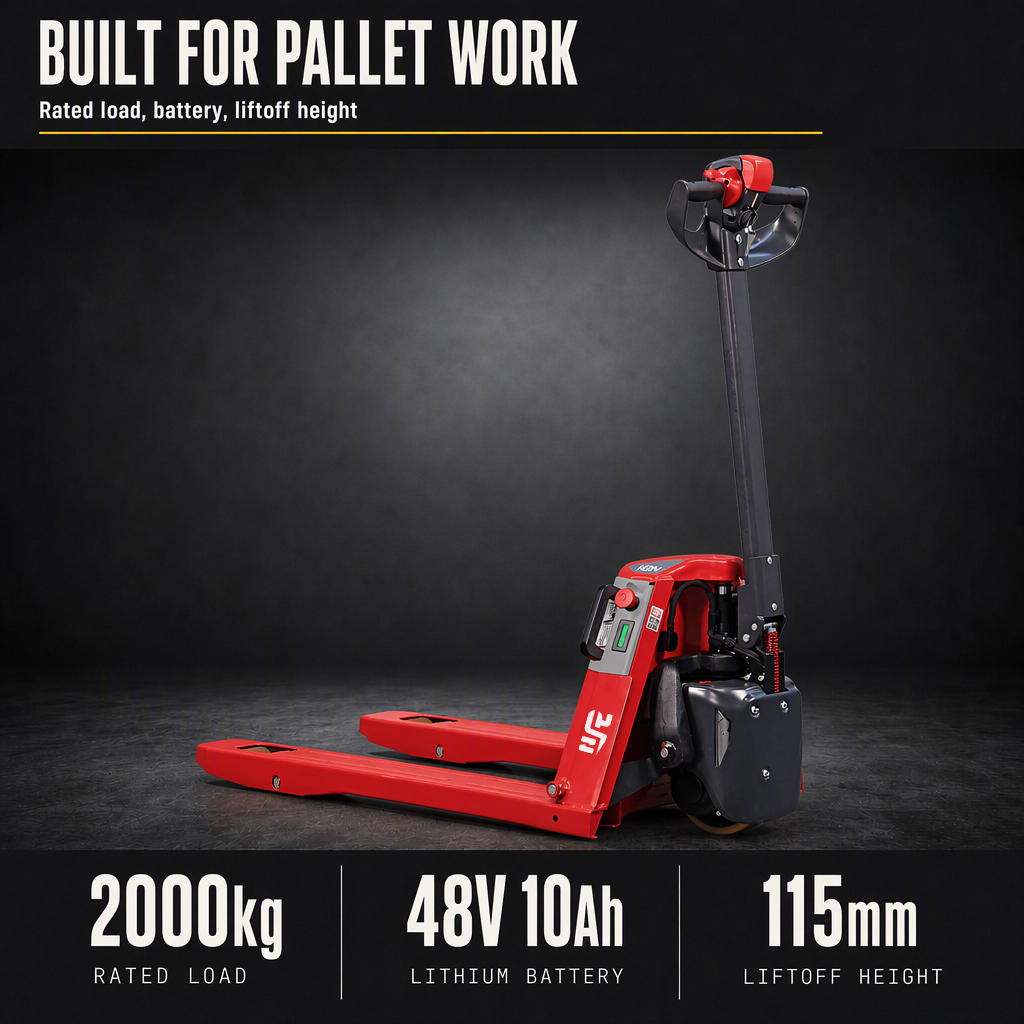
Professional Electric Pallet Jack 2 Ton 2000kg Capacity Heavy Duty Power Pallet Truck with Easy Control System for Warehouse
A high-utilization horizontal transport truck for dock-to-stock flows, trailer unloading and fast pallet movement. The easy-control system helps reduce operator fatigue in warehouses, 3PL hubs and distribution centres.

2026 New Alternative Convertidor De Palet Jack a Electrico Ultra-Lightweight 107kg Electric Pallet Jack with Lithium Power
An ultra-light 107 kg lithium-electric pallet jack for retail replenishment, e-commerce backrooms and route delivery where vehicle weight, maneuverability and flexible charging matter.
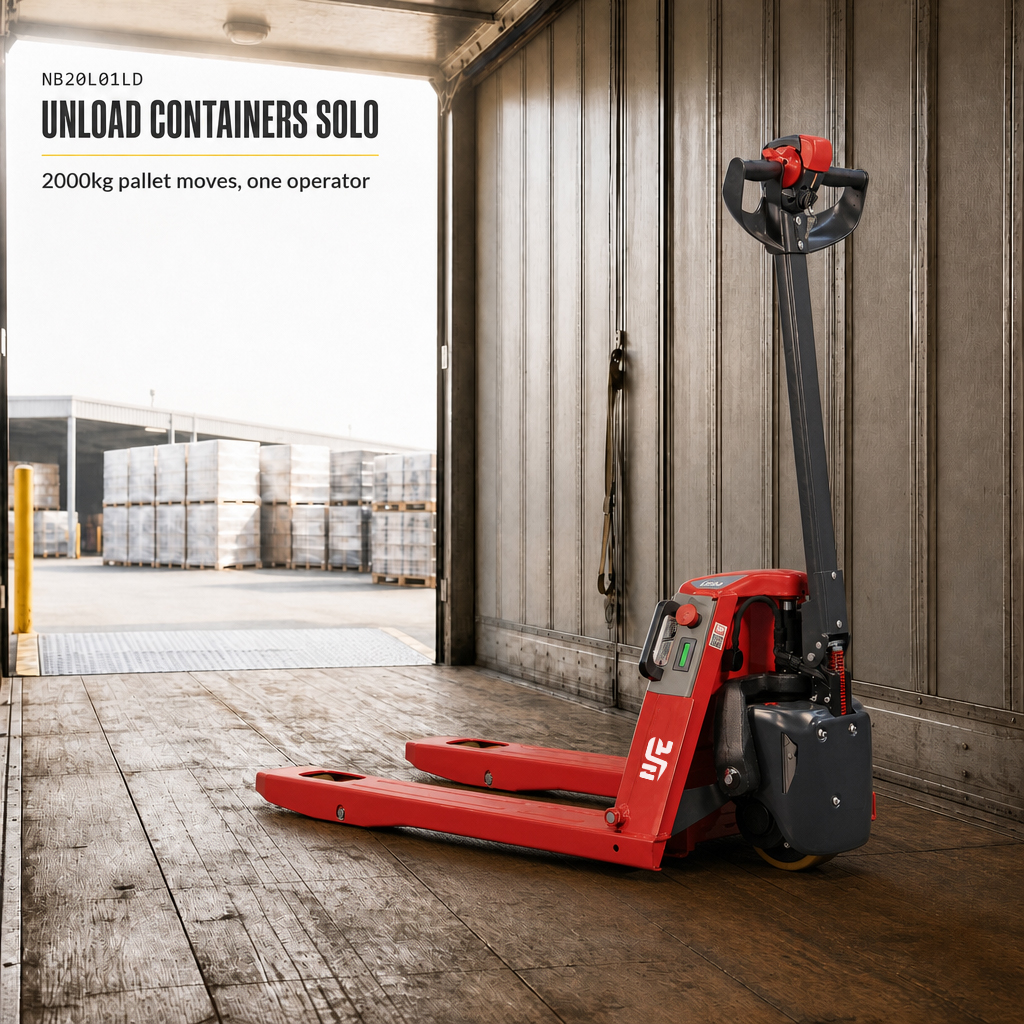
NRT 2 Ton Electric Pallet Jack Lithium-Ion 48V 10Ah 1150mm Forks Polyurethane Wheels Warehouse Handling
A 2-ton lithium-ion pallet jack with 48 V 10 Ah battery, 1,150 mm forks and polyurethane wheels — a useful balance of runtime, floor protection and handling speed for wholesale warehouse work.
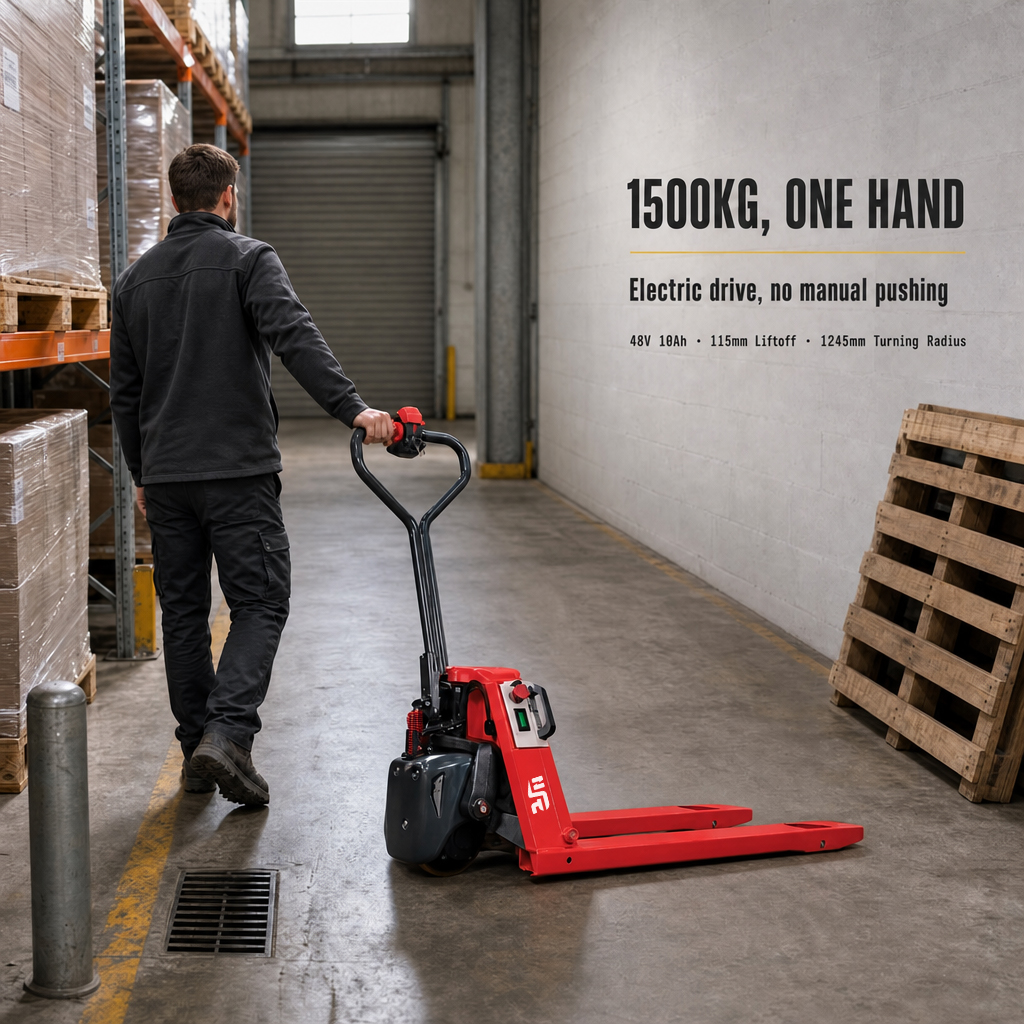
80mm Ground Clearance Electric Pallet Jack 9% Climbing Grade 1450mm Vehicle Length Lithium Pallet Truck for Ramp Use
Purpose-built for ramps and dock transitions: 80 mm ground clearance, 9% climbing grade and a 1,450 mm vehicle length for tighter maneuvering on sloped warehouse routes.
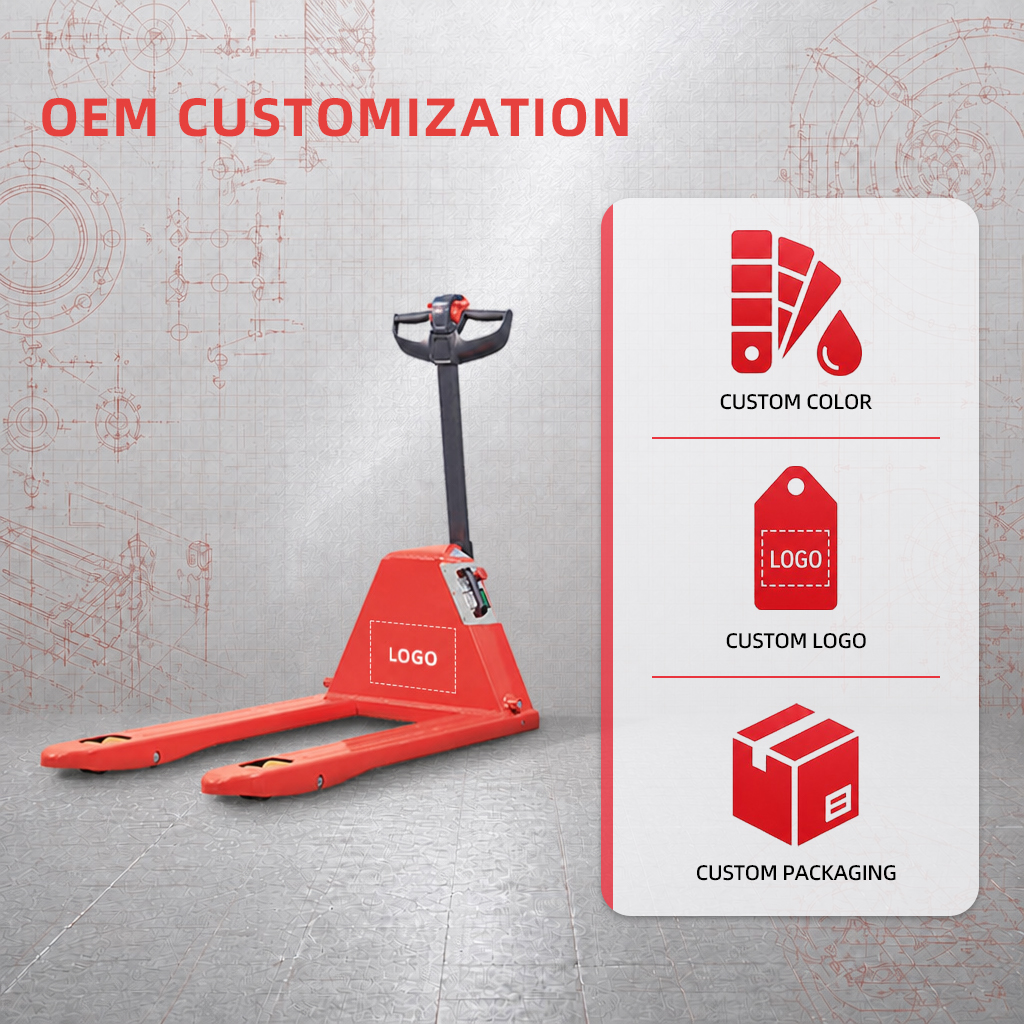
Efficient 2 Ton Electric Pallet Jack 2000kg Capacity: Best Material Handling Solution for Logistics Centers 2026 Hot Sale
A high-frequency 2,000 kg electric pallet jack for logistics centres, cross-docking and distribution operations that need fast horizontal movement and straightforward service access.
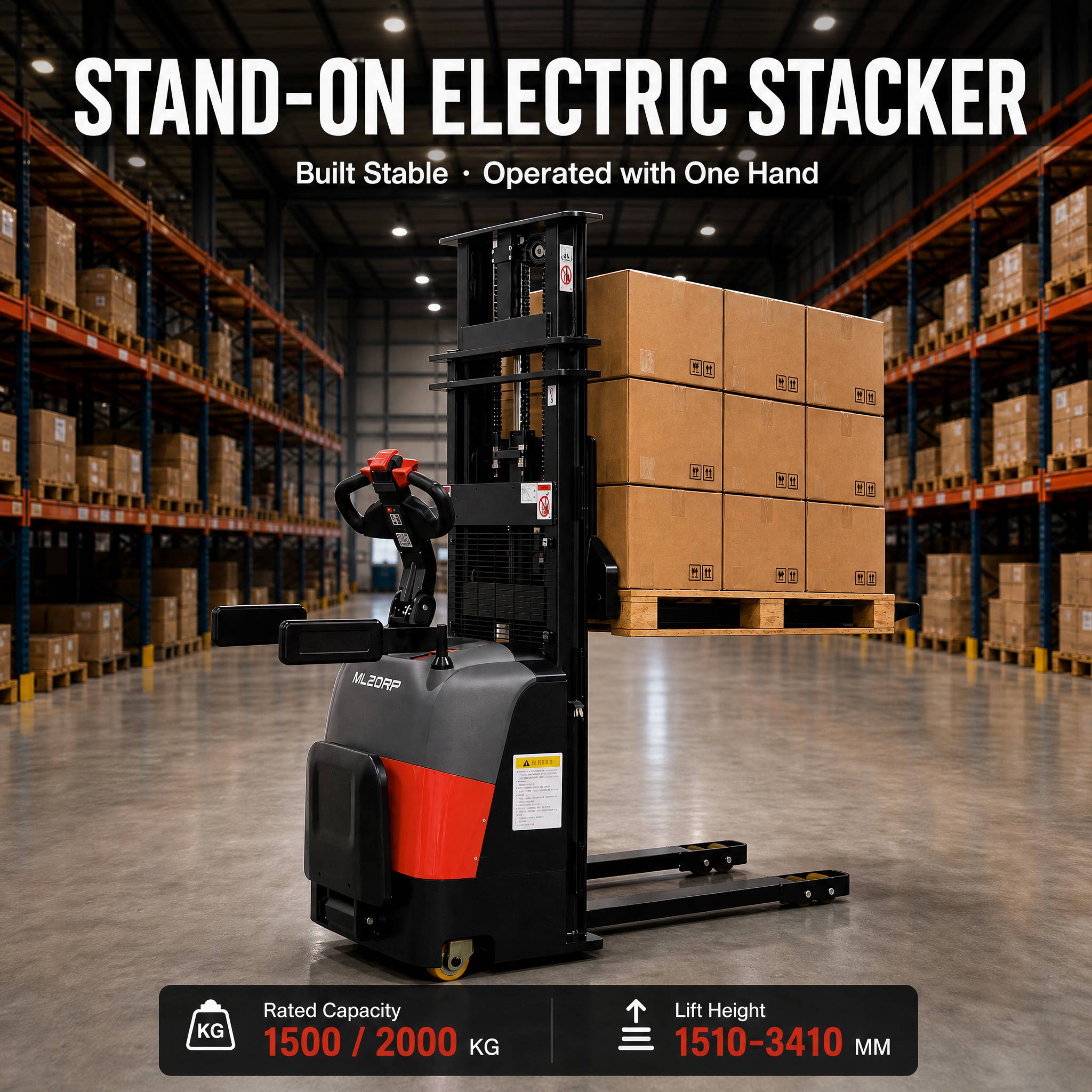
Channel Steel Mast Electric Pallet Stacker 2000kg 90mm Lowered Fork Height Stable High Rack Stacking
Channel-steel mast construction and a 90 mm lowered fork height support stable high-rack stacking. A strong candidate for wholesale distributors handling dense pallet flows and repeated put-away cycles.
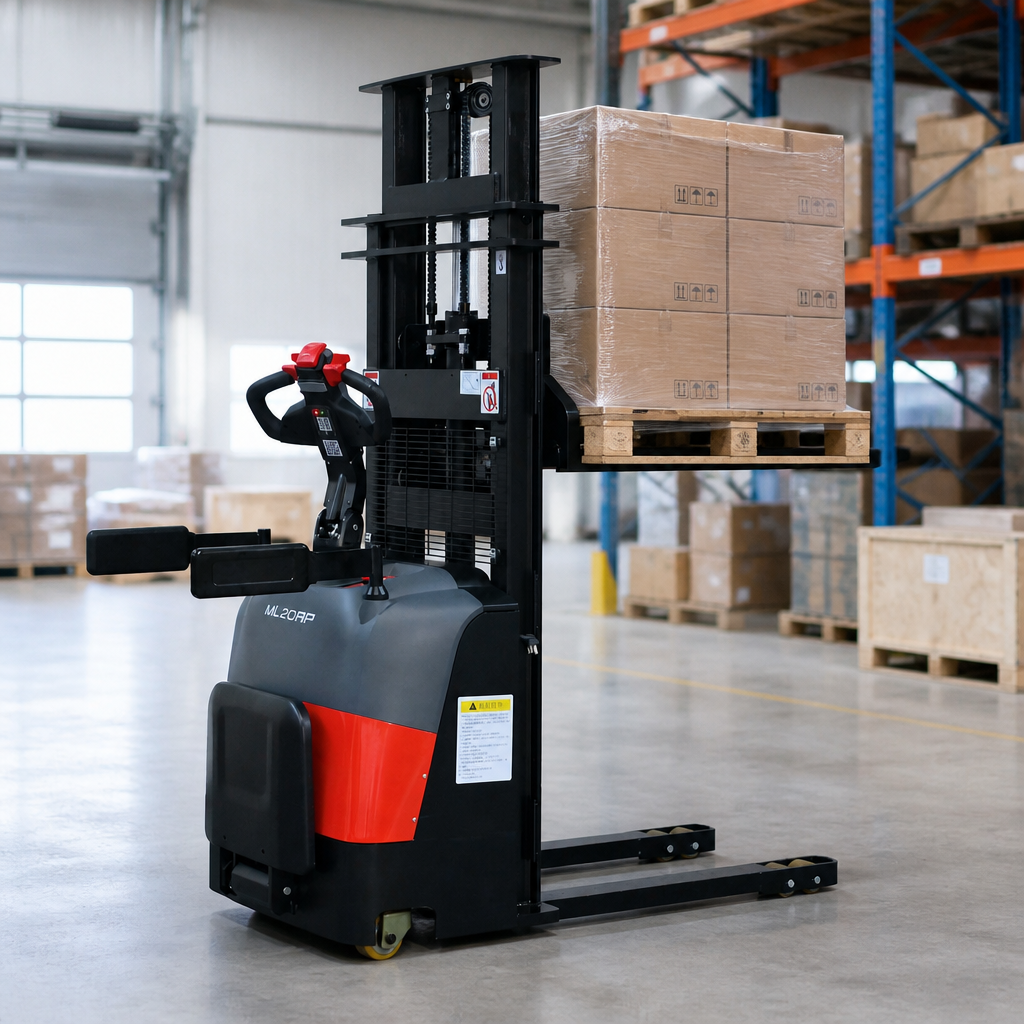
Electric Pallet Stacker 2000kg 3410mm Lift Height Stand on Stacker Truck for Warehouse Racking Stacking
A stand-on stacker with 3,410 mm lift height for warehouse racking. It helps operators travel faster between pick faces without the footprint of a full counterbalance forklift.
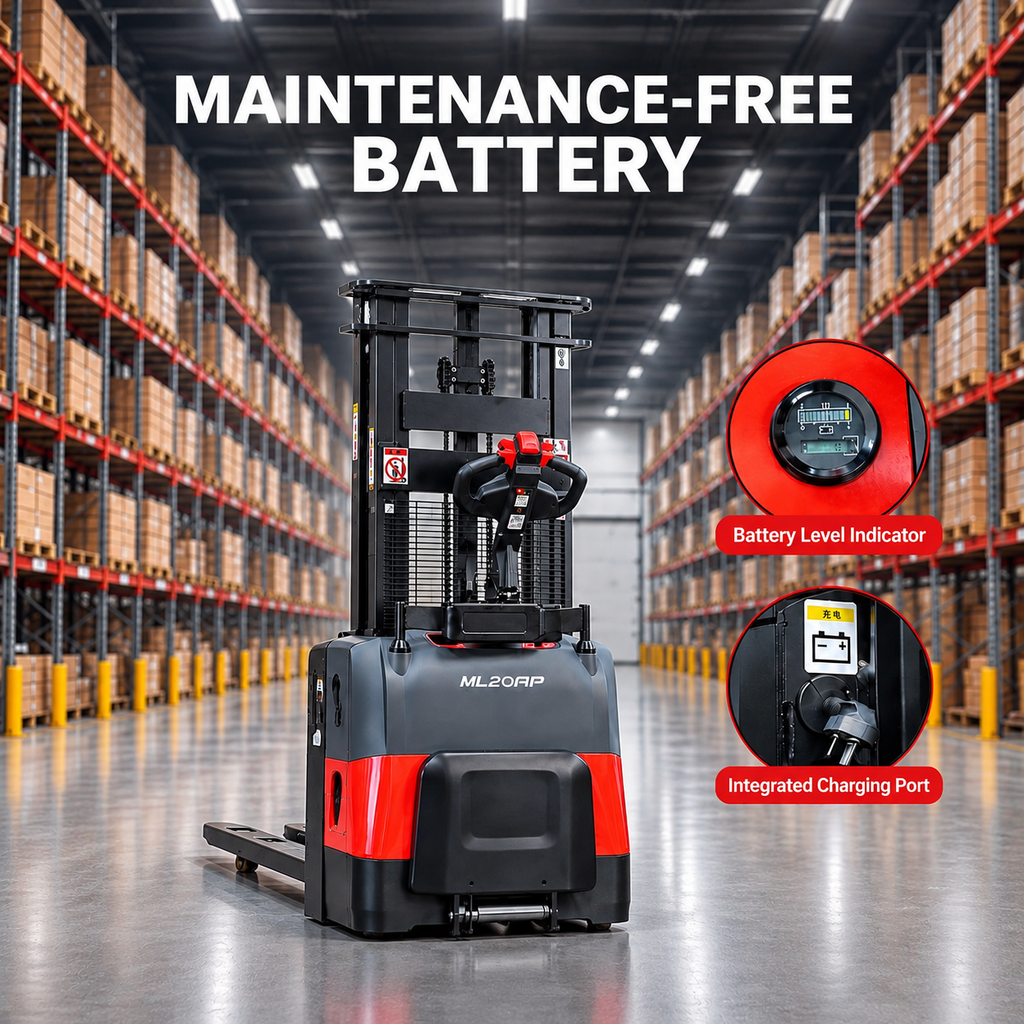
Stacker Forklift Electric 1500kg 2000kg for Retail Backroom Farm Feed Store Pallet Stacking Work
A versatile 1,500–2,000 kg electric stacker forklift for retail backrooms, farm feed stores and light industrial stacking where space, noise and local emissions are constrained.
Supplier scale designed for repeat wholesale orders
What Buyers Must Clarify Before Comparing Ride-On Pallet Stacker Quotes
Search demand for ride-on pallet stackers is semantically broad. A warehouse buyer may use the phrase to describe a stand-on electric stacker, a platform stacker, a powered pallet truck with a fold-down platform, or a compact counterbalance stacker. For procurement teams, the first step is to separate the operator platform from the load-handling function. A ride-on or stand-on stacker normally combines a mast and fork carriage with a platform and faster travel speed; a powered pallet truck is primarily for horizontal transport; a full counterbalance forklift adds higher lift, heavier duty cycles and a different aisle footprint.
Xiamen Pexal Technology Co., Ltd. sees this terminology overlap in real wholesale enquiries. Our application team therefore qualifies every request against five variables: maximum load, load centre, required lift height, aisle width and ramp or floor condition. This is the practical information gain that a price list cannot provide. The lowest unit price is rarely the lowest landed cost when the mast, battery, wheel type or service plan is mismatched to the application.
Use the eight-model shortlist above as a starting point, then confirm battery chemistry, charger voltage, mast height, fork length, wheel material, branding and destination-market documentation before the quotation is finalised.
- Define the real load, including pallet and load centre
- Measure aisle width, door height and top racking level
- Confirm ramp grade, floor friction and dock transitions
- Model energy use, charging window and spare-parts plan
From broad search term to buyable specification
A high-intent wholesale enquiry should move quickly from a catalog category to a workable specification. The most useful qualification sequence is:
- 01 Identify whether the task is horizontal transport, low-level stacking or high-rack put-away.
- 02 Confirm the rated capacity at the required lift height, not only at ground level.
- 03 Check the truck’s footprint against aisle, ramp and charging-room constraints.
- 04 Compare total cost of ownership, spare-parts availability and training needs.
Relative weighting in live wholesale enquiries
Directional observation from Pexal export enquiries; intended as a qualification aid, not a published market statistic.
2026 Procurement Trends: What Wholesale Buyers Are Changing Now
Buying behaviour for electric pallet stackers and powered pallet trucks is moving from “catalog selection” to “lifecycle specification”. Four trends are especially visible in distributor and fleet enquiries.
Lithium-first energy planning
Buyers now ask about chemistry, cycle life, opportunity charging, charger voltage and multi-shift energy plans. A “battery included” quote is no longer enough; wholesale programmes need standardised voltages, plugs and spare-battery strategy.
TCO and uptime sourcing
Procurement teams are comparing energy, wheel life, brake and hydraulic service, training, spare-parts kits and downtime risk. A low FOB price without a parts plan can cost more per pallet moved.
Destination-market readiness
Importers want manuals, labels, charger plugs, voltage, packaging and applicable conformity documents confirmed before deposit. The practical trend is earlier documentation review, not later paperwork repair.
Mixed-fleet trial orders
Distributors increasingly validate a supplier with a small mixed container: pallet trucks, stackers and a spare-parts kit. Once serviceability and product-family consistency are proven, reorders become larger and more predictable.
Product Development Trends: What the Next Generation of Ride-On Stackers Will Change
Ride-on and stand-on pallet stackers are becoming more energy-flexible, safer to operate and easier to support across a distributor network. These changes affect specification choices today, not just future model years.
Modular lithium platforms
Battery packs, chargers and BMS protections are being standardised across model families. For wholesale buyers, this reduces spare-battery complexity and makes multi-model fleet support more practical.
Integrated safety intelligence
Speed limiting, anti-rollback on ramps, tilt sensing and clearer operator presence systems are moving from premium options to specification points. Buyers should confirm which functions are standard.
Operator-centred ergonomics
Lower step heights, better mast visibility, regenerative braking and fatigue-reducing controls are becoming differentiators in labour-constrained warehouses. Cycle time is increasingly measured in operator comfort, not only travel speed.
Serviceability and data readiness
CAN-bus diagnostics, clearer fault codes, accessible service points and telematics-ready interfaces help distributors support equipment in the field. For fleets, the trend is to ask for data readiness before automation.
Match the Truck to the Flow, Not the Catalog Photo
A ride-on pallet stacker is only one point in the warehouse equipment spectrum. Use the criteria and matrix below to shortlist the correct equipment class before comparing suppliers.
Load and load centre
Check maximum pallet weight, pallet depth and load centre. Rated capacity is not constant at every lift height.
Lift height and mast
Confirm top racking level, lowered fork height, free lift and residual capacity at the required height.
Aisle, ramp and floor
Measure aisle width, door openings, dock transitions, floor friction and any slope the truck must climb loaded.
Duty cycle and energy
Hours per shift and shifts per day determine battery chemistry, charger planning and spare-parts strategy.
| Application | Walk-behind stacker | Stand-on / ride-on stacker | Electric pallet truck | Counterbalance forklift |
|---|---|---|---|---|
| Short horizontal transport | Possible | Good for longer routes | Best fit | Over-specified in many cases |
| High-rack put-away | Up to moderate height | Best fit for 3–3.4 m class work | Not designed for racking | Good but needs more aisle space |
| Narrow aisles | Compact | Check platform and mast clearance | Compact | Limited by counterbalance footprint |
| Ramps and docks | Confirm gradeability | Specify anti-rollback and braking | Choose ramp-ready models | Good with correct rating |
| Mixed indoor/outdoor | Indoor mainly | Indoor and covered yards | Indoor and smooth yards | Best for rough or outdoor yards |

 SGS onsite-assessed supplier
Verified video & trade records
Why Pexal Is a Practical China Wholesale Supplier for Ride-On Pallet Stackers
Xiamen Pexal Technology Co., Ltd. was founded in Xiamen, Fujian in 2024 as the sales, service and technical support base for Pexal material handling equipment. We work with a 220,000 m² partner manufacturing campus employing more than 1,200 people, including over 100 engineers focused on electric warehouse equipment.
Our range covers electric forklifts, diesel forklifts, pallet trucks, stackers, reach trucks, order pickers and AGV robotics. That breadth matters for wholesale buyers: you can consolidate stacker, pallet truck and spare-part lines with one export team while keeping product-family compatibility and a single communication channel.
- Sample-based customization and full ODM support
- Mast, fork, battery, colour and logo configuration
- Export terms from EXW to DDP and multi-currency payment
- Verified trade capacity, credit index and transaction history
SGS assessed
Onsite check and supplier assessment conducted by SGS Group, with verified company video and trade records available for buyer review.
Customization & ODM
Sample-based customization, full customization and ODM services, including mast height, fork length, battery type, branding and packaging.
Global trade support
FOB, CFR, CIF, EXW, FCA, CPT, CIP and DDP terms; T/T, L/C, D/P, D/A, Western Union, PayPal, credit card and escrow payments.
Five export regions
Western Europe, North America, South America, Eastern Europe and Oceania, serving dealers, rental companies and end users.

Ride-On Pallet Stacker Procurement: Common Buyer Questions
These are the questions our export and application teams answer most often when distributors, rental fleets and warehouse operators evaluate a China wholesale supplier.
What is a ride-on pallet stacker, and how is it different from a walk-behind stacker?
A ride-on or stand-on pallet stacker carries the operator on a platform while providing a mast and fork carriage for lifting pallets to racking or stacking heights. A walk-behind stacker is guided on foot. Ride-on and stand-on designs reduce travel fatigue over longer distances and can improve cycle time in medium-to-large warehouses, but they need more aisle clearance and operator training. Confirm the terminology with your supplier because some catalogs use “ride-on” for powered pallet trucks with fold-down platforms.
Which capacity and lift height should I specify?
Start with maximum pallet load, load centre and required fork height. A 1,500 kg or 2,000 kg class covers many wholesale, retail and light industrial applications, while 3,410 mm lift height suits standard racking. Always check residual capacity at the required lift height; a truck rated 2,000 kg at ground level may have a lower capacity with the mast raised. Pexal’s application team can verify mast, fork length and wheel configuration against your rack layout.
Can these trucks work on ramps and dock levelers?
Some models are specifically configured for ramp use. For example, the 80 mm ground clearance lithium pallet truck in this shortlist is designed with a 9% climbing grade and a 1,450 mm vehicle length for ramp maneuvering. For any slope, confirm loaded gradeability, braking, anti-rollback, floor friction and operator training. Do not assume that a standard warehouse truck is suitable for a steep or wet ramp.
Lead-acid or lithium-ion: which battery should I choose?
Lithium-ion is often selected for opportunity charging, lower maintenance and flexible charger placement, while lead-acid can still be economic for single-shift operations with a dedicated battery room. The right choice depends on duty cycle, charging window, energy tariff, ambient temperature and local service capability. For wholesale programmes, standardise battery voltage and charger plugs across the range to simplify spare-parts and training.
How should I calculate total cost of ownership for a stacker?
Build a five-year model: purchase price, freight and duty, charger and battery replacement, energy, tyres and wheels, hydraulic and brake service, planned maintenance, operator training, spare-parts inventory and downtime risk. Ask for a recommended spare-parts kit and mean-time-to-repair evidence. The lowest FOB quote is not necessarily the lowest landed cost per pallet moved.
What customization can Pexal provide for distributors?
Xiamen Pexal Technology Co., Ltd. offers sample-based customization, full customization and ODM services for warehouse equipment. Typical variables include mast height, fork length, battery type, wheel material, colour, logo, labels, packaging and market-specific documentation. Provide drawings, load data and destination requirements before quotation so engineering and export documentation are aligned.
What documentation and after-sales support should I request?
Request the operating manual, spare-parts list, wiring and hydraulic diagrams, charger instructions, maintenance schedule, warranty terms and packaging specification. Confirm voltage, plug type and language requirements for your market, along with remote technical support and parts lead times. If a conformity document is required in your destination market, state it before the order so the correct configuration and paperwork can be planned.
Which markets do you export to, and what trade terms are accepted?
Pexal’s main export markets are Western Europe, North America, South America, Eastern Europe and Oceania, serving dealers, rental companies and end users. Common delivery terms include FOB, CFR, CIF, EXW, FCA, CPT, CIP and DDP, with payment methods such as T/T, L/C, D/P, D/A, Western Union, PayPal, credit card and escrow. Accepted currencies include USD, EUR, GBP, JPY, CAD, AUD, HKD, CHF and CNY.
Can I place a trial order or mix models in one container?
Trial orders and mixed configurations are common for distributors validating a new supplier. Share the target models, quantities, container type and destination port; the export team can advise on packaging, pallet arrangement and loading plan. Mixed containers can include stackers, pallet trucks and a spare-parts kit, but final loading depends on dimensions and weight distribution.
How does SGS assessment reduce sourcing risk?
Pexal has passed an onsite check and supplier assessment conducted by SGS Group. The assessment reviews company existence, premises, main products, trade capacity and related capabilities. For buyers, it reduces — but does not replace — your own due diligence. Combine the report with sample testing, reference checks, product-specific documentation and a clear purchase contract.
Build a Wholesale Shortlist With Our Application Engineers
Share your load, lift height, aisle width, ramp grade and target market. We will help match the right electric pallet stacker, pallet truck or custom configuration to your fleet plan. Email: info@pexalbot.com