8 Electric Warehouse Trucks for Mixed-Container and Dealer Programs
These models solve specific operational constraints: high-rack stacking, container unloading, ramp work, narrow aisles, cold storage and lightweight field service. Each product link is preserved so procurement teams can review original specifications, dimensions and applications.
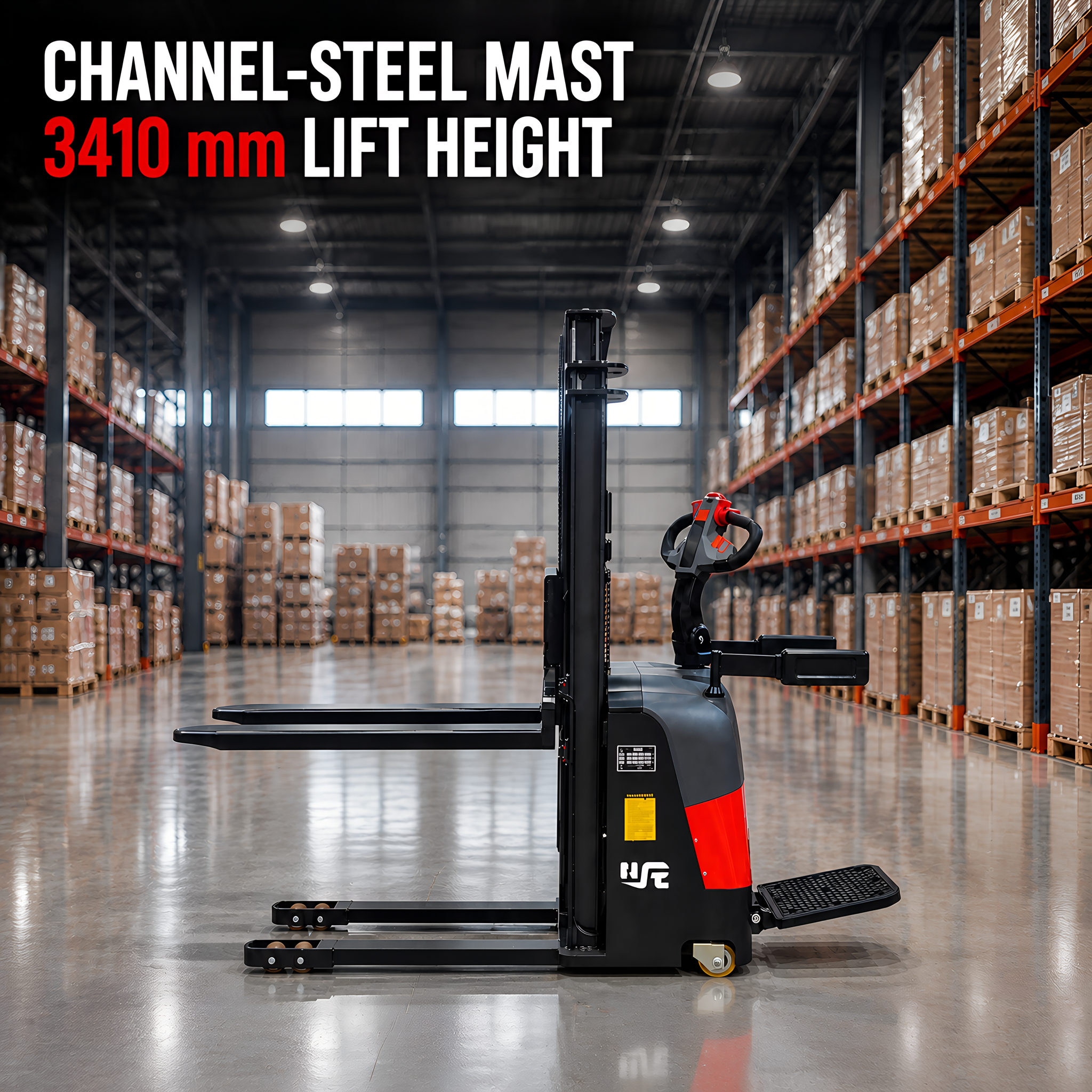
ML20AP Stand on Electric Stacker 2000kg 3410mm Max Lift 1478mm Turning Radius 820mm Body Width
Compact stand-on stacker for high-rack warehousing where turning radius and body width directly affect aisle productivity.
View wholesale specification →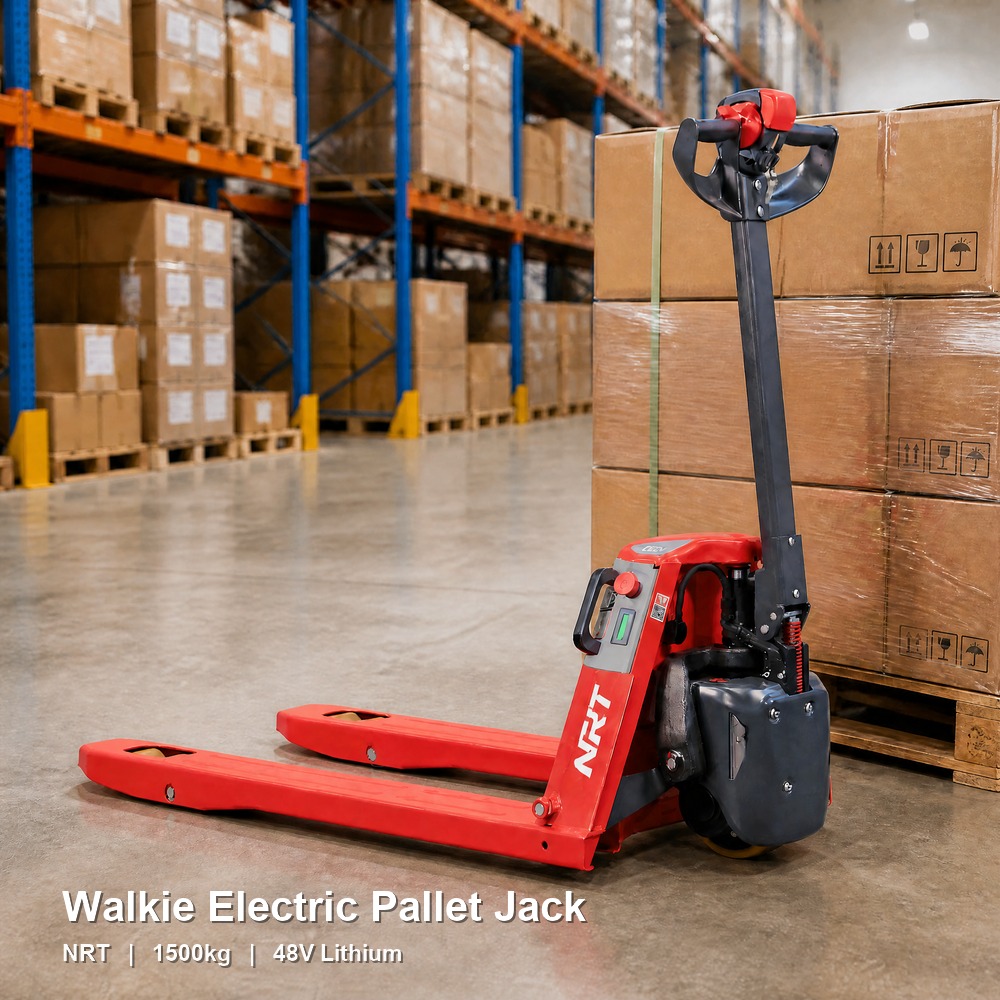
Electric Pallet Jack 1500kg 2000kg Walkie Pallet Truck Battery Powered Lithium Pallet Jack for Warehouse Loading
General-purpose lithium pallet truck for loading docks, warehouse transfer and dealer rental fleets.
View wholesale specification →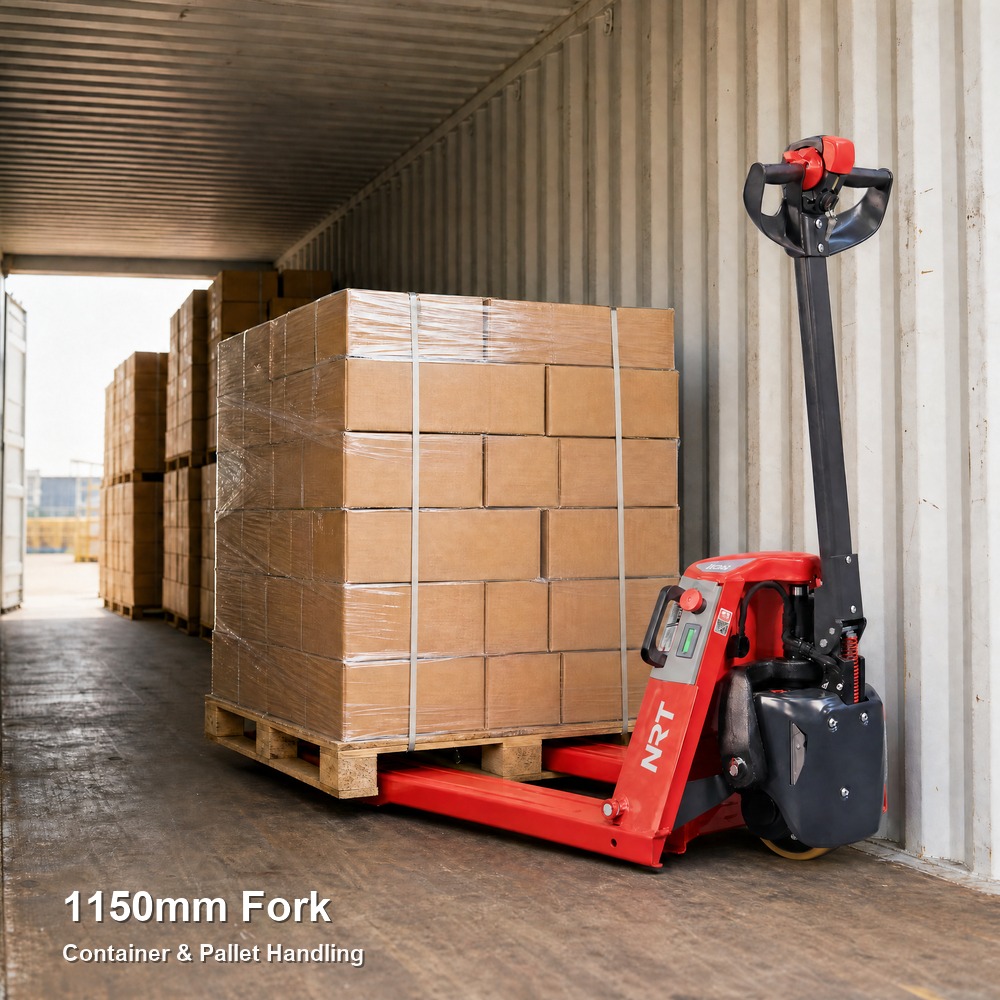
Walkie Electric Pallet Jack 1500kg Fork 1150mm Pallet Truck Battery Powered for Container Unloading Shop Floor
Fork length and compact handling suit container stripping, retail backrooms and shop-floor replenishment.
View wholesale specification →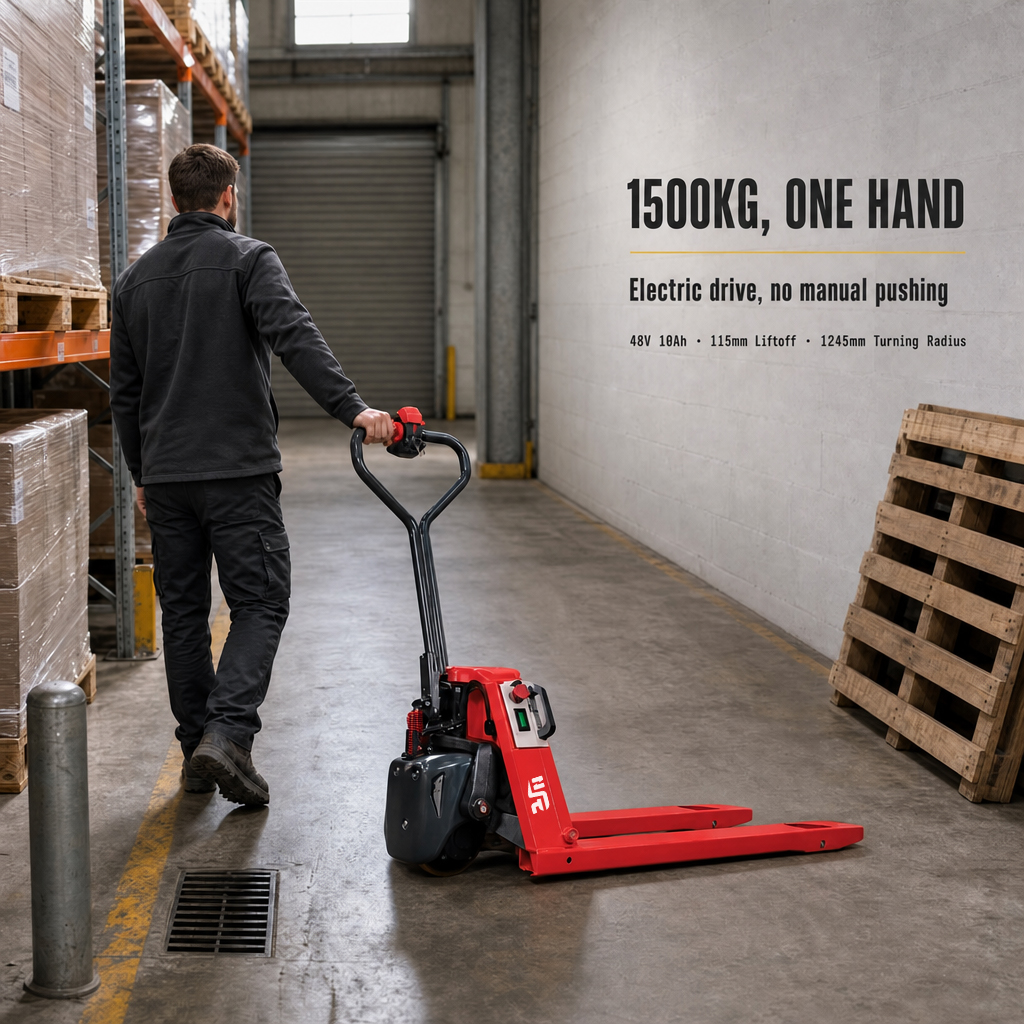
80mm Ground Clearance Electric Pallet Jack 9% Climbing Grade 1450mm Vehicle Length Lithium Pallet Truck for Ramp Use
Designed for sites with ramps or slight inclines where standard pallet trucks may lose confidence or efficiency.
View wholesale specification →
2026 New Alternative Convertidor De Palet Jack a Electrico Ultra-Lightweight 107kg Electric Pallet Jack with Lithium Power
Lightweight lithium platform for service fleets, delivery vans and distributors serving low-volume accounts.
View wholesale specification →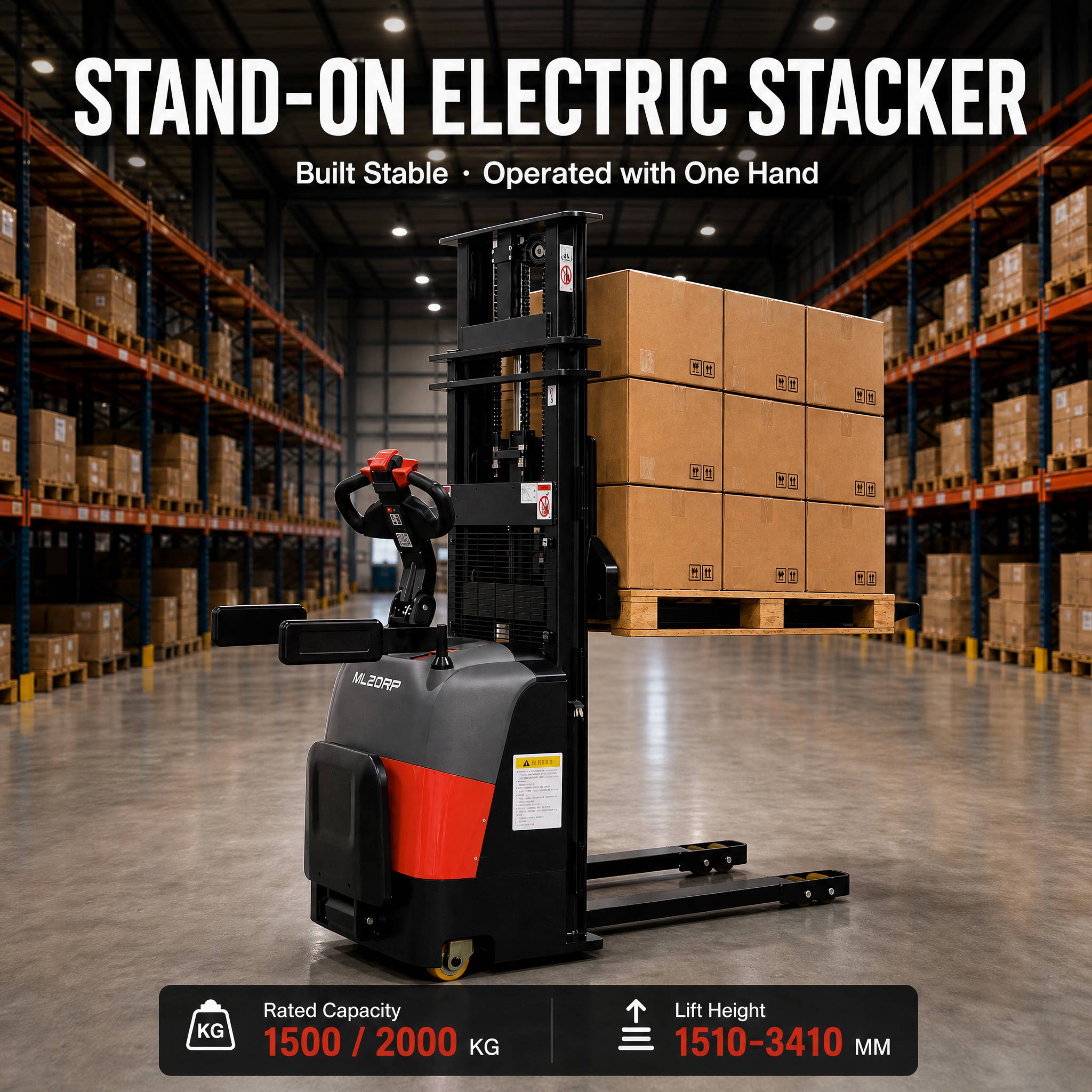
Channel Steel Mast Electric Pallet Stacker 2000kg 90mm Lowered Fork Height Stable High Rack Stacking
Channel steel mast configuration for repeated pallet placement into medium-high racking with stable control.
View wholesale specification →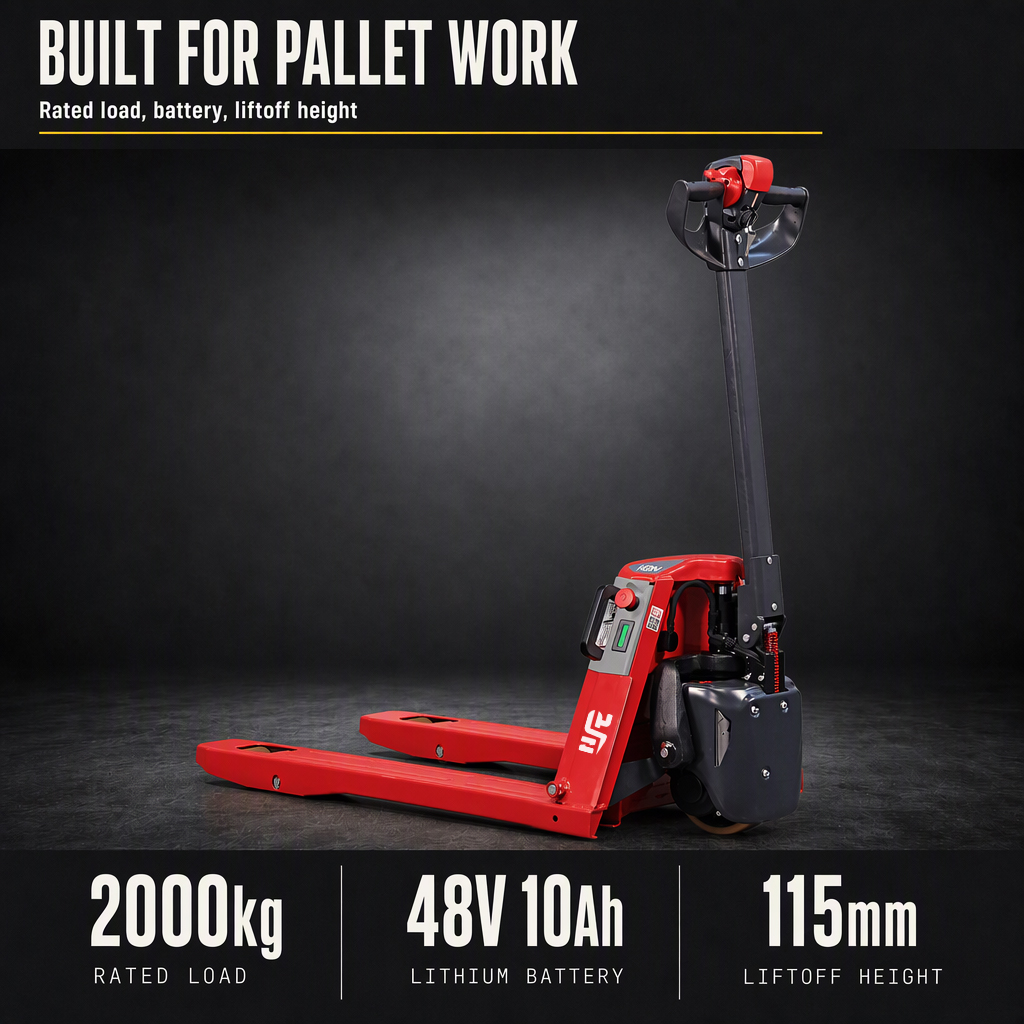
Portable Electric Pallet Jack Lithium Battery 2T for Narrow Aisle Warehouse and Truck Delivery Handling with 48V High Efficiency
Portable 2T lithium pallet jack for narrow aisles, truck delivery handling and decentralized warehouse operations.
View wholesale specification →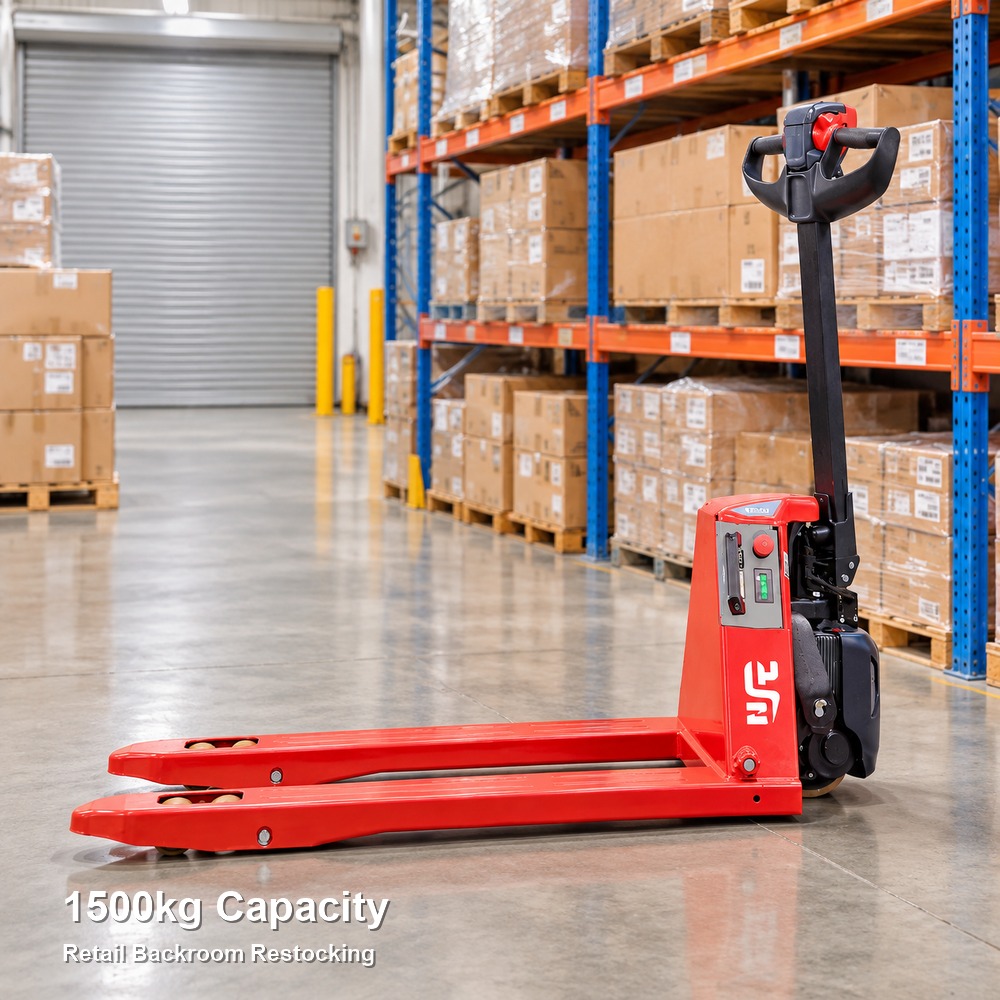
Cold Storage Electric Pallet Jack -20C Working 48V Lithium Battery Pallet Truck Walkie Type 1500kg 2000kg
Cold-chain pallet truck for frozen warehouses, food distribution and temperature-controlled logistics.
View wholesale specification →What Wholesale Buyers Should Know Before Sourcing Electric Counterbalance Forklifts from China
China’s wholesale channel for electric counterbalance forklifts is moving from price-led purchasing toward configuration-led purchasing. For distributors and rental fleets, the most expensive mistake is rarely a small difference in FOB price. It is a container mix that leaves slow-moving inventory, chargers that do not match site voltage, forks and masts that cannot serve the target aisle, or documentation that delays customs and commissioning.
A practical China wholesale electric counterbalance forklift exporter should therefore behave less like a catalogue and more like an application desk. The buying decision should connect load weight, load centre, lift height, aisle width, floor or ramp condition, duty cycle, charging window and local compliance requirements. When those inputs are clear, the quotation becomes comparable across suppliers; when they are vague, the lowest price often hides the highest total cost of ownership.
This guide is prepared from Pexal’s material handling export experience and the company’s verified supplier information. It is intended for dealers, rental companies, private-label buyers and fleet managers sourcing from Western Europe, North America, South America, Eastern Europe and Oceania. Final specifications, certification scope, delivery terms and payment conditions should always be confirmed in the quotation and against your market’s regulations.
A Practical China Wholesale Electric Counterbalance Forklift Exporter for Dealer and Fleet Programmes
Wholesalers need more than a product list. They need verified supplier evidence, flexible configuration, export documentation and a partner who understands how a mixed fleet is sold, rented and serviced in the destination market.
Source-Direct Partner Factory
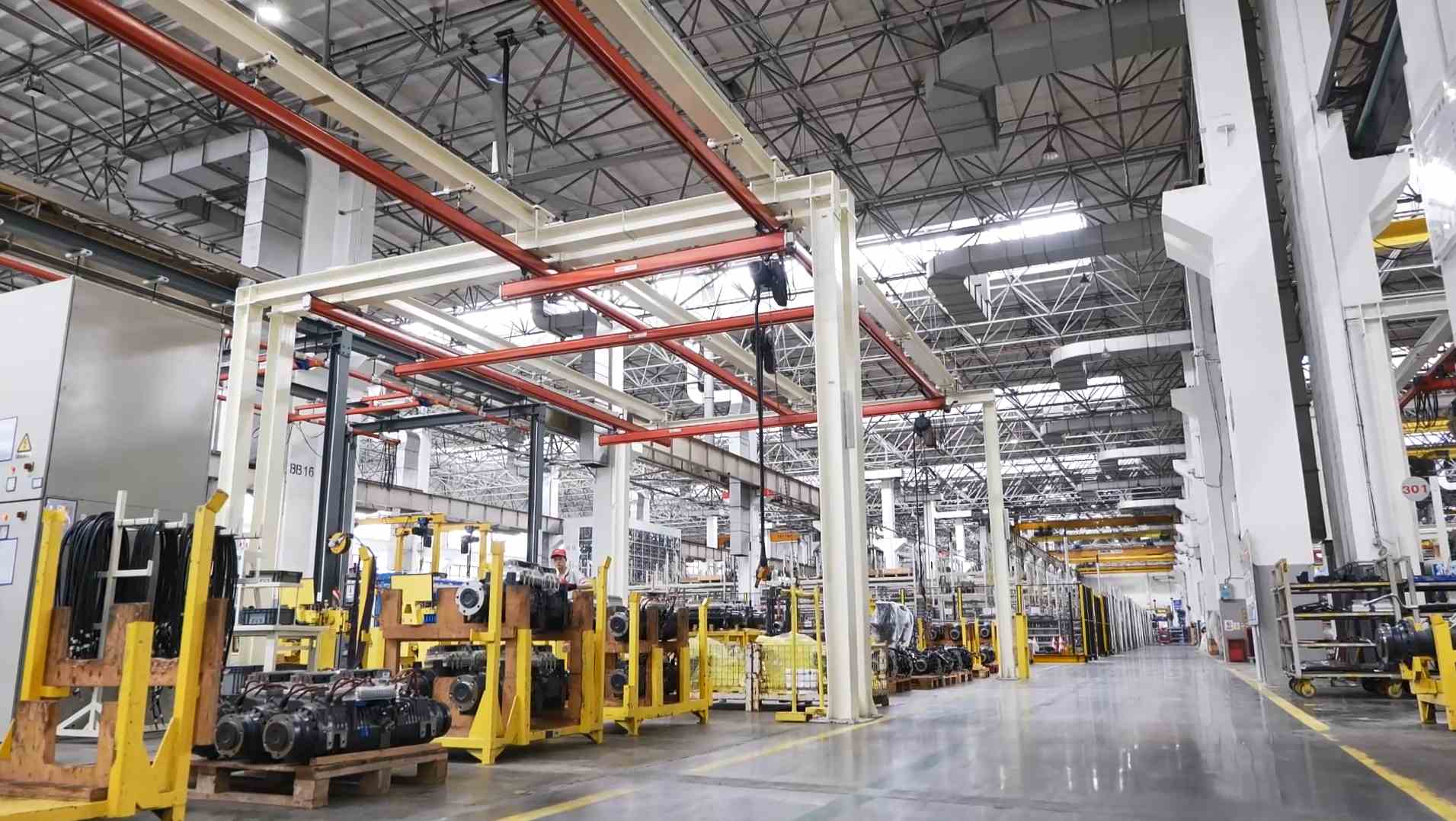
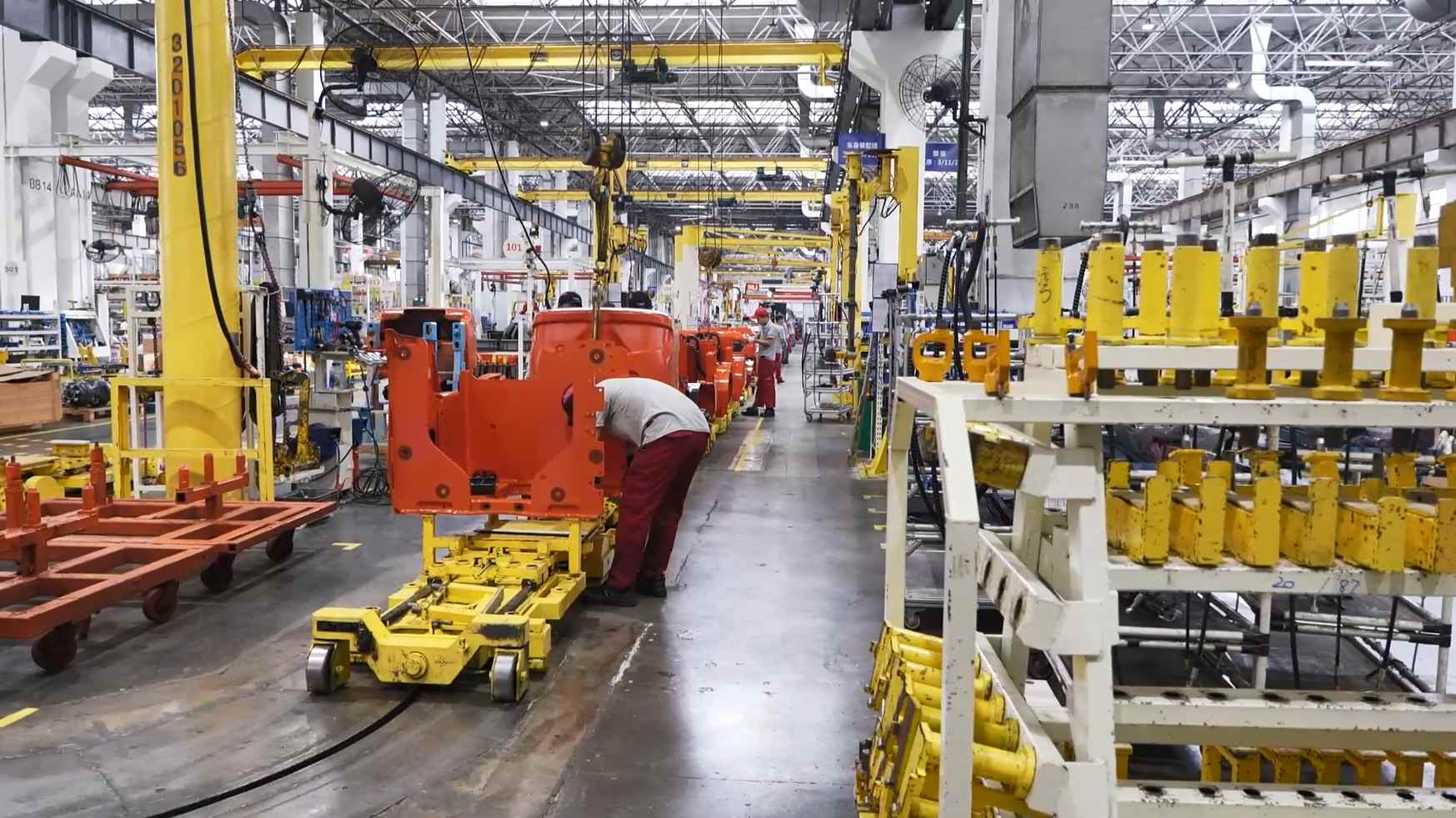
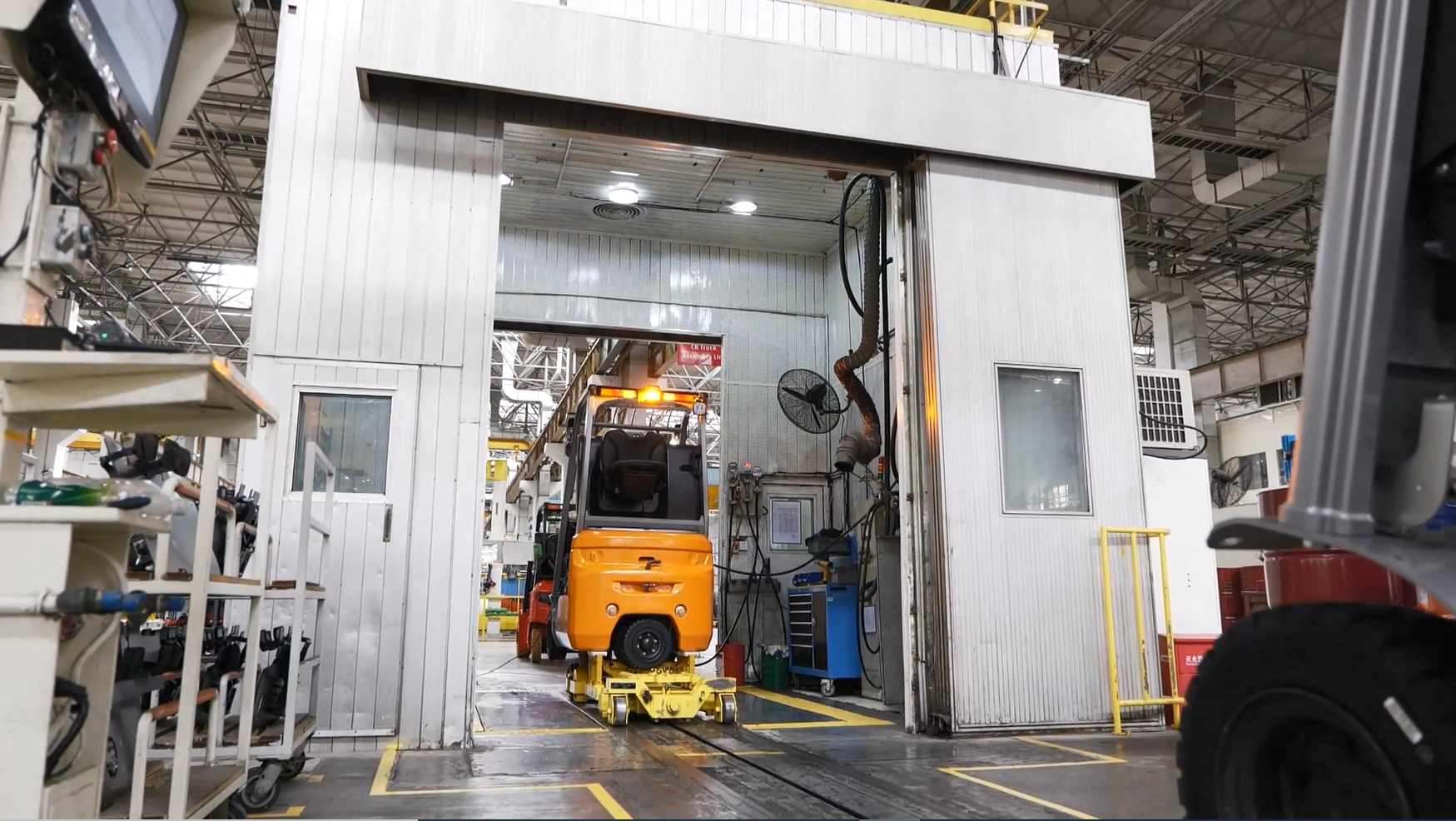
Xiamen Pexal Technology Co., Ltd. operates as the sales, service and technical support base for Pexal material handling equipment and works with a 220,000 m² partner manufacturing campus. This structure supports factory-level product knowledge, configuration review and consistent engineering communication for wholesale buyers.
SGS-Assessed Supplier Evidence
Pexal has passed an onsite check and supplier assessment conducted by SGS Group. Buyers can review supporting information such as the verified company video, trade capacity, credit index, transaction history and buyer reviews, which reduces the uncertainty of sourcing a high-value fleet from overseas.
OEM, ODM and Mixed-Container Flexibility
Pexal supports sample-based customization, full customization and ODM services, including mast height, fork length, battery type, colour, logo and attachment configuration. For wholesalers, mixed-container planning can help balance product variety, freight efficiency and local inventory risk, subject to final production scheduling.
Export Logistics and Market Fit
The company serves wholesale buyers across Western Europe, North America, South America, Eastern Europe and Oceania. Common delivery terms include FOB, CFR, CIF, EXW, FCA, CPT, CIP and DDP, with payment methods such as T/T, L/C, D/P, D/A, Western Union, PayPal, credit card and escrow. Accepted currencies include USD, EUR, GBP, JPY, CAD, AUD, HKD, CHF and CNY.
What Makes an Electric Counterbalance Forklift Easier to Sell, Rent and Service
Wholesale profitability depends on uptime, repeat orders and service confidence. The specification should be judged by how the truck performs across a full shift, not by a single headline number.
 Power System
Reinforced Mast
Safety Control
Energy Platform and Duty Cycle
Battery-electric drivetrains should be matched to shift length, charging windows and site voltage. Lithium-ion and lead-acid configurations can be discussed by model so the buyer does not overpay for unused battery capacity or underestimate multi-shift demand.
Structural Durability
Rigid chassis and mast structures matter in repeated lifting cycles, high-rack placement and rental fleets where different operators use the same truck. Buyers should ask for the load centre, mast type, fork dimensions and capacity at the required lift height.
Operator-Centered Design
Humanized controls, clear visibility and intuitive operation shorten training time and reduce fatigue. This is especially important for distributors who rent equipment to multiple industries or sell into labour markets with high operator turnover.
Intelligence and Automation Readiness
From smart forklifts to automated guided forklifts, the next procurement cycle will reward suppliers who can support digital fleet management, fault diagnostics and predictable integration with warehouse workflows.
Match the Truck to the Operating Condition, Not Just the Capacity Label
Use this recommendation logic before requesting a quotation. The same 2-tonne class can require very different forks, batteries, masts and safety configurations depending on aisle width, ramp grade, temperature and duty cycle.
Standard Indoor Counterbalance Fleet
For smooth floors, indoor racking and mixed pallet handling, start with a 2.0–2.5 tonne electric counterbalance forklift platform and confirm capacity at the actual load centre. Ask for mast, tyre, battery and charger options that match your local dealer service model.
Best for: 3PL, manufacturing, distributionHigh-Rack Stacking in Tight Aisles
The ML20AP stand-on electric stacker combines 2000 kg capacity, 3410 mm max lift, 1478 mm turning radius and 820 mm body width. It is a practical choice for distributors serving warehouses that need high placement without the footprint of a larger counterbalance truck.
Best for: racking, narrow storage, wholesale stockContainer Unloading and Dock Transfer
Walkie electric pallet jacks in the 1500–2000 kg class are efficient for horizontal movement, container stripping and shop-floor replenishment. Fork length, lowered fork height and ground clearance should be checked against the actual pallet and dock conditions.
Best for: docks, retail, container unloadingRamps, Inclines and Uneven Floors
Ramp work needs more than a standard pallet truck. The 80 mm ground clearance electric pallet jack with a 9% climbing grade and 1450 mm vehicle length is relevant for sites where slope control, clearance and compact dimensions influence safe handling.
Best for: ramps, mezzanines, loading baysNarrow Aisle and Field Service
The portable 2T 48V lithium pallet jack and the ultra-lightweight 107 kg lithium model are suited to distributors serving narrow aisles, van delivery, service technicians and low-volume accounts where truck weight and transportability matter.
Best for: route delivery, service fleets, small depotsCold Storage and Frozen Logistics
For −20°C environments, specify a cold-storage electric pallet truck with the right battery, charger and condensation management. The 48V lithium walkie type in 1500–2000 kg is a starting point for frozen warehouses and food distribution.
Best for: cold chain, food, pharmaceutical storageWhat Wholesale Buyers Will Compare Differently in the Next Buying Cycle
The winning supplier will not simply quote a lower unit price. It will help the distributor reduce inventory risk, shorten commissioning time and prove service readiness.
1. Total Cost of Ownership Replaces Sticker Price
Buyers are comparing battery life, charger compatibility, energy cost, tyre wear, brake service, spare-parts availability and downtime. A slightly higher quote can be cheaper over three years if it protects rental utilisation and avoids emergency parts airfreight.
Procurement implication: request a TCO worksheet, not only FOB.2. Lithium Becomes the Default Conversation
Lithium power is increasingly discussed for opportunity charging, maintenance reduction and compact packaging. Lead-acid remains relevant in some markets and applications, so the right answer depends on charging infrastructure, shift patterns and local service capability.
Procurement implication: specify charge window and site voltage.3. Mixed Containers and Faster Inventory Turns
Distributors want fewer capital-heavy bets. They combine counterbalance forklifts, stackers, pallet trucks and spare parts in one programme to test demand and improve cash flow. This increases the value of suppliers who can configure multiple SKUs consistently.
Procurement implication: plan the container mix before pricing.4. Digital Proof and Remote Due Diligence
Overseas buyers increasingly rely on SGS assessment records, verified video, trade history and inspection evidence before placing a first order. Suppliers that present verifiable information reduce the perceived risk of an overseas fleet purchase.
Procurement implication: ask for evidence, not only brochure claims.5. Safety and Compliance Transparency
Fleet buyers need clear documentation for braking, warning systems, controls, load charts, manuals and operator training. Compliance requirements vary by destination, so the supplier should confirm the applicable scope before the purchase order.
Procurement implication: attach the compliance checklist to the RFQ.6. Automation-Ready Equipment
AGV and automated guided forklift interest is growing, but most warehouses still need flexible manual trucks. The practical trend is a hybrid fleet: standard electric counterbalance and warehouse trucks supported by automation on repetitive routes.
Procurement implication: keep data and service access open.The Next Generation of Electric Counterbalance Forklifts Will Compete on Uptime and Usability
Battery and Charging Architecture
Expect more modular battery options, opportunity-charging strategies and application-specific tuning for cold storage, multi-shift logistics and rental fleets.
Operator Safety and Ergonomics
Visibility, step height, control layout, regenerative braking behaviour and warning systems will continue to shape dealer demonstrations and operator acceptance.
Diagnostics and Fleet Support
Fault-code visibility, service documentation and remote technical support are becoming part of the product, not an afterthought. This directly affects dealer service cost.
Modular Market Configuration
Mast height, fork length, battery, attachments, labels, manuals and voltage configuration will be managed as modular ODM choices rather than one-off custom projects.
Compare Electric Counterbalance Forklifts and Warehouse Trucks Before You Shortlist
This is a planning matrix, not a final specification sheet. Confirm every value against the final quotation, load chart and destination-market requirements.
| Equipment | Best-fit task | Specifications to verify | Wholesale planning note |
|---|---|---|---|
| Electric counterbalance forklift | Indoor and smooth-floor pallet handling, racking, loading and production supply | Capacity at load centre, lift height, mast type, tyre type, battery, charger, aisle width | Core fleet model for dealers. Match battery and charger to local voltage and charging window. |
| Stand-on electric stacker | High-rack stacking in compact warehouses | Max lift, turning radius, body width, lowered fork height, rated capacity | Strong add-on SKU for distributors serving dense storage and retail warehouses. |
| Walkie electric pallet jack | Horizontal transport, dock transfer, container unloading, shop-floor replenishment | Fork length, ground clearance, battery type, gradeability, vehicle length | High-turnover wholesale item. Offer at least one ramp-capable and one lightweight option. |
| Cold-storage pallet truck | −20°C frozen warehouses and temperature-controlled logistics | Cold-room rating, lithium configuration, charger placement, condensation protection, duty cycle | Requires technical consultation. Do not assume a standard pallet truck is suitable without cold validation. |
| Reach truck / order picker | Narrow-aisle high-density storage and piece picking | Lift height, aisle requirement, platform height, battery, safety features | Useful for dealers serving e-commerce and 3PL customers with high storage density. |
| AGV / automated guided forklift | Repetitive fixed-route transport and 24/7 pallet movement | Route mapping, safety sensors, integration, load interface, service access | Best sold as a project with clear site data, not as a stand-alone catalogue item. |
Illustrative Procurement Weighting Model
Use this model to structure an internal buying decision. It is an illustrative planning tool, not a market statistic; adjust the weights to your own dealer margin, rental utilisation and after-sales capability.
Evidence That Supports a Lower-Risk Wholesale Purchase
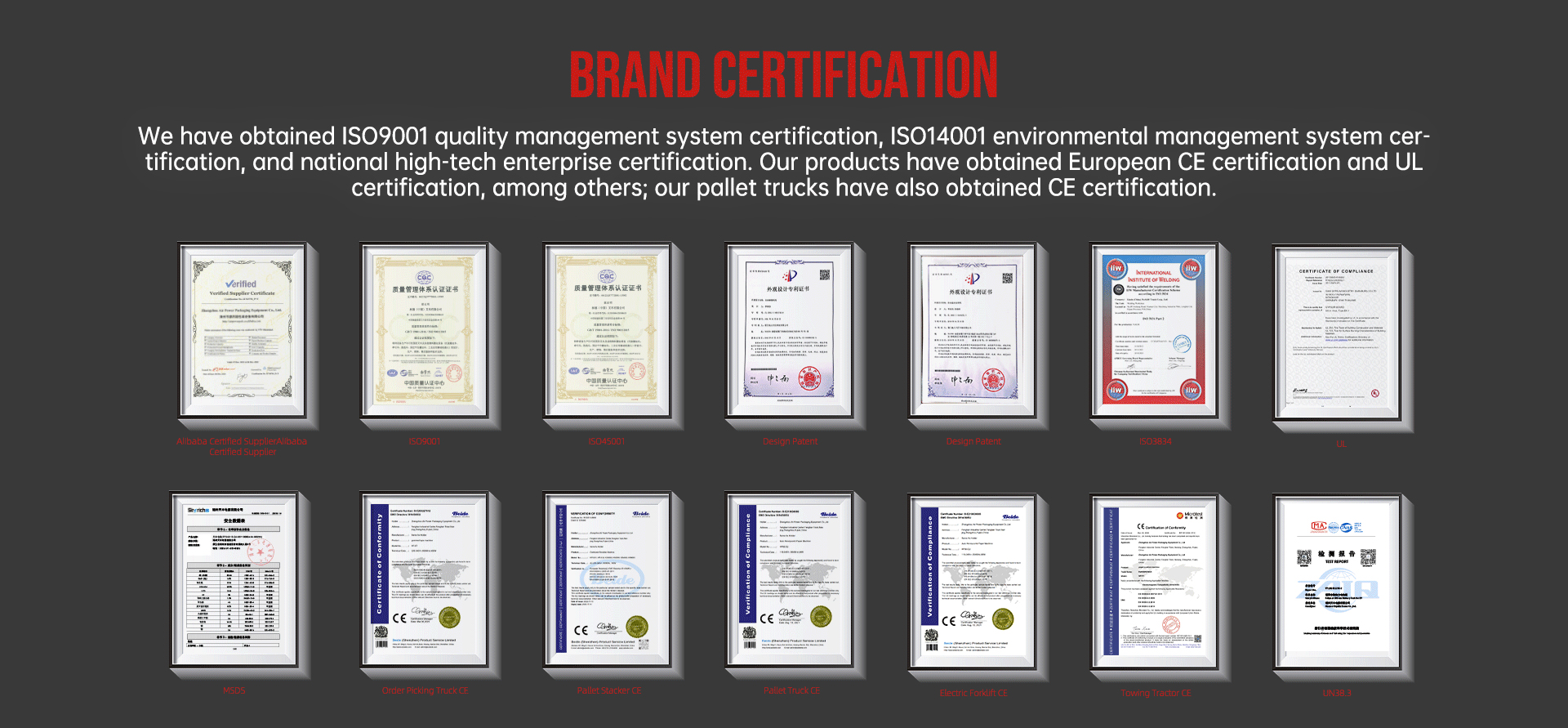
Pexal’s export base in Xiamen works with a large partner manufacturing campus and presents third-party assessment and company records for buyer review.

From Specification Review to Export Loading
Xiamen Pexal Technology Co., Ltd. was founded in Xiamen, Fujian in 2024 as the sales, service and technical support base for Pexal material handling equipment. The company works with a 220,000 m² partner manufacturing campus, more than 1,200 employees and a team of over 100 engineers focused on electric warehouse equipment.
The practical mission is to help buyers move from manual handling to electric handling and from diesel to battery power, reducing emissions, noise and operating cost while preparing for intelligent, digital logistics. The product scope covers electric and diesel forklifts, pallet trucks, pallet stackers, reach trucks, order pickers and AGV robotics.
For wholesale buyers, verification is part of the product. Pexal has passed an onsite check and supplier assessment by SGS Group, offers a verified company video, and provides trade capacity, credit index, transaction level, trade history and buyer review information for due diligence.

Wholesale Pre-Order Checklist for Electric Counterbalance Forklifts and Warehouse Trucks
Application Data
- Maximum load and load centre
- Required lift height
- Aisle width and racking layout
- Floor, ramp or yard condition
Energy and Charging
- Shift length and charging window
- Lithium or lead-acid preference
- Site voltage and charger location
- Cold-storage or high-temperature needs
Compliance and Documents
- Destination-market certification scope
- Manual and label language
- Load chart and test documentation
- Operator training material
Commercial and After-Sales
- Incoterm and destination port
- Spare-parts kit and consumables
- Warranty terms and service escalation
- Mixed-container and reorder plan
Questions Wholesale Buyers Ask About Electric Counterbalance Forklifts from China
These answers reflect the commercial and technical questions most relevant to dealers, rental fleets and private-label buyers.
Are you a factory or a trading company?
Xiamen Pexal Technology Co., Ltd. is the sales, service and technical support base in Xiamen and works with a 220,000 m² partner manufacturing campus. For buyers, this means factory-level production support combined with an export team handling specification review, documentation, logistics and communication.
Do you offer OEM, ODM and customized electric forklifts?
Yes. Pexal supports sample-based customization, full customization and ODM services. Typical configuration points include mast height, fork length, battery type, colour, logo, attachments and market-specific labels. The final customization scope should be written into the quotation and approved sample or drawing.
What is the minimum order quantity for wholesale programmes?
MOQ depends on model, configuration, battery choice and production schedule. Mixed-container discussions can be useful for distributors who want to test several SKUs without concentrating inventory in one model. The final MOQ and container loading plan are confirmed in the quotation.
Which Incoterms, payment methods and currencies do you accept?
Common delivery terms include FOB, CFR, CIF, EXW, FCA, FAS, CPT, CIP, DDP, DDU and express. Payment methods include T/T, L/C, D/P, D/A, Western Union, MoneyGram, PayPal, credit card and escrow. Accepted currencies include USD, EUR, GBP, JPY, CAD, AUD, HKD, CHF and CNY.
Which export markets do you serve?
The main export markets are Western Europe, North America, South America, Eastern Europe and Oceania, serving dealers, rental companies and end users. Market-specific voltage, documentation and service requirements should be discussed before the order is finalised.
How is product quality verified before shipment?
Pre-shipment quality control typically checks lifting, travel, braking, electrical systems and basic functions. Pexal has also passed an onsite check and supplier assessment by SGS Group, and a verified company video is available for review. The final inspection scope should be agreed in the purchase order.
How do I choose between lithium and lead-acid batteries?
Start with duty cycle, charging window, energy cost, maintenance capability and site infrastructure. Lithium is often discussed for opportunity charging and lower maintenance in suitable applications, while lead-acid may remain practical in certain markets. Cold-storage operation requires a specific battery and charger review.
Can you supply cold-storage and ramp-use pallet trucks?
Yes. The cold-storage electric pallet truck is designed for −20°C working with 48V lithium power in 1500–2000 kg classes. For ramps and inclines, the 80 mm ground clearance electric pallet jack with a 9% climbing grade is a relevant model. Always confirm the actual ramp angle, load and floor condition.
What information should I send to receive a useful quotation?
Send the load weight, load centre, required lift height, aisle width, floor or ramp condition, operating temperature, shift pattern, charging availability, destination port, target quantity, local voltage and any certification or labelling requirements. These details allow the quotation to be configured rather than estimated.
Can you support a dealer launch with mixed models?
Yes. A mixed programme can combine electric counterbalance forklifts, pallet trucks, stackers, reach trucks, order pickers and spare parts, subject to production planning and MOQ. For new distributors, a phased launch based on local demand is usually more prudent than a single high-volume commitment.
Request a Configuration and Wholesale Quotation
Share your application data and destination market. The Pexal export team can review the right electric counterbalance forklift, pallet truck, stacker or mixed-container programme for your dealer or rental business.
- Load, lift height and aisle width
- Battery and charging preference
- Quantity, destination port and target market
- OEM, ODM or private-label requirements