China Top Pallet Transport Equipment Manufacturers & Manufacturer
A procurement-ready guide to electric pallet trucks, stackers, walkie pallet jacks and warehouse transport equipment — with eight recommended models, total-cost trends, customization options and SGS-assessed supplier verification.
8 Pallet Transport Equipment Models for Global Buyers
Selected from Pexal’s current electric pallet truck, stacker and walkie range, these eight models cover cold storage, narrow aisles, high racking, retail backrooms, container loading and multi-shift warehouse duty. Each product link preserves the original model page so buyers can verify specifications before requesting a configuration.
Stand on Electric Stacker 2000kg Centre Mounted Drive Twin Balance Wheels Stable High Racking Stacking
Centre-mounted drive and twin balance wheels support confident high-rack stacking at 2,000 kg, with a ride-on format for longer duty cycles.
View Model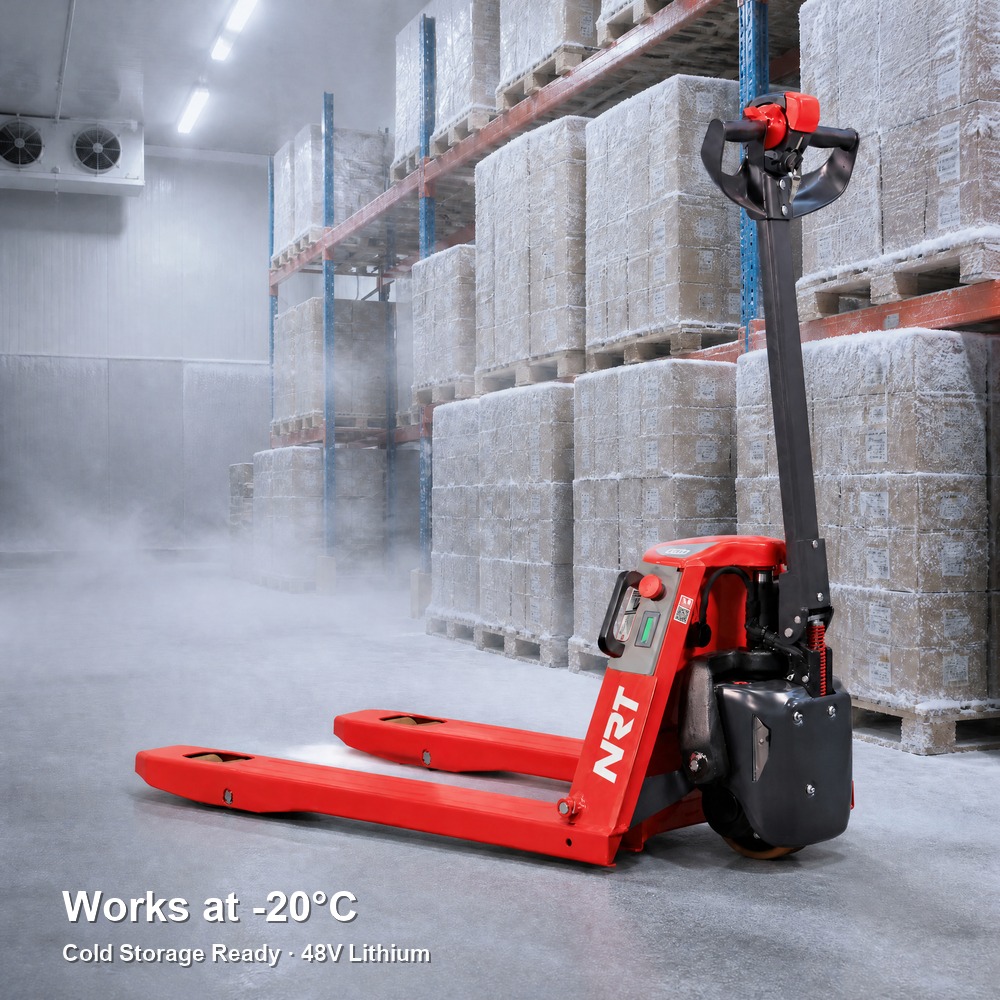
Electric Pallet Jack 2000kg with 48V Lithium Battery 6s Swap 300mm Slim Body Climbing 9% for Cold Storage -20C
48V lithium power with 6-second battery swap, 300mm slim body, 9% gradeability and -20°C cold-storage suitability for fast battery rotation and uptime.
View Model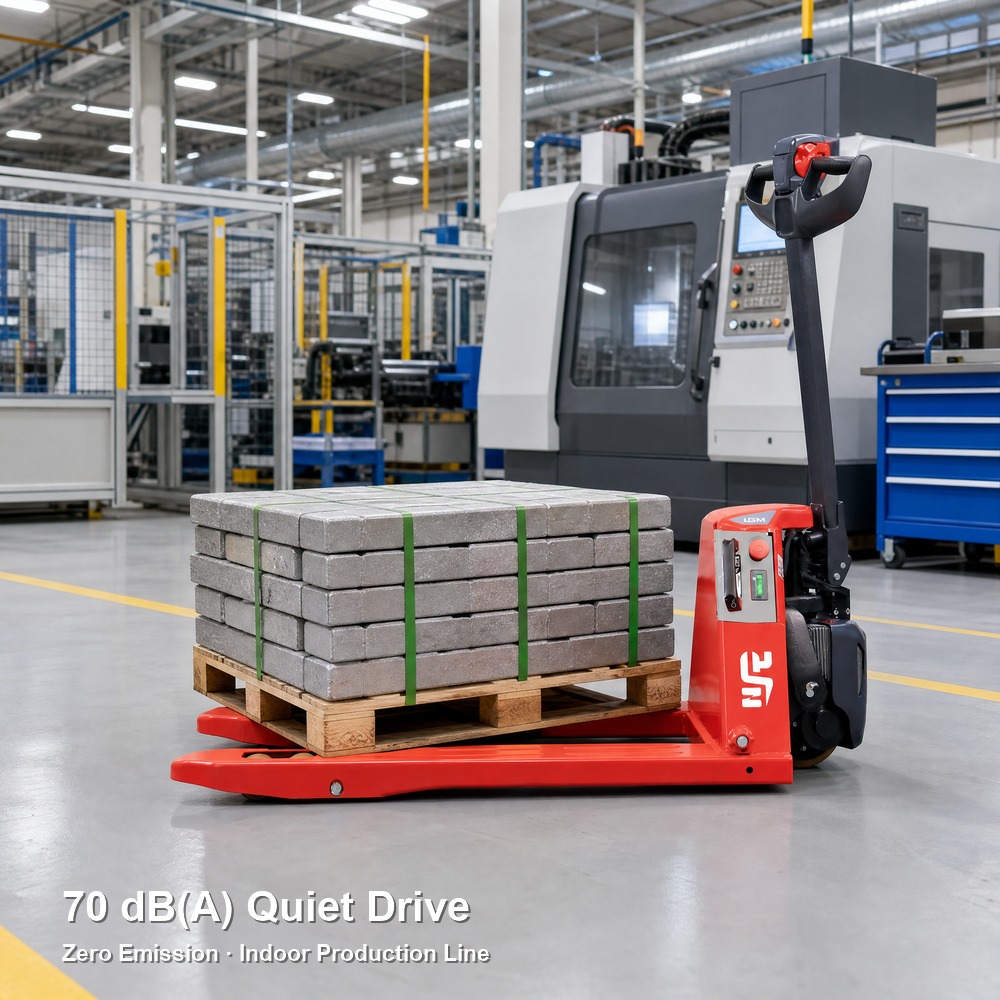
Battery Powered Pallet Jack Truck 48V Lithium Walkie Type for Narrow Aisle Warehouse Elevator Loading Unloading
Walkie format for narrow aisles, elevators and loading or unloading zones, with 48V lithium power for frequent starts and stops.
View Model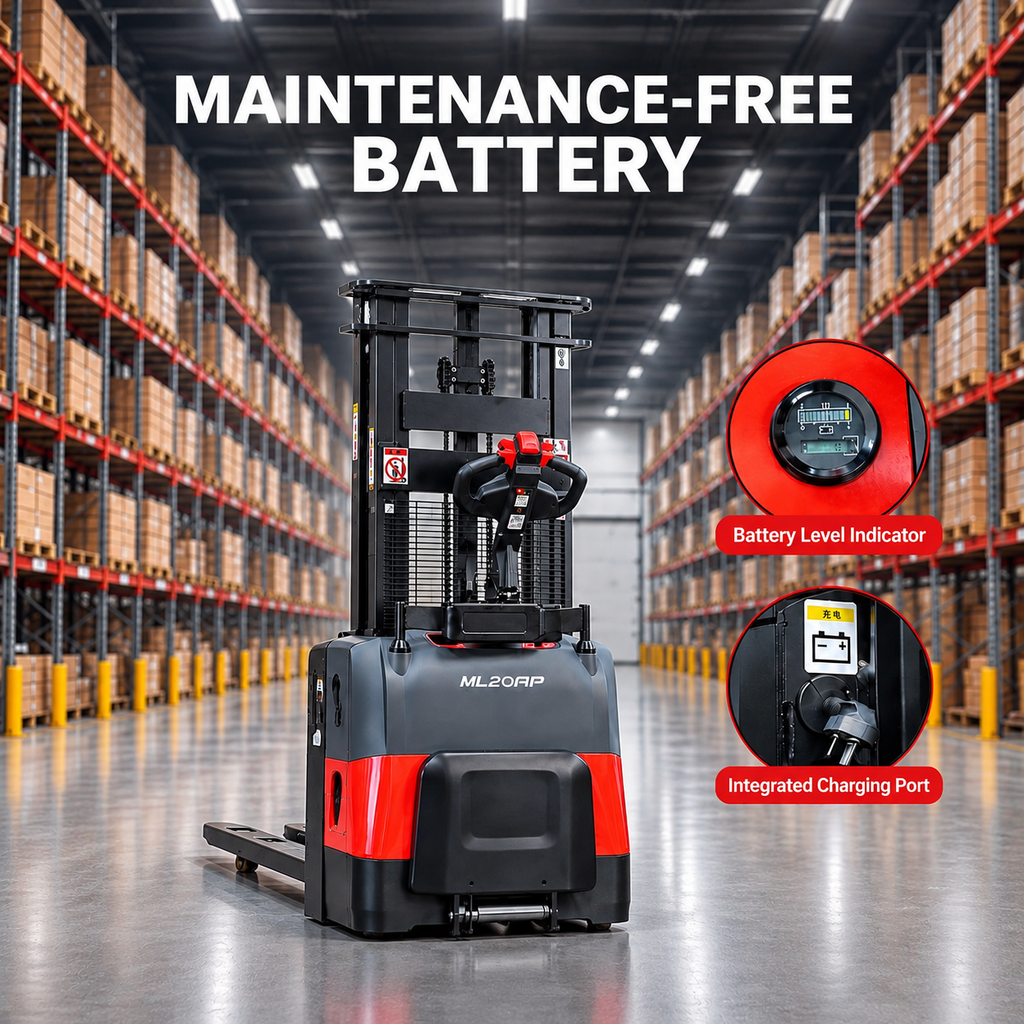
Stacker Forklift Electric 1500kg 2000kg for Retail Backroom Farm Feed Store Pallet Stacking Work
Dual 1,500/2,000 kg class for retail backrooms, farm supply and feed stores; electric lifting reduces manual handling and improves stacking consistency.
View Model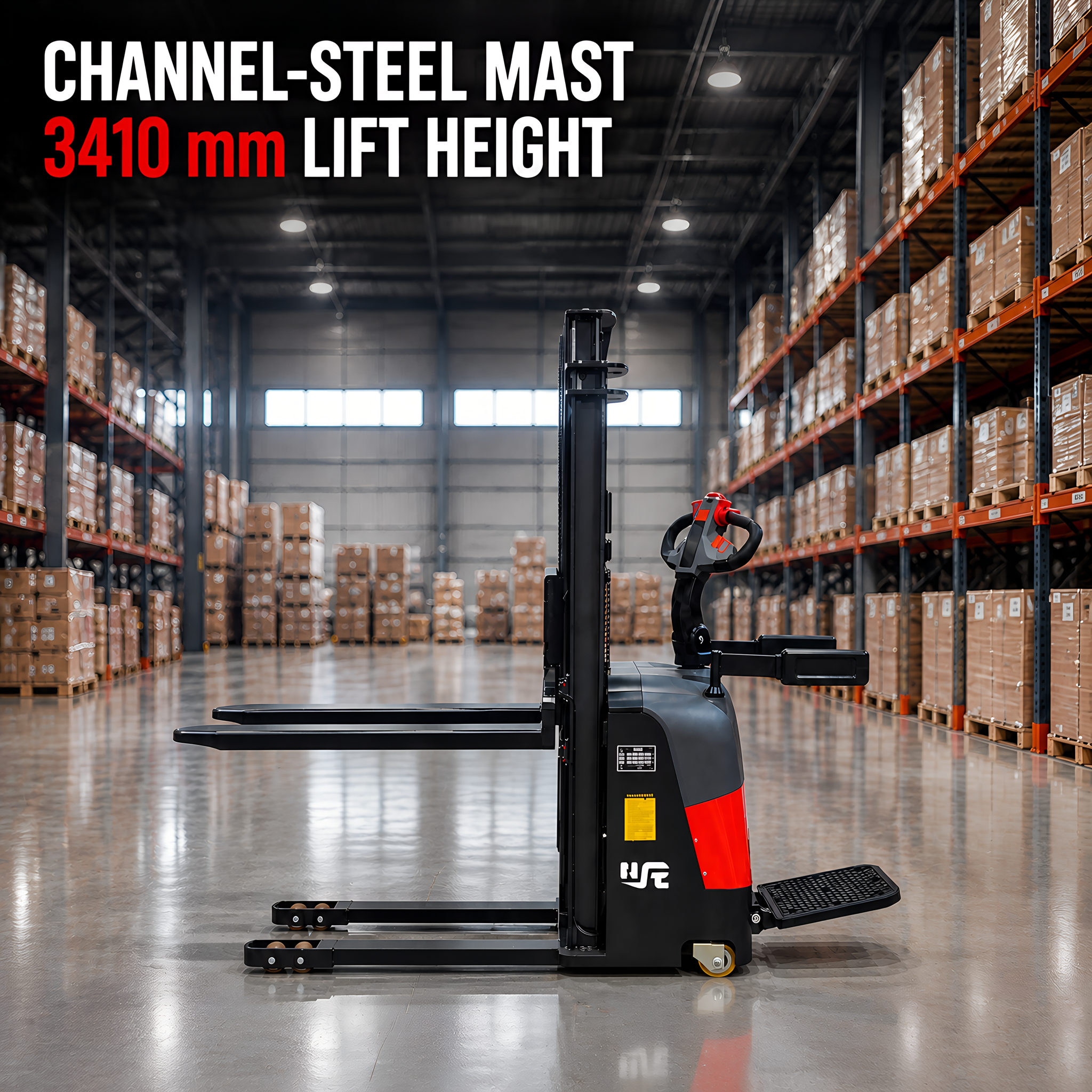
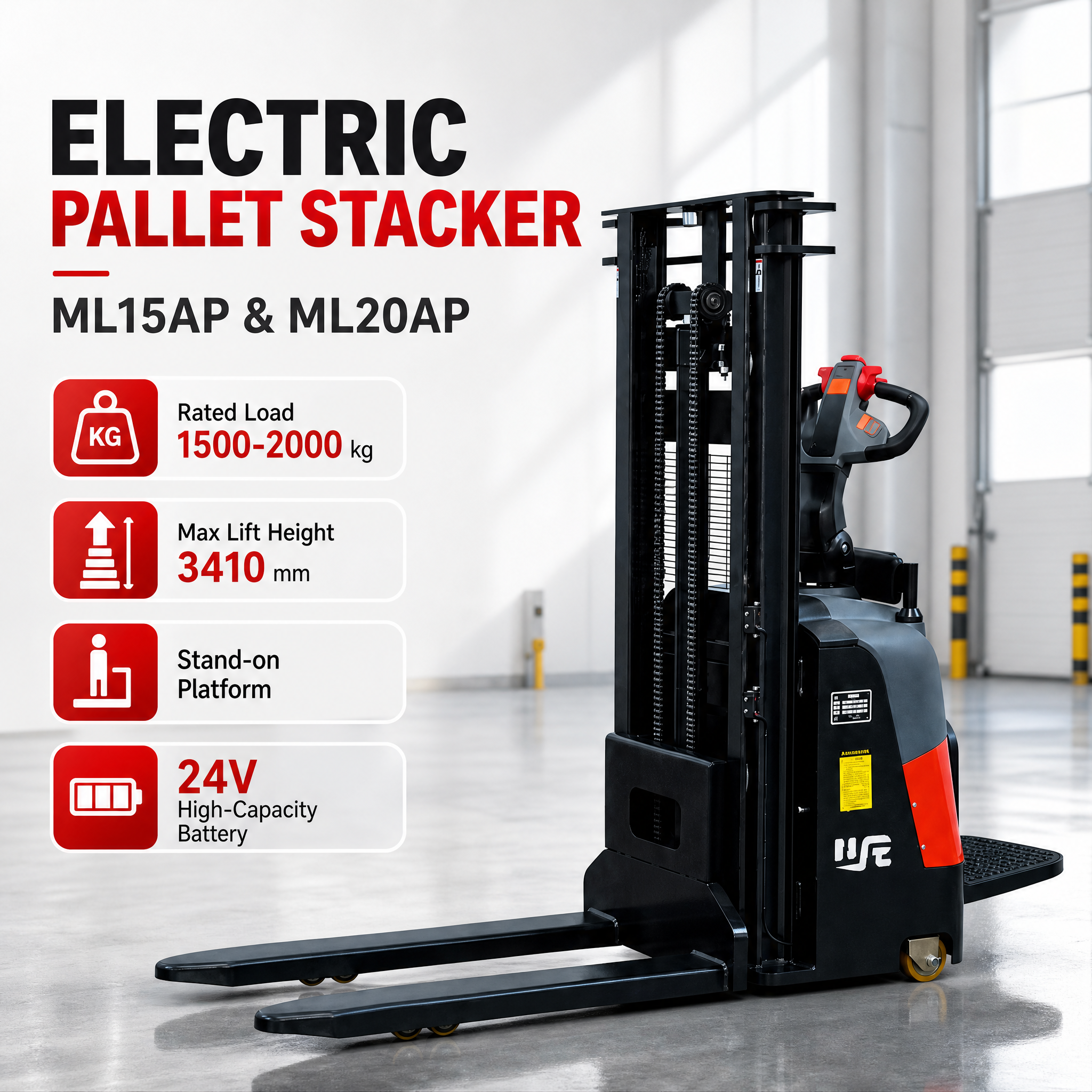
ML20AP Stand on Electric Stacker 2000kg 3410mm Max Lift 1478mm Turning Radius 820mm Body Width
2,000 kg capacity with 3,410 mm max lift, 1,478 mm turning radius and 820 mm body width for high-rack stacking in tighter footprints.
View Model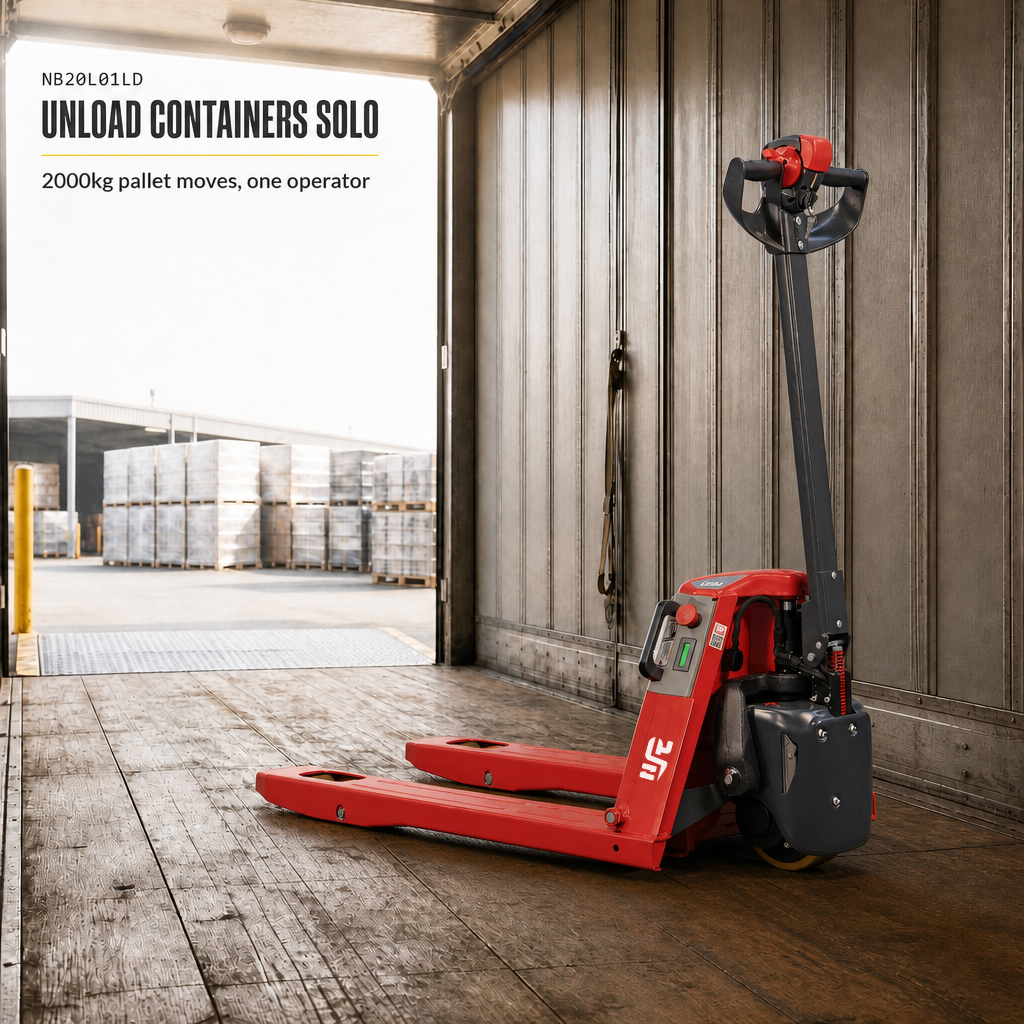
2000kg Electric Pallet Truck Lithium Ion 48V 10Ah Power Jack 1150mm Forks Polyurethane Wheels Container Loading
48V 10Ah lithium, 1,150 mm forks and polyurethane wheels make this a practical choice for container loading and smooth-floor transport.
View Model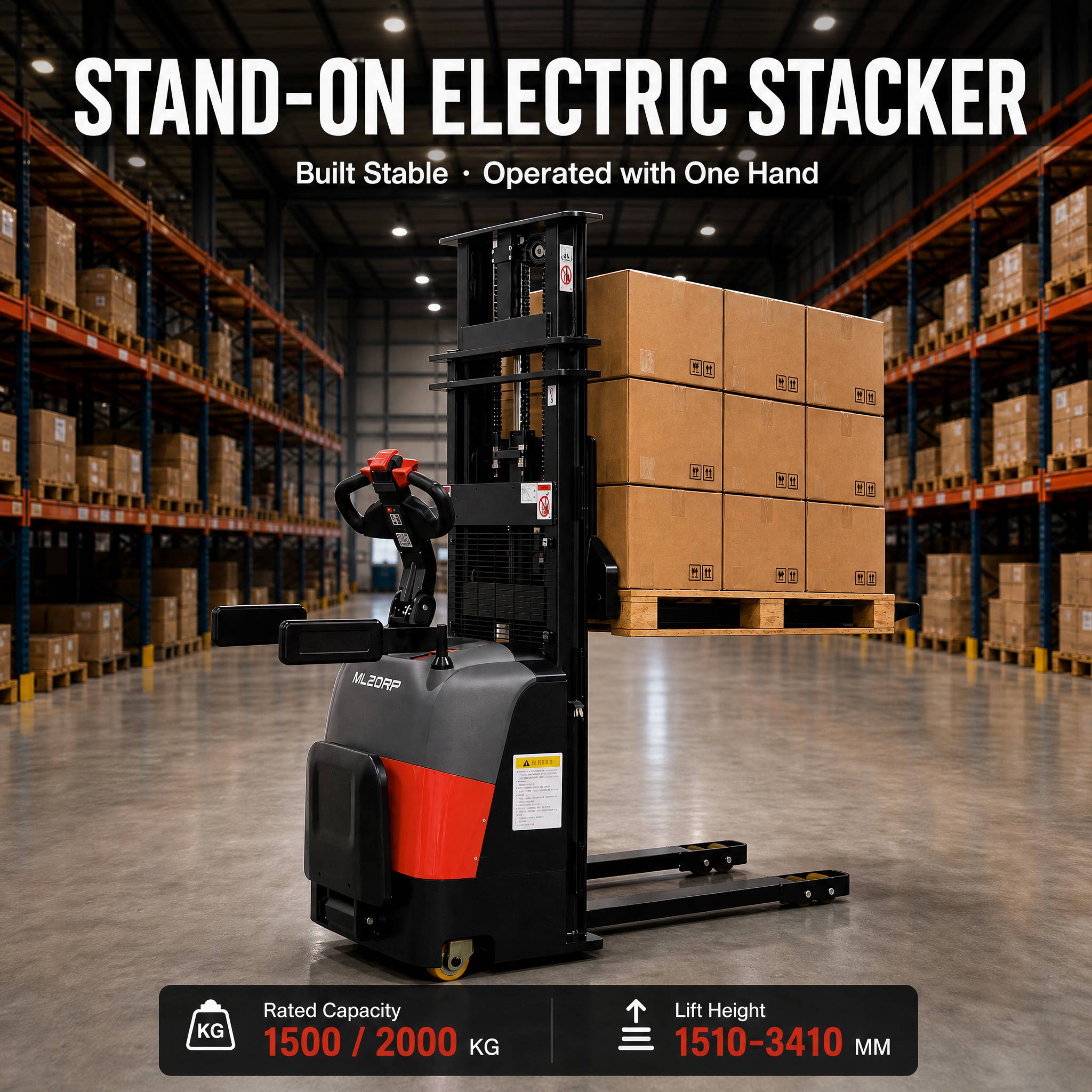
Channel Steel Mast Electric Pallet Stacker 2000kg 90mm Lowered Fork Height Stable High Rack Stacking
Channel steel mast and 90 mm lowered fork height support stable high-rack stacking where mast rigidity and low-entry forks matter.
View Model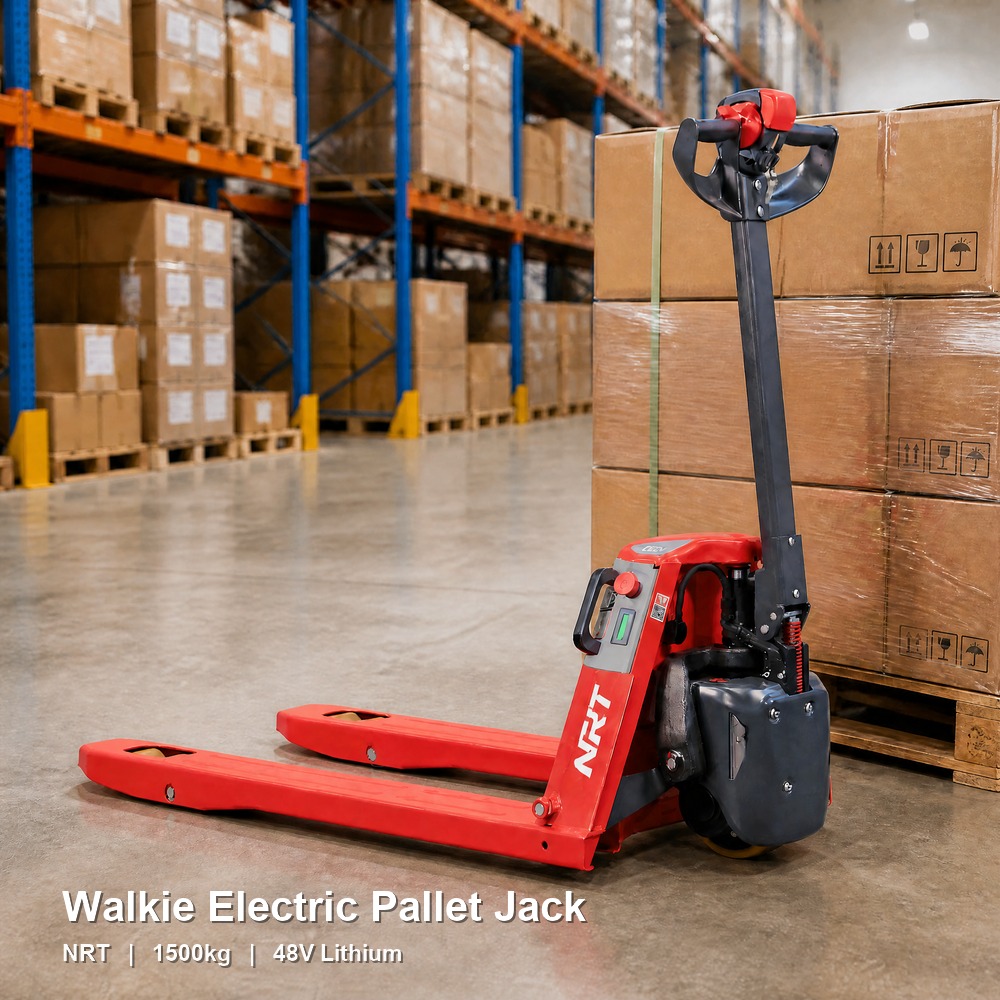
Electric Pallet Jack 1500kg 2000kg Walkie Pallet Truck Battery Powered Lithium Pallet Jack for Warehouse Loading
Walkie battery-powered pallet truck in 1,500/2,000 kg classes for warehouse loading and horizontal transport; a cost-efficient upgrade from manual jacks.
View ModelNeed a mixed container, private-label configuration or cold-storage battery package? Share your load, aisle and duty cycle with our application team. Get a Quote
Prepared by the Pexal application engineering and export compliance team for B2B buyers comparing pallet transport equipment from China. Specifications should be confirmed against your site data and final quotation.
China Pallet Transport Equipment Procurement Trends Buyers Should Plan For
The lowest quote is no longer the default decision. Across Western Europe, North America, South America, Eastern Europe and Oceania, procurement teams are rebuilding pallet transport equipment business cases around uptime, energy, safety, spare parts and supplier transparency.
Total Cost of Ownership
Buyers now compare acquisition price with energy cost, battery life, tyre wear, service intervals, spare-parts lead time and downtime risk. A 2,000 kg pallet truck that costs slightly more upfront can be cheaper over five years if it uses lithium power, offers fast battery swap and shares components with a wider fleet. For tender documents, ask suppliers to separate equipment cost, battery and charger cost, warranty terms, recommended spare-parts kit and estimated service hours. This makes bids comparable and reduces hidden costs after commissioning.
Lithium & Fast Swap
Lithium-ion and fast battery swap are moving from premium options to practical requirements. Models such as the 2,000 kg electric pallet jack with 48V lithium battery and 6-second swap are designed for cold storage down to -20°C, where battery rotation and uptime matter. For multi-shift warehouses, opportunity charging and a spare battery can reduce range anxiety. Procurement teams should confirm charger voltage, charging profile, battery management system, warranty and whether the battery can be serviced locally. They should also ask for a realistic duty-cycle calculation rather than a generic runtime claim.
Narrow Aisles & High Racks
Narrow aisles and high-density racking are driving demand for compact stackers and reach trucks. The ML20AP stand-on stacker, for example, combines 2,000 kg capacity, 3,410 mm max lift, 1,478 mm turning radius and 820 mm body width. Other models use 300 mm slim bodies or 90 mm lowered fork height for low-clearance entry. Buyers should measure actual aisle width, rack beam height, door clearances and floor flatness before choosing a model. A small difference in body width or turning radius can change the whole warehouse layout and safety margin.
Verification & Parts
Supplier verification and spare-parts continuity are now part of product selection. A China pallet transport equipment manufacturer should be evaluated on factory assessment, product traceability, export documentation, warranty response and component availability. Pexal has passed an SGS supplier assessment and onsite check, and publishes trade capacity, credit index and transaction history for review. For dealers and rental fleets, ask for a recommended fast-moving parts list, technical manuals, training materials and a named service contact. These details matter more than a generic “quality guaranteed” statement.
What this means for your next tender
Build a level playing field: require the same load center, lift height, aisle width, battery chemistry, charger specification, warranty and spare-parts response from every bidder. A lower headline price can be misleading when the battery, charger, freight or service package is excluded. Use a total-cost-of-ownership model and ask suppliers to disclose assumptions in writing.
Product Development Trends: From Electric Pallet Jacks to Intelligent Logistics
Product development is moving on several fronts: energy density, compactness, safety intelligence and modular customization. For buyers, the next generation of pallet transport equipment should be specified not only by capacity and lift height but also by battery architecture, data readiness and serviceability.
Lithium-ion as Standard
The direction is clear: 48V lithium platforms, fast swap and opportunity charging are becoming standard in electric pallet trucks. Products such as the 2000kg electric pallet truck with 1150mm forks and polyurethane wheels show how battery packaging is being integrated into compact chassis. Buyers should ask for charge-cycle data, battery management details, cold-storage performance and warranty terms. A lithium system is only an advantage when the charger, battery and service network are matched to the duty cycle.
Slim Bodies for Real Aisles
Pallet transport equipment is being designed around actual warehouse constraints rather than only load capacity. A 300mm slim body helps with narrow aisles and elevator loading, while an 820mm body width combined with a 1478mm turning radius supports maneuverability in high-rack areas. For procurement, the lesson is to share aisle drawings, rack elevations and door dimensions. The best model is the one that fits the building safely, not simply the one with the highest headline capacity.
Higher Lift, Stable Mast
High-rack stacking is pushing stacker design toward stiffer masts, lower fork entry and better visibility. Channel steel mast constructions and 90mm lowered fork heights help operators place pallets accurately while reducing impact risk. The ML20AP’s 3410mm max lift demonstrates how stand-on stackers are moving into work once reserved for larger equipment. Buyers should verify residual capacity at height, not just nominal capacity at ground level, and confirm that racking tolerances match the equipment’s lift and tilt performance.
Safety Intelligence
The next generation of equipment includes better braking, stability control, visibility packages, speed limiting and operator-presence sensing. These features are especially valuable in mixed pedestrian and forklift zones, cold stores and high-throughput loading docks. However, technology does not replace training. A practical procurement plan should include operator training, daily inspection checklists, floor marking and a clear pedestrian segregation policy. Ask suppliers for safety features, warning devices and service diagnostics that help supervisors identify misuse before it becomes an incident.
AGV & Fleet Telematics
Automation is entering through repetitive, predictable routes rather than a wholesale replacement of manual fleets. Automated guided forklifts and handling robots are being used for 24/7 pallet transport between fixed points. At the same time, telematics on conventional electric pallet trucks and stackers can provide utilization, battery and impact data. For buyers, the question is not whether to automate everything, but which flows are stable enough to justify the investment. A mixed fleet of manual and automated equipment is often the most practical first step.
Modular OEM / ODM
Customization is becoming modular. Instead of one-off engineering, suppliers can configure mast height, fork length, battery type, color, logo and attachments from validated options. Pexal offers sample-based customization, full customization and ODM services for distributors. This helps dealers build a local product line without damaging reliability or spare-parts commonality. Before ordering, define the exact market requirements: voltage, plug type, documentation language, safety labels, packaging and after-sales parts kit. Clear customization briefs reduce rework and shorten delivery.

Why Pexal Is a Practical China Pallet Transport Equipment Partner
Xiamen Pexal Technology Co., Ltd. was founded in Xiamen, Fujian in 2024 as the sales, service and technical support base for Pexal material handling equipment. We work with a 220,000 m² partner manufacturing campus and more than 1,200 people, including over 100 engineers focused on electric warehouse equipment.
Our mission is practical: help buyers move from manual handling to electric handling, and from diesel to battery power — reducing emissions, noise and operating cost while preparing for intelligent, digital logistics. We support dealers, rental companies and end users with electric forklifts, diesel forklifts, pallet trucks, pallet stackers, reach trucks, order pickers and AGV robotics.

SGS-Assessed & Onsite-Verified
Pexal has passed a supplier assessment and onsite check carried out by SGS Group. Buyers can review trade capacity, credit index, transaction level and trade history before the first order.
OEM / ODM Customization
Sample-based customization, full customization and ODM services are available, including mast height, fork length, battery type, color, logo and attachment configuration.
Global Trade Support
Delivery terms include FOB, CFR, CIF, EXW, FCA, CPT, CIP and DDP. Payment methods include T/T, L/C, D/P, D/A, Western Union, PayPal, credit card and escrow, with multiple currencies accepted.
Five Export Regions
Main markets include Western Europe, North America, South America, Eastern Europe and Oceania, serving dealers, rental fleets and end users with export documentation and application support.

Using Data to Build a Better Pallet Transport Equipment Business Case
A white-paper approach to procurement should separate measurable cost drivers from assumptions. The indicators below are a practical framework, not a guarantee; use them to ask better questions during supplier evaluation.
How to Read the Indicators
Use the bars to structure a total-cost-of-ownership discussion, not as a substitute for your own site data. A realistic model should include acquisition, energy, charging infrastructure, maintenance, tyres, downtime, training, battery replacement and resale value.
- Confirm the actual load center, not just the pallet weight.
- Match battery and charger strategy to shift patterns.
- Ask for residual capacity at your required lift height.
- Request a recommended spare-parts kit and service contact.
- Compare quotations on identical technical and commercial terms.
A Four-Step Buying Checklist Before You Request a Quote
The fastest quotation is the one built on complete site data. Share the details below so the recommended model is practical, safe and comparable with alternative bids.
Define the Load
Record maximum pallet weight, pallet size, load center and any attachments. Capacity declines as load center increases and lift height rises, so specify the heaviest realistic combination.
Measure the Site
Note aisle width, rack beam height, door clearance, floor condition and turning space. Photos or drawings help our engineers match body width, turning radius and lift height to the building.
Set the Duty Cycle
Estimate hours per shift, shifts per day, travel distance and loading frequency. This determines battery type, charger choice, fast-swap requirements and whether a ride-on model is more suitable.
Verify Compliance
Confirm voltage, plug type, safety labels, documentation language and local market requirements. Also clarify Incoterms, warranty, spare-parts kit and after-sales support before deposit.
Pallet Transport Equipment Procurement FAQ
Straight answers to the questions importers, dealers and fleet managers ask most often when comparing electric pallet trucks, stackers and warehouse transport equipment from China.
What is the difference between an electric pallet truck and an electric pallet stacker?
An electric pallet truck is designed mainly for horizontal movement on smooth floors, such as loading docks, retail backrooms and container loading. An electric pallet stacker adds a mast and can lift pallets to racking or stacking heights. If you only move pallets from point A to point B, a pallet truck is usually faster and more cost-efficient. If you need to lift pallets onto racking, a stacker or reach truck is required. Share your maximum lift height and rack beam height before selecting a model.
Should I choose 1,500 kg or 2,000 kg capacity?
Choose capacity from the actual load, load center and attachment, not from the pallet label alone. A 1,500 kg model may be sufficient for light retail and farm supply work, while 2,000 kg models provide more margin for dense goods, attachments or uneven loading. Remember that capacity decreases as load center increases and as lift height rises. For high-rack stacking, ask for residual capacity at height. If loads vary widely, specify the heaviest realistic combination and consider a model with a higher capacity margin.
Can lithium pallet equipment operate in cold storage?
Yes, when the equipment is configured for cold storage. The 2000kg electric pallet jack with 48V lithium battery, 6-second swap, 300mm slim body and -20°C cold-storage suitability is an example of a model positioned for temperature-controlled environments. Buyers should confirm battery chemistry, charger placement, lubricant suitability, condensation protection and warranty conditions for cold-store use. Battery runtime can change in low temperatures, so duty-cycle planning and a spare battery or opportunity-charging strategy may be necessary.
What can be customized for OEM/ODM orders?
Pexal offers sample-based customization, full customization and ODM services. Typical configuration points include mast height, fork length, battery type and capacity, color, logo, voltage, plug type, safety labels, packaging and attachments. For dealer programs, we can discuss private-label documentation and spare-parts kits. To speed up the process, provide drawings or photos of the aisle, racking, pallet type and loading method. Customization works best when requirements are defined before production, not after the equipment is built.
How do I verify a China manufacturer before payment?
Start with third-party verification, not only a website. Check whether the supplier has passed an onsite assessment, such as the SGS supplier assessment, and review trade capacity, credit index, transaction history and verified company video. Ask for the exact product configuration, Incoterms, payment terms, warranty, spare-parts list and after-sales contact. Compare quotations on the same technical basis. A lower price with unclear battery, charger or service terms can be more expensive over the life of the fleet.
Which Incoterms and payment methods does Pexal accept?
Pexal accepts common delivery terms including FOB, CFR, CIF, EXW, FCA, CPT, CIP and DDP, with other terms available by discussion. Payment methods include T/T, L/C, D/P, D/A, Western Union, PayPal, credit card and escrow. Accepted currencies include USD, EUR, GBP, JPY, CAD, AUD, HKD, CHF and CNY. The final combination depends on the order value, destination, financing requirements and whether the buyer is a dealer, rental company or end user. Confirm all terms in the quotation before deposit.
Build Your Next Pallet Transport Equipment Order With Clear Data
Share your load weight, load center, aisle width, lift height, floor condition, shift pattern and target market. The Pexal application team will recommend a configuration from the eight models above, confirm customization options and prepare a quote with suitable Incoterms and payment terms. Email: info@pexalbot.com
Get a Quote