Counterbalance Stackers and Electric Pallet Trucks for Wholesale Programs
The models below are presented with their original product links and image assets. Each card is a starting point, not a forced recommendation. For a counterbalance stacker program, match capacity to load center, lifting height to racking, fork length to pallet depth and battery strategy to shift pattern.
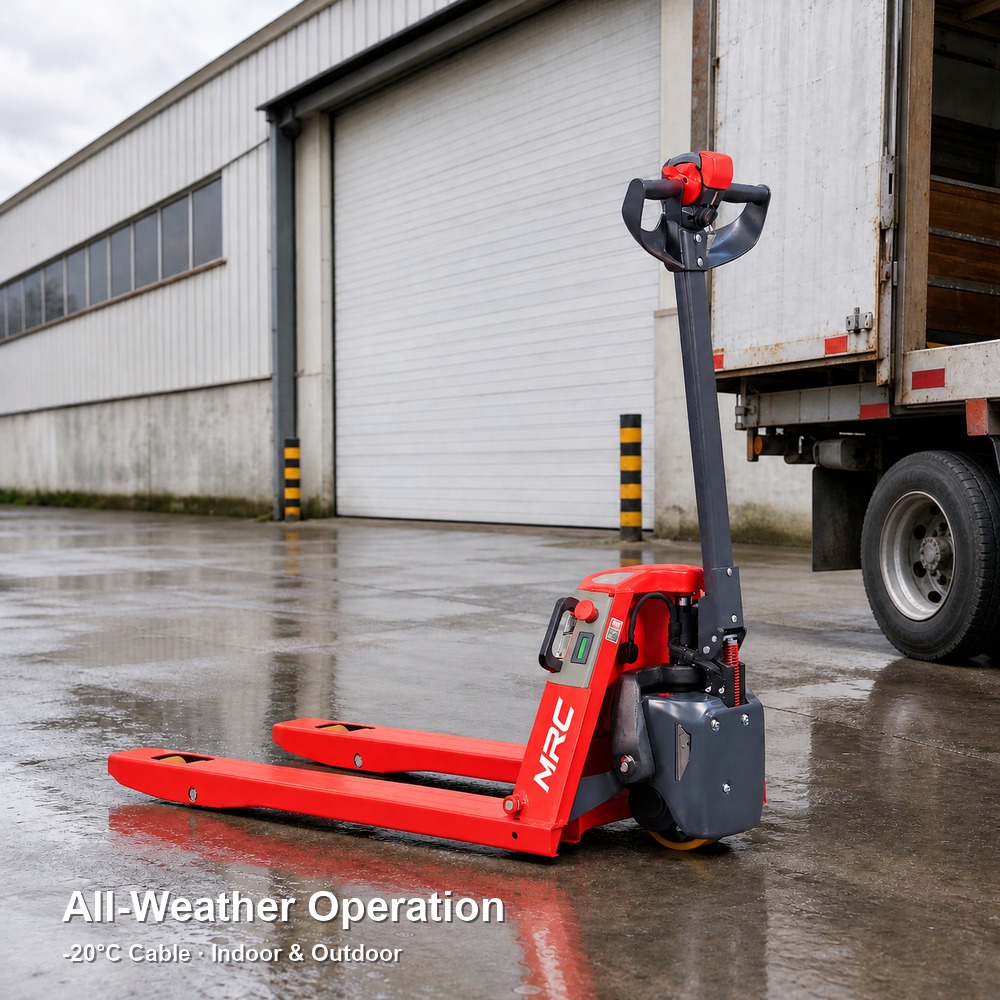
Factory Direct Price Electric Pallet Jack 1500kg 2000kg Battery Powered Walkie Pallet Truck Lithium Pallet Jack
Factory-direct walkie pallet truck for distributors that need a low-entry lithium model, simple maintenance access and a competitive landed-cost position.
View model specifications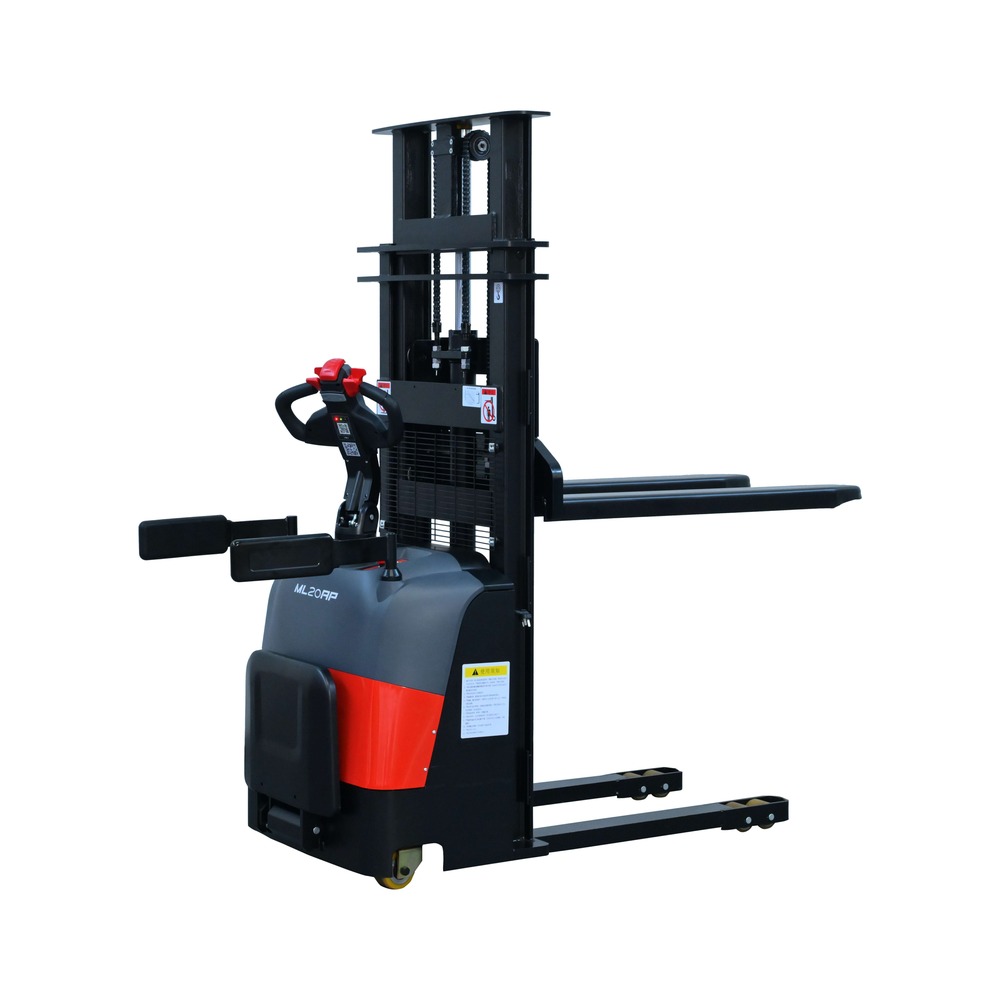
2000kg Stand on Electric Pallet Stacker 3.41m Lift Height Pallet Stacker Truck Channel Steel Mast 1480mm Turning Radius
Stand-on stacker with 3.41 m lift, channel-steel mast and 1,480 mm turning radius for warehouses that need higher racking without a full forklift footprint.
View model specifications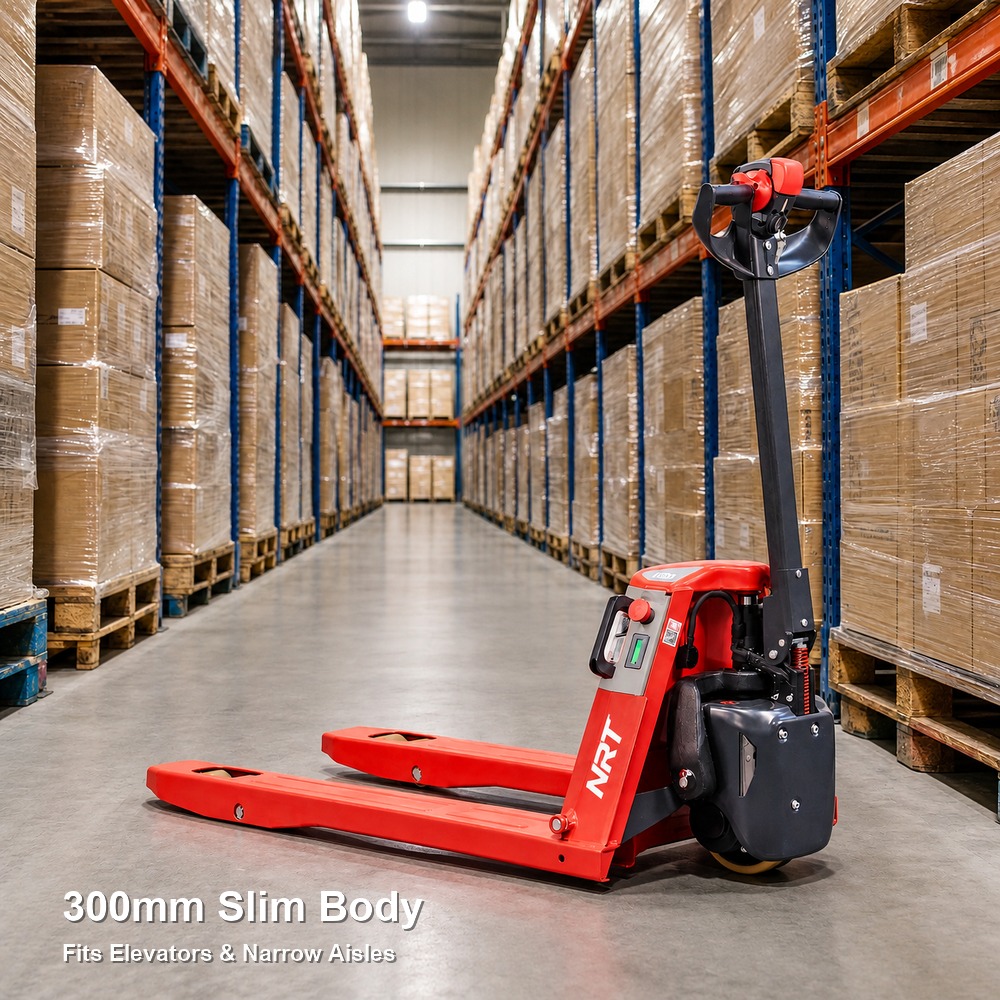
NB15L01LD Electric Pallet Jack 2000kg 48V 15Ah Lithium Battery 850W Fork 1150mm PU Wheels Pallet Truck
NB15L01LD lithium pallet jack with 1,150 mm forks and PU wheels; a practical wholesale option for multi-shift horizontal transport and dock work.
View model specifications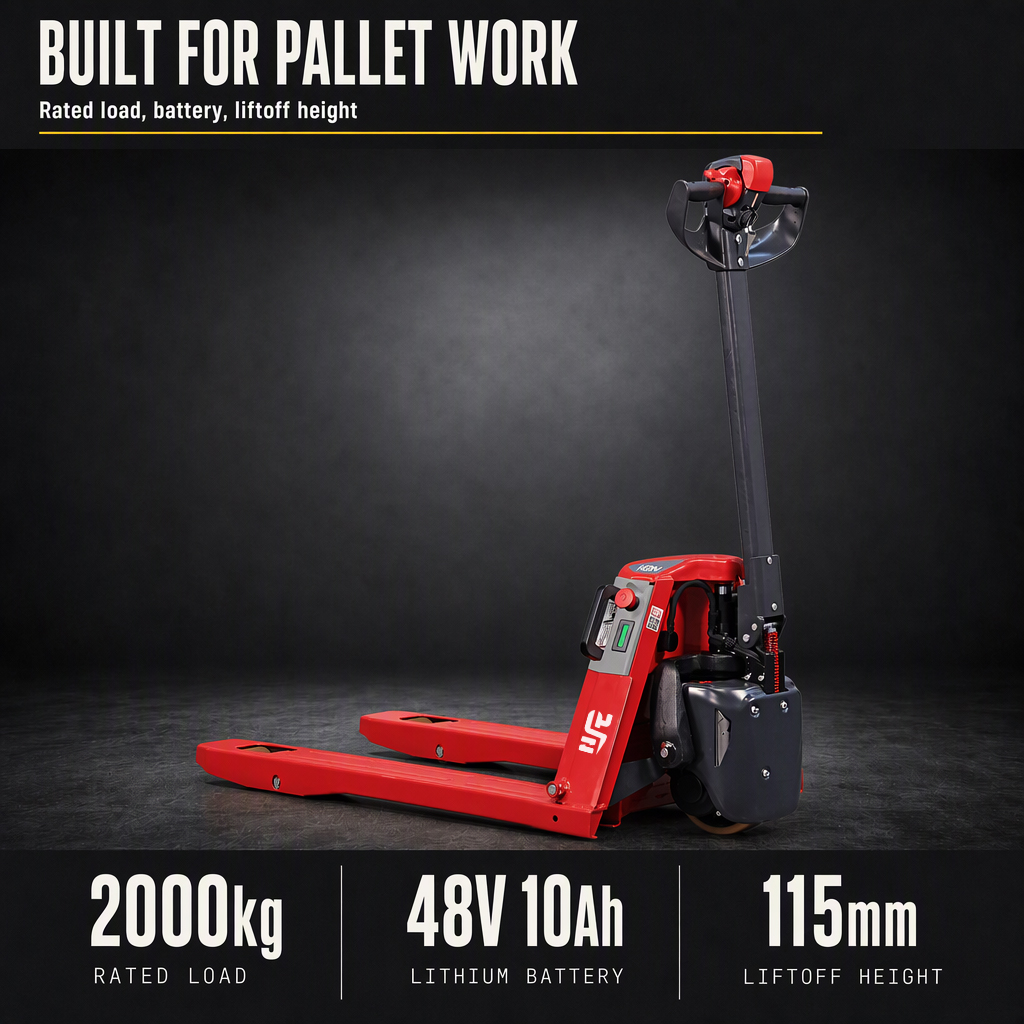
Portable Electric Pallet Jack Lithium Battery 2T for Narrow Aisle Warehouse and Truck Delivery Handling with 48V High Efficiency
Portable lithium pallet jack for truck delivery and narrow aisles, positioned as a flexible unit for dealers serving small warehouses and last-mile operations.
View model specifications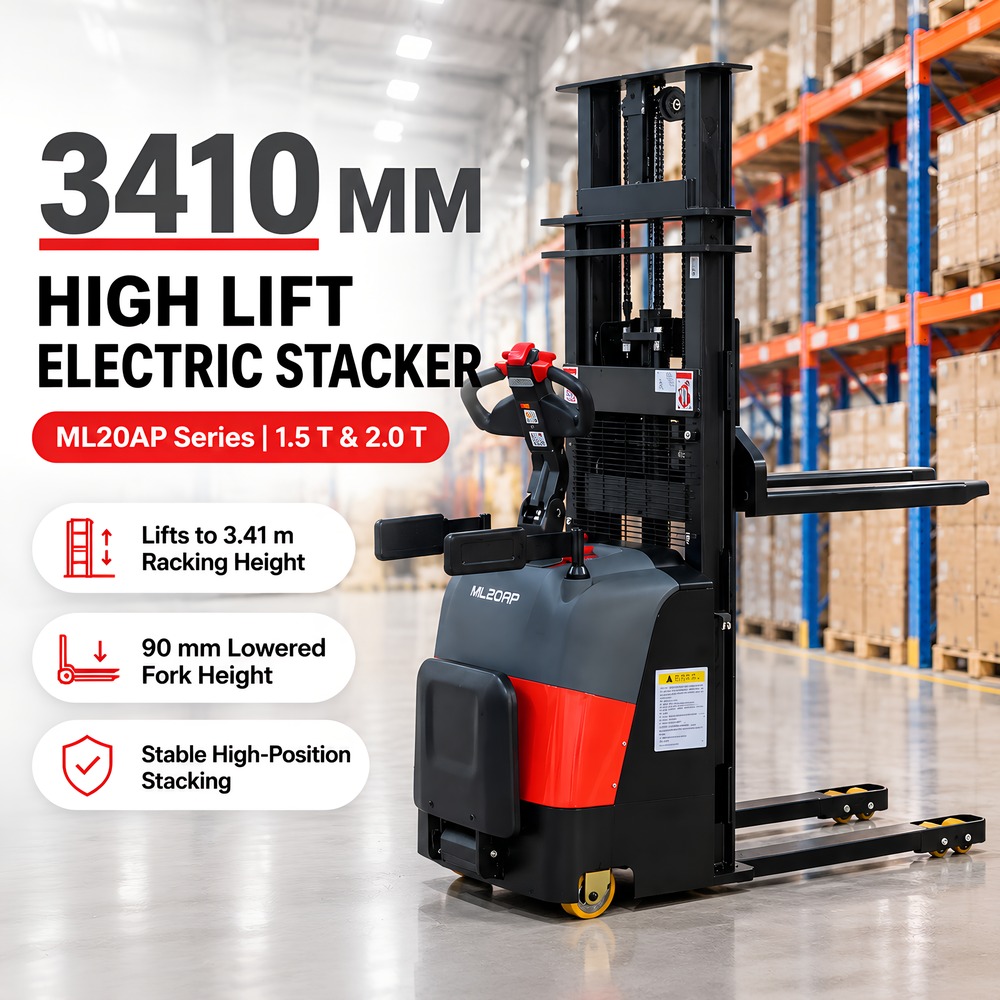
ML20AP Stand on Electric Stacker Truck 2000kg Warehouse Stacker for Narrow Aisle Loading Dock Building Material Shops
ML20AP stand-on electric stacker for loading docks, building-material shops and confined storage where operator ride-on comfort and precise positioning matter.
View model specifications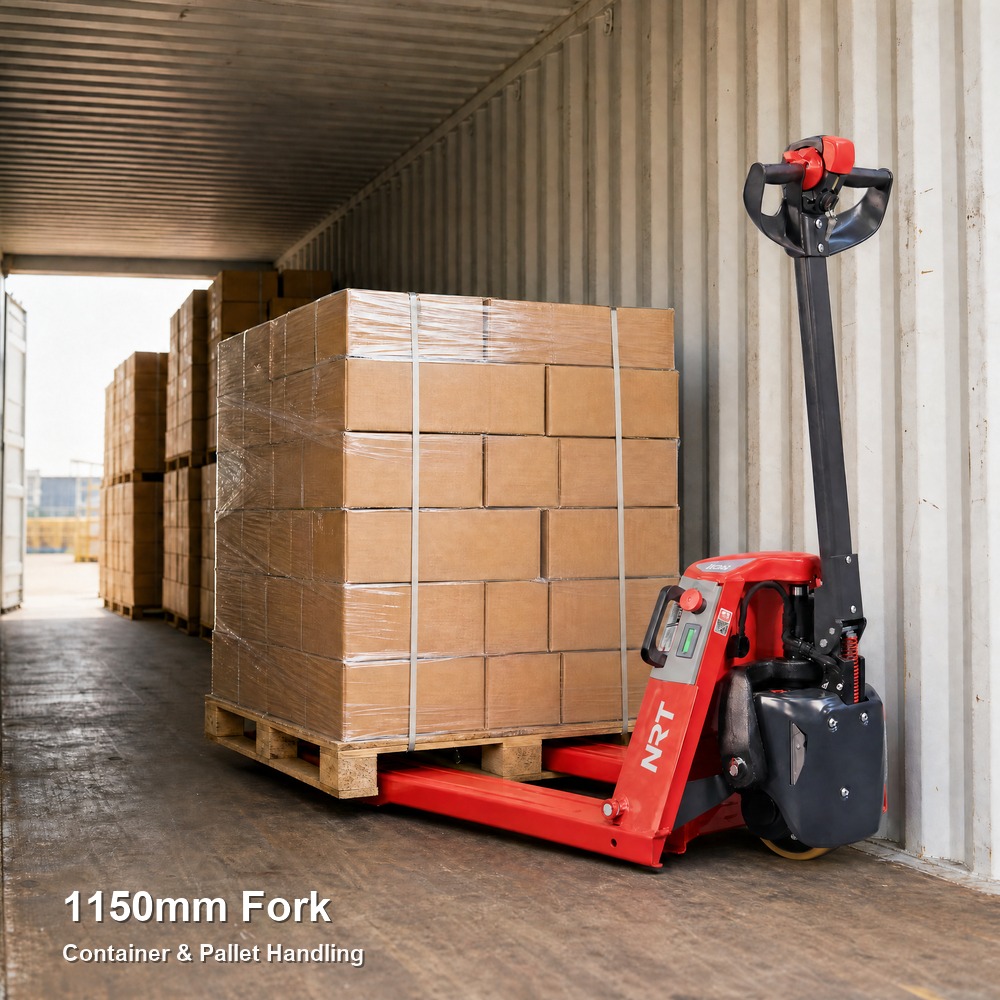
Walkie Electric Pallet Jack 1500kg Fork 1150mm Pallet Truck Battery Powered for Container Unloading Shop Floor
Walkie electric pallet jack for container unloading and shop-floor moves; a familiar specification for buyers who want a proven 1.5-ton class pallet truck.
View model specifications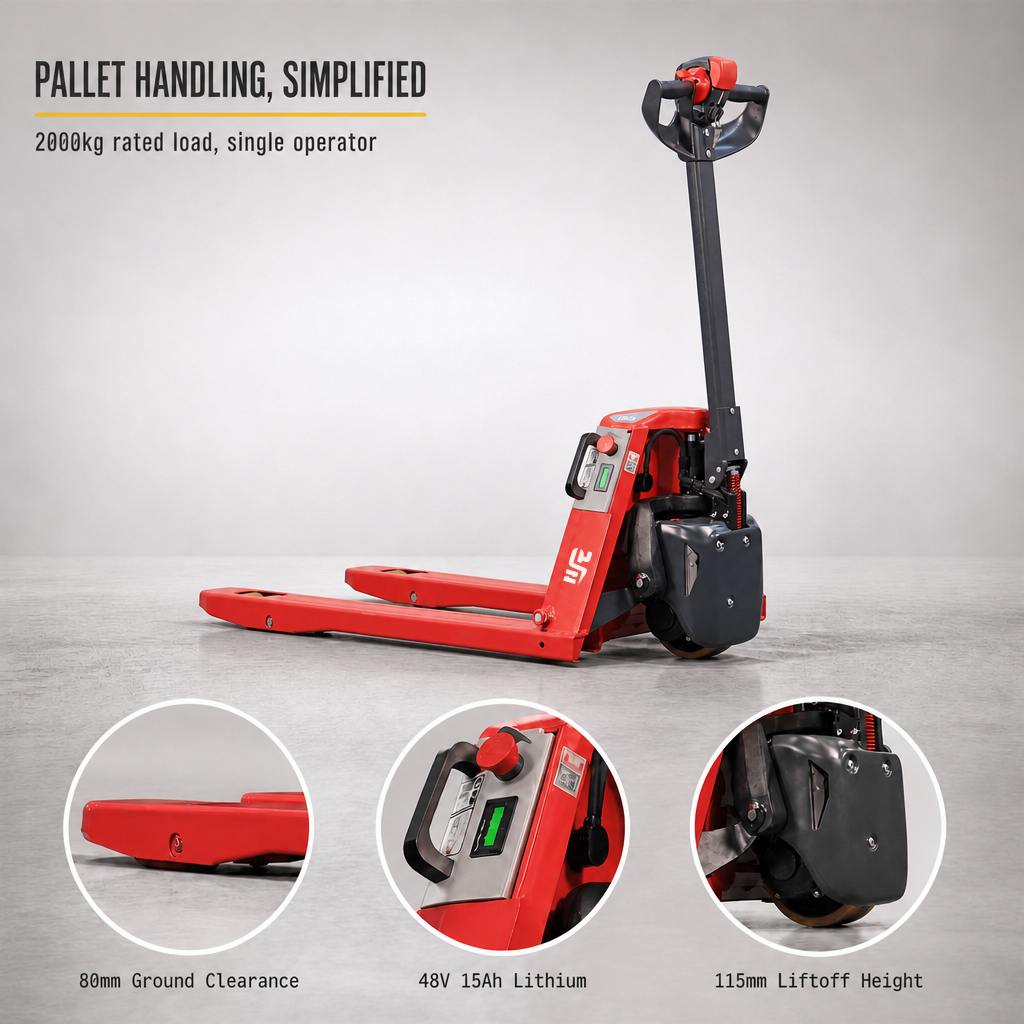
NB20L01LD 2000kg Electric Pallet Truck Lithium Battery 4.8km/h Speed 1245mm Turning Radius Jack
NB20L01LD lithium pallet truck with 4.8 km/h travel speed and 1,245 mm turning radius for distribution centers balancing speed and maneuverability.
View model specifications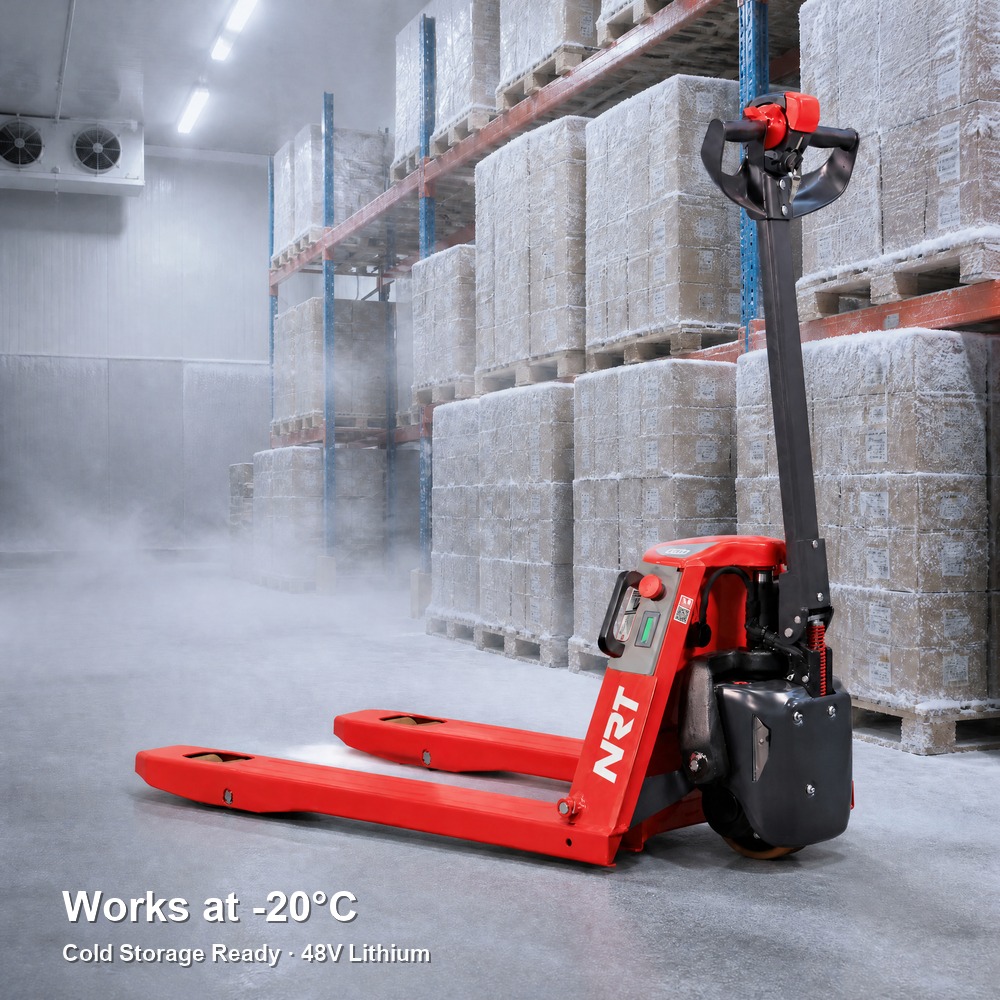
Electric Pallet Jack 2000kg with 48V Lithium Battery 6s Swap 300mm Slim Body Climbing 9% for Cold Storage -20C
Electric pallet jack with 48V lithium battery, slim 300 mm body, 9% grade capability and cold-storage suitability to -20°C for specialized applications.
View model specificationsProduct image proportions are preserved and all catalogue URLs above remain unchanged. Need a mixed model quotation? Get a Quote
What Makes a Qualified China Counterbalance Stacker Manufacturer for Wholesale Buyers?
Price matters, but a reliable stacker supplier must also prove application knowledge, traceable facilities, customization capability and export discipline. The most useful RFQ response gives you evidence, not adjectives.
 Since 2024 · Xiamen · SGS Assessed
Verified Capability Behind the Quotation
Xiamen Pexal Technology Co., Ltd. was founded in Xiamen, Fujian in 2024 as the sales, service and technical support base for Pexal material handling equipment. It works with a 220,000 m² partner manufacturing campus employing more than 1,200 people, including a team of over 100 engineers focused on electric warehouse equipment.
The practical meaning for buyers is straightforward: a single supply partner can support electric forklifts, pallet trucks, pallet stackers, reach trucks, order pickers and automated guided forklifts, while offering sample-based customization, full customization and ODM services. For wholesale programs, this breadth can reduce supplier-management cost and simplify mixed-container planning — provided each model is confirmed against the actual load, aisle and duty cycle.
- SGS onsite assessment and verified company video
- Full range for counterbalance and warehouse handling
- OEM / ODM customization for dealer branding
- Export experience across five main regions
- Logistics solution design and application consulting
- Published trade, transaction and credit records
Six supplier advantages that matter in an RFQ
Third-Party Verified Identity
Pexal has passed an onsite check and supplier assessment conducted by SGS Group. Buyers can review the assessment record, company profile and verified video before a deposit, reducing the risk of dealing with an unverified intermediary.
Source-Direct Economics
The partner production campus and stable component planning support dealer pricing without sacrificing pre-shipment inspection. Factory-direct models in the catalogue are positioned for importers who need a repeatable landed-cost structure.
Engineering-Led Customization
Mast height, fork length, battery type, color, logo and attachments can be configured around a market’s requirements. A written specification sheet and sample approval process help avoid hidden differences between a brochure and the delivered unit.
Export Terms and Payment Flexibility
Common delivery terms include FOB, CFR, CIF, EXW, FCA, CPT, CIP and DDP. Payment options include T/T, L/C, D/P, D/A, Western Union, PayPal, credit card and escrow, with currencies including USD, EUR, GBP, JPY, CAD, AUD, HKD, CHF and CNY.
Product Breadth for Mixed Containers
Counterbalance stackers, electric pallet trucks, electric forklifts, reach trucks, order pickers and AGV equipment can be discussed under one programme. That helps dealers build a complete warehouse floor rather than forcing customers to source from many unrelated suppliers.
Documented Trade Capacity
Company overview, trade capacity, transaction level, credit index, trade history and ratings are published for buyer review. These records are not a substitute for your own due diligence, but they make the verification process faster and more transparent.

Company and facility overview — a visual starting point for buyer verification.
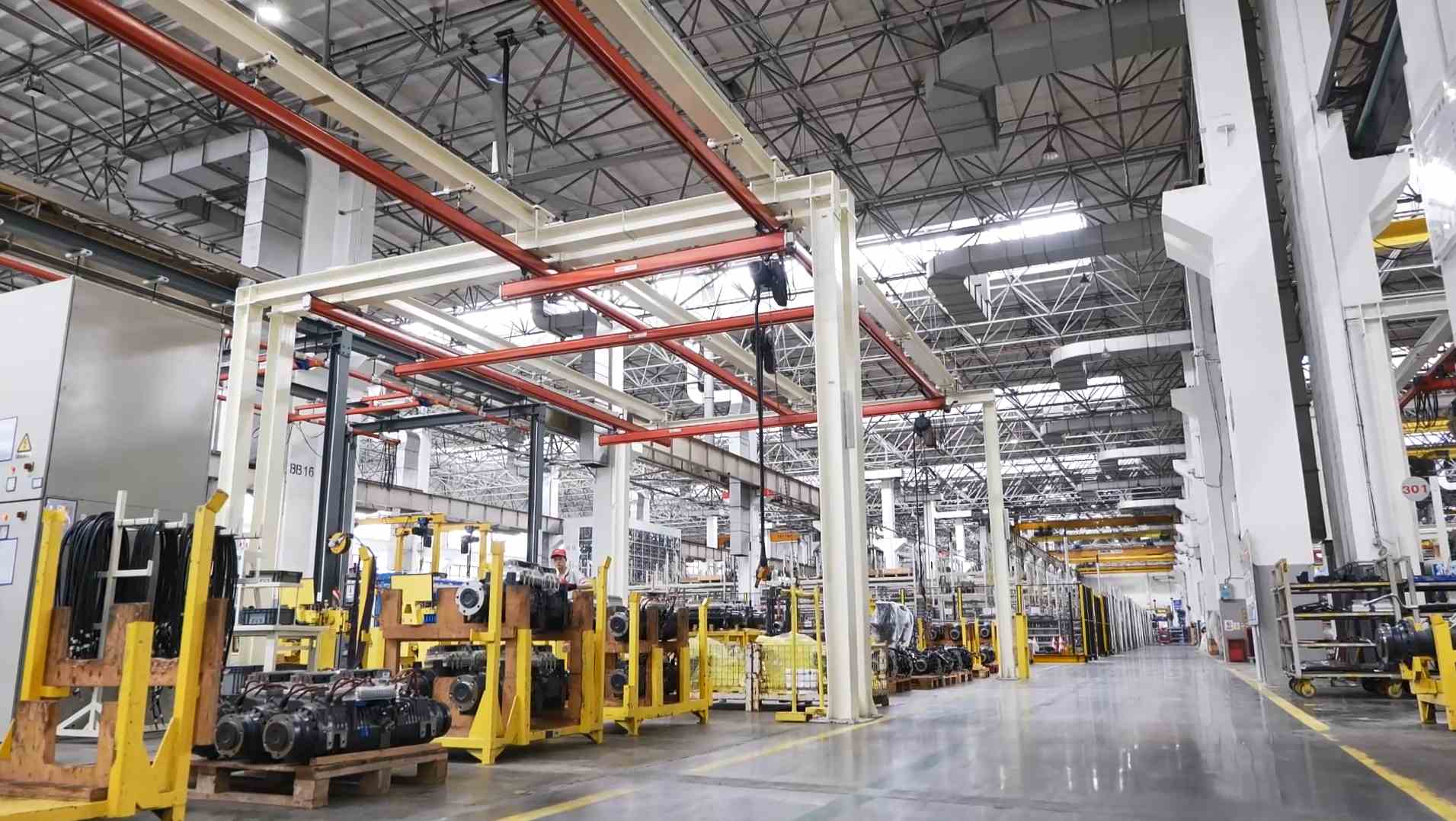
Production workshop review — confirm the assembly environment before a wholesale order.
The 2025–2030 Counterbalance Stacker Buying Outlook
The next procurement cycle will reward buyers who can prove application fit, not simply compare a unit price. This section gives importers a repeatable framework for evaluating Chinese stacker manufacturers, comparing pallet trucks and budgeting for total cost of ownership.
In a typical warehouse, a counterbalance stacker is used where a pallet must be lifted to a rack, feed line or vehicle bed and the aisle is too constrained for a conventional forklift. But the market uses the term broadly. Some products in this catalogue are walkie pallet trucks for horizontal moves; others are stand-on electric stackers for higher lift and longer routes. The first quality decision is therefore functional: define the job before you choose the model.
Load Center, Not Just Capacity
A 2,000 kg rating is not universal. The available capacity changes with load center, mast height and attachment. Ask for the rated capacity at your actual load center, not only the headline number. For 1,500 kg and 2,000 kg models, state the pallet weight, pallet depth and where the load sits on the forks.
Lift Height + Mast Structure
Models in this catalogue include a stand-on stacker with 3.41 m lift and a channel-steel mast. That is a different duty from a low-lift pallet truck. If your racking is the constraint, confirm the top beam height, free-lift requirement, mast profile and overhead clearance before approving the order.
Aisle + Fork Dimensions
Turning radius and fork length decide daily productivity. The listed 1,480 mm and 1,245 mm turning radii, 1,150 mm fork options and 300 mm slim body show why a measured aisle is essential. Ask the supplier to mark the proposed model’s dimensions on a site drawing.
From Invoice Price to Cost per Pallet Movement
For wholesale and dealer buyers, the lowest invoice price is rarely the lowest landed cost. The planning model below is an illustrative three-year TCO view for a 2-ton class electric stacker or pallet truck used in a single-shift warehouse. Actual percentages vary with energy price, duty cycle, spare-part policy, labor cost and charging strategy.
Use the model to structure questions: Does the battery support opportunity charging? What is the spare-parts list and lead time? Which components are common across models? What inspection evidence is provided before shipment? These questions often matter more than a 3–5% difference in the initial quotation.
For dealers, TCO also includes demo-unit availability, technical training, branding and after-sales response. A manufacturer that can supply a complete range may reduce inventory complexity, but only if model-level parts commonality and documentation are confirmed.
Sourcing Scorecard: How to Compare Counterbalance Stacker Suppliers
Use a weighted scorecard before shortlisting. The weights below are a practical starting point for dealers and warehouse operators; adjust them to your own risk profile.
| Criterion | Suggested Weight | Evidence to Request |
|---|---|---|
| Safety and compliance evidence | 25% | Market-specific documentation, emergency-stop function, brake test, load test report, labels, manuals and operator training material. |
| Application fit | 20% | Load center, lift height, turning radius, fork length, battery type and aisle drawing marked with the proposed model. |
| Total cost of ownership | 15% | Energy consumption estimate, service interval, wear-part list, spare-parts pricing and availability plan. |
| Supplier verification | 15% | SGS assessment, onsite check, verified video, trade history, transaction level and a named engineering contact. |
| Customization capability | 10% | Written customization sheet, sample approval process, ODM scope, logo and color control, attachment compatibility. |
| Lead time and logistics | 10% | Production schedule, packaging method, Incoterms, port of loading, mixed-container capability and shipment inspection plan. |
| After-sales and spares | 5% | Parts catalogue, warranty terms, technical response channel, and a realistic plan for components that wear in daily operation. |
What Buyers Are Changing in China Stacker Wholesale Orders
Several changes are visible in RFQs and repeat orders from Western Europe, North America, South America, Eastern Europe and Oceania. They influence specification, payment structure and supplier selection.
Electric and Lithium-First Purchasing
Indoor air quality, noise and operating cost continue to push manual and diesel equipment toward electric handling. Lithium models and opportunity charging reduce battery-room requirements, but charger compatibility and shift patterns must be documented before the order is finalised.
TCO and Cost per Pallet Movement
Procurement teams increasingly request energy consumption, service intervals and parts pricing alongside unit price. A stacker that is cheaper to buy but more expensive to maintain can lose over a three-year horizon, especially in multi-shift warehouses.
Mixed-Container Sourcing
Dealers combine pallet trucks, stackers, spare parts and accessories in one container to improve freight efficiency. A manufacturer with breadth across electric forklifts, pallet trucks, stackers, reach trucks, order pickers and AGV helps reduce supplier count — provided the mixed load is engineered and packed safely.
Fast Battery Swap and Cold-Chain Specialisation
Models with 48V lithium, fast battery swap and cold-storage operation down to -20°C show how specific buyer requirements have become. Buyers should still validate charger suitability, condensation risk, operator safety and warranty conditions for the actual site.
Verification Before Deposit
SGS assessment, a verified company video, trade history, transaction history and a named engineering contact are becoming standard due-diligence items. Product photos alone are not a verification programme. Ask for records that can be checked independently.
Dealer and Rental Programme Requirements
Distributors need consistent branding, parts availability, technical documentation and predictable lead times. OEM/ODM customization should be supported by a written specification sheet, pre-production approval and a clear change-control process.
How Counterbalance Stackers and Electric Pallet Trucks Are Evolving
Equipment development is moving toward application-specific electric platforms, not one generic truck for every warehouse. The following directions are relevant to dealers planning the next catalogue cycle.
Smarter Lithium Architecture
Modular packs, opportunity charging and thermal management are becoming more important than simple battery capacity. The buying question is not only “how many Ah?” but “how does the pack behave across real shifts, breaks and charging windows?”
Slimmer, Purpose-Built Geometry
A 300 mm slim body, short turning radius and fork lengths around 1,150 mm are responses to real aisles and delivery vehicles. Expect more models designed around specific tasks such as container unloading, shop-floor transfer and cold-store handling.
Safety Intelligence and Telematics
Speed limiting, access control, fault-code visibility and usage data are moving from premium fleets toward broader warehouse equipment. Buyers should ask which features are standard, optional or retrofittable before comparing quotes.
Automation-Ready Handling
Automated guided forklifts and handling robots complement manual stackers on repetitive, fixed routes. The practical trend is hybrid fleets: manual electric trucks for variable work and automation for predictable pallet flows with stable infrastructure.
Recommended Configurations by Operating Scenario
Use these starting points to frame a quotation request. Final models should be confirmed against a measured aisle, load-center and duty-cycle study.
Container Unloading and Retail Backroom
For horizontal transport, tight receiving areas and shop-floor replenishment, start with a walkie pallet truck. Confirm fork length against the pallet and ensure the charger matches local power.
Racking to 3 m+ and Loading Dock
For medium-height racking, a stand-on stacker with a reinforced mast and precise positioning is usually more productive than a low-lift pallet truck. Verify overhead clearance and aisle width.
Narrow Aisle and Distribution Centre
For fast horizontal movement with limited turning space, compare travel speed, turning radius and battery strategy. The 1,245 mm turning radius and 4.8 km/h travel speed are useful data points for route planning.
Cold Storage and Battery-Swap Programme
For cold-chain and specialised applications, request written confirmation of operating temperature, condensation protection, charger placement and warranty terms. A fast-swap design can support continuous operation if the process is designed correctly.
Questions Buyers Commonly Ask Before Ordering Counterbalance Stackers
Straight answers for importers, dealers and warehouse operators evaluating a China manufacturer or wholesaler.
What is a counterbalance stacker, and when should I choose one?
How do I select between 1,500 kg and 2,000 kg models?
What lift height should I request for racking?
Are lithium electric stackers suitable for cold storage?
Can I order a mixed container with stackers and pallet trucks? Yes.
What customization is available for wholesale programs?
How can I verify the supplier before paying a deposit?
What shipping terms and payment methods are supported?
Get an Engineered Quote, Not a Blind Price List
Share your load, aisle, lift height, duty cycle, port and local voltage. We will help you shortlist a counterbalance stacker or pallet truck configuration from the range and prepare a wholesale quotation for your market.
- Maximum pallet weight and load center
- Required lift height and racking layout
- Aisle width and floor condition
- Shift pattern and charging window
- Destination port and Incoterms
- Customization, branding and documentation
Email: info@pexalbot.com
Response from the sales and application team.
Specifications, images and product links are presented for B2B sourcing reference. Final configuration, documentation and commercial terms should be confirmed in the quotation and contract.