China Top Battery Powered Stacker Factories & Supplier
Most buyers searching for China’s top battery powered stacker factories are not simply looking for a catalogue. They are trying to reduce sourcing risk, confirm application fit, and protect total cost of ownership. This evidence-led guide compares eight production-ready models, explains what genuine factory capability looks like, and shows how Xiamen Pexal Technology Co., Ltd. supports dealers and fleet owners across Western Europe, North America, South America, Eastern Europe and Oceania.
8 Battery Powered Stacker and Pallet Handling Products to Shortlist
The products below preserve their original product-page links. Use them to compare load class, battery format, lift height, aisle requirement, operator format, and application fit. For mixed-fleet buyers, start with the duty cycle, then confirm the stacker architecture that will still be serviceable in year three.
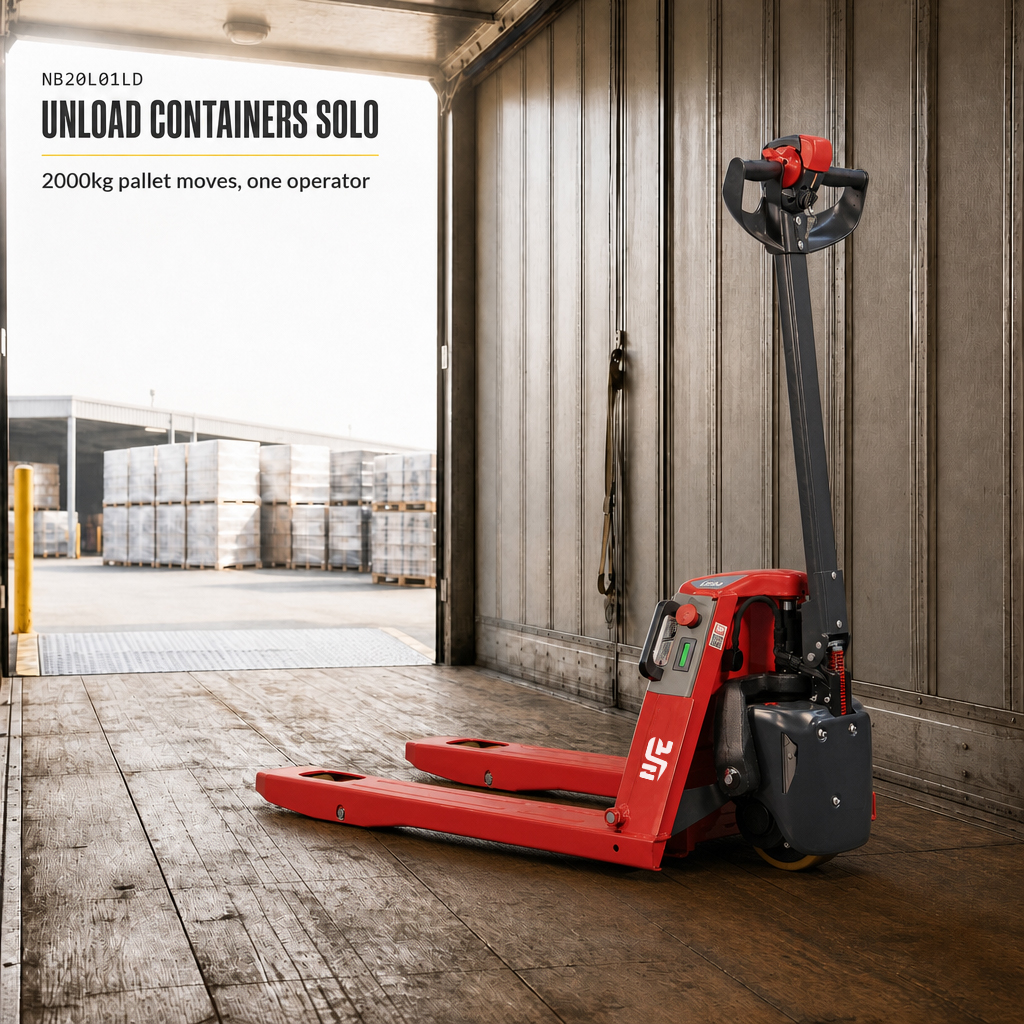
NRT 2 Ton Electric Pallet Jack Lithium-Ion 48V 10Ah 1150mm Forks Polyurethane Wheels Warehouse Handling
A 2-ton lithium-ion pallet jack for horizontal transport, dock work, and warehouse handling. The 48V 10Ah battery, 1150 mm forks, and polyurethane wheels suit frequent short-to-medium moves where manoeuvrability and clean operation matter.
View product specs
Stand on Electric Stacker 2000kg for Narrow Aisle Warehouse Loading Dock Building Material Shop Pallet Handling
A stand-on electric stacker for narrow-aisle loading, building-material retail, and repeated pallet placement. The 2,000 kg class and stand-on format improve operator control where reverse travel and precise positioning are part of daily work.
View product specs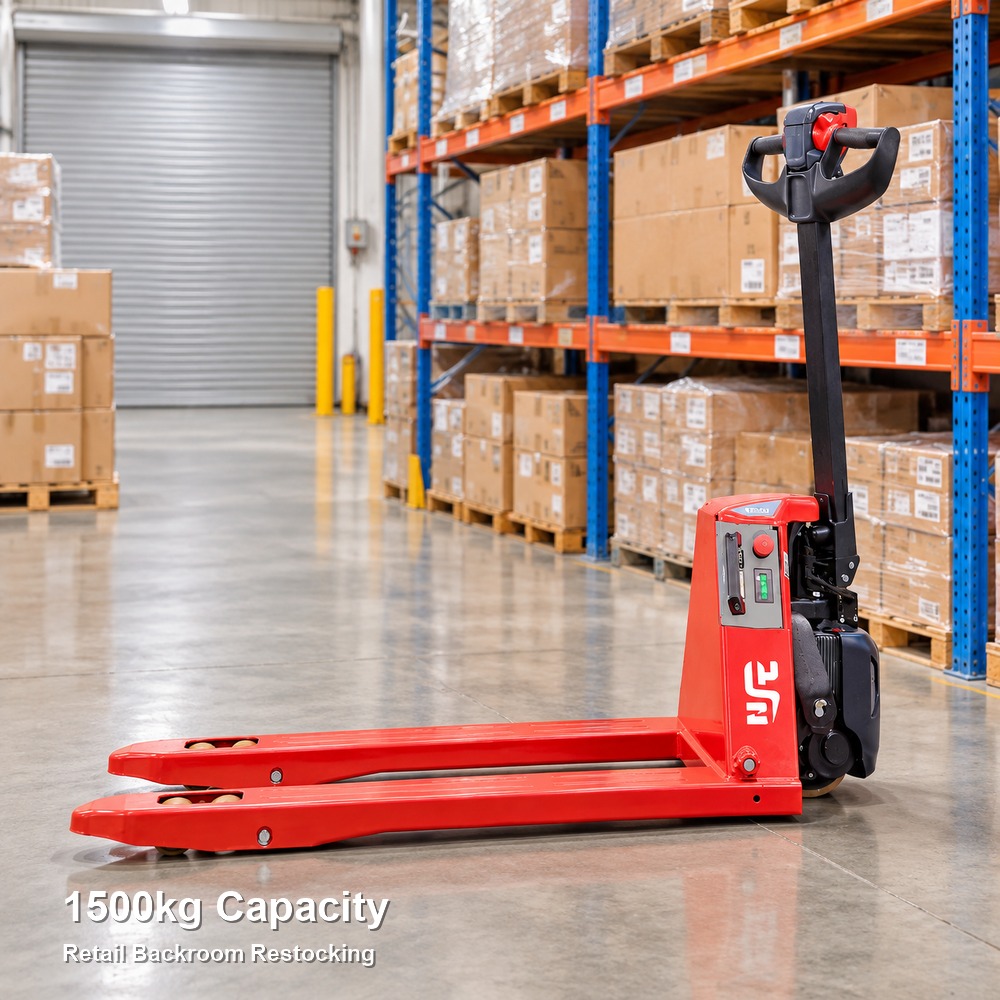
Cold Storage Electric Pallet Jack -20C Working 48V Lithium Battery Pallet Truck Walkie Type 1500kg 2000kg
A cold-storage electric pallet truck configured for -20°C work. Lithium power, walkie operation, and 1,500–2,000 kg capacity address freezer-room handling where battery behaviour, operator exposure, and condensation control require a specific configuration.
View product specs
2026 New Alternative Convertidor De Palet Jack a Electrico Ultra-Lightweight 107kg Electric Pallet Jack with Lithium Power
An ultra-lightweight 107 kg lithium electric pallet jack for distributors and importers who need easier container loading, lower handling effort, and a modern alternative to conventional pallet jacks without oversizing the fleet.
View product specs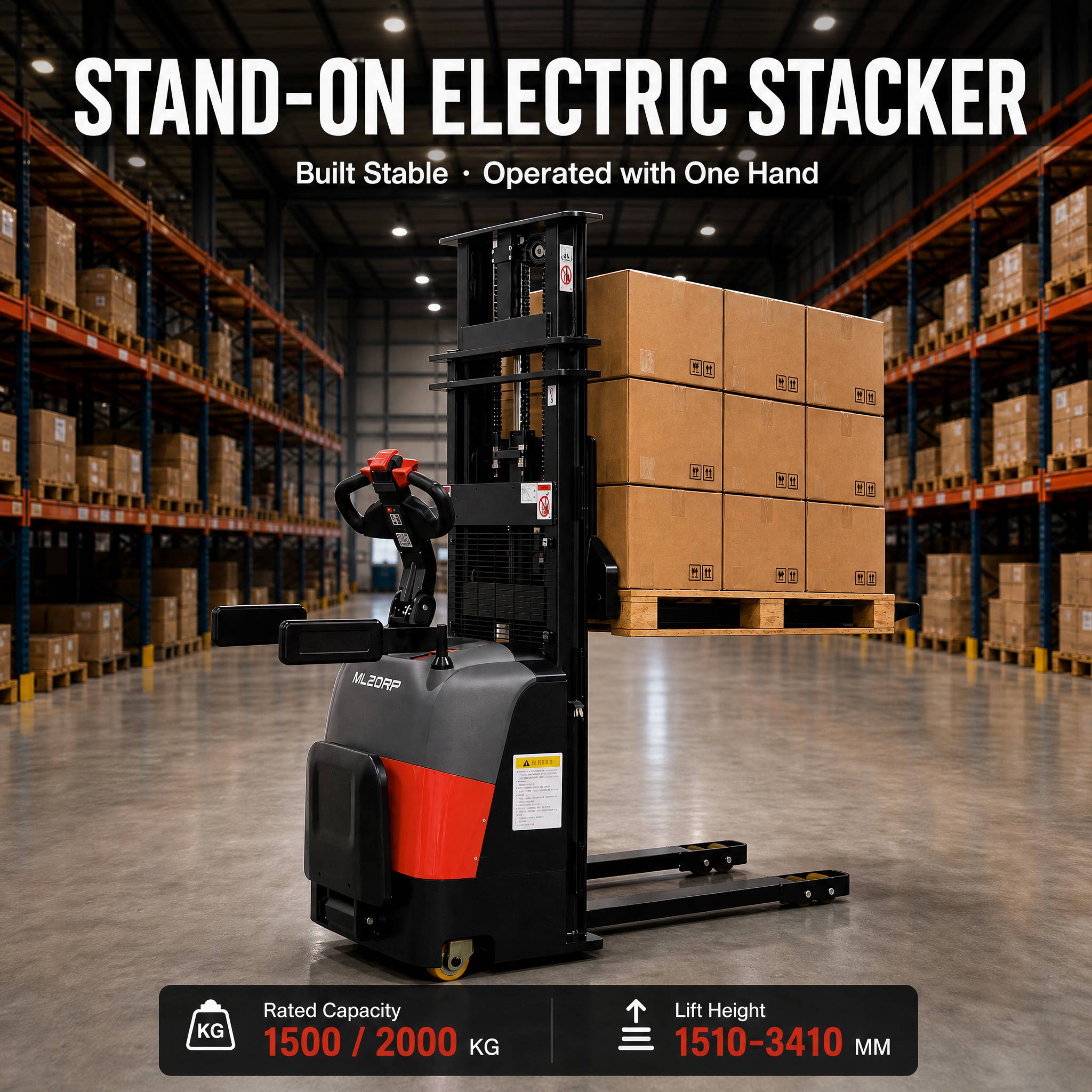
Channel Steel Mast Electric Pallet Stacker 2000kg 90mm Lowered Fork Height Stable High Rack Stacking
A channel-steel mast electric pallet stacker with 2,000 kg capacity and a 90 mm lowered fork height. Designed for stable high-rack stacking where structural rigidity, mast control, and repeatable pallet entry are more important than headline travel speed.
View product specs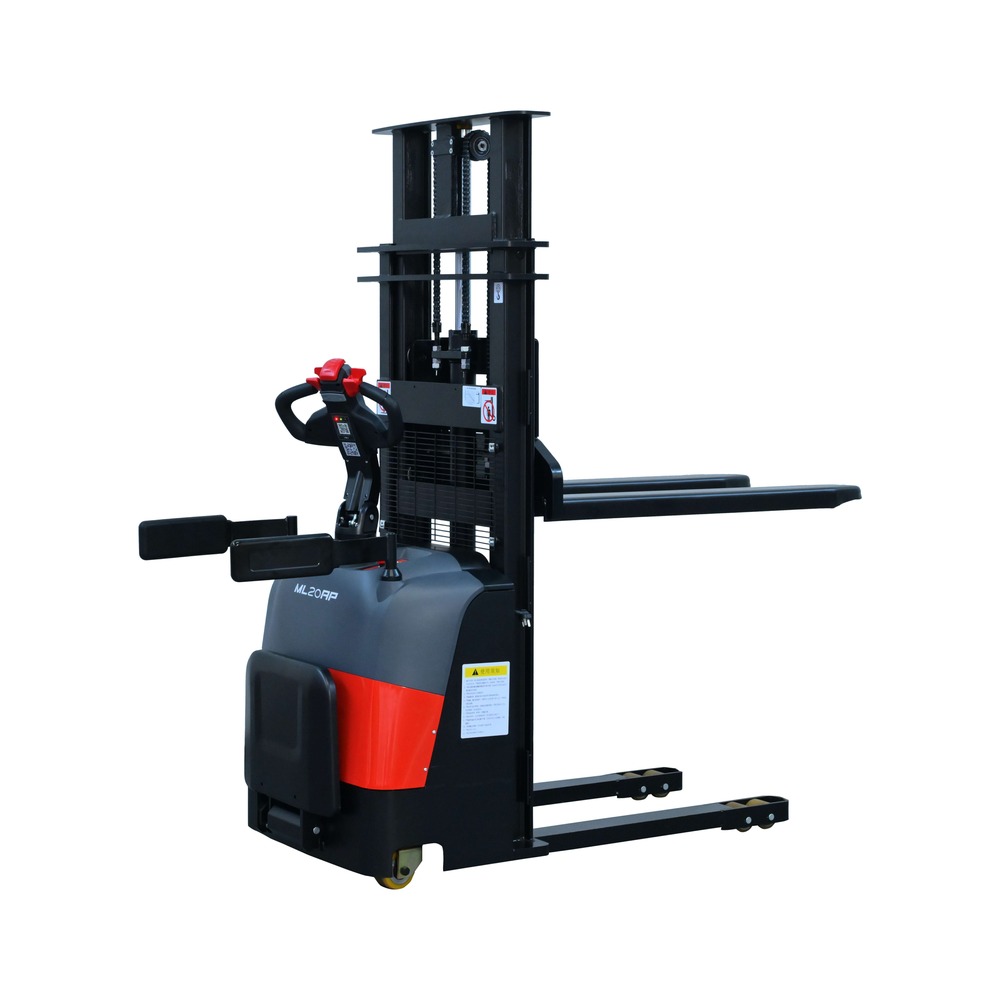
2000kg Stand on Electric Pallet Stacker 3.41m Lift Height Pallet Stacker Truck Channel Steel Mast 1480mm Turning Radius
A 2,000 kg stand-on electric pallet stacker with 3.41 m lift height and a 1,480 mm turning radius. A strong candidate for narrow aisles that still require high-level put-away and operator visibility during repeated stacking cycles.
View product specs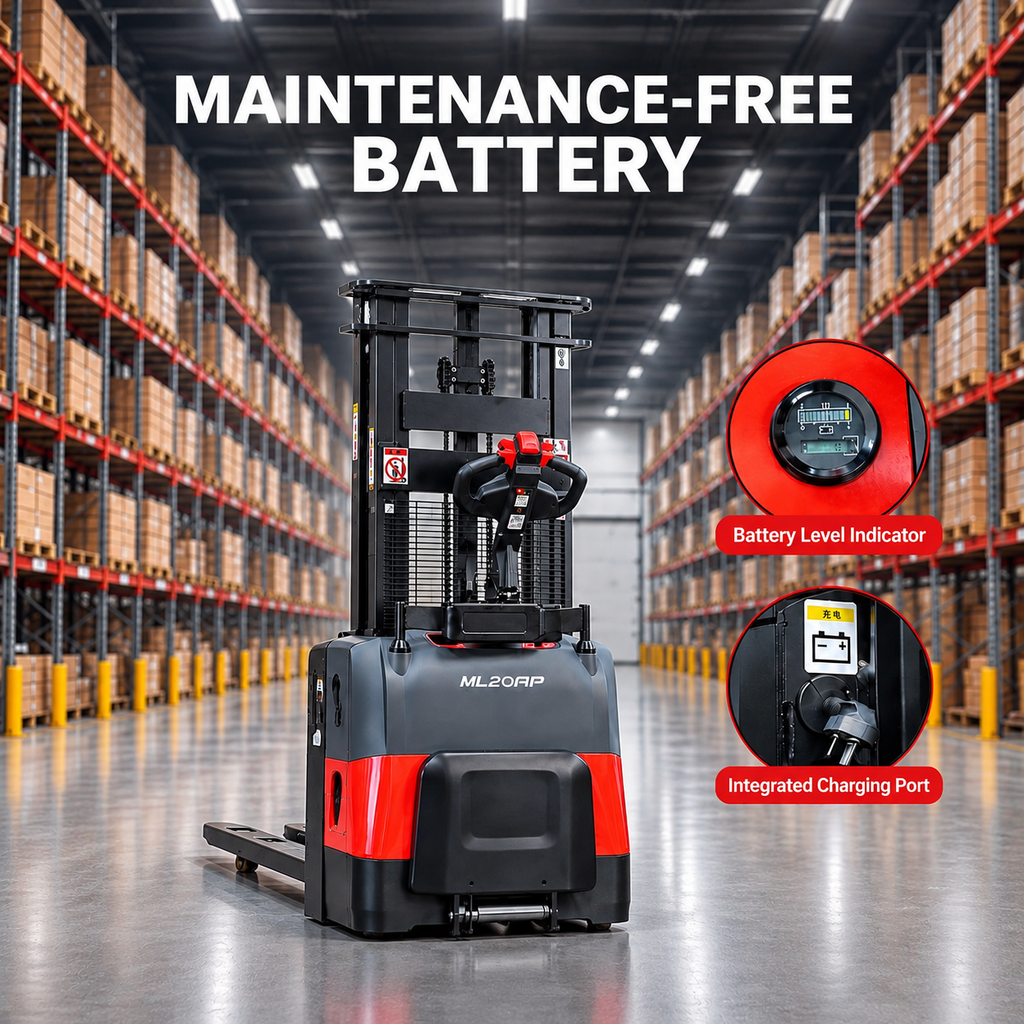
Stacker Forklift Electric 1500kg 2000kg for Retail Backroom Farm Feed Store Pallet Stacking Work
A 1,500–2,000 kg electric stacker forklift for retail backrooms, farm supply depots, and feed stores where pallet stacking is repetitive but floor space is limited. It sits between a simple pallet truck and a full counterbalance forklift.
View product specs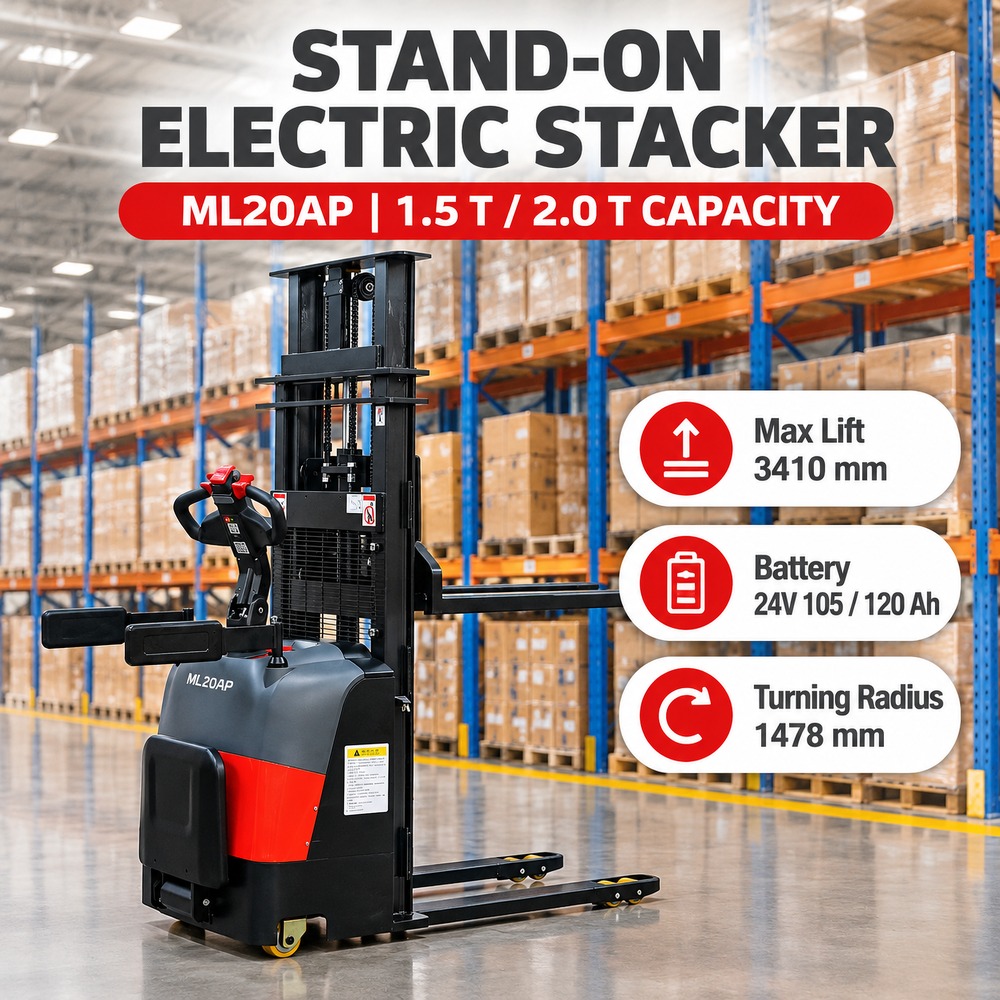
Warehouse Stacker Truck 1500kg 2000kg Electric Pallet Stacker 24V 105Ah Maintenance Free Battery
A warehouse stacker truck with 1,500–2,000 kg capacity, 24V 105Ah maintenance-free battery, and electric pallet-stacker configuration. Suited to multi-shift warehouses that prioritise low maintenance and predictable daily availability.
View product specsShare your pallet weight, lift height, aisle width, voltage, and destination port. The application team can then match a stacker configuration rather than force a generic model.
Four Different Buyers Search for a “China Stacker Factory”
Semantic search has changed supplier discovery. A dealer searching for an OEM battery powered stacker supplier has a different intent from a warehouse manager searching for a 2 ton electric pallet stacker with 3.4m lift. A credible supplier page should answer both without confusing catalogue breadth with application capability.
“What is the container price?”
Wants MOQ, loading quantity, battery options, spare-parts kits, and a landed-cost comparison. The hidden risk is a low unit price followed by slow parts support or an undersized battery.
“Will it fit my aisle and rack?”
Needs capacity at load centre, lowered fork height, lift height, turning radius, mast type, and floor condition. A 3.41 m stacker and a 90 mm lowered fork height solve different problems.
“Can the factory support ODM?”
Asks about logo, colour, voltage, documents, packaging, control interfaces, and consistency between repeat orders. Real customization must be verified, not just promised in a chat.
“What keeps uptime predictable?”
Compares service access, charger compatibility, battery maintenance, diagnostics, and warranty handling. For multi-shift operations, serviceability is part of product performance.
Why Xiamen Pexal Technology Co., Ltd. Fits a Battery Stacker Shortlist
The strongest supplier evidence is not a slogan. It is a combination of factory scale, engineering depth, third-party verification, export experience, and a product range that can support mixed warehouse fleets.
Factory-backed scale, sales-company agility
Xiamen Pexal Technology Co., Ltd. was founded in Xiamen, Fujian in 2024 as the sales, service, and technical support base for Pexal material handling equipment. It works with a 220,000 m² partner manufacturing campus and a 1,200+ person workforce, combining production capacity with responsive export communication.
SGS-assessed and onsite checked
Pexal has passed an onsite check and supplier assessment by SGS Group. Buyers can review the supplier assessment, trade capacity, credit index, trade history, transaction history, and verified company video. This matters because third-party evidence reduces the gap between “we are a factory” and “we can prove it”.
Customization and ODM from a defined base
Verified capabilities include sample-based customization, full customization, and ODM services. Relevant configuration items include mast height, fork length, battery type, voltage, colour, logo, and attachment setup. For brand owners, the practical question is repeatability: can the same specification be held across containers?
Export-ready commercial support
Delivery terms include FOB, CFR, CIF, EXW, FCA, CPT, CIP, DDP, and other common arrangements. Payment can be handled through T/T, L/C, D/P, D/A, Western Union, PayPal, credit card, and escrow. Accepted currencies include USD, EUR, GBP, JPY, CAD, AUD, HKD, CHF, and CNY, with service focused on dealers, rental companies, and end users.
Product Development Trends Shaping Battery Powered Stackers
The next stacker purchase will be judged less on a single specification sheet and more on how the equipment behaves inside a live warehouse. These four development trends are already influencing specification decisions.
Lithium-ion moves from option to default
High-utilisation warehouses increasingly prefer lithium-ion because opportunity charging, maintenance-free operation, and stable power delivery fit multi-shift rhythms. The caveat is configuration: cold storage, high-duty cycles, and fast charging require a properly matched battery, charger, and BMS—not just a lithium label.
Modular architecture reduces spare-parts drag
Channel-steel masts, common controllers, swappable batteries, and standard hydraulic components make customization less risky. For buyers, modularity means a new fork length or mast height does not create a completely separate service ecosystem. It also shortens the path from quotation to repeat order.
Safety and telematics become specification items
Speed limiting, load monitoring, curve control, operator access, and fleet dashboards are moving from premium options to procurement questions. The commercial benefit is not only safety: telematics records help justify replacement cycles, operator training, and battery-utilisation decisions.
Automation-ready interfaces prepare the fleet
Most warehouse stackers will remain operator-driven, but the next generation must connect to wider material-flow systems. Standardized interfaces, sensor mounting points, and diagnostic access make it easier to add AGV/AMR support or digital dispatch without replacing the entire fleet.
Future Procurement Trends: How Smart Buyers Will Source Battery Powered Stackers
Procurement is shifting from a one-off quotation exercise to a risk-managed supplier programme. The best buying teams are changing four things at once.
Total cost of ownership replaces unit price
Buyers are adding battery life, charging cost, tyre and hydraulic maintenance, spare-parts lead time, and expected downtime to the purchase decision. A lower unit price can be more expensive if the charger is incompatible with local power or the battery is undersized for a second shift.
Supplier verification becomes a gate
Third-party assessment, onsite check records, trade history, and verified video are no longer “nice to have” for serious importers. They help separate a genuine factory ecosystem from a generic trading listing, especially when the order value includes spare parts and repeat shipments.
Mixed-fleet standardisation grows
Dealers and rental fleets are reducing the number of incompatible battery formats, chargers, controllers, and hydraulic parts across the warehouse. A smaller number of common platforms improves technician productivity and lowers the cost of holding inventory in the destination market.
Framework agreements with spare-parts kits
Instead of buying one stacker at a time, buyers are planning repeat orders with pre-agreed spare-parts packages, label standards, and after-sales escalation paths. This is especially relevant for cold-storage and stand-on stacker applications where downtime affects an entire shift.
Battery Powered Stacker Selection Matrix
Use this comparison to align the buyer’s search intent with the right equipment type. The matrix is designed to add procurement-specific signals that are often missing from supplier listings.
| Stacker type | Best duty | Decisive specifications | Buyer question to ask |
|---|---|---|---|
| Electric pallet truck / lightweight pallet jack | Horizontal transport, dock work, retail replenishment, container unloading. | Capacity, fork length, battery format, wheel material, service weight. | Will it handle daily pallet moves without becoming heavy to load or hard to service? |
| Stand-on electric stacker | Narrow-aisle put-away, loading docks, building-material shops, repeated stacking. | Capacity, lift height, turning radius, operator platform, mast type. | Does the operator need to ride over longer travel distances, or is walk-behind sufficient? |
| Channel-steel mast high-rack stacker | High-rack stacking where mast stability and precise pallet entry are critical. | Lowered fork height, maximum lift, mast rigidity, load centre, safety control. | Is the racking height paired with the right mast and capacity at height? |
| Cold-storage pallet truck | Freezers, cold chain, food distribution, pharmaceutical storage. | -20°C rating, lithium battery behaviour, condensation control, walkie or stand-on format. | Has the battery and charger been configured for low temperature and door-cycle condensation? |
| Retail / farm / feed-store stacker | Backroom pallet stacking, feed supply, compact storage areas. | Capacity, lift height, footprint, tyre type, battery maintenance requirement. | Is a simple stacker enough, or does the floor surface demand a different wheel and chassis setup? |
Evidence From a Verified Supplier Ecosystem
Product images and factory context are not decorative. They help buyers evaluate production scale, engineering detail, and export readiness before a first video call. The images below are from the original company and product content.

Company and production overview: a reference point for buyers evaluating the supplier’s operating base.
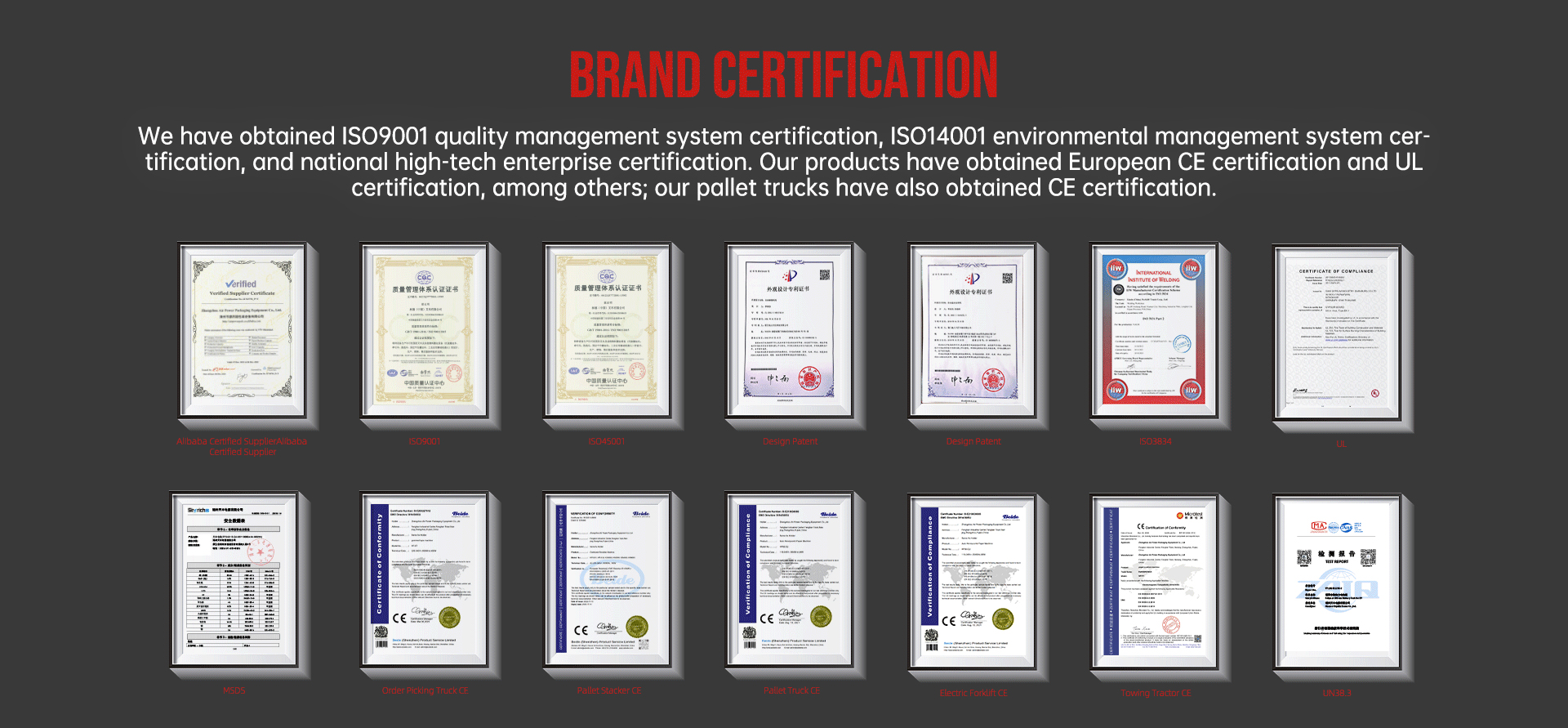
Engineering detail: power-system layout, mast structure, and operator-control considerations.

Partner manufacturing campus: production and assembly context behind the equipment range.
Verified video introduction: a useful pre-qualification step before requesting a formal quotation.
Built for Buyers Who Need More Than a Keyword Match
This guide was prepared around the user intent behind high-commercial-value searches such as China battery powered stacker factory, electric stacker supplier, OEM battery powered pallet stacker, and cold storage electric pallet truck. The content combines the original product data, company profile points, export terms, product-development signals, and common buyer questions. It is designed to help a procurement team move from broad supplier discovery to a specific configuration discussion.
- Original product links and images are retained for direct technical review.
- Company claims are matched with SGS assessment, onsite check, trade history, and verified video references.
- Product recommendations are grouped by application fit, not by an arbitrary “best seller” label.
- Procurement and development trends are included to support longer-term fleet planning.
Battery Powered Stacker Factory FAQ
These are the questions that most often move an inquiry from a price request to a workable specification.
What should I check before choosing a China battery powered stacker factory?+
Check application fit first: load weight, load centre, lift height, lowered fork height, aisle width, floor condition, and shift pattern. Then verify supplier capability: third-party assessment, onsite check, product range, customization records, export markets, spare-parts support, and the ability to configure voltage and battery format for your destination market. A useful next step is to request the specific configuration drawing, not only a catalogue PDF.
What is the difference between a battery powered stacker and an electric pallet truck?+
An electric pallet truck is primarily designed for horizontal transport and short lifts, such as moving pallets from a dock to a staging area. A battery powered stacker adds a mast and lifting capability for putting pallets into low, medium, or high racking. For buyers, the real question is whether the pallet must be lifted to a racking level. If yes, a stacker or reach truck is usually the better starting point.
Can you customize voltage, forks, mast height, battery, and branding?+
Xiamen Pexal Technology Co., Ltd. offers sample-based customization, full customization, and ODM services. Typical configuration items include mast height, fork length, battery type, voltage, colour, logo, and attachment setup. For repeat orders, request a frozen specification sheet and a pre-production sample confirmation so that the second container matches the first.
Which battery option is better: lithium-ion or lead-acid?+
Lithium-ion is often preferred for opportunity charging and maintenance-free operation in multi-shift warehouses. Lead-acid can still be appropriate where charging infrastructure is established, shift patterns allow full charging, and the buyer has trained battery-room staff. In cold storage or high-duty applications, the deciding factor is not only the cell chemistry but also the BMS, charger, and thermal configuration.
How do I specify a cold-storage or -20°C application?+
State the working temperature, door-cycle frequency, humidity or condensation exposure, shift length, and whether the truck leaves the freezer. The cold-storage electric pallet jack listed above is rated for -20°C work, but the battery and charger configuration still needs to match the actual duty cycle. For freezer rooms, operator safety and visibility are as important as the temperature rating.
What are typical MOQ, lead time, and shipping terms?+
MOQ and lead time depend on the model, battery configuration, and whether the order is customized. Common delivery terms include FOB, CFR, CIF, EXW, FCA, CPT, CIP, and DDP. Buyers can discuss T/T, L/C, D/P, D/A, Western Union, PayPal, credit card, and escrow. Export shipments are typically coordinated through Xiamen port, with packaging and loading plans confirmed before production is completed.
How is after-sales support and spare-parts handling managed?+
A serious stacker order should define the spare-parts kit before shipment: wheels, seals, controllers, chargers, battery connectors, and commonly replaced hydraulic parts. Pexal supports dealers and fleet owners with technical communication and configuration records. For rental fleets, it is sensible to standardize a small number of battery and controller platforms across the order.
What verification tells me the supplier is reliable?+
Look for an onsite check, a third-party supplier assessment, verified company video, trade history, transaction history, and a clear contact point for technical questions. Pexal has passed an SGS Group onsite check and supplier assessment. Buyers should still validate the exact application, required documents, and warranty terms before placing a first production order.
Request a Configuration Review Before You Compare Quotes
Send the load weight, lift height, aisle width, floor condition, voltage, and destination port. Pexal can then recommend a battery powered stacker or pallet truck configuration that is practical to build, ship, and service. Email: info@pexalbot.com