China Best Walkie Pallet Stacker Manufacturers & Factory
A 2026 buyer’s white paper for electric pallet stackers, walkie pallet trucks, cold-storage pallet jacks and factory-direct warehouse equipment from Xiamen Pexal Technology Co., Ltd.
8 Recommended Walkie Pallet Stacker & Electric Pallet Jack Models
These models cover the practical buying range for warehouse buyers, dealers and rental fleets: ultra-light lithium pallet jacks, narrow-body walkie pallet trucks, high-lift electric stackers, stand-on stackers and cold-storage pallet trucks. Each card keeps the original product URL and image, so procurement teams can review the exact configuration.

2026 New Alternative Convertidor De Palet Jack a Electrico Ultra-Lightweight 107kg Electric Pallet Jack with Lithium Power
- 107 kg class
- Lithium power
- High agility
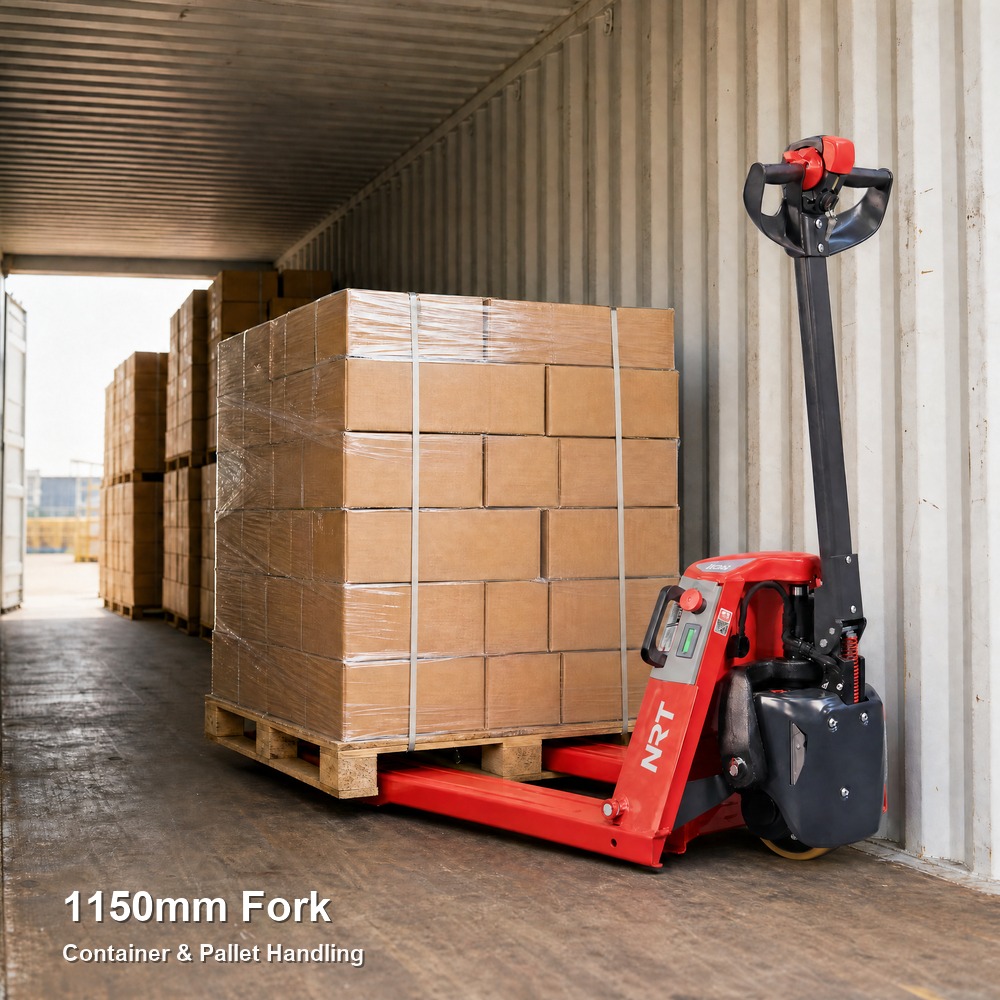
Walkie Electric Pallet Jack 1500kg Fork 1150mm Pallet Truck Battery Powered for Container Unloading Shop Floor
- 1,500 kg
- 1,150 mm fork
- Battery powered
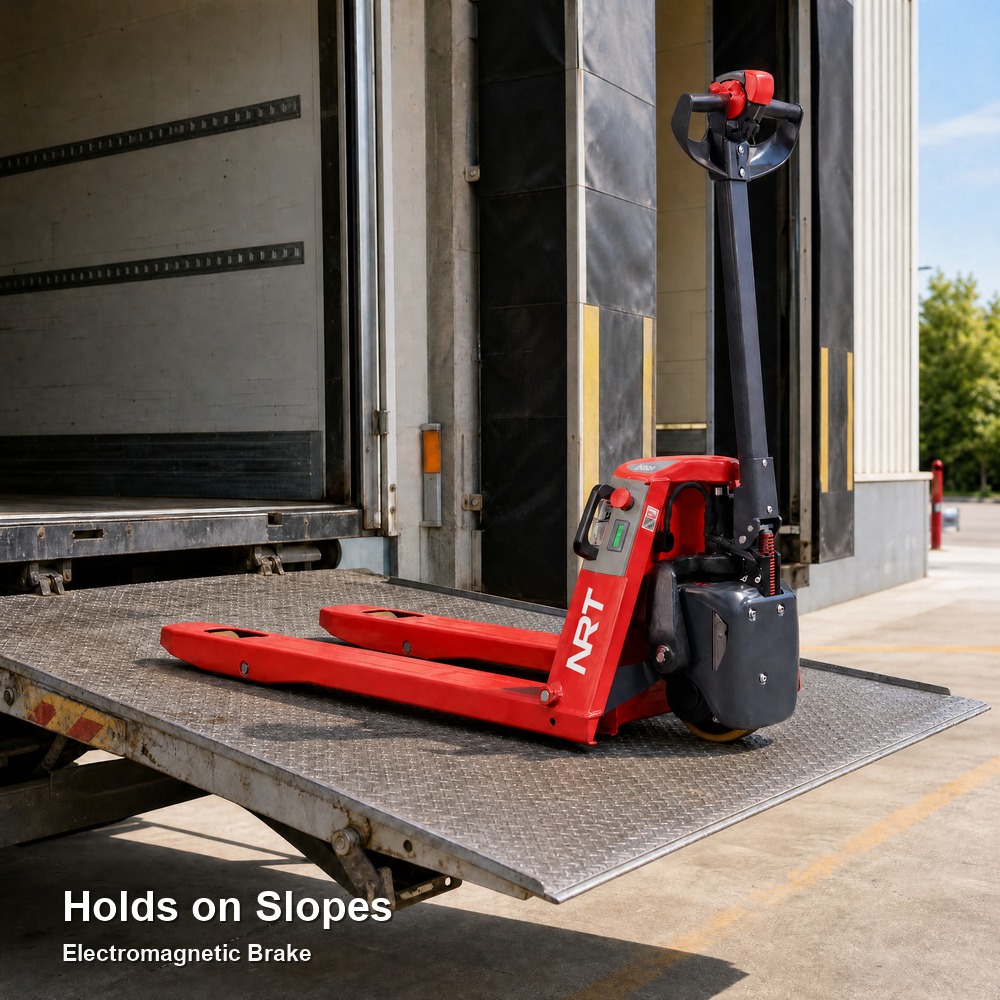
Electric Pallet Jack 1500kg 300mm Slim Body Walkie Pallet Truck for Elevator Freight Box Narrow Aisle Handling
- 1,500 kg
- 300 mm body
- Narrow aisle
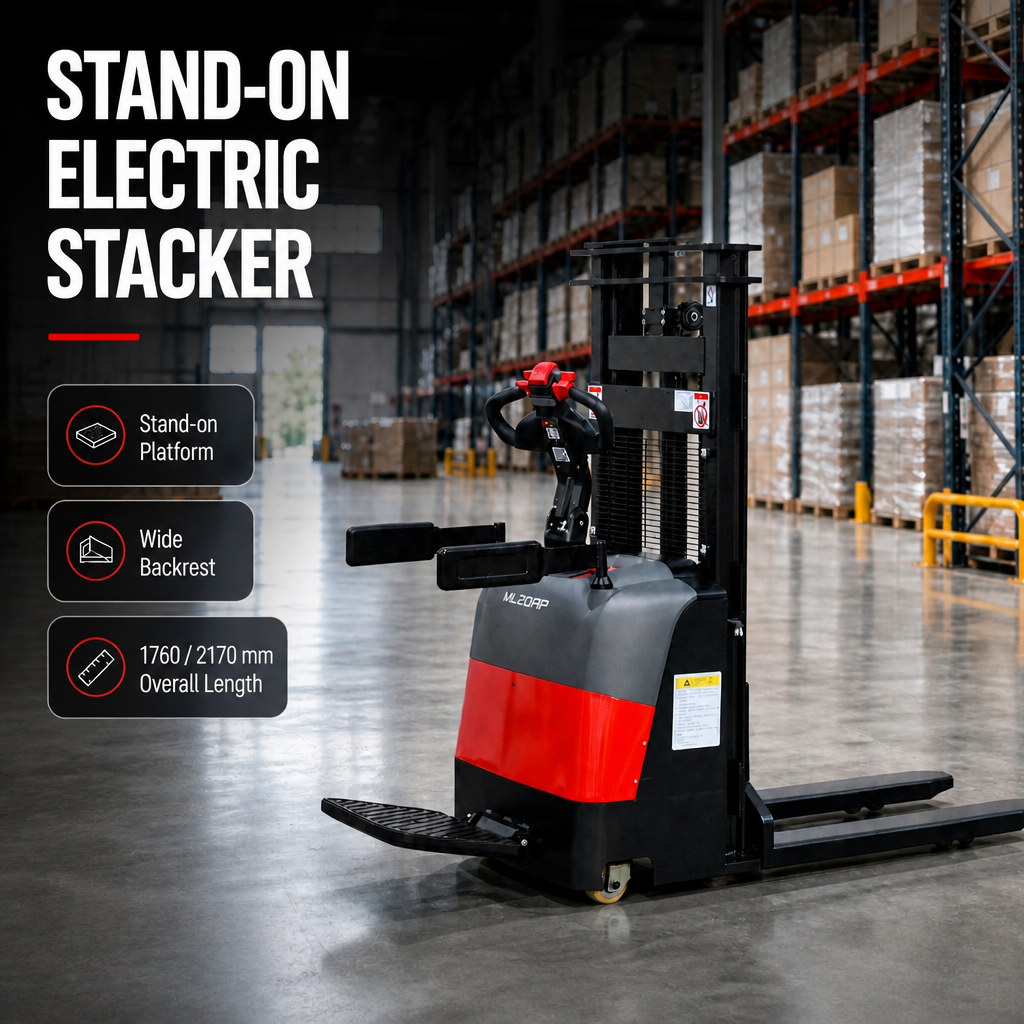
Electric Stacker Truck 2000kg Pallet Stacker Forklift 3410mm Lift for Warehouse Loading Unloading
- 2,000 kg
- 3,410 mm lift
- Stacking duty
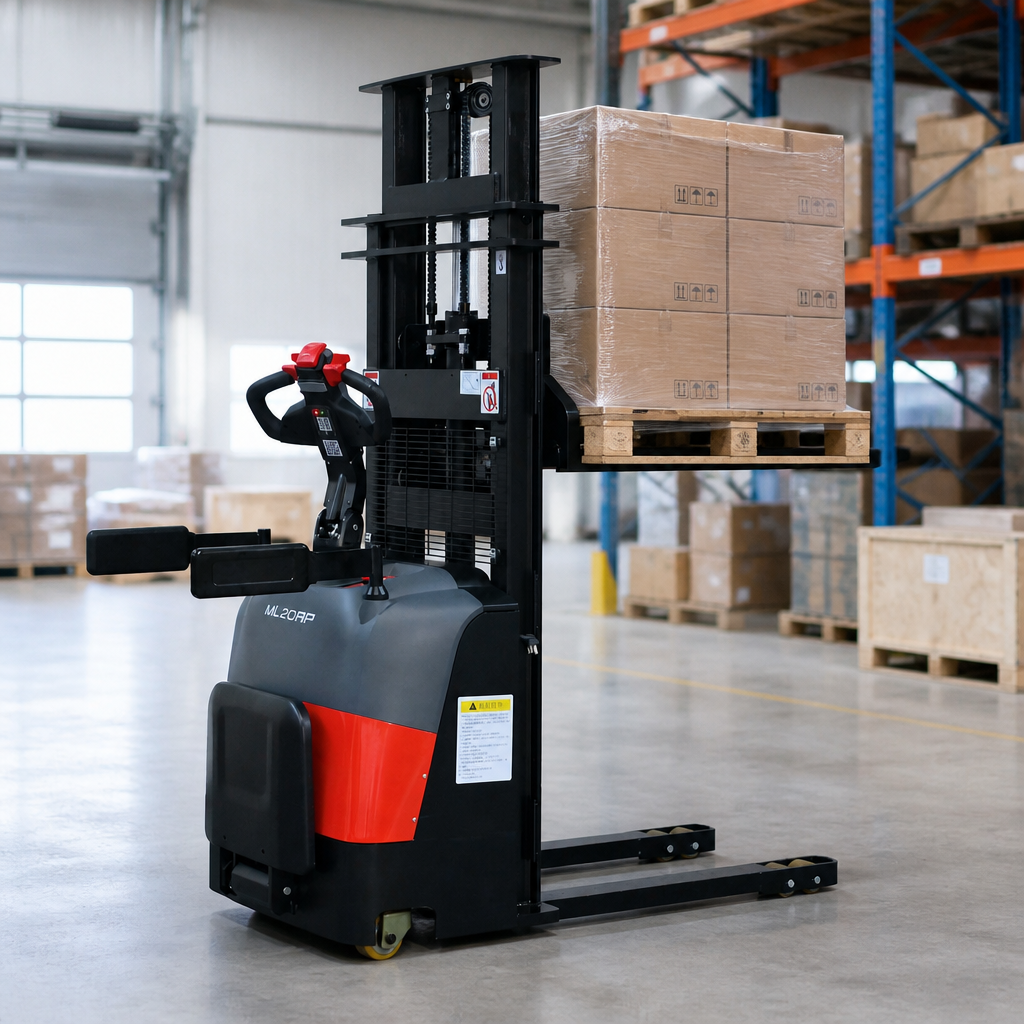
Electric Pallet Stacker 2000kg 3410mm Lift Height Stand on Stacker Truck for Warehouse Racking Stacking
- 2,000 kg
- Stand-on
- Racking
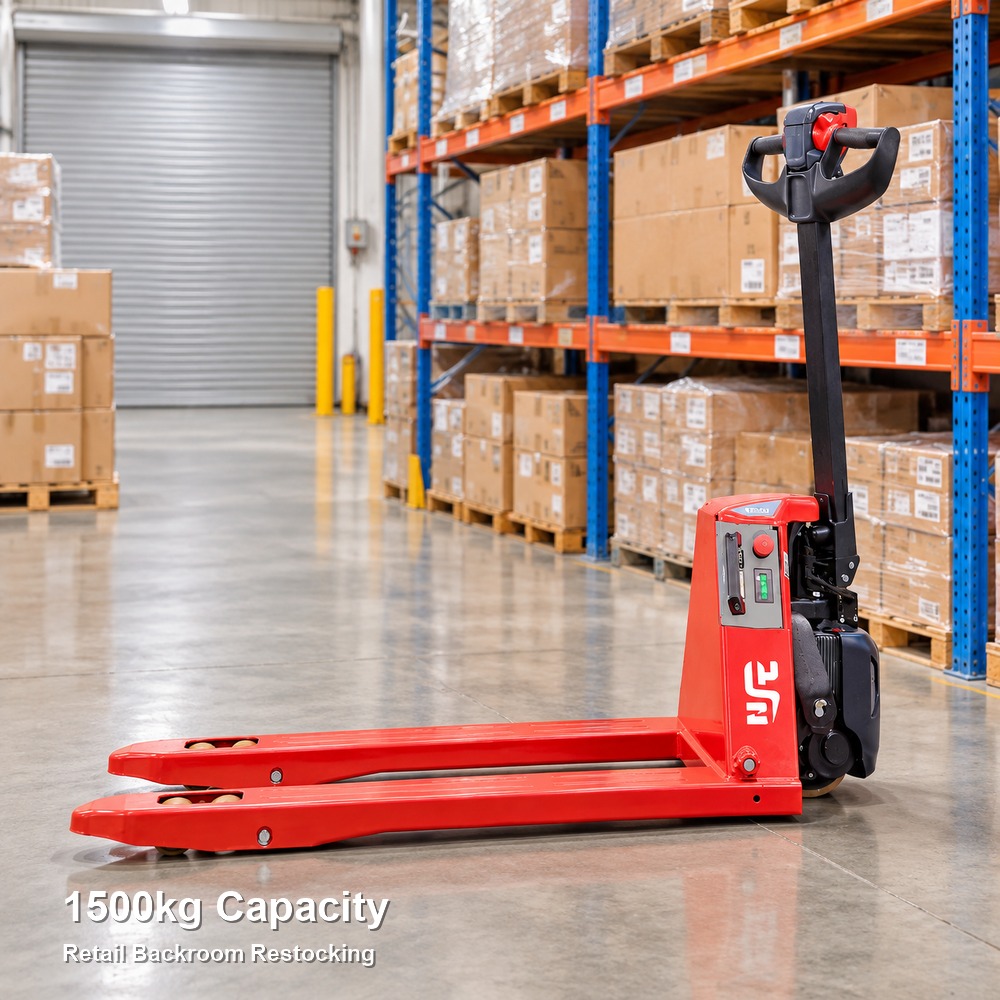
Cold Storage Electric Pallet Jack -20C Working 48V Lithium Battery Pallet Truck Walkie Type 1500kg 2000kg
- -20°C
- 48V lithium
- 1.5–2T
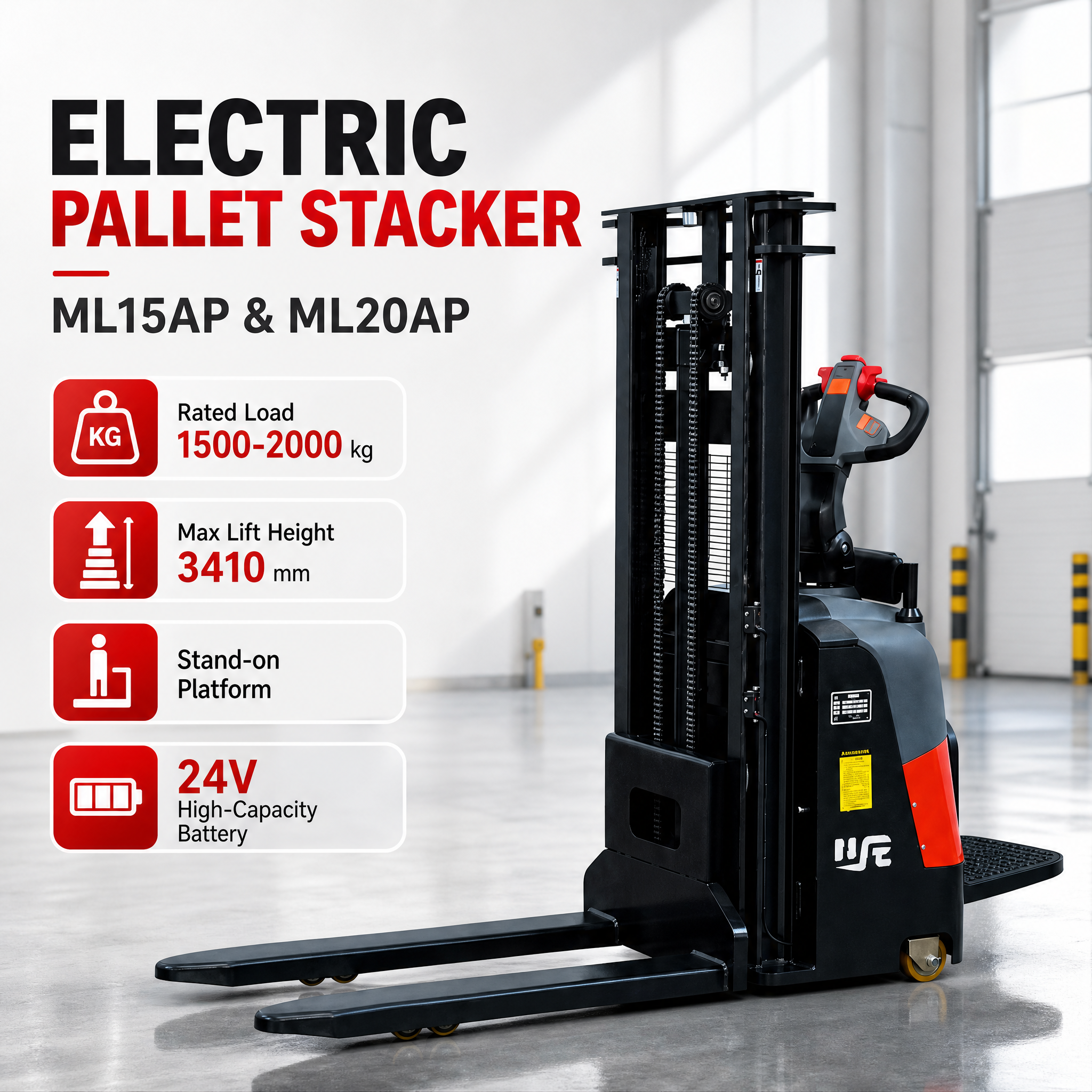
Stand on Electric Stacker 2000kg Centre Mounted Drive Twin Balance Wheels Stable High Racking Stacking
- 2,000 kg
- Centre drive
- Twin balance wheels
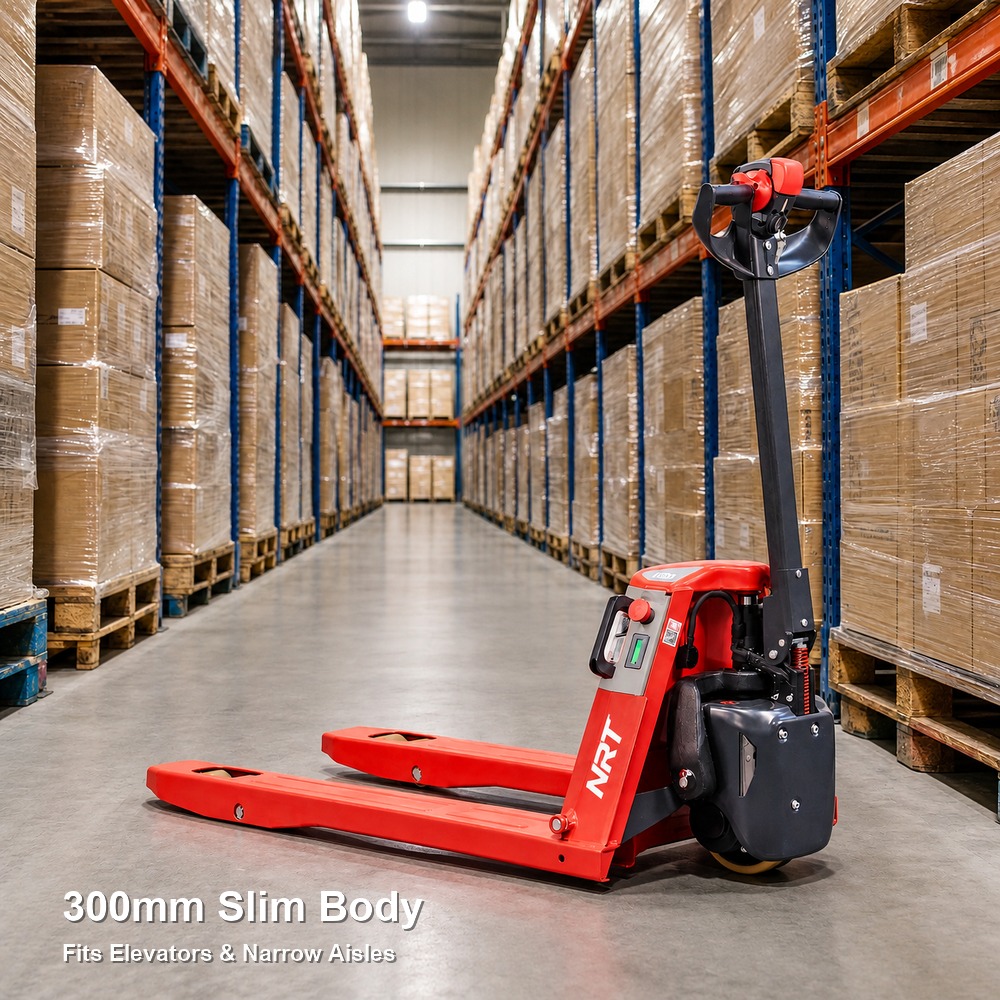
NB15L01LD Electric Pallet Jack 2000kg 48V 15Ah Lithium Battery 850W Fork 1150mm PU Wheels Pallet Truck
- 2,000 kg
- 48V 15Ah
- PU wheels
From Price Comparison to Proof: How to Identify a Genuinely Capable Walkie Pallet Stacker Manufacturer
Search results for “China best walkie pallet stacker manufacturers & factory” often return long catalogues. What they rarely explain is how to judge whether a supplier can support repeat orders, spare parts, voltage requirements and after-sales service after the first container ships.
A walkie pallet stacker is a low-speed, high-consequence tool. If a pallet jack fails on a loading dock, the immediate cost is a delayed truck. If an electric pallet stacker fails in a racking aisle or a cold-storage room, the cost can include missed dispatch windows, damaged goods, operator downtime and emergency freight. For that reason, serious buyers now evaluate a walkie pallet stacker factory less like a commodity seller and more like a technical partner. They ask for capacity validation, battery configuration, charger compatibility, maintenance access, spare-parts lists, packaging standards and a clear escalation path for warranty claims.
This guide is structured around that reality. Instead of presenting a wall of specifications, it separates eight recommended models, 2026 procurement trends, product-development direction, an application-fit matrix, a specification checklist and the verified advantages of Xiamen Pexal Technology Co., Ltd. Pexal was founded in Xiamen, Fujian in 2024 as the sales, service and technical support base for Pexal material handling equipment, working with a 220,000 m² partner manufacturing campus and more than 1,200 employees, including over 100 engineers. That combination matters because buyers increasingly want direct factory economics without losing the engineering support normally associated with established brands.
The most reliable way to compare suppliers is to ask for proof in four layers: legal identity and third-party verification, real manufacturing or assembly capability, application engineering and customization ability, and after-sales documentation. A supplier that can answer those four layers clearly is usually a safer choice than one that competes only on a headline price. For buyers seeking a China walkie pallet stacker manufacturer that can support both a trial order and a dealer program, the right question is not “Who is cheapest?” but “Who can document the configuration, repeat it consistently and support it after delivery?”
Factory, Engineering and Export Advantages at a Glance
These figures reflect the Pexal partner manufacturing ecosystem and export support capability. They are the practical foundation behind stable lead times, customization and spare-parts planning.
Scalable assembly and production capacity for container orders and dealer stock.
Production, quality control and assembly teams supporting repeat orders.
Electric drive, warehouse equipment and customization specialists.
Western Europe, North America, South America, Eastern Europe and Oceania.
2026 Procurement Trends: What Buyers Will Ask Before They Issue a PO
Across warehouses, dealerships and rental fleets, walkie pallet stacker sourcing is moving from simple price comparison to total operating proof. The following six questions are likely to appear in RFQs, supplier audits and dealer partnership reviews.
Lithium-first, but not lithium-only
Buyers want faster opportunity charging and lower maintenance, but they still ask about lead-acid alternatives, charger compatibility and battery replacement economics. A credible electric pallet stacker supplier should explain where lithium is advantageous and where a different configuration is more rational for the duty cycle.
Low-temperature validation, not just a label
Cold-storage buyers are asking for -20°C operating confirmation, low-temperature battery management, hydraulic oil suitability, seal performance and charger guidance. The model listed above is specifically positioned for cold-storage pallet truck work, but the purchasing lesson is broader: demand test evidence and a configuration sheet, not only a marketing claim.
Automation will be phased, not bought all at once
Many warehouses are not ready for a fully automated guided forklift fleet, but they are preparing for it. Procurement teams now ask whether manual stackers and pallet trucks can share routes, battery infrastructure and safety policies with future automation. A practical walkie pallet stacker factory should be able to discuss the migration path rather than sell an all-or-nothing automation package.
Safety evidence before price negotiation
Braking performance, stability, emergency lowering, horn, anti-rollback behavior and operator visibility are no longer optional discussion points. Professional buyers ask for functional test records, warning labels, operation manuals and a clear list of wear parts. This is particularly important when the equipment will be used by multiple shifts or rented to third parties.
Spare parts and training decide repeat orders
For distributors, the first container is a test; the second order depends on serviceability. Dealers want a clear spare-parts structure, recommended stock list, troubleshooting support and training material. A supplier that can provide these items reduces after-sales friction and protects the dealer’s local reputation, which is often more valuable than a small unit-price difference.
Customization for voltage, labeling and packaging
Buyers increasingly request market-specific chargers, plugs, labels, manuals, colors and packaging. A China electric pallet stacker manufacturer that supports sample-based customization and full customization can shorten the adjustment cycle when requirements change. This matters especially for private-label dealers and rental fleets that need a consistent visual identity.
Product Development Trends: What the Next Generation of Walkie Pallet Stackers Will Deliver
The next buying cycle will favor equipment that is easier to operate, faster to service and simpler to integrate. These trends are already visible in the specification requests coming from warehouse operators, distributors and rental companies.
Lightweight architecture
Ultra-light pallet jacks reduce operator fatigue and make container unloading, elevator transport and retail backroom work more practical. The 107 kg lithium model in the product list reflects this direction: lower machine weight does not have to mean lower usefulness.
Modular platform design
Mast height, fork length, battery type, wheel material and control layout are increasingly treated as configurable modules. This reduces engineering duplication and helps buyers source one product family for multiple sites instead of managing several unrelated models.
Smart safety and fleet visibility
Fleet telemetry, usage logs and smart safety controls are becoming more accessible. Even when a buyer does not need full connectivity on day one, choosing a platform with room for sensors and data outputs can prevent premature replacement later.
AGV-ready interfaces
Manual warehouse trucks are being prepared for mixed fleets. Standard electrical architecture, clear sensor mounting points and safety protocols can make it easier to add automated guided forklifts later without redesigning the entire material flow.
Serviceability by design
Easy access to battery, controller, hydraulic components and brake systems matters more as fleets age. Buyers should ask for exploded diagrams, recommended spare-parts lists and maintenance intervals before commissioning a fleet.
Cold-chain material upgrades
Freezer applications are pushing improved low-temperature cells, battery management settings, hydraulic fluids, seals and condensation handling. For cold-storage buyers, the machine should be selected as a system: truck, charger, battery, oil and maintenance schedule together.
Matching the Right Electric Pallet Stacker to the Job
This matrix is a procurement aid, not a laboratory ranking. It converts typical application priorities into a simple visual comparison so buyers can narrow the model family before requesting a quotation.
Specification and Supplier Evaluation Checklist Before You Request a Quote
Before contacting any China walkie pallet stacker manufacturer, prepare the data below. A well-prepared RFQ reduces back-and-forth, improves configuration accuracy and makes supplier comparison more objective.
Load and duty cycle
Record the maximum pallet weight, average load, load center, lift height, lifts per shift, travel distance and number of shifts. A 1500 kg model used at its limit all day is not the same as a 2000 kg model used with reserve capacity.
Space and floor condition
Measure aisle width, door height, elevator opening, turning radius and floor slope. Confirm whether the floor is smooth concrete, epoxy, dock plate, freezer slab or uneven outdoor ground. These factors can change the right chassis size and wheel type.
Battery and charging
Confirm voltage, battery chemistry, charger type, charging window, opportunity charging policy and available power supply. For cold storage, include operating temperature and condensation expectations in the RFQ.
Documentation and after-sales
Ask for operation and maintenance manuals, spare-parts lists, warranty terms, test records and packaging details. If the equipment is going to a dealer or rental fleet, ask for training material and recommended stock parts.
Inside the Factory: Pexal’s Verified Advantages for Global Buyers
Xiamen Pexal Technology Co., Ltd. combines a direct factory partnership model with the technical support, export documentation and customization expected by dealers, rental companies and warehouse operators.

Source-direct partnership, backed by onsite verification
Pexal was founded in Xiamen, Fujian in 2024 as the sales, service and technical support base for Pexal material handling equipment. The company works hand in hand with a 220,000 m² partner manufacturing campus employing more than 1,200 people, including over 100 engineers dedicated to electric warehouse equipment. Pexal has passed an onsite check and supplier assessment conducted by the global inspection company SGS Group. That does not replace your own due diligence, but it gives buyers a documented starting point for supplier verification.
Factory-backed capacity, not a trading-only catalogue
The partner campus and workforce depth provide a practical foundation for container orders, recurring dealer stock and multi-model procurement. Buyers can source electric pallet trucks, pallet stackers, electric forklifts, reach trucks, order pickers and automated guided forklifts through one support structure.
Application support for the real duty cycle
Pexal’s support model includes logistics solution design and consulting. Instead of simply quoting a model number, the team can discuss load, aisle width, lift height, battery strategy and cold-storage requirements — the same details that determine whether a walkie pallet stacker succeeds after commissioning.
Sample-based, full customization and ODM
Pexal offers sample-based customization, full customization and ODM services. Typical configuration items include mast height, fork length, battery type, color, logo and attachments. This is valuable for distributors building a private-label line and for rental fleets that need consistent parts across models.
Pre-shipment functional checks
Before dispatch, equipment is checked for lifting, travel, braking, electrical systems and overall function. Buyers can request inspection coordination, packaging confirmation and documentation review to align with their own quality gates.
Export markets and commercial flexibility
Main export markets include Western Europe, North America, South America, Eastern Europe and Oceania. Accepted delivery terms include FOB, CFR, CIF, EXW, FCA, CPT, CIP and DDP, with payment options such as T/T, L/C, D/P, D/A, Western Union, PayPal, credit card and escrow. Currencies include USD, EUR, GBP, JPY, CAD, AUD, HKD, CHF and CNY.
Documentation for dealers and fleet managers
Pexal can support export packaging, product documentation, customization records and communication throughout the order. The aim is a repeatable supply process: model selection, configuration confirmation, pre-shipment inspection, shipment and after-sales parts planning.

From production line to loading dock
Scaled production, pre-shipment QC, custom builds and export logistics are not separate promises; they form one chain. A stacker configured with the wrong fork length or battery specification creates problems that no price discount can solve. Pexal’s procurement model therefore encourages buyers to confirm application details early, then lock the configuration before production.
Walkie Pallet Stacker FAQ for Importers and Fleet Managers
These answers focus on the commercial and technical questions that appear most often during RFQ review, supplier comparison and first-order planning.
What is a walkie pallet stacker, and how is it different from an electric pallet jack?
A walkie pallet stacker is a walk-behind machine with a mast that can lift a pallet to a height for stacking or racking. An electric pallet jack is primarily for horizontal transport and usually cannot lift high enough to stack. If you only move pallets from truck to floor, a pallet jack may be sufficient. If you place pallets into racking, use a stacker and confirm lift height, capacity and aisle width.
How do I choose between 1500 kg and 2000 kg capacity?
Start with the maximum pallet weight, then consider load center, attachments, lift height and how often the machine will work near its limit. A 1500 kg model is often adequate for light retail, container unloading and shop-floor transport. A 2000 kg model gives more reserve for heavier pallets, taller lifting and demanding multi-shift use. Do not treat rated capacity as a routine working target if your loads vary.
Can lithium pallet trucks work in cold storage at -20°C?
Yes, but the truck must be configured as a cold-storage system. The battery cells, battery management settings, charger strategy, hydraulic oil, seals and condensation protection all need to match the operating temperature. Buyers should ask for the specific low-temperature configuration and operating guidance rather than assuming that a standard lithium pallet truck is automatically suitable for a freezer.
What should I verify before choosing a China walkie pallet stacker manufacturer?
Check the legal entity, factory or partner manufacturing capability, third-party assessment such as SGS onsite verification, product test records, spare-parts availability, packaging standards and export experience in your market. Ask for the exact configuration sheet, warranty terms and recommended maintenance schedule. A supplier that answers these questions clearly is easier to audit and safer to scale with.
Which Incoterms and payment methods are accepted?
Pexal accepts common delivery terms including FOB, CFR, CIF, EXW, FCA, CPT, CIP and DDP, plus other practical arrangements discussed during quotation. Payment methods include T/T, L/C, D/P, D/A, Western Union, PayPal, credit card and escrow. Accepted currencies include USD, EUR, GBP, JPY, CAD, AUD, HKD, CHF and CNY.
Do you offer OEM, ODM and customized pallet stackers?
Yes. Pexal offers sample-based customization, full customization and ODM services for pallet trucks, stackers and other warehouse equipment. Typical customization includes mast height, fork length, battery type, color, logo, labeling and attachment configuration. For dealer programs, it is best to confirm the target market requirements, packaging needs and expected order volume before the final design is locked.
Request a Factory-Backed Recommendation
Send your load weight, pallet size, aisle width, lift height, duty cycle, floor condition, operating temperature, voltage and target market. Our engineers can translate those details into a practical walkie pallet stacker, electric pallet jack or cold-storage pallet truck configuration — and support your RFQ with the right documentation.