8 Factory-Direct Pallet Moving Machines for Real Procurement
This shortlist is structured around the questions buyers actually ask before a container order: Can it fit the aisle, elevator or ramp? Will it survive multi-shift duty? How fast can the drive wheel be serviced? Can the battery and charger be configured for my market? Each model below links to the original product page so engineering teams can verify specifications directly.
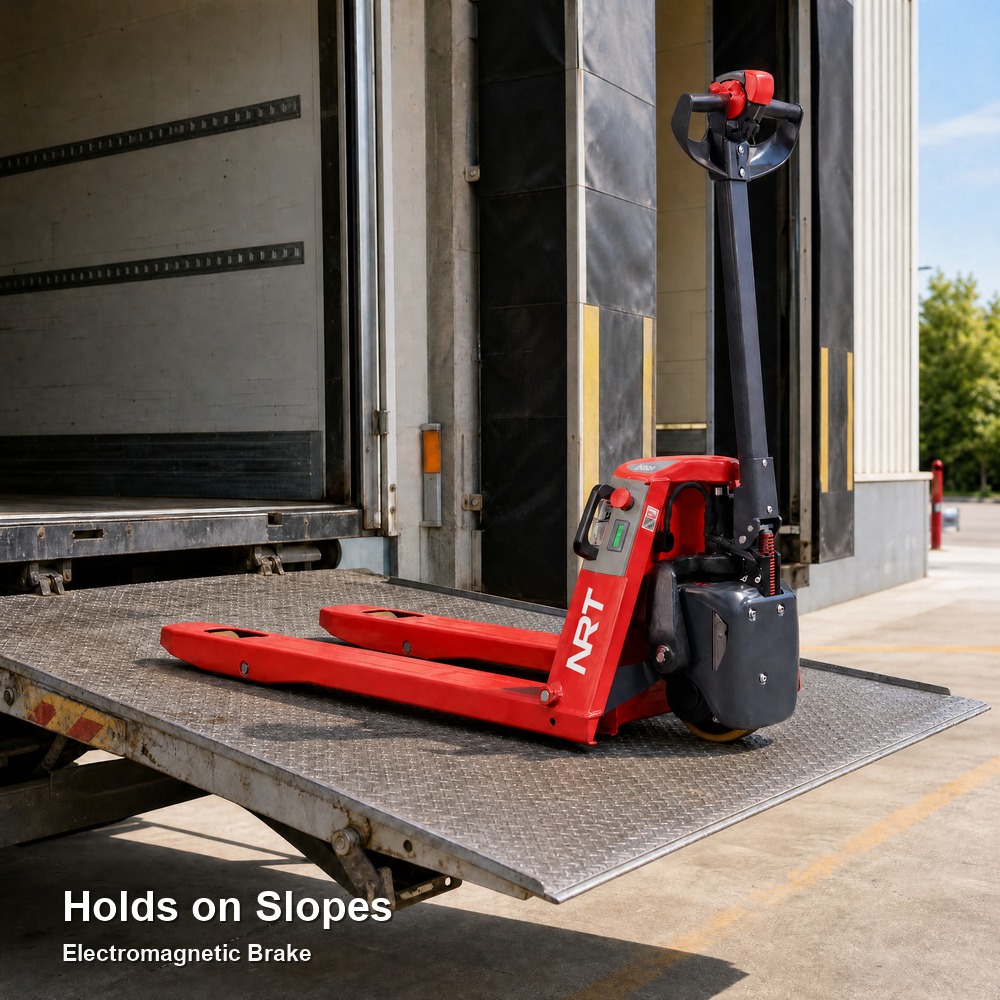
1500kg 300mm Slim Body Electric Pallet Jack
A walkie pallet truck designed for freight boxes, elevators and narrow-aisle handling where compact geometry matters as much as rated capacity. A practical first choice for retail backrooms, light manufacturing and last-100-metre logistics.
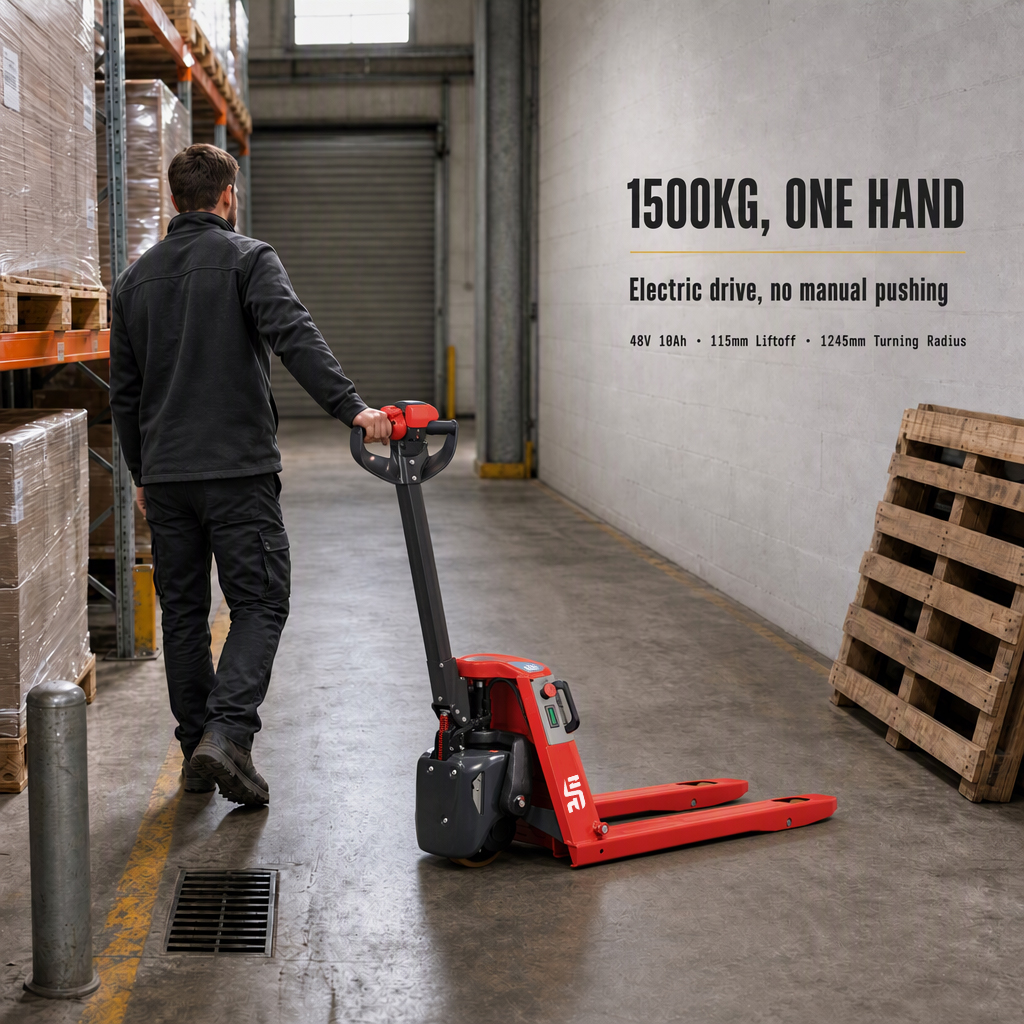
1.5 Ton 48V Li-ion Electric Pallet Truck
With a 107 kg ultra-lightweight platform and a 48V lithium battery architecture, this model targets narrow-aisle warehouses and distributors that need easy deployment, opportunity charging and lower operator fatigue.
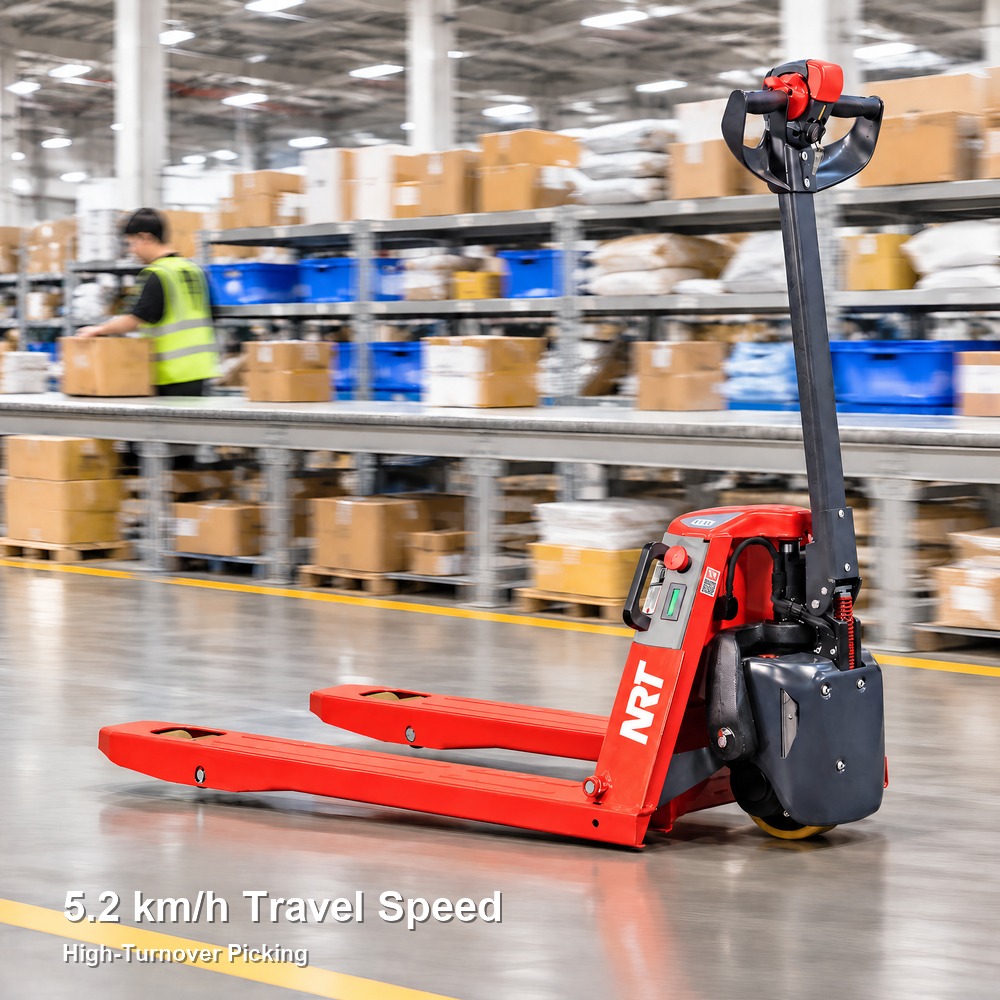
2,000kg Quick-Release 48V Lithium Pallet Truck
The quick-release drive-wheel design supports approximately one-minute service access — a meaningful uptime advantage for rental fleets, 3PL operators and busy loading docks where maintenance windows are short.
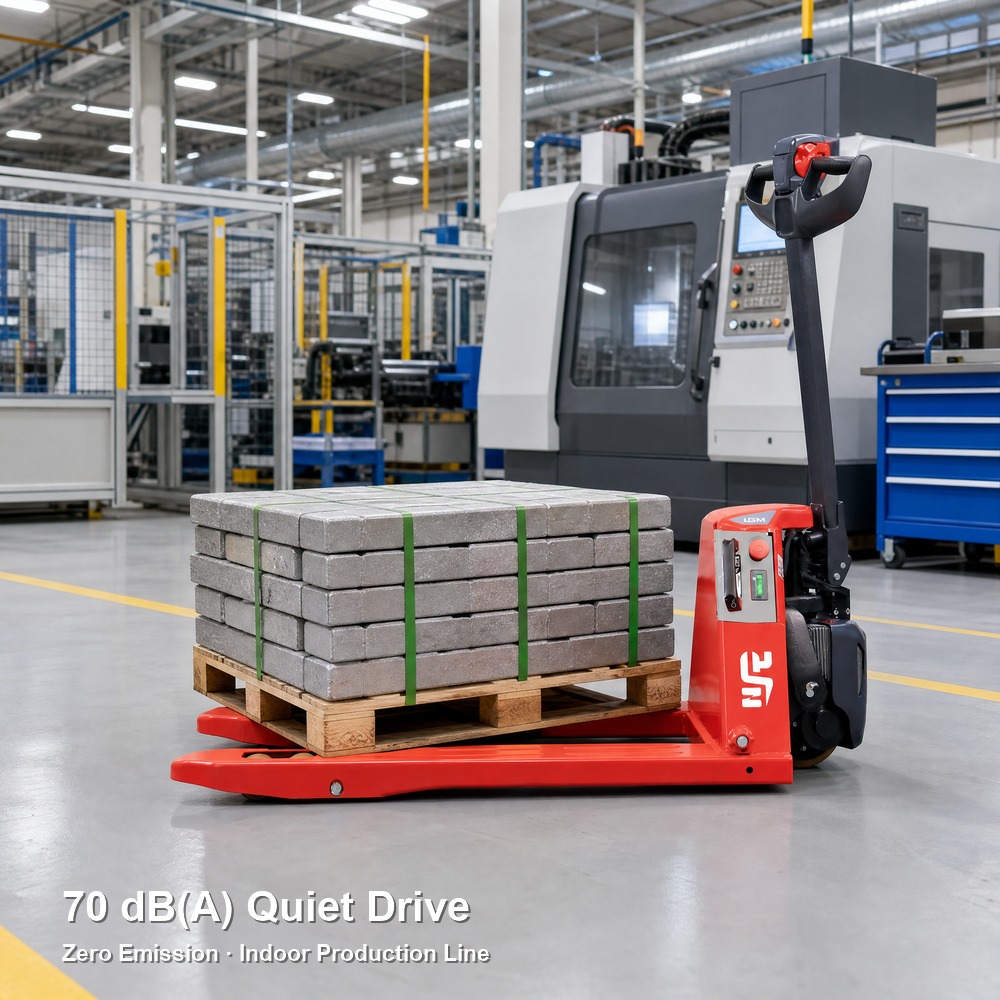
48V Lithium Battery Powered Walkie Pallet Jack
A battery-powered pallet jack built around narrow-aisle movement, elevator loading and unpacking zones. Its walkie format is suitable for warehouses that need manoeuvrability without the footprint of a full counterbalance forklift.
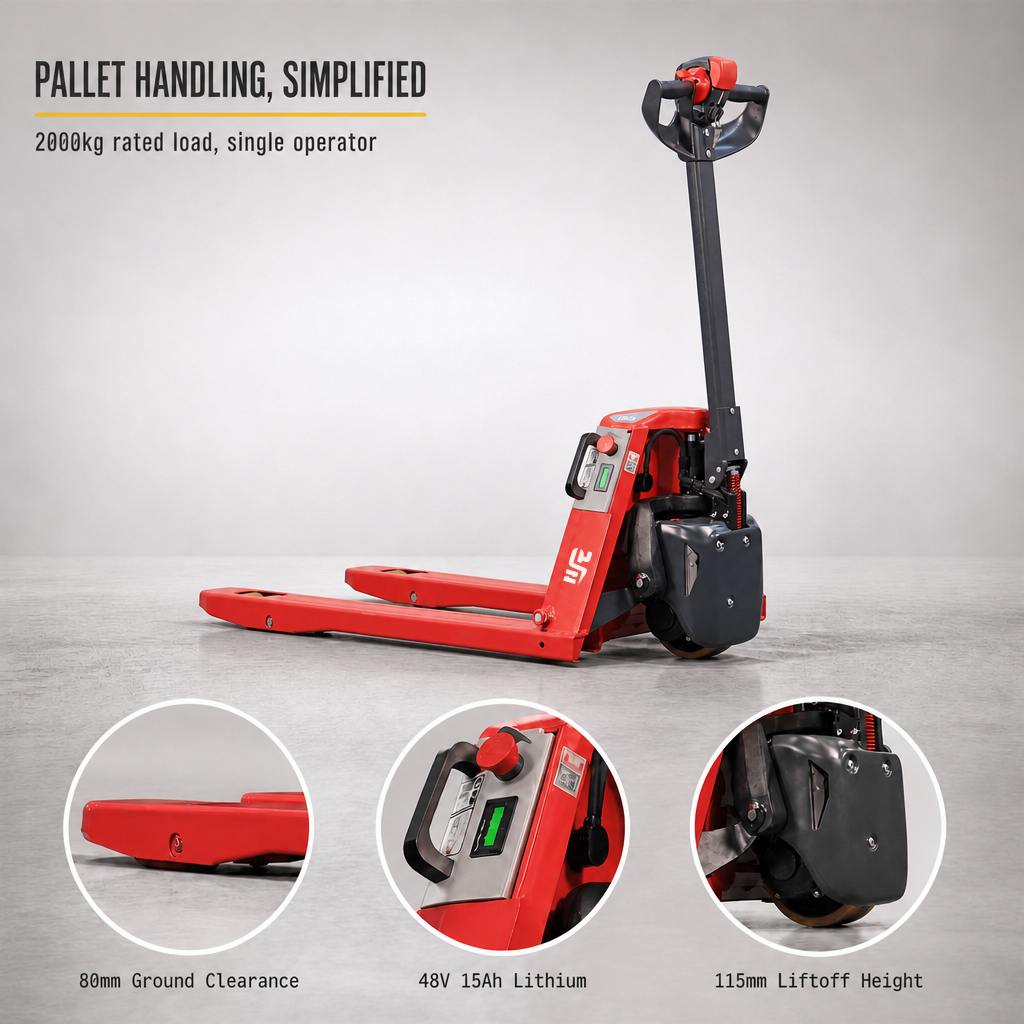
NB20L01LD 2,000kg Lithium Electric Pallet Truck
A 2,000 kg lithium-battery pallet truck with a 4.8 km/h travel speed and 1,245 mm turning radius, balancing throughput with the agility required in dense storage and cross-dock operations.
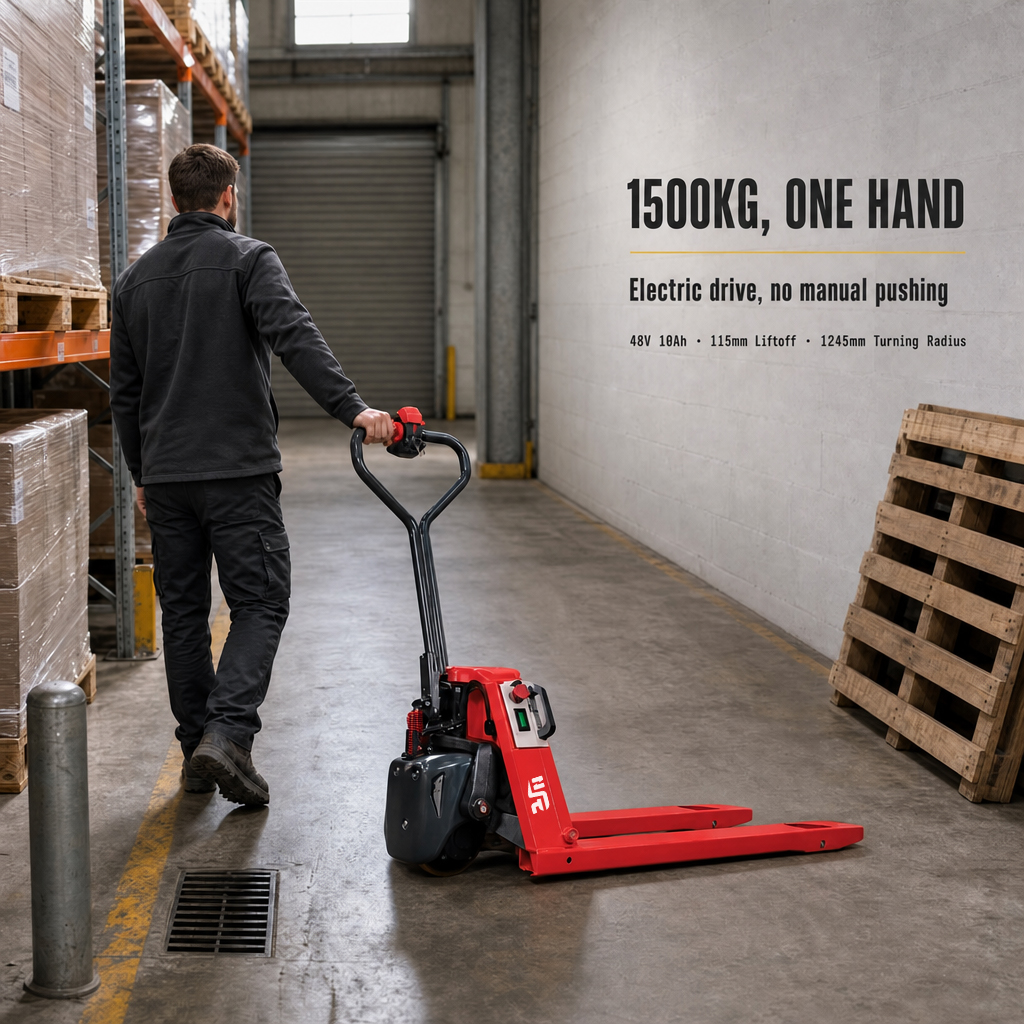
80mm Ground Clearance Electric Pallet Jack for Ramps
Engineered with a 9% climbing grade, 1,450 mm vehicle length and 80 mm ground clearance for ramps and uneven dock transitions. A good fit for sites where gradeability and compact length affect daily safety.
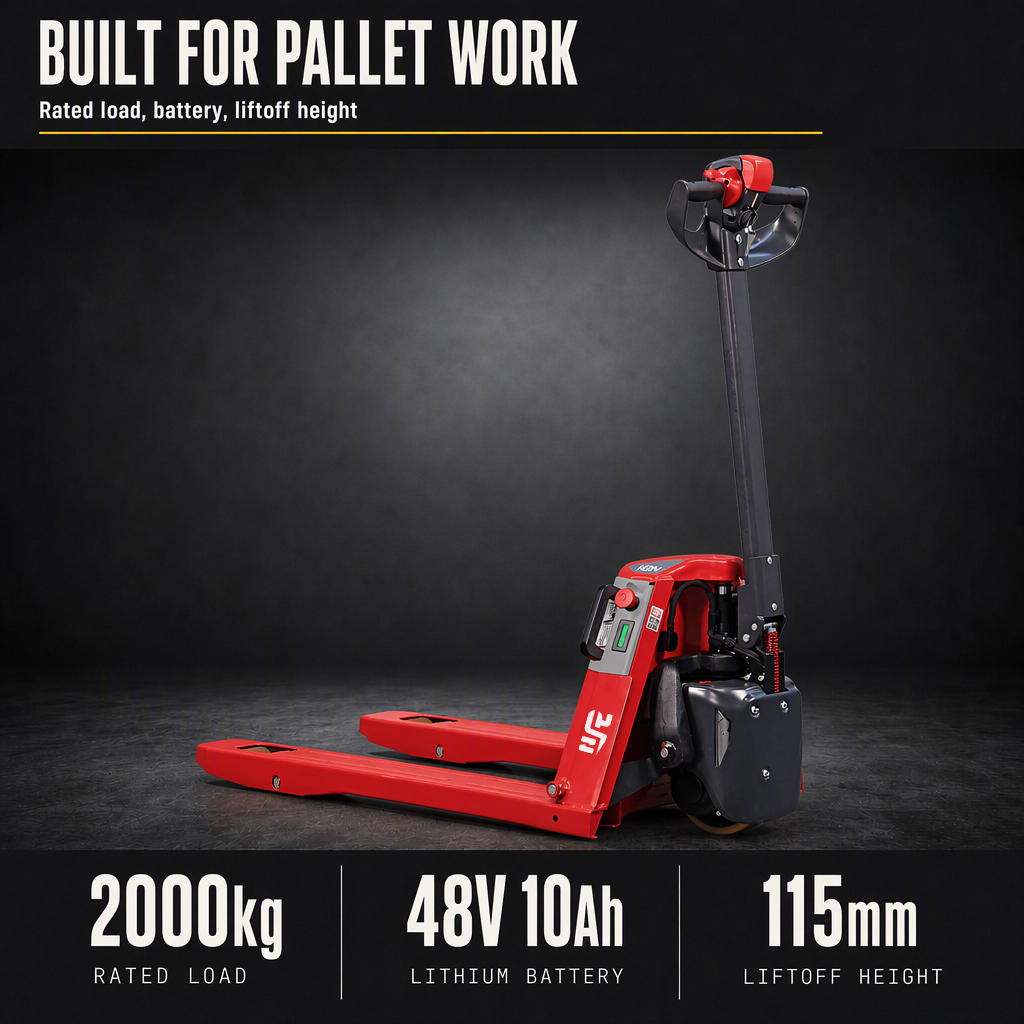
Professional 2 Ton Heavy Duty Electric Pallet Jack
A 2,000 kg warehouse power pallet truck with an easy-control system for repetitive loading, unloading and horizontal transfer. Its heavy-duty positioning suits distributors and fleet buyers that need a robust workhorse specification.
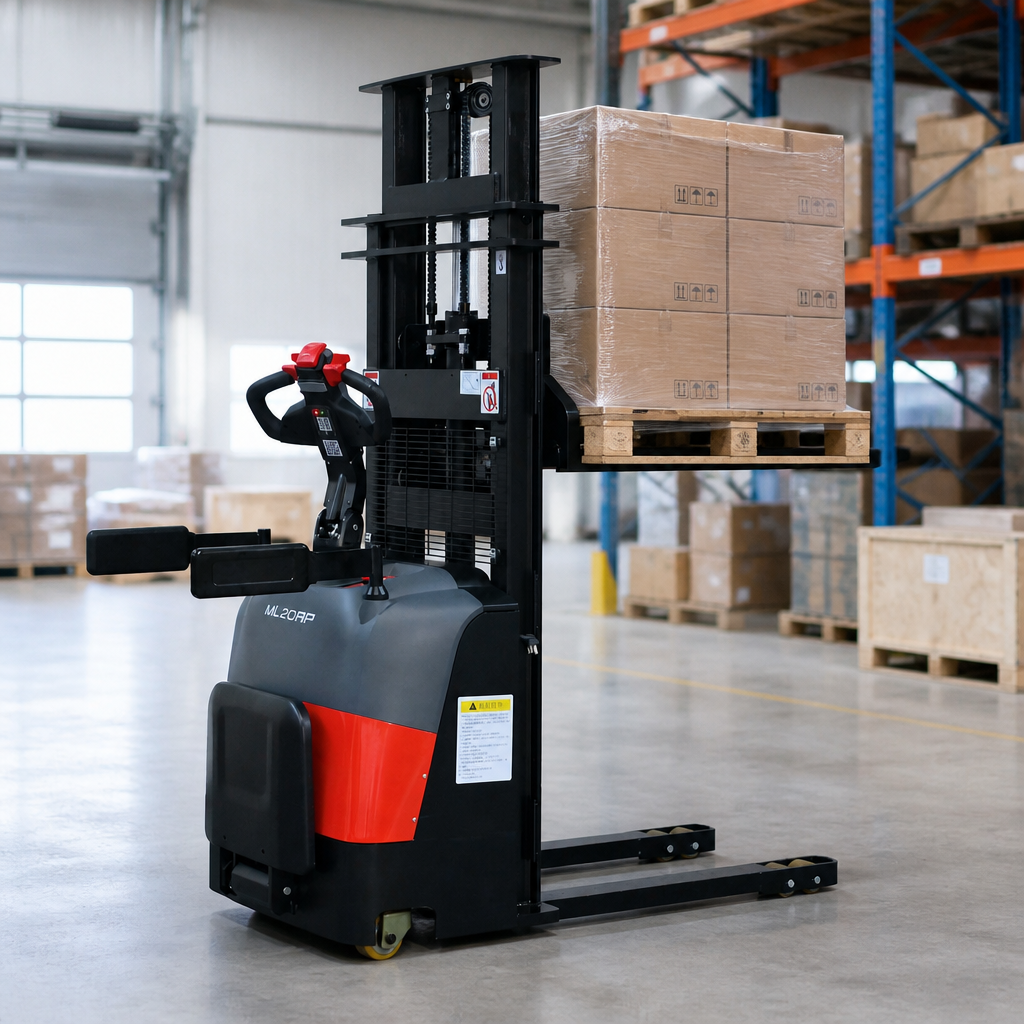
2,000kg Electric Stand-On Pallet Stacker
A 3,410 mm lift-height stand-on stacker truck for warehouse racking and repetitive stacking. When horizontal pallet moving evolves into elevated put-away, this model bridges the gap between a pallet truck and a full forklift.
From Catalogue Breadth to Verified Supply Capability
In pallet moving equipment, the lowest quotation is rarely the lowest total cost. Buyers need a supplier that can connect product configuration, spare-parts planning, battery strategy, pre-shipment testing and export documentation. Xiamen Pexal Technology Co., Ltd. operates as the sales, service and technical support base for Pexal material handling equipment, working with a partner manufacturing campus of 220,000 m² and a workforce of more than 1,200 people, including over 100 engineers focused on electric warehouse equipment.
Application-Led Model Selection
We start with floor condition, aisle width, pallet size, load centre, lift height and daily duty cycle. That prevents a common procurement error: buying a machine that meets the capacity number but slows down every shift because it is too wide, too long or over-specified for the actual route.
Export-Ready Customization
Sample-based customization, full customization and ODM support are available for mast height, fork length, battery type, colour, logo and attachment configuration. Distributors can build market-specific ranges without managing several unrelated factories.
Pre-Shipment Functional QC
Lifting, travel, braking and electrical systems are checked before dispatch, with export packaging and flexible Incoterms from EXW to DDP via Xiamen port. This is the operational layer that protects repeat dealer business after the first container.
What Pallet Moving Equipment Buyers Are Changing Now
Procurement teams are moving away from one-off price comparisons and toward fleet-level economics. The strongest RFQs now ask for battery strategy, service accessibility, spare-parts commonality, safety documentation and mixed-container flexibility.
Total Cost of Ownership Becomes the Buying Language
Lithium batteries, opportunity charging and lower hydraulic maintenance are being evaluated against lead-acid routines and diesel alternatives. Buyers increasingly compare energy cost per shift, charger utilisation, battery lifespan and downtime risk — not just the machine price.
Narrow-Aisle and Elevator-Compatible Designs
Urban warehouses, retail backrooms and multi-floor freight elevators demand compact turning radii, slim bodies and controlled travel speeds. Equipment that cannot enter the elevator or turn at the end of a racking aisle creates hidden labour cost every day.
Dealer Programmes Need After-Sales Depth
Distributors want a factory partner that can support recurring container programmes with consistent specs, fast-wear parts, service guidance and market-specific branding. The supplier relationship is becoming a fleet-support relationship, not a one-time transaction.
Where Electric Pallet Trucks and Stackers Are Heading
The next generation of pallet moving equipment is not only electrified; it is being designed around uptime, operator confidence and data readiness. For exporters, these trends translate into clearer configuration choices during quotation.
Smart Energy Management
48V lithium battery systems are becoming more compact and more serviceable. Buyers are asking how opportunity charging affects multi-shift use, how battery health is monitored and how charger voltage requirements differ by market.
Modular Serviceability
Quick-release drive wheels, accessible control systems and common wear parts shorten maintenance windows. For rental fleets and 3PL operations, a 60-second service advantage can matter as much as a small increase in top speed.
Automation-Ready Warehouse Flow
Pallet trucks and stackers must increasingly fit into phased automation plans. Stable dimensions, predictable control behaviour and clear safety states make it easier to integrate manual equipment into future AGV or digital fleet projects.
Why Xiamen Pexal Technology Co., Ltd. Is Built for B2B Buyers
Pexal is based in Xiamen, Fujian, and founded in 2024 as a focused sales, service and technical support base. The company supplies electric forklifts, pallet trucks, stackers, reach trucks, order pickers and AGV robotics to distributors, rental companies and end users across Western Europe, North America, South America, Eastern Europe and Oceania.
SGS-Assessed Supplier
The company has passed an onsite check and supplier assessment conducted by SGS Group. Buyers can review verification records, trade capacity, transaction level and trade history before approving a supplier.
Full Customization & ODM
Support includes sample-based customization, full customization and ODM projects, with configuration around mast height, fork length, battery type, colour, logo and attachments.
Factory-to-Fleet Support
From model selection to export packaging, the team connects product engineering with practical logistics, reducing specification gaps and commercial friction for dealers.
Global Trade Readiness
Accepted Incoterms include FOB, CFR, CIF, EXW, FCA, CPT, CIP, DDP and DDU, with payment options such as T/T, L/C, D/P, D/A, Western Union, PayPal, credit card and escrow.
Verification and Transparency
Third-party verification reduces unknown supply-chain risk. Pexal's company profile, SGS assessment report, credit index and transaction history are available for buyer due diligence. Trust should be measurable before the first purchase order.
One Range, Fewer Suppliers
A single partner for electric pallet trucks, stackers, reach trucks, order pickers and AGV robotics simplifies procurement, spare-part planning and after-sales communication for distributors serving multiple warehouse segments.
Market-Specific Configuration
Voltage, charger type, documentation, branding and packaging can be aligned to destination markets. That level of configuration discipline helps avoid rework after the container arrives.
Match the Machine to the Job Before You Compare Prices
A useful RFQ is specific. Before requesting a quote, record the four variables below; they will determine whether a pallet truck, stacker, reach truck or forklift is the correct equipment class.
Load & Load Centre
Confirm maximum pallet weight, pallet dimensions and load centre distance. Rated capacity must be assessed at the actual load centre, not only at the nominal headline figure.
Aisle, Door & Elevator
Measure the narrowest aisle, door opening, elevator threshold and turning space. These dimensions decide the maximum vehicle width, length and turning radius.
Lift & Route Profile
Record racking height, ramp gradient, ground clearance needs and travel distance. Ramp use and high stacking require different specifications from simple dock-to-storage moves.
Duty Cycle & Charging
Calculate hours per shift, shifts per day and charging windows. Battery capacity, type and charger strategy should follow the operating pattern rather than habit.
Technical Note for Procurement Teams
Model specifications are a starting point, not a final approval. Final configuration should be confirmed against drawings, local requirements and site measurements. For applications involving ramps, elevators, cold storage or special attachments, request a written engineering confirmation before ordering. This is how experienced buyers protect project schedules while supporting faster approvals.
- Define the maximum load and the load centre distance.
- Confirm aisle width, turning radius and door height.
- Specify battery type, charger voltage and shift pattern.
- Request spare-parts and service documentation for the model family.
Questions Buyers Ask Before Ordering Pallet Moving Equipment
These answers reflect the practical concerns of importers, dealers and fleet managers evaluating a China-based factory and exporter for electric pallet equipment.
What does "pallet moving equipment" include in this product series?
It covers electric pallet jacks, walkie pallet trucks, lithium-battery pallet trucks, ramp-rated pallet jacks and electric stand-on pallet stackers. For higher racking or narrow-aisle storage, related categories include reach trucks, order pickers and AGV-style equipment.
How do I choose between an electric pallet truck and a pallet stacker?
Use a pallet truck for horizontal transport and dock handling. Choose a stacker when the task includes lifting pallets onto racking or stacking at height. If the route includes high racks, narrow aisles and frequent put-away, a reach truck may be more appropriate.
Are 48V lithium batteries suitable for multi-shift warehouses?
Lithium power can support multi-shift operations when the battery capacity, charger strategy and opportunity-charging windows are planned around the actual duty cycle. Buyers should confirm charger voltage, charging time and operational pauses with the supplier before selecting a configuration.
Can the equipment be customized for my market or brand?
Yes. Xiamen Pexal Technology Co., Ltd. offers sample-based customization, full customization and ODM services. Typical configuration points include battery type, fork length, mast height, colour, logo and attachments. Market-specific voltage and documentation requirements should be stated in the RFQ.
What proof is available before I approve the supplier?
The company has passed an onsite check and supplier assessment by SGS Group. Buyers can request or review verification records, trade capacity, transaction level, trade history and the company's verified video introduction. We recommend completing formal due diligence before the first order.
Which Incoterms, payments and currencies are supported?
Delivery terms include FOB, CFR, CIF, EXW, FCA, CPT, CIP, DDP and other common terms. Payment options include T/T, L/C, D/P, D/A, Western Union, PayPal, credit card and escrow. Supported currencies include USD, EUR, GBP, JPY, CAD, AUD, HKD, CHF and CNY.
Specify Your Next Pallet Moving Equipment Order
Share your load data, aisle measurements, elevator limits, ramp grade, battery preference and destination market. The team can then recommend a configuration that fits the application — rather than simply matching a catalogue capacity number.
SGS-assessed supplier · OEM / ODM customization · Export support for EU, Americas, Eastern Europe and Oceania