8 Recommended Electric Pallet Trucks & Stackers from China Factory Supply
The models below are selected for the jobs that drive repeat orders: dock handling, narrow aisle movement, retail backroom stacking, cold storage, warehouse loading and lightweight field service. Each link preserves the original product URL so buyers can review detailed specifications directly.
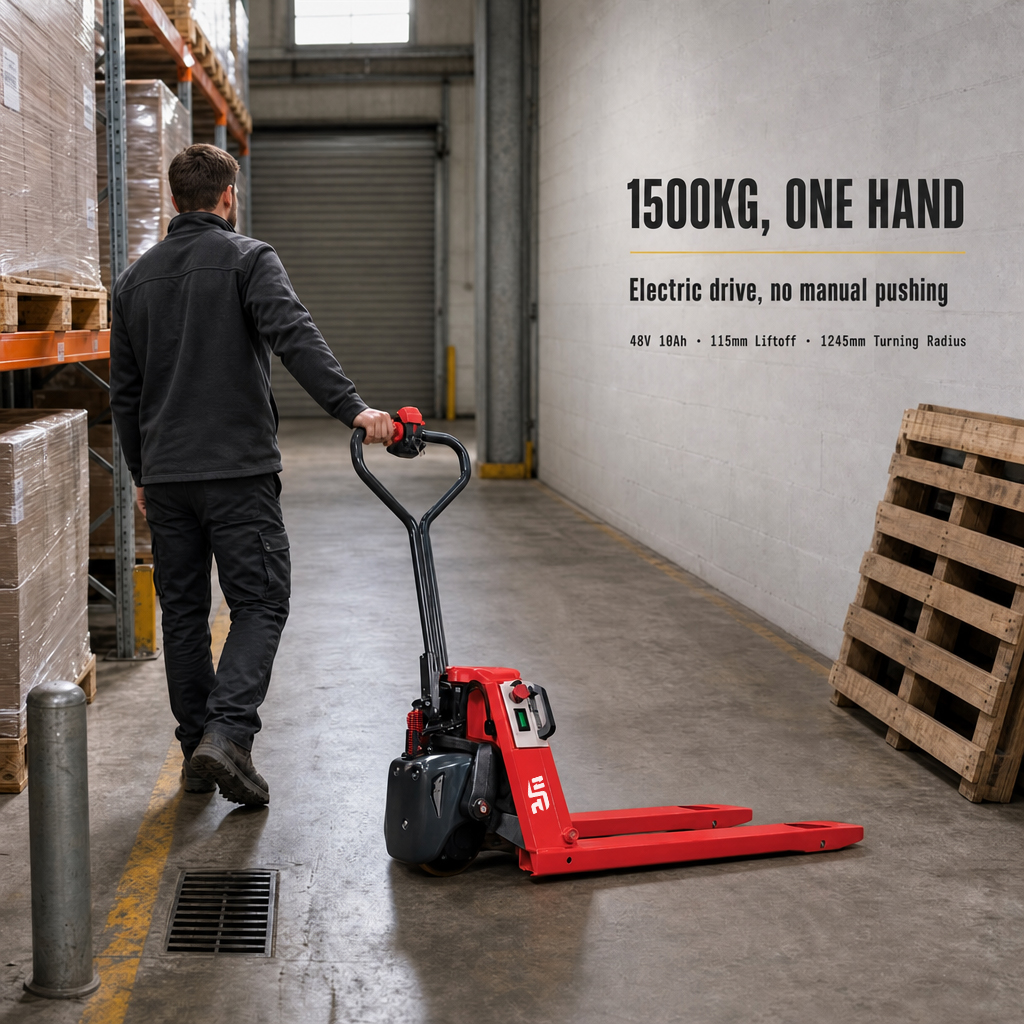
Electric Pallet Truck for Distribution Center Workshop Supermarket Pallet Handling 1500kg Lithium Battery Walkie Jack
A practical walkie jack for fast horizontal movement in distribution centers, workshops and supermarkets, with lithium power suited to frequent daily pallet handling.
View product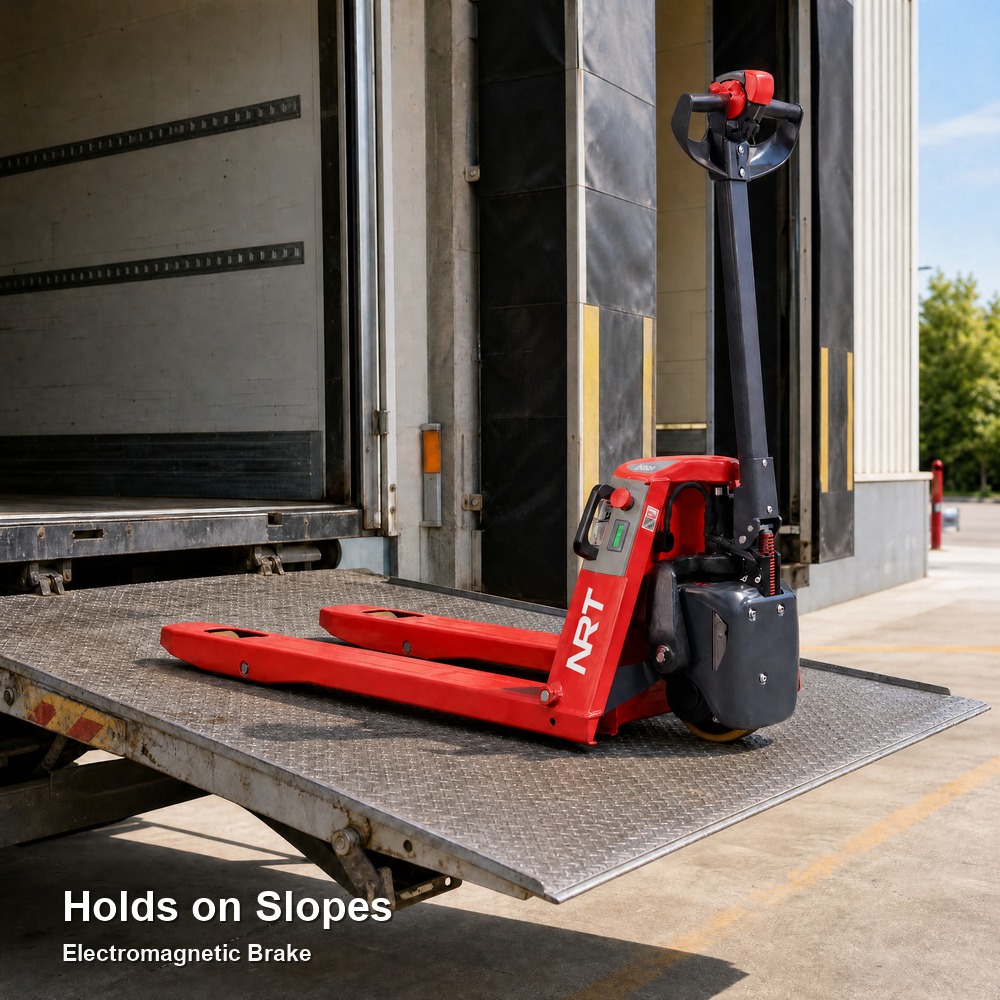
Electric Pallet Jack 1500kg 300mm Slim Body Walkie Pallet Truck for Elevator Freight Box Narrow Aisle Handling
Recommended where space is the constraint. The 300 mm slim body supports elevator entry, freight box loading and narrow aisle work without giving up daily pallet capacity.
View product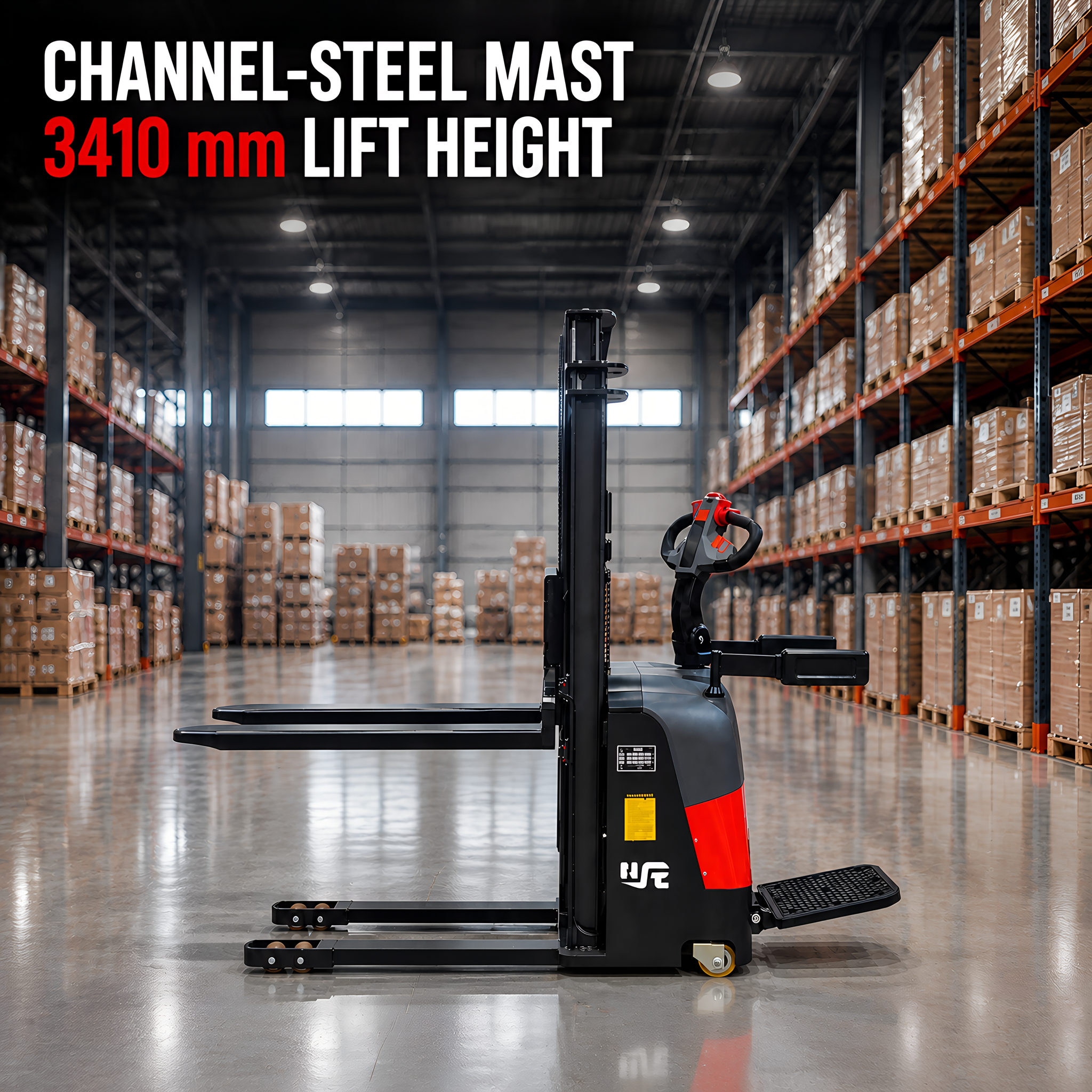
ML20AP Stand on Electric Stacker 2000kg 3410mm Max Lift 1478mm Turning Radius 820mm Body Width
A higher-throughput stacker for medium-height racking and space-limited warehouses, with stand-on operation, 3410 mm max lift and a compact turning envelope.
View product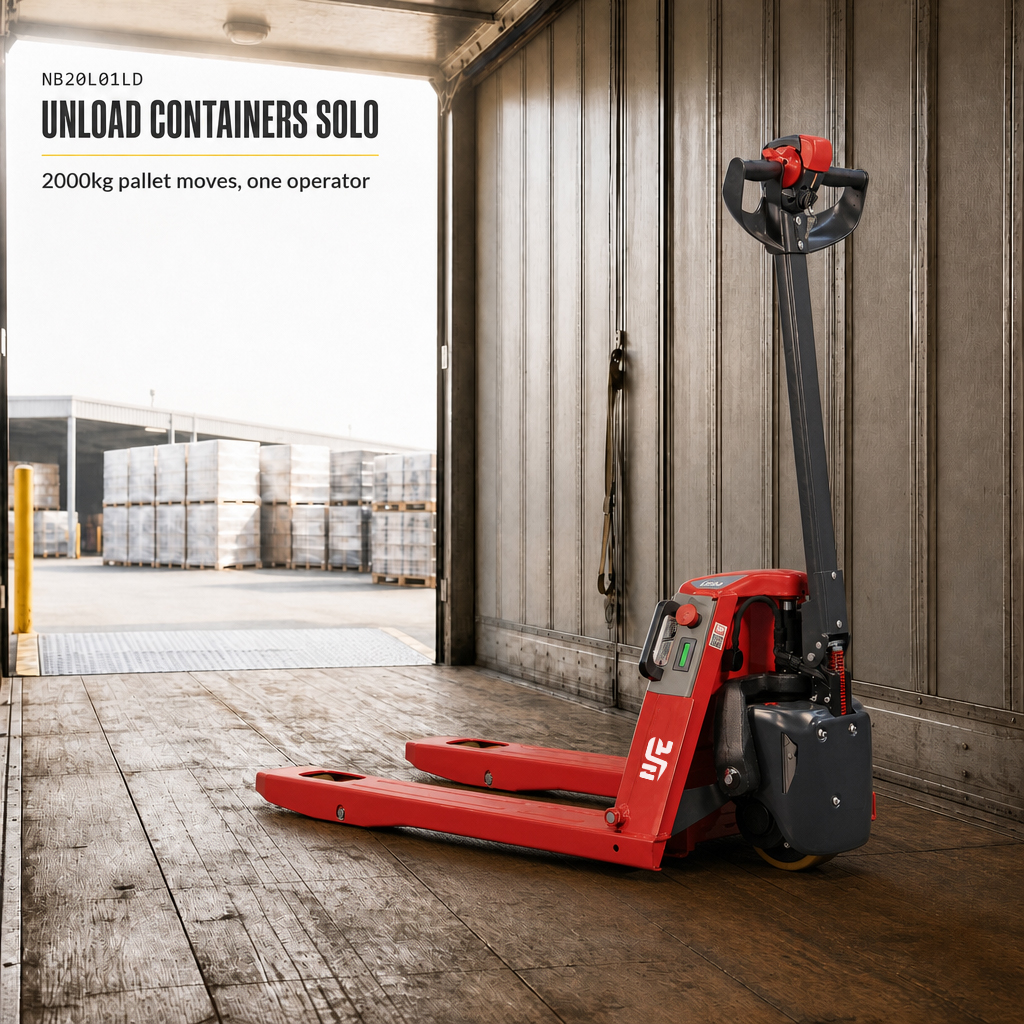
NRT 2 Ton Electric Pallet Jack Lithium-Ion 48V 10Ah 1150mm Forks Polyurethane Wheels Warehouse Handling
Balanced for warehouse handling: 2-ton capacity, 48V 10Ah lithium-ion power, 1150 mm forks and polyurethane wheels for smooth-floor logistics and trailer work.
View product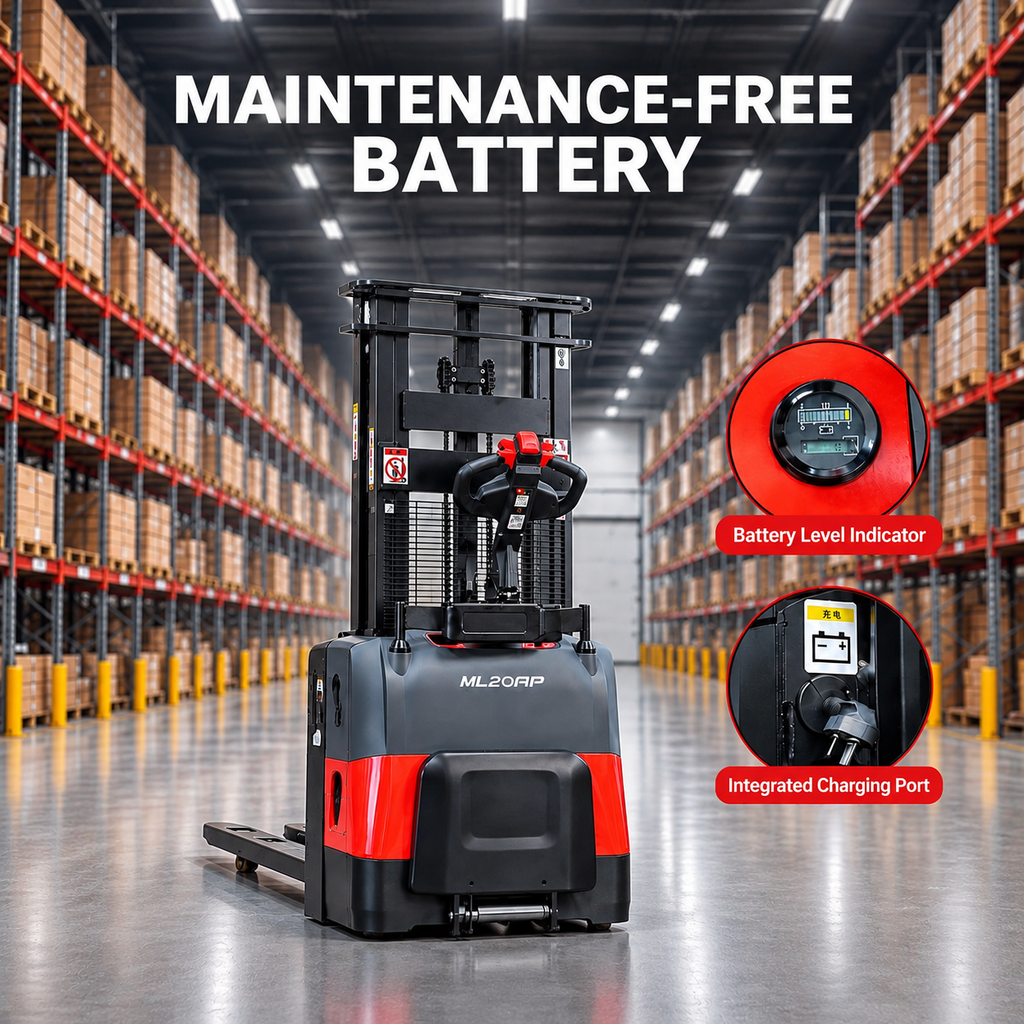
Stacker Forklift Electric 1500kg 2000kg for Retail Backroom Farm Feed Store Pallet Stacking Work
Designed for retail backrooms, farm feed stores and modest pallet stacking duties where a compact electric stacker is faster and safer than manual lifting.
View product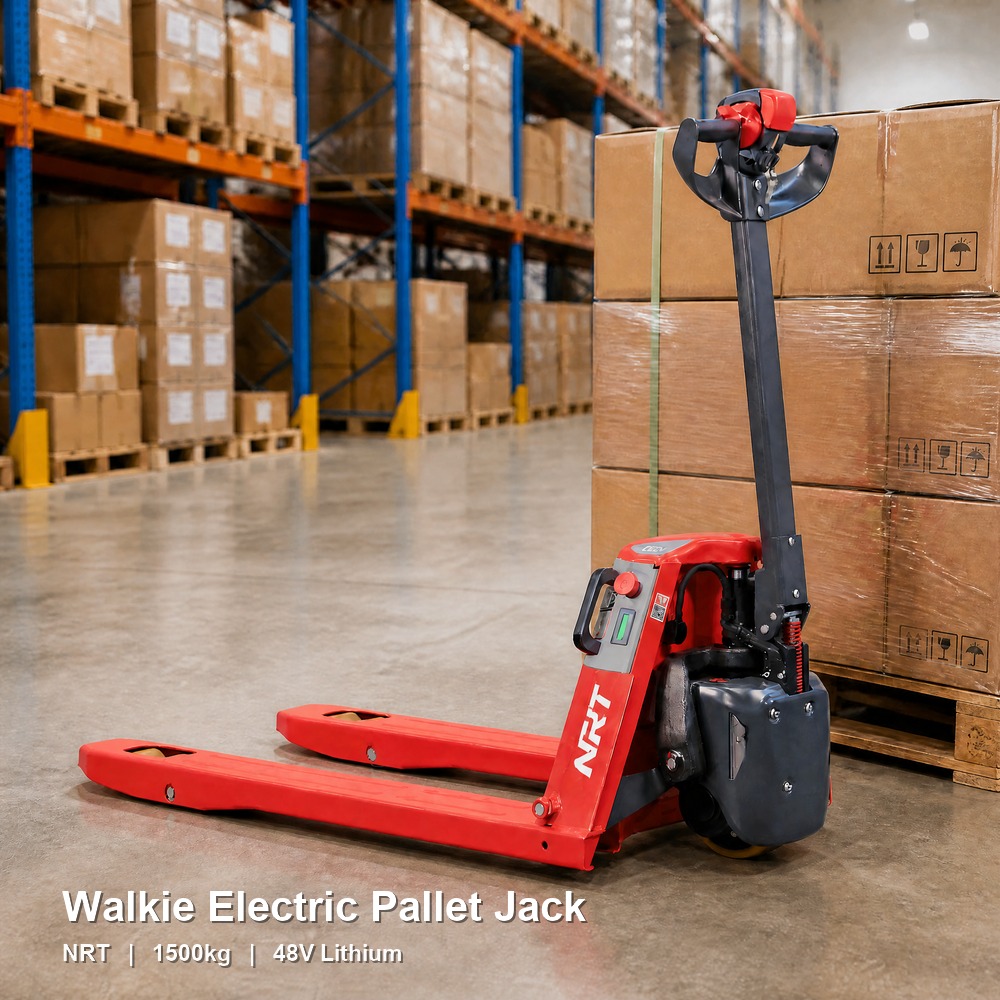
Electric Pallet Jack 1500kg 2000kg Walkie Pallet Truck Battery Powered Lithium Pallet Jack for Warehouse Loading
A flexible warehouse loading jack for mixed pallet profiles and daily goods movement, offering battery-powered lithium operation and straightforward walkie control.
View product
2026 New Alternative Convertidor De Palet Jack a Electrico Ultra-Lightweight 107kg Electric Pallet Jack with Lithium Power
A lightweight lithium pallet jack for dealers targeting small warehouses, delivery teams and service vans where transportability matters as much as lifting power.
View product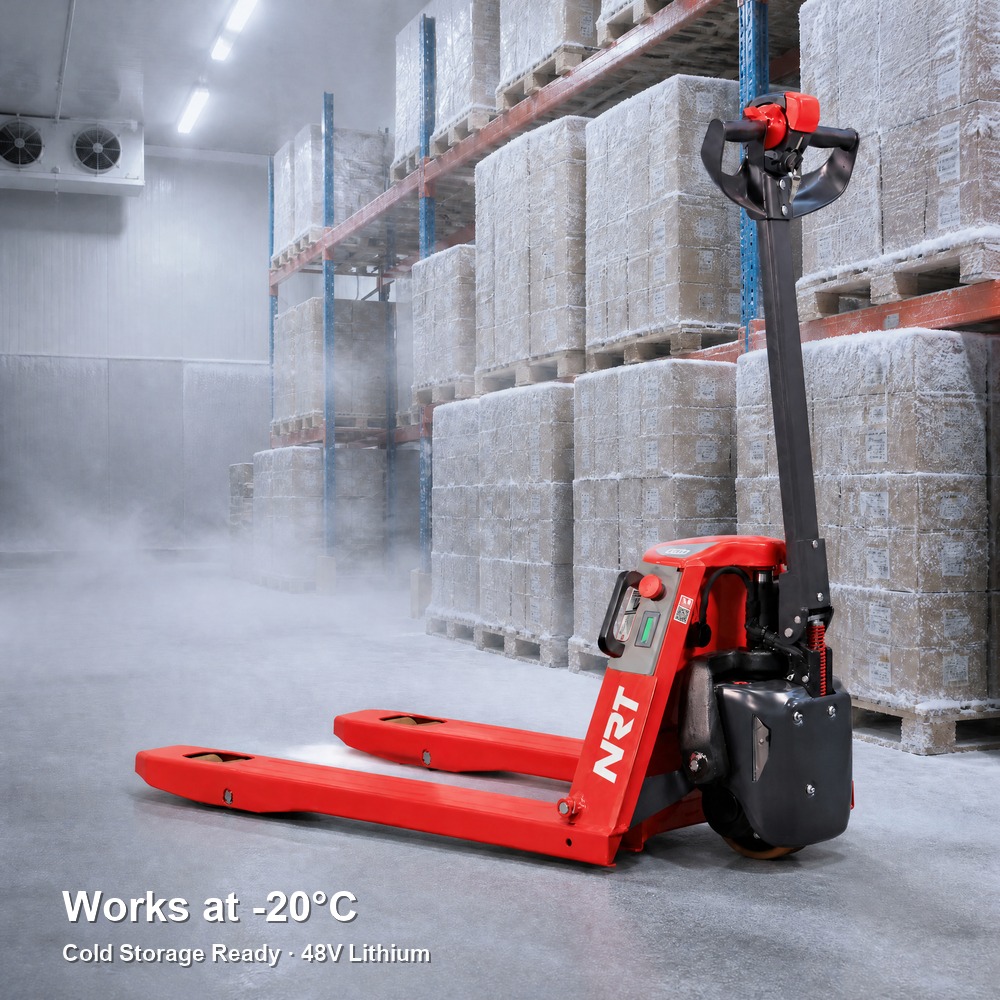
Electric Pallet Jack 2000kg with 48V Lithium Battery 6s Swap 300mm Slim Body Climbing 9% for Cold Storage -20C
Built for demanding environments: 2-ton capacity, 48V lithium battery, 6-second swap concept, 300 mm slim body, 9% climbing capability and cold-storage suitability to -20°C.
View productWhy China Is Still the Center of Gravity for Electric Forklift Manufacturing
China remains the most complete production ecosystem for electric material handling equipment because it combines component depth, lithium battery capability, chassis fabrication, motor and controller integration, export packaging and mature OEM/ODM workflows in one supply network. For buyers comparing China best electric forklift manufacturer options, the real advantage is not simply a lower unit price. It is the ability to engineer the right specification, validate the factory, control documentation and support spare parts after shipment.
For 2026 and beyond, procurement teams are moving from “buy the cheapest truck” to “buy the lowest-risk operating asset.” That means checking whether the supplier can align battery capacity with shift length, whether the mast and chassis are stable for repeated lifting, whether the charger matches local voltage, and whether the supplier can provide a configuration history for repeat orders. A factory that can answer these questions in writing is more valuable than a catalogue with dozens of unverified models.
Xiamen Pexal Technology Co., Ltd. was founded in Xiamen, Fujian in 2024 as the sales, service and technical support base for Pexal material handling equipment. We work with a 220,000 m² partner manufacturing campus employing more than 1,200 people, including over 100 engineers focused on electric warehouse equipment. This structure gives buyers the commercial responsiveness of a dedicated export team and the production depth of an established manufacturing base.
Third-party verification is another information-gain layer. Our company has passed an onsite check and supplier assessment conducted by SGS Group, and our verified company video is available for buyers to review. For overseas dealers and fleet managers, these checks reduce the unknowns that usually slow down first orders: legal identity, site existence, business type, main products, export markets and customization capability.
The most successful buyers treat a China factory visit as a technical audit, not a price negotiation. They bring load data, aisle width, racking height, floor condition, shift pattern, charging infrastructure and market-specific compliance requirements. When those inputs are clear, the factory can recommend a sensible electric pallet truck, electric stacker, reach truck or electric forklift instead of pushing a generic model. That is where total cost of ownership starts to improve.
Read Buyer FAQPurchasing Priority Index
Qualitative decision weight observed in dealer and fleet buyer inquiries. Use it as a discussion checklist, not a market forecast.
Procurement Trends Buyers Will Price Into 2026–2030
Electric warehouse equipment is becoming a strategic asset class rather than a simple catalogue purchase. These six procurement shifts are already changing how distributors, rental companies and end users compare China electric forklift factories.
Lithium-ion Becomes the Default Specification
Buyers increasingly ask for lithium power because it supports opportunity charging, reduces battery maintenance and simplifies multi-shift planning. The procurement question is shifting from “lead-acid or lithium?” to “what lithium capacity and charger profile fit the actual duty cycle?”
Total Cost of Ownership Replaces Sticker Price
Fleet buyers now compare energy cost, battery life, tyre wear, service access, downtime and spare-parts availability. A slightly higher initial quote can be the better decision when it protects uptime and reduces unscheduled repairs across a three- to five-year horizon.
Multi-Shift Uptime Becomes a Contract Issue
Warehouses running two or three shifts cannot afford vague runtime claims. Procurement teams are asking for load tests, charging windows, battery-swap options and clear maintenance intervals before they release purchase orders.
Safety and Market Compliance Move Earlier
Certification, voltage, documentation, labels, manuals and local market requirements should be confirmed before production. Buyers are increasingly unwilling to discover compliance gaps at the port, where rework can erase the value of a low factory price.
Automation-Ready, But Phased
Most buyers are not replacing every manual truck overnight. They are planning phased automation: fixed-route AGV tasks first, then telematics and fleet data. A supplier that can support both manual equipment and future automated guided forklifts reduces integration risk.
OEM/ODM Modularity Becomes a Competitive Edge
Distributors want their own brand, packaging, fork length, mast height, battery choice and market-specific accessories. Modular customization allows a China factory to support differentiation without turning every order into a slow, one-off engineering project.
Where Electric Forklift Product Development Is Heading
The next generation of warehouse trucks will be judged less by a single headline specification and more by how well the machine fits a real operating system: people, charging, safety, data and service.
Battery Architecture & Fast Swap
Lithium pack design is moving toward faster opportunity charging, easier battery exchange and better cold-weather performance. For cold storage and multi-shift sites, swap convenience can matter as much as nominal capacity.
Slimmer Chassis & Smarter Ergonomics
Compact bodies, improved visibility, smoother controls and low step heights help operators work faster in narrow aisles and elevators. Ergonomic design also supports training efficiency and reduces fatigue in repetitive handling.
Telematics, Diagnostics & Safety Sensing
Fleet data is becoming part of the product. Usage logs, fault alerts, speed control, pedestrian awareness and battery-state monitoring help managers prevent downtime and improve safety without waiting for a failure.
Manual-to-Autonomous Hybrid Fleets
Automated guided forklifts and handling robots are being integrated alongside manual trucks rather than replacing entire fleets. The practical path is a hybrid operation where repetitive routes are automated first and human drivers focus on exceptions.
How to Qualify a China Electric Forklift Factory Before You Release a PO
Strong procurement does not rely on a single quote sheet. It uses a repeatable qualification process that checks identity, capability, product fit, documentation and after-sales readiness.
Verify Legal Identity & Site
Match the company name, address, business scope and contact person. Ask for an onsite check record or third-party assessment such as SGS verification.
Validate Product-Fit Data
Check capacity at the actual load center, lift height, fork length, aisle width, turning radius, wheel type, gradeability and battery configuration.
Review Export Discipline
Confirm Incoterms, packaging, markings, manuals, voltage, plug type, spare parts list and shipment schedule before production.
Ask for a Reference Configuration
Request a past order in a similar market and application. A factory that can explain why a configuration was chosen is easier to trust than one that only sends a price.
| Verification Area | What to Request | Why It Matters |
|---|---|---|
| Supplier identity | Business license, registered address, contact person and company profile. | Prevents confusion between a trading identity, a sales agent and the actual production partner. |
| Site assessment | SGS assessment record, onsite check confirmation or a live video walkthrough. | Confirms that the claimed operation and product scope exist in the real world. |
| Product family | Electric forklifts, pallet trucks, stackers, reach trucks, order pickers and AGV options. | Shows whether the supplier can support one-stop procurement and future fleet expansion. |
| Customization | Mast height, fork length, battery type, color, logo, packaging and attachment configuration. | Protects distributor branding and market fit, especially for OEM and ODM programs. |
| Export terms | FOB, CFR, CIF, EXW, FCA, CPT, CIP, DDP and common payment methods. | Reduces friction between the purchasing team, freight forwarder and customs broker. |
| After-sales data | Spare parts list, maintenance guidance, troubleshooting support and warranty terms. | Shortens downtime and protects resale value for rental fleets and dealers. |
The Pexal Advantage: Factory-Linked Expertise with Export Discipline
Pexal is built for buyers who want direct technical communication, practical customization and a transparent path from product selection to shipment.

Xiamen Pexal Technology Co., Ltd.
Founded in Xiamen, Fujian in 2024, Pexal serves as the sales, service and technical support base for material handling equipment. We combine a full forklift and warehouse truck range with sample-based customization, full customization and ODM services.
Our mission is practical: help buyers move from manual handling to electric handling, and from diesel to battery power, while reducing emissions, noise and operating cost. The partner manufacturing campus covers 220,000 m², with a 1,200+ workforce and 100+ R&D engineers supporting electric warehouse equipment development.
Main export markets include Western Europe, North America, South America, Eastern Europe and Oceania. We support dealers, rental companies and end users with export documentation, flexible trade terms and product configurations aligned to local voltage and application needs.
Factory-Linked Pricing
Work directly with a supplier connected to a large partner production campus, with clearer visibility on configuration and order planning.
SGS-Assessed Supplier
Our company has passed an onsite check and supplier assessment by SGS Group, with a verified company video available for buyer review.
OEM / ODM Customization
Sample-based customization, full customization and ODM services for mast height, fork length, battery type, color, logo and attachments.
Application Engineering Support
Logistics solution design and consulting help translate load, aisle, lift height and shift data into a workable equipment configuration.
Export & Trade Flexibility
Support for FOB, CFR, CIF, EXW, FCA, CPT, CIP, DDP and other common delivery terms, plus T/T, L/C, D/P, D/A, Western Union, PayPal, credit card and escrow.
Global Market Focus
Export experience across Western Europe, North America, South America, Eastern Europe and Oceania, serving dealers, rental companies and end users.
Product Selection Matrix for Common Warehouse Jobs
Use this quick matrix to shortlist the right starting point. Final configuration should always be checked against load center, floor condition, aisle width, lift height and duty cycle.
| Recommended Model | Best Application | Selection Signal | Buyer Note |
|---|---|---|---|
| 1500kg Lithium Walkie Pallet Jack | Distribution center, workshop, supermarket pallet handling | Frequent horizontal movement | Good general-purpose entry model for smooth floors. |
| 1500kg 300mm Slim Body Pallet Jack | Elevator, freight box and narrow aisle handling | Doorway or elevator width is limited | Confirm actual aisle and entrance dimensions before order. |
| ML20AP Stand-on Electric Stacker | Medium-height racking and compact warehouse stacking | Higher lift and stand-on travel are required | Check racking height, overhead clearance and turning radius. |
| NRT 2 Ton Lithium Pallet Jack | Warehouse handling and trailer loading | 2-ton pallet loads and smooth floors | 48V lithium setup suits frequent charging and daily use. |
| 1500–2000kg Electric Stacker | Retail backroom, farm feed store and pallet stacking | Stacking is needed but space is moderate | Match stacker legs to pallet type and floor condition. |
| 1500–2000kg Walkie Pallet Truck | Warehouse loading and mixed pallet movement | Flexible daily loading tasks | Consider fork length, wheel type and charger availability. |
| 107kg Ultra-Lightweight Pallet Jack | Small warehouses, service vans and delivery teams | Transportability is a priority | Useful where one person must move equipment between sites. |
| 2000kg 48V Lithium Cold Storage Jack | Cold storage to -20°C and demanding indoor logistics | Cold environment and climbing ability matter | Confirm battery performance and charging plan in cold conditions. |
Buyer FAQ: China Electric Forklift Factories, OEM and Procurement
Direct answers to the questions that most often appear in dealer, rental fleet and warehouse procurement discussions.
What makes a China electric forklift manufacturer suitable for export buyers?
Should I buy an electric pallet truck or an electric stacker?
Do you offer OEM, ODM and customized electric forklifts?
Which Incoterms and payment methods are accepted?
How is the company verified for first-time buyers?
Which markets do you export to and what should buyers prepare?
What is the fastest way to get a useful quotation?
Plan Your Next Electric Forklift or Pallet Truck Order
Share your load, aisle width, lift height, shift pattern, battery preference, voltage and destination market. Our team will recommend a practical configuration and prepare a quotation for your business.