CE Certified Warehouse Pallet Truck Manufacturer & Factory
Factory-direct electric pallet trucks, lithium walkie pallet jacks and stand-on electric stackers for distributors, rental fleets and warehouse operators in Europe, the Americas and Oceania.
8 Warehouse Pallet Trucks and Stackers for CE Markets
Start with the operating condition, not the product name. These eight models cover narrow aisles, container loading, medium-height stacking, high-rack handling and ultra-lightweight delivery duties. Every product URL below is preserved so procurement teams can compare specifications directly.
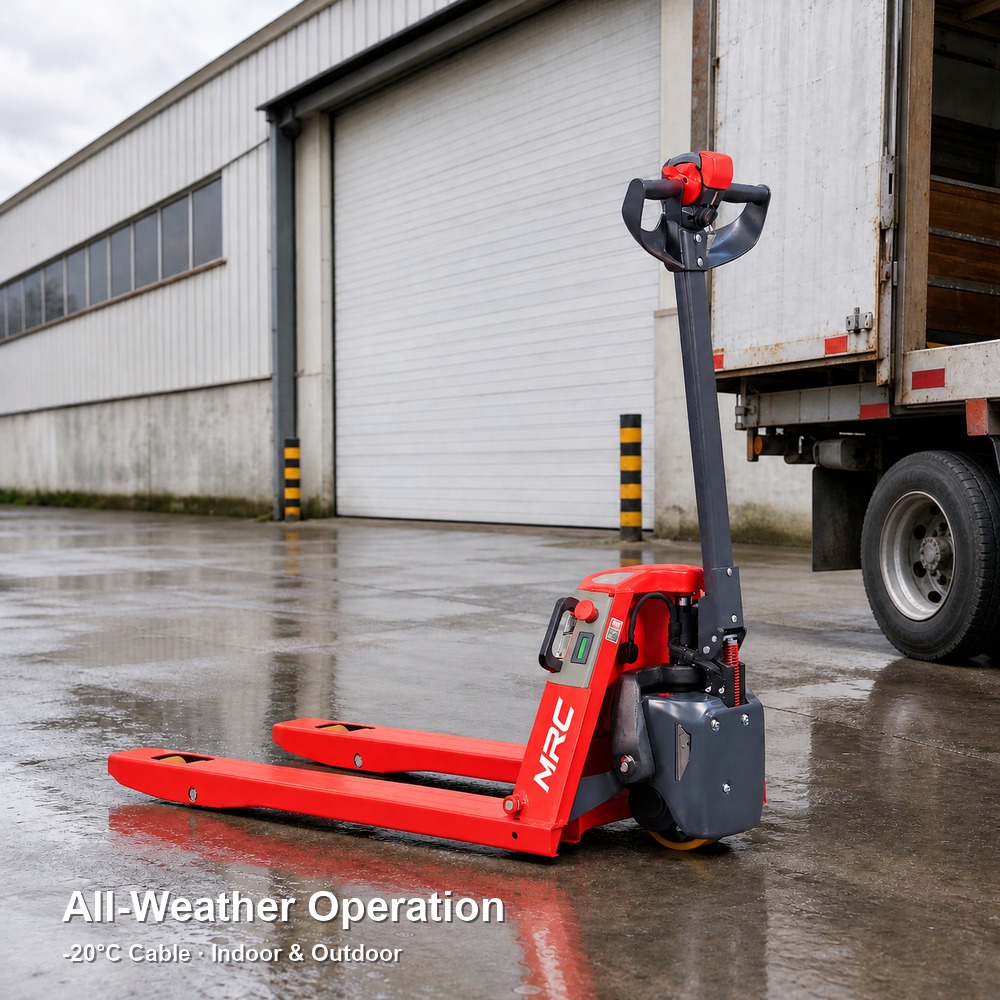
Factory Direct Price Electric Pallet Jack 1500kg 2000kg Battery Powered Walkie Pallet Truck Lithium Pallet Jack
A factory-direct lithium walkie pallet truck for horizontal transport, loading docks and warehouse replenishment. The 1500–2000 kg class is a practical starting point for distributors that need one platform to cover retail, food, logistics and light manufacturing duties with lower noise and zero local emissions.
View specifications →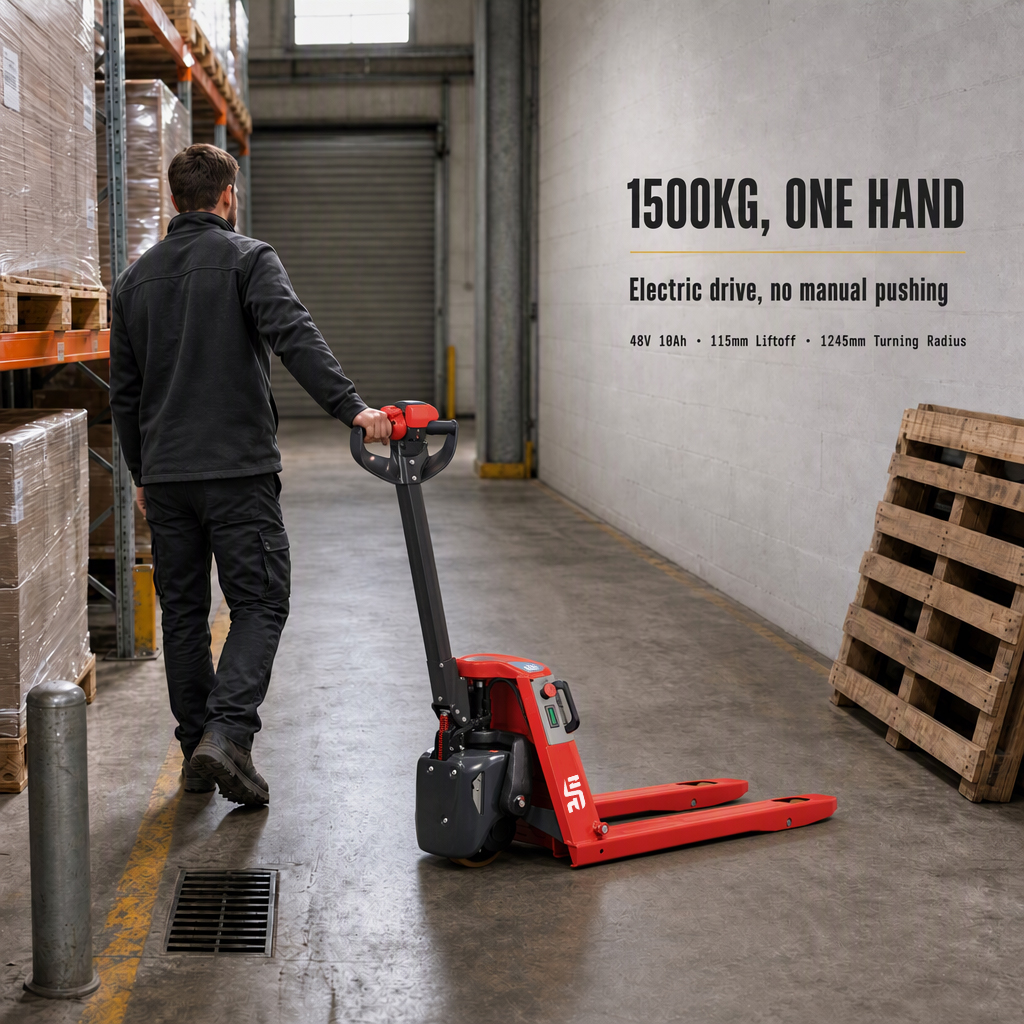
1.5 Ton Electric Pallet Truck with 48V Li-ion Battery, 107kg Ultra-lightweight Pallet Jack for Narrow Aisle Warehouse
A 107 kg ultra-lightweight pallet jack with 48V Li-ion power for narrow aisles, mezzanines, elevators and retail backrooms. The low service weight and compact footprint make it easier to deploy where floor loading, turning space or operator fatigue is a constraint.
View specifications →
Stand on Electric Stacker 2000kg for Narrow Aisle Warehouse Loading Dock Building Material Shop Pallet Handling
A stand-on electric stacker for medium-height racking, loading docks and building-material shops. It is a productive bridge between a pallet truck and a full forklift when operators need repeated lifting, precise pallet placement and better visibility in confined work zones.
View specifications →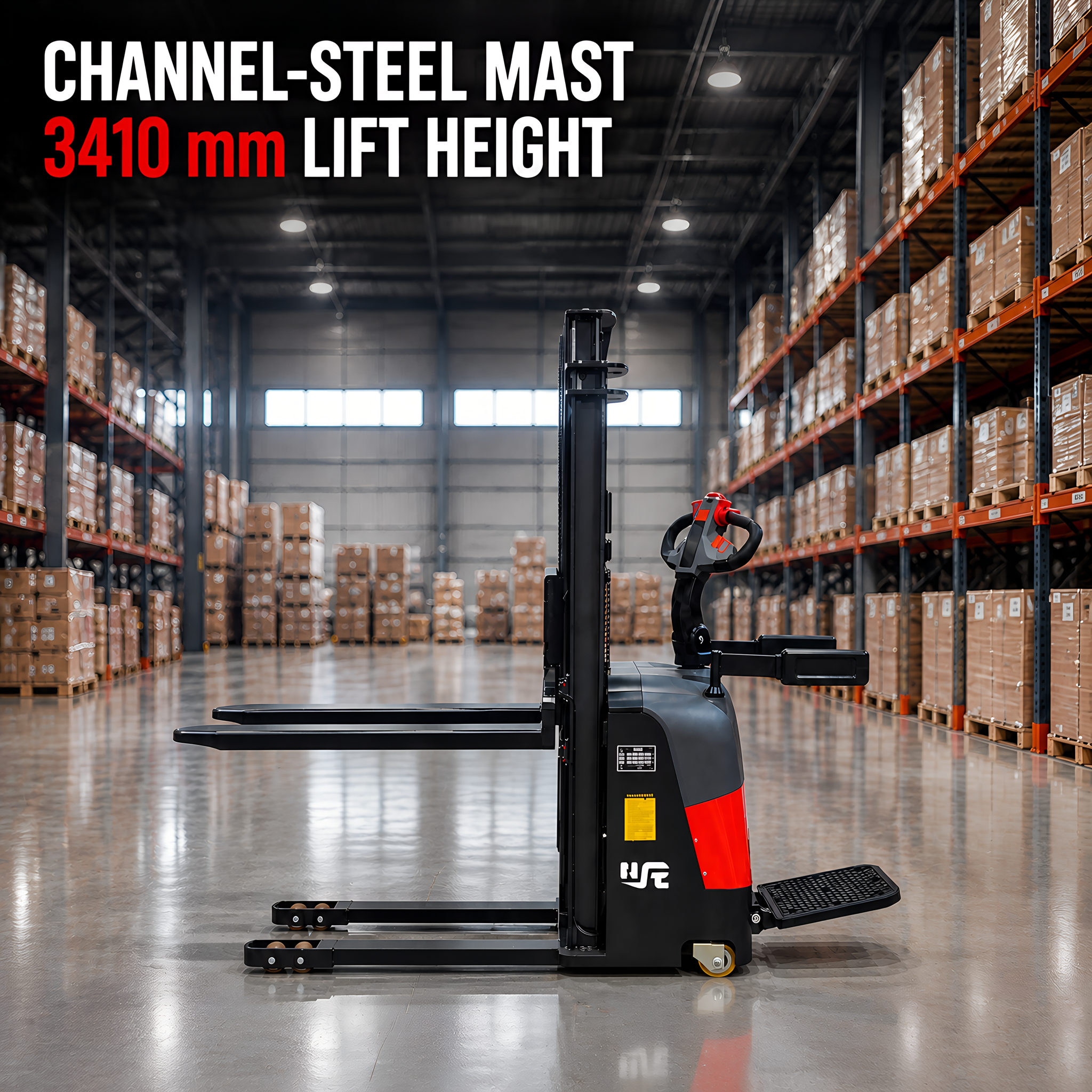
ML20AP Stand on Electric Stacker 2000kg 3410mm Max Lift 1478mm Turning Radius 820mm Body Width
The ML20AP combines a 2000 kg load rating, 3410 mm max lift, 1478 mm turning radius and 820 mm body width. It is aimed at warehouses where high-rack stacking and limited maneuvering space must be solved together, without moving to a larger counterbalance truck.
View specifications →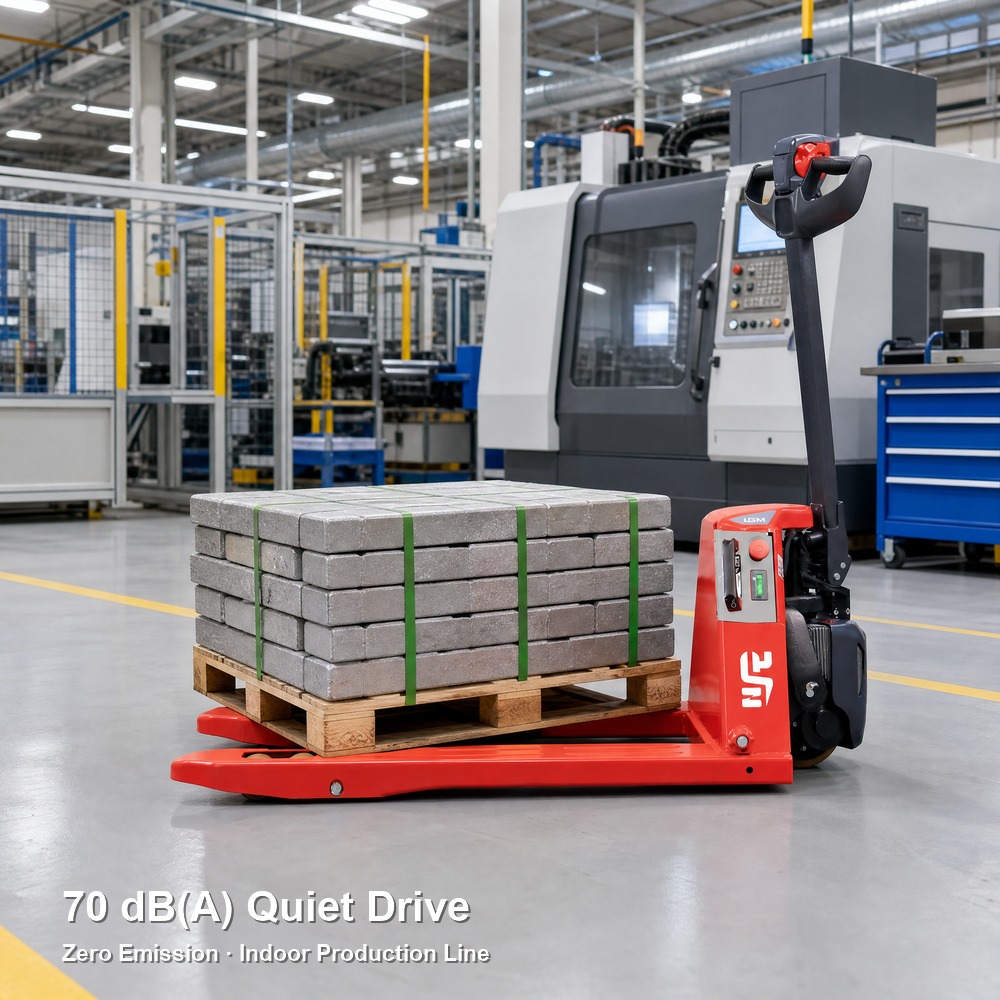
Battery Powered Pallet Jack Truck 48V Lithium Walkie Type for Narrow Aisle Warehouse Elevator Loading Unloading
A 48V lithium walkie pallet jack for narrow aisles, elevator transfer and truck loading or unloading. It is well suited to facilities that want battery-powered horizontal movement without the space requirements of a ride-on forklift or the labor exposure of manual pallet handling.
View specifications →
2000kg Walkie Electric Pallet Jack 685mm Width Narrow Fork Pallet Truck with Lithium Battery for Container Loading
A 2000 kg lithium walkie pallet truck with 685 mm narrow fork width for container loading, tight warehouse lanes and confined receiving zones. The narrower chassis improves access where standard pallet trucks cannot turn or enter cleanly, while retaining a practical 2-ton load class.
View specifications →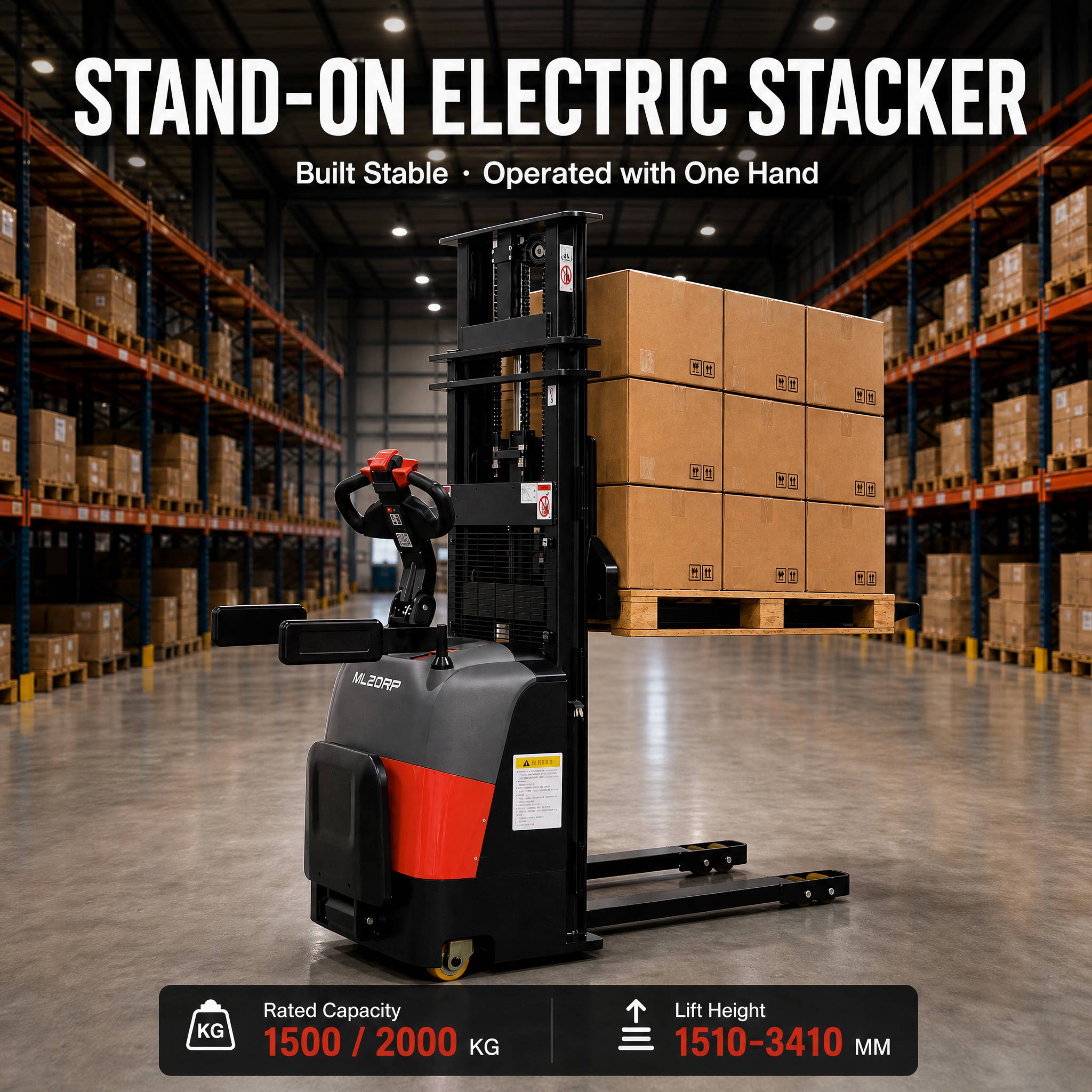
Channel Steel Mast Electric Pallet Stacker 2000kg 90mm Lowered Fork Height Stable High Rack Stacking
A 2000 kg electric pallet stacker with channel steel mast and 90 mm lowered fork height for stable high-rack stacking. The structural design is intended for repeated lift cycles in warehouses, workshops and material shops where pallet positioning accuracy affects safety and throughput.
View specifications →
2026 New Alternative Convertidor De Palet Jack a Electrico Ultra-Lightweight 107kg Electric Pallet Jack with Lithium Power
A 2026 ultra-lightweight 107 kg lithium electric pallet jack positioned as an alternative to manual pallet handling in space-limited operations. It is relevant for distributors targeting retail, food service, small warehouses and delivery fleets that need compact equipment with modern battery power.
View specifications →What CE Certification Means for Warehouse Pallet Truck Buyers
For an electric warehouse pallet truck, CE marking is not a decorative label. It should connect the exact model, battery, charger, voltage, control system and manual to a conformity assessment pathway. Buyers should ask for the Declaration of Conformity, model designation, technical file reference and applicable standards before approving a production order. This is especially important when the same truck platform is configured for different markets, fork widths, lift heights or battery capacities.
Xiamen Pexal Technology Co., Ltd. is the sales, service and technical support base for Pexal material handling equipment in Xiamen, Fujian. Founded in 2024, the company works with a 220,000 m² partner manufacturing campus and a workforce of more than 1,200 people, including over 100 engineers focused on electric warehouse equipment. That structure gives importers a practical combination: a responsive commercial team, engineering support for customization and access to scaled factory production.
Our position is straightforward: CE documentation is model-specific, so the quotation, datasheet and conformity documents must match. For eligible models, we support CE-market configuration reviews, English manuals, charger compatibility checks and export documentation preparation. For buyers comparing a CE certified warehouse pallet truck manufacturer and factory, the right question is not only “Does it have CE?” but “Does the CE file match the exact unit I am ordering?”
- Model-specific CE documentation review
- Lithium and lead-acid battery options by model
- Fork width, mast height and branding customization
- SGS-assessed supplier with onsite verification
Reliability note: final CE compliance, voltage, plug type and manual language should be confirmed on the signed datasheet and purchase order for the destination market. This guide supports procurement planning but does not replace local legal or compliance advice.

Where Warehouse Pallet Truck Savings Really Come From
Purchase price is only one line in the business case. Labor exposure, charging routine, maintenance access, battery life, spare-parts availability and downtime risk usually determine whether a pallet truck is genuinely economical over three to five years.
Illustrative directional comparison only. Actual costs depend on duty cycle, local labor rates, energy tariffs, charging strategy, maintenance contracts and spare-parts logistics.
Product Recommendation Matrix for Procurement Teams
Use this matrix to shortlist a configuration before requesting a quotation. It is built around the eight factory-direct models above and the operating questions that most often change the recommended pallet truck or stacker.
| Operating Need | Recommended Type | Why It Fits | Confirm Before Order |
|---|---|---|---|
| Loading dock horizontal transfer | 1500–2000 kg lithium walkie pallet truck | Fast pallet movement with zero local emissions and low noise | Dock level, floor condition, charger location |
| Narrow aisle and elevator work | 1.5 ton ultra-lightweight / 48V walkie pallet jack | Compact footprint and low service weight reduce access issues | Aisle width, elevator capacity, ramp slope |
| Medium-height racking | 2000 kg stand-on electric stacker | Productive lifting with better visibility in confined zones | Rack height, load center, floor flatness |
| High-rack stacking in tight space | ML20AP 2000 kg stand-on electric stacker | 3410 mm max lift with 1478 mm turning radius | Overhead clearance, mast height, aisle geometry |
| Container loading and narrow forks | 2000 kg walkie electric pallet jack, 685 mm width | Narrow fork width for container and confined receiving zones | Pallet size, container floor, operator clearance |
| Stable high-rack handling | Channel steel mast electric pallet stacker 2000 kg | 90 mm lowered fork height and reinforced mast structure | Load stability, rack tolerance, lift cycle frequency |
Four Checks Before You Approve a Factory Order
Experienced buyers reduce risk by turning operational data into a written specification. These four checks prevent most late-stage changes, rework and shipping delays.
Load and Duty Cycle
Record maximum pallet weight, load center, travel distance, shifts per day and lift cycles per hour. A 1500 kg truck and a 2000 kg truck may share a platform name but require different battery and structural choices.
Aisle, Rack and Floor
Measure aisle width, top racking level, door height, elevator capacity and floor flatness. For narrow-aisle projects, the turning radius and body width matter as much as the rated load.
CE and Safety File
Confirm the exact CE document for the model, voltage, charger and manual language. Request emergency-stop, braking, speed-control and warning-label details so your local safety team can review them early.
Battery, Charger and Spares
Define charging windows, outlet type, spare battery policy and critical spare-parts list. Lithium platforms can reduce maintenance routines, but charger compatibility and local service access still need a written plan.
How Pallet Truck Buying Is Changing
Procurement teams are moving from single-unit price comparisons to fleet-level decisions. The strongest suppliers will be those that can document compliance, support mixed battery platforms and provide reliable after-sales data.
TCO Replaces Sticker Price
Buyers now compare energy, labor, maintenance and downtime over three to five years. A low purchase price can be misleading if battery replacement, charger upgrades or spare-parts delays create hidden costs.
Lithium Becomes the Default
Opportunity charging, lower maintenance routines and stable power delivery are making lithium pallet trucks easier to justify. Distributors increasingly request 48V lithium platforms for leasing and rental fleets.
Compliance as a Gate
CE documentation, labels, manuals and charger compatibility are becoming qualification gates, not afterthoughts. Procurement teams want a file that matches the ordered configuration and can be reviewed before production.
Mixed Fleet Rationalization
Instead of buying many one-off models, dealers are rationalizing platforms across pallet trucks, stackers and forklifts. Shared batteries, chargers and spare parts reduce training time and inventory complexity.
Service SLAs Matter More
Warehouse operators ask suppliers for response times, critical spare-parts lists and documentation packages. The ability to support a fleet after shipment is now part of the product, not a separate courtesy.
ESG, Noise and Air Quality
Indoor logistics, food storage, cold chain and urban warehouses are under pressure to reduce emissions and noise. Electric pallet trucks help procurement teams align equipment selection with environmental reporting.
What the Next Generation of Pallet Trucks Will Look Like
Equipment development is moving in six practical directions. These trends are not abstract technology themes; they change aisle requirements, operator training, maintenance routines and fleet integration.
Lighter and Narrower Platforms
Ultra-lightweight designs such as 107 kg electric pallet jacks make electrification possible in buildings where floor loading, elevator capacity or narrow doors previously forced manual handling.
Higher Energy Density
48V lithium systems and fast/opportunity charging reduce battery swapping. The development focus is runtime stability under real duty cycles, not only nominal capacity on a datasheet.
Smart Safety Functions
Speed control, emergency-stop architecture, operator-presence sensing and clearer displays are becoming common in warehouse pallet trucks. Safety electronics also simplify fleet inspections.
Modular Battery and Charger Design
Modular power platforms help dealers support multiple markets and voltage requirements without duplicating too many spare parts. This is especially valuable for OEM and private-label programs.
AGV-Ready Interfaces
As automated guided forklifts and handling robots enter more warehouses, manual pallet trucks are being designed with future fleet integration in mind, including data and control interfaces.
Ergonomics and Training
Lower tiller forces, better visibility, intuitive controls and clear labels reduce training time. For rental fleets, equipment that is easy to understand across different operators is a commercial advantage.
Why Buyers Choose Pexal as a Warehouse Pallet Truck Partner
Xiamen Pexal Technology Co., Ltd. combines a focused sales and technical support team with a mature partner manufacturing campus. For importers, that means factory access plus a commercial interface that understands export documentation, customization and after-sales expectations.
SGS Onsite Assessed
Our company has passed an onsite check and supplier assessment conducted by SGS Group. Buyers can review the assessment, credit index and trade history before placing a first order.
220,000 m² Partner Campus
Access to a large partner manufacturing campus supports container orders, recurring dealer stock and production planning for electric pallet trucks, stackers and forklifts.
OEM, ODM and Full Customization
Sample-based customization, full customization and ODM services are available, including mast height, fork length, battery type, color, logo and attachment configuration for your market.
Full Material Handling Ecosystem
One supplier for electric forklifts, battery-powered forklifts, pallet trucks, pallet stackers, reach trucks, order pickers and automated guided forklifts simplifies sourcing and spare-parts planning.
Flexible Trade Terms
Accepted delivery terms include FOB, CFR, CIF, EXW, FCA, CPT, CIP and DDP. Payment options include T/T, L/C, D/P, D/A, Western Union, PayPal, credit card and escrow.
Five-Region Export Support
Main export markets include Western Europe, North America, South America, Eastern Europe and Oceania. Accepted currencies include USD, EUR, GBP, JPY, CAD, AUD, HKD, CHF and CNY.
Production, Inspection and Export Readiness
B2B buyers need evidence, not slogans. These views reflect the production, assembly and inspection context behind the Pexal material handling range.

Company Overview
Commercial, technical and export support aligned with factory production.
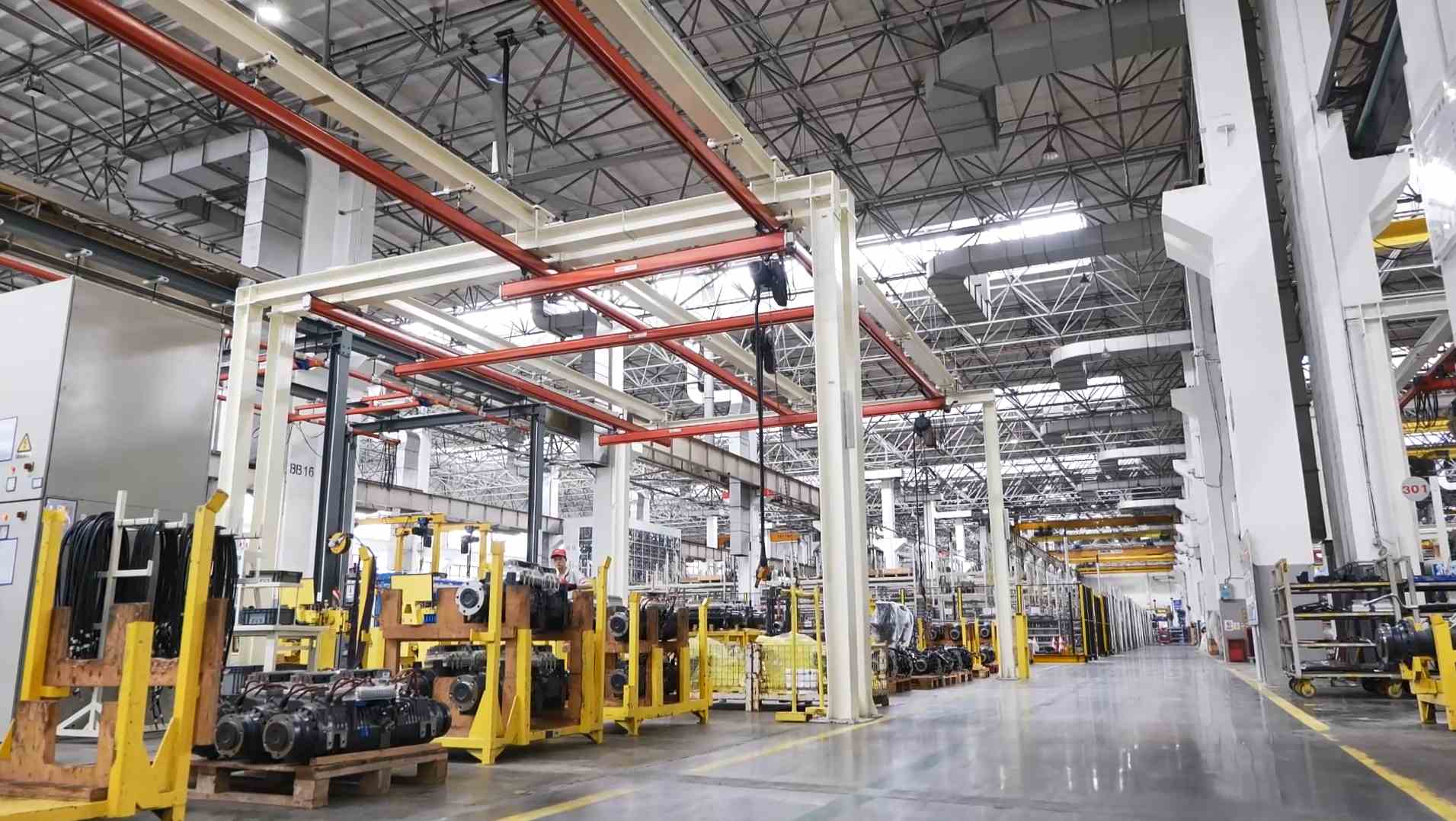
Production Workshop
Scaled assembly environment for warehouse trucks and electric equipment.
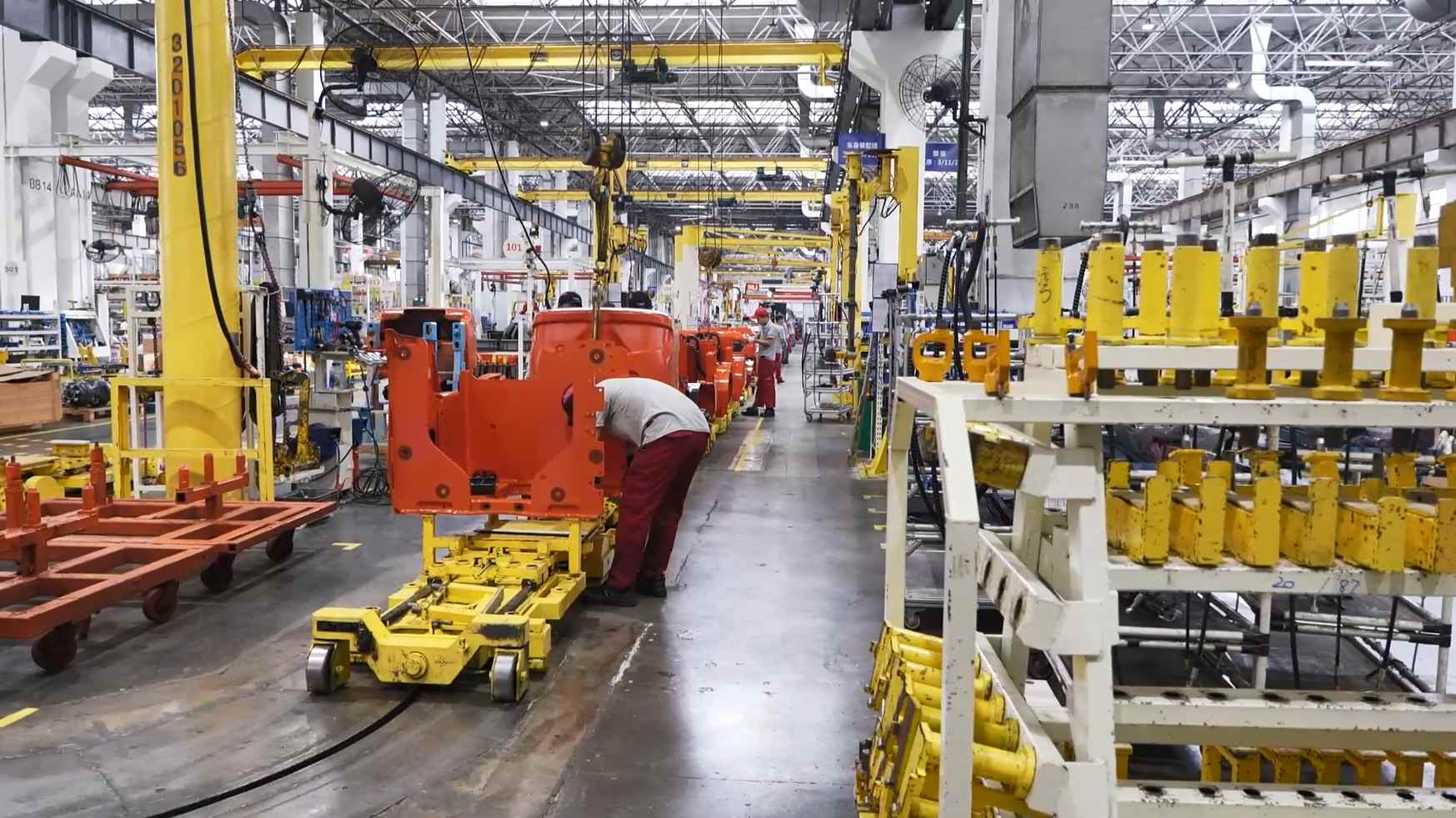
Assembly Line
Model-specific configuration for battery, mast, fork and branding requirements.
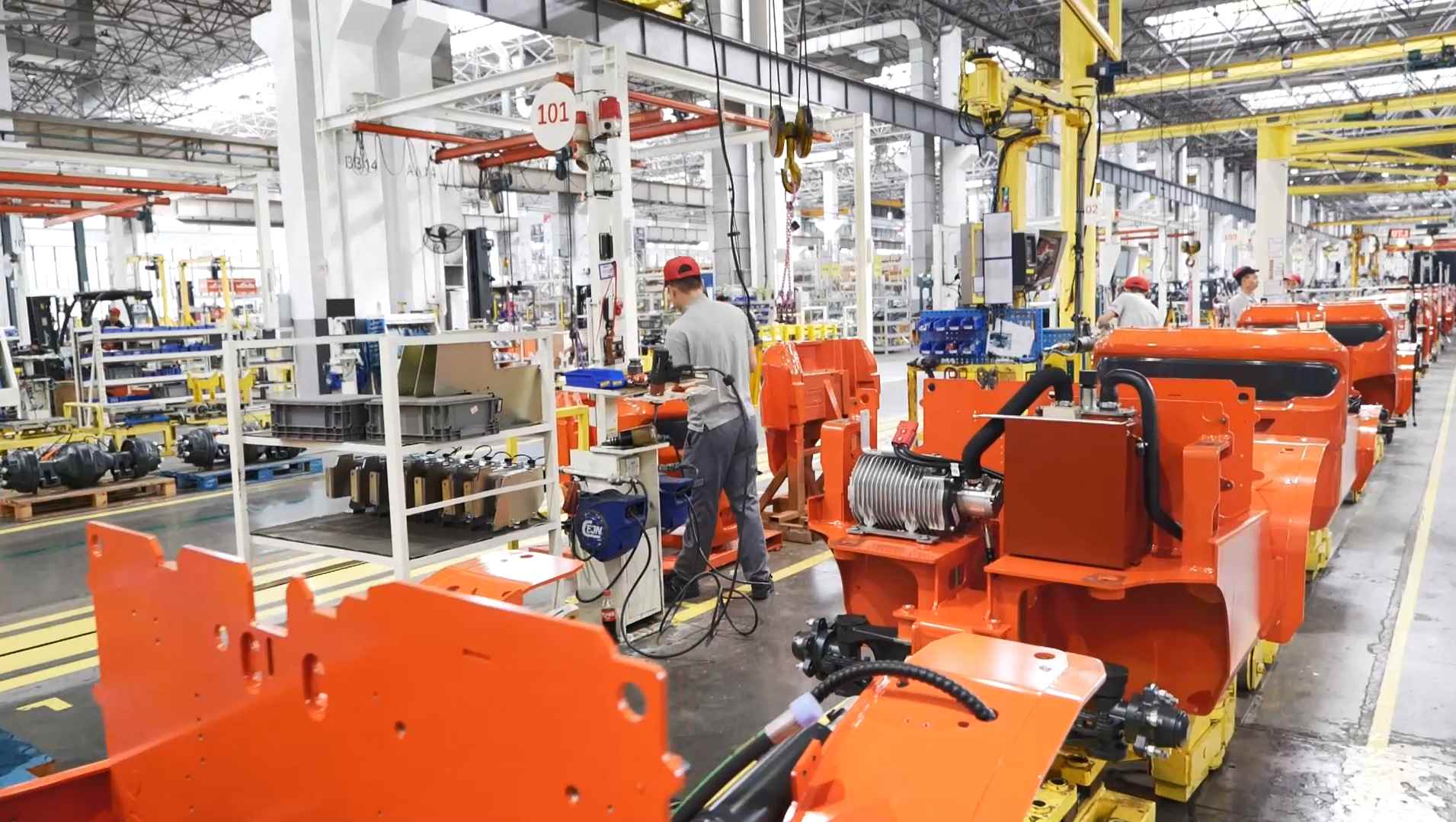
Quality Inspection
Pre-shipment functional checks for lifting, travel, braking and electrical systems.
Common Questions About CE Warehouse Pallet Trucks
These answers reflect the questions most often raised by importers, dealers, rental companies and warehouse project teams during supplier evaluation.
Are your warehouse pallet trucks CE certified?
Which model is best for a narrow aisle or elevator?
Should I choose a walkie pallet truck or a stand-on stacker?
Can you customize the truck for my brand and market?
What are the MOQ, sample policy and lead time?
Which Incoterms and payment methods do you accept?
How do you control quality before shipment?
Which markets do you export to, and how are spare parts handled?
Request a CE-Compliant Pallet Truck Configuration
Send us your load weight, aisle width, lift height, duty cycle, destination port and required CE documentation. Our team will recommend a suitable electric pallet truck, walkie pallet jack or stand-on stacker from the factory-direct range and prepare a written configuration for review.
Email: info@pexalbot.com