CE Certified Powered Pallet Mover Manufacturers & Factory
Electric pallet movers, stand-on stackers, lithium walkie trucks, and high-racking handling equipment engineered for distributors, 3PL fleets, and container-loading operations. SGS-assessed manufacturing, ODM customization, and export-ready documentation from Xiamen, China.
Eight Powered Pallet Mover Models for Global B2B Buyers
The shortlist below is designed as a procurement map, not a catalog wall. Each model solves a specific operating constraint—turning radius, lift height, fork width, battery service access, or container-loading speed—so buyers can compare fit before requesting a quotation.
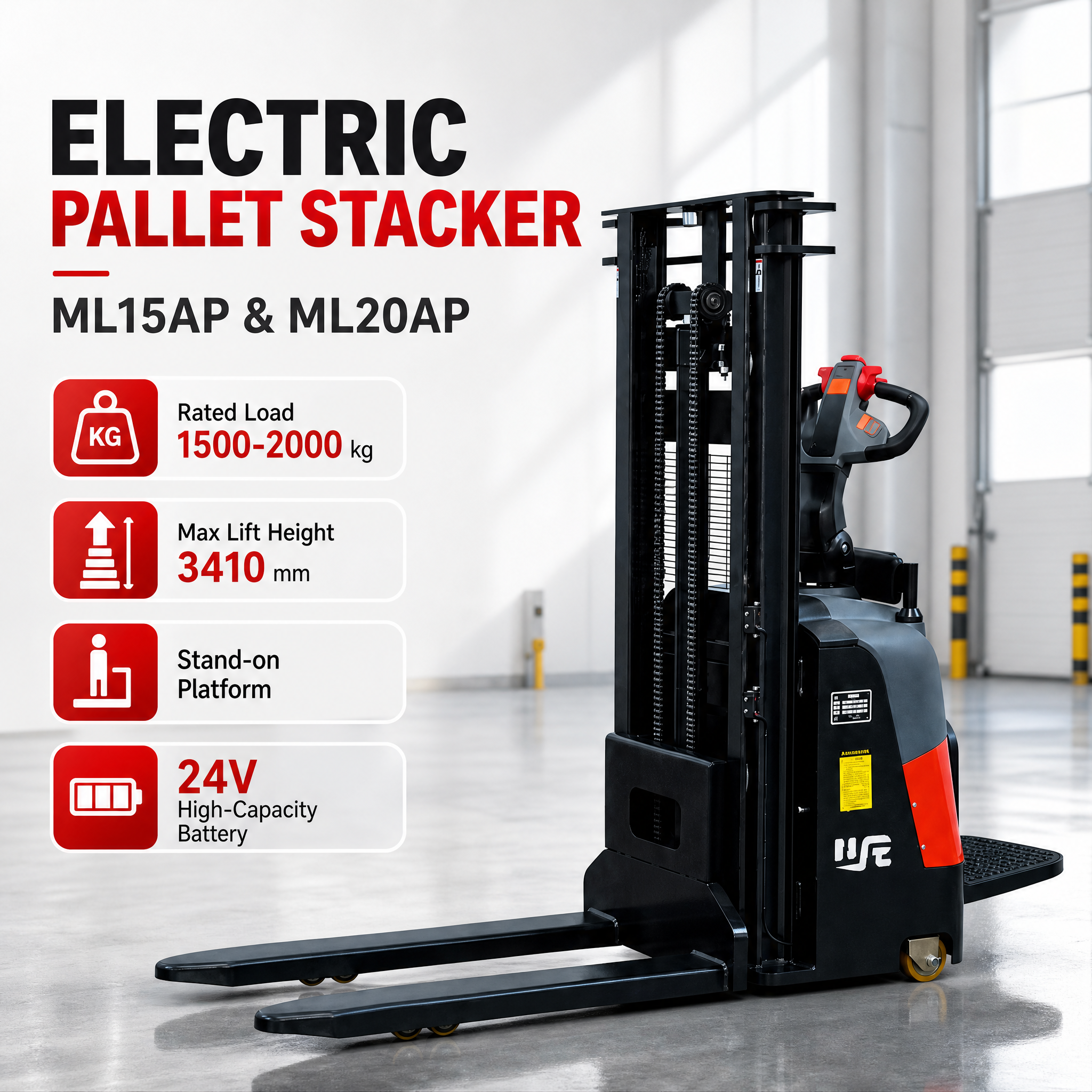
Stand on Electric Stacker 2000kg Centre Mounted Drive Twin Balance Wheels Stable High Racking Stacking
A stand-on stacker with centre-mounted drive and twin balance wheels. The layout improves operator confidence during high-racking stacking, especially where aisle space is tight and load visibility matters. Recommended for multi-shift warehouses that need stable vertical handling rather than simple horizontal transport.
View product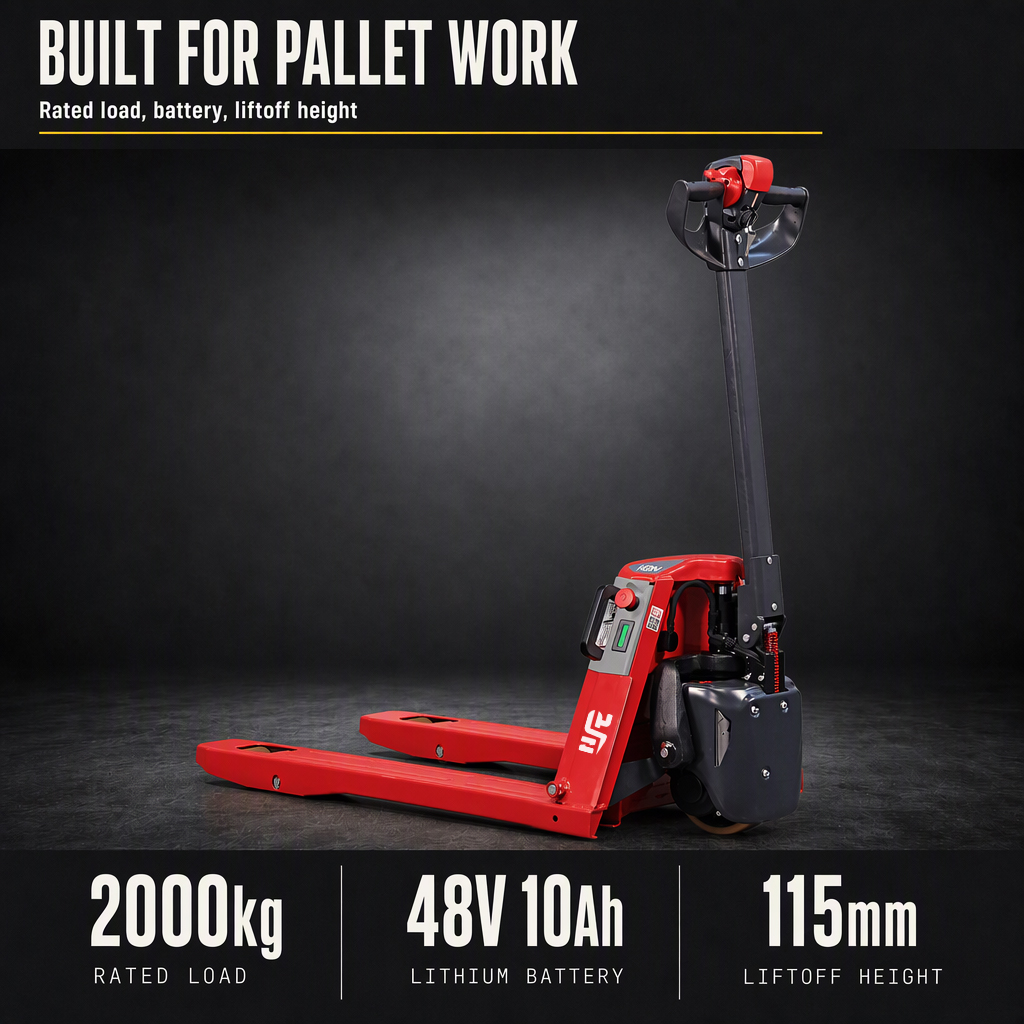
Portable Electric Pallet Jack Lithium Battery 2T for Narrow Aisle Warehouse and Truck Delivery Handling with 48V High Efficiency
A portable 2T lithium pallet jack for narrow aisles and truck delivery. The 48V high-efficiency drive, battery portability, and compact footprint suit route distribution, retail replenishment, and last-mile transfer points where charging windows are short and floor space is limited.
View product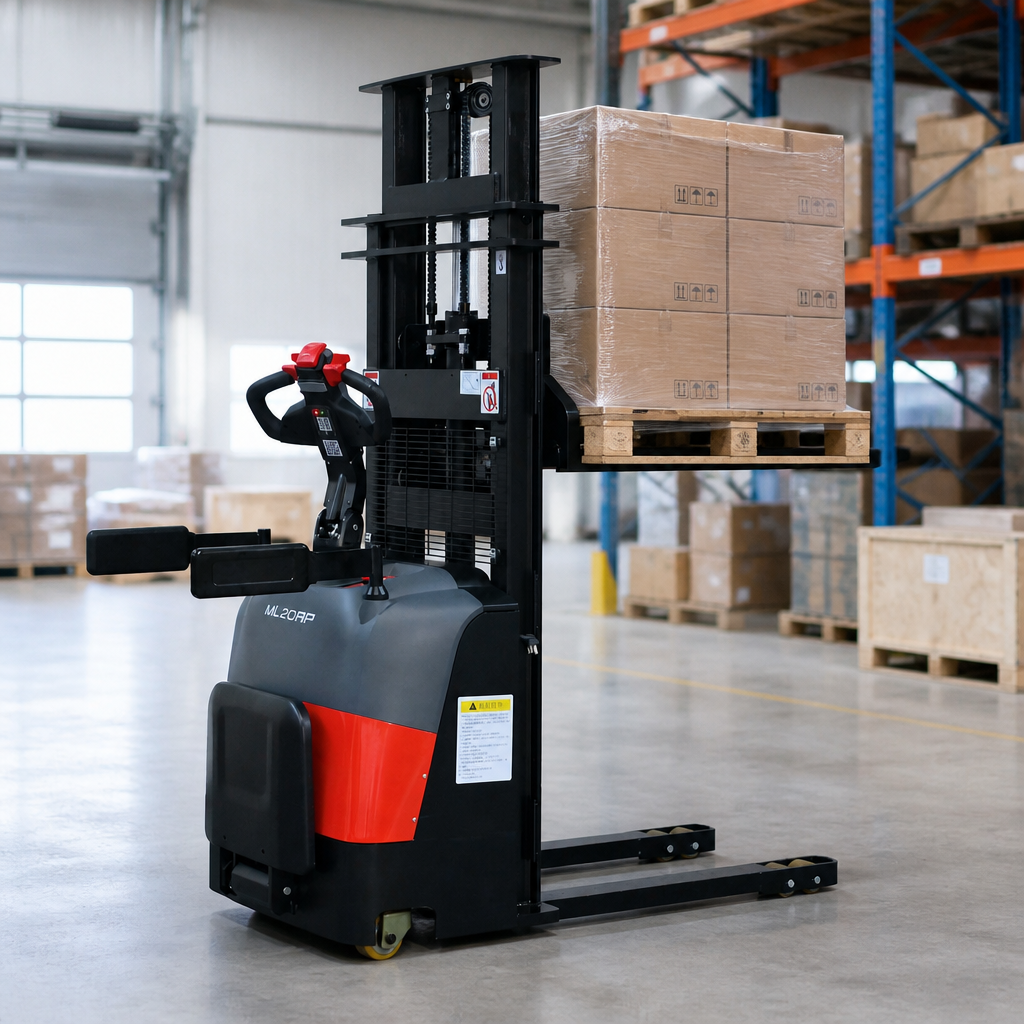
Electric Pallet Stacker 2000kg 3410mm Lift Height Stand on Stacker Truck for Warehouse Racking Stacking
A 2000 kg stand-on stacker with 3410 mm lift height, designed for warehouse racking and stacking where the top beam—not floor space—sets the productivity limit. Confirm mast collapsed height, overhead clearance, and floor flatness before specifying this model.
View product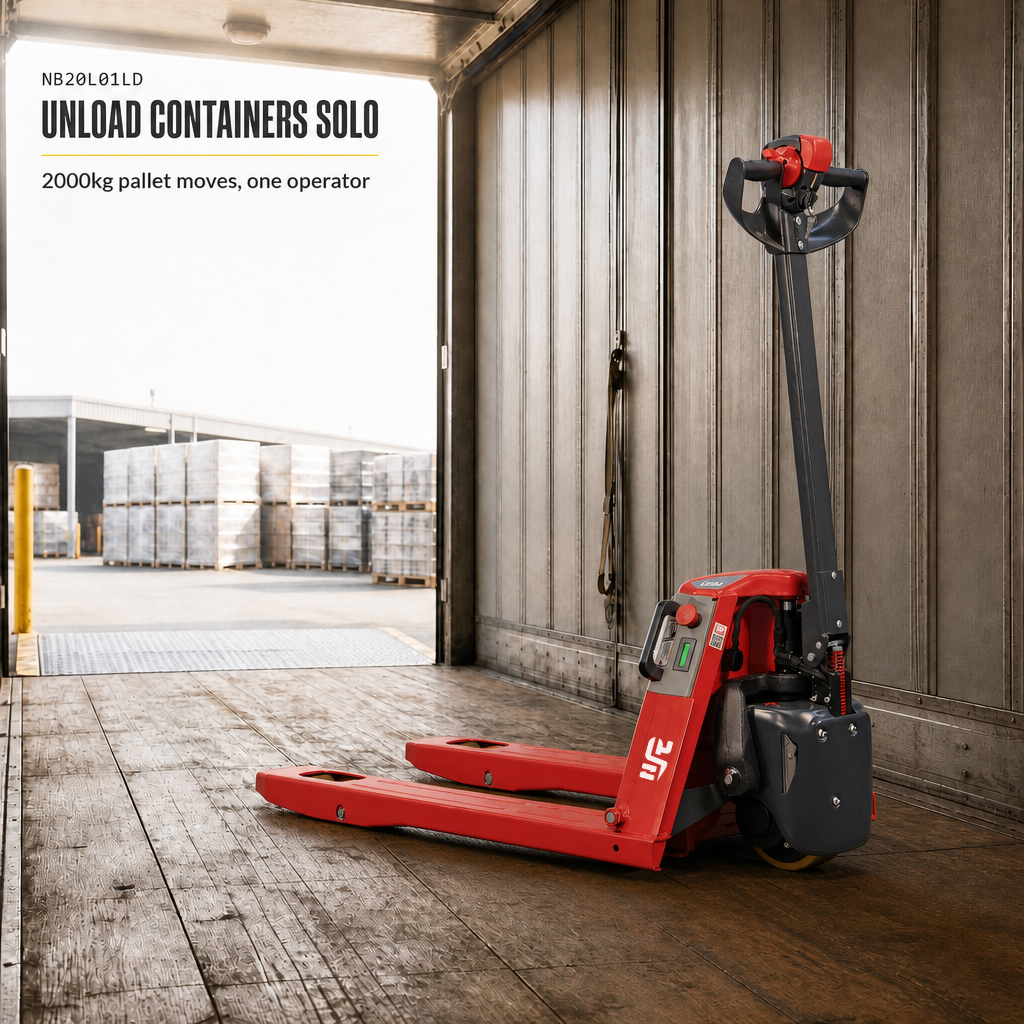
2000kg Electric Pallet Truck Lithium Ion 48V 10Ah Power Jack 1150mm Forks Polyurethane Wheels Container Loading
A 2000 kg lithium-ion pallet truck with 48V 10Ah power system, 1150 mm forks, and polyurethane wheels. A practical choice for container loading, dock transfer, and smooth-floor logistics centers where traction, floor protection, and fast battery access are procurement priorities.
View product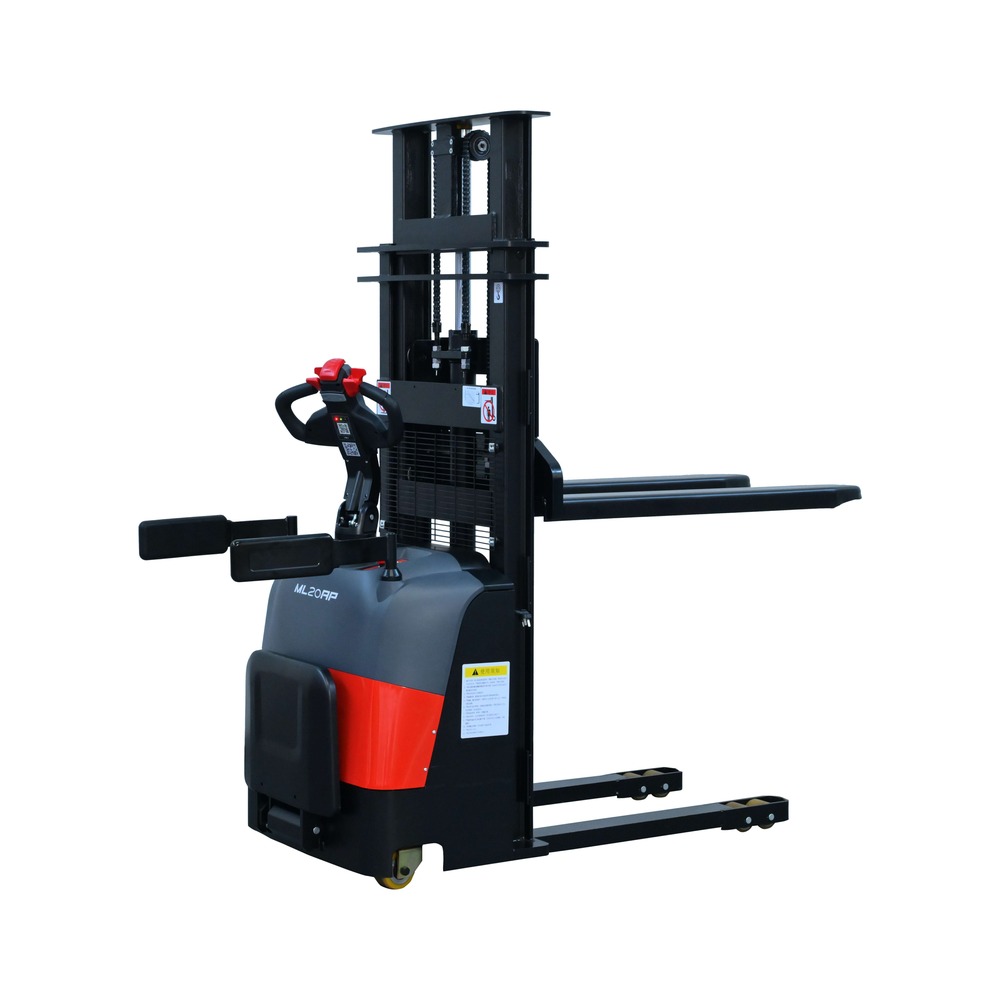
2000kg Stand on Electric Pallet Stacker 3.41m Lift Height Pallet Stacker Truck Channel Steel Mast 1480mm Turning Radius
A 2000 kg stand-on electric stacker with 3.41 m lift and channel-steel mast. The 1480 mm turning radius and reinforced mast geometry suit dense racking layouts; validate right-angle stacking aisle width with your racking plan and pallet overhang before order confirmation.
View product
2000kg Walkie Electric Pallet Jack 685mm Width Narrow Fork Pallet Truck with Lithium Battery for Container Loading
A 2000 kg walkie electric pallet jack with 685 mm narrow fork width and lithium battery. Ideal for container loading and pallet flows where standard fork spacing is too wide. Narrow forks require a load-stability check for mixed pallet types and damaged base boards.
View product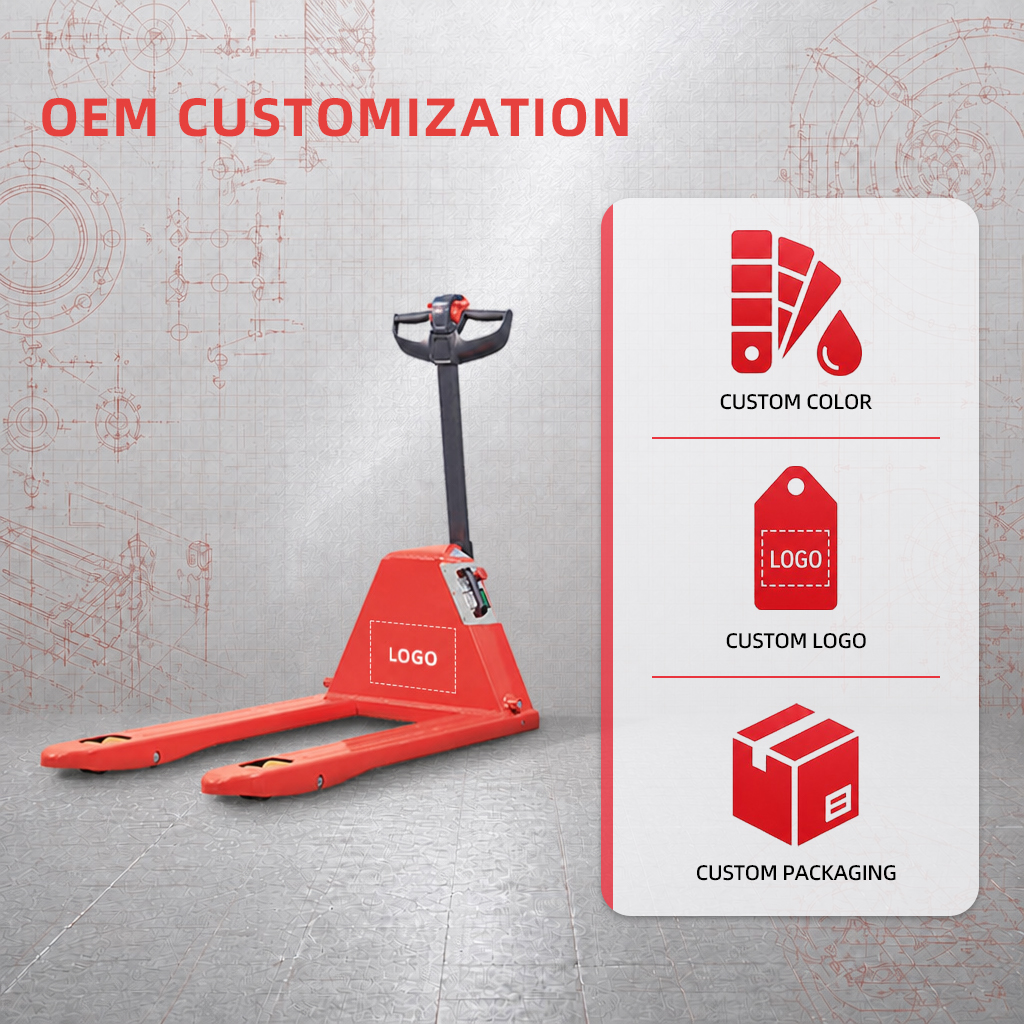
Efficient 2 Ton Electric Pallet Jack 2000kg Capacity: Best Material Handling Solution for Logistics Centers 2026 Hot Sale
An efficient 2-ton electric pallet jack for logistics centers. The 2000 kg class is a common sweet spot for high-turnover horizontal movement, dock levellers, and cross-docking. Ask for cycle-time testing against your heaviest routine pallet, not the maximum rated load alone.
View product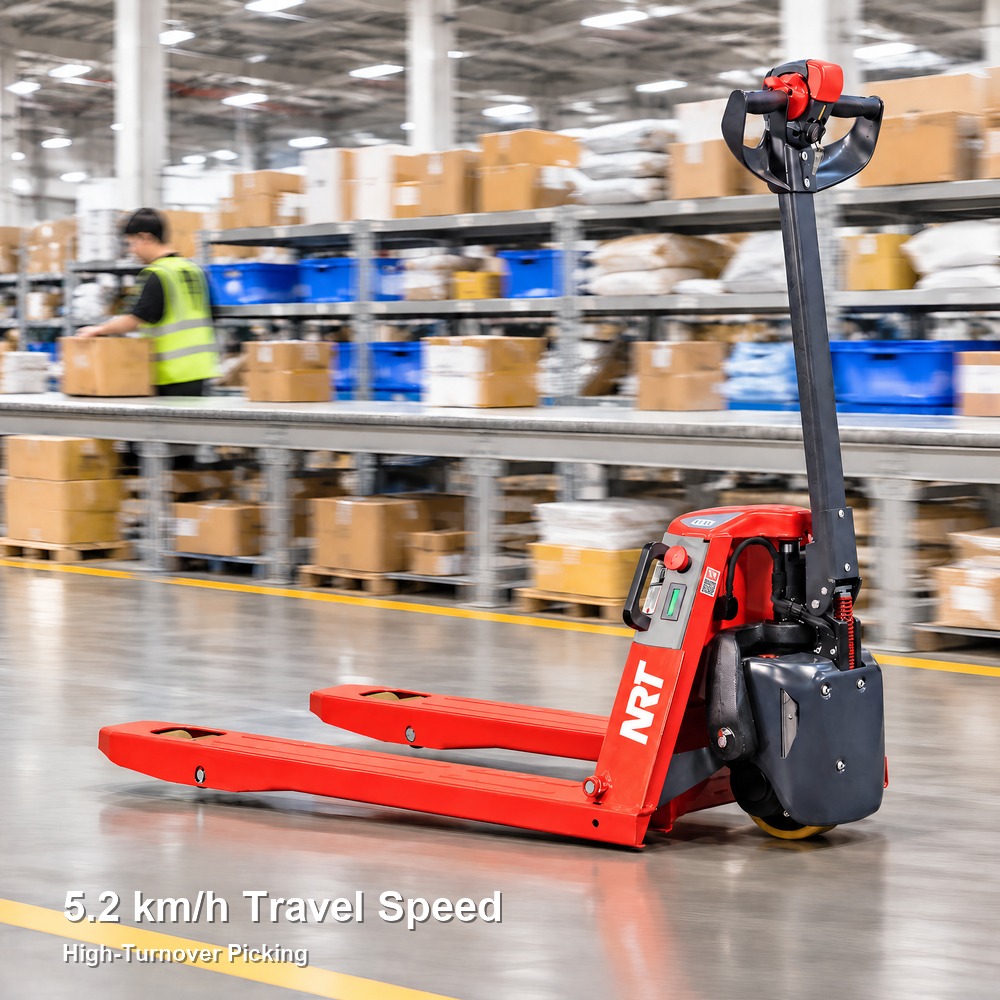
Electric Pallet Jack with Quick Release Drive Wheel 1Min Service 48V Lithium Walkie Pallet Truck 2000kg Capacity
An electric pallet jack with quick-release drive wheel for one-minute service access, 48V lithium walkie configuration, and 2000 kg capacity. The design reduces downtime when drive wheels wear in high-frequency container and yard use, making it a strong fit for rental fleets and service-sensitive distributors.
View productA Factory Network Built for Repeatable Export Quality
Xiamen Pexal Technology Co., Ltd. was founded in Xiamen, Fujian in 2024 as the sales, service, and technical support base for Pexal material handling equipment. We work with a 220,000 m² partner manufacturing campus and a 1,200+ workforce, including more than 100 engineers focused on electric warehouse equipment. Our role is not to sell a single truck; it is to help distributors and fleet operators move from manual handling to electric handling, and from diesel-dependent operations to battery-electric fleets, with clear documentation, customization control, and export discipline.
For international buyers, the advantage is practical: one team can coordinate product configuration, OEM/ODM branding, pre-shipment inspection, export packaging, spare-part planning, and mixed-container loading. That reduces the coordination burden on importers who are comparing multiple factories for electric pallet movers, stackers, pallet jacks, and warehouse trucks.
Source-Direct
Partner factory pricing and technical support for importers, rental companies, and dealer networks.
SGS Assessed
Onsite supplier assessment and onsite check conducted by SGS Group, with verification records available for review.
OEM / ODM
Sample-based customization, full customization, and ODM services for forklift and warehouse-truck lines.
Global Service
Export experience across Western Europe, North America, South America, Eastern Europe, and Oceania.
Why Powered Pallet Movers Are Becoming a Procurement Priority
Warehouse labor availability, safety expectations, and energy costs are reshaping the pallet-mover category. In many B2B projects, the purchasing decision has moved from “Can this truck lift the load?” to “Can this truck keep a shift productive without creating compliance, maintenance, or operator risk?” A powered pallet mover should therefore be evaluated as an asset with four cost layers: acquisition cost, energy cost, maintenance cost, and downtime cost.
The lowest quote is rarely the lowest total cost of ownership once battery cycle life, wheel wear, service access, spare-part availability, operator training, and CE documentation are included. A useful screening formula for procurement teams is: TCO per 1,000 pallet moves = energy + maintenance + labor + downtime + financing − residual value. This model does not replace a formal quotation, but it forces the RFQ conversation toward the variables that decide long-term fleet performance.
A Practical Selection Matrix for 2026 Projects
Use the operating constraint first, then confirm capacity, voltage, battery, and documentation. The best model is the one that matches the narrowest aisle, highest rack beam, and most frequent service interval in your actual workflow.
| Operating constraint | Best-fit model | Why it wins | RFQ data to confirm |
|---|---|---|---|
| High racking stacking | Stand-on electric stacker 2000 kg with twin balance wheels | Stable vertical handling and operator confidence in tighter racking zones | Lift height, mast collapsed height, overhead clearance, aisle width |
| Narrow aisle and truck delivery | Portable 2T lithium pallet jack | Compact footprint, 48V efficiency, and portable battery strategy | Floor condition, ramp use, charge window, fork length |
| 3.41 m warehouse stacking | Stand-on stacker with channel-steel mast | High lift with reinforced mast geometry and 1480 mm turning radius | Right-angle stacking aisle, load center, pallet overhang |
| Container loading | 2000 kg lithium-ion pallet truck with 1150 mm forks | Polyurethane wheels and 48V 10Ah power for dock and container transfer | Container floor type, fork entry, charger voltage, plug type |
| Narrow fork pallets | 2000 kg walkie pallet jack with 685 mm width | Access into narrow pallet flows where standard forks are too wide | Load stability, pallet quality, wheel material, route length |
| Service-sensitive fleets | Electric pallet jack with quick-release drive wheel | Fast drive-wheel access reduces downtime in rental and high-frequency use | Service kit, spare-wheel stock, technician training, warranty terms |
What Buyers Will Ask for in 2026–2030
Procurement is becoming more technical. The RFQ is no longer just a capacity and price request; it is a request for evidence, uptime planning, and total cost control.
Lithium as Default
48V lithium platforms are increasingly requested because opportunity charging and lower maintenance align with multi-shift operations. Compare usable kWh, charger compatibility, and BMS protections—not only Ah.
Compliance-First Sourcing
CE documentation, labels, technical files, and component traceability are moving into the RFQ. Ask for model-level declarations, voltage, plug type, and destination-market requirements.
Serviceability KPIs
Quick-release drive wheels, diagnostic access, and modular controllers reduce downtime. Measure mean time to repair, not only mean time between failures.
Narrow-Aisle Density
As storage density rises, stackers and reach-style equipment are specified by lift height, turning radius, and right-angle stacking aisle—not just rated capacity.
Automation Readiness
AGV-ready interfaces and fleet data are more common, but automation should follow stable routes and clean process design rather than precede them.
Supply De-Risking
Distributors want fewer suppliers, export packaging, spare-parts kits, and mixed-container loading to protect stock availability and service response.
How Powered Pallet Movers Are Evolving
The next generation of powered pallet movers will be judged less by a single headline specification and more by how well electrical architecture, ergonomics, service access, and documentation work together.
48V Architecture
48V systems continue to dominate compact electric pallet trucks because they balance power density, cost, and charger availability. Buyers should verify motor, controller, and BMS matching rather than mixing components by specification alone.
Portable Power
Removable and swappable lithium batteries are becoming more attractive for truck delivery and multi-site operations. The engineering question is not only battery weight, but also how the battery is secured, charged, and tracked across shifts.
High-Racking Stability
As racking height increases, stacker design is moving toward stronger mast geometry, centre-mounted drive layouts, and visibility-focused operator positions. Stability at height matters more than top speed in high-racking work.
Human-Centered Control
Low step height, clear sightlines, intuitive tiller controls, and reduced vibration are becoming differentiators in rental and multi-user fleets where training time directly affects labor cost.
Diagnostics & Telemetry
Fleet buyers increasingly ask for fault-code visibility, battery state data, and service-hour tracking. Even without full telematics, a clear diagnostic path helps local technicians reduce repeated downtime.
Modular Attachments
Fork extensions, special fork widths, and application-specific fixtures allow one base platform to serve more markets. Modularity must be controlled in the technical file so that CE scope and load ratings remain traceable.
CE Certification, SGS Verification, and the Evidence Buyers Should Request

CE certification is not a sticker; it is a chain of design, documentation, and conformity assessment. For applicable powered pallet mover models, Pexal supports CE-market configuration with technical file preparation, electrical schematics, nameplate and warning-label control, component traceability, and pre-shipment functional inspection. Because certification depends on model, voltage, charger, and destination market, the final scope should be confirmed in the quotation and technical agreement.
Our company has passed a supplier assessment and onsite check conducted by SGS Group, one of the world’s leading inspection and verification companies. Business type, main products, main markets, and capabilities have been reviewed onsite. For buyers building a new supplier file, this is a useful third-party reference—not a replacement for your own technical due diligence.
- Model-level certificate or declaration
- Technical file index and schematics
- Battery BMS and charger compatibility
- Nameplate and warning-label artwork
- Pre-shipment lifting, travel, and brake test
- Spare-parts list and packaging specification

Where Powered Pallet Movers Create the Fastest Payback
The right truck depends on floor surface, aisle width, lift height, and duty cycle. The applications below show how different buyers typically configure their fleets.
Warehousing & 3PL
High pallet throughput and dense racking demand reliable, low-maintenance equipment across multiple shifts. Stand-on stackers and compact pallet trucks reduce manual pushing and improve shift consistency.
E-Commerce Fulfillment
Fast piece picking and short-distance pallet moves between receiving, storage, and dispatch zones make compact electric movers a practical upgrade from manual handling.
Manufacturing
Line-side supply, work-in-progress transfer, and finished-goods handling require repeatable movements. Electric pallet trucks and stackers support safer flow between production cells.
Food & Cold Chain
Zero local emissions and low noise help indoor air quality in food, beverage, and pharmaceutical storage. Battery type and charger placement should be planned for cold-zone access.
Container Loading
Containers, dock levellers, and truck beds require compact dimensions and stable traction. Narrow-fork and quick-release models help reduce loading time and service interruption.
Retail & Wholesale
Backroom replenishment and pallet-to-shelf movement benefit from compact electric jacks that reduce operator fatigue and make better use of limited floor space.
Questions Buyers Ask Before Ordering
These are the practical questions that usually decide whether a powered pallet mover quote becomes a repeat-order program.
What is a powered pallet mover, and how does it differ from a manual pallet jack?
Are your powered pallet movers CE certified?
Which capacity is right: 1.5T, 2T, or higher?
How long does a 48V lithium battery last per charge?
Can you customize fork length, width, lift height, color, logo, or battery?
What is the MOQ and typical lead time?
Which Incoterms, payment methods, and currencies do you accept?
How do you control quality before shipment?
Do you provide spare parts and after-sales support?
Which markets do you export to, and has the company been verified?
Plan Your Next Powered Pallet Mover Order With Engineers, Not Guesswork
Send your load weight, aisle width, lift height, floor condition, voltage, charger requirement, and destination port. Our team will return a configuration matrix, CE documentation checklist, spare-parts recommendation, and export quotation for your market.
Inquire Now