8 Battery Powered Pallet Trucks & Stackers for Wholesale Procurement
Most importers need a compact pallet jack for trailers and docks, a stacker for racking, and a portable unit for last-mile delivery. The eight models below cover those jobs while keeping battery voltage, service access and spare-part logic close enough to build a practical wholesale range.
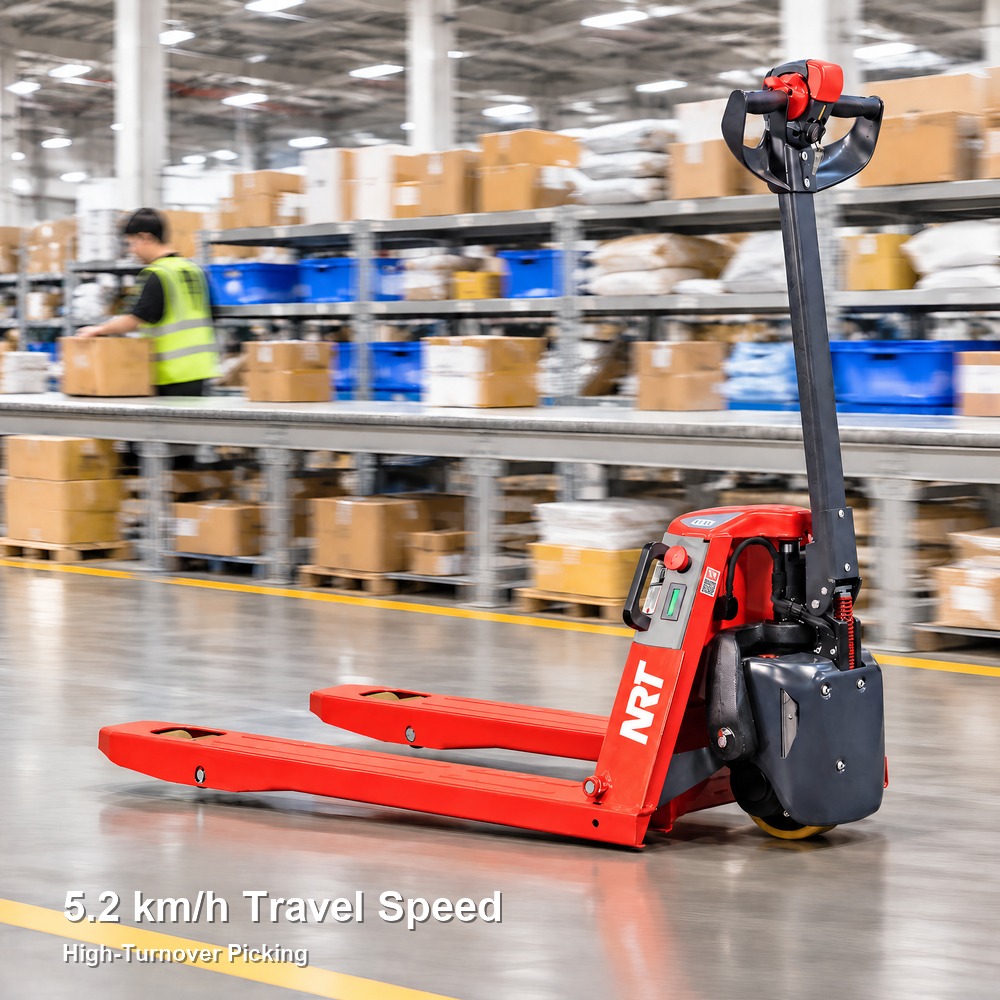
Electric Pallet Jack with Quick Release Drive Wheel 1Min Service 48V Lithium Walkie Pallet Truck 2000kg Capacity
A strong first SKU for rental fleets and container unloading. The quick-release drive wheel reduces maintenance time, while the 48V lithium system supports opportunity charging between shifts.
- Capacity: 2,000 kg for standard pallet flows
- Battery: 48V lithium walkie configuration
- Service access: quick-release drive wheel

Stand on Electric Stacker 2000kg for Narrow Aisle Warehouse Loading Dock Building Material Shop Pallet Handling
Designed for operators who cover longer horizontal distances than a walkie allows. It suits warehouse loading docks, building-material shops and narrow aisles where fast pallet handling matters.
- Stand-on platform for repeated warehouse runs
- 2,000 kg class for pallet handling
- Narrow-aisle configuration for space-limited sites
Electric Pallet Stacker 2000kg 3410mm Lift Height Stand on Stacker Truck for Warehouse Racking Stacking
For warehouses that need higher put-away without moving to a full reach truck. The 3410 mm lift height makes this stacker a practical choice for medium-height racking and dense storage zones.
- Lift height: 3,410 mm for elevated stacking
- Stand-on format for faster task cycles
- Recommended for warehouse racking operations
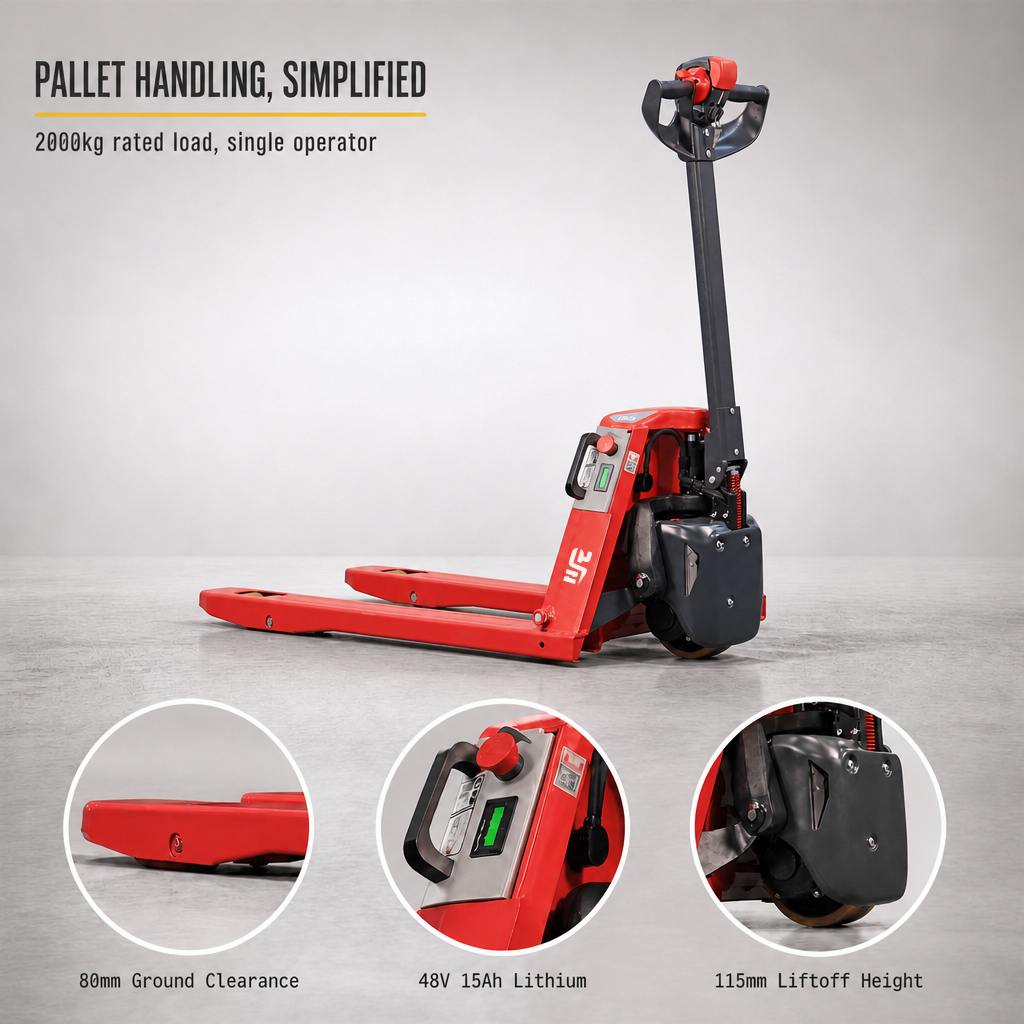
NRT 2 Ton Electric Pallet Jack Lithium-Ion 48V 10Ah 1150mm Forks Polyurethane Wheels Warehouse Handling
A compact lithium pallet jack for warehouse handling, order preparation and short-transfer duties. The 1150 mm fork and polyurethane wheels support smooth movement on finished floors.
- 48V 10Ah lithium battery configuration
- 1150 mm forks for standard pallet handling
- Polyurethane wheels for clean indoor floors

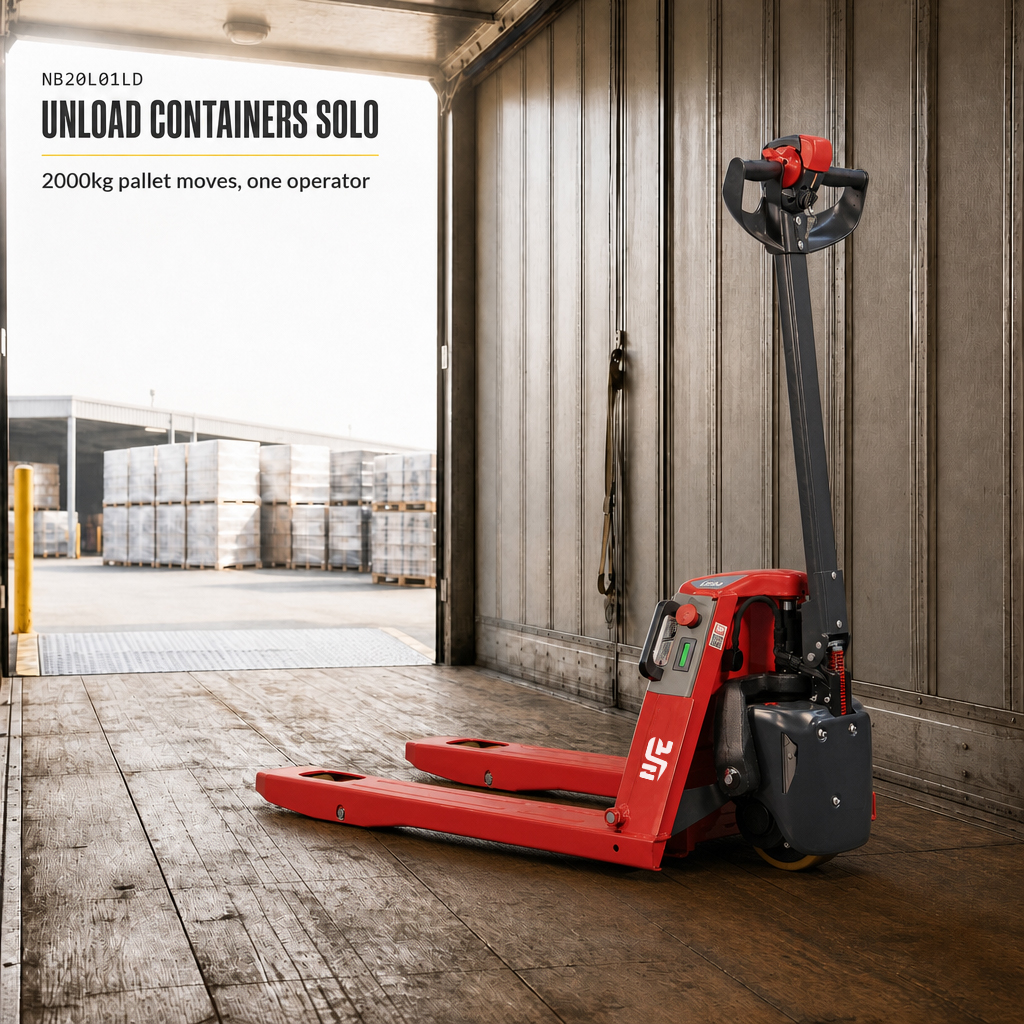
2000kg Walkie Electric Pallet Jack 685mm Width Narrow Fork Pallet Truck with Lithium Battery for Container Loading
Built for tight trailer and container work. The 685 mm narrow fork width gives distributors a model for customers whose pallet dimensions and aisle constraints rule out a wider truck.
- 685 mm width for narrow handling spaces
- 2,000 kg capacity for loaded pallets
- Lithium battery for opportunity charging
NB20L01LD 2000kg Electric Pallet Truck Lithium Battery 4.8km/h Speed 1245mm Turning Radius Jack
For warehouses that value faster transfer speed and turnaround in standard aisles. The 1245 mm turning radius helps operators keep pallet movement productive without needing a larger counterbalance truck.
- Travel speed: 4.8 km/h
- Turning radius: 1,245 mm
- 2,000 kg lithium battery pallet truck
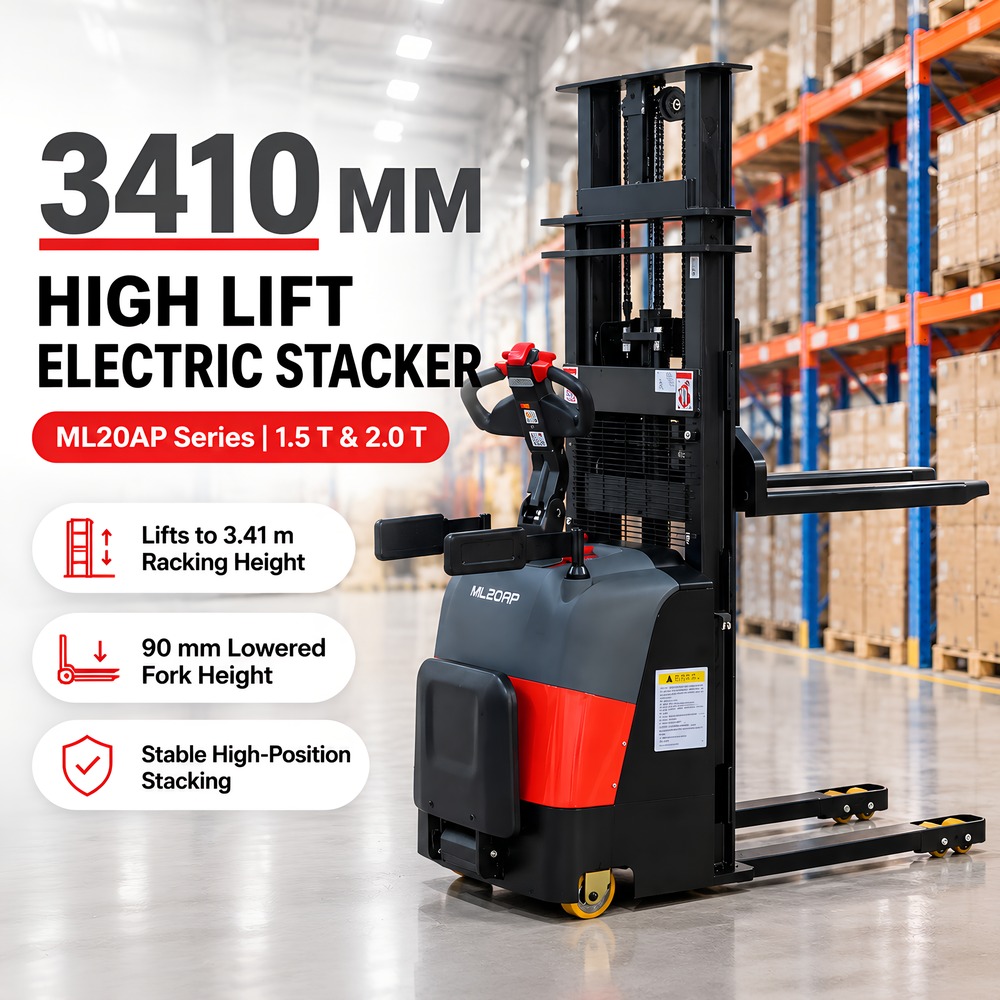
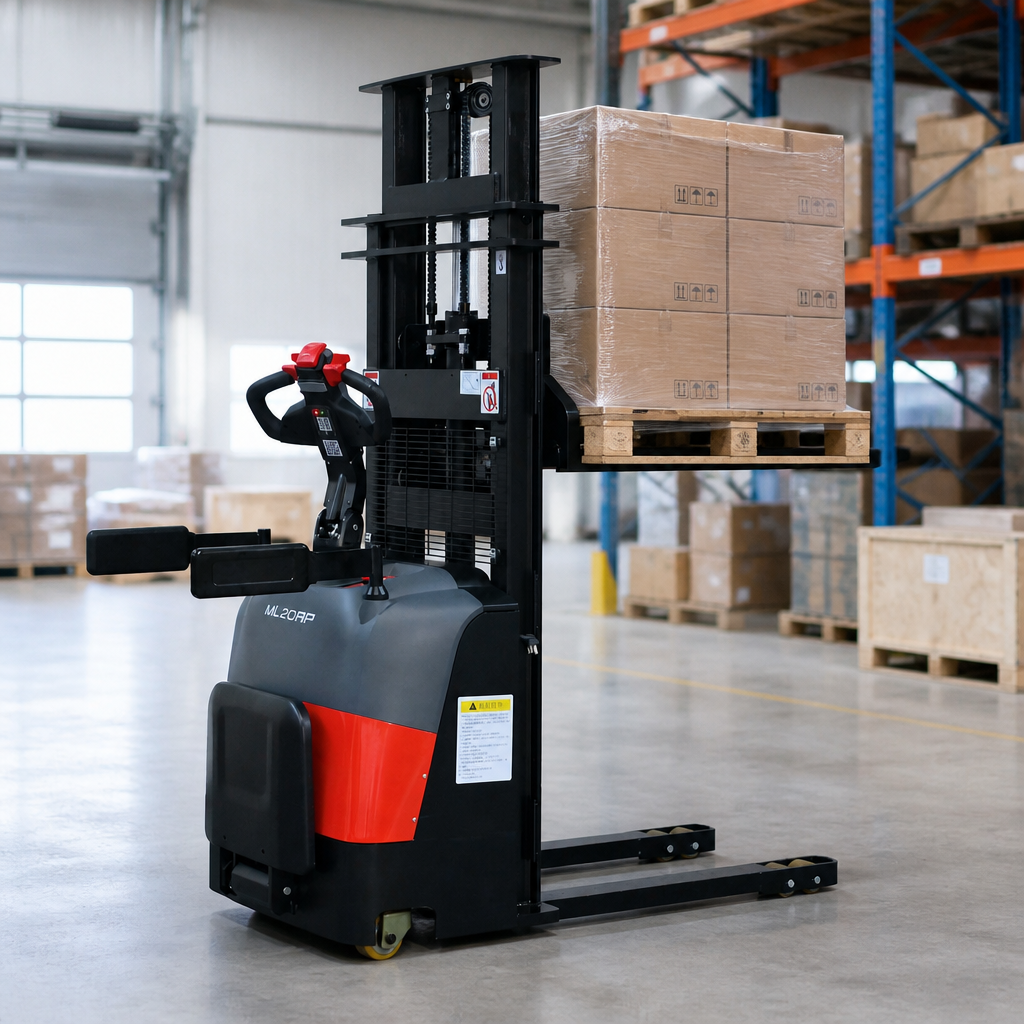
ML20AP Stand on Electric Stacker Truck 2000kg Warehouse Stacker for Narrow Aisle Loading Dock Building Material Shops
A stand-on stacker for warehouses, loading docks and building-material shops where operators need to move and stack pallets repeatedly. It gives dealers a robust model to pair with the higher-lift stacker.
- 2,000 kg pallet stacking capacity
- Stand-on layout for longer shift comfort
- Suitable for narrow-aisle and dock activities
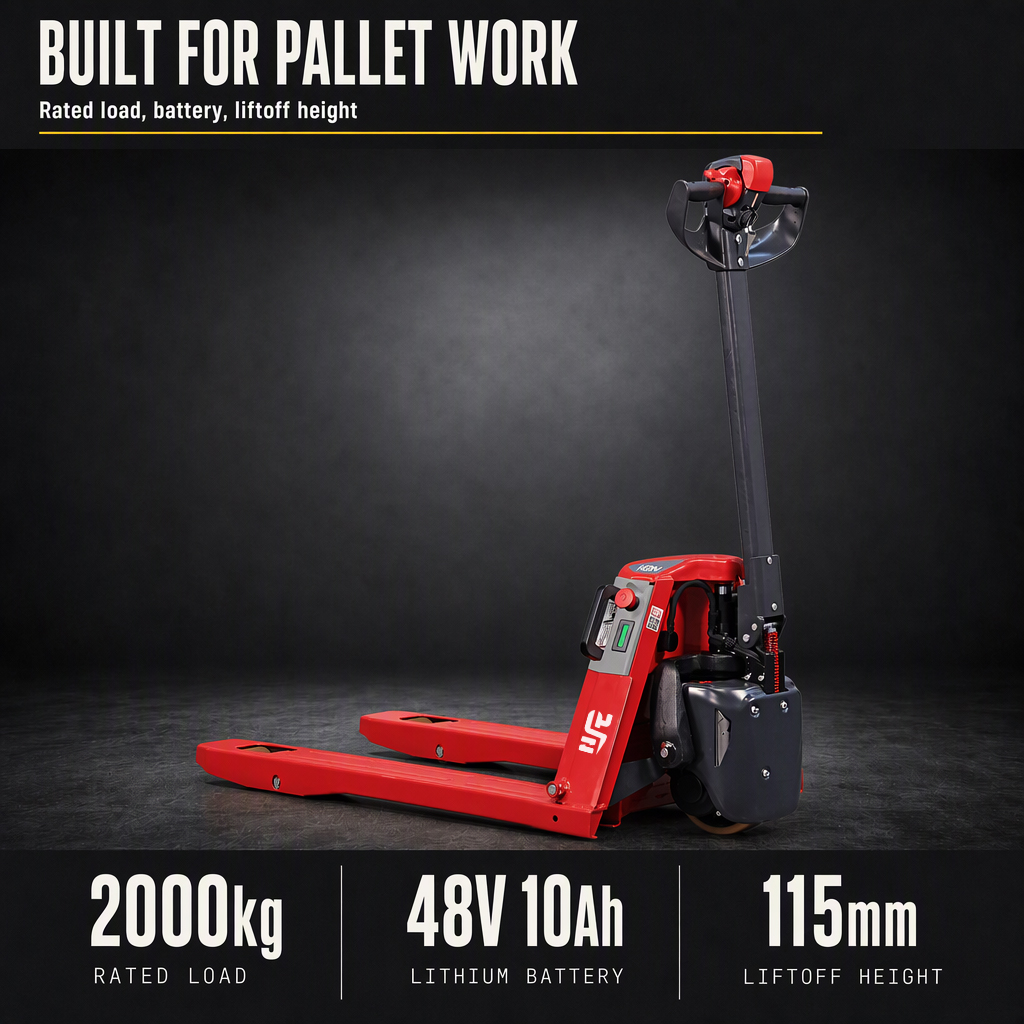
Portable Electric Pallet Jack Lithium Battery 2T for Narrow Aisle Warehouse and Truck Delivery Handling with 48V High Efficiency
A portable 2T pallet jack for delivery fleets and distributors that need a transportable lithium solution. It suits narrow-aisle warehouse handling and truck delivery work where space is limited.
- Portable 2T format for delivery applications
- 48V lithium battery for efficient handling
- Narrow-aisle and truck-delivery use case
Need a mixed-container wholesale quotation? Send your target market, voltage, fork width, lift height and annual volume. We will confirm the suitable model, CE documentation scope and spare-parts package before quoting.
Match the Truck to the Job, Not Only to the Unit Price
An electric pallet truck that is ideal for container unloading is not always the right choice for 3,410 mm racking. Use the workflow lanes below to shortlist models before requesting a configuration sheet.
Container & Trailer Unloading
Choose the 685 mm walkie model or the quick-release 48V lithium jack. Check fork width, trailer floor condition and whether operators need the truck lifted by crane or ramp.
Medium-Height Racking
Use the 3410 mm stand-on stacker for elevated put-away. Confirm racking beam height, pallet overhang, aisle width and free-lift requirements before finalizing the mast.
Long Horizontal Runs
The stand-on stacker and NB20L01LD are more productive when operators cover longer distances. Compare travel speed, turning radius and battery exchange strategy.
Retail & Delivery Fleets
The portable 2T lithium jack works for narrow aisles and truck delivery handling. Ask for charger compatibility, transport packaging and quick-wear parts list for van or depot use.
CE Certification Is a Documentation Project, Not a Badge on a Photo
For EU and UK importers, the real question is not whether a product page says “CE certified.” The question is whether the exporter can supply a consistent technical file, declaration, labels and charger documentation for the exact model you are importing.
Pexal can configure CE-oriented documentation packages according to the destination market, truck model, battery system and charger option. Final scope should always be confirmed in the quotation and technical agreement, because a 48V lithium walkie jack and a 3410 mm stand-on stacker do not share identical technical files.
2026–2030 Buying Trends for Battery Pallet Truck Wholesalers
Procurement teams are moving from “lowest landed price” to “lowest cost per productive hour.” That change affects how importers evaluate battery chemistry, service access, documentation and battery data.
Total Cost per Productive Hour
Buyers increasingly compare purchase price against charging time, tyre wear, service access and downtime risk. Quick-release parts and common batteries become commercial advantages.
Lithium-First, Charger-Aware
The 48V lithium segment continues to expand because opportunity charging fits shift breaks. Importers will ask more detailed questions about charger voltage, BMS protection and battery warranty terms.
Auditable Compliance Files
Wholesale customers want a supplier who can produce declaration, label, test-record and battery documents quickly. Compliance is becoming a sales enablement asset for dealers.
Telematics & Battery Visibility
Fleet managers want to know which trucks are idle, which batteries are underused and which units generate repeated service calls. Data-ready electrical architectures will become a tender item.
Modular Service Architecture
Distributors prefer trucks that can be repaired in modules rather than replacing large assemblies. Design choices such as quick-release drive wheels reduce local labor hours and spare-parts inventory.
Mixed Fleet & AGV Readiness
Manual pallet trucks will remain essential, but warehouses are preparing for automated pallet movement. Suppliers that understand both manual electric trucks and AGV workflows will win larger accounts.
What to Write Into the Next RFQ for Battery Pallet Trucks
The next buying cycle will reward importers who specify serviceability, battery behavior and dimension discipline — not just lifting capacity. These development themes are already visible in the eight models above.
48V Lithium as the Default
Lithium is becoming the baseline for walkie pallet trucks because it supports opportunity charging, lighter battery exchange and more predictable runtime in multi-shift warehouses.
Quick-Release Service Points
The quick-release drive wheel on model one is a clear example: maintenance access is becoming a sales feature. Dealers should ask for time-to-change figures for wheels, controllers and tiller parts.
Compact High-Lift Stackers
Models such as the 3410 mm stacker blur the line between pallet stacker and reach truck. They allow medium-height racking in smaller buildings without the cost of a full narrow-aisle truck.
Narrow-Width & Container Logic
The 685 mm fork-width model shows how container dimensions shape product development. More buyers will specify fork width, overall truck width and turning radius as tender-critical data.
Smart Safety & Operator Assist
Speed limiting in turns, emergency reverse, hill-hold logic and clear visibility are moving from premium options to expected features on battery pallet trucks for rental and fleet use.
Automation Interfaces
Even buyers who are not ordering AGVs today want a path to automation. Standardized interfaces, predictable pallet positioning and clean fleet data will protect resale and upgrade value.

Why Pexal Is a Practical Wholesale Partner for CE-Ready Pallet Trucks
Xiamen Pexal Technology Co., Ltd. was founded in Xiamen, Fujian in 2024 as the sales, service and technical support base for Pexal material handling equipment. We work with a 220,000 m² partner manufacturing campus employing more than 1,200 people, including over 100 engineers focused on electric warehouse equipment.
That structure matters to importers: you get factory-direct product logic, export documentation coordination and a contact team that understands dealer programs. We support sample-based customization, full customization and ODM work, covering mast height, fork length, battery type, color, logo and attachment configuration.
Where the Savings Actually Come From
Purchase price is only one line in the ownership model. Use the illustrative chart and selection matrix below to structure a supplier comparison; then replace the assumptions with your own energy tariff, labor rate and duty cycle.
Illustrative 5-Year Cost Contribution
2T lithium pallet truck, standard warehouse duty. Planning model only.
A quick-release drive wheel, common 48V battery strategy and local spare-parts kit can reduce service and downtime exposure more than a small unit-price discount.
Procurement Selection Matrix
Use this table to brief your buying team before requesting final quotations.
| Workflow | Recommended Model | Why It Fits | Data to Confirm |
|---|---|---|---|
| Container loading | 685 mm walkie jack | Narrow width and lithium charging | Fork width, trailer floor, daily cycles |
| Dock transfer | Quick-release 48V jack | Fast service access and 2,000 kg capacity | Wheel type, charger location, runtime |
| Racking put-away | 3410 mm stand-on stacker | Medium-height lifting without reach truck cost | Beam height, free lift, aisle width |
| Long shifts | Stand-on stacker / NB20L01LD | Operator platform, travel speed, turning radius | Shift hours, floor friction, battery swap |
| Retail delivery | Portable 2T lithium jack | Transportable format for narrow spaces | Van/truck loading, charger voltage, weight |
| Wholesale range | Mixed 48V lithium portfolio | Shared battery and service logic | CE file scope, spare parts, warranty terms |
Where Battery Powered Pallet Trucks Deliver Fast Payback
Electric pallet trucks and stackers create value where manual handling slows throughput, where diesel emissions are unacceptable, or where a full forklift is larger than the task requires.
Container & Dock Operations
Narrow fork widths and compact turning help unload trailers and containers without waiting for a large forklift.
Warehouse Racking
A 3410 mm lift height allows medium-height put-away while keeping the truck simpler than a reach truck.
Building Material Shops
Stand-on stackers handle repeated pallet movement in yards and shops where pallets must be stacked and retrieved.
Retail & Delivery Fleets
Portable lithium pallet jacks support narrow-aisle store handling and truck delivery where space and weight matter.
Food & Clean Warehouses
Battery power avoids local exhaust emissions and supports cleaner indoor air in food, beverage and light manufacturing sites.
Manufacturing Line-Side
Compact pallet trucks and stackers move work-in-progress between cells where a counterbalance forklift is inefficient.
Common Questions From Pallet Truck Importers
These are the questions we recommend answering before a dealer places the first container order. For a model-specific answer, send the application data through the inquiry button.
Are these battery powered pallet trucks CE certified?+
What is the minimum order quantity for a wholesale program?+
Can you customize fork length, width, battery, charger, color and logo?+
Should I choose a walkie pallet jack or a stand-on stacker?+
What supporting documents can be provided for a tender?+
Which Incoterms, payment methods and currencies do you accept?+
Which export markets do you serve?+
How has Pexal been verified by a third party?+
Get a CE Configuration Sheet and Wholesale Quotation
Send your destination country, target model, capacity, lift height, fork width, battery preference, charger voltage and estimated annual quantity. Our team will respond with a suitable configuration, documentation checklist and quotation path for your market.
Send an InquiryPlease include your company type — dealer, rental fleet, integrator or end user — so the recommendation can match your sales model.