0%

Electric pallet trucks are no longer one-size-fits-all tools. A compact walkie model may suit short moves through tight aisles. A rider pallet truck can reduce walking during longer trips. Walkie-rider and center-rider designs serve different travel distances, load patterns, and operator preferences. The distinction matters on a busy shift.

MHI’s 2024 Annual Industry Report found that 55% of surveyed respondents planned to increase supply-chain technology investment. That figure covers technology broadly, not pallet trucks alone. Still, it signals why buyers are examining equipment that can improve material flow. For practical selection, the U.S. Occupational Safety and Health Administration’s powered industrial truck guidance is also worth reviewing; training and operating conditions matter alongside specifications.

Lean manufacturing expert Taiichi Ohno wrote, “The Toyota Production System is a system for the absolute elimination of waste.” (Toyota Production System: Beyond Large-Scale Production.) Applied carefully, that idea prompts a useful question: which truck removes wasted travel without creating new bottlenecks? No model does everything. A high-lift pallet truck, for example, may help with occasional positioning tasks, but it is not automatically the right choice for long-distance transport. This guide compares the top types of Electric Pallet Truck by operating style, typical use, and trade-offs. Real warehouse conditions can be messier than a product chart suggests. Check aisle width, load weight, route length, and operator workflow before deciding.
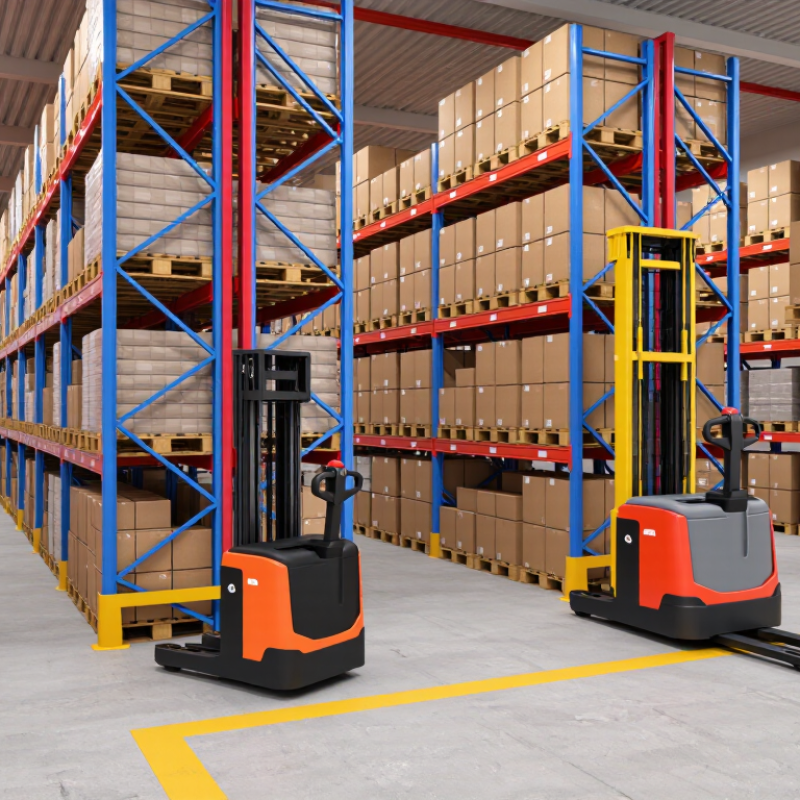
What Are the Top Types of Electric Pallet Trucks?

How Electric Pallet Trucks Are Classified

Electric pallet trucks are best classified by operator position, lifting function, and working environment. Walk-behind models keep the operator on foot, steering with a tiller while moving loads across short, level routes. They suit narrow aisles and frequent stops. Rider models add a standing platform or seat, making longer warehouse runs less tiring. That difference matters.

A second distinction is lifting height. Low-lift pallet trucks move loads between floor level and dock height; high-lift versions raise pallets for positioning, but are often better described as pallet stackers. OSHA places powered hand and rider trucks in Class III, a useful reference, though a truck’s exact design still matters. For example, a compact walkie truck and a platform rider may share a load capacity yet behave very differently at a busy loading bay.

Capacity, battery type, turning radius, and duty cycle refine the classification. MHI’s 2024 Annual Industry Report found that 55% of surveyed supply-chain professionals planned to invest in robotics and automation. That wider shift makes truck compatibility with chargers, routes, and digital fleet systems worth checking. Labels can blur. I would verify the operator position and lift height before comparing specifications.

Walkie Electric Pallet Trucks for Short-Distance Handling

Walkie electric pallet trucks suit short-distance handling in shops, loading bays, and compact warehouses. The operator walks behind the truck and guides it with a tiller, making frequent stops and tight turns easier to manage than with ride-on equipment. A powered drive can reduce the effort of moving heavy loads, especially across repeated trips. Still, narrow aisles and busy pedestrian routes demand careful speed control. These trucks are useful, not automatically safer.

Tips: Check the route width, floor condition, turning space, and load weight before choosing a model. Test it with a typical pallet, not an unusually light one. Keep the tiller and controls within comfortable reach.

The U.S. Bureau of Labor Statistics reported 4.4 cases involving days away from work, job restriction, or transfer per 100 full-time workers in transportation and warehousing in 2023. This broad industry figure does not measure pallet-truck risks specifically, but it underscores why task design and training matter. Set a walking pace that allows clear visibility, especially near doorways and blind corners. A small operating mistake can still happen; review routes and near misses regularly.

Rider Pallet Trucks for Longer Travel Routes

Rider Pallet Trucks for Longer Travel Routes

Rider pallet trucks suit warehouses where pallet loads travel repeatedly between receiving, storage, and dispatch. The operator rides on a platform instead of walking behind the truck, which can make longer trips less tiring. They work best on clear, reasonably smooth routes with enough room for turning and safe passing. Distance matters. So do crossings, congestion, and stopping points.

MHI and Deloitte’s 2024 Annual Industry Report found that 55% of respondents planned to invest more than $1 million in supply-chain innovation and technology over five years. That figure does not prove rider trucks are the right choice, but it signals sustained pressure to improve material flow. Before selecting one, compare route length, load weight, operating hours, battery needs, and braking performance. A faster truck can still lose time in narrow aisles. I may be giving speed too much weight if I ignore traffic and charging breaks.

Tips: Walk the route during a busy shift. Check floor joints, doorways, ramps, and pedestrian crossings. Test the truck with a typical load, not an empty pallet. Record travel time and operator feedback; one short trial may miss peak-hour delays.

What Are the Top Types of Electric Pallet Trucks? — Rider Pallet Trucks for Longer Travel Routes

Typical characteristics are indicative; specifications vary by model, battery, load, and operating conditions. Check the manufacturer’s data plate and product specifications before selection.

Truck Type Typical Rated Capacity Operator Position Travel-Route Fit Common Applications Key Consideration
Walkie electric pallet truck About 4,000–6,000 lb (1,800–2,700 kg) Operator walks behind or beside the truck Best for short trips and frequent stops; less suited to sustained long-distance travel Loading docks, short transfers, and compact storage areas Compact and maneuverable, but the operator must walk with the truck.
End-control rider pallet truck About 6,000–8,000 lb (2,700–3,600 kg) Operator rides on a platform at the rear end of the truck Well suited to longer, repeated horizontal moves Dock-to-storage transfers, warehouse replenishment, and high-throughput distribution Standing ride-on operation supports frequent travel; allow room for the truck’s turning path.
Center-control rider pallet truck About 6,000–8,000 lb (2,700–3,600 kg) Operator stands on a platform within the truck’s central area Suitable for medium-to-long routes with repeated stops Order staging, cross-docking, and movement between warehouse zones Offers a ride-on alternative to walkie trucks; compare platform layout and visibility.
Sit-down rider pallet truck About 6,000–8,000 lb (2,700–3,600 kg) Operator sits on the truck Suitable for longer travel where seated operation is preferred Extended horizontal transport and repetitive load movement over larger facilities Check aisle width, turning requirements, and the truck’s overall dimensions.
Compact rider pallet truck Capacity varies; commonly in the light-to-medium-duty range Operator rides on a compact standing platform Useful for moderate routes where space is limited Busy docks, narrow operating areas, and mixed short-to-medium transfers Balance the smaller footprint against the required load capacity and travel distance.

Stand-On and Center-Rider Pallet Trucks for Frequent Transport

What Are the Top Types of Electric Pallet Trucks?

Stand-On and Center-Rider Pallet Trucks for Frequent Transport

Stand-on and center-rider electric pallet trucks suit operations that move palletized loads repeatedly across a facility. The operator rides rather than walking behind the truck, which can reduce fatigue on longer routes. A stand-on model typically has a rear platform and works well where operators make frequent stops or need to step off quickly. Check turning space, route length, and floor condition before choosing one.

Center-rider trucks place the operator near the middle of the machine, often with a more enclosed standing area. They are commonly used for sustained transport between receiving, storage, and shipping zones. The position can feel steadier over longer runs, but it may take more room to maneuver than a compact stand-on unit. Space still matters. Test the truck on actual routes, including tight corners and dock approaches.

For either type, compare rated capacity, braking response, controls, and visibility with the loads and traffic patterns at your site. Keep forks low while traveling, and avoid sharp turns with a raised or unstable load. Operator fit matters too; a platform that feels cramped during a brief trial may become tiring over a full shift. The distinction is not always neat: layouts and features vary, so a hands-on evaluation is more useful than relying on the category name alone.

High-Lift Electric Pallet Trucks for Lifting and Positioning Loads

What Are the Top Types of Electric Pallet Trucks?

High-Lift Electric Pallet Trucks for Lifting and Positioning Loads

High-lift electric pallet trucks do more than move pallets across a floor. Their forks raise loads to a workable height for packing, assembly, or order preparation. That can reduce repeated bending when workers transfer cartons onto a bench. Lift heights and rated capacities vary, so check the truck’s capacity chart at the intended height. A load that feels stable near floor level may behave differently when raised.

The U.S. Bureau of Labor Statistics reported 2.6 million nonfatal workplace injuries and illnesses in private industry in 2023. This figure covers many causes; it does not show that pallet trucks alone prevent injuries. Still, it reinforces the value of reviewing manual handling tasks. Measure aisle width, load dimensions, floor condition, and the height operators need before choosing a unit. A high-lift model is not a substitute for training or a clear work area.

Tips: Keep the load centered and within the rated capacity. Raise it only as high as the task requires. Check for leaks, damaged forks, or unusual movement before use. Small details matter. If operators still twist or reach across a raised pallet, revisit the workstation layout; the truck may not solve the whole problem.

FAQS

How are electric pallet trucks commonly classified?

They are classified by operator position, lifting function, and working environment. Capacity, battery type, and turning radius also matter.

What is the difference between walk-behind and rider models?

Walk-behind models are steered on foot with a tiller. They suit short routes, narrow aisles, and frequent stops. Rider models have a standing platform or seat for longer runs.

What does a low-lift pallet truck do?

It moves pallets between floor level and dock height. It is designed for transport, not raising loads to a workbench.

When might a high-lift model be useful?

It raises forks to a workable height for packing, assembly, or order preparation. This may reduce repeated bending, but it does not solve every workstation problem.

How should I check a truck’s lifting capacity?

Read the capacity chart at the height you plan to use. A load may behave differently when raised. Check the load’s weight and keep it centered.

What should I measure before choosing a model?

Measure aisle width, load dimensions, floor condition, and required lift height. Also consider turning space and charger access. Small details matter.

What should operators inspect before use?

Check for damaged forks, leaks, or unusual movement. Keep the load within rated capacity and raise it only as high as needed.

Does a high-lift truck prevent handling injuries?

Not by itself. It may help with some lifting tasks, but training and a clear work area remain important. I would also review whether workers still need to twist or reach.

Conclusion

Electric pallet trucks are classified by how operators control them, how far they travel, and the lifting tasks they perform. A walkie Electric Pallet Truck is guided on foot and is well suited to short-distance movement in compact spaces. For longer routes, rider models let operators travel with the load, helping reduce effort across larger facilities. Stand-on and center-rider designs also support frequent transport, offering practical options for repeated trips and varying route conditions.

High-lift electric pallet trucks are designed not only to move loads but also to raise them for positioning, order preparation, or work at a suitable height. Choosing among these types depends on travel distance, operating frequency, available space, and required lift height. Matching the truck design to the task can make material handling more comfortable, efficient, and appropriate for the workplace.

Ethan

Ethan

Ethan is a professional marketing specialist with a strong understanding of the company’s products, their practical applications, and the needs of the customers they serve. He regularly contributes expert articles to the company website, turning detailed product knowledge into clear, useful......