0%

A Powered Pallet Truck is a powered warehouse vehicle designed to lift and move palletized loads over short distances. Unlike a manual pallet jack, it uses an electric motor to drive the wheels and raise the forks. The operator guides the truck with a control handle, walking behind it or riding on a platform, depending on the model. Simple idea. Different working demands.

In a busy warehouse, it can move stacked cartons from a receiving dock to a storage aisle without repeated manual pumping. Its compact frame may also help in spaces where a forklift feels too large. But “powered” does not mean effortless or suitable for every job. Load capacity, travel distance, floor condition, aisle width, and battery type all affect the right choice. A truck that handles smooth concrete may behave differently on a rough or sloped surface.

This guide explains the main components, common truck styles, and the tasks they are built to handle. It also looks at practical checks, such as examining the forks, controls, wheels, and battery before use. Small faults matter. Operators should follow the manufacturer’s instructions and receive appropriate workplace training. Specifications vary, so claims from one model should not be assumed to apply to another. The name can sound straightforward; choosing and using the equipment safely takes more care.
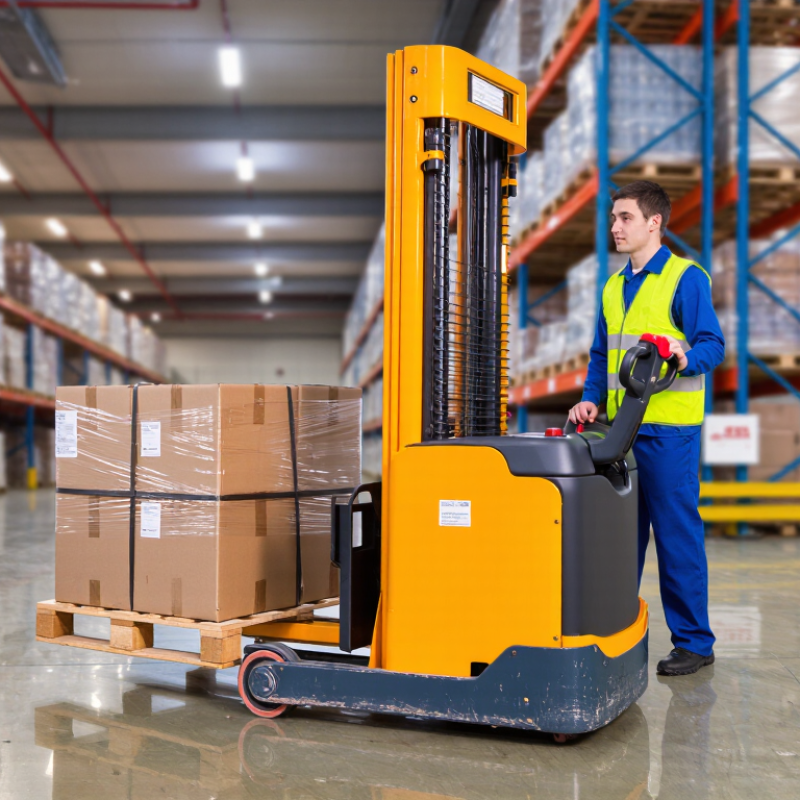
What Is a Powered Pallet Truck?

Definition and Purpose of a Powered Pallet Truck

A powered pallet truck is a motorized warehouse vehicle designed to lift and move palletized loads over short distances. Its forks slide beneath a pallet, then rise just enough to clear the floor. An electric drive moves the truck, while a tiller lets the operator steer and control speed. That small lift is the point. It is not a forklift.

Its purpose is to reduce the pushing and pulling involved in moving goods through warehouses, loading areas, and stockrooms. An operator can guide a walk-behind model along a receiving lane, or use a ride-on version for longer routes. Picture a pallet of cartons moving from a delivery door to a storage aisle: the truck handles the horizontal travel, while the operator manages turns, stops, and positioning. For frequent transfers, that can save time and physical effort.

A powered pallet truck is best suited to firm, relatively level floors and compatible pallets. It does not usually raise loads to high shelves. Capacity, turning space, floor condition, and travel distance all affect which type is appropriate. Small details count. In daily use, a tight corner or damaged pallet can matter more than the truck’s headline capacity. Operators should check the load, route, and controls before moving; even a short trip can become awkward when visibility is blocked.

Main Components and Their Functions

A powered pallet truck moves palletized loads with an electric drive and lifting system. Its components work together to control movement, support the load, and bring the truck to a stop. Small parts matter.

The handle assembly contains travel and lift controls, and often an emergency-reverse button. The battery supplies electrical power; the traction motor turns the drive wheel. A hydraulic pump and cylinder raise the forks, while a lowering valve controls their descent. Load wheels support the forks and help the truck roll beneath a pallet. A worn wheel can make steering feel vague, especially on a smooth warehouse floor. The layout is not always intuitive; gloves can make small controls harder to use.

OSHA’s powered-industrial-truck safety materials cite estimates of about 85 fatalities and 34,900 serious injuries annually in the United States. Those figures cover powered industrial trucks broadly, not pallet trucks alone. OSHA’s standard, 29 CFR 1910.178, requires pre-use inspection and removal of unsafe equipment from service. In practice, operators should check the brakes, horn, wheels, forks, and battery before work. A control that sticks or a fork that lowers unevenly deserves attention, even if the truck still moves.

What Is a Powered Pallet Truck? — Main Components and Their Functions

A powered pallet truck uses battery-powered controls and motors to move palletized loads and raise or lower its forks.

The bars show a simplified functional sequence, not measured time or performance. The battery supplies power throughout operation; the tiller provides operator input, and the controller manages commands to the drive and lifting systems. Forks and load wheels support and move the pallet.

How a Powered Pallet Truck Operates

A powered pallet truck moves palletized loads with an electric drive motor and a battery. The operator guides it with a tiller, using controls to travel, lift, and lower the forks. The forks slide into the pallet openings. A powered lift mechanism raises the load just enough to clear the floor. That small gap matters: lifting higher than needed can affect stability and visibility.

The tiller also helps steer and control speed. On many models, releasing the travel control slows or stops the truck, but operators should learn the specific braking behavior before carrying a load. It varies. Before moving, check the forks, wheels, battery display, and travel path. Look for loose wrapping or debris near the wheels. Keep the load centered, travel at a controlled pace, and slow down before turns. A smooth first trip proves little; stopping distance and turning response can change with load weight, floor condition, and battery charge. Good habits need repetition, and even experienced operators can misjudge a tight corner.

Types and Common Applications

Powered pallet trucks use electric power to move palletized loads over short distances. Their designs suit different routes and operator needs. Walk-behind models are compact and controlled from a tiller handle. They work well in narrow aisles, small stockrooms, and short replenishment runs. Ride-on models let operators travel with the load across longer warehouse routes. End-rider versions are common where frequent stops and faster movement matter, such as busy docks. Low-lift trucks move pallets; they are not substitutes for forklifts that stack goods high.

Applications vary by setting. At a loading dock, a ride-on truck can move several pallets between trailers and staging zones. In a grocery backroom, a walk-behind model may maneuver around shelving and parked carts. Production teams also use them to bring components to work cells. MHI and Deloitte’s 2024 Annual Industry Report found that 55% of surveyed supply chain leaders planned to increase technology and innovation investment. That broad figure is not a pallet-truck sales measure, but it reflects ongoing attention to material-flow efficiency. Fit matters more than a headline capacity: check pallet dimensions, floor condition, travel distance, aisle width, and stopping space. The awkward part is easy to miss. A truck that fits the aisle may still turn poorly with a long load. Test the actual route before choosing.

Safe Operation and Routine Maintenance

A powered pallet truck uses an electric motor to move palletized loads across a warehouse or loading area. Its compact frame can turn in tight spaces, but a heavy load still needs room to stop. Before use, check the forks, wheels, controls, horn, and emergency stop. Look for leaks, loose parts, or a damaged cable. If anything feels unusual, report it and keep the truck out of service until it has been checked.

Safe operation starts with a clear route and a stable load. Keep forks fully under the pallet, travel at a controlled speed, and slow down near corners, doorways, and pedestrians. Avoid sudden turns, especially on ramps. Keep your feet clear of the wheels and never carry a rider. Slow down. Even experienced operators can miss a small hazard when work gets busy.

Tips: Park on level ground, lower the forks, switch off the truck, and remove the key if fitted. Keep the travel path clear. At the start of each shift, note battery condition and check that controls respond smoothly. Follow the maintenance schedule in the operator’s manual; routine checks should be completed by trained personnel. Wipe away dust and spills with suitable equipment, and do not use water near electrical components unless the manual allows it. Small details matter. A quick check can reveal wear before it interrupts a shift.

FAQS

What does a powered pallet truck do?

It moves palletized loads with an electric drive and lifting system. Its forks rise just enough to clear the floor.

Which parts should I check before use?

Check the brakes, horn, wheels, forks, battery, and controls. Look for damaged cables, leaks, or loose parts. Small details matter.

How does the truck lift a pallet?

A hydraulic pump and cylinder raise the forks. A lowering valve controls their descent. Keep the load centered.

How should I control the truck while traveling?

Use the tiller and travel controls, and learn how your truck brakes. Travel at a controlled pace. Slow down before corners.

What can affect stopping and turning?

Load weight, floor condition, and battery charge can change the truck’s response. A smooth first trip proves little.

What should I do if a control sticks or a fork lowers unevenly?

Stop using the truck and report the problem. Keep it out of service until it has been checked.

How can I reduce hazards around the truck?

Keep the route clear of debris and loose wrapping. Keep your feet away from the wheels, and never carry a rider. Tight corners still deserve caution.

How should I park and maintain the truck?

Park on level ground, lower the forks, switch off the truck, and remove the key if fitted. Follow the manual’s maintenance schedule. Trained personnel should handle routine checks. A quick check helps, but it cannot catch everything.

Conclusion

A Powered Pallet Truck is a motorized material-handling tool designed to lift and move palletized loads over short distances. Unlike a manual pallet truck, it uses a battery-powered drive and lifting system to reduce the physical effort required from the operator. Its main components typically include forks, load wheels, a drive wheel, a battery, a motor, lifting controls, and a handle with steering and operating buttons. Each part helps support, move, or control the load.

To operate one, the user positions the forks beneath a pallet, raises it using the lift control, and guides the truck to its destination at a controlled speed. Different models suit tasks such as warehouse transport, stockroom replenishment, and loading-area work, with choices depending on load capacity, travel distance, and available space. Safe use involves checking the truck before operation, securing and balancing the load, watching for people and obstacles, and following site procedures. Routine maintenance includes inspecting wheels, forks, controls, and the battery, while keeping the truck clean and reporting faults promptly.

Oliver

Oliver

Oliver is a professional marketing specialist who helps make complex product information clear, useful, and engaging. With a strong understanding of the company’s products, their features, and the needs they are designed to address, he creates practical content that supports customers as they......